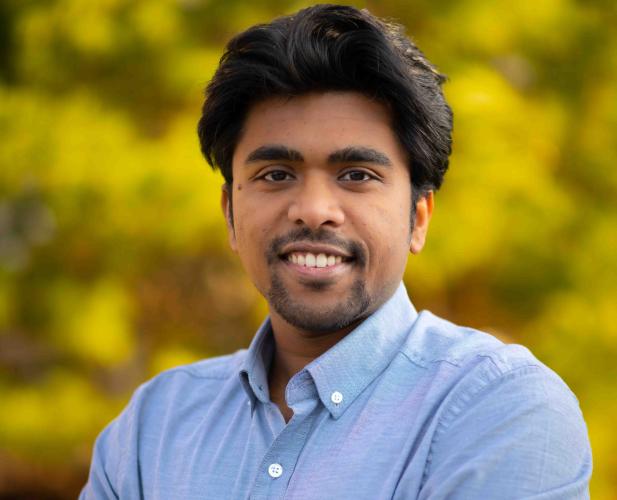
Saikat Dutta is an Assistant Professor in the Department of Computer Science at Cornell University. He is affiliated with the Software Engineering Group and focuses on the intersection of Software Engineering and Machine Learning . His work aims to enhance the reliability of ML-based systems while applying ML techniques to solve software engineering challenges. PhD in Computer Science from University of Illinois Urbana-Champaign (Summer 2023) Postdoctoral Researcher at University of Pennsylvania Bachelor's in Computer Science and Engineering from Jadavpur University Research Interests: Dr. Dutta's research spans several key areas: Automated test generation and debugging for ML/DL libraries Using AI/ML for automated software engineering tasks Improving performance of regression tests in ML libraries Static and dynamic analysis for probabilistic programming Article Trends: His recent publications emphasize: Automated testing of ML systems Security vulnerability detection using LLMs Probabilistic program analysis Neurosymbolic learning frameworks Flaky test management in stochastic environments Stochastic regression test optimization Scientific Awards: Meta AI LLM Evaluation Research Grant (2025) Mavis Future Faculty Fellowship (2022-23) Facebook PhD Fellowship (2020-22) 3M Foundation Fellowship (2019-2020) Advising & Grants: Dr. Dutta actively recruits PhD students and postdocs. He leads research projects supported by grants from Meta AI and participates in program committees for top conferences like ICSE and ISSTA. His lab focuses on neurosymbolic systems and ML-based software verification.
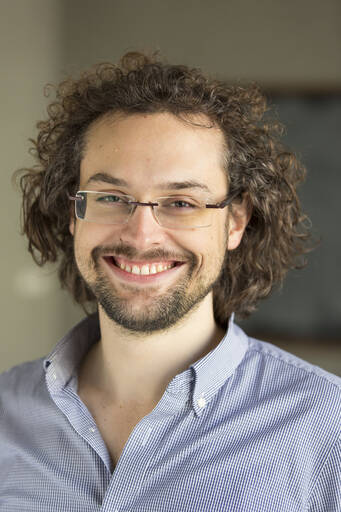
Benjamin Ricaud is an Associate Professor and Group Leader in Machine Learning at UiT The Arctic University of Norway's Department of Physics and Technology. His core affiliations include membership in the Machine Learning Group, Visual Intelligence center, and co-directorship of the Digital Technology Innovation Lab focused on Arctic-region tech startups. He also co-chairs the annual Northern Light Deep Learning conference. Ricaud's research spans: Fundamental ML : Graph signal processing, explainable AI, and generative models Applications : Microfossil classification, medical diagnostics (retinal aging), drug analysis, and climate data interpretation Emerging domains : Self-supervised learning and biological data analysis using Raman spectroscopy His recent publications (2020-2025) cluster in three domains: Graph ML methodologies (35%) Biomedical/biological applications (40%) Geoscience/climate informatics (25%) with consistent focus on interpretability and real-world data challenges. Teaching includes Image Processing (FYS-2010), Pattern Recognition (FYS-3012), and Machine Learning (FYS-2021). He leads outreach initiatives developing AI exhibits for Tromsø Science Centre.
Dr. Jennifer Volk is an Assistant Professor at the College of Engineering, University of Wisconsin-Madison, specializing in Electrical & Computer Engineering. Her research focuses on leveraging novel technologies like superconductor electronics and photonics to create efficient systems for datacenters, neuromorphic computing, quantum computing, and space/sensing applications. She employs a holistic approach spanning circuit design, materials science, and computer microarchitecture. PhD (2024), University of California, Santa Barbara BS (2016), University of California, Santa Cruz Her research interests include superconducting logic , bio-based architectures , and novel computing mediums , emphasizing co-optimization of logic and circuit blocks. Her work develops design abstractions to simplify adoption of unconventional technologies. Dr. Volk's publications demonstrate expertise in superconducting circuit design, radiation-hardened CMOS for particle physics, and photonic materials. She has received numerous awards including the 2025 John D. Wiley Assistant Professorship and IEEE fellowships in applied superconductivity. 2025 John D. Wiley Assistant Professorship 2024 UC Santa Barbara President's Dissertation Year Fellowship 2023 IEEE CSC Graduate Study Fellowship in Applied Superconductivity 2022 IEEE Micro Top Picks Honorable Mention 2021 IEEE Micro Top Picks She teaches E C E 340 - Electronic Circuits I (Spring 2025). Her work bridges materials science, circuit design, and system architecture to enable next-generation computing platforms.
Louisa Foss-Kelly is a Professor and Coordinator of the Counselor Education and Supervision Program at Southern Connecticut State University. Her work bridges clinical practice, counselor education, and legislative advocacy, with a focus on poverty-related counseling and professional identity development. Education: Ph.D. in Counseling from Kent State University Research Interests : Counseling people living in poverty via the I-CARE Model Legislative advocacy for professional counseling Substance abuse prevention in school counseling Graduate counseling student experiences Multicultural and socioeconomic competence Article Trends emphasize poverty interventions (I-CARE Model), counselor education innovations, and legislative advocacy. Her work spans qualitative research, clinical tools, and policy-focused studies. Leadership Roles include: President, Connecticut Counseling Association 2023-2024 President, Chi Sigma Iota Honor Society Grants highlight SBIRT training, evidence-based practices, and addictions counseling program development. She collaborates with researchers like Margaret Generali on poverty and counselor training initiatives.
David Steurer is an Associate Professor in the Department of Computer Science at ETH Zurich, where he leads the Institute for Theoretical Computer Science. His research bridges theoretical computer science, mathematics, and practical applications in machine learning and statistics. Steurer has made significant contributions to the understanding of sum-of-squares methods, semidefinite programming, and high-dimensional estimation problems. Steurer earned his B.Sc. & M.Sc. in Computer Science from Saarland University in 2006, followed by a Ph.D. in Computer Science from Princeton University in 2010 under the supervision of Sanjeev Arora. His doctoral dissertation, "On the Complexity of Unique Games and Graph Expansion," received an Honorable Mention for the ACM Doctoral Dissertation Award in 2011. Steurer's research focuses on algorithm design through mathematical programming relaxations, particularly semidefinite programming and the sum-of-squares method. His work addresses computational complexity of high-dimensional estimation problems including tensor decomposition, clustering, Gaussian mixture models, and stochastic block models. He also investigates algorithmic aspects of robustness and differential privacy, especially for estimation tasks. His theoretical contributions have practical implications for machine learning and data analysis in the presence of noise and adversarial conditions. Analysis of Steurer's recent publications reveals a consistent trajectory in advancing the sum-of-squares framework for high-dimensional estimation and robust statistics. His work demonstrates how sophisticated mathematical programming techniques can provide certifiable guarantees for challenging problems in machine learning. The research spans theoretical foundations while maintaining relevance to practical applications, particularly in scenarios involving corrupted or noisy data. A notable trend is the extension of sum-of-squares methods to handle increasingly complex statistical models while providing rigorous performance guarantees. ERC Consolidator Grant (2019) Michael and Sheila Held prize (2018, with Raghavendra) Invited speaker at International Congress of Mathematicians (2018) STOC Best Paper Award (2015) Alfred P. Sloan Research Fellowship (2014) NSF CAREER Award (2014) Microsoft Research Faculty Fellowship (2014) FOCS Best Paper Award (2010) Steurer has advised numerous PhD students and postdocs who have gone on to prominent positions, including Sam Hopkins (now faculty at MIT), Jonathan Shi, and Aaron Potechin. His research is supported by multiple prestigious grants, including an ERC Consolidator Grant, an NSF CAREER Award, and a Microsoft Research Faculty Fellowship. He has served on numerous program committees for top theoretical computer science conferences and has been recognized for his service to the community through roles such as internal member of the Scientific Advisory Committee of the Institute for Theoretical Studies at ETH Zurich. As head of the Institute for Theoretical Computer Science at ETH Zurich, Steurer leads a research group focused on advancing the theoretical foundations of computer science with particular emphasis on mathematical optimization methods. His team explores the boundaries of what can be efficiently computed in high-dimensional settings, with applications spanning machine learning, statistics, and data science. The group maintains strong connections with both theoretical and applied researchers across ETH and the broader academic community.
Jiefeng Sun serves as Assistant Professor in the Department of Aerospace and Mechanical Engineering within Arizona State University's School for Engineering of Matter, Transport and Energy. His research program centers on designing artificial-muscle-driven robots that replicate biological adaptivity through advanced modeling and control systems. His academic credentials include: Ph.D. in Robotics and Control from Colorado State University (2022) M.S. in Mechanical Engineering from Dalian University of Technology (2017) B.S. in Mechanical Engineering from Lanzhou University of Technology (2014) Dr. Sun's research integrates soft robotics, artificial muscles, and adaptive control to create morphologically intelligent systems. His work spans aerial robotics, wearable exoskeletons, and biomimetic locomotion, with emphasis on shape-changing mechanisms and energy-efficient actuation that enables robots to operate in unstructured environments. Analysis of his recent publications reveals dominant themes in twisted-and-coiled actuators, tensegrity structures, and physics-informed control methods. Key trends include variable-stiffness systems for wearable devices, data-efficient simulation techniques using Koopman operators, and bistable mechanisms for aerial grasping applications. His research excellence has been recognized through: Finalist for Best Student Paper Award at IEEE/RSJ IROS 2018 Reviewer of the Year 2021 for Smart Materials and Structures Journal 2022 DARPA Riser designation Dr. Sun actively recruits graduate students for robotics research and has secured significant funding including DARPA support. He teaches core courses including System Dynamics and Control I (MAE 318) while supervising thesis research and applied projects through MAE 599 and MAE 792. He directs the Sun Robotics Lab (https://sunroboticslab.github.io), which collaborates across biomechanics, materials science, and control theory to develop next-generation adaptive robotic systems with applications in healthcare, exploration, and human augmentation.
Graham Ormondroyd is a Professor at the School of Environmental and Natural Sciences , Bangor University , specializing in the Biocompounds department. His research focuses on innovative wood modification techniques, sustainable biomaterials, and environmental impact assessments. Current projects include scaling waste-based composites for infrastructure and developing Welsh wool applications. Collaborations span academia-industry partnerships like Bangor University and Zentia Ltd KTP. Research Trends: His 2025 publications emphasize multi-scale resin diffusion analysis and UK wood recycling frameworks, while 2024 work explores laser incising and phenolic resin-NMR interactions. Recent studies also address VOC emissions from formaldehyde-free composites. Professional Activities: He chairs academic panels (e.g., International Panel Products Symposium) and reviews publications. Projects focus on net-zero construction and climate resilience.
Marco Panesi is a Professor in the Department of Aerospace Engineering at the University of Illinois at Urbana-Champaign and Director of the Center for Hypersonics and Entry Systems Studies (CHESS). His research focuses on non-equilibrium phenomena in high-enthalpy flows, plasma dynamics, and uncertainty quantification. He holds a Ph.D. from the von Kármán Institute for Fluid Dynamics (2009) and M.S. degrees from Università di Pisa (2003) and VKI (2005). Roles: Faculty Member, Research Director, Principal Investigator Key Affiliations: CHESS, University of Illinois, VKI Research Interests: Hypersonic flow modeling, non-equilibrium plasmas, radiation effects, machine learning applications in aerothermodynamics, ablation processes, and state-to-state chemistry. His work bridges computational fluid dynamics with experimental validation in facilities like the Plasmatron X wind tunnel. Publications: Over 100 peer-reviewed articles on topics ranging from plasma kinetics to thermal protection systems. Recent work emphasizes adaptive neural operator models and Bayesian uncertainty quantification. Awards: Includes the Vannevar Bush Faculty Fellowship (2021), NASA Groundbreaker Award (2021), and multiple early-career recognitions from AFOSR, NASA, and ESA. Grants & Leadership: Secured funding from NSF, NASA, and DOD. Leads multidisciplinary teams on projects like the CHyPS material response solver and hypersonic entry modeling. Labs & Facilities: Principal investigator for the UIUC Plasmatron X facility, a key resource for studying high-enthalpy plasma flows.
Bruce Jacob is a Keystone Professor and Full Professor in the Department of Electrical & Computer Engineering at the University of Maryland College Park's College of Engineering. His research primarily focuses on memory systems design and exascale computing architectures, with significant contributions to DRAM simulation and high-performance computing systems. Dr. Jacob received his A.B. in Mathematics from Harvard University (1988), followed by his M.S. and Ph.D. in Computer Science & Engineering from the University of Michigan (1995 and 1997 respectively). His research interests include memory systems design, exascale computing architectures, embedded systems, circuit integrity, and algorithmic composition. His recent publications demonstrate a strong focus on next-generation memory technologies, particularly ReRAM and advanced DRAM architectures. His work bridges the gap between theoretical modeling and practical implementation, with significant contributions to memory system simulation through projects like DRAMsim. His research shows a consistent trajectory toward solving the memory bottleneck problem in high-performance computing systems. Named Fellow, IEEE (2021) Multiple University of Maryland Research Leader awards (2006, 2010, 2012, 2016, 2017) Clark School of Engineering Keystone Professor (2006) National Science Foundation CAREER Award (2000) University of Maryland Award for Teaching Excellence (2004) Dr. Jacob has led significant research initiatives including the University of Maryland Exascale Systems Research and Memory-Systems Research groups. He has developed important computational artifacts such as DRAMsim (a public-domain DRAM-system simulator) and BioBench (a set of bioinformatics workloads). His work has influenced both academic research and industry practices in memory system design.
Evan Davies is a Professor in the Civil and Environmental Engineering Department at the University of Alberta's Faculty of Engineering. He has been a Full Professor since July 2021, following his promotion from Associate Professor (2015-2021) and Assistant Professor (2009-2015) positions at the same institution. Education: Ph.D. (Civil and Environmental Engineering), The University of Western Ontario, London, Ontario (2003-2007) M.E.S. (Environment and Resource Studies), The University of Waterloo, Waterloo, Ontario with field research in China and India (2001-2003) B.A.Sc. (Systems Design Engineering), The University of Waterloo, Waterloo, Ontario, including a year-long exchange at Technical University of Hamburg-Harburg, Germany (1995-2001) Evan Davies' primary research focuses on water resources planning and management, systems thinking and modeling, and sustainable development. His work develops and applies hydrological, water use, and water quality models to understand complex feedbacks among water availability, use, and quality within their social, economic, and environmental contexts. His research spans municipal to global spatial scales and daily to decadal time scales, aiming to provide decision-makers with tools to compare structural, management, and policy alternatives for sustainable water planning. His recent projects include global and regional-scale modeling of water security and the water-energy-food nexus, irrigation reservoir management, municipal water demand projections, flood risk management, and chloramine dissipation in stormwater pipes. Recent research trends show a strong focus on: Integrated assessment modeling of water-energy-food systems Climate change impacts on water resources Machine learning applications in hydrology Water security under decarbonization scenarios Flood risk assessment and management Sustainable urban water systems Scientific Awards: Faculty of Engineering Graduate Teaching Award, University of Alberta (2020-2021) Faculty of Engineering Undergraduate Teaching Award, University of Alberta (2018-2019) Doctoral Fellowship (CGS), Natural Sciences and Engineering Research Council (2005-2007) University of Western Ontario Graduate Tuition Scholarship (2005-2007) Ontario Graduate Scholarship in Science and Technology (2004-2005) Masters/Doctoral Fellowship (PGS A/B), Natural Sciences and Engineering Research Council (2002-2004) Davies has supervised numerous graduate students working on projects related to water resources planning and management. His research has been supported by various grants, including funding from the Natural Sciences and Engineering Research Council. He collaborates extensively with researchers at the Joint Global Change Research Institute (JGCRI) in College Park, MD, and with government agencies and industry partners on water management projects across Canada, particularly in Alberta's Bow River basin. Davies leads a research group focused on water resources systems modeling, which employs system dynamics, optimization techniques, and machine learning approaches to address complex water management challenges. His team collaborates with decision-makers and stakeholders to ensure research outcomes are directly applicable to real-world water management problems.
Holger Dette is a Professor and Chair Holder of Stochastics (specializing in Statistics) at the Faculty of Mathematics, Ruhr University Bochum. He leads the prominent Group Dette within the Institute of Statistics, overseeing a team of researchers, doctoral students, and administrative staff including Birgit Tormöhlen as team assistant. His research group is deeply integrated within the university's mathematical ecosystem, collaborating with other research groups across algebra, analysis, numerics, and topology. Dette's research spans mathematical statistics with strong applications in real-world problems. His primary interests include optimal experimental design, time series analysis, functional data, change point problems, nonparametric regression, biostatistics, special functions, goodness-of-fit tests, and random matrices . His work bridges theoretical statistics with practical applications, particularly evident in his collaborations with pharmaceutical giants Novartis and Bayer AG in biostatistics, as well as Quasol, a spin-off company from his statistics institute. His recent publications (2024-2025) reveal a research program increasingly focused on high-dimensional and functional data analysis, privacy-preserving statistics, and novel methodological approaches to longstanding statistical problems. Dette's work shows strong interdisciplinary connections, particularly with biomechanics (analyzing joint angles during fatigue phases) and data science (addressing challenges in the era of big data). His research group is actively involved in multiple DFG-funded projects including the newly established 'Small Data' collaborative research center (Sonderforschungsbereich 1597) and the Spatio-temporal Statistics for the Transition of Energy and Transport (Transregio 391). Dette has received significant recognition including the prestigious Humboldt Research Award . His paper 'With Great Power Come Great Side Channels: Statistical Timing Side-Channel Analyses with Bounded Type-1 Errors' achieved second place at the CSAW'24 Applied Research Competition MENA. His research group has also secured multiple significant funding awards from the German Research Foundation (DFG). As an advisor, Dette supervises numerous doctoral and master's students including Pascal Quanz, Marius Kroll, and Carina Graw. His group offers statistical consulting services for scientists and students across bachelor's, master's, and doctoral phases. The group maintains strong industrial partnerships, particularly in biostatistics applications, demonstrating Dette's commitment to translating theoretical statistics into practical solutions for real-world challenges.
Peng Li is a Professor in the Department of Electrical and Computer Engineering at the University of California, Santa Barbara. His research focuses on integrated circuits, brain-inspired computing, electronic design automation, and hardware machine learning systems. He holds Fellow status in the Institute of Electrical and Electronics Engineers (IEEE). His work emphasizes neuromorphic engineering, spiking neural networks, and the intersection of machine learning with analog circuit design. Education includes a PhD in Electrical and Computer Engineering from Carnegie Mellon University, an MS in Systems Engineering from Xi'an Jiaotang University, and a BS in Information Science and Engineering from the same institution. His research has been recognized with prestigious awards including the ICCAD Ten-Year Retrospective Most Influential Paper Award and multiple Design Automation Conference Best Paper Awards. Key research trends in his articles include advancements in spiking neural networks (SNNs), hardware accelerators for neuromorphic computing, Bayesian optimization for analog circuit design, and robustness in machine learning systems. He explores topics like adversarial robustness, energy-efficient architectures, and data-efficient prediction techniques. His work bridges theoretical machine learning models with practical hardware implementations, particularly in 3D integration and systolic array acceleration. Notable contributions include pioneering hybrid approaches combining formal verification with machine learning for analog circuits (HFMV framework), and innovations in neuromorphic processors such as the 3D Liquid State Machine architecture. His research also addresses challenges in semiconductor manufacturing, including wafer map pattern recognition and failure detection through semi-supervised learning and contrastive methods. Awards highlight his impactful contributions to both design automation and neural computing. His grants and collaborations likely span industry partnerships in semiconductor technology and neuromorphic computing. He leads a lab focused on next-generation hardware-software co-design for intelligent systems, emphasizing energy efficiency and scalability.
Dr. Assela Pathirana is a Professor at the IHE Delft Institute for Water Education, specializing in water infrastructure asset management (WIAM), climate resilience of Small Island Developing States (SIDS), and sustainable urban water systems. His work bridges academia, policy, and practice, focusing on digitalization, data-driven decision-making, and nature-based solutions. Key roles include Chief Technical Advisor for the Maldives’ water systems and leadership of a MOOC on SIDS climate adaptation. He holds a BSc (First Class Honours) from the University of Peradeniya and advanced degrees from the University of Tokyo, specializing in hydrology and water resources engineering. Education: Bachelor of Science in Civil Engineering (First Class Honours), University of Peradeniya, Sri Lanka Master’s and Doctoral Degrees in Civil Engineering (Hydrology and Water Resources), University of Tokyo, Japan Research Interests: Dr. Pathirana’s work emphasizes climate resilience, SIDS adaptation, urban flood risk management, and sustainable infrastructure. He develops decision-support tools for flood forecasting, evaluates land-use changes in Jakarta, and promotes equity in water rationing systems. His interdisciplinary approach integrates hydrological modeling, open-source software development, and policy analysis. Advising & Capacity Building: He leads training-of-trainers programs and capacity-building initiatives, enhancing postgraduate education in technical disciplines. His efforts focus on didactics and pedagogy, ensuring graduates gain both theoretical knowledge and practical expertise. Key Projects: Developed the WIAM curriculum at IHE Delft MOOC on SIDS climate adaptation and water security Consultancy for the Maldives’ Ministry of Environment and UNDP Labs & Collaborations: Engages in cross-disciplinary teams addressing urban water challenges, including sponge cities in China and flexible adaptation planning in Melbourne and Pune. His work with UNESCO-ICHARM and UNU underscores global water security and disaster risk reduction.
Samir Elhedhli is a Professor in the Department of Management Sciences at the University of Waterloo, within the Faculty of Engineering. His research focuses on Large-scale Optimization, Logistics, Supply Chain Design, Healthcare Operations, Airline Scheduling, and Data Analytics. He has held grants from NSERC, CFI, OCE, and MITACS, collaborating with industries in aircraft manufacturing, airline scheduling, and warehouse management. Education: PhD in Management Science, McGill University (2001) Master's in Industrial Engineering, Bilkent University (1996) Bachelor's in Industrial Engineering, Bilkent University (1994) Research Interests: Data Analytics & Data Science Large-scale Optimization (Interior-point methods, decomposition, column generation) Supply-chain Analytics (Logistics, warehousing, routing, scheduling) Environmental Sustainability in Supply Chains Key Awards: CORS Service Award (2013) University of Waterloo Distinguished and Outstanding Performance Awards (2005–2019) Grants & Advising: Active grants from NSERC, CFI, OCE, and MITACS Currently accepting graduate student applications Administration & Service: Chair, Department of Management Sciences (2014–2018) President, Canadian Operational Research Society (2011–2012) Co-Editor-in-Chief, INFOR Journal (2014–present) Labs & Teams: Leads the WanOpt research group focused on optimization methodologies and applications.
Nina Schwarz is Assistant Professor of human-environment interactions in cities at the Department of Urban and Regional Planning and Geo-Information Management, ITC—University of Twente. Holding a Diploma in Environmental Sciences (University of Lüneburg, 2003) and a PhD in Social and Economic Sciences (University of Kassel, 2007), she spent a decade as senior scientist at the Helmholtz Centre for Environmental Research – UFZ before joining ITC. Her interdisciplinary research integrates urban land-use science, ecosystem-service evaluation and advanced modelling techniques—especially agent-based models—to explore sustainable urban development under global change. Research interests revolve around three interconnected themes: (i) urban land-use change —understanding how residential, commercial and green-space dynamics co-evolve; (ii) urban ecosystem services —quantifying both supply and demand of services such as local climate regulation, recreation and biodiversity; and (iii) behavioural modelling —formalising human decision-making to simulate policy scenarios ranging from slum-upgrading to vineyard management. She actively links these themes to UN Sustainable Development Goals, notably SDG 11 (Sustainable Cities) and SDG 15 (Life on Land). Recent publications (2022-2025) reveal a methodological breadth spanning citizen-science impact assessment in Suriname, cooling effects of urban water bodies in Chinese mega-cities, European wine-growers’ adaptive behaviour, and methodological advances in upscaling and validating agent-based land-use models. Across these studies, Schwarz consistently combines empirical field data, geospatial analytics and participatory approaches to produce policy-relevant insights for cities in both the Global North and South. She has (co-)authored >80 peer-reviewed works, accumulating c. 5 900 citations and an h-index of 28 (Scopus). While specific honours are not itemised in the supplied text, her sustained citation impact and invited contributions to major conferences (e.g., iEMSs 2020, IAHR 2025) underscore scientific recognition. Schwarz frequently engages with societal stakeholders: her projects have generated open datasets on urban green-space monitoring in Paramaribo, e-learning modules for Latin-American universities, and interactive dashboards for sustainable water management. Within ITC she contributes to capacity-building programmes for emerging economies, supervises graduate researchers and maintains active collaborations across Europe, Latin America, Africa and Asia. No explicit lists of PhD students or personal grants are provided in the current corpus, but her leadership of externally funded projects (e.g., citizen-science evaluation, vineyard decision-making database) indicates ongoing acquisition of research funding.