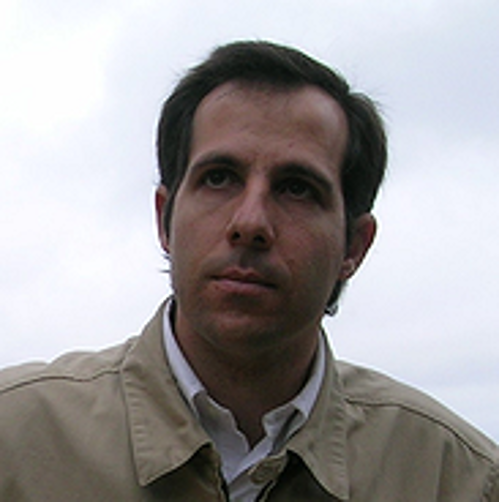
Juan Ignacio Arribas is a Full Professor in the Department of Signal and Communications Theory and Telematic Engineering at the School of Telecommunications Engineering, University of Valladolid. He is affiliated with the Center of Artificial Intelligence (Valladolid), Castilla-Leon Institute of Neuroscience (INCyL), and serves on the Section Board of Agriculture (MDPI) and Editorial Board of Scientific Data (Nature). His educational background includes: PhD in Electrical Engineering, University of Valladolid (2001) MSc in Electrical Engineering, University of Valladolid (1996) Dr. Arribas's research focuses on Machine Learning, Pattern Recognition, and Expert Systems applied to Cybersecurity, Computer Aided Diagnosis, Computer Vision, Bioinformatics, and Food Science. He pioneers computer vision and hyperspectral imaging for agricultural applications including weed detection, fruit quality assessment, and plant health monitoring, while also advancing medical diagnostics through EEG-based schizophrenia analysis. Analysis of his 15 most recent publications (2021-2024) reveals dominant themes in agricultural technology (70% of output), particularly non-destructive testing using hyperspectral imaging for crop monitoring and food quality. Cybersecurity applications (20%) feature network intrusion detection via novel neural architectures, with biomedical engineering (10%) represented by EEG analysis for psychiatric diagnosis. His work consistently integrates machine learning with domain-specific sensor data. Dr. Arribas supervises research through the Image Processing Laboratory (LPI) and collaborates with the Center of Artificial Intelligence. His international engagements include Visiting Research Associate roles at the University of Maryland (1998-2009) and Barrow Neurological Institute (2010). He leads the Image Processing Laboratory (LPI) research group and maintains active collaborations with the Castilla-Leon Institute of Neuroscience, driving interdisciplinary projects that bridge agricultural technology, medical diagnostics, and cybersecurity through advanced computational methods.