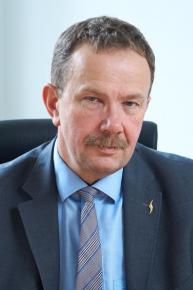
Prof. Janusz Frączek is a faculty member at Warsaw University of Technology, holding the academic rank of Professor. His research focuses on computational mechanics, kinematics and dynamics of multibody systems, robotics, and biomechanics. University: Warsaw University of Technology Academic Rank: Professor Contact: janusz.fraczek@pw.edu.pl | New Aviation Building, room 322 Research Interests: Computer methods in mechanics Kinematics and dynamics of multibody systems Robotics Biomechanics Teaching Activities: Dynamics of Multibody Systems Surveying and experimental techniques Theory of Machines and Mechanisms I Article Trends: The 15 most recent publications emphasize computational mechanics, robotics, Hamiltonian frameworks, and optimization. Topics include redundant constraints, parallel computing, nonholonomic systems, and augmented Lagrangian methods.
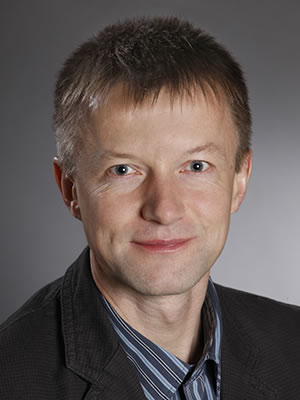
Yu Li is a Lecturer at the University of Picardie Jules Verne (UPJV) and a member of research unit UR 4290 “Optimization and Cryptography, AI – OCIA.” His office is located in room 302, reachable by internal telephone extension 5900. Research Interests Dr. Li’s research spans several inter-related domains: Optimization & Control Theory – developing dynamic optimization algorithms for industrial processes such as continuous casting in steel manufacturing. Cryptography & Security – investigating secure and dependable models for cloud and distributed systems. Artificial Intelligence & Robotics – integrating AI perception and decision-making into cloud-connected robotic platforms, including exoskeletons for rehabilitation and autonomous ground vehicles. Cloud & Fog Computing – designing middleware and domain-specific languages that seamlessly connect robotic devices with cloud and edge resources. Publication Trends Over the past decade, Dr. Li’s publication record reveals a clear evolution from foundational work in software architecture and component-based systems (2010-2016) toward cutting-edge applications in cloud/fog-enabled robotics and AI-driven cyber-physical systems (2017-2023). His studies increasingly emphasize real-world deployment, simulation-driven resource estimation, and human-centric interaction in rehabilitation robotics. Scientific Awards & Recognition No specific awards are listed in the provided materials. Advising & Funding No explicit information about supervised students or funded grants is available in the text supplied. Laboratories & Teams He carries out his research within the UR 4290 research unit “Optimization and Cryptography, AI – OCIA” at UPJV, focusing on collaborative projects that bridge mathematics, computer science, and robotics engineering.
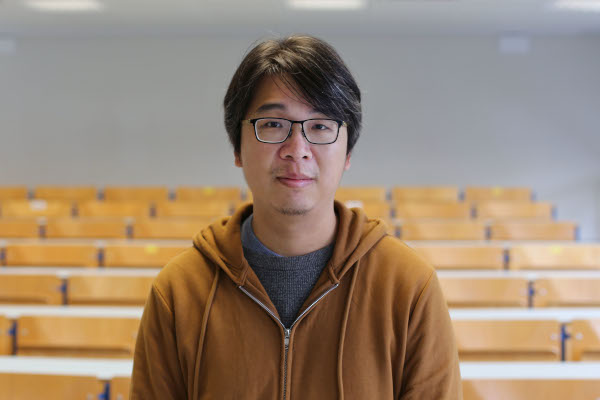
Prof. Dr.-Ing. Torsten Jeinsch is Professor and Chair of Control Engineering at the University of Rostock, Germany, where he also serves as Head of the Application Center for Control Engineering (AZR) within the Institute of Automation Technology. He is affiliated with the Interdisciplinary Faculty (INF), Department of Maritime Systems, and maintains a dual research focus on theoretical control systems and practical maritime applications. His research program spans theory-oriented work in digital control (optimization of sampling processes), adaptive systems, optimal control, and fault-tolerant systems, alongside application-oriented research in automotive systems, medical technology (including the Rostock Anesthesia Assistance System), maritime technology, and energy systems. The maritime research is particularly extensive, covering large-scale underwater monitoring, autonomous rescue systems, and integrated control for large ships. Professor Jeinsch's recent publications reveal a strong emphasis on sampled-data systems theory and maritime control applications, with consistent advancement in autonomous vessel navigation, collision avoidance algorithms, and parameter estimation for ship maneuvering models. His work bridges fundamental control theory with practical engineering challenges in multiple domains. Professional affiliations include: Board member of the Department of Maritime Systems (INF) Head of Application Center Control Engineering (AZR) IFAC Technical Committee Marine Systems IFAC Technical Committee SAFEPROCESS (Fault Detection) DAAD Selection committee for USA/Canada His teaching portfolio covers Fundamentals of Control Engineering, Selected Applications, Control Systems/Automation, Fault Diagnosis, Computer-Aided Controller Design, Modern Methods of Control Engineering, and Modeling and Simulation of Technical Systems, reflecting his broad expertise across theoretical and applied control engineering.
Jorge Segovia González is a Professor at Universidad Pablo de Olavide, affiliated with the Department of Physical, Chemical and Natural Systems within the College of Engineering. His research focuses on Applied Physics, Particle Physics, and Quantum Chromodynamics, particularly in the study of quark models, meson spectroscopy, and multiquark systems. He earned his PhD in 2012 from the Universidad de Salamanca, where he studied spectroscopy and decay mechanisms of heavy quark mesons under the supervision of Dr. David Rodríguez Entem. His work spans topics like Constituent and chiral quark models Tetraquark and pentaquark systems Generalized Parton Distributions Strong decay formalisms Proton-antiproton scattering Electromagnetic form factors of hadrons . Recent publications (2024–2025) emphasize theoretical advancements in tetraquark systems, Monte Carlo simulations, and applications of QCD to meson structure. His research contributes to understanding hadron stability, quark interactions, and experimental signatures at facilities like the Jefferson Lab and Electron-Ion Collider (EIC).
Paul Fortier is a Full Professor at the Department of Electrical Engineering and Computer Engineering , Université Laval, with a career spanning over three decades. His work focuses on Digital Communications , Internet of Things (IoT) , Cyber-Physical Systems , and Wireless Communication Systems , particularly exploring complexity-performance tradeoffs in hardware implementations. PhD in Electrical Engineering, Stanford University (1989) MSc in Statistics, Stanford University (1987) MSc and BSc in Electrical Engineering, Université Laval (1984, 1982) His research integrates Machine Learning with FPGA architectures for applications like real-time hand gesture recognition and hardware-in-the-loop simulation . Current projects include Advanced Digital Twin Development and Quantum-Resistant Communication Protocols under the Quebec Strategic Microsystems Group . Key contributions appear in IEEE Transactions on Vehicular Technology , IEEE Internet of Things Journal , and IEEE Transactions on VLSI Systems . He has secured major grants from Fonds de recherche du Québec and NSERC for initiatives like Hardware-in-the-Loop Simulators and Wireless Cybersecurity Research . Fellow, Engineering Institute of Canada Fellow, Canadian Academy of Engineering Senior Member, IEEE
Dr. Mingzhou Yin is a postdoctoral researcher at the Institute of Automatic Control within the Faculty of Electrical Engineering and Computer Science at Leibniz University Hannover, where he has been working since August 2024. He received his Doctor of Sciences degree from ETH Zurich in 2024 under the supervision of Prof. Roy S. Smith, with a dissertation titled 'Regularized and Nonparametric Approaches in System Identification and Data-Driven Control.' His research interests span data-based modeling and control, sparse learning theory, system identification using subspace and regularized methods, model predictive control, and periodic system theory. Dr. Yin has developed innovative approaches in low-rank matrix regression, Gaussian process-based control of nonlinear systems, and closed-loop identification frameworks. His work bridges theoretical advances with practical applications in energy-flexible buildings and aerospace systems. Dr. Yin has received significant recognition including the IEEE Control Systems Society Swiss Chapter Young Author Best Journal Paper Award and the Systems Identification and Adaptive Control Technical Committee Outstanding Student Paper Prize in 2023. His publications in IEEE Control Systems Letters, Automatica, and other top journals demonstrate his contributions to data-driven control theory. IEEE Control Systems Society Swiss Chapter Young Author Best Journal Paper Award (2023) Systems Identification and Adaptive Control Technical Committee Outstanding Student Paper Prize (2023) As an educator, Dr. Yin has supervised numerous student projects on data-driven predictive control, sparse learning algorithms, and closed-loop identification of networked systems. His teaching includes 'Data- and Learning-Based Control' exercises and previous TA roles for 'Robust Control and Convex Optimisation' and 'System Identification' courses.
Hazhir Rahmandad is the Schussel Family Professor of Management Science and a Professor of System Dynamics at the MIT Sloan School of Management . He is also affiliated with the System Dynamics Group , Institute for Work and Employment Research (IWER) , and the Institute for Data, Systems, and Society (IDSS) at MIT. His research bridges complex organizational dynamics and public health, focusing on how feedback delays and strategic interactions shape long-term outcomes in both domains. Education: Hazhir earned a Bachelor of Science in Industrial Engineering from Sharif University of Technology and a PhD in Management with a concentration in System Dynamics from MIT . Research Interests: His work explores how organizations learn and adapt over time, particularly in the presence of delayed feedback and competitive pressures. He investigates the origins of persistent heterogeneity in organizational capabilities and performance, using simulation modeling, experiments, and empirical data. A second major stream of his research applies system dynamics to public health challenges, including obesity, depression, and infectious disease epidemics like COVID-19. He also contributes to methodological advancements in dynamic modeling, including parameter estimation and model validation techniques. Publications: His recent work spans COVID-19 modeling , organizational learning under uncertainty , network effects on diffusion , and economic mobility . Notable articles include studies on the behavioral dynamics of COVID-19 across 92 nations, the impact of employer practices on economic mobility, and how delays in feedback impair strategic learning. Awards: Hazhir is the recipient of the prestigious Jay Wright Forrester Award , recognizing his significant contributions to the field of system dynamics. Grants & Funding: His research has been supported by the National Science Foundation (NSF) , National Institutes of Health (NIH) , Department of Housing and Urban Development (HUD) , and various private sector organizations. Teaching & Executive Education: At MIT Sloan, he teaches introductory and advanced system dynamics courses and leads executive education programs such as Understanding and Solving Complex Business Problems and the Global Executive Academy .
Manuel Jesus Lopez Sanchez is a tenured professor at the University of Cádiz, Spain, affiliated with the College of Engineering and the Department of Automatic Engineering, Electronics, Computer Architecture, and Networks. His work focuses on Systems Engineering and Automation, with expertise in Nonlinear Dynamics, Cyber-Physical Systems, Robust Control , and Advanced Process Control . He has developed control methodologies for chaotic systems, marine applications, and real-time simulation environments. Education: PhD in Systems Engineering (1999) - University of Cádiz PhD in Systems Engineering (1995) - University of Sevilla His research spans multiple domains including chaos control , marine automation , and real-time systems . Key contributions include H∞ controller designs for aircraft , adaptive ship stabilization systems , and open-source hard real-time environments . Article trends show sustained focus on robust control algorithms (7/15 articles), chaotic system stabilization (5/15 articles), and maritime automation (6/15 articles) since the 1990s. He has collaborated on numerous projects, including the development of the ControlAvH software for controller design and the EPESC real-time simulation system. His work integrates nonlinear control theory with practical hardware implementations , often through experimental validation using physical systems like chaotic circuits and marine vessels.
Cristina Nuevo Gallardo is a Research Professor (“Profesional Investigadora”) at the University of Navarra , based in the Escuela Técnica Superior de Arquitectura (ETSA) within the Construction, Installations and Structures department. She recently defended her PhD (2024) at the University of Extremadura , supervised by Dr. Inés Tejado Balsera and Dr. Blas Manuel Vinagre Jara. Research Interests Bio-inspired micro-robotics and low-Reynolds swimming locomotion Design and control of IPMC-actuated Purcell-type swimmers Fractional-order control systems and their biomedical applications Digital twins and automatic assessment tools for engineering education Energy modelling of buildings, calibration and machine-learning comparisons Modelling and validation of cardiovascular system dynamics Across more than 35 peer-reviewed works (2018–2025), her publications display a clear evolution from theoretical modelling toward experimental validation and educational innovation. Early works focused on fractional-order controllers and their parameter interpretation, followed by hardware-in-the-loop evaluation of artificial eukaryotic flagellum microrobots. Since 2021 she has coupled these robotic studies with educational technologies, developing MATLAB Grader–based auto-graded exercises and digital-twin simulators for automatic control courses. Recent papers (2024–2025) extend into COVID-19 impact on digital education adoption, advanced building-energy modelling with LSTM networks, and clinical validation of cardiovascular electrical analogues. Contact Email: cnuevoga@unav.es
Nadia Chamoun, MD, is a Postdoctoral Research Fellow in the Division of Cardiology at the University of Washington , working within the CardSS Lab. She earned her medical degree from the University of Balamand in Lebanon and completed a 12-credit online Scholars in Health Research Program (SHARP) at AUBMC, focusing on clinical and translational research. Her career path includes research roles at the American University of Beirut’s structural heart program, Tulane University’s EP team, and the Atrial Fibrillation Program under Dr. Nazem Akoum. Research Focus: Computational modeling of cardiac arrhythmias, machine learning in atrial fibrillation (AFib), epicardial adipose tissue (EAT) dynamics, and ablation therapy outcomes. Labs: University of Washington’s CardSS Lab. Recent publications highlight her work on machine learning applications to predict AFib recurrence, EAT-fibrosis interactions, and advanced simulation frameworks for cardiac electrophysiology. Her research bridges clinical observations with computational insights to improve arrhythmia treatment strategies. Personal interests include piano, hiking, and culinary exploration.
Murat Üçüncü is an Associate Professor in the Department of Electrical and Electronics Engineering at Başkent University . He holds a PhD (1989), MSc (1985), and BSc (1983) from Boğaziçi University, and an additional BSc from Kara Harp Okulu (1980). His academic career spans over 35 years, with a focus on RF systems, control theory, and defense technologies. PhD, Boğaziçi University (1989) MSc, Boğaziçi University (1985) BSc, Boğaziçi University (1983) BSc, Kara Harp Okulu (1980) His research interests include RF power amplifier design, MEMS-IMU systems, underwater communication, and graph signal processing for automotive RADAR. Recent work emphasizes adaptive Kalman filtering, avionics network simulations, and autonomous systems for UAVs. Key article trends show expertise in RF circuit optimization , Kalman filter adaptation , and graph-based classification algorithms . No scientific awards are mentioned in the provided data. Advised 21+ students in areas spanning control systems, avionics, and defense technologies Led projects on shaped charges, underwater communication systems, and avionics networks
Fouad KHENFRI is a Professor and researcher at ESTACA (Ecole Supérieure des Techniques Aéronautiques et de Construction Automobile) , specializing in embedded systems and control engineering. He holds a PhD in Computer Science and Applications from the University of Nantes (2016), a Master's in Automatic Control from EMP Algiers (2011), and an Engineering Degree in Automation from the University of Biskra (2008). Key research areas: Systems Control, Embedded Software Design, and Artificial Intelligence Recent publications focus on UAV control systems, Neural Architecture Search, and energy optimization Supervising doctoral students on topics including drone development and deep learning applications
Costantinos Zagaris is an Assistant Professor of Aerospace Engineering at the Air Force Institute of Technology (AFIT). He earned his B.S. (2007), M.S. (2012), and Ph.D. (2018) in Astronautical Engineering from Virginia Tech, AFIT, and the Naval Postgraduate School, respectively. His military career includes roles at Edwards Air Force Base, Space and Missiles Systems Center, and Air Force Research Laboratory. B.S. Aerospace Engineering, Virginia Tech (2007) M.S. Astronautical Engineering, AFIT (2012) Ph.D. Astronautical Engineering, Naval Postgraduate School (2018) Zagaris specializes in autonomous spacecraft guidance, spacecraft relative motion dynamics, optimal control, and reachability. His work focuses on spacecraft autonomy, control algorithms, and rendezvous maneuvers with tumbling objects. His recent publications address topics such as convex-programming-based guidance, model predictive control, and reachability analysis for spacecraft proximity operations and docking. These works emphasize applications in robotic manipulation, collision avoidance, and trajectory optimization. Zagaris has conducted experimental research on hardware-in-the-loop testbeds and has contributed to guidance strategies for spacecraft rendezvous and docking with rotating bodies. His technical expertise includes spacecraft autonomy, control systems, and mission planning for space operations.
Dr. Nakkeeran Kaliyaperumal is a Senior Lecturer at the School of Engineering, University of Aberdeen. He holds advanced qualifications including a PhD in Nonlinear Fibre Optics from Anna University, India, and professional certifications such as Fellow of the Institute of Physics (FInstP) and Chartered Engineer (CEng). His research spans optical fiber sensors, solitons in nonlinear fiber optics, supercontinuum generation, and photonic crystal fiber design. Education: PhD (1998) - Nonlinear Fibre Optics, Anna University MTech (1995) - Laser & Electro Optical Engineering, Anna University BEng (1993) - Electronics & Communication Engineering, CIT, Bharathiar University His scientific work focuses on modeling soft robotics, optical pulse compression, and dispersion-managed solitons. Recent publications highlight advancements in 2 μm mode-locked fiber lasers and supercontinuum comb generation. He has received significant funding from the Research Grants Council (Hong Kong), Santander Mobility Awards, and UKIERI. Scientific Awards & Grants: Santander Mobility Awards (2018) - £980 RGC Hong Kong PolyU 152173/17E (co-PI) - HK$495,846 RGC Hong Kong PolyU 152144/15E (co-PI) - HK$696,029 Dr. Kaliyaperumal supervises PhD, MEng/BEng Honours, and MSc projects while lecturing in Electronics Design and C/C++ Programming. He actively explores integrability aspects of nonlinear PDEs and semiconductor laser modeling.
Rachel Cassidy is a researcher at the University of Bern , affiliated with the Multidisciplinary Center for Infectious Diseases (MCID). Her work integrates systems thinking and mathematical modeling to address complex health system challenges in low- and middle-income countries . Her research interests span maternal and child health , payment for performance (P4P) , health economics , and noncommunicable disease (NCD) management . She employs agent-based modeling and system dynamics to evaluate healthcare interventions, particularly in sub-Saharan Africa . The 15 most recent articles highlight her focus on health system optimization in resource-limited contexts. These include studies on family planning , financial incentives for maternal health , and integrated HIV/NCD care , with methodologies ranging from causal loop diagrams to multilevel analysis . University: University of Bern Email: rachel.cassidy@unibe.ch