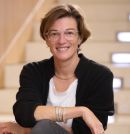
Prof. Dr. Silvia Cappello is a Research Group Leader at the Biomedical Center Munich (BMC) , Ludwig Maximilian University Munich, specializing in Molecular & Developmental Neuroscience . Her work bridges Biomedical Neuroscience and Cellular & Systems Neuroscience with a focus on neurodevelopmental disorders. Research interests include: Molecular mechanisms of neuronal migration Neurogenetic disorders and cortical development Neuronal evolution and disease modeling Recent publications highlight her contributions to understanding neuronal migration anomalies using cerebral organoids and developmental genetics. She has been recognized by Faculty of 1000 for her work on cadherin receptor mutations. Key collaborations and students: Co-advised Dr. Isabel Buchsbaum (Graduate GSN Student) Collaborated with leading institutions including University of Otago, Max Planck Institute, and Medical University of Vienna
Professor Heinrich Kuhn serves as Professor of Business Administration, Supply Chain Management & Operations at the Ingolstadt School of Management, Catholic University of Eichstätt-Ingolstadt. His extensive research focuses on planning and control of production systems, flexible production planning, JIT and flow production systems analysis, maintenance, and queueing theory. With a prolific publication record spanning decades, he has established himself as a leading scholar in operations research and supply chain management. His research interests encompass Supply Chain Management, Operations Research, Production Planning, Retail Logistics, Queueing Theory, and Inventory Management. Professor Kuhn has developed innovative approaches for optimizing retail fulfillment processes, managing assortment planning, improving inventory accuracy, and addressing complex production planning challenges. His work bridges theoretical operations research with practical applications in retail and manufacturing industries, with particular emphasis on omnichannel retailing, grocery operations, and sustainable logistics solutions. His research demonstrates consistent evolution from foundational production planning systems to addressing contemporary challenges in digitalized retail environments. Professor Kuhn's recent publications (2021-2024) reveal a strong focus on retail logistics challenges, particularly in grocery retailing during the pandemic, drone delivery systems, vehicle routing optimization, and inventory management. His research shows a clear progression toward addressing digital transformation in retail, sustainable practices, and the integration of physical and online retail channels. The work demonstrates sophisticated methodological approaches including advanced optimization algorithms, simulation modeling, and empirical analysis of retail operations. Throughout his career, Professor Kuhn has maintained extensive collaborations with researchers including A. Holzapfel, A. Hübner, M. Sternbeck, and others. His research provides valuable decision support tools for retail operations, supply chain design, and production planning, with practical applications across multiple industries. His work continues to influence both academic discourse and industry practices in supply chain management and operations research.
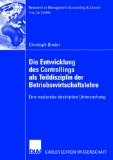
Prof. Dr. Christoph Binder serves as a Professor and Dean of Studies at Reutlingen University within the ESB Business School in Reutlingen, Germany. His academic career centers on Management Accounting, specifically Controlling and Internal Accounting, where he maintains active teaching and administrative responsibilities. His research interests include: Management Accounting (Controlling) as an academic discipline Cost Management systems and Key Performance Indicators Accounting History in German-speaking contexts Strategic Management Consulting frameworks Bibliometric analysis of academic literature His publication record from 2002-2008 demonstrates sustained investigation into controlling's historical evolution, particularly through citation analyses of German-language journals (1970-2003). Key contributions examine generational changes in academic positions, the influence of practical cost accounting standards on research, and future research directions emphasizing empiricism and teaching integration. No scientific awards were documented in the source materials. Information regarding student advising, research grants, or laboratory affiliations was not specified in the available information.
Professor Jörg Hähner holds the Chair of Organic Computing at the University of Augsburg's Faculty of Applied Computer Science within the Institute of Computer Science. He leads a research team focused on evolutionary computation, self-organizing systems, and intelligent computing approaches. His educational background includes computer science studies at TU Darmstadt. His academic career progression shows steady advancement in the field of organic and self-organizing computing systems. Prof. Hähner's research spans multiple interconnected domains in computational intelligence. His primary focus is on Organic Computing, which involves developing systems that can adapt and self-organize in complex environments. Within this framework, he has made significant contributions to Evolutionary Algorithms, particularly Cartesian Genetic Programming and Learning Classifier Systems. His work explores how these techniques can be applied to real-world problems such as predictive maintenance, energy systems optimization, and industrial automation. The research demonstrates a strong emphasis on both theoretical foundations and practical applications of self-adaptive systems. An analysis of his recent publications reveals a strong concentration on evolutionary computation techniques, particularly Cartesian Genetic Programming variants and Learning Classifier Systems. His research group has been actively developing frameworks like CRust_GP and GRAHF to advance modular construction of evolutionary algorithms. There's a clear trend toward applying these techniques to industrial problems including predictive maintenance, resource allocation in networks, and energy management systems. The publications show consistent exploration of fundamental questions about algorithm behavior while maintaining strong connections to practical applications. Prof. Hähner leads an active research group with numerous PhD students and collaborators, including Karen Poloczek, Henning Cui, Victor Gerling, Dr. Michael Heider, Marco Hüller, Neele Kemper, Helena Stegherr, Jonathan Wurth, and Roman Sraj. His team regularly publishes in top-tier conferences and journals in evolutionary computation, intelligent systems, and industrial applications. The Organic Computing research group maintains a strong presence in both theoretical and applied research, with projects spanning from foundational algorithm development to industrial applications in manufacturing, energy systems, and network optimization. The group's work demonstrates a cohesive research vision centered on creating adaptive, self-organizing computational systems that can operate effectively in complex real-world environments.
Professor Dr. Christian Landau is a faculty member at EBS Business School, where he holds the Professorship of Strategic Management since 2015. As Dean since 2019, he oversees the management and strategic development of the institution. He previously served as Vice Dean for Teaching (2017–2019) and Assistant Professor of Competitive Strategy (2010–2015), alongside visiting roles at the University of California, Berkeley, Tongji University, and SP Jain Institute of Management. He is co-founder and director of the European Strategy Institute (ESI). Degree in Industrial Engineering from Technical University of Berlin MBA from Salisbury University, USA Doctorate from University of Erlangen-Nürnberg His research focuses on strategic management, innovation, technology, and entrepreneurship, with publications in journals like the Journal of Product Innovation Management, Schmalenbach Journal of Business Research, and R&D Management. His work explores business model innovation, venture life cycles, and open innovation contests. He has also contributed to understanding customer resistance and multitasking impacts on consumer decisions. Professor Landau has held visiting research and teaching positions at prestigious institutions and actively engages in executive education. His professional expertise spans over 15 years in research, teaching, and academic leadership.
Prof. Dr. Rita Triebskorn is a Full Professor of Animal Physiological Ecology at the University of Tübingen since October 2024, following her role as Extraordinary Professor from 2006-2024. She serves as Group Leader at the Institute for Evolution and Ecology, Animal Physiological Ecology Section, and heads the Steinbeis-Transfer Center for Ecotoxicology and Ecophysiology in Rottenburg. Her research focuses on contaminant effects in freshwater ecosystems, particularly examining how pollutants impact fish and invertebrate health across biological levels from cellular to ecosystem scales. Her educational background includes: PhD in Zoology from the University of Heidelberg (1990) State examination in Biology and German Literature from the University of Heidelberg (1987) Habilitation from the University of Tübingen (1999) Research Scientist positions at University of Tübingen, University of Hohenheim, and LONZA Ltd, Basle and Visp, Switzerland Prof. Triebskorn's research spans aquatic and terrestrial ecotoxicology with expertise in contaminant and stress effects in biota using biotests and biomarkers. Her work examines the effects of metals, organic pollutants, pesticides, microplastics, and pharmaceuticals on fish, molluscs, and other invertebrates. She employs histology, histopathology, enzymology, and behavioral analysis to assess contaminant impacts. Her laboratory investigates the mode of action of molluscicides and optimization of wastewater treatment plants to improve aquatic ecosystem health. She has pioneered research on combined stressor effects, particularly interactions between microplastics and pharmaceuticals in freshwater systems. Analysis of her publication record reveals a consistent trajectory from organotin compound research in the 1990s to contemporary investigations of emerging contaminants including microplastics, antidepressants, metformin, and glyphosate. Her work demonstrates how these contaminants affect fish physiology, behavior, and development across multiple life stages, often examining complex interactions between multiple stressors. She has made significant contributions to understanding how wastewater treatment plant upgrades can improve aquatic ecosystem health, particularly through activated carbon filtration. Her scientific recognition includes: Appointed member of the Expert board for the assessment of micropollutants of the Federal Ministry of the Environment (BMU) since 2020 Member of the EU Working group Chemicals for derivation of UQN since 2020 Appointed member of the KBwS Commission for the assessment of pollutants hazardous to water since 2019 Member of RiSKWa Toxicology committee since 2013 Member of the steering committee of the BMBF funding framework Risk management of emerging pollutants since 2012 Member of standardization committees VDI/DIN Effects of environmental pollutants on wildlife animals – fish since 2009 Prof. Triebskorn has coordinated numerous major research projects including Glymic (2020-2023) on glyphosate effects in brown trout, Success control for the expansion of the Tübingen wastewater treatment plant (2018-2023), MiWa: Microplastics in the Water Cycle (2016-2019), Effect-Net (2015-2020), and several others dating back to 1995. She has served as coordinator for multi-partner consortia, including the RiSKWa consortium SchussenAktivplus with 21 partners (2012-2015). Her work has received substantial funding from BMBF, Ministry of the Environment of Baden-Württemberg, and UBA, reflecting the policy relevance of her research on water quality and contaminant effects. Her laboratory at the University of Tübingen employs a multi-level approach from molecular biomarkers to whole organism responses, with particular expertise in fish and invertebrate models. Current work emphasizes complex interactions between multiple stressors in aquatic environments and developing practical solutions for water quality improvement. The research has direct implications for environmental policy and water management practices in Germany and beyond.
Nathalie Bredella is a Professor of Architectural Theory at the Institute for History and Theory of Architecture , Leibniz University Hannover. Her academic career spans institutions including TU Berlin, Cooper Union, ETH Zurich, Bauhaus-University Weimar, and Leuphana University Lüneburg. She has held visiting professorships at the Berlin University of the Arts (UdK), Karlsruhe Institute of Technology (KIT), Technical University of Munich (TUM), and a guest lecturer at ETH Zurich. Doctorate in Architectural Theory from Leibniz University Hannover Habilitation at ETH Zurich’s Department of Architecture Her research intertwines architectural theory , media studies , and computational design , with a focus on gender theory , digital tools , and material cultures . Recent publications like The Architectural Imagination at the Digital Turn (2022) highlight her analysis of digital technology's transformation of architectural practice. Her 2017 work on Building Information Modeling (BIM) underscores her expertise in computational workflows. Analysis of her 15 most recent articles (2013–2024) reveals recurring themes: media-architecture integration , algorithmic design , gendered digital spaces , material agency , sensory environments , and historical computing practices . These include interviews, journal papers, and book chapters published across Springer , Birkhäuser , and transcript Verlag platforms. Scientific recognition includes: Research Fellow at Bauhaus University’s IKKM (2017) Research Fellow at Leuphana University’s MECS (2013) While no direct information about students is provided, her editorial leadership in works like Utopia Computer: The 'New' in Architecture? (2023) and Infrastrukturen des Urbanen (2013) reflects a deep engagement with academic discourse.
Prof. Dr. Sandra Tänzer is a full professor at the Faculty of Education , University of Erfurt, holding the Professorship for Pedagogy and Didactics of General Education since 2011. She leads multiple subprojects within university learning workshops, including QUALITEACH , the eduroom - Workshop for Media Education , and local history initiatives in the DuT project. Research Interests: Teacher training, university learning workshops, historical developments in GDR education, and curriculum planning. Affiliations: Faculty of Education (University of Erfurt), Erfurt School of Education, Goethe University Frankfurt. Publications focus on university learning workshops, GDR-era educational materials, and interdisciplinary teacher training. She co-edits the Primary School Science Instruction magazine and contributes to educational reform dialogues. Projects include longitudinal studies on teacher professionalization, GDR historical education analysis, and sustainable learning cultures in teacher education. She emphasizes materiality, aesthetics, and reflective practice in educational settings.
Dr. phil. Dirk Schuck is a Research Associate at the University of Erfurt's History Department since 2021, working on the subproject A03: Property and Habit within the CRC TRR294 'Structural Change of Property'. Doctorate in Political Science (2016), University of Leipzig Master's in Philosophy (2007), Goethe University Frankfurt His research focuses on: Political anthropology of property – analyzing ownership's role in habit formation and societal structures (19th century Germany, global contexts). Moral philosophy – comparative studies of David Hume and Adam Smith's theories of compassion and social stability. Liberalism's evolution – historical transformations of individual autonomy from John Locke to modern educational systems. Postwar German ethics – continuity and rupture in bourgeois vs. Nazi moral philosophy. Key publications examine: Enlightenment thought – comparative analysis of Hegel, Scottish Enlightenment's retroactive necessity concepts. Empathy cultivation – critique of economic education models in the Bologna system. Cross-cultural normative frameworks – Liberalism and Confucianism in contemporary China-Europe relations. Historical memory – persistent Nazi mentality in postwar Germany through edited volumes. His work combines DFG-funded collaborative research with editorial contributions to academic series like Gothaer Forschungen zur FNZ .
Georg Stauch is a Professor at the University of Würzburg, holding the Chair of Geomorphology within the Institute of Geography and Geology, Faculty of Philosophy. His research spans multiple continents with particular focus on the Tibetan Plateau, Gobi Desert, and Central European reservoir systems. He employs advanced remote sensing techniques including Google Earth Engine and UAV photogrammetry to investigate landscape evolution and human-environment interactions. Stauch's research focuses on geomorphological processes in arid and high-mountain environments, with particular emphasis on sediment dynamics, climate change impacts, and anthropogenic influences. His work integrates field observations , remote sensing data , and sediment analysis to understand landscape evolution across various temporal scales. Recent research has increasingly incorporated microplastic analysis as a novel tool for dating sedimentary archives and understanding pollution history. His publication record reveals strong trends in utilizing multi-decadal satellite imagery to track dune migration rates across the Tibetan Plateau and Gobi Desert regions, while simultaneously investigating reservoir sedimentation as archives of human industrial activity in Central Europe. The integration of traditional geomorphological methods with modern cloud computing approaches represents a distinctive methodological signature across his recent work. Stauch actively contributes to educational innovation through projects like smartphone-based 3D landform mapping and XR technologies for geographical spatial analysis. His research group participates in multiple collaborative projects examining disaster risk, resilience, and environmental change across diverse global settings.
Professor Carolin Wendling is a faculty member at the Graduate School Life Science Munich, Ludwig-Maximilians-University Munich (LMU), where she leads the Medical Microbiology research group. Her work focuses on bacterial evolution, mobile genetic elements, and phage therapy applications in gut infections. Professor for Medical Microbiology, LMU (2024–present) W2 Professorship, Max von Pettenkofer Institute (2024–present) Research Group Leader, ETH Zurich (2019–2024) Postdoctoral Fellowships, University of Kiel, University of York, University of Zurich Her research explores how phage-bacteria interactions shape antimicrobial resistance, virulence, and gut health. Key projects include prophage dynamics in microbial communities and optimization of phage therapy strategies. She employs molecular biology, genomics, and mathematical modeling across clonal populations to complex ecosystems. Recent publications highlight her expertise in prophage-mediated genetic transfer, environmental influences on phage epidemics, and Vibrio pathogen evolution. Her work has been recognized through competitive fellowships like the SNSF Ambizione grant. Prophage maintenance mechanisms (Current Biology, 2024) Phage therapy optimization (Current Opinion in Systems Biology, 2023) Plasmid-phage interactions (Phil Trans B, 2022) Vibrio genomics and adaptation (Microbial Genomics, 2022) As a mentor, she supervises PhD and Master’s students while leading a multidisciplinary team integrating experimental and computational approaches to microbial evolution.
Dietmar Seipel is a Professor at the University of Würzburg, affiliated with the Department of Computer Science within the Faculty of Mathematics and Computer Science. He has held this position since November 1995, establishing a distinguished academic career spanning over 25 years with significant contributions to logic-based computer science. Professor Seipel's research focuses on Logic Programming and Deductive Databases, with substantial expertise in Knowledge Engineering and Artificial Intelligence. His scholarly work bridges theoretical foundations with practical applications, particularly in rule-based systems, knowledge representation, and declarative programming paradigms. He has consistently advanced the field through both theoretical developments and practical implementations, creating tools that enable more effective knowledge management and reasoning systems. His publication trajectory demonstrates a clear evolution from foundational work in disjunctive logic programming to contemporary applications in knowledge representation and semantic technologies. Recent research shows continued innovation in integrating logic programming with modern programming languages and systems, including Python and JavaScript implementations. His work spans theoretical contributions to practical tool development, with applications across diverse domains including space systems, medical informatics, and business process management. Professor Seipel has made extensive contributions to the academic literature, with publications appearing consistently from the 1980s through to the present. His work has influenced both theoretical developments in logic programming and practical applications in knowledge-based systems. He has been actively involved in academic community building through conference organization, particularly for events related to declarative programming and knowledge management.
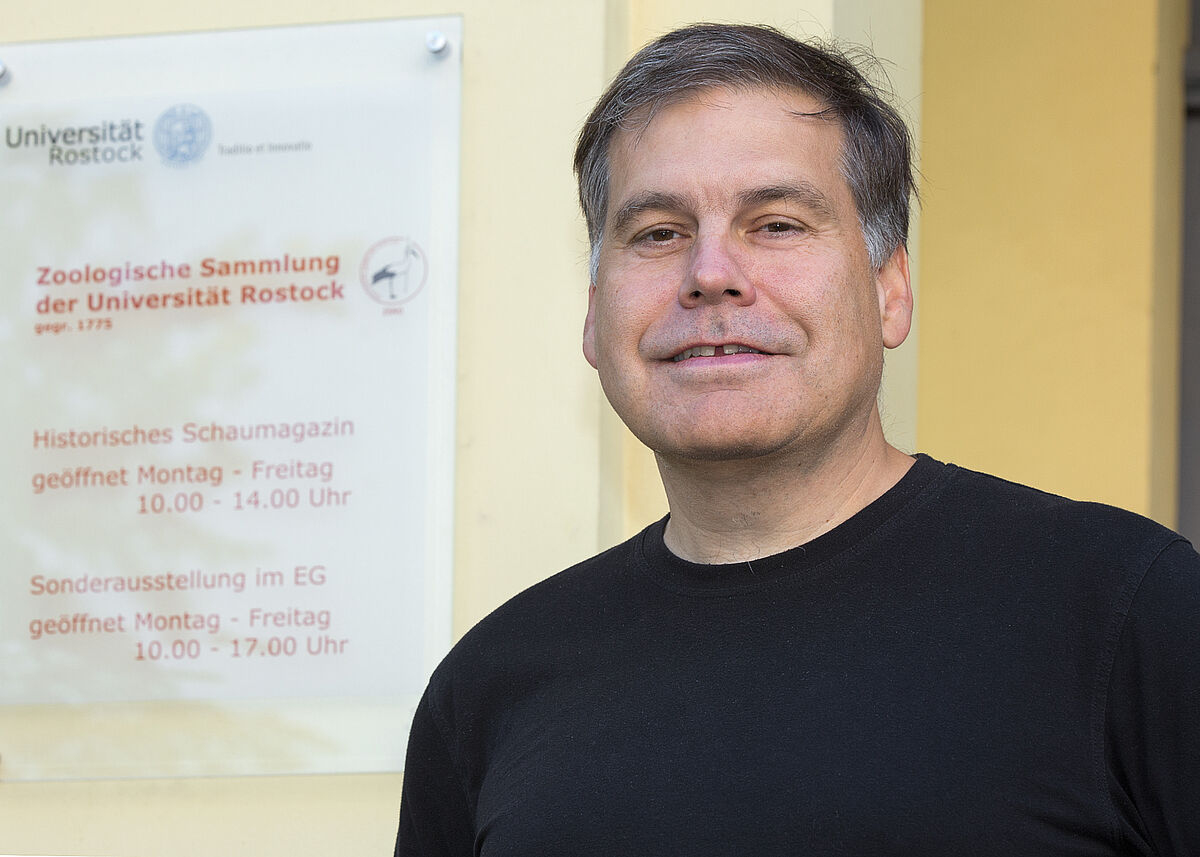
Prof. Dr. Stefan Richter is a faculty member at the University of Rostock , affiliated with the Institute of Biosciences under the Faculty of Mathematics and Natural Sciences . His research focuses on General and Special Zoology , with significant contributions to crustacean morphology, phylogenetic systematics, neuroanatomy, and evolutionary biology. Research Interests : Crustacean evolutionary morphology, phylogenetic methodologies, comparative neuroanatomy, biogeography, and evolutionary developmental biology. Contact : Universitätsplatz 2, 18055 Rostock, Germany | Tel: +49 381 / 498-6260 | Email: stefan.richter@uni-rostock.de His work explores the interplay between morphological adaptation, genetic variation, and evolutionary constraints across diverse crustacean groups, including decapods, branchiopods, and malacostracans. Recent studies examine limb asymmetry in hermit crabs, compound eye evolution in prawns, and mitochondrial genomic insights into mountain shrimps. Richter actively contributes to debates on homology concepts and character dependency frameworks in phylogenetic analysis. Key publication trends include: Evolutionary Morphology of crustacean appendages (maxillipeds, chelae, thoracopods) Phylogenomics of Malacostraca and Branchiopoda Neuroanatomical Studies in Cephalocarida and Mystacocarida Biogeographical Investigations of Tasmanian freshwater species Methodological Advances in character dependency analysis Debates on homology, synapomorphy, and evolutionary concepts He serves on editorial boards and participates in academic governance, emphasizing interdisciplinary approaches to understanding crustacean evolution and its broader implications for arthropod systematics.
Christine Reh is Professor of European Politics at the Hertie School in Berlin. She previously served as Dean of Graduate Programmes (2018-2022) and held academic positions at the College of Europe (Bruges) and University College London . Her research focuses on EU institutions, politicisation, and legitimacy, particularly analyzing informal governance and national electoral influences on supranational decision-making. PhD from European University Institute (Florence, Italy) in 2007 Editorial Board Member, Journal of European Public Policy Co-Editor, European Union series at Bloomsbury Press Her research explores: EU decision-making under ideological gridlock Impact of domestic politics on European Commission agendas Politicisation-depoliticisation strategies in EU institutions Legitimacy challenges in multilevel governance Codecision procedures and informal legislative practices Consensus-building in European integration Key publication themes include: Trilogue negotiations and early agreements European Council's legislative authority European Parliament's intra-organisational politics Accountability mechanisms in EU financial governance Normative assessments of informal politics She teaches graduate courses on: EU politics and policy-making European Union governance Qualitative research methods Climate policy in Brussels Contact: reh@hertie-school.org | Office hours: Mondays 2-4pm (Room 2.50)
Rosa Hesse is a Lecturer in the Institute of English Philology (WE6) at Freie Universität Berlin , part of the Department of Philosophy and Humanities. She is based at Habelschwerdter Allee 45, Room JK29/223, and can be contacted via email at r.hesse@fu-berlin.de. Her work bridges theoretical and applied linguistics, with a focus on syntactic and morphological structures, sociolinguistic dynamics, and computational approaches to language study. Research Focus: Her research explores the intersection of syntax , morphology , and sociolinguistics , particularly in multilingual urban environments and modern English dialects. She also contributes to cognitive linguistics and historical philology , analyzing idiomatic expressions and medieval manuscripts. Publications: Recent work highlights interdisciplinary trends, such as integrating computational models to study syntactic patterns and examining cross-linguistic complexity in language acquisition. Her studies often combine empirical analysis with theoretical frameworks from cognitive and historical linguistics. Institute Involvement: She participates in academic events like introductory sessions for first-year students in the BA English Philology and MA English Studies programs, underscoring her role in departmental teaching and student mentorship.