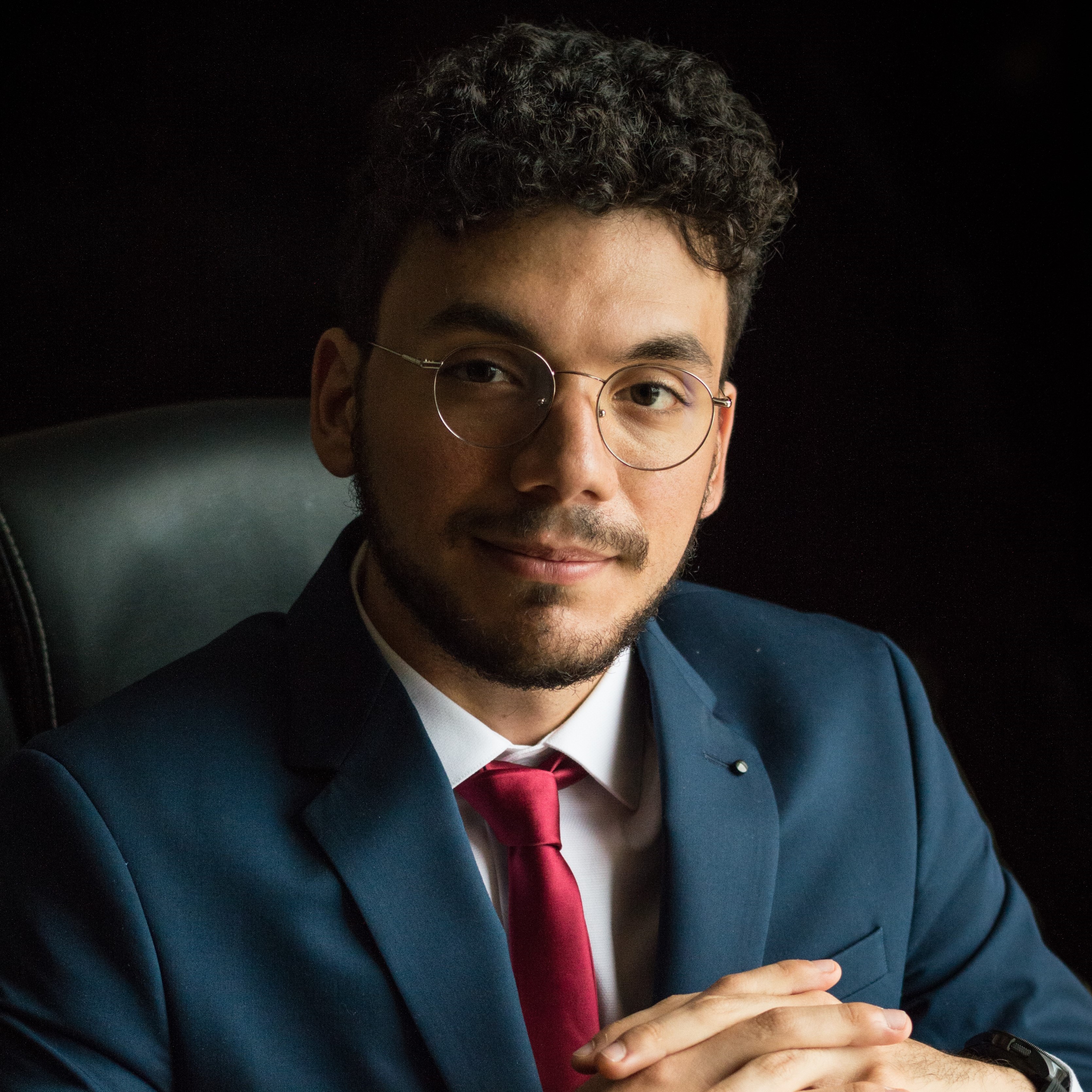
Aldo Gangemi is a Full Professor in the Department of Philosophy at the University of Bologna, specializing in Informatics (INFO-01/A). His research integrates Semantic Technologies, Natural Language Processing, Data Science, and Cognitive Science to address challenges in knowledge representation, ontology engineering, and cultural heritage informatics. He co-founded the STLab at ISTC-CNR and DHARC at the University of Bologna, and is on leave from Sorbonne Paris Nord University (Computer Science Lab - LIPN). Scientific roles include serving as area chair for Web Semantics , editorial board member for Semantic Web and Applied Ontology , and conference chairs for major events like WWW2015 and ESWC2018. He has led European projects such as GALEN, WonderWeb, NeOn, and MARIO, and developed software tools like FRED, Aemoo, and Framester. Research interests focus on semantic technologies, knowledge patterns, and applications in humanities, medicine, law, and fisheries. Over 250 peer-reviewed publications span these areas, with emphasis on ontology-based knowledge integration, multimodal reasoning, and ethical AI. His work bridges cognitive science and technological innovation, particularly in virtual reality's societal applications and cultural heritage preservation. Notable contributions include the PRIVAFRAME knowledge graph for sensitive data, the ImageSchemaNet ontology for embodied cognition, and the Sandra neuro-symbolic reasoner. His interdisciplinary approach addresses challenges in AI ethics, creative systems, and citizen-driven data curation.
Luca Demetrio is an Assistant Professor at the University of Genoa, Italy, specializing in adversarial machine learning and cybersecurity. Previously, he was a Post-doctoral Researcher at the PRA Lab within the Department of Electrical and Electronic Engineering at the University of Cagliari. He holds bachelor's (2015), master's (2017), and Ph.D. (2021) degrees from the University of Genova, with his doctoral thesis focusing on formalizing evasion attacks against security detectors. His research emphasizes enhancing the robustness of machine learning models against adversarial attacks, particularly targeting malware detectors, SQL injection defenses, and Windows security systems. He leads the development of SecML Malware, a Python library for generating adversarial Windows malware, and contributes to the SecML framework. His work has been published in top-tier journals like ACM TOPS and IEEE TIFS. Key research interests include adversarial example generation, malware analysis, and cybersecurity defense mechanisms. He has explored query-efficient attacks on phishing detectors, certified adversarial robustness via randomized smoothing, and robust synthetic data-driven threat detection. His recent studies (2023–2025) address challenges in hardening machine learning models against evasion attacks, adversarial SQL injection countermeasures, and securing autonomous driving systems from adversarial reinforcement learning attacks.
Stefano Grivet-Talocia is a Full Professor at the Department of Electronics and Telecommunications at the Polytechnic University of Turin, where he also serves as Director of the Doctoral School and President of the Doctoral School Council. He is a member of the Interdepartmental Center SmartData@PoliTO - Big Data and Data Science Laboratory, the University Committee for Research, Technology Transfer and Services to the Territory, and the Commission for the Promotion of Library, Archive and Museum Heritage. His academic career spans over two decades at Politecnico di Torino, where he has established himself as a leading researcher in electromagnetic modeling and signal integrity. Grivet-Talocia earned his Laurea degree (summa cum laude) in Electronic Engineering in 1994 and his Ph.D. in Electronic and Communication Engineering in 1998, both from the Polytechnic University of Turin. Between 1994 and 1996, he conducted research at NASA/Goddard Space Flight Center in Greenbelt, Maryland. His educational background laid the foundation for his expertise in electromagnetic modeling, wavelet analysis, and signal processing. His research focuses on behavioral modeling, electromagnetic compatibility, macromodeling, model order reduction, numerical modeling, passivity, power integrity, signal integrity, transmission lines, and wavelets . Grivet-Talocia is particularly renowned for his work on passive macromodeling of interconnect structures, development of the TOPLine technique for transmission line simulation, and pioneering contributions to passivity enforcement algorithms. He has co-authored the first book entirely dedicated to Macromodeling (2016) and developed innovative approaches to waveform relaxation and wavelet-based signal processing. His recent publications (2024-2025) demonstrate continued leadership in model order reduction, with significant contributions to data-driven modeling of linear and nonlinear systems, power integrity analysis, and electromagnetic compatibility. His work spans both theoretical advances in numerical methods and practical applications in circuit design, with strong industry relevance particularly for semiconductor and electronic design automation companies. IEEE Fellow (2018-present) Three Intel SRS Grants (2022-2024) Three IBM SUR Grant Awards (2007-2009) Best Associate Editor Award - IEEE Transactions on Components, Packaging and Manufacturing Technology (2020) Multiple Best Conference Paper Awards (2006-2020) URSI Young Scientist Awards (1999) Ranked among the "top 2% worldwide researchers" (Stanford) since 2019 Grivet-Talocia actively supervises doctoral students including Michele Cusano, Sara Paknezhad Panahi, Antonio Carlucci, and Kun Zhao. He has secured numerous research grants from competitive national calls (PRIN) and commercial contracts with industry partners including Intel, IBM, Nokia, Hitachi, Infineon, and Cadence. His technology transfer activities include co-founding the spin-off IdemWorks (2007-2016), which was acquired by CST in 2016. He also developed the autoCircuits web service for automated circuit problem generation, widely used in electrical engineering education. He leads the EMC Group (Electromagnetic Compatibility) at DET and has been instrumental in establishing the Compact Dynamical Modeling research area. His work has practical applications in high-speed electronics design, with algorithms embedded in commercial tools like IBM PowerSPICE. Grivet-Talocia maintains strong industry connections through his research projects and serves as Associate Editor for IEEE Transactions on Components, Packaging and Manufacturing Technology.
Asunción Gómez Pérez is a Spanish computer scientist and Full Professor at the Technical University of Madrid (UPM) . She currently serves as Vice-Rector for Research, Innovation and Doctoral Studies at UPM and holds a seat at the Real Academia Española . She has authored over 300 publications and accumulated 20,000 citations. Education : PhD in Computer Science (UPM, 1993), MBA (Comillas Pontifical University) Leadership Roles : Director of the Department of Artificial Intelligence (2008–2016), Academic Director of AI Master’s/PhD programs (2009–2016), Executive Director of UPM’s Artificial Intelligence Lab (1995–1998) Her research focuses on Semantic Web and Ontology Engineering , with applications in knowledge representation, machine-machine communication, and multilingual data integration. She pioneered methods for ontology validation, metadata licensing, and AI-driven social inclusion. Key publication trends include: Ontology evaluation frameworks (e.g., OOPS!) Linked Data quality models and validation tools Multilingual and cross-lingual AI applications Interoperability solutions for smart cities and healthcare Machine Learning for social exclusion prediction Ontology-driven library and lexicography systems Scientific Awards Fellow of the European Academy of Sciences Ada Byron Prize She has led projects like the NeOn Methodology for ontology development and contributed to the European framework for linked data rights (LD Terms). Her work bridges theoretical research with practical implementations in AI and Semantic Technologies.
Diego Calvanese is a Full Professor in Computer Engineering at the Faculty of Engineering of the Free University of Bozen-Bolzano, Italy. He serves as Spokesperson of the Institute of Computer Science and Artificial Intelligence and Director of the Smart Data Factory technology transfer lab at NOI Techpark. As Coordinator of the Intelligent Integration and Access to Data (In2Data) research group, part of the Research Centre for Knowledge and Data (KRDB), he leads significant research initiatives in knowledge representation and data management. Calvanese's research focuses on virtual knowledge graphs for data access and integration, ontology-based data access, description logics, semantic web technologies, graph data management, and verification of data-aware processes. His work bridges theoretical foundations with practical applications through the Ontop framework, which enables SPARQL query answering over OWL 2 QL ontologies connected to external data sources. His research has substantial practical impact, powering the South Tyrol Open Data Hub Knowledge Graph and supporting numerous European and national research projects. With more than 400 refereed publications and over 39,000 citations (h-index 80), Calvanese's recent work demonstrates continued leadership in virtual knowledge graphs, ontology-based data federation, explainable AI through knowledge representation, and integration of complex data types including 3D city models and raster data. His publications show a clear trajectory from theoretical foundations toward increasingly practical and applied research addressing real-world data integration challenges across multiple domains. ACM Fellow (2019) EurAI Fellow (2015) AAIA Fellow Program Chair of PODS 2015 and KR 2020 General Chair of ESSLLI 2016 Calvanese has secured significant research funding through numerous competitive projects including EU H2020 INFRAEOS Project (INODE), Italian PRIN Project (HOPE), FESR Project (IDEE), and EU FP7 IP Project (Optique), totaling close to 6.4M Euro. As an originator and co-founder of Ontopic, the first spin-off of the Free University of Bozen-Bolzano, he has successfully translated research into commercial applications. He serves as Associate Editor of Artificial Intelligence (AIJ) and has participated in over 200 program committee roles for international conferences. As Director of the Smart Data Factory technology transfer lab and coordinator of the In2Data research group, Calvanese bridges academic research with industry applications, focusing on practical implementations of knowledge graph technologies. His work with the KRDB Research Center has established Bozen-Bolzano as a significant hub for knowledge representation and data management research in Europe.
Marco Badami is a Full Professor at the Department of Energy (DENERG) , Polytechnic of Turin. He serves as Scientific Director for national and EU-funded research projects in energy systems and has been a Course Lecturer for Energy Systems and Industrial Use of Energy since 2010. He supervises PhD students in Energetics and Electrical Engineering . Research Interests: His work spans energy systems optimization, machine learning applications for industrial energy efficiency, smart grids, cogeneration scheduling, blockchain-based energy data immutability, and predictive maintenance algorithms for photovoltaic plants. Current projects focus on AI-driven energy audits, optimized control systems for industrial microgrids, and digital twin architectures. Collaborations: He works with Trigenia Srl, Stogit SpA, and international institutions on commercial research contracts. His scientific contributions include 15+ publications on topics like LSTM forecasting for solar energy, deep reinforcement learning for multi-energy systems, and decentralized peer-to-peer energy trading platforms.
Andrea Appolloni is an Associate Professor at the Department of Management and Law, University of Rome Tor Vergata. His academic career focuses on Management with emphasis on Sustainable Supply Chain Management , Digital Transformation , and Circular Economy . His research explores the intersection of technological innovation and sustainability, particularly through topics like AI in Logistics , Green Procurement , and Policy Optimization . Publications span both theoretical frameworks and empirical studies in China, Italy, and Malaysia, with a strong focus on environmental impact and organizational performance. Recent work includes digital twin applications for human-AI collaboration, blockchain integration in sustainable supply chains, and analyzing barriers to circular economy adoption. His 15 most recent articles (2025-2022) demonstrate a trend toward combining Artificial Intelligence , Operations Management , and Environmental Governance .
Marco Picone is an Associate Professor at the Department of Sciences and Methods for Engineering (DISMI) of the University of Modena and Reggio Emilia. He leads the Distributed and Pervasive Intelligence (DIPI) Group and holds a PhD in Information Technology from the University of Parma. His postdoctoral research at the University of Parma (2012-2015) and a visiting scholar position at the University of Cambridge (2011) further enriched his expertise. He is nationally qualified as an Associate Professor by MIUR (2020). Education: PhD in Information Technology, University of Parma (Italy) M.Sc. (cum Laude) in Computer Engineering, University of Parma Visiting Researcher, NetOS Group, University of Cambridge (UK) His research focuses on Distributed Systems , IoT , Edge Computing , and Digital Twins , emphasizing their applications in smart industries and cities. He has supervised postdocs (e.g., Matteo Martinelli) and PhD students (e.g., Enrico Rossini) on topics like Digital Twin Continuum and Edge-Cloud Systems. Teaching spans courses on Intelligent IoT , Distributed IoT Software Architectures , and Edge Computing , with a focus on lab-based learning and industry-relevant projects. He actively contributes to open-source frameworks like the White Label Digital Twin (WLDT) and collaborates on initiatives such as the Web of Digital Twins (WoDT). Research collaborations include projects on smart city data fusion, livestock waste management, and Industry 5.0 human-centric systems. His work bridges theoretical advancements with practical implementations in cyber-physical environments.
Alexander Kocian is an Assistant Professor at the Department of Computer Science, University of Pisa. He holds a Ph.D. in Electrical and Electronic Engineering from Aalborg University (Denmark) and a Master's in Electrical Engineering from TU Vienna (Austria). His research focuses on Machine Learning, IoT, Agro Informatics, Health Informatics, and Real-time embedded systems. He has led major projects like AGRITECH (€40M funded by PNRR) and FuorisuoloSmart, advancing smart agriculture and healthcare technologies. Dr. Kocian serves as IEEE Senior Member (since 2024) and EAI Fellow (since 2022). He is Associate Editor of IEEE Access (2025–present), and Editorial Board member of Stats (2019–present) and Signals (2020–present). He has organized conferences like the EAI Int. Conf. on Intelligent Transport Systems (INTSYS) as General Chair (2024) and Steering Committee Member (2023). His work includes 50+ peer-reviewed publications, 4 patents, and contributions to telemedicine platforms like TESHEALTH (ESA-funded). Key projects span precision farming, IoT-based greenhouses, and AI-driven healthcare solutions. Current efforts emphasize data spaces for agritech and health informatics interoperability.
Davide Cassi serves as Associate Professor of Physics of Matter at the University of Parma's Department of Mathematical, Physical and Computer Sciences since 2001, following his appointment as Researcher in Theoretical Physics (1995-2001). With over 30 years of academic service, he teaches Condensed Matter Physics, Soft Matter Physics, and Physics Applied to Gastronomy across undergraduate and graduate programs in Physics and Gastronomic Science. His educational background includes: Ph.D. in Physics, University of Parma (1988-1992) Master’s degree in Materials Science and Technology, University of Parma (1986-1988) Degree in Physics, University of Parma (1982-1986) Cassi's research integrates statistical mechanics with real-world applications through two primary lenses: complex network theory for ecological and social systems, and soft matter physics applied to culinary processes. His work on biodiversity loss prediction in agricultural networks and food preservation technologies demonstrates exceptional interdisciplinary reach. Recent publications reveal a strategic pivot toward AI-driven biodiversity conservation and network robustness modeling. Analysis of his 15 most recent publications (2023-2025) shows dominant themes in network vulnerability analysis (68% of works) and food-physics applications (27%), with emerging focus on machine learning integration for ecological modeling. His research bridges theoretical physics with practical solutions in food safety and ecosystem management. Key recognitions include: Grand Prix de la Science de l'Alimentation from Académie Internationale de la Gastronomie (2012-2013) Dual National Scientific Qualifications for Full Professorship (2022) in Theoretical Physics of Fundamental Interactions and Matter Cassi's academic contributions extend beyond publications to two international patents in food preservation technology and editorial leadership since 2007 for World Scientific's Series on Advances in Statistical Mechanics . His research program demonstrates consistent translation of theoretical physics into practical applications across gastronomy and ecology, with growing emphasis on AI-enhanced network analysis for sustainability challenges.
Roberto Giorgi is an Associate Professor of Computer Engineering at the Department of Information Engineering, University of Siena, Italy. He has held this position since October 1, 2006, following his tenure as an Assistant Professor since March 15, 1999. His educational background includes a Ph.D. in Computer Engineering from the University of Pisa (1999) with a thesis on coherence protocols for shared-memory multiprocessors, and an Electronic Engineering degree (1995) with a thesis on trace-driven performance evaluation of multiprocessors. Giorgi's primary research focuses on Computer Architecture , particularly on multiprocessor/multicore issues including processor design, coherence protocols, programmability, and energy efficiency. His work spans both theoretical and practical aspects of computer architecture, with emphasis on real-world implementations and educational tools. He has coordinated significant EU-funded projects including AXIOM (2014-2018) on Smart Cyber-Physical Systems and TERAFLUX (2009-2014) on Many-Cores. His recent publications (2022-2025) demonstrate a strong progression toward practical applications of computer architecture research, with particular emphasis on RISC-V architecture, FPGA-based acceleration, dataflow computing models (especially DF-Threads), and graph processing. Many of his papers address educational tools for computer architecture education, real-time object detection on embedded platforms, and novel execution paradigms for edge computing and HPC. IEEE Senior Member ACM Lifetime Member Coordinator of EU-funded AXIOM project (2014-2018) on Smart Cyber-Physical Systems Coordinator of EU-funded TERAFLUX project (2009-2014) on Many-Cores Giorgi has been actively involved in securing research funding and building collaborations, particularly in high-performance computer architecture research with emphasis on scalable architectures and embedded systems. He leads the Computer Architecture Lab (ROOM 223) at the University of Siena, which was established in 2007, and has been instrumental in developing practical implementations of architectural concepts including the AXIOM platform for cyber-physical systems.
Eva Blomqvist serves as an Assistant Professor in the Department of Computer and Information Science (IDA) at Linköping University, Sweden. She is actively affiliated with the MDA laboratory within the Human-Centered Systems (HCS) division, focusing on critical-domain decision support systems. Her research centers on Semantic Web technologies and ontology engineering, with specialized expertise in ontology design patterns for security and crisis management applications. She pioneered the eXtreme Design methodology for agile ontology development and contributed foundational work on ontology testing frameworks, bridging theoretical knowledge representation with real-world operational systems. Analysis of her 2009-2016 publications reveals a progressive research trajectory from foundational pattern formalization to practical engineering methodologies. Her work consistently emphasizes reusable design patterns, validation techniques, and human-centered implementation within semantic technologies, establishing her as a key contributor to ontology engineering standards. No scientific awards were documented in the source material. While student advising and grant details remain unspecified in available records, her collaborative projects indicate active research leadership in ontology development. As a core member of IDA's MDA lab (HCS division), she contributes to human-centered decision analytics research, particularly developing ontology-driven support systems for high-stakes security and crisis scenarios through projects like Networked Ontologies.
Daniele Apiletti is an Associate Professor at the Polytechnic University of Turin , affiliated with the Department of Control and Computer Engineering (DAUIN). He serves as a member of the Interdepartmental Center SmartData@PoliTO and acts as Academic Advisor for the Master's degree program in Data Science and Engineering. Research Groups: DBDM - Database and Data Mining Group (DAUIN) ERC Sectors: Algorithms, Artificial Intelligence, Machine Learning, Web and Information Systems Research Interests span Big Data Analytics, Data Science, Machine Learning, Computer Vision, and Quantum Computing. His work focuses on integrating data-driven and theory-guided approaches for heterogeneous data querying, cloud continuum machine learning, and spatio-temporal models for crisis management. Recent Publications highlight trends in medical image segmentation, predictive industrial modeling, and fault-tolerant data systems. Key subfields include AI in healthcare, scalable manufacturing analytics, and vision-language models for game tutorials. Teaching roles include course ownership of Big Data: Architectures and Data Analytics and Internships across multiple academic years. He has collaborated on courses in Data Science, Database Technologies, and Data Management. PhD Students Supervised: Etibar Vazirov (Cloud Continuum Machine Learning) Gabriele Scaffidi Militone (Cloud Storage Microservices) Daniele Rege Cambrin (Spatio-Temporal Ecology Models) Simone Monaco (Theory-Guided Data Science) Research Projects include commercial contracts on: - Natural language querying of corporate research archives - National tourism ecosystem platforms - AI for thermotechnical system design - Machine Learning in clinical trials and supply chains
Francesco Greco is a Research Fellow and Ph.D. student at the University of Bari Aldo Moro's Computer Science Department, actively contributing to the Interaction, Visualization, Usability & UX (IVU) Laboratory under Prof. Maria Francesca Costabile. He completed a visiting research position at King's College London's Cybersecurity (CYS) group from October 2023 to March 2024 under Prof. Luca Viganò's supervision. His academic qualifications include: Master's degree in Computer Science (2022, University of Bari, full marks with honors) Bachelor's degree in Computer Science and Digital Communication (2020, University of Bari - Taranto, full marks with honors) Greco's research centers on Human-Computer Interaction and Usable Security , with specialized expertise in End-User Development , Internet of Things security , Computer Vision , and eXplainable AI for cybersecurity . His work develops human-centered security tools that translate technical findings into actionable user protections, particularly through phishing detection systems that generate intuitive explanations. Analysis of his 15 recent publications (2023-2025) reveals a cohesive research trajectory focused on XAI-driven security interventions . Key themes include timing optimization for phishing warnings, human factors in cybersecurity incidents, and LLM-based educational tools. His work consistently bridges theoretical HCI principles with practical security applications, as demonstrated by tools like APOLLO for phishing email analysis. Greco actively collaborates within the IVU Lab ecosystem and maintains international partnerships, including his recent work at King's College London. His research output demonstrates significant contributions to usable security frameworks and cybersecurity education methodologies.
Filippo Ubertini is Professor of Civil and Environmental Engineering at the University of Perugia, Italy, where he coordinates the International Doctoral Programme in Civil & Environmental Engineering and represents the University inside the FABRE national bridge-research consortium. He leads the Structural Health Monitoring Laboratory ( SHM-Lab ) and is the primary contact for assignments linked to smart-infrastructure research. Education: While explicit degrees are not listed in the supplied text, his role as programme coordinator and full professor implies completion of a PhD and habilitation in Civil Engineering. Research focus: Ubertini’s work sits at the intersection of smart materials and data-driven infrastructure management . He develops self-sensing cementitious composites doped with carbon micro-fibers or graphene nano-platelets that can measure strain, cracking and moisture in real time, turning whole bridges and buildings into distributed sensors. Complementary research threads include low-cost acquisition electronics, UAV & InSAR remote sensing, Bayesian & adversarial machine-learning algorithms for damage detection, digital twins and life-cycle cost analysis of bridge networks. Publication trends (2024-2025): Roughly 30 peer-reviewed items per year concentrate on (i) AI-enhanced operational modal analysis and transfer-learning damage classification across bridge populations, (ii) experimental characterisation of 3D-printed and cast self-sensing concrete, (iii) full-scale validation on curved box-girder, masonry and railway bridges, and (iv) integration of satellite radar data with numerical collapse simulations to predict residual service life of landslide-affected viaducts. Scientific awards & recognition: No specific prizes or fellowships are mentioned in the provided text. Doctoral supervision & grants: The text does not enumerate individual students or funded projects; however, his coordination of an international PhD programme and numerous experimental campaigns imply sizeable supervisory and funding responsibilities. Laboratory & team: Ubertini heads the SHM-Lab at UniPg, maintaining facilities for material mixing, 3D concrete printing, electrical impedance tomography, UAV photogrammetry, and large-scale structural testing, while collaborating with the European FABRE consortium and multiple EU projects.