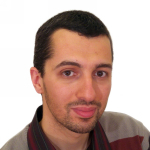
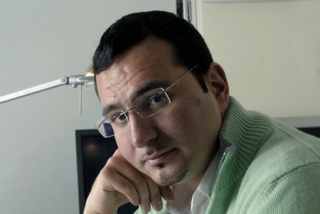
Angelo Corallo is an Associate Professor at the Department of Experimental Medicine, University of Salento, specializing in technologies and methodologies for collaborative processes in industrial systems. His research spans Digital Business Ecosystems , Cybersecurity , and Collaborative Product Design , focusing on the interplay between technology and organizational dynamics. He leads interdisciplinary research divisions in Open Networked Business Management , Learning and Innovation , and Collaborative Product Design . Research Interests : Corallo's work integrates Information and Communication Technologies (ICT) with Business Management, particularly in Digital Twins for healthcare and manufacturing Knowledge Modeling and Ontology Engineering Industry 4.0 and Smart Manufacturing Agri-Food Sustainability through digitalization Scientific Contributions : His recent articles explore trends in Cybersecurity for Industrial IoT Metaverse Applications in business models Traceability Systems in food supply chains Collagen-Based Biomaterials from aquaponics
Marco Porta is a Full Professor at the University of Pavia, Department of Electrical, Computer and Biomedical Engineering. He teaches Web and Multimedia Technologies in the Computer Engineering Master's program and Web Design and Technologies in the interdepartmental CIM Bachelor's program. His research focuses on Eye Tracking, Vision-Based Perceptive Interfaces, and Human-Computer Interaction, with recent emphasis on AI applications for human-centered systems. He leads the Computer Vision & Multimedia Lab and chairs teaching councils for CIM and CoD programs. Education: Master's in Electronic Engineering (Polytechnic of Milan) and Ph.D. in Electronic & Computer Engineering (University of Pavia). Professional roles include vice-chair of IEEE's Technical Committee on Factory Automation. Over 118 publications in journals/conferences, with contributions to biometrics, e-learning interfaces, and industrial automation. Research highlights include gaze-based authentication systems, interactive museum interfaces, and ergonomic in-vehicle infotainment evaluations. Current projects explore gaze-driven intelligent tutoring systems and public space interaction frameworks.
Marcello Pietri is a Researcher (td art. 24 c. 3 lett. A) and Contract Professor at the Department of Engineering Sciences and Methods (DISMI) at the University of Modena and Reggio Emilia. His work focuses on Information Processing Systems, with expertise in IoT, Edge Computing, and Digital Twins. He teaches courses like 'Sistemi Informativi' (Information Systems) for the Engineering Management program, emphasizing database design, SQL, and web application development with Python. His research explores advanced topics including Digital Twin integration in Industry 5.0, Fluid Computing in IoT ecosystems, and Smart City data fusion using 5G MEC architectures. He collaborates with institutions like the DIPI Lab (Distributed and Pervasive Intelligence Group), contributing to projects on telecom security, energy forecasting, and human-centric manufacturing systems. Recent publications highlight innovations in operator digital twins for workplace well-being, distributed data mesh models for IoT-edge-cloud systems, and adaptive monitoring algorithms for large-scale cloud environments. His work bridges theoretical advancements with practical implementations, addressing challenges in scalability, real-time data processing, and interdisciplinary collaboration.
Enrico Franconi is a tenured full Professor in the Faculty of Engineering at the Free University of Bozen-Bolzano, Italy. He is the founder and director of the KRDB Research Centre for Knowledge-based Artificial Intelligence, established in 2002. His research focuses on applying database, AI, and semantic technologies to address challenges in information systems design, data integration, and big data analysis. He holds leadership roles including former Vice-Rector for Research (2005-2006) and director of the European Masters Program in Computational Logic (2004-2019). His academic contributions span Description Logics, knowledge representation, and ontology engineering, with a strong emphasis on theoretical foundations and practical applications. He has led numerous EU-funded projects, including ONTORULE and SeWAsIE, and contributed to international conferences as a program committee member and keynote speaker. His work bridges theory and practice, aiming to translate foundational results into real-world solutions. He is a prolific author with an h-index of 42 and has mentored researchers in areas like semantic web technologies and conceptual modeling. Key achievements include advancing ontology-driven data integration, developing tools like ICOM for conceptual modeling, and contributing to standards for semantic web languages. He is affiliated with the Computational Logic community and actively participates in international research networks such as CAIRNE. His research has been recognized through ANVUR evaluations ranking his department among Italy’s top computer science faculties.
Ivano Malavolta is an Associate Professor in Software Engineering at the University of Urbino , focusing on energy-efficient software, software architecture, and model-driven engineering (MDE). His research bridges robotics, mobile systems, and sustainability, emphasizing empirical methods and industrial applicability. Key Research Areas: Energy-efficient software, microservices, robotics systems, collaborative modeling, mobile application performance. Affiliations: Department of Software Engineering, University of Urbino. His recent publications highlight empirical studies on energy consumption patterns in robotics, mobile apps, and AI systems. He has contributed to frameworks like the Green Software Measurement Model (GSMM) and tools for architectural technical debt analysis. Notably, he has co-authored 15+ peer-reviewed articles in venues such as Journal of Systems and Software , Information and Software Technology , and ACM/IEEE conferences . His work often involves cross-platform comparisons (e.g., Electron vs. Web, Pandas vs. Polars) and systematic mappings of software engineering practices.
Giuseppe Desolda is an Associate Professor at the Computer Science Department of the University of Bari Aldo Moro , where he has been since July 2, 2022. He leads research at the Interaction, Visualization, Usability & UX (IVU) Lab , focusing on Novel Interaction Techniques , Internet of Things development, and Usable Security . His work includes coordinating the PRIN PNRR DAMOCLES project (2022-2025) on human-centric cybersecurity and leading Work Package 1 of PNRR SERICS. PhD in Computer Science from University of Bari Co-author of over 110 publications Associate Editor for IEEE Access Journal Research interests span Human-Computer Interaction (HCI), End-User Development (EUD) for IoT, and Usable Security systems. His recent work explores AI-driven usability evaluation, voice-based 3D modeling, and GDPR-compliant software frameworks. Article trends show focus on phishing mitigation , smart environment customization , and privacy-by-design methodologies. Publications appear in TOCHI , FGCS , IJHCS , and BIT . Scientific achievements include: Selected for Heidelberg Laureate Forum (2019) LARE spin-off grant (EUR 50,000, 2013) He supervises PhD students Andrea Esposito and Francesco Greco, and has advised multiple funded research projects (PRIN DAMOCLES, DevProDev, PNRR SERICS). Teaching roles include courses on Human-Centered AI, IoT Security, and Web Programming across undergraduate and graduate programs.
Maurizio Morisio is a Full Professor at the Department of Control and Computer Science (DAUIN), Polytechnic University of Turin, where he is also a member of the Interdepartmental Center SmartData@PoliTO - Big Data and Data Science Laboratory. He has held numerous leadership roles in national and international research projects and academic events. University: Polytechnic University of Turin Department: Department of Control and Computer Science (DAUIN) Research Affiliation: SmartData@PoliTO, SOFTENG Research Group Email: maurizio.morisio@polito.it His research interests include software engineering, mobile and web application testing, energy efficiency of software, machine learning, data science, and green software. He has led significant research in empirical software engineering, gamification of testing, and user-centric service platforms. The recent publications highlight a strong focus on GUI testing , gamification in education and testing , and software process improvement . These works reflect interdisciplinary integration of software engineering with human factors, education, and AI. Scientific Awards and Editorial Roles: Editor-in-Chief of IEEE SOFTWARE since 2008 Program Chair of major conferences including ICSR, ESEM, and GREENS workshops Advising and Grants: He has advised multiple PhD students, including Anna Arnaudo and Simone Leonardi. He has served as the Scientific Manager or Director on over 20 research projects funded by EU, national, regional, and commercial sources, including FP6, Clean Sky, FIRB, and industrial contracts in data science, AI, and software engineering. Research Groups and Labs: He is a key member of the SOFTENG - Software Engineering Group (DAUIN) and contributes to the SmartData@PoliTO center, focusing on data-intensive systems and AI applications in software engineering.
Marta Catillo is a Researcher at the Department of Engineering (DING) of the University of Sannio (UNISANNIO) . She specializes in Cybersecurity , with focus on Machine Learning applications for intrusion detection , IoT security , and cloud auto-scaling mechanisms . Her research addresses challenges in Denial of Service (DoS) mitigation , anomaly detection , and deep learning architectures for security. Teaching: [803004] PROGRAMMING 1 for Electronic and Biomedical Engineering students (2025 cohort) Contact: Office hours: Thursdays 3-5 PM, Room 23, Bosco Lucarelli Palace Research trends: From 2019-2025 publications, her work spans adversarial attack resistance , collective anomaly detection , outlier-aware architectures , and empirical analysis of defense mechanisms , with recurring collaborations with Antonio Pecchia , Umberto Villano , and Massimiliano Rak . Key methodologies include deep autoencoders , hybrid detection systems , and measurement-based security evaluation . Technical Contributions: Developed the ZED-IDS framework for zero-day threat detection, MultiCIDS for multivariate time series intrusion detection, and DEFEDGE for edge-cloud security testing.
Maristella Matera is a full professor at the Department of Electronics, Information and Bioengineering (College of Engineering) at Politecnico di Milano. She leads the Human-Centric Interactive Technology (HINT) lab and teaches courses on Human-Computer Interaction, Human-centered AI, and Interaction Design. Her research focuses on the intersection of Human-Computer Interaction and Model-driven Web Engineering , with emphasis on design methods, tools for Web application development, Web mashups, end-user development, context-awareness, and cooperative processes on the Web. Author of ~300 papers and four books Associate Editor, ACM Transactions on the Web Co-founder of SIGCHI Italy (ACM Special Interest Group on Human-Computer Interaction) Organizer of international events in Web Engineering and HCI
Maurizio Leotta is an Assistant Professor in Computer Science at the University of Genova, Italy, where he has been employed since 2018. He is a member of the Department of Computer Science, Bioengineering, Robotics, and Systems Engineering (DIBRIS) within the School of Mathematical, Physical and Natural Sciences. Additionally, he serves on the School Council and the Department Board of DIBRIS. Dr. Leotta received his PhD in Computer Science from the University of Genova in 2015, with a thesis on Automated Web Testing under the supervision of Prof. Filippo Ricca. His doctoral work was revised by Prof. Massimiliano di Penta (Università del Sannio, Italy) and Prof. Ali Mesbah (University of British Columbia, Canada). Before his academic career, he worked as an IT Technician in various companies and participated in research and industrial projects funded by organizations such as Finmeccanica S.p.A. and the Italian Space Agency. Dr. Leotta's primary research focuses on Software Engineering, with particular emphasis on Test Automation, which is his main research topic. He collaborates with Prof. Paolo Tonella from USI, Switzerland on this area. His other significant research interests include Empirical Software Engineering, Requirements Engineering, Business Process Modelling, and Model-Driven Software Engineering. His work often addresses practical challenges in web and mobile application testing, with a growing interest in applying AI and gamification techniques to improve software testing processes. His recent publications demonstrate a strong trend toward integrating artificial intelligence with traditional software testing methodologies, particularly in end-to-end web testing. He has made significant contributions to improving test robustness, addressing flakiness in test execution, and developing tools for better test maintenance. His work also shows increasing interest in gamification approaches to engage developers and students in software testing activities, as well as applications of large language models to enhance test automation. Dr. Leotta has received multiple prestigious awards for his research, including: Best Paper Award at ICST 2025 (Short Papers, Vision and Emerging Results) Distinguished Paper Award at ICST 2023 (Industry Papers) Best Paper Award at QUATIC 2022 (Full Papers) Best Paper Award at ICST 2022 (Demo and Testing Tool Papers) Best Paper Award at QUATIC 2020 (Full Papers) Best Student Paper Award at ICWE 2016 (Full Papers) Dr. Leotta has advised numerous graduate students, including three PhD candidates who have completed their degrees (Andrea Fasciglione in 2024, Dario Olianas in 2023, and Diego Clerissi in 2020). He currently supervises multiple Master's students working on topics related to software testing, web accessibility, and AI applications in software engineering. He has also served as a postdoctoral advisor for researchers including Diego Clerissi and Dario Olianas. Beyond advising, Dr. Leotta has secured research funding through collaborations with industry partners and has been involved in multiple research projects focused on software testing and verification. He co-directs the Software Engineering for Healthcare (SEH) Laboratory, which has been partially supported by Janssen Italia (previously by Actelion Pharmaceuticals Italia). The lab focuses on applying software engineering techniques to healthcare applications, particularly in the areas of wearable technology for patient monitoring and medical data analysis. Dr. Leotta is also active in the Gamify research community, organizing workshops on gamification in software development, verification, and validation.
Alfredo Benso is a Full Professor in the Department of Control and Computer Science (DAUIN) at the Polytechnic University of Turin, where he is also a member of the Interdepartmental Center PolitoBIOMed Lab - Biomedical Engineering Lab. He has been continuously involved in the Doctoral College for Computer and Systems Engineering since 2008, guiding PhD education across numerous cycles. His academic roles span teaching and research leadership in bioinformatics, systems biology, and computer engineering. Research interests: Bioinformatics and computational biology Systems biology and gene regulatory networks Artificial intelligence and machine learning in biomedicine Molecular modeling and multiscale simulation Biological database systems and data integration Health informatics and public health modeling His recent publications reflect a strong trend in applying AI and machine learning to biological and medical challenges, including protein function prediction, Alzheimer’s and Multiple Sclerosis modeling, food fraud detection, and viral genome analysis. These works span journals and conferences in bioinformatics, computational biology, and biomedical engineering, demonstrating interdisciplinary innovation. Scientific Awards: BIOINFORMATICS 2014 BEST PAPER AWARD (INSTICC, United Kingdom) Advising and Grants: He supervises PhD students, including Sofia Ostellino, and leads major research initiatives such as the BIGMECH (2023–2025) and FISHUB (2016–2018) projects. He has served as Scientific Director for collaborative agreements with public administrations and as Principal Investigator on EU, national (PRIN), and regional research grants focused on bioinformatics, space systems, and reliable digital technologies. Labs and Teams: He is a key member of the SBG - System Biology Group (DAUIN) and contributes to PolitoBIOMed Lab, fostering collaborative research in biomedical engineering and computational biology.
Massimo Mecella serves as Full Professor at Sapienza University of Rome's Faculty of Information Engineering, Computer Science and Statistics, where he leads the Processes, Services and Software Management research group and participates in the CINI National Cyber Security Lab. His academic foundation stems from a PhD in Computer Engineering earned at Sapienza in 2002. His research expertise spans service-oriented computing, business process management, and cyber-physical systems with emphasis on service composition, process mining, and adaptive distributed architectures. Key technical domains include IoT integration, digital twin development, and security frameworks for complex software ecosystems. Recent publications (2024-2025) demonstrate a pronounced shift toward Large Language Model (LLM) integration in business processes and smart manufacturing. Dominant themes include LLM-driven process modeling, multimodal quality control systems, and digital twin implementations for energy management and production optimization. Methodological innovations focus on retrieval-augmented generation (RAG) for service discovery and fuzzy cognitive maturity assessments. His distinguished recognition includes: ICSOC 2013 Most Influential Paper Award (2003-2012 decade) 2017 Best Paper Award As research group leader, Mecella directs projects in smart manufacturing, process mining, and cyber-physical security, with funding typically sourced from EU initiatives and industry partnerships in aerospace, healthcare, and energy sectors. His team maintains active collaborations with aerospace manufacturers through the MICS SPOKE8 project and develops frameworks like SAMBA for human-in-the-loop manufacturing systems. The Processes, Services and Software Management group operates within Sapienza's engineering faculty infrastructure, utilizing specialized labs for CPS/IoT testing and digital twin simulation, with strong ties to the CINI Cyber Security Lab for security validation.
Massimiliano Lo Turco is a Full Professor at the Department of Architecture and Design (DAD) of the Polytechnic University of Turin. Specializing in digital modeling and cultural heritage, he actively contributes to the fields of Building Information Modeling (BIM), Heritage BIM (HBIM), and 3D reconstruction. University: Polytechnic University of Turin Department: Department of Architecture and Design (DAD) Academic Rank: Professor Research interests include: 3D modeling, reconstructive modeling, augmented/virtual reality, descriptive geometry, architectural representation history, digital cultural heritage, and parametric design. His work often bridges computational tools with heritage conservation. Recent publications demonstrate expertise in: HBIM for Baroque facades, digital preservation of Balinese architecture, parametric design education, and AI-BIM integration. These works align with his broader focus on digital strategies for heritage and sustainable architecture. Scientific awards: Effective member of Italian Union for Drawing (2015-) Associate Editor of Dn - Building Information Modeling, Data & Semantics (2018-) Grants and collaborations: Scientific Director for PhD scholarships in architectural heritage, Contract Manager for agreements with ASL Vercelli, Principal Investigator for research with CNR, and leader of multiple commercial and non-commercial projects with institutions like Museo Egizio and LINKS Foundation.
Stefano Cirillo is a Researcher at the University of Salerno , affiliated with the Department of Computer Science . His work spans software engineering, cybersecurity, and service-oriented systems. Email: scirillo@unisa.it Office Location: Fisciano Campus, Building F2, Room 041 (L8 Laboratory) Reception Hours: Tuesday & Thursday, 2:30 PM - 4:00 PM Research Interests include model-driven engineering , agile software development , and cloud-native architectures . He explores service-oriented platforms for educational tools and quality assessment in distributed environments. Key publication trends highlight cybersecurity integration , software modularity , and automated testing for microservices. Projects emphasize collaborative development and ontology-based resource management .
Antonio Piccinno is an Associate Professor at the Department of Computer Science , University of Bari Aldo Moro (UNIBA). He is a founding member and coordinator of the IVU (Interaction, Visualization, Usability & UX) Laboratory , focusing on the interplay between Human-Computer Interaction (HCI) and Software Engineering through End-User Development (EUD) techniques. His career spans roles as Research Fellow , Assistant Professor , and now Associate Professor , with a Ph.D. in Computer Science from UNIBA (2005). His research interests include Human-Centered Design (HCD) , End-User Development (EUD) , Adaptive Interfaces , Secure Software Design , and Ambient Intelligence . He has authored over 150 publications and contributed to EU-funded projects like EUD-Net , FairsNet , and FAIRWIS . His work bridges academia and industry through collaborations with international institutions such as the University of Colorado at Boulder. His recent publications highlight trends in Human-AI Symbiosis , IoT for Cultural Heritage , and Security Education . He actively organizes conferences, including roles as Full Papers Co-Chair at INTERACT 2023/2021 and Founder/Co-Chair of workshops like CoPDA and PDEUD . He serves on the Steering Committee of IS-EUD and is a member of ACM , IEEE , and ACM SIGCHI . At UNIBA, he teaches Software Engineering (undergraduate) and Cloud Computing (graduate). He has supervised ~70 bachelor’s/master’s theses and one PhD student. The IVU Lab he co-founded investigates adaptive systems, ambient intelligence, and secure software design.