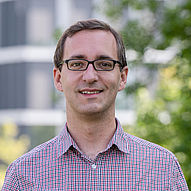
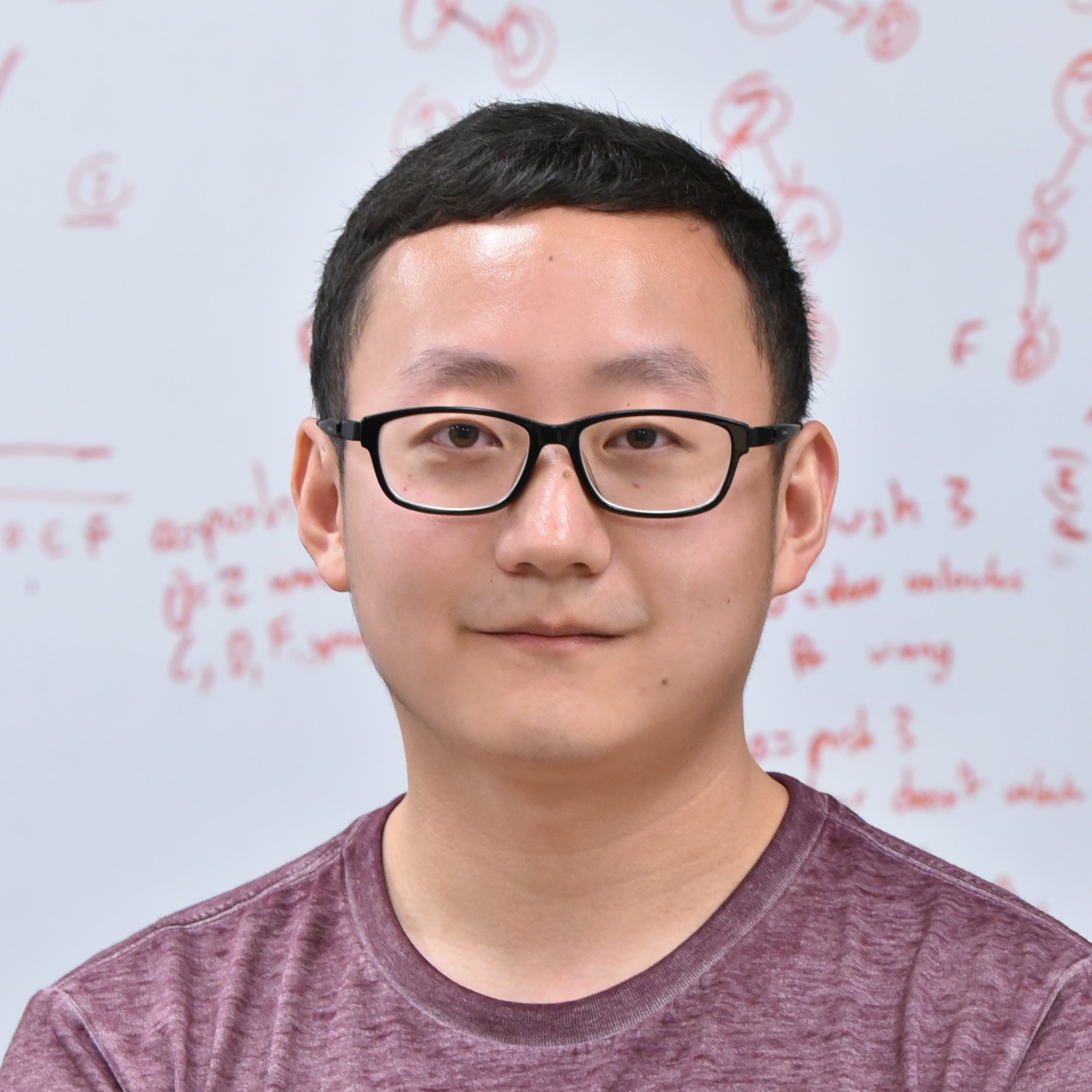
Vijay Laxmi is a Professor in the Department of Computer Science and Engineering at Malaviya National Institute of Technology (MNIT) Jaipur, India. With over a decade of active research publication from 2014-2024, Dr. Laxmi has established themselves as a prominent researcher in network security, Android security systems, and Network-on-Chip architectures. Their work demonstrates consistent collaboration with Manoj Singh Gaur and numerous doctoral students at MNIT Jaipur. Dr. Laxmi's research interests span Network Security, Android Security, Malware Analysis, Network-on-Chip Architectures, Routing Protocols, Side-Channel Attacks, Wireless Networks, and Mobile Security. Their work bridges theoretical security frameworks with practical implementations, particularly in mobile and embedded systems. Recent publications indicate a growing focus on AI-based security approaches including GAN applications for fuzzing and deep learning for image dehazing. The research trajectory shows increasing sophistication in security analysis techniques, evolving from basic malware detection to advanced side-channel attack analysis and sophisticated network security protocols. Recent publications demonstrate expertise in both theoretical frameworks and practical implementations with applications in real-world security challenges. Dr. Laxmi has mentored numerous graduate students including Vineeta Jain, Anugrah Jain, Sonal Yadav, Mohit Singh, and Gaurav Singal, who appear as co-authors across multiple publications. Their collaborative network extends to researchers at international institutions, indicating strong academic connections beyond their home institution.
Prof. Martin Boeker is a Professor of Medical Informatics at the Technical University of Munich (TUM), affiliated with the TUM School of Medicine and Health. His work focuses on advancing healthcare through AI-driven solutions, interoperability frameworks, and precision medicine initiatives. Key projects include the German Medical Text Corpus (GeMTeX) and the MIRACUM DIFUTURE Alignment Hub. Expertise: Medical Informatics, AI in Healthcare, Federated Learning, Health Data Integration Key Contributions: FHIR-based systems, clinical decision support, patient-centered outcomes research Leadership: Director of the Institute for AI and Informatics in Medicine at TUM Hospital Right of the Isar Research emphasizes bridging clinical practice and data science through projects like modular health crawlers, automated guideline adherence monitoring, and cross-institutional medical NLP solutions. His work spans oncology informatics, rare disease management, and pandemic response data ecosystems. Recent articles highlight innovations in digital twins for precision oncology, federated analysis in oncology, and German-language medical NLP challenges. He collaborates internationally on EHR standardization and healthcare interoperability, contributing to the Medical Informatics Initiative (MII) and pandemic evidence ecosystems. Grants and collaborations involve the German Federal Ministry of Education and Research, European initiatives, and industry partnerships. Educational efforts focus on training future medical informatics professionals through MII competency programs.
Asia J. Biega is a tenure-track faculty member (W2) at the Max Planck Institute for Security and Privacy (MPI-SP), where she leads the interdisciplinary Responsible Computing group. She is also a principal investigator of the Cluster of Excellence CASA and the FINDHR consortium. Her work sits at the intersection of computing and society, focusing on responsible computing, data protection & governance, and digital well-being within data-driven and AI-based systems. Dr. Biega's research spans multiple disciplines including computer science, law, philosophy, and social sciences. Her work examines how principles of responsible computing can be computationally operationalized, with particular attention to data protection frameworks, privacy technology governance, and digital well-being. She actively collaborates across disciplinary boundaries to make technical contributions while supporting research in other fields. Her approach combines theoretical rigor with practical applications, often drawing from her industry experience at Microsoft and Google. Her publication record reveals a strong focus on the intersection of fairness, privacy, and transparency in information retrieval systems. She has pioneered work on data minimization compliance, fair ranking algorithms, and user perceptions of data collection practices. Her research consistently bridges technical and legal perspectives, particularly examining how GDPR principles can be computationally implemented. Recent work shows increasing attention to generative AI governance, algorithmic hiring systems, and the relational aspects of data in recommender systems. Dr. Biega has received several prestigious awards including the Council of Europe's Rodotà Award for innovative research in data protection, the SaTML Notable Reviewer Award, the GI-DBIS Dissertation Award of the German Informatics Society, and recognition as one of the '100 Brilliant Women in AI Ethics' in 2025. She has advised numerous PhD students and postdocs who have gone on to faculty positions at institutions including the University of Trieste, Penn State, and the University of Washington. Her research is funded by the Max Planck Society, Alexander von Humboldt Foundation, and the European Union (Horizon Europe FINDHR). She serves as General Co-Chair for ACM FAccT 2025 and has held leadership roles in multiple academic conferences.
Niels Henze is a Professor at the Chair of Media Informatics within the Faculty of Languages, Literature and Cultural Studies at the University of Regensburg, where he has been serving since May 2018. His research centers on human-computer interaction, with a strong focus on predictive models in interactive systems, mobile interaction, augmented and virtual reality, and attention-aware computing. His research interests include: Human-Computer Interaction (HCI) Predictive modeling for runtime adaptation Mobile and wearable interaction Augmented and Virtual Reality (AR/VR) Attention-aware and context-sensitive systems Sociocognitive aspects of interactive technologies The analysis of his recent publications reveals a consistent focus on leveraging user behavior and contextual cues to build intelligent, adaptive interfaces. His work integrates machine learning with interaction design, emphasizing real-time model updates, implicit feedback, and cognitive load awareness to improve usability and user experience across mobile and immersive platforms. Scientific awards: No awards mentioned in the provided text. Niels Henze leads research in adaptive interactive systems and advises students in the field of media informatics. He has previously held a junior professorship at the University of Stuttgart and completed his doctorate at the University of Oldenburg under Susanne Boll. He is actively involved in advancing the theoretical and practical foundations of predictive and attention-aware computing. Grants and funding sources are not specified in the text. He is associated with the Institute for Information and Media, Language and Culture (I:IMSK) at the University of Regensburg, contributing to a multidisciplinary environment that bridges informatics with cultural and linguistic studies.
Christian Schlag is a Professor at the Finance Department of Goethe University Frankfurt’s Faculty of Economics and Business , where he also serves as Dean. He leads the Chair of Derivatives and Financial Engineering and coordinates young researchers at the Leibniz Institute for Financial Research SAFE. His research focuses on equilibrium asset pricing, derivative securities, and empirical capital market analysis. Research Trends : Schlag’s recent work explores volatility dynamics, climate risk in asset pricing, return predictability, and investor behavior. His 2023 publications examine time-varying consumption growth risk, equity factors, and individual stock volatility models. Earlier studies (2021–2015) address pricing kernels, welfare costs of temperature volatility, and model mis-specification in hedging. Student Placements : Former advisees hold positions at institutions like the European Central Bank, INSEAD, Australian National University, and Warwick Business School. His Chair of Derivatives and Financial Engineering collaborates with networks across Europe, North America, and Asia.
Michael Muehlebach leads the independent Learning and Dynamical Systems research group at the Max Planck Institute for Intelligent Systems in Tuebingen, Germany. His interdisciplinary work bridges machine learning, dynamical systems theory, and control engineering to develop algorithms for cyber-physical systems with theoretical guarantees and practical implementations. Dr. Muehlebach received his B.Sc. and M.Sc. in Mechanical Engineering from ETH Zurich in 2010 and 2013, specializing in robotics and control systems. He completed his Ph.D. at ETH's Institute for Dynamic Systems and Control under Prof. R. D'Andrea in 2018, followed by postdoctoral research with Prof. Michael I. Jordan at UC Berkeley. His research focuses on constrained optimization, reinforcement learning, and control theory with applications in robotics. He pioneered approaches that express constraints in terms of velocities rather than positions, enabling more efficient optimization algorithms. His work spans theoretical foundations to physical implementations, including the One-Wheel Cubli balancing robot and electromagnetic navigation systems. Recent publications reveal a strong trend toward physics-informed machine learning, particularly for robotics applications requiring real-time performance and safety guarantees. Dr. Muehlebach has received numerous prestigious awards: Outstanding D-MAVT Bachelor Award Willi-Studer prize for best Master's degree ETH Medal and HILTI prize for doctoral thesis Branco Weiss Fellowship (2018) Emmy Noether Fellowship (2020) Amazon Fellowship (2024) He actively mentors doctoral researchers including Hao Ma, Melis Ilayda Bal, and Onno Eberhard, with research supported by multiple grants. His group maintains strong collaborations with Bernhard Schölkopf's Empirical Inference group at the Max Planck Institute. The Learning and Dynamical Systems group develops innovative hardware and software platforms, including Floaty (a wind-harnessing flying robot), advanced electromagnetic navigation systems, and data-efficient learning methods for robotic table tennis. Their approach combines rigorous theoretical analysis with practical validation on physical systems, emphasizing the integration of known physical structure into machine learning algorithms to improve sample efficiency and ensure generalization.
Tianmin Shu is an Assistant Professor in the Department of Computer Science at Johns Hopkins University , with a joint appointment in the Department of Cognitive Science . He is the founding director of the Social Cognitive AI (SCAI) Lab and was previously a Research Scientist at MIT, working with Josh Tenenbaum and Antonio Torralba. His research goal is to advance human-centered AI by engineering machine social intelligence —building systems that understand, reason about, and interact with humans in real-world settings. His work is inherently interdisciplinary, integrating machine learning, computer vision, robotics, and social cognition. Research Interests: Theory of Mind Reasoning: Developing models that infer human mental states from multimodal behavioral data. Embodied Assistance: Creating agents capable of assisting humans in physical environments through verbal and non-verbal collaboration. Learning from Human Feedback: Extracting reward-relevant preferences from rich human input to guide agent behavior. Social Scene Understanding: Recognizing and reasoning about group activities and social roles from visual and physical cues. Computational Social Cognition: Modeling how humans perceive and interpret social and physical interactions. Scientific Awards: Outstanding Paper Award at ACL 2024 for "MMToM-QA: Multimodal Theory of Mind Question Answering" Grants & Collaborations: Tianmin Shu has led or co-organized several high-impact workshops and tutorials, including the NeurIPS 2023 Tutorial on "Language Models Meet World Models" and the RSS 2024 Workshop on "Social Intelligence in Humans and Robots". His lab has also developed open-source platforms like VirtualHome-Social and SimWorld for multi-agent interaction research. Lab & Team: As director of the Social Cognitive AI (SCAI) Lab at Johns Hopkins University, Tianmin Shu leads a multidisciplinary team focused on building socially intelligent systems. His lab is located in Malone Hall 213 and collaborates closely with the Departments of Computer Science and Cognitive Science.
Elena Simperl is a Professor of Computer Science and Deputy Head of Department for Enterprise and Engagement at King's College London's Department of Informatics. She co-directs the King's Institute for Artificial Intelligence and serves as Director of Research for the Open Data Institute. As a Hans Fischer Senior Fellow at the Technical University of Munich's Institute for Advanced Study, she leads the Trustworthy Knowledge Graphs focus group and contributes to advancing human-centric AI research across European institutions. Professor Simperl obtained her doctoral degree in Computer Science from the Free University of Berlin and her diploma from the Technical University of Munich. Prior to joining King's, she held academic positions in Germany, Austria, and at the University of Southampton, and was a Turing Fellow. Her career trajectory demonstrates consistent leadership in bridging academic research with practical applications in data ecosystems. Her research sits at the critical intersection of AI and social computing, focusing on human-centric approaches to building sociotechnical systems that integrate data, algorithms, and human capabilities. She investigates how to make knowledge engineering more accessible, how to leverage collective intelligence for data quality improvement, and how to design participatory AI systems that address societal challenges like misinformation. Her work spans knowledge graphs, semantic technologies, crowdsourcing, and open data, with particular emphasis on the social dimensions of data-intensive systems and the governance frameworks needed for trustworthy AI deployment. Analysis of her recent publications reveals a strong evolution toward integrating large language models with traditional knowledge engineering practices while maintaining human oversight. There's a clear trajectory from foundational work on knowledge representation toward increasingly applied research addressing real-world challenges in media ecosystems, citizen science, and data governance, with growing attention to policy implications of AI technologies. Fellow of the British Computer Society Fellow of the Royal Society of Arts Hans Fischer Senior Fellow at TUM-IAS (2023) Ranked among top 100 most influential scholars in knowledge engineering of the last decade Included in Women in AI 2000 ranking Professor Simperl has led 14 major European and national research projects totaling millions in funding, including MediaFutures (a Horizon 2020 program tackling online misinformation), QROWD, ODINE, Data Pitch, and ACTION. She currently co-chairs the Croissant working group in ML Commons developing data standards for AI, and serves as president of the Semantic Web Science Association. Her research has directly influenced the development of data ecosystems supporting startups and citizen science initiatives across Europe, demonstrating exceptional ability to translate theoretical advances into practical impact. As Director of Research at the Open Data Institute, she oversees initiatives connecting data entrepreneurs with artists and civic organizations. Her leadership in the MediaFutures project established a data-driven innovation hub that supported 51 startups/SMEs and 43 artists through three open calls, creating a sustainable model for arts-technology collaborations addressing media challenges. Her work with the ODINE project helped create a European ecosystem for data-driven startups, demonstrating her commitment to building practical applications of open data principles.
Georg Martius is a Full Professor in the Department of Computer Science at the University of Tübingen's Faculty of Science and a Max Planck Research Group Leader at the MPI for Intelligent Systems. Since April 2023, he has been a core member of the DFG-funded Cluster of Excellence 'Machine Learning: New Perspectives for Science,' which received extended funding through 2032 for its mission to integrate machine learning into fundamental scientific discovery processes. His academic foundation includes a PhD from the University of Göttingen and Bernstein Center for Computational Neuroscience (2005), a Diploma in Computer Science from the University of Leipzig (2003), and a visiting research period at the University of Edinburgh's Division of Informatics. Postdoctoral positions followed at the Max Planck Institutes for Dynamics and Self-Organization (Göttingen, 2009), Mathematics in the Sciences (Leipzig, 2010), and IST Austria (2015). Professor Martius's research pioneers the intersection of reinforcement learning, robotics, and tactile sensing, with emphasis on developing autonomous systems capable of natural locomotion, dexterous manipulation, and physical-world understanding. His work bridges theoretical machine learning with practical hardware applications, particularly in creating differentiable simulators, superresolution tactile sensors, and biologically plausible learning frameworks for robotic control. Analysis of his 2024-2025 publications reveals dominant trends in offline reinforcement learning (especially goal-conditioned and diversity-maximization techniques), object-centric representation learning for video understanding, and tactile sensing innovations. A strong thread connects foundation models to world model construction, while his work on differentiable physics engines enables precise collision handling and contact dynamics for real-world robotic control. His leadership roles include directing the Distributed Intelligence research team at Tübingen and contributing to major collaborative initiatives like the Real Robot Challenge and Myochallenge 2022. The Cluster of Excellence appointment represents recognition of his contributions to transforming scientific methodology through machine learning, particularly in automating hypothesis generation and experimental design. Current projects focus on integrating large-scale machine learning with embodied intelligence, advancing tactile perception systems like the Minsight vision-based sensor, and developing neuroplasticity-inspired approaches for robust out-of-distribution detection. His work directly impacts fields requiring physical interaction intelligence, from autonomous navigation to medical robotics, with emphasis on sample-efficient learning from limited real-world data.
Prof. Alexander Pretschner is a Professor of Software & Systems Engineering at the Technical University of Munich (TUM) and Founding Director of the Bavarian Research Institute for Digital Transformation (bidt). He also serves as Scientific Director of fortiss, a Bavarian research institute for software-intensive systems. His research focuses on software engineering, testing, information security, and ethical software development. Pretschner holds a PhD from TUM and has held academic positions at Karlsruhe Institute of Technology (KIT) and TU Kaiserslautern. He is a co-editor of several prestigious journals, including IEEE Transactions on Reliability and the Journal of Software Testing, Verification and Reliability. Education: PhD in Computer Science, Technical University of Munich MSc in Computer Science, University of Kansas (on Fulbright Scholarship) Diplom in Computer Science, RWTH Aachen University Research Interests: His work spans testing methodologies, secure software design, and ethical considerations in agile development. Notable contributions include frameworks for metamorphic testing, distributed data usage control, and accountability mechanisms for cyber-physical systems. Awards: IBM Faculty Award (2012, 2013) Google Focused Research Award (2011, 2012) EARTO Innovation Prize (2014) 2nd Platz Supervisory Award (2020) Advising & Grants: Pretschner has supervised numerous PhD and Master’s students, contributing to over 200 publications. He leads projects like EDAP (Ethical Deliberation in Agile Processes) and collaborates with industry partners on cybersecurity and AI ethics initiatives. Labs & Teams: His work is anchored in bidt, fortiss, and TUM’s Chair of Software & Systems Engineering, focusing on societal impacts of digitalization and trustworthy AI systems.
Sotirios Liaskos is an Associate Professor in the School of Information Technology at the Faculty of Science, York University. He is a leading researcher in requirements engineering and conceptual modeling, with a focus on goal models, empirical evaluation, and model-driven engineering. Research Interests: Requirements Engineering Goal and Conceptual Modeling Empirical Software Engineering Model-Driven Design and Automation Uncertainty and Decision-Theoretic Reasoning in Models Applications in Blockchain and Reinforcement Learning His recent work emphasizes the empirical validation of modeling constructs, the integration of decision theory into goal models, and the automated generation of secure workflows and AI training environments. He has led and co-authored numerous experimental studies on model comprehensibility and semantic quality. Publication Trends: His publications consistently appear in top venues like ER, RE, and iStar. The last five years show a strong trend toward empirical evaluation of modeling languages, decision-theoretic goal models, and applications of goal modeling in emerging domains such as blockchain and reinforcement learning simulation design. Scientific Contributions: Developed frameworks for empirical evaluation of modeling language ontologies (Peira framework). Advanced decision-theoretic approaches to goal modeling under uncertainty. Pioneered model-driven methods for generating blockchain simulators and reinforcement learning environments. Conducted foundational empirical studies on the comprehensibility of contribution links and visualization alternatives in goal models. Advising and Collaboration: He has advised several researchers including Ibrahim Jaouhar, Wisal Tambosi, Mehrnaz Zhian, and Saba Zarbaf. He maintains a highly collaborative research profile with frequent co-authorship with John Mylopoulos, Shakil M. Khan, and other international researchers. He has served as a co-editor for multiple iStar workshop proceedings, indicating leadership in the goal-oriented requirements engineering community. Labs and Teams: While no specific lab name is mentioned, his work is closely associated with research groups focused on requirements engineering and conceptual modeling, likely within York University’s software engineering research cluster. His collaborations span institutions in Canada, Europe, and beyond.
Franziska Mueller is a Research Scientist at Google Zurich , specializing in Augmented Perception . Prior to joining Google, she earned her Ph.D. in Computer Science at Saarland University under the supervision of Prof. Dr. Christian Theobalt, focusing on real-time hand reconstruction from RGB and depth images. Ph.D. in Computer Science (2016-2020) at Saarland University Master’s and Bachelor’s in Computer Science at Saarland University Research visits at Stanford University (2018) and Reality Labs Research (2019) Her research emphasizes the integration of model-based techniques and machine learning components for real-time 3D hand pose estimation, occlusion handling, and hand-object interaction tracking. Key contributions include methods for single-camera reconstruction and datasets like HandSeg. Scientific Awards : Dr. Eduard Martin Award (2021) Google PhD Fellowship (2017) Günter-Hotz-Medal (2016) Bachelor Award (2015) Völklinger Abiturpreis (2012)
Prof. Dr. Ingo Scholtes is Chair of Machine Learning for Complex Networks at Julius-Maximilians-Universität Würzburg's Center for Artificial Intelligence and Data Science (CAIDAS). His research spans network science, graph machine learning, and computational social science, with applications in software engineering, ecology, biology, and physics. He received a Juniorfellowship from the German Informatics Society (2014) and an SNSF Professorship (CHF 1.5Mio, 2018). Current affiliations: JMU Würzburg (since 2021), University of Zurich (2018-2024), Bergische Universität Wuppertal (2019-2021) Research focus: Higher-order network modeling, temporal graph analysis, AI for collaborative systems, causality-aware machine learning His recent publications demonstrate strong trends in temporal network analysis , graph neural networks for time-series, and higher-order models across software engineering and social science domains. He co-chairs multiple international workshops on complex networks and serves as associate editor for EPJ Data Science and Advances in Complex Systems. Key scientific contributions: Foundational work on higher-order network models published in Nature Physics Methodological innovations in temporal network visualization (HOTVis) and path-based analysis (pathpy) As both educator and organizer, he leads the Computational Social Science Section at GI e.V., mentors across disciplines, and develops tools like git2net for collaboration analysis. His work bridges theoretical foundations with practical applications in network science.
Leo Schwinn is a Lecturer at the Technical University of Munich (TUM) within the Department of Computer Science (I26), working in the Data Analytics and Machine Learning group supervised by Prof. Stephan Günnemann at the TUM School of Computation, Information and Technology. His research focuses on robust machine learning with particular emphasis on data-efficient learning and robustness vulnerabilities of Large Language Models (LLMs). Dr. Schwinn's research interests span multiple critical areas in contemporary machine learning including: Robustness against adversarial attacks in LLMs Embedding space vulnerabilities and defenses Model unlearning and privacy preservation Efficient training methodologies for large models Time-series forecasting with probabilistic frameworks Graph-based machine learning approaches His work bridges theoretical understanding with practical security implications of modern AI systems. Analysis of his recent publications (2023-2025) reveals a strong focus on LLM security, with multiple papers accepted at premier conferences including ICML, CVPR, ICLR, and NeurIPS. His research demonstrates consistent innovation in identifying novel attack vectors while developing practical defense mechanisms, particularly through embedding space manipulation techniques. The work shows increasing sophistication in handling both theoretical aspects of model robustness and practical deployment concerns. His notable scientific achievements include: Receiving the ATE dissertation price for his PhD work at FAU Securing an oral presentation at ICLR 2025 Organizing the ICLR BlogPost Track Becoming a member of ELLIS (European Laboratory for Learning and Intelligent Systems) Dr. Schwinn has served as review process chair for the 2024 Conference on Lifelong Learning Agents (CoLLAs) and actively collaborates with researchers at Mila Quebec AI Institute. His research group at TUM focuses on addressing fundamental challenges in machine learning robustness, particularly as they apply to real-world deployment scenarios where security and reliability are paramount. He maintains active GitHub repositories related to LLM security research, including circuit-breakers-eval and LLM_Embedding_Attack, demonstrating his commitment to open science and reproducible research in the field of AI security.
Michael Mühlebach is a Research Group Leader at the Max Planck Institute for Intelligent Systems in Tübingen, Germany, leading the independent Learning and Dynamical Systems group. His academic journey began at ETH Zurich where he earned his B.Sc. (2010) and M.Sc. (2013) in mechanical engineering, specializing in robotics, systems, and control. He completed his Ph.D. at ETH Zurich in 2018 under Prof. R. D'Andrea, followed by postdoctoral research at UC Berkeley with Prof. Michael I. Jordan. Dr. Mühlebach's research spans machine learning, dynamical systems, control theory, and optimization . His work bridges theoretical foundations with practical applications in robotics, developing methods that incorporate physical constraints and system dynamics into learning frameworks. His group focuses on online learning, physics-informed machine learning, and large-scale optimization for cyber-physical systems, with applications in electromagnetic navigation, robotic table tennis, and energy-efficient flight systems like the shape-changing robot Floaty . His publication record shows a strong focus on constrained optimization, with recent work exploring decision-dependent stochastic optimization, nonlinear feedback, and the theoretical foundations of reinforcement learning. His research integrates perspectives from control theory, dynamical systems, and optimization to develop algorithms with strong theoretical guarantees and practical performance. Outstanding D-MAVT Bachelor Award Willi-Studer prize for best Master's degree ETH Medal and HILTI prize for doctoral thesis Branco Weiss Fellow (2018) Emmy Noether Fellowship (2020) Amazon Fellowship (2024) Dr. Mühlebach actively mentors doctoral researchers and is seeking talented students for PhD and Master's projects. His research group has received funding from multiple prestigious fellowships and maintains collaborations across institutions including ETH Zurich, UC Berkeley, and various Max Planck research units. The group's work spans theoretical developments to practical implementations on robotic systems, demonstrating strong connections between mathematical theory and physical realization.