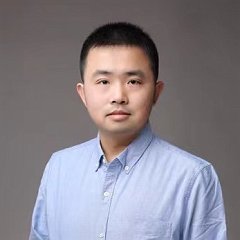
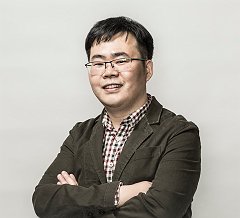
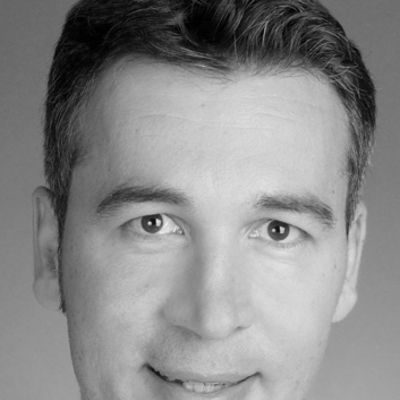
Luciano Baresi is a Full Professor at the Polytechnic University of Milan (Politecnico di Milano), Italy, affiliated with the Department of Electronics, Information and Bioengineering. He earned his laurea (MSc) and PhD in Computer Science from the same institution and has held visiting positions at the University of Oregon (USA), Tongji University (China), and the University of Paderborn (Germany). His research spans software engineering, with current focuses on self-adaptive systems, edge computing, and AI/ML-based software. His work integrates formal methods with practical applications, emphasizing autonomous systems, cloud-edge continuum, and federated learning. Recent publications highlight AI-driven advancements in software testing, resource optimization, and educational tools. Key research themes include: AI/ML for autonomous driving testing and data augmentation Serverless computing at the edge Federated learning system architectures Containerization and cloud resource management Awarded for impactful contributions: RE 2020 Most Influential Paper ICSOC 2020 Best Paper SEAMS 2022 Best Paper He advises 14+ PhD students and leads projects like Ketonet (health app), WHO's Essential Items Estimator, and dynaSpark. As Editor-in-Chief of Proceedings of the ACM on Software Engineering and senior editor for multiple journals, he shapes academic discourse in adaptive systems and software engineering.
Maxime Lamothe is an assistant professor at Polytechnique Montreal specializing in empirical software engineering and mining software repositories. His research focuses on software APIs, build systems, and the intersection of AI and software engineering. Previously, he was a postdoctoral researcher at the University of Waterloo's Software REBELs Lab under Prof. Shane McIntosh. Dr. Lamothe's educational background includes: Ph.D. in Software Engineering from Concordia University (2020) M.Eng from Concordia University (2017) B.Eng from McGill University (2013) His research interests center around empirical studies of software engineering practices, with particular focus on API design and evolution, software build systems, and performance analysis. Dr. Lamothe investigates how developers interact with APIs, how build systems operate in practice, and how AI techniques can enhance software engineering processes while maintaining human oversight of critical decisions. Dr. Lamothe's publication record shows a consistent focus on empirical approaches to understanding software engineering practices. His work frequently examines API usage patterns, code review processes, and continuous integration systems. A notable trend is his growing interest in applying AI techniques to software engineering challenges while maintaining empirical validation of proposed solutions through rigorous case studies and longitudinal analyses. Dr. Lamothe actively serves the academic community as a reviewer for top journals including Transactions on Software Engineering (TSE), Empirical Software Engineering (EMSE), and Journal of Systems and Software (JSS). He has served on program committees for major conferences including ASE, ICSE, ESEC/FSE, MSR, and SANER across multiple years, with particular involvement in the NIER Track, Research Papers track, and Tool Demonstration tracks. Currently seeking Masters and Ph.D. students, Dr. Lamothe leads research at the intersection of traditional software engineering practices and emerging AI techniques. His work combines rigorous empirical methods with practical applications to solve real challenges in software development, with implications for improving API design, enhancing code review processes, optimizing build systems, and developing trustworthy AI-assisted software engineering tools.
Thomas Degueule is a researcher at CNRS (Centre National de la Recherche Scientifique) in France, actively contributing to software engineering research since 2015. He serves on program committees for major conferences including ASE, ICSE, and SLE, with primary research interests in Software Evolution, Empirical Software Engineering, and Domain-Specific Languages. His work focuses on breaking change analysis in APIs and libraries, client-library compatibility testing, and dependency management. He develops practical tools like Roseau for source-based breaking change detection and investigates semantic versioning impacts in ecosystems like Maven Central. His empirical approach leverages large-scale repository analysis to address real-world software maintenance challenges, particularly in Java ecosystems. Recent publications (2023-2025) show consistent contributions to breaking change analysis and compatibility testing, appearing in top venues like ASE, ICSE, and ISSTA. His research bridges theoretical insights with practical tooling for software evolution challenges, demonstrating strong empirical methodology and tool-oriented contributions. No scientific awards are documented in the available information. Degueule has advised no publicly listed students and holds no mentioned research grants. His organizational roles include Program Co-Chair for SLE 2023 and committee positions across multiple conferences, reflecting significant service to the software engineering community.
Dr. Yutian Tang serves as an Assistant Professor (UK Lecturer) and Principal Investigator at the School of Computing Science, University of Glasgow, where he supervises PhD students and leads research in AI-driven software engineering. His academic journey includes a PhD from The Hong Kong Polytechnic University's Department of Computing. His research spans AI+SE integration , particularly focusing on Large Language Models for program analysis, software testing, and Android security. Key areas include: LLM-assisted vulnerability detection and repair Empirical studies of real-world software systems Privacy protection mechanisms Configuration compatibility in mobile applications Smart contract security optimization His publication portfolio shows a clear trajectory toward AI-augmented software engineering , with recent work demonstrating how LLMs can enhance taint analysis, binary code similarity detection, and test generation. This evolution reflects the field's broader shift toward AI integration while maintaining rigorous empirical validation. Award highlights include: Best Industry Paper Award at ISSRE'18 Elevation to IEEE Senior Member (2024) Three Android OS defects confirmed by Google Security Team As an active researcher and community contributor, Tang serves on 40+ program committees including PLDI, ICSE, and FSE. His work receives funding from National Natural Science Foundation of China, Shanghai Science Commission, OpenAI, and Google. Current projects focus on automated bug localization and LLM-based testing frameworks, with recent grants from OpenAI Cybersecurity and Google Cloud programs. He leads research groups investigating Android security and AI-assisted program analysis, collaborating with institutions like Lund University.
Hongyu Zhang is a Professor and Dean of the School of Big Data and Software Engineering at Chongqing University, China, and an Honorary Professor at The University of Newcastle, Australia. Previously, he served as a Lead Researcher at Microsoft Research Asia and an Associate Professor at Tsinghua University, China. He received his PhD from the National University of Singapore in 2003. His academic journey spans prestigious institutions, combining industry research experience with academic leadership. Dr. Zhang's research interests focus on intelligent software engineering, software analytics, data-driven software engineering, software fault management, testing and debugging, and software maintenance and reuse. His work centers on improving software quality and productivity by mining and analyzing vast amounts of software data. Over the years, he has developed innovative methods that apply data mining, machine learning (including deep learning), and information retrieval techniques to extract knowledge from software data and solve complex software engineering problems. His research spans three major areas: intelligent programming (code search, code summarization, code generation), intelligent quality prediction (defect prediction, cloud failure prediction, performance prediction), and intelligent fault detection and diagnosis (log-based fault detection, crash-based fault localization, bug report analytics). His recent publications demonstrate a clear trend toward integrating large language models and deep learning techniques with traditional software engineering practices. The research spans intelligent programming assistance, code security, UI automation, distributed systems optimization, and performance analysis. His work increasingly focuses on practical applications of AI in software engineering, with emphasis on real-world impact in industrial settings, particularly in microservices, cloud systems, and large-scale software development environments. 8 ACM Distinguished Paper Awards Best Paper Award: How Long Will it Take to Mitigate this Incident for Online Service Systems? David Lorge Parnis Fellowship Senior Member of IEEE Distinguished Member of ACM Distinguished Member of CCF Fellow of Engineers Australia (FIEAust) Recognized in The Australian's Top Researchers special edition as leading researcher in Software Systems World's Top 2% Scientists (career-long) Dr. Zhang has successfully advised numerous PhD and Master's students who have gone on to prominent positions at leading technology companies and academic institutions worldwide. His research has been supported by significant grants including Australian Research Council Discovery Projects (as Lead CI) and multiple National Science Foundation of China projects. His work has made tangible impacts in industry, most notably through the Microsoft Developer Assistant project which received over 450K downloads in 2016. He leads research groups focused on intelligent software engineering and software analytics, with strong collaborations between Chongqing University, The University of Newcastle, and Microsoft Research. His teams develop practical tools for code intelligence, log analysis, and fault diagnosis that are deployed in real-world online service systems.
Ajitha Rajan is a Professor (Personal Chair of Software Testing & Verification) at the School of Informatics, University of Edinburgh. She joined the university in December 2012 as a Reader (equivalent to Associate Professor in American terms) and was promoted to Professor in 2024. Prior to her position at Edinburgh, she held postdoctoral positions at Oxford University and Laboratoire d'Informatique de Grenoble in France. She earned her PhD in Computer Science from the University of Minnesota in August 2009 under Professor Mats Heimdahl. Her research focuses on two primary directions: Automated Software Testing (including test input generation, test oracles, and coverage measurement) and Biomedical AI (particularly cancer survival models and interpretability for biological sequences and medical images). Her work has applications in safety-critical systems, blockchains, embedded systems, and medical diagnostics. She has made significant contributions to explainable AI for healthcare applications, especially in lung cancer detection and cancer survival analysis. Her recent publications demonstrate a strong trend toward interdisciplinary research at the intersection of software engineering and biomedical applications. She has numerous publications in top venues including ICSE, ASE, and healthcare-focused conferences. Her work increasingly focuses on making AI systems more interpretable and trustworthy, particularly in medical contexts where model decisions can have life-or-death consequences. ACM SIGSOFT Distinguished Reviewer Award, ISSTA 2025 Best Paper Award at ICHI 2025 Promoted to Professor (Chair in Software Testing & Verification) 2024 SICSA Best Supervisor Award 2024 ACM Distinguished Paper Award 2008 Professor Rajan actively supervises PhD students in both software testing and biomedical AI domains. She leads several funded projects including MANIFEST (a cancer immunotherapy response research platform), a Huawei Joint Lab project on RobustCheck, a Royal Society Industry Fellowship on AutoTest, and the KATY project on clinical knowledge for personalized medicine. Her research group includes current PhD students working on explainable AI for medical image analysis, scenario-based testing for autonomous driving, and protein design applications.
Zhenbang Chen is a Professor in the College of Computer at National University of Defense Technology (NUDT), China. His academic career spans over a decade with significant contributions to software engineering, particularly in program analysis and formal methods. He has served on program committees for major conferences including ASE, ICSE, and FSE, and has been actively involved in research that bridges theoretical formal methods with practical software engineering applications. Dr. Chen received his Ph.D. and Bachelor degrees in computer science from National University of Defense Technology (NUDT) in June 2009 and July 2002, respectively. His educational background from NUDT has provided a strong foundation for his research in software engineering and formal methods. Ph.D. in Computer Science, National University of Defense Technology (NUDT), 2009 Bachelor's Degree in Computer Science, National University of Defense Technology (NUDT), 2002 Zhenbang Chen's research primarily focuses on program analysis, with special emphasis on symbolic execution techniques. His work extends to formal methods and their practical applications in software engineering. He investigates constraint solving approaches to improve the efficiency of program analysis and explores program synthesis techniques to automate software development tasks. His research bridges theoretical foundations with practical software engineering challenges, particularly in the areas of software verification and testing. His recent work has increasingly focused on optimizing symbolic execution through novel constraint solving techniques and exploring multi-modal approaches to behavior tree synthesis. This demonstrates his commitment to advancing both the theoretical underpinnings and practical applications of software analysis techniques. Professor Chen's publication record shows a consistent focus on symbolic execution and constraint solving, with a clear progression toward more sophisticated optimization techniques. His recent work demonstrates a shift toward multi-objective optimization for floating-point constraints and multi-modal approaches to program synthesis. The research spans both theoretical foundations and practical implementations, with several tools developed from his research participating in international competitions. Dr. Chen's research excellence has been recognized through multiple prestigious awards: ACM SIGSOFT Distinguished Paper Award for FSE 2025 paper "QSF: Multi-Objective Optimization based Efficient Solving for Floating-Point Constraints" ACM SIGSOFT Distinguished Paper Award for ISSTA 2021 paper "Type and interval aware array constraint solving for symbolic execution" ACM SIGSOFT Distinguished Paper Award for ICSE 2018 paper "Towards optimal concolic testing" Bronze Medal (3rd place) in Cover-Branches category at Test-COMP 2025 for the FDSE tool Professor Chen is actively involved in mentoring the next generation of researchers, currently seeking Ph.D. and M.Sc. students to work with him on cutting-edge research in program analysis and formal methods. His research group has developed several tools that have gained recognition in international competitions, including AISE which ranked 1st in SV-COMP 2025's ReachSafety-Loops category and FDSE which won Bronze Medal in Test-COMP 2025. His research has been supported by grants that enable participation in major international conferences and competitions, fostering collaborations with researchers worldwide. Dr. Chen leads a research group focused on program analysis and formal methods at NUDT. His team has developed several notable tools including AISE for program verification and FDSE for software testing, which have achieved top rankings in international competitions like SV-COMP and Test-COMP. The research group maintains active collaborations with other institutions and participates regularly in major software engineering conferences, contributing to both theoretical advancements and practical tool development in the field.
Song Wang is an Associate Professor in the Department of Electrical Engineering and Computer Science at York University's Lassonde School of Engineering since May 2024. Previously, he served as an Assistant Professor at the same institution from July 2019 to May 2024. He earned his Ph.D. in Computer Engineering from the University of Waterloo in December 2018 under Prof. Lin Tan, an MS degree from the Chinese Academy of Sciences in June 2014 under Profs. Ye Yang and Wen Zhang, and BE and BHRM degrees from Sichuan University in June 2011. Dr. Wang's research focuses on the intersection of Software Engineering and Artificial Intelligence, with two main thrusts: 1) leveraging AI technologies to address software reliability challenges (AI for SE), and 2) developing software reliability techniques to improve AI infrastructure systems (SE for AI). His specific interests include software testing, program analysis, software reliability, and machine learning applications in software engineering. His research has led to tools that have detected hundreds of true bugs across various open-source projects. His recent publications reveal a strong focus on applying large language models to software engineering tasks, analyzing vulnerabilities in deep learning libraries, and developing techniques for software testing and reliability. The research spans multiple subfields including API testing, vulnerability detection, bias analysis in generated code, and automated assurance case generation. TOSEM Distinguished Reviewer Award 2023 APSEC'23 Distinguished Paper Award ACM SIGSOFT Distinguished Paper Award (ICPC 2022) ACM SIGSOFT Distinguished Paper Award (ICSE 2020) Best Paper Award at PROMISE 2019 Dr. Wang actively mentors students at all levels, currently supervising multiple PhD and MASc students. His research group has produced numerous publications in top-tier software engineering venues, including ICSE, FSE, ASE, and TOSEM. He also serves on the editorial board of ACM TOSEM and has been involved in organizing major conferences like ASE and CASCON.
Professor Kristina Schädler is a faculty member at the West Coast University of Applied Sciences (FH Westküste), where she serves as Professor of Data Processing within the School of Technology. She has been with the university since 2005 and also served as Dean of the Department of Technology. Her academic background includes a PhD in machine learning from TU Berlin, where she was awarded the Chorafas Research Prize for young scientists. West Coast University of Applied Sciences (since 2005) TU Berlin, Institute of Computer Science (1994-1999) Martin Luther University Halle/Wittenberg (1990-1994) Professor Schädler's research focuses on artificial intelligence and machine learning applications, particularly in image processing and data analysis. Her work spans multiple domains including industrial automation, agricultural technology, renewable energy, and animal husbandry. She has led numerous research projects that bridge academic theory with practical industrial applications, with particular emphasis on developing robust image processing systems that can be deployed in real-world settings. Her research portfolio demonstrates a consistent pattern of applying advanced machine learning techniques to solve practical problems across diverse industries. The ANIMET project, which developed facial recognition for horses, and the MaviSeg system for multichannel image segmentation represent her innovative approach to adapting computer vision technologies for specialized applications. Her work often involves close collaboration with industry partners to ensure practical relevance and implementation. Chorafas Research Prize for young scientists Innovationspreis at Equitana (2013) for the ANIMET project Professor Schädler has supervised numerous student theses that have resulted in practical applications across various domains. Her research group has secured funding from multiple sources including the European Commission, BMBF, and regional development agencies. She has established the CICAD project as a sustainable competence center for industrial image processing, which has trained multiple doctoral students through cooperative programs with the University of Lübeck. Her work demonstrates strong industry connections with companies like HIT Hinrichs Innovation + Technik, MBJ Solutions, and Fischer und Tausche Kondensatoren. Her research laboratory focuses on industrial image processing applications, with specialized equipment for 2D/3D imaging, spectral analysis, and machine learning implementation. The CICAD project established a dedicated competence center that continues to develop new applications of image processing technology across multiple industries.
Prof. Reiner Marchthaler is a Professor at Esslingen University of Applied Sciences within the Faculty of Computer Science and Information Technology. He serves as Deputy Director of the Institute for Intelligent Systems (IIS), Scientific Director of the Green IT 2026 Conference, and Liaison Lecturer for the Friedrich Ebert Foundation. His academic leadership spans autonomous systems research and educational initiatives in embedded technologies. His research centers on Embedded Systems and Sensor Data Fusion, with pioneering work on Kalman filters for autonomous systems. He maintains the authoritative resource kalman-filter.de and has developed real-time capable SLAM algorithms, camera-based reference systems, and parking space detection frameworks. His expertise extends to entropy-based safety evaluation in autonomous driving and semantic segmentation using mixed real/synthetic data. Analysis of his 2020-2025 publications reveals dominant trends in autonomous driving systems, emphasizing real-time sensor fusion, deep learning for perception, and safety validation. Key subfields include adaptive Kalman filtering (ROSE-Filter), landmark-based navigation, neural network training with synthetic data, and maximum entropy safety frameworks. His work bridges theoretical innovation with automotive applications, particularly in model vehicle testing environments. Prof. Marchthaler leads research at the Institute for Intelligent Systems, directing the Green IT 2026 initiative and advising the Friedrich Ebert Foundation. His team develops ROS-based validation environments for autonomous algorithms and maintains the Kalman filter knowledge portal. Current projects focus on connected traffic systems using conventional infrastructure landmarks and entropy-optimized safety protocols for production vehicles.
Prof. Dr. Dieter Landes serves as a Professor in the Faculty of Electrical Engineering and Computer Science at Coburg University of Applied Sciences, Germany. His research bridges theoretical AI advancements with practical cybersecurity and energy solutions, particularly targeting small and medium enterprises (SMEs) through federally funded initiatives. Landes' core research interests include: Cybersecurity applications of Large Language Models for Blue/Red Teaming operations AI-driven predictive maintenance in photovoltaic energy systems Realistic data generation for security system training and testing Intelligent educational technologies for personalized learning navigation High Performance Computing infrastructure for applied AI workloads His current grant portfolio demonstrates sustained research leadership: Blue-and Red-Agent-based Cyber Security (2025-2028): Federal Office for Information Security project developing LLM-powered defenses against SME-targeted cyberattacks Kick-PV (2023-2026): AI characterization methods for remote photovoltaic system diagnostics GENESIS (2022-2025): Framework for generating realistic data flows to train insider threat detection systems VoLL-AI (2021-2025): Multi-university collaboration (Erlangen/Bamberg) on AI-driven learning navigation HPC4AAI (2021-2024): Infrastructure development for applied artificial intelligence computing Landes operates within interdisciplinary research collectives at Coburg University, frequently partnering with Friedrich-Alexander University of Erlangen-Nuremberg and Otto-Friedrich University of Bamberg. His project pipeline extending to 2028 confirms active research trajectory in applied computer science.