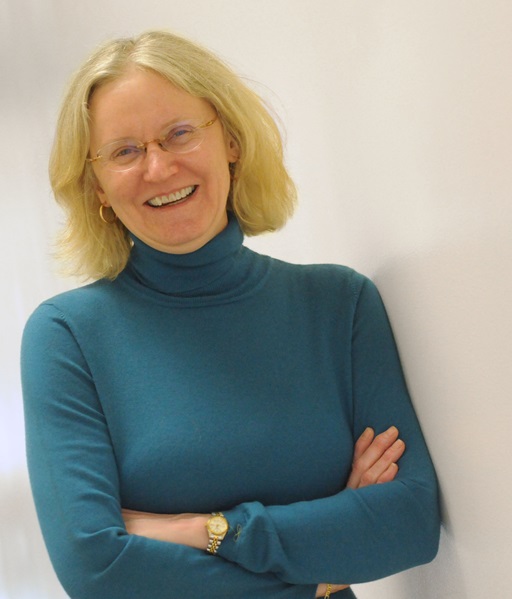
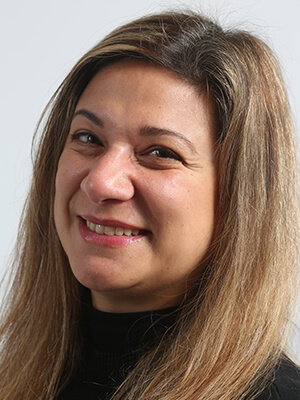
Dr. Gail Kaiser is a Professor of Computer Science at Columbia University, where she has served for 40 years. She directs the Programming Systems Lab (PSL) and is affiliated with the Software Systems Lab (SSL). Her research focuses on software systems, program analysis, testing, security, and AI-driven software engineering. She earned her PhD from Carnegie Mellon University and a BS from MIT. Education: PhD in Computer Science, Carnegie Mellon University (1985) MS in Computer Science, Carnegie Mellon University (1980) BS in Computer Science and Engineering, MIT (1979) Research & Teaching: Dr. Kaiser teaches COMS W4156 (Advanced Software Engineering) and COMS E6156 (Topics in Software Engineering). Her work spans metamorphic testing for machine learning, secure computing, and AI in SE. Notable contributions include pioneering metamorphic testing for classifiers and secure containers research. Awards & Grants: 2025 Distinguished Journal Award (ICST) NSF grants totaling over $2M for secure computing and software assurance ACM SIGSOFT Distinguished Paper Awards (2023, 2014) Labs & Collaborations: Her labs (PSL and SSL) drive innovation in program analysis and security. Collaborations include DARPA, NIH, and industry partners like IBM and Microsoft.
Konrad Kowalczyk is an Associate Professor at AGH University of Science and Technology in Krakow, Poland, where he heads the Signal Processing Group within the Faculty of Computer Science, Electronics and Telecommunications. With extensive international experience from institutions including Queen's University Belfast, Stanford University, and Fraunhofer Institute, he has established himself as a leading researcher in audio and speech signal processing. His academic journey includes B.Eng. and M.Sc. degrees from AGH University (2005), a Ph.D. from Queen's University Belfast (2009), and a Habilitation in ICT from AGH University (2020). B.Eng. and M.Sc. in Electronics and Telecommunications, AGH University of Krakow (2005) Ph.D. in Electronics, Queen's University Belfast, UK (2009) Habilitation (D.Sc.) in Information and Communication Technology, AGH University of Krakow (2020) Kowalczyk's research spans multiple cutting-edge areas in audio processing, with particular focus on speech and audio signal processing enhanced by machine learning techniques. His work integrates deep neural networks with traditional signal processing methods to address challenges in array signal processing , speech enhancement , and speaker recognition . The research group he leads explores innovative applications in distributed signal processing for IoT , acoustic event detection , and spatial audio rendering , bridging theoretical advances with practical implementations. His recent publications demonstrate a clear trend toward integrating deep learning with traditional signal processing techniques, particularly in speaker diarization, source separation, and robust speech recognition. The research increasingly focuses on real-world applications requiring reverberation-robust processing , distributed microphone array systems , and end-to-end neural architectures that can operate in challenging acoustic environments. There's a noticeable shift toward more complex, integrated systems that combine multiple signal processing tasks. Stanislaw Staszic Medal for best graduate of AGH (2005) IEEE Best Student Paper Contest finalist (2007) AES Student Technical Paper Award winner (2008) Best Student Paper Award at IWAENC conference (2014) Best Paper Awards at IEEE SPA conferences (2016, 2019) Polish Ministry of Science Scholarship for Distinguished Young Scientists (2016-2019) Prime Minister Award for outstanding scientific achievements (2020) As Principal Investigator, Kowalczyk leads multiple significant research projects including "Acoustic Intelligence" (2024-2028) funded by National Science Center, and "Deep extraction for robust speech recognition" (2023-2028). He has successfully secured funding from prestigious programs including First TEAM from the Foundation for Polish Science, and EU FP7 projects. His research group actively supervises Ph.D., M.Sc., and B.Eng. students, with strong connections to international institutions including Aalto University and IEEE Signal Processing Society. The research output includes numerous journal publications, conference papers, patents, and software implementations that have advanced the field of audio signal processing. Kowalczyk leads the Signal Processing Group at AGH University, which focuses on developing innovative solutions for speech and audio processing challenges. The group maintains strong collaborations with international institutions including Aalto University (Finland), and participates in European research initiatives. Their work spans theoretical development through practical implementation, with applications ranging from medical voice assistants to distributed acoustic sensor networks.
Paul Maher is an Associate Professor at the University of Limerick's Department of Psychology and Centre for Social Issues Research. His research focuses on emotions, attitudes, and political orientation, particularly the role of epistemic emotions in shaping political polarization and group identity. He investigates disillusionment as an affective response to meaning-threatening events and its link to ideological rigidity and nostalgic tendencies. His work employs bipartite network visualizations to map political attitude clusters, with notable contributions during the early stages of the COVID-19 pandemic analyzing how public health attitudes predict behavioral outcomes. Maher holds a PhD awarded in 2017. Education: PhD in Psychology (2017) Key Research Areas: Political Psychology, Epistemic Emotions, Attitude Networks, Misinformation, Identity Dynamics Collaborations: Extensive work with institutions including the University of Limerick's Centre for Social Issues Research and international teams on computational social science models. His recent studies explore how social norms and opinion-sharing behaviors reinforce group identities, with applications in understanding polarization during crises. He has contributed to UN Sustainable Development Goals related to education and societal resilience through his work on trust in science and pandemic responses. Publications highlight interdisciplinary approaches, integrating agent-based modeling, network analysis, and experimental psychology. His work on disillusionment's role in Brexit and Trump phenomena demonstrates real-world policy relevance.
Neng Wan is a Professor of Geography and Director of the Utah Geo-Health Lab at the University of Utah's School of Environment, Society & Sustainability. His work bridges geography, public health, and spatial analysis to address critical healthcare access and environmental health issues. Previously, he served as an Assistant Professor of Geography at the University of Utah from 2014-2019. Dr. Wan earned his BS in Geodesy from Wuhan University in 2003, followed by an MS in Cartography and GIS from the same institution in 2006. He completed his PhD in Geography from Texas State University-San Marcos in 2011. His research focuses on applying GIS and spatial methods to understand public health and environmental health problems. Current research projects include mHealth-supported health behavior research, access to healthcare, health disparities, and health consequences of pesticide exposure. His work demonstrates how spatial patterns influence health outcomes, particularly in emergency surgical care, telemedicine utilization, and pandemic responses. Dr. Wan's approach integrates advanced geospatial techniques with public health questions to reveal patterns that might otherwise remain hidden in traditional analyses. Analysis of his recent publications shows a consistent focus on healthcare access disparities, with particular attention to how social vulnerability, geography, and infrastructure impact health outcomes. His work increasingly incorporates network analysis and advanced spatial statistics to model complex healthcare systems. Recent studies examine telemedicine adoption patterns, emergency surgical care networks, and spatial patterns of discrimination during the pandemic. Presidential Scholar Award (2023, University of Utah) Dr. Wan has secured multiple grants from the National Institutes of Health (NIH), American Cancer Society, and other organizations to support his research on healthcare access disparities, mobile health interventions, and spatial epidemiology. His teaching includes advanced GIS methods, GIS & Public Health, and Health-Global Pandemics courses, where he trains students in applying spatial methods to health problems. As Director of the Utah Geo-Health Lab, Dr. Wan leads a research team that develops and applies innovative geospatial methods to address pressing public health challenges, particularly those related to health disparities and access to care. The lab's work has direct implications for healthcare system design, resource allocation, and policy interventions aimed at reducing geographic health disparities.
Tej Chajed is an Assistant Professor in the Department of Computer Sciences at the University of Wisconsin-Madison, focusing on formal verification of systems software. His research bridges theoretical foundations and practical implementations to ensure software correctness in concurrent and crash-safe systems. Research interests include formal verification, concurrency, crash safety, and programming languages, particularly using Coq, Perennial, and Goose frameworks. He has contributed to systems like DaisyNFS, a verified file system with sequential reasoning, and Verus, a foundation for systems verification. His work appears in top venues like SOSP, OSDI, and PLDI. 2025: Dafny PC Member 2024: PLDI Committee Member, CoqPL Co-chair 2023: CoqPL Co-chair, POPL Program Committee He actively mentors students and develops tools for systems verification education, including extensive Coq-based course materials.
Laura Toni is an Associate Professor in the Department of Electronic & Electrical Engineering at University College London (UCL). She serves as Director of the MSc in Telecommunications and Internet Engineering and the MRes in Telecommunications. Additionally, she is a Turing Fellow at the Alan Turing Institute and a member of ELLIS (European Lab for Learning and Intelligent Systems). Her research focuses on coding, streaming technologies, machine learning for immersive communications, decision-making under uncertainty, and large-scale signal processing. She leads the LASP (Learning And Signal Processing) group at UCL. Education: MSc (2005) and PhD (2009) from the University of Bologna, followed by postdoctoral research at UC San Diego and EPFL under Professors L. Milstein, P. Cosman, and P. Frossard. Key roles include Technical Program Chair at ACM MM 2022, Keynote Co-Chair at ACM MMSys 2022, and leadership in organizing workshops on graph-based machine learning and emerging technologies in performing arts. She is a Senior IEEE Member and holds editorial roles in IEEE Multimedia Magazine and EURASIP Journal on Signal Processing. Her work bridges communication systems and machine learning, with contributions to adaptive streaming, network optimization, and graph signal processing. She actively promotes diversity and inclusion in technical conferences, including roles as Diversity Chair at MMSys 2021 and PIMRC 2020.
Per Lynggaard is a Professor of Electronics at the Technical University of Denmark (DTU) , leading the B.Eng. program in Electronics. Previously, he held an Associate Professor role at Aalborg University, combining academic excellence with a robust industrial career in technical-scientific research and development. Education: M.Sc. in Electrical Engineering and Information Technology (EE and IT) Ph.D. in Electronics from Aalborg University Research Interests: Focus on Integrated Circuit Design, Wireless Sensor Networks (WSN), Machine Learning, IoT, and Smart City Technologies . His work emphasizes energy-efficient systems, cybersecurity in IoT, AI-driven interference mitigation, and sustainable energy harvesting solutions. He has contributed to UN Sustainable Development Goals through projects addressing smart infrastructure and environmental monitoring. Projects & Collaborations: Leads and participates in EU-funded initiatives such as InnoTech (2023–2025) for green transition solutions and TransportTech (2023–2026) for Industry 4.0 logistics. Active in cybersecurity research via projects like Jamming Against Critical Wireless Communication , aiming to protect critical infrastructure. Awards: Recognized with multiple honors and rewards during his industrial career, though specific names are not listed. His work has been cited widely, with notable impact in IoT security and energy-efficient systems. Advising & Grants: Supervises Turnip T.N. in a PhD project on 6G security protocols. Engaged in securing funding for projects like F2D2: The Community for Dynamic Data (2021–2030), focusing on dynamic data systems and cybersecurity. Labs & Teams: Collaborates in interdisciplinary teams such as the InnoTech TaskForce and F2D2 Community , advancing IoT and AI integration. His research bridges academia and industry, with outputs spanning smart cities, healthcare IoT, and sustainable energy systems.
Dr. Christiana Hall, MD, MS, FNCS serves as Professor of Neurology with secondary appointment to Neurosurgery at the University of Texas Southwestern Medical Center, where she joined in 2008. She currently holds the position of Chief of Service for Neurology at Parkland Hospital, one of the nation's largest public hospital systems. Dr. Hall previously served as Medical Director for the Neurocritical Care Unit at Parkland (2013-2018) and led the transition of neurological services into the new Parkland hospital facility in 2015. Her clinical expertise spans Neurocritical Care and Vascular Neurology, with significant contributions to stroke systems development. Dr. Hall established the Neurocritical Fellowship program at UT Southwestern in 2009, achieving UCNS accreditation in its inaugural year, and directed the program for six years during its expansion to five fellows. She previously co-founded the REACH telestroke system at the Medical College of Georgia (2004-2008), one of the earliest effective models for rural stroke care. Medical College of Georgia (MD, 1995) Neurosurgery training: University of New Mexico (2 years) Neurology residency: Medical College of Georgia Neurocritical Care & Vascular Neurology fellowships: University of Texas at Houston Dr. Hall's research program focuses on Intracerebral Hemorrhage and glucose regulation in critically ill neurological patients, with continuous investigation since her residency. She served as Principal Investigator for the landmark SHINE trial (U01 NS069498), a North American multi-site study demonstrating that glucose regulation to As an active leader in professional societies, Dr. Hall served eight years on the Neurocritical Care Society Board of Directors (including Executive Committee) and eleven years on its Research Committee, earning Fellowship status in 2013. Her work bridges clinical care, research innovation, and educational program development across multiple institutions. Fellow of the Neurocritical Care Society (2013) Board Certification: Neurocritical Care (UCNS) Board Certification: Neurology and Vascular Neurology (ABPN) Dr. Hall has secured substantial research funding through NIH mechanisms including the SHINE trial and multiple ICH/SAH studies. She has mentored fellows through the Neurocritical Care Fellowship program she established and contributed to multicenter research networks including the Neurocritical Care Research Network (NCRN). Her leadership extends to designing the expansion of Neuro ICU beds and establishing comprehensive neuroscience facilities at Parkland Hospital. Her current work focuses on optimizing stroke care delivery in public health systems, with recent publications examining racial/ethnic variations in intracerebral hemorrhage and potentially avoidable neurological emergency visits. The new Parkland neuroscience floor (66 beds) houses multiple certified centers including a Comprehensive Stroke Center and the nation's largest public-system Sleep Center under neurological direction.
Dr Melvyn Weeks serves as a University Senior Lecturer, Director of Teaching, and Director of Undergraduate Studies at the Faculty of Economics, University of Cambridge. His academic leadership spans curriculum development and student supervision within one of the world's leading economics departments. Specializing in Microeconometrics , Causal Inference , and Machine Learning , Weeks' research bridges advanced statistical methodology with real-world economic applications. His work prominently features in energy economics (analyzing consumer behavior in prepayment energy systems), development economics (examining microcredit impacts and religious institution effects in India), and economic growth theory (addressing model uncertainty in convergence clubs). Publication trends reveal a consistent integration of machine learning techniques with traditional econometric frameworks, particularly in causal tree estimation for heterogeneous treatment effects and robust model averaging approaches. His recent work demonstrates growing emphasis on machine learning applications in economics , causal inference methodologies , and distributional analysis across diverse economic contexts. As a doctoral supervisor, Weeks mentors PhD candidates including Christian Tien (focusing on causal inference and machine learning applications) and Cheuk Fai Ng (specializing in cluster-robust inference for high-dimensional regression). His teaching portfolio spans foundational statistical inference through advanced topics including machine learning in economics, causal inference, and research computing. Based at Clare College with office in Room 60, Weeks maintains active research collaboration through the Faculty of Economics' Econometrics Research Group, contributing to Cambridge's reputation in quantitative economic analysis.
Dr. Anna Jankowiak is a Professor at the Department of International Economic Relations at Wrocław University of Economics (UEW) and serves as Director of the Center for International Cooperation. She is also the Manager of the International Economic Relations program and co-founder of the Asia-Pacific Research Center and Asian conferences at UEW. Her research focuses on global value chains, cluster policy, Asian economies, and international trade. She has held visiting professorships in China, Iceland, Hungary, the Czech Republic, Estonia, Japan, and Canada, reflecting her strong international academic engagement. Her expertise includes cluster-based development, regional economic integration, and the role of transnational corporations in the Asia-Pacific region. She is a member of prominent academic associations such as the European International Business Academy and the European Association for Southeast Asian Studies. Her work emphasizes policy analysis, particularly in comparing cluster initiatives across countries like Germany, Poland, and China. Recent research highlights include studies on global production networks, the impact of natural disasters on economies, and the achievement of Sustainable Development Goals. She has authored numerous articles and books, with a focus on bridging theoretical frameworks with practical policy applications. Her academic contributions span international business education, including courses on managerial etiquette and clusters in the global economy. Key achievements: Development of cluster policy models, analysis of China’s trade dynamics, and leadership in Asia-Pacific academic networks. Professional roles: Director of UEW’s Center for International Cooperation, co-founder of research initiatives, and academic supervisor. International recognition: Visiting professorships across Asia and Europe, scholar at Seikei University’s Center for Asian and Pacific Studies.
Sebastiano Vascon is an Associate Professor at Ca' Foscari University of Venice's Department of Environmental Sciences, Computer Science and Statistics (DAIS), and affiliated with the European Center for Living Technology. He earned his PhD in 2016 from the Italian Institute of Technology and University of Genoa, focusing on evolutionary game theory in pattern analysis and computer vision. His postdoctoral work spanned institutions like the Technical University of Munich and ETH Zurich, where he specialized in Active Learning and multi-object tracking. His research merges AI with interdisciplinary challenges, including climate change, environmental science, and cultural heritage preservation. Key areas include graph neural networks, computer vision, and game-theoretic models. He leads projects like RePAIR (AI for cultural heritage reassembly) and EasyWalk (AI-driven mobility solutions), and contributes to initiatives like MEMEX (digital storytelling). Teaching spans courses in Deep Learning, Machine Learning for Environmental Applications, and AI in Cultural Management. Research projects include: RePAIR: AI-driven 3D puzzle solving for artifact reconstruction EasyWalk: Socially-aware navigation systems MEMEX: AI for inclusive digital storytelling Climate modeling with IceBoost framework Publications highlight innovations in trajectory forecasting, environmental risk assessment, and graph-based methods. He actively reviews for top conferences (CVPR, ECCV) and journals.
James R. Green is a Professor in the Department of Systems and Computer Engineering at Carleton University , where he has been a faculty member since 2005. He holds a PhD from Queen's University and is a licensed Professional Engineer (P.Eng.) and Senior Member of IEEE. His work integrates machine learning, biomedical informatics, and high-performance computing. His educational background includes: B.A.Sc. in Systems Design Engineering, University of Waterloo (1998) M.Sc.(Eng.), Queen's University (2000) PhD, Queen's University (2005) Dr. Green's research focuses on machine learning challenges in biomedical informatics , particularly class imbalance and rare event prediction. Key areas include protein structure, function, and interaction prediction; microRNA detection in unique species; non-contact neonatal monitoring; and accelerating scientific computing via parallel architectures like the Cell BE processor. His lab has developed several widely used bioinformatics tools such as PIPE, ProtDCal, and PCI-SUMO. His recent publications reflect a strong trend in computational biology and machine learning , with applications in proteomics, genomics, and medical diagnostics. He has published over 100 peer-reviewed papers and secured funding from NSERC, CIHR, CFI, ORF, OCE, MITACS, and IBM. Scientific and teaching recognitions include: Three teaching awards NSERC Best Project Award (twice: 2006-2007 and 2007-2008) Multiple student projects resulting in conference papers (e.g., CMBEC) He has supervised numerous undergraduate capstone projects in areas such as assistive technologies, robotic systems, and bioinformatics. His teaching portfolio includes courses in Pattern Classification, Machine Learning, Computer Architecture, and Biomedical Engineering. He leads an active research group that bridges computer engineering and life sciences, fostering interdisciplinary collaboration. Lab and research team initiatives include: Development of open-access web servers for protein analysis Collaborations with biologists and clinicians Integration of hardware and software for medical applications
Dr Ismini Vasileiou is an Associate Professor at De Montfort University within the School of Computer Science and Informatics, Faculty of Computing, Engineering and Media. She serves as Director of the East Midlands Cyber Security Cluster, leading regional and national cybersecurity initiatives. Her work bridges academia, industry, and government, focusing on cyber resilience, policy, education, and inclusion. Her research interests include: Cybersecurity Policy and Governance Human Factors and Social Engineering Cyber Resilience and Risk Management Cybersecurity Education and Pedagogy Diversity, Equity, and Inclusion in Cybersecurity AI and Cybersecurity Secure by Design Principles Her recent publications reflect a strong interdisciplinary focus on cybersecurity education, human behavior, digital transformation, and workforce development. Trends show a consistent emphasis on experiential learning, threshold concepts, and addressing the cyber skills gap through degree apprenticeships and inclusive practices. She has received several honors, including: Cyber Security Diversity Academic Champion, EMIC Network (2024) Winner, Students as Partners Cup (2014) Runner-up, WISE Advisor Award (2014, 2012) Most Dedicated Project Supervisor SSTAR Award, University of Plymouth (2012) Dr Vasileiou supervises multiple PhD students and has secured substantial external funding, including £5.8 million from the Office for Students and £100,000 from DSIT. She has led bids for major initiatives like the Leicester and Leicestershire Institute of Technology. She actively mentors students in areas such as cyber behavior, learning analytics, and agile medical device development. She is involved in key labs and networks, notably the East Midlands Cyber Security Cluster, and contributes to national frameworks through advisory roles with NCFE, QAA, IfATE, and the Institute of Apprenticeships. Her leadership extends to professional societies including BCS, IFIP, and UCISA.
Dimitris Karlis is a Professor in the Department of Statistics at the Athens University of Economics and Business (AUEB), within the School of Information Sciences and Technology. He has been a key academic figure since earning his BSc and PhD in Statistics from AUEB in 1992 and 1999, respectively, and was promoted to Associate Professor in 2012 before advancing to full Professor. Education: BSc in Statistics, AUEB (1992) PhD in Applied Statistics, AUEB (1999) His research spans computational statistics, mixture models, EM algorithms, copulas, multivariate discrete data, and applications in sports, insurance, and seismicity. He has published extensively in top-tier statistical journals such as the Journal of the Royal Statistical Society and Statistics in Medicine . The 15 most recent publications reveal a strong focus on multivariate count data, integer-valued time series, model-based clustering using copulas, and applications in actuarial science and health. His work frequently involves mixture models, Bayesian inference, and innovative extensions of Poisson-based frameworks. Scientific Service and Recognition: Associate Editor: Metron, Communications in Statistics, IMA Journal of Management Mathematics, Stochastic Environmental Research and Risk Assessment Editor: Biometrics Bulletin of IBS Member: American Statistical Society, International Statistical Institute, International Association of Statistical Computing, Hellenic Statistical Institute Publicity Officer: Eastern Mediterranean Region, International Biometric Society Advising and Grants: He has supervised 4 completed PhDs and 18 Master’s theses, with several more in progress. He has led and participated in research projects funded by the European Union and EUROSTAT, particularly in official statistics. His advising spans methodological and applied topics in statistics. Labs and Teams: While no formal lab is named, he collaborates extensively with researchers in actuarial science, transportation, biostatistics, and environmental risk, often through joint projects and publications.
Evan Franklin is an Associate Professor in Energy and Power Systems within the School of Engineering at the University of Tasmania. He also serves as Associate Head of Research, reflecting his leadership in advancing engineering research at the institution. His academic work is centered on modern power systems with a strong emphasis on renewable integration, grid stability, and sustainable energy technologies. His primary research interests include energy and power systems, renewable energy integration, grid frequency control, harmonic analysis, distributed energy resources (DER), battery and compressed air energy storage, agrivoltaics, and hydrogen integration. His work bridges engineering fundamentals with real-world applications in sustainable energy systems, contributing to Australia's transition toward clean energy. The recent publications of Dr. Franklin span high-impact journals such as Energies , IEEE Transactions on Industry Applications , Renewable and Sustainable Energy Reviews , and Journal of Energy Storage . The research trends reflect a strong focus on power system stability, microgrid control, harmonic mitigation, and innovative energy storage solutions. His work increasingly integrates AI and machine learning techniques for power quality and system monitoring, while also exploring interdisciplinary applications like agrivoltaics and offshore energy systems. Dr. Franklin has successfully supervised both PhD and Master’s students, including Ahmadreza Eslami and Md Ruhul Amin, with research topics ranging from harmonic analysis to frequency control using battery storage. He has secured substantial research funding from major national and international bodies, including the Australian Research Council (ARC), Australian Renewable Energy Agency (ARENA), CSIRO, and the Blue Economy CRC. Notable projects include the ARC Training Centre in Energy Technologies for Future Grids, MoorPower wave energy projects, and studies on hydrogen integration and black-start capabilities. He leads and participates in research teams focused on renewable energy systems, including the Centre for Renewable Energy and Power Systems at UTAS. His collaborative network includes key researchers such as Professor Michael Negnevitsky, industry partners like Carnegie Clean Energy and TasNetworks, and government agencies including Hydro Tasmania and Aurora Energy. His work is instrumental in shaping resilient, sustainable, and intelligent power systems for the future.