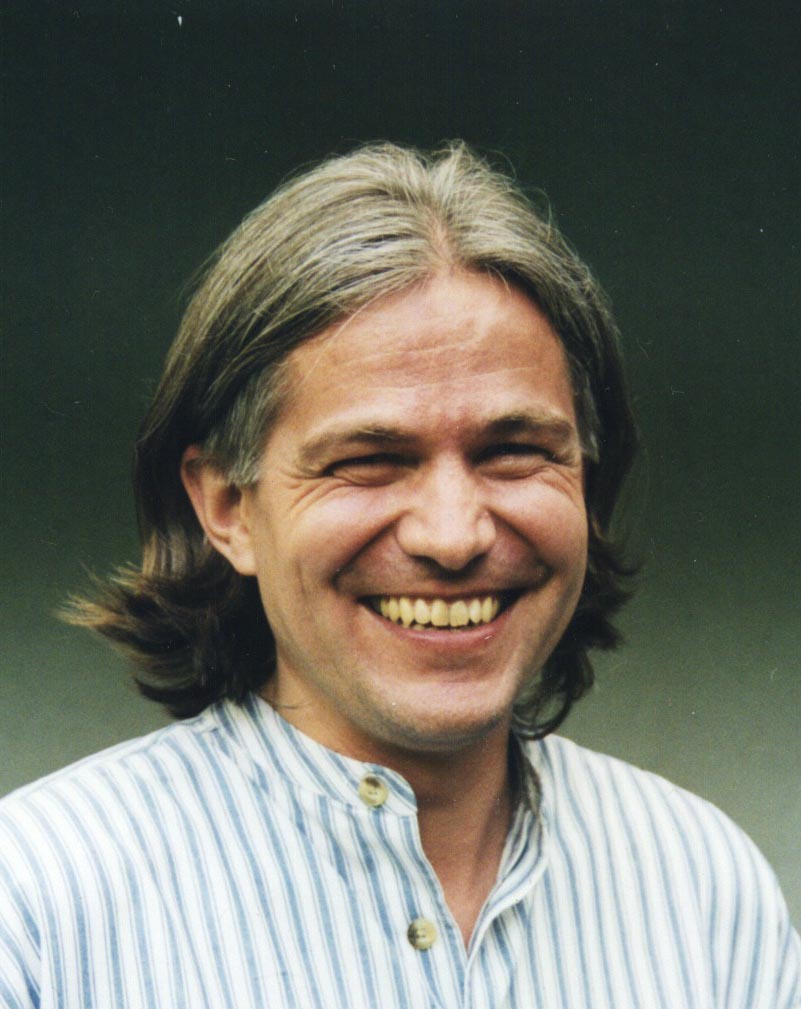
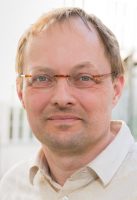
Peter Druschel is a Professor and founding Director of the Max Planck Institute for Software Systems (MPI-SWS) in Saarbrücken, Germany. He holds adjunct professorships at Saarland University and the University of Maryland. His research focuses on distributed systems, operating systems, and privacy-preserving technologies. He earned his Ph.D. from the University of Arizona in 1994 and has held roles at Rice University since 1994, including Professor of Computer Science (2002–2005). Education: Ph.D. in Computer Science, University of Arizona (1994) Research Interests: Distributed systems, operating systems, network security, accountable computing, and privacy technologies. Current projects include privacy compliance in data systems (Thoth), secure communication (EbN), and privacy-aware image capture (I-Pic). Awards: SIGOPS Mark Weiser Award (2008) NSF CAREER Award (1995) Member of Academia Europaea and German Academy of Sciences Leopoldina Grants & Leadership: Leads the ERC Synergy Project imPACT, chairs the Max Planck Society’s Chemistry, Physics, and Technology Section, and collaborates with institutions like Cornell and Google. Advises on policy issues related to technology and privacy. Labs/Teams: Distributed Systems Group at MPI-SWS, collaborations with Microsoft Research and MIT. Current team includes students and postdocs working on privacy, security, and distributed systems.
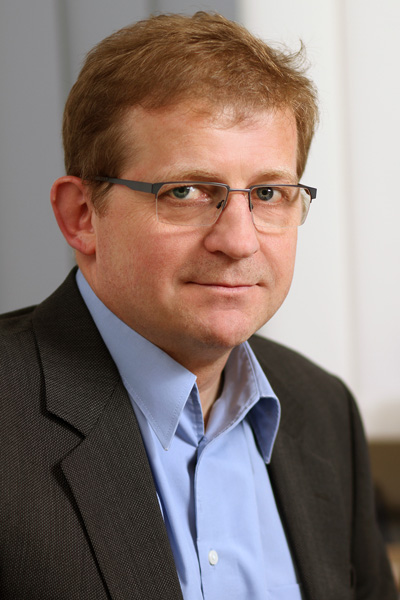
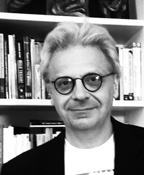
Wolfgang Kunz is a Full Professor (C4, W3) and Chair of Electronic Design Automation at the Technische Universität Kaiserslautern since 2001. His academic career spans multiple prestigious institutions, including Goethe-University Frankfurt/Main and the University of Massachusetts, Amherst. He has held leadership roles such as Dean (2005-2007) and Vice-Dean (2007-2009) at TU Kaiserslautern. Habilitation (Dr. rer. nat. habil.), Computer Science, University of Potsdam (1996) Doctoral degree (Dr.-Ing.), Electrical Engineering, University of Hannover (1992) Dipl.-Ing. degree, Karlsruhe Institute of Technology (1989) His research focuses on hardware verification, security, and optimization, particularly in embedded systems and processors. His work on formal verification methods has been commercialized by companies like Synopsys, Mentor Graphics, and Siemens EDA. His 2016-2021 publications address critical security issues such as Spectre/Meltdown and introduce innovative verification frameworks adopted by industry leaders like Infineon and OneSpin Solutions. Scientific awards include the IEEE Fellow (2006), German IT Society Award (2005), and TU Kaiserslautern Distinguished Teaching Award (2016). He has served on editorial boards of major journals and coordinated the Erasmus Mundus European Master Program in Embedded Computing Systems since 2010. Key students: Jörg Bormann, Raik Brinkmann, Tobias Ludwig Collaborations: Siemens EDA, Infineon, AbsInt, Intel SCAP Spin-offs: LUBIS EDA, OneSpin Solutions
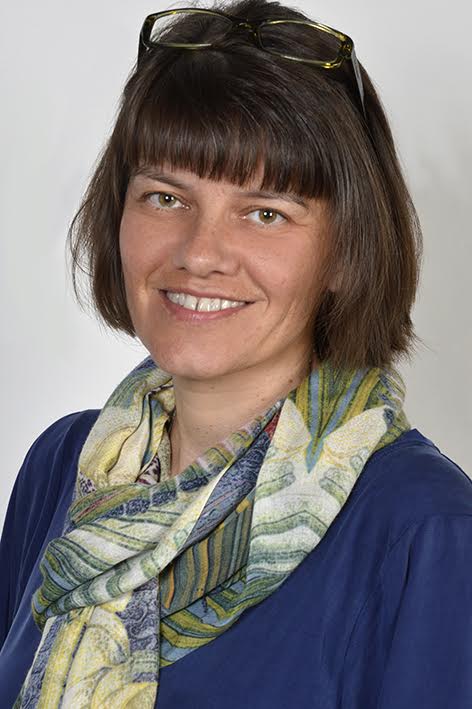
Professor Marta Zofia Kwiatkowska is Professor of Computing Systems and Fellow of Trinity College at the University of Oxford, where she has held a faculty position since 2007. She previously served as Professor of Computer Science at the University of Birmingham (2001–2007), Reader and Lecturer at the University of Birmingham (1994–2001), and Lecturer at the University of Leicester (1986–1994). Her academic career began as Assistant Professor at the Jagiellonian University in Kraków, Poland (1980–1988). Education: BSc/MSc in Computer Science, Jagiellonian University, Kraków MA, University of Oxford PhD, University of Leicester Research Interests: Professor Kwiatkowska spearheaded the development of probabilistic and quantitative verification methods on the international stage. Her work bridges theory and practice through the PRISM model checker—the leading software tool in probabilistic model checking—used worldwide for research and teaching. Application domains include communication and security protocols , nanotechnology designs , power management , ubiquitous computing and systems biology . She investigates automated verification , temporal logics , semantic models for concurrency , real-time systems , and biological process modelling . Current grant funding exceeds £3.7 million from EPSRC, EU and ERC, including the prestigious ERC Advanced Grant VERIWARE. Scientific Awards & Honours: Fellow of the Royal Society Fellow of the ACM Fellow of the European Association for Theoretical Computer Science (EATCS) Fellow of the British Computer Society (BCS) Fellow of the Polish Society of Arts & Sciences Abroad ERC Advanced Grant VERIWARE (€2.046 M, 2010–2015) Top Cited Article Award, Theoretical Computer Science (2005–2010) Best Paper Award, QEST 2006 Doctoral Supervision & Grants: Professor Kwiatkowska actively supervises doctoral students (D.Phil. at Oxford) and post-doctoral researchers. She welcomes applications in areas aligned with her research interests, detailed here . Current students include Charlie Griffin, Daqian Shao, Matthew Yuan and Minghao Liu; past students and researchers number over twenty, many now in faculty or industry leadership roles. Laboratory & Teams: She leads the Oxford Quantitative Verification group within the Department of Computer Science. Ongoing projects include FUN2MODEL, ELSA, FAIR and the flagship PRISM probabilistic model checker. The group maintains strong collaborations with biological, robotics and engineering teams worldwide.
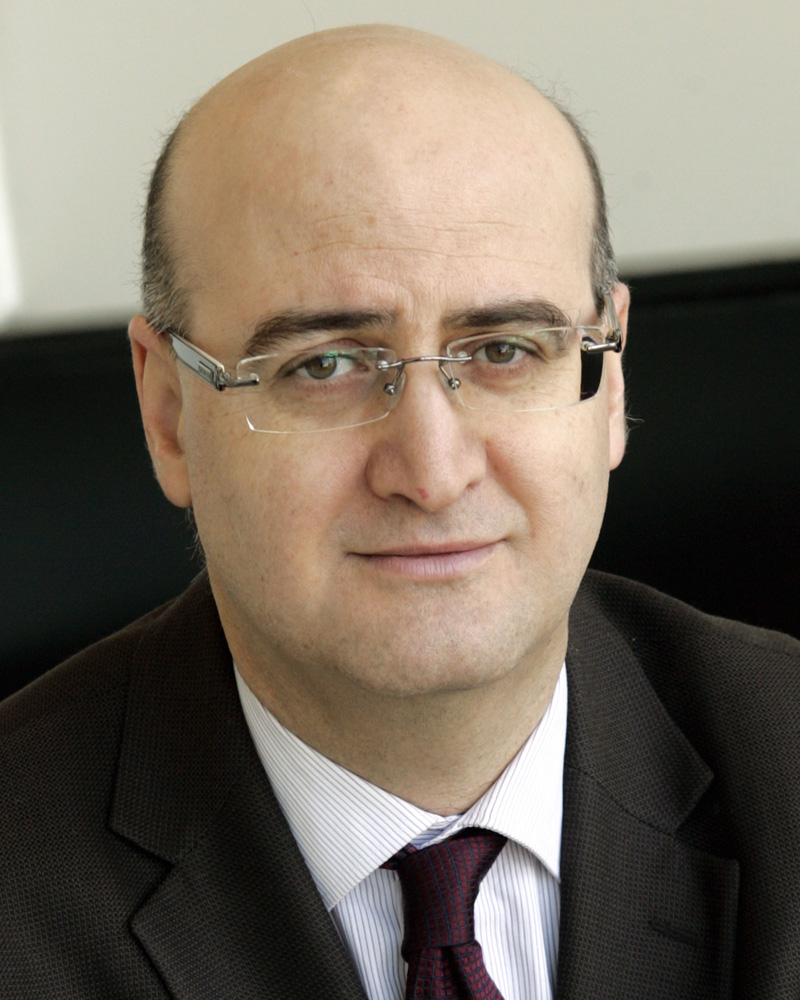
Matteo Maffei is a Full Professor at TU Wien, leading the Security and Privacy group. He joined in 2017 after 11 years at Saarland University's CISPA. He holds a Ph.D. in Computer Science from Ca’ Foscari University of Venice (2006). He coordinates the TU Wien Cybersecurity Center, the SecInt Doctoral School, and the FWF Special Research Program SPyCoDe. His research focuses on formal methods for security and privacy, blockchain technologies, and web security. Roles: Full Professor, Coordinator of TU Wien Cybersecurity Center, Module Head of Christian Doppler Lab for Blockchain Technologies (CDL-BOT), Board Member of Vienna Cybersecurity and Privacy Research Cluster (ViSP). His work emphasizes formal verification of cryptographic protocols, smart contracts, and decentralized systems. Key achievements include ERC Advanced (2024) and Consolidator (2018) Grants, and leadership roles in conferences like IEEE Computer Security Foundations Symposium (CSF). Research Interests: Formal methods, smart contracts, blockchain scalability, web security, privacy-preserving protocols, and decentralized systems. His recent projects include optimizing Lightning Network channels, secure multi-hop payments, and AI-driven robustness verification. Publications: Over 200 publications in top venues like CCS, IEEE S&P, and CRYPTO. Recent work includes advancements in blockchain interoperability (e.g., Alba bridges), light client protocols (Blink), and neural network verification techniques. Grants & Awards: ERC Advanced Grant (2024), ERC Consolidator Grant (2018), DFG Emmy Noether Fellowship (2009). Led projects funded by EU Horizon, FWF, and industry partners like ABC Research GmbH. Advising & Labs: Supervised over 20 PhD/Master theses. Active in the Christian Doppler Lab for Blockchain Technologies and the SPyCoDe SFB. Collaborates with institutions like SBA Research and Stanford University.
Joseph Sifakis is a CNRS Research Director and founder of Verimag Laboratory in Grenoble, France. He holds the INRIA-Schneider endowed industrial chair since 2008 and has been instrumental in advancing concurrent systems specification and verification. Education: Electrical Engineering (Technical University of Athens), Computer Science (University of Grenoble) Research interests focus on component-based design , real-time systems , and correct-by-construction techniques . He pioneered the development of the BIP framework and contributed to model checking, a cornerstone of industrial system verification. Recent publications emphasize component-based modeling, formal verification, and distributed system design, reflecting his work's impact on embedded systems and critical applications like aerospace and telecommunications. Scientific awards include: Turing Award (2007) CNRS Silver Medal (2001) Test-of-Time Award (2012) Multiple honorary doctorates (2008-2011) Member of prestigious academies Industry collaborations span Airbus, ST Microelectronics, and the European Space Agency, with applications in aeronautics, telecommunications, and industrial software standards. He leads the ARTIST2 Network of Excellence and directs the CARNOT Institute 'Intelligent Software and Systems'.
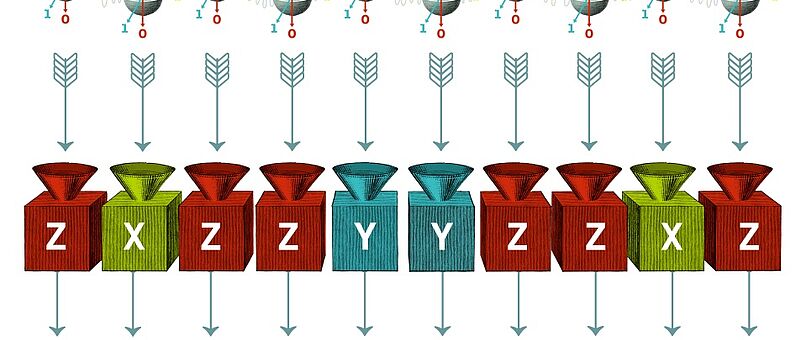
Dr. Borivoje Dakic is an Associate Professor at the University of Vienna , affiliated with the Faculty of Physics and the Quantum Optics, Quantum Nanophysics and Quantum Information department. His research spans foundational and applied aspects of quantum theory. Operational reconstruction of quantum formalism Quantum interference as a resource for communication Tomography of large-scale quantum systems Macroscopic quantum phenomena His work includes scalable verification techniques for quantum devices and collaborations with experimental teams like Philip Walther’s and Markus Aspelmeyer’s groups. He received the Marko Jarić Prize (2025) for his contributions. Recent projects focus on diagnostics of quantum devices (FWF BeyondC SFB), information-theoretic foundations of quantum interference (FWF P36994), and local operations in quantum field theory (Cluster of Excellence QuantA). His research on quantum coherence in networks and macroscopic entanglement challenges traditional assumptions about quantum-classical boundaries. Publications emphasize resource-efficient tomography, device-independent verification, and foundational frameworks for quantum statistics and field theory. Teaching: Quantum Information (2025W), Theory in Quantum Optics (2025S), VCQ Summerschool Labs: Dakić Group at University of Vienna
Professor Moncef Gabbouj is a distinguished academic and researcher currently serving as Professor of Signal Processing at the Department of Computing Sciences, Faculty of Information Technology and Communication Sciences, Tampere University, Finland. Previously, he held the same position at Tampere University of Technology before the merger in 2019. He has also held visiting professorships at prestigious institutions including Hong Kong University of Technology and Science, University of Southern California, and Purdue University. Ph.D. and MSc. in Electrical Engineering from Purdue University, USA (1989 and 1986) B.Sc. in Electrical Engineering from Oklahoma State University, USA (1985) Prof. Gabbouj's research spans multiple domains within signal and image processing, with a strong focus on machine learning applications. His primary research interests include artificial intelligence, machine learning, Big Data analytics, multimedia content-based analysis, indexing and retrieval, nonlinear signal and image processing, voice conversion, and video processing and coding. His work bridges theoretical advancements with practical applications across various industries, particularly in multimedia communications and biomedical applications. His extensive publication record demonstrates a clear evolution from traditional signal processing techniques toward more sophisticated machine learning and deep learning approaches. Recent work shows increasing focus on convolutional neural networks for various applications including ECG classification, video processing, financial time-series analysis, and image recognition tasks, reflecting the broader trend in the field toward deep learning methodologies while maintaining strong foundations in signal processing theory. IEEE Fellow (2011) Member, Finnish Academy of Science and Letters (2014) Knight, First Class, of the Order of the White Rose of Finland (2006) Nokia Foundation Recognition Award (2005) Nokia Foundation Visiting Professor Award (2012) Finnish Cultural Foundation for Art and Science Award (2017) TUT Foundation Grand Award (2015) Prof. Gabbouj has supervised 64 doctoral and 72 Master's theses, demonstrating his significant contribution to academic mentoring. His research has been supported by substantial funding, including research grants totaling 8.5 million Euro (2001-2015). He has served as Academy of Finland Professor during 2011-2015 and has been involved in numerous EU research projects including Horizon, ESPRIT, HCM, IST, COST, Tempus and Erasmus programs. As Editor, Guest Editor or member of the Editorial Board of 6 international scientific journals, he has significantly influenced the academic discourse in his field. He leads the Signal Analysis and Machine Intelligence (SAMI) research group at Tampere University and serves as the Finland Site Director of the NSF IUCRC funded Center for Visual and Decision Informatics. His research unit focuses on applying advanced machine learning techniques to solve complex problems in signal processing, computer vision, and multimedia analytics, with applications ranging from healthcare to multimedia communications and financial analysis.
Markus Vincze is an Associate Professor at the Institute of Automation and Control Engineering (ACIN) at Vienna University of Technology (TU Wien). He founded the Vision for Robotics (V4R) group in 1996 to advance robotic perception, particularly in real-world environments and homes. His work focuses on cognitive computer vision techniques for robotics. Education: Diplom in Mechanical Engineering (1988) and PhD (1993) from TU Wien; M.Sc. (1990) from Rensselaer Polytechnic Institute. V4R coordinates EU projects like ActIPret, robots@home, HOBBIT, and national initiatives like vision@home. Markus has edited a book on Robust Vision with Gregory Hager and authored 62 peer-reviewed journal articles and over 400 reviewed publications. His recent research explores zero-shot 6D pose estimation, sim-to-real transfer, and transparent object detection. Markus has served as program chair for ICRA 2013 and organized HRI 2017 in Vienna. He has advised numerous students and secured grants from the Austrian Academy of Sciences for work at HelpMate Robotics and Yale's Vision Laboratory. The V4R group leads innovations in robotic vision, including frameworks for synthetic data generation (Unrealgensyn), depth completion (CAGT), and educational robotics applications for sustainability. Their work spans household robotics (RH3), agricultural robotics (EdgeSoil), and human-robot collaboration.
Roman Obermaisser is a Professor at the Vienna University of Technology (TU Wien), affiliated with the Cyber-Physical Systems department. His research focuses on real-time systems, system architectures, communication protocols, safety-critical systems, distributed algorithms, and fault-tolerance. He holds a PhD in Computer Science from TU Wien, awarded in 2003 for his work on integrated architectures for control paradigms. His academic contributions span over two decades, with publications in top-tier conferences and journals. Key research themes include time-triggered architectures (TTA), fault containment in embedded systems, and integration of heterogeneous communication protocols like CAN and Ethernet. He has supervised numerous graduate students, contributing to advancements in system-on-chip (SoC) design, transient-resilient architectures, and diagnostic frameworks for real-time systems. Obermaisser’s work emphasizes practical applications in automotive and industrial systems, addressing challenges such as scalability, reliability, and composability. His involvement in projects like GENESYS and DECOS highlights his role in developing cross-domain reference architectures for embedded systems. Recent efforts include evaluating ontology-based reconfiguration and COTS-based Ethernet solutions for safety-critical networks. His articles reflect a focus on real-time communication protocols, fault-tolerant design, and system integration, with applications ranging from automotive networks to smart transducers. Advising over 20 students underscores his commitment to nurturing the next generation of embedded systems researchers.
Victor Vianu is a Professor of Computer Science and Engineering at the University of California, San Diego and holds the INRIA International Chair at INRIA-Saclay in Paris. He has maintained continuous faculty status at UC San Diego since 1983 while developing extensive international collaborations, particularly with French research institutions including INRIA, ENST-Paris, ENS-Paris, and the University of Paris. His academic credentials include a Ph.D. in Computer Science from the University of Southern California (1983) and undergraduate studies in Mathematics and Informatics at the University of Bucharest (1974-1977). Professor Vianu's research spans computational logic, database systems and theory, and automatic verification. His work uniquely bridges theoretical foundations with practical applications in XML processing, workflow systems, and data-driven applications. He has made seminal contributions to understanding the theoretical underpinnings of database query languages and their expressive power, particularly in the context of XML technologies and workflow systems. His research demonstrates a consistent trajectory from theoretical computer science to practical database systems applications. His publication record reveals significant contributions to database theory spanning over three decades, with particular emphasis on XML technologies, workflow systems, and formal methods for data-driven applications. His work shows a clear evolution from foundational theoretical work to practical applications in business processes and web technologies. INRIA International Chair (2013) Fellow of the American Association for the Advancement of Science (AAAS) (2013) ACM PODS Alberto O. Mendelzon Test-of-Time Award (2010) Fellow of the Association for Computing Machinery (ACM) (2006) Professor Vianu has held significant leadership roles including Editor-in-Chief of the prestigious Journal of the ACM, numerous program committee chair positions for major database conferences (PODS, ICDT, ASIAN), and General Chair for ACM SIGMOD conferences. He has served on the executive committees of SIGMOD (1998-2000) and PODS (1993-2004), and was a member of the ICDT Council (1997-2007), demonstrating sustained influence in the theoretical database community. His extensive invited talks at major conferences including College de France, ACM PODS, and International Conference on Database Theory highlight his international recognition.
Georges Gielen is Full Professor in the Department of Electrical Engineering (ESAT) at KU Leuven, Belgium, and part-time Research Director at imec. He has held multiple leadership roles including Chair of ESAT Department (2012-2013, 2020-2024) and Vice-Rector for Science, Engineering & Technology (2013-2017). His academic career spans over 30 years at KU Leuven, progressing from Assistant to Full Professor. His research focuses on analog and mixed-signal integrated circuit design automation , with expertise in CAD tools, design optimization, sensor interfaces, and neuromorphic systems. His work bridges hardware design with machine learning, particularly in hardware-efficient AI implementations and biomedical applications. He has pioneered techniques for automated analog circuit sizing, topology synthesis, and reliability-aware design in nanometer CMOS. Gielen has received numerous accolades including the IEEE CAS Mac Van Valkenburg Award (2015), IEEE CAS Charles Desoer Award (2020), and EDAA Achievement Award (2021). He holds an ERC Advanced Grant AnalogCreate and is an IEEE Fellow since 2002. As a prolific scholar, he has chaired major conferences including DATE (2006), ICCAD (2007), and ESSCIRC (2017). He has graduated over 55 PhD students through the MICAS research group at KU Leuven, currently supervising 13 doctoral candidates. His research team collaborates extensively with imec and industry partners on cutting-edge projects in carbon-aware AI accelerators, uncertainty-aware design, and neuromorphic sensor interfaces.
Bernhard Aichernig is an Associate Professor at the Institute of Software Engineering and Artificial Intelligence. His work bridges formal methods, model-based testing, and artificial intelligence, with a focus on automata learning, digital twins, and AI-assisted programming. Institution: Institute of Software Engineering and Artificial Intelligence Key Research Areas: Model-Based Testing, Automata Learning, AI-Driven Verification His research explores the integration of machine learning into formal verification, enabling scalable testing of complex systems like IoT devices and reinforcement learning agents. Recent projects include AI-Augmented DevOps frameworks (AIDOaRT) and digital twin validation (LearnTwins). Notable scientific awards include multiple best paper recognitions at SEFM (2020, 2021) and the TAYSIR Competition first place (2023). His publications emphasize hybrid approaches combining genetic programming, SMT solving, and neural networks for system modeling. 2025 : AI-assisted programming, timed automata via domain knowledge 2024 : Stochastic environment modeling, Git system learning 2023 : Reinforcement learning under partial observability, digital twins for VPN servers He actively contributes to testing frameworks like AALpy and investigates explainable AI for fault diagnosis in cyber-physical systems.
Hans Tompits is an Associate Professor in the Department of Knowledge-Based Systems at Technische Universität Wien (Vienna University of Technology). His research focuses on computational logic, declarative logic programming, and formal methods, with a particular emphasis on Answer-Set Programming (ASP). He coordinates the Master's program in Logic and Computation and leads projects in areas such as formal methods for optimization, fault-tolerant autonomous systems, and algorithmic composition. His work bridges theoretical advancements with practical applications, including tools like SeaLion (an ASP IDE with debugging support) and dlvhex (an ASP-based semantic web reasoner). He has contributed to foundational topics like program equivalence, debugging techniques, and integration of ASP with external systems. His recent projects address challenges in autonomous vehicle architectures, music composition algorithms, and safety-critical system design. Tompits has published extensively on topics ranging from nonmonotonic reasoning and modal logics to the development of declarative programming tools. His interdisciplinary approach spans computer science, mathematics, and AI, with applications in both academic and industrial contexts.
Thomas Henzinger is a Professor at the Institute of Science and Technology Austria (ISTA), where he leads the Henzinger Thomas Group focused on improving software reliability through mathematical methods. He previously served as ISTA's President (2009–2022) and held academic positions at EPFL, Max Planck Institute, UC Berkeley, and Cornell University. Education: Dipl.-Ing. in Computer Science (Johannes Kepler University, Austria), M.S. in Computer and Information Sciences (University of Delaware), PhD in Computer Science (Stanford University), and Honorary Doctorates from Fourier University (France) and Masaryk University (Czech Republic). The group's research spans concurrent systems , embedded systems , quantitative model checking , runtime monitoring , and trustworthy AI . They develop tools like HyTech and VAMOS, emphasizing predictability, robustness, and fairness in safety-critical software. Recent publications highlight trends in quantitative automata , fairness in AI , quantum algorithms , and automata theory , reflecting interdisciplinary applications from cyber-physical systems to neural networks. Collaborative projects include SPyCoDe (security foundations) and VAMOS (software monitoring). Honors & Awards: 2024 Fellow of the Royal Society 2020 Member, US National Academy of Sciences 2015 Royal Society Milner Award 2012 Wittgenstein Award 2006 ACM and IEEE Fellow 1995 NSF CAREER and ONR Young Investigator Awards Henzinger advises current and former PhD students including Mahyar Karimi, Pavol Kebis, and Mathias Lechner. His grants include ERC Advanced Grants (QUAREM, VAMOS) and FWF funding (Wittgenstein Award, NFN RISE). Labs & Teams: He leads the Henzinger Thomas Group at ISTA, collaborating with FORSYTE (TU Wien) and contributing to EU-funded initiatives. The group integrates postdocs, PhD students, and interns in formal methods and system verification.
Ana Sokolova is a Professor in the Department of Computer Science at the University of Salzburg. She is affiliated with the Faculty of Digital and Analytical Sciences and actively contributes to research in theoretical computer science. University: University of Salzburg Faculty: Faculty of Digital and Analytical Sciences Department: Computer Science Email: ana.sokolova@plus.ac.at Her research focuses on probabilistic systems , concurrency theory , convex algebras , and formal verification . This work bridges theoretical foundations with practical applications in distributed computing and programming semantics. Recent publications highlight advancements in trace semantics , determinization , probabilistic anonymity , and coalgebraic modeling . Key trends include the integration of Markov chains , nondeterministic systems , and algebraic structures for formal verification.