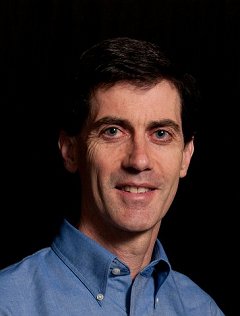
Thomas W. Reps is the J. Barkley Rosser Professor & Rajiv and Ritu Batra Chair Emeritus at the University of Wisconsin-Madison , where he has been a faculty member since 1985. He is also President of GrammaTech, Inc., and a co-founder of the company. Education: Ph.D. in Computer Science from Cornell University (1982), winner of the 1983 ACM Doctoral Dissertation Award. Reps’s research spans program analysis , abstract interpretation , model checking , and computer security . His recent work focuses on quantum computing verification , probabilistic program analysis , and symbolic methods for static analysis . His publications (over 225) include foundational contributions to program slicing (1988 paper with Horwitz and Binkley, cited >1,780 times), machine-code analysis (ETAPS Best-Paper Awards in 2004 and 2008), and programming environments (co-author of The Synthesizer Generator ). Key awards include the ACM SIGPLAN Programming Languages Achievement Award (2017) , Guggenheim and Packard Fellowships , and ACM Fellow (2005) . Students: Mentored award-winning graduates like Akash Lal (SIGPLAN Outstanding Dissertation) and Venkatesh Srinivasan (Outstanding Graduate Student Research Award).
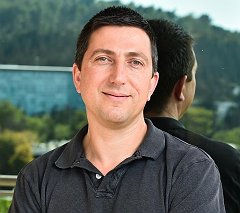
Eran Yahav is an Associate Professor in the Computer Science Department at the Technion - Israel Institute of Technology. He previously served as a research staff member at IBM T.J. Watson Research Center from 2004 to 2010. His academic journey began with a B.Sc. from the Technion in 1996, followed by a Ph.D. from Tel Aviv University in 2005. Yahav's research focuses on program analysis, program synthesis, program verification, and machine learning for programming. His work bridges theoretical foundations with practical applications, particularly in developing techniques that help programmers work more effectively with complex frameworks and APIs. He has pioneered approaches that combine static analysis with machine learning to address challenges in code search, completion, and understanding. His recent work heavily intersects with neural network applications to programming tasks, demonstrating how deep learning can enhance traditional program analysis techniques. His publication record shows a clear evolution from traditional program analysis and verification toward integrating machine learning with programming language processing. The most recent articles reveal a strong focus on neural methods for code understanding, including structural language models, adversarial examples for code models, and neural approaches to binary analysis and program synthesis. This represents a significant shift toward leveraging AI techniques to solve longstanding problems in programming languages and software engineering. Yahav has received numerous accolades including the prestigious Alon Fellowship for Outstanding Young Researchers, the Andre Deloro Career Advancement Chair in Engineering, and an ERC Consolidator Grant. He also earned best paper awards at ISSTA 2006 and 2007. As an advisor, Yahav has mentored numerous Ph.D. and Master's students who have gone on to make significant contributions in academia and industry. His research has been supported by substantial grants, including the ERC Consolidator Grant. He also serves as CTO at Tabnine, demonstrating the practical impact of his research. Yahav leads multiple research projects including PRIME (Programming with Millions of Examples), Fender (Preserving Correctness under Weak Memory Models), Saint (Synthesis using Abstract Interpretation), and several others focused on program analysis, verification, and synthesis. His work often involves building practical tools that translate theoretical advances into usable software engineering solutions.
Martin Berger is an Associate Professor in Foundations of Computation at the University of Sussex's School of Engineering and Informatics. His research bridges theoretical computer science and practical systems engineering, with focus areas including: Formal methods and program verification Programming language design and semantics Hardware security vulnerabilities and mitigations GPU-accelerated computation and program synthesis Automated reasoning and logic-based systems With 51 publications, his recent work demonstrates strong emphasis on: Developing high-performance simulation tools (Pydrofoil) GPU-based acceleration of formal methods Security analysis of programming language ecosystems Automated inference systems for regular expressions He maintains active research collaborations across Europe and welcomes inquiries via his institutional email.
Dr. Angelo Valleriani serves as Group Leader for Stochastic Processes in Complex and Biological Systems at the Max Planck Institute of Colloids and Interfaces in Potsdam, Germany, and coordinates the International Max Planck Research School (IMPRS) on Multiscale Bio-Systems. His research bridges theoretical physics and biological applications with a focus on quantitative modeling of complex biological phenomena. Dr. Valleriani earned his PhD in High Energy Physics from SISSA in Trieste, Italy (1996), following a Laurea Degree in Theoretical Physics from the University of Bologna (1992) with full marks and honors. His academic journey includes Visiting Scientist positions at Max Planck Institutes in Golm and Dresden before becoming a Group Leader in November 2000. His research interests encompass: Stochastic modeling of biological processes RNA biology and translational control mechanisms mRNA and tRNA turnover dynamics Population genetics and evolutionary biology Biostatistical data analysis Dr. Valleriani's recent publications (2022-2024) reveal a strong emphasis on computational approaches to biological problems, particularly in ribosome dynamics, protein synthesis regulation, and cellular remodeling processes. His work demonstrates sophisticated integration of mathematical modeling with experimental biology. He maintains active collaborations with researchers from multiple institutions including the University of Potsdam (Silke Leimkühler, Carsten Beta, Stefanie Barbirz), University of Cambridge (Davide Chiarugi), Weizmann Institute (Ziv Reich, Ruti Kapon), DRFZ Berlin (Ria Baumgrass), and others. The research group actively recruits MSc students from physics, mathematics, engineering, and bioinformatics backgrounds for challenging thesis projects in computational biology and biophysics.