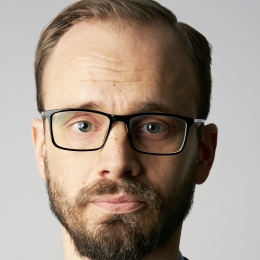
Hadi Meidani is a Clinical Associate Professor at the Carle Illinois College of Medicine , specifically within the Department of Biomedical and Translational Sciences at the University of Illinois at Urbana-Champaign . He teaches courses in Civil and Environmental Engineering, including topics like Systems Engineering & Economics , Machine Learning in CEE , and Uncertainty Quantification . Ph.D., Civil Engineering, University of Southern California (2012) M.S., Electrical Engineering, University of Southern California (2012) M.S., Structural Engineering, Sharif University of Technology (2005) B.S., Civil Engineering, K.N. Toosi University of Technology (2002) Dr. Meidani's research focuses on uncertainty quantification , scientific machine learning , and optimization under uncertainty for engineering systems. His work spans stochastic multiscale analysis , physics-informed machine learning , and model reduction techniques. His recent publications emphasize machine learning for infrastructure systems , graph neural networks , physics-informed models , and traffic assignment . Key trends include deep learning , multi-fidelity modeling , and neural operator transformers applied to metamaterial design , seismic reliability , and autonomous freight delivery .
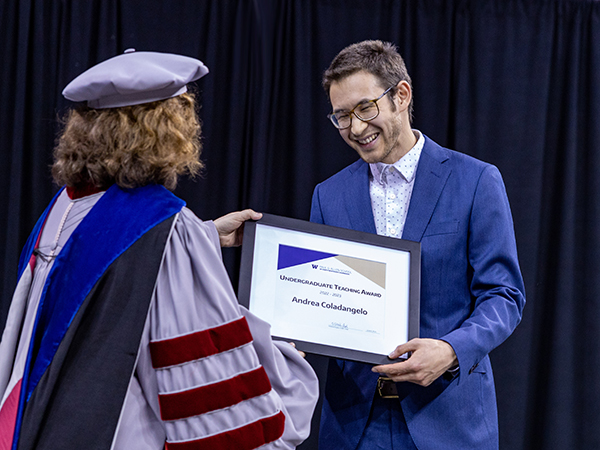
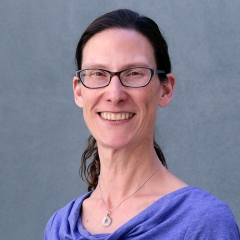
Andrea Coladangelo is an Assistant Professor at the Allen School of Computer Science & Engineering , University of Washington , co-leading the Quantum group and contributing to the Theory and Crypto groups. He coordinates the NSF-funded Quantum@UW REU program , fostering undergraduate research in quantum information. Previously, he was a postdoctoral researcher at UC Berkeley and the Simons Institute , advised by Umesh Vazirani , following a PhD in Computer Science at Caltech under Thomas Vidick . His academic journey began with a B.A. in Mathematics from Oxford and a Master in Mathematics from Cambridge . He co-founded qBraid , a platform for quantum computing education. Research Interests : Andrea explores the intersection of quantum computation and cryptography , focusing on foundational questions in entanglement , quantum correlations , and quantum learning theory . His work investigates quantum pseudorandomness , device-independent security , quantum algorithms , and quantum copy-protection , often leveraging computational assumptions to bridge quantum information theory with cryptographic applications. Scientific Awards : 2025 Google Research Scholar Program Award in Quantum Computing 2023 CSE Undergraduate Teaching Award for his course on quantum computation 2019 Best Student Paper Award at QIP Teaching & Outreach : Andrea designed and taught CSE 434: Intro to Quantum Computation (Spring 2023, 2024, 2025), CSE 534: Quantum Information and Computation (Autumn 2023), and CSE 599C: Quantum Learning Theory (Winter 2025). He also delivered lectures at the 22nd Bellairs Crypto Workshop (2024) and led a quantum programming tutorial using qBraid . Labs & Teams : As co-leader of the Quantum group at the Allen School, he collaborates with researchers in Theory and Crypto , advancing quantum computing through interdisciplinary projects and educational initiatives.
Professor Po-Ling Loh is a faculty member at the University of Cambridge, affiliated with the Statistical Laboratory within the Faculty of Mathematics. Her research focuses on statistical theory and methodology, with applications in machine learning, robust statistics, and medical imaging. She holds a professorship position and contributes to advancing computational and theoretical frameworks for high-dimensional data analysis. Loh’s work addresses challenges such as robust regression, differential privacy, and efficient algorithms for complex models. Her educational background includes studies at Cambridge and further academic pursuits, though specific degree details are not provided here. Research interests span statistical learning, adversarial machine learning, and the mathematical foundations of robust algorithms. She actively publishes in top-tier journals and conferences, addressing topics like neural network regularization, privacy-preserving synthetic data, and network analysis. Notably, Loh collaborates on projects involving medical image analysis (e.g., bone age estimation via BAE-ViT) and has contributed to methodological advancements in hypothesis testing and privacy-constrained inference. Her research often bridges theory and practice, emphasizing computational efficiency and statistical rigor. While no specific grants or awards are listed, her prolific publication record reflects sustained academic impact in statistical and machine learning domains. Loh is associated with the Statistical Laboratory, contributing to its research initiatives and possibly advising students in high-dimensional statistics and related fields. Her work frequently intersects with interdisciplinary applications, such as medical imaging and network science, underscoring the practical relevance of her theoretical contributions.
Aishwarya Agrawal is an Assistant Professor at Université de Montréal in the Department of Computer Science and Operations Research (DIRO), affiliated with Mila – Quebec Institute of Artificial Intelligence and a Canada CIFAR AI Chair. She also serves as a research scientist at Google DeepMind, spending one day weekly there. Education: B.E. in Electrical Engineering (IIT Gandhinagar, 2014), Ph.D. in Computer Science (Georgia Tech, 2019). Her research focuses on multimodal learning , deep learning , natural language processing , and computer vision , particularly in developing AI systems that 'see' and 'communicate' effectively. Grants & Awards: Canada CIFAR AI Chair, 2020 Sigma Xi Best PhD Thesis Award, NVIDIA Fellowship (2018–2019), and multiple fellowships from Google and Facebook. She leads projects like Advancing Multimodal Vision-Language Learning (CRSNG-funded) and StarDoc: Document Structure Extraction (MITACS). Research Contributions: Pioneered benchmarks like CulturalVQA and UI-Vision , and frameworks such as PROGRESS for efficient VLM training. Her work emphasizes cross-modal alignment, robust evaluation, and cultural understanding in AI systems. Labs/Teams: Active in Mila’s core academic group and collaborates with Google DeepMind on multimodal and vision-language research. Supervises a dynamic team of PhD and master’s students in Montreal.
Ram Vasudevan is an Associate Professor and Associate Chair of Graduate Studies in the Department of Robotics at the University of Michigan. His research focuses on developing tools for safe and robust deployment of robotic systems, emphasizing optimization, nonlinear control, and real-world applications. Key areas include legged robot locomotion, shared control systems, and safety-critical autonomous systems. Research Interests: Optimization and control of nonlinear systems, locomotion of legged robots, shared control active safety systems, and automation of diagnostic/rehabilitative tasks. His ROAHM Lab prioritizes mathematical guarantees for robotic performance, with applications in medical robotics, autonomous vehicles, and soft robotics. Recent work emphasizes trajectory optimization, sensor fusion, and safety-aware control strategies. He has contributed to benchmarks for autonomous vehicle perception and novel methods in thermal image restoration using neural radiance fields. Awards: None explicitly listed in provided text. Labs/Teams: Directs the ROAHM Lab, collaborating on projects like robotic tail mechanics, real-time motion planning, and sensor data analysis. Active in academic conferences including RSS and ICRA.
Alessio Lomuscio is a Professor of Safe Artificial Intelligence at Imperial College London, holding the prestigious Royal Academy of Engineering Chair in Emerging Technologies and recognized as an ACM Distinguished Member. He leads the Safe AI Lab, which focuses on developing methods and tools for the verification of AI systems to ensure their safe and secure deployment in applications of societal importance. His research spans verification and robust learning for neural networks and decision trees, robust machine learning in aviation and finance, monitoring of machine learning systems, assurance for autonomous systems and AI, and verification and validation of neuro-symbolic systems. Lomuscio has made significant contributions to formal verification methods for AI systems, particularly in the context of safety-critical applications. His recent publications demonstrate a strong focus on neural network verification techniques, with applications across multiple domains including finance, aviation, and autonomous systems. His work bridges theoretical advances in formal methods with practical applications in real-world AI systems, addressing critical challenges in AI safety and trustworthiness. Scientific Awards: Royal Academy of Engineering Chair in Emerging Technologies ACM Distinguished Member Lomuscio has served in numerous leadership roles, including as Co-Director (2023-present) and Deputy Director (2019-2023) of the UKRI Centre for Doctoral Training in Safe and Trusted Artificial Intelligence. He has also held positions as Director of Strategy and Planning (2017-2020), Member of Management Committee (2013-2020), and Deputy Head of Department (2016-2017). His editorial service includes roles as Associate Editor for Artificial Intelligence Journal and Editorial Board Member for Journal of Artificial Intelligence Research and Journal of Autonomous Agents and Multi-agent Systems. His research group actively mentors students and researchers, with current openings for PhD and postdoctoral positions focused on AI verification and safety. Lomuscio's work has established him as a leading figure in the field of safe and verifiable AI systems, with significant contributions to both theoretical foundations and practical applications.
Karl Gustafsson is a Professor at Stockholm University within the Department of Economic History and International Relations. His work bridges security studies , collective memory , and digital research methods in international relations. Current Role: Professor of International Relations, Stockholm University Previous Positions: Post-Doc at Lund University, Researcher at Swedish Institute of International Affairs Visiting Appointments: University of Tokyo, Osaka University, Keio University, Academia Sinica, Nordic Institute of Asian Studies Research Focus: Karl specializes in memory politics , ontological security , and anxiety-driven international dynamics , particularly in Sino-Japanese relations and digital platforms . His studies explore how historical narratives and online memory construction influence state identity and policy. Awards & Grants: Recipient of the Wang Gungwu Prize (2014) and Stockholm University Association’s award (2011). Holds Swedish Research Council and Marianne & Marcus Wallenberg Foundation grants for projects on apologies in international politics and digital memory in East Asia . Publications: His work appears in journals such as International Studies Quarterly , European Journal of International Relations , and Memory Studies , addressing topics like narrative power in East Asia, anxiety’s role in policy change , and digital humanities applications in IR.
Jenna Wise DiVincenzo is an Assistant Professor at the Elmore Family School of Electrical and Computer Engineering at Purdue University. She specializes in research areas such as software verification, formal methods, and programming languages, with a focus on gradual verification techniques that combine static and dynamic analysis. Her work emphasizes usability and scalability in verification tools, and she has contributed to projects like Gradual C0 and gradual null-pointer analysis. Dr. DiVincenzo earned her PhD in Software Engineering from Carnegie Mellon University (2023) and a BS in Mathematics and Computer Science from Youngstown State University (2017). She has interned at IBM Research, MIT Lincoln Laboratory, and the Software Engineering Research and Empirical Studies Lab at YSU. Her awards include the Google PhD Fellowship, NSF GRFP Fellowship, and 2022 Rising Star in EECS. Her research projects span theoretical advancements in gradual verification, empirical studies on usability, and practical tool development. She advises PhD students (e.g., Craig Liu, Conrad Zimmerman) and collaborates on initiatives like gradual verification for Rust and educational tools to teach verification concepts. Her work also explores leveraging large language models for specification generation and enhancing verification tool soundness through formal proofs.
Florentina Bunea is a Professor in the Department of Statistics and Data Science at Cornell University’s Bowers College of Computing and Information Science, and an active member of the Graduate Fields of Statistics, Applied Mathematics, and Computer Science. She also serves on the Diversity and Inclusion Council of her college, championing workforce diversity in data-science disciplines. Education & Institutional Roles Professor, Department of Statistics and Data Science, Cornell University Member, Graduate Fields of Statistics, Applied Mathematics, Computer Science Member, Diversity and Inclusion Council, Bowers College of Computing and Information Science Research Interests Professor Bunea’s research lies at the intersection of statistical machine-learning theory and high-dimensional inference. She develops rigorous methodology supported by sharp theoretical guarantees to tackle core problems in modern data science. Recent themes include: Soft-max mixtures for understanding large-language-model/AI algorithms Optimal transport for high-dimensional mixture distributions Wasserstein-distance inference for sparse mixing measures in topic models Latent-space clustering and cluster-based inference in high dimensions Network modeling and hidden-structure inference Applications spanning genetics, systems immunology, neuroscience, sociology, and economics Research Funding & Awards Her work is supported by grants from the National Science Foundation (NSF-DMS). She is a Fellow of the Institute of Mathematical Statistics and a recipient of the IMS Medallion Award. Editorial & Service Contributions Associate Editor: Annals of Statistics, Bernoulli, JASA, JRSS-B, EJS, Annals of Applied Statistics Co-Editor: Chapman & Hall/CRC Statistics and Applied Probability Monograph Series Advising & Collaboration Professor Bunea has mentored numerous doctoral and post-doctoral researchers, including Xin Bing, Shuyu Liu, Seth Strimas-Mackey, and Yang Ning, among others. Collaborative projects extend across Cornell and external institutions, producing widely-used software packages and high-impact publications. Contact Office: 1184 Comstock Hall, Cornell University Email: fb238@cornell.edu Phone: (607) 255-8449
Katie Byl is an Associate Professor in the Departments of Electrical and Computer Engineering and Mechanical Engineering at the University of California, Santa Barbara (UCSB). Her research focuses on robot dynamics and control, particularly in locomotion and manipulation, with applications in rough terrain legged locomotion, supervised autonomy, and flapping-wing flight. She holds B.S., M.S., and Ph.D. degrees in Mechanical Engineering from MIT. Affiliations: Center for Control, Dynamical Systems and Computation (CCDC) Mechanical Engineering Department Research Interests: Byl’s work emphasizes modeling and control of underactuated systems, stochasticity in real-world environments, and the development of robust control principles for dynamic systems. Her applied projects include exoskeletons, autonomous robots like RoboSimian (part of the DARPA Robotics Challenge), and flapping-wing microrobotics. Scientific Awards: NSF Early Career Development Award Hellman Faculty Fellowship Alfred P. Sloan Foundation Fellowship in Neuroscience Regents’ Junior Faculty Fellowship Teaching & Advising: Byl teaches courses in control systems (e.g., ECE 147B, ECE 179D) and robotics. She advises students in UCSB’s Robotics Lab, emphasizing a mix of control theory, mechanical design, and algorithm development. Undergraduate researchers are also recruited annually for summer projects. Labs & Teams: Her Robotics Lab focuses on hardware implementation of control ideas, maintaining a high robot-to-student ratio. Collaborations include the Army’s Institute for Collaborative Biotechnologies and the DARPA Robotics Challenge with JPL.
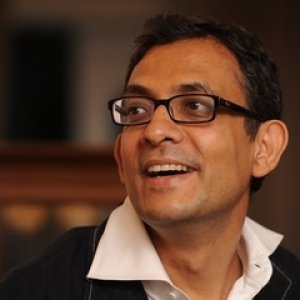
Abhijit Banerjee is the Ford Foundation International Professor of Economics at MIT and Director of the Abdul Latif Jameel Poverty Action Lab (J-PAL). A 2019 Nobel laureate in Economic Sciences, his research focuses on development economics, political economy, and poverty alleviation. He co-authored influential books like Poor Economics and Good Economics for Hard Times , emphasizing evidence-based policies and randomized controlled trials. Banerjee’s work addresses global challenges such as education, health, and social welfare, with notable contributions to microfinance, public health interventions, and anti-poverty programs. He holds leadership roles in global initiatives like the Global Education Evidence Advisory Panel and has advised governments worldwide. His research spans topics from police resource allocation in India to the impact of information during crises like demonetization and the pandemic. Education: Bachelor’s in Statistics, Presidency College, Kolkata M.A. in Economics, Jawaharlal Nehru University PhD in Economics, Harvard University Key Contributions: Co-founder of J-PAL, promoting evidence-based poverty reduction strategies. Pioneer in using randomized controlled trials (RCTs) for policy evaluation. Research on microfinance, education reforms, and health interventions in developing countries. Awards: Nobel Prize in Economics (2019), Infosys Prize in Social Sciences (2009), Member of the National Academy of Sciences (2020). Grants/Advisory Roles: Collaborations with institutions like the World Bank, UN, and governments on poverty, health, and education policies. Labs/Teams: J-PAL global network, Abdul Latif Jameel Poverty Action Lab.
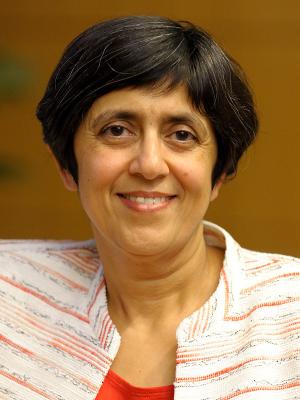
Sarita V Adve is the Richard T. Cheng Professor of Computer Science at the University of Illinois at Urbana-Champaign, where she conducts research spanning hardware, programming languages, operating systems, and applications with a focus on domain-specific systems. Her work bridges theoretical foundations and practical implementations, particularly in extended reality and heterogeneous computing. Her educational background includes a Ph.D. and M.S. in Computer Science from the University of Wisconsin-Madison (1993, 1989) and a B.Tech in Electrical Engineering from the Indian Institute of Technology Bombay (1987). Prior to joining Illinois, she served on the faculty at Rice University from 1993 to 1999. Adve's research centers on generalizable and scalable specialization for domain-specific systems, with current emphasis on extended reality (XR) systems including virtual, augmented, and mixed reality. She chairs the ILLIXR consortium to democratize XR research and developed the first fully open-source XR system (ILLIXR). Her foundational contributions include memory consistency models for C++ and Java programming languages, the Spandex coherence framework for heterogeneous systems, and software-driven approaches for hardware reliability. Her work spans hardware reliability (SWAT and RAMP projects), power management (GRACE system), and instruction-level parallelism. Recent publications reveal a strong focus on energy-efficient XR systems, hardware-software co-design for AI workloads, and resilience analysis. Her team explores rendering offload, visual-inertial odometry optimization, and compositional error injection frameworks, often targeting tradeoffs between energy, latency, and accuracy in mobile and edge environments. Fellow of the American Academy of Arts and Sciences Fellow of the ACM and IEEE ACM/IEEE-CS Ken Kennedy Award Anita Borg Institute Woman of Vision in Innovation Award ACM SIGARCH Maurice Wilkes Award Alfred P. Sloan Research Fellowship UIUC University Scholar University of Illinois Campus Award for Excellence in Graduate Student Mentoring Adve actively mentors students and has received multiple teaching awards. She co-founded the CARES movement to address discrimination in CS research events and chairs CS@Illinois CARES. Her service includes leadership roles in ACM SIGARCH (2015-2019), DARPA/ISAT study group, ACM Council, and Computing Research Association. She has secured significant funding including DARPA initiatives and Google Faculty Research Awards. She leads the ILLIXR consortium and has established collaborative research programs such as the $8.3M DARPA Joint University Microelectronics Program. Her lab focuses on open-source XR development, heterogeneous system architectures, and reliability-aware designs, with strong industry and government partnerships.
Zaid Harchaoui is an Adjunct Professor in the Department of Statistics at the University of Washington. His research focuses on machine learning, generative AI, and algorithmic optimization, with applications spanning ecology, neuroscience, and artificial intelligence. He explores learning under distributional shifts and develops tools for scalable generative models in language and vision domains. University: University of Washington Department: Statistics Research Focus: Learning from data with computational, inferential, and mathematical rigor; distributional shift adaptation; generative model scaling Email: zaid@uw.edu His recent work emphasizes generative AI applications in ecology and neuroscience, stochastic optimization for robustness, and algorithmic efficiency in large-scale learning. Key contributions include techniques for distributionally robust optimization, interpretable authorship obfuscation, and uncertainty quantification in behavior classification. Scientific awards and honors are not explicitly mentioned in the provided text. Collaborative efforts often intersect with nonlinear control algorithms, spectral analysis, and privacy-preserving machine learning frameworks.
Henrik Sandberg is a Professor at the Division of Decision and Control Systems , KTH Royal Institute of Technology , Stockholm, Sweden. He holds the title of Deputy Head of Division and is affiliated with the School of Electrical Engineering and Computer Science . Education: MSc in Engineering Physics (1999) PhD in Automatic Control (2004) from Lund University Postdoctoral position at Caltech (pre-2007) Research Interests: Focus on cyber-physical systems security , power systems , model reduction , and fundamental limitations of control systems . Key sub-areas include attack detection , networked control , privacy-preserving estimation , and resilient control architectures . Publications: Over 150 papers across IEEE Transactions and Automatica , covering topics like stealthy attacks , distributed control , LQG optimization , and thermodynamic costs in filtering . Recent work includes LWE-based encrypted control and Bayesian deception mechanisms . Scientific Awards: Best Student Paper Award Finalist at IEEE CASE 2014; Best Student-Paper Award at IEEE CDC 2004. Grants & Projects: Leads the DYNACON project (WASP Cybersec cluster) and collaborates on CERCES (critical infrastructure resilience). Serves as examiner for multiple advanced courses in cybersecurity and control systems. Contact: Email: hsan@kth.se Phone: +46 (0)8 790 7294 Room: A:607, Malvinas Väg 10, Stockholm
Rizwan Ahmed is a Senior Lecturer in Accounting and Finance at the University of Kent 's Kent Business School . He serves as Director of Studies for the Department for Accounting and Finance, with prior experience as an Assistant Professor at institutions like the University of Birmingham, Cardiff Business School, and Birkbeck University of London. His research focuses on Sustainable Finance , FinTech , and Corporate Governance , with funding from the Economic and Social Research Council (ESRC) for collaborative projects. Fellowship of Higher Education Academy (HEA-UK) Associate Fellow Member, Chartered Institute of Securities and Investment (CISI-UK) His publications in journals like Energy Economics and International Journal of Finance and Economics examine intersections between climate risk, financial markets, and regulatory frameworks. He supervises PhD research in areas including Sustainable Finance, Climate Finance, and Corporate Governance in the financial sector. Research Trends Recent articles analyze climate change impacts , energy market spillovers , and ESG performance under sanctions, utilizing empirical methods and data from the UK, China, and emerging economies. Methodological innovations include cross-quantilogram analysis and portfolio optimization frameworks. Scientific Awards Fellowship of Higher Education Academy (HEA-UK) Associate Fellow Member, Chartered Institute of Securities and Investment (CISI-UK) Rizwan also acts as a peer reviewer for journals including International Review of Financial Analysis and Technological Forecasting & Social Change .