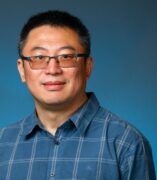
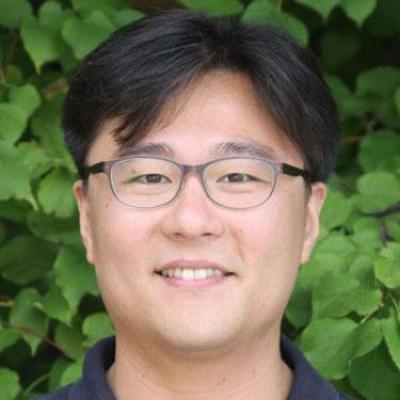
Yan Yan is an Associate Professor at the University of Illinois at Chicago , affiliated with the Department of Computer Science. Her research spans Computer Vision , Machine Learning , and Multimedia with a focus on model optimization, interpretability, and diffusion-based techniques.
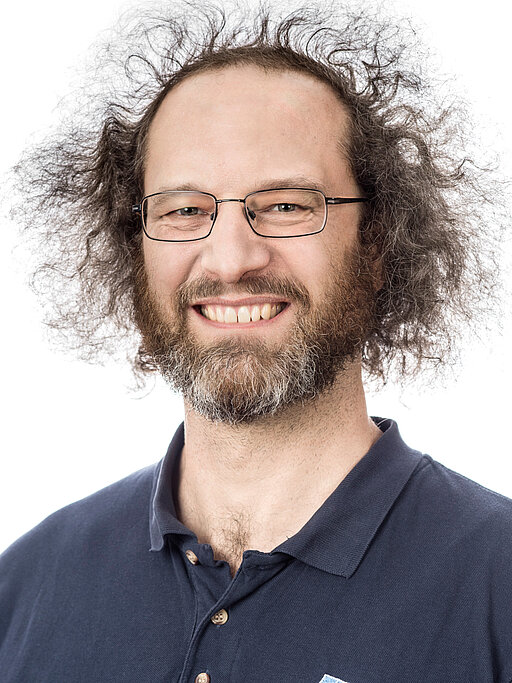
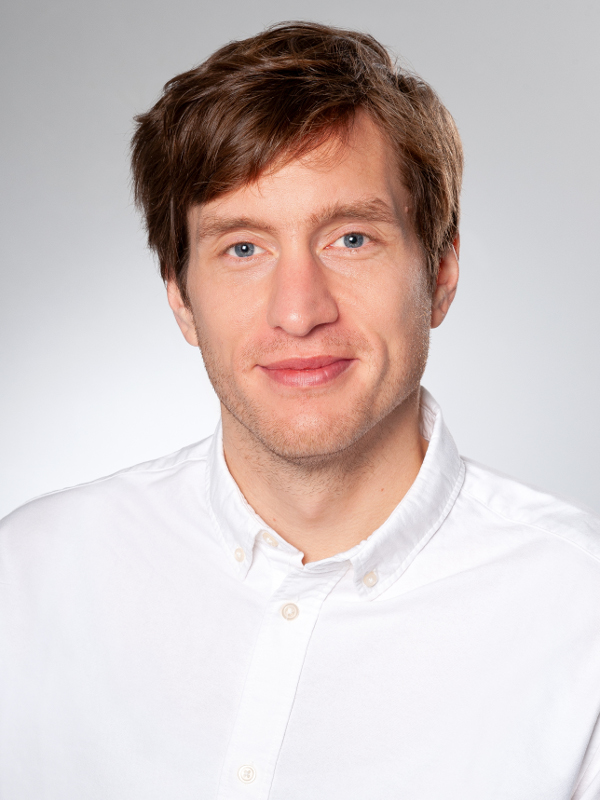
Professor Stefan Waldmann holds the Chair of Mathematics X (Mathematical Physics) at the University of Würzburg, where he leads the Mathematical Physics research team. His academic career spans from his doctoral work at Albert-Ludwigs-Universität Freiburg through faculty positions at multiple institutions including Erlangen, Leuven, and Frankfurt, before settling at Würzburg. He maintains an active research program in mathematical physics with numerous publications and collaborations across Europe. Waldmann's research interests focus on the mathematical foundations of quantum theory, particularly in the areas of deformation quantization, star products, symplectic and Poisson geometry. His work bridges abstract mathematical structures with physical applications, exploring how classical systems transition to quantum mechanical descriptions. He has made significant contributions to understanding the convergence properties of star products, representation theory of *-algebras, and Morita theory in deformation quantization contexts. His research also extends to coisotropic submanifolds, phase space reduction techniques, and applications to noncommutative spacetime models. The most recent publications demonstrate a consistent focus on advancing deformation quantization theory while addressing specific geometric contexts like Riemann surfaces, Lie groups, and Poincaré disc. His work shows increasing interest in convergence properties of star products and their applications to mathematical physics problems, with recent papers exploring homotopy structures, rigidity phenomena, and phase transitions in Poisson geometrical settings. The research shows a clear trajectory from formal deformation theory toward more strictly convergent mathematical frameworks. Prix du Concours annuel 2018 of the Académie royale des Sciences, des Lettres et des Beaux-Arts de Belgique Professor Waldmann has supervised numerous doctoral and master's students throughout his career, primarily at the University of Freiburg before his appointment at Würzburg. His supervision record includes over 20 theses on topics spanning deformation quantization, Poisson geometry, and mathematical aspects of quantum theory. He has organized multiple international workshops and conferences including the 'Math in the Mill' series and specialized workshops on Poisson geometry, deformation theory, and representation theory. His research has been supported through collaborations with institutions across Europe including Barcelona, Delft, and Mulhouse. At the University of Würzburg, Waldmann leads the Mathematical Physics research group within the Institute of Mathematics, focusing on deformation quantization and its applications to theoretical physics. The group maintains active collaborations with international partners and regularly hosts visiting researchers. Waldmann has also authored several influential textbooks including 'Linear Algebra 1 & 2', 'Topology: An Introduction', and 'Poisson-Geometrie und Deformationsquantisierung', which have become standard references in mathematical physics education.
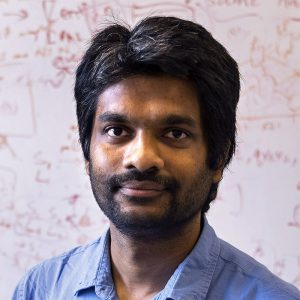
Bruno Cornelis is a postdoctoral researcher at Vrije Universiteit Brussel's Electronics and Informatics school, with a focus on biomedical signal processing, digital holography, and deep learning applications. His work spans both fundamental and applied research projects. Education : Master's thesis on Quantization-based Watermarking (2007) and Digital Holographic Image Processing (2007) Research Interests include: Deep Learning for Image Restoration and Biomedical Applications Sparse Signal Representations in Holography and Anomaly Detection Photoplethysmography (PPG) Signal Analysis Art Classification via Mathematical Signal Models Recent Publication Trends show a shift towards real-time traffic data disaggregation, PPG-based health monitoring, and deep learning architectures for image reconstruction. His work often bridges theoretical signal processing with practical biomedical/transportation applications. Honors : BARCO/FWO Master Thesis Award (2007) Collaborations involve EU-funded initiatives like GEAR and Tech4Health, with cross-disciplinary teams in Belgium and China. He has presented at IEEE conferences on transportation systems (ITSC 2022) and medical imaging (DATE 2025).
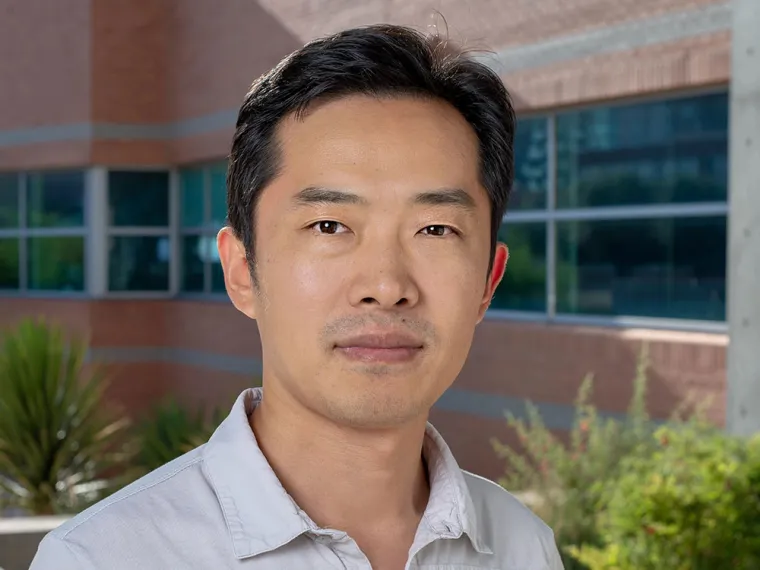
Vincenzo Bonnici is an Associate Professor in Informatics at the Department of Mathematical, Physical and Computer Sciences , University of Parma, Italy. His academic career includes a PhD in Computer Science from the University of Verona (2015), preceded by a master’s degree from the University of Catania (2011). He has held research positions at prestigious institutions, including the Institute for Genomics and Bioinformatics (IGB) , University of California, Irvine (2013–2014). Education BSc/MSc in Computer Science from University of Catania (2008/2011) PhD in Computer Science from University of Verona (2015) His research focuses on bioinformatics and computational biology , with a strong emphasis on subgraph matching algorithms for biomedical graphs, genomic sequence analysis using information theory, and parallel computing for biological networks. His work spans pangenomics, phylogenomics, and non-coding RNA studies, with applications in GPU and SMP architectures. The article trends reflect his core expertise in graph algorithms and computational genomics. Key contributions include MULTI-GRAPHMATCH (2025) for multigraph analysis, ARC-MATCH (2024) for edge domain-based graph querying, and foundational work on pangenome discovery (e.g., PANDELOS series, 2023). Parallel computing and information theory are recurring themes across his publications. Scientific awards include the ICPR 2014 international graph-matching contest and a best poster award at the Jacob T. Schwartz International School for Scientific Research. He has served as a speaker at 12 international conferences. Teaching includes courses on Artificial Intelligence Algorithms (2025/2026), Artificial Intelligence Laboratory , and Software Engineering at the University of Parma. His work integrates algorithmic innovation with biological data analysis.
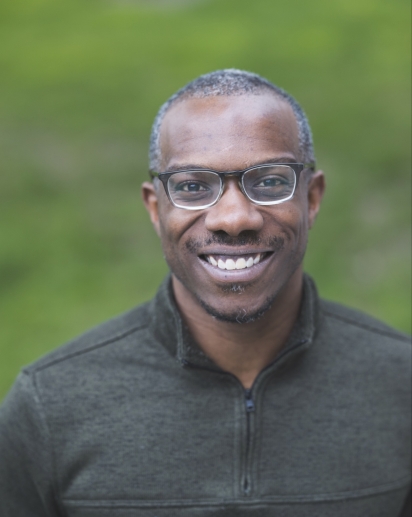
James Daniel Whitfield is an Associate Professor of Physics at Dartmouth College, specializing in quantum computing, quantum information science, and computational chemistry. His research focuses on the intersection of quantum mechanics and computational methods, with applications to electronic structure and fermionic systems. Ph.D. and M.A. in Physics from Harvard University B.S. in Physics from Morehouse College The Whitfield Group explores quantum simulations for physical systems, bridging classical and quantum computing techniques. Their work includes basis set optimization for NISQ-era quantum devices, entanglement spectrum analysis, and algorithmic solutions for quantum chemistry. Current projects funded by the Department of Energy and Army Research Office address: Quantum Chemistry for Quantum Computers (QCQC) Optimal Basis Set Design for Computational Chemistry Key research areas include quantum algorithm limitations, hybrid quantum-classical interfaces, and stochastic processes in uncertain systems. The group also develops educational tools like the qbraid platform for quantum technology training. Students and Team Members : Brent Harrison Weshi Wang Notable Collaborations : Viola Research Group Hautier Group qBraid Quantum Research
Volker Kiessling is an Associate Professor in the Department of Molecular Physiology and Biological Physics at the University of Virginia School of Medicine. His research focuses on membrane fusion mechanisms in two key contexts: Secretory vesicle fusion with the plasma membrane Viral membrane fusion during infections like HIV and Ebola His work employs advanced techniques such as Planar supported membranes Single molecule tracking Fluorescence microscopy Cryo-electron microscopy to study the interplay between lipids and proteins during fusion processes. Key contributions include: Discovering the role of cholesterol in HIV fusion Elucidating synaptotagmin's mechanism in calcium-triggered exocytosis Identifying how lipid asymmetry affects fusion pore dynamics Characterizing viral entry requirements for Ebola and HIV His publications reveal a consistent focus on SNARE proteins, lipid domains, and viral entry mechanisms across multiple high-impact journals.
In Kee Kim is an Associate Professor in the School of Computing at the University of Georgia, holding a Ph.D. in Computer Science from the University of Virginia (2018). His research focuses on performance and resource management problems in diverse computing systems, including cloud, high-performance computing (HPC), edge, and IoT environments. Funded by agencies like NSF, DoD, and Army Research Labs, his work bridges theoretical innovation with practical system optimization. Education : Ph.D. in Computer Science (University of Virginia, 2018) University : University of Georgia School : School of Computing Department : Department of Computer Science Current research directions include: Edge AI : System-level optimization for AI inference, training, and compression at the edge Serverless Workflow Management : Cost-performance optimization in edge-cloud collaboration Reproducible Benchmarking : Workload characterization across cloud, HPC, edge, and IoT systems Recent publications highlight advancements in: Edge device scheduling for heterogeneous AI accelerators Model compression techniques for constrained environments Energy scheduling for environmental sensors Serverless computing benchmarking Scientific Awards : Best Paper Award at IEEE EDGE 2024 for 'Characterizing Deep Learning Model Compression...' His Adaptive Computing & Edge Intelligence (ACE) Lab at UGA supports student research through facilities in Boyd Graduate Studies Research Center (Rooms 817 and 819). Current and former advisees have contributed to publications at top venues including IEEE EDGE, CLOUD, and ACM Transactions.
Alessio De Angelis is a researcher affiliated with the University of Perugia, focusing on advanced measurement systems, battery technology, and localization techniques. His work spans disciplines such as electrical engineering, machine learning, and IoT applications. University: University of Perugia Email: alessio.deangelis@unipg.it His research interests include: Battery management and state-of-charge estimation Uncertainty quantification in AI-based systems Ultra-wideband (UWB) and magnetic localization Wireless sensor networks for environmental monitoring Signal processing for quantized and constrained data IoT applications in structural and health monitoring Recent publications highlight his expertise in battery diagnostics, localization algorithms, and AI-driven measurement systems. Key trends involve integrating machine learning with electrochemical impedance spectroscopy (EIS) and optimizing low-complexity sensor architectures.
Tuna Tuğcu is a Professor in the Department of Computer Engineering at Bogazici University's Faculty of Engineering. He also serves as Advisor to the Rector. He is a faculty member of the Computer Networks Research Lab (NetLab) and participates in the Telecommunications and Informatics Technologies Research Center (TETAM) at Kandilli Campus. His educational background includes a PhD in Computer Engineering from Bogazici University (2001), followed by a post-doctoral position at Georgia Institute of Technology's Broadband and Wireless Networking Lab (18 months), and a visiting professorship at Georgia Institute of Technology - Savannah Campus (2 years). Professor Tuğcu's research focuses primarily on wireless networks with emphasis on Cognitive Radio and 5G Networks, as well as Molecular Communications and NanoNetworking. His work spans both theoretical and practical aspects, including the development of emulators for molecular communication systems. His research group has created several educational tools including emulators for Communication via Diffusion, Calcium Signaling, Neuromuscular Junctions, and Protrusions. His publication record shows a clear progression from foundational work in Cognitive Radio Networks architecture to more recent work on Radio Environment Maps, social cognitive radio, and optimized sensor networks. The research demonstrates consistent focus on spectrum utilization challenges and innovative approaches to molecular-scale communications. Best Paper Award at The Sixth Advanced International Conference on Telecommunications (AICT) 2010 Professor Tuğcu has supervised numerous students who have contributed to research projects and developed educational emulators. He teaches courses including Introduction to Computing (CmpE150), Introduction to Object Oriented Programming (CmpE160), Operating Systems (CMPE322), Broadband Wireless Networks (CmpE567), and NanoNetworking (CMPE59G). His research group is actively seeking new members for projects on NanoNetworking, 5G/CloudRAN, and Next-Generation Private Industrial Communications Networks, including a joint TÜBİTAK-2244 project with SIEMENS.
Reemt Hinrichs is a researcher at the Institute for Information Processing (TNT) at Leibniz University Hannover, where he focuses on signal processing applications across biomedical engineering, audio technology, and structural health monitoring. He completed his Dr.-Ing. (PhD) at TNT in 2023 after working as a research assistant since January 2018. Dr. Hinrichs earned his Master's Degree in Mechatronics from Leibniz University Hannover in May 2017, completing his thesis on "System-theoretical modeling of a structural sound signal path" at the Institute for Information Processing. His academic journey reflects a consistent focus on signal processing theory applied to practical engineering challenges. His primary research interests center around Signal Coding , particularly for Cochlear Implants , along with broader expertise in Digital Signal Processing and Nonlinear System Theory . His work spans multiple application domains including biomedical engineering (cochlear implants), audio processing (guitar effects modeling), and structural health monitoring (acoustic emissions analysis for infrastructure). Dr. Hinrichs' publication record demonstrates a strong focus on compression algorithms for cochlear implants, with numerous papers on neural network-based approaches for zero-delay compression of electrical stimulation patterns. He has also made significant contributions to guitar effects modeling using convolutional neural networks and structural health monitoring through acoustic emission analysis. His research bridges theoretical signal processing with practical applications across diverse domains, showing particular strength in applying deep learning techniques to specialized signal processing challenges. With approximately 60 theses supervised, Dr. Hinrichs has been actively involved in mentoring students across various research topics including cochlear implant technology, structural modeling, and audio signal processing. His supervision portfolio includes work on nonlinear prediction of electrode excitation patterns, geometry-dependent modeling of transfer functions, and automatic extraction of guitar effects. His current research focuses on "deep learning models for the compression of electrode excitation patterns of cochlear implants," continuing his long-standing expertise in this specialized area of biomedical signal processing while expanding into new applications of neural network architectures for real-time signal compression.
Mohit Bansal is the John R. & Louise S. Parker Distinguished Professor and Director of Graduate Admissions in the Computer Science Department at the University of North Carolina Chapel Hill. He leads the MURGe-Lab (UNC-AI Group) and serves as Lead (Core AI) for the ENGAGE NSF-AI Institute. Previously, he was a Research Assistant Professor at TTI-Chicago. Dr. Bansal earned his Ph.D. from UC Berkeley in 2013 under Dan Klein and his B.Tech. from IIT Kanpur in 2008. His research spans Natural Language Processing and Multimodal Machine Learning , with specific expertise in multimodal generative models, grounded and embodied semantics (language with vision/speech for robotics), faithful language generation, reasoning and planning agents, and interpretable deep learning. He employs techniques from structured prediction, reinforcement learning, and model editing to address challenges in compositional generalization and robustness. His recent work focuses on multimodal understanding, vision-language navigation, model merging, and evaluating/factuality in generative models. Trends show increasing emphasis on trustworthy AI, with projects addressing hallucination reduction, cultural bias diagnosis, and safe generation. His publications span top venues including ACL, CVPR, NeurIPS, and ICML, with significant contributions to multimodal foundation models and parameter-efficient learning. AAAI Fellow (2025) Presidential Early Career Award for Scientists and Engineers (PECASE) (2025) IIT Kanpur Young Alumnus Award (2023) DARPA Director's Fellowship (2019) NSF CAREER Award (2019) Microsoft Investigator Fellowship (2019) Outstanding Paper Awards at ACL, CVPR, EACL, COLING, and CoNLL Dr. Bansal has advised numerous PhD students who now hold positions at top institutions including UT Austin, NTU Singapore, JHU, Meta, and Adobe. His lab secures substantial funding from NSF, DARPA, NIH, and ONR, including the $20M NSF-AI Institute on Engaged Learning where he serves as Core AI Lead. Current projects include DARPA's Environment-driven Conceptual Learning (ECOLE) and ONR's Science of Artificial Intelligence program. The MURGe-Lab (Multimodal Understanding, Reasoning, and Generation) develops foundational models for multimodal tasks, with recent work on VideoTree for long video reasoning, SELMA for skill-specific text-to-image experts, and LASeR for adaptive reward model selection. The lab collaborates extensively with industry partners including Google, Meta, and Microsoft.
Christoph Frisch is a researcher at the Chair of Information Security at the Technical University of Munich , focusing on Physical Unclonable Functions (PUFs) and their applications in hardware security. His work explores the intersection of coding theory, information theory, and secure implementation of cryptographic primitives. Current research emphasis on entropy-area trade-offs in quantization schemes for PUFs Contributions to reliability enhancement of security primitives and min-entropy estimation Active in hardware reverse engineering and side-channel attack countermeasures His publications reveal a strong focus on IoT security and post-quantum cryptography , with recent work addressing memristor-based PUFs and polar decoder implementations. No scientific awards are mentioned in the provided text. Teaching activities include delivering Lecture Series on System Security and Applied Cryptology courses since 2017, indicating a dual role in research and education.
Michael Mahoney is Professor of Statistics at the University of California, Berkeley, with additional affiliations at the International Computer Science Institute (ICSI) where he is Vice President and Director of the Big Data Group, the Lawrence Berkeley National Laboratory (LBNL) where he leads the Machine Learning and Analytics Group, and the EECS department's RISELab. He is also an Amazon Scholar. Education: While specific degrees are not listed in the provided text, his extensive record of teaching, research leadership, and publications indicates doctoral-level training in Statistics and Computer Science. Research Interests: Mahoney's work centers on the applied mathematics of data , spanning algorithmic and statistical foundations of big data, randomized numerical linear algebra (RandNLA), high-dimensional statistics, machine learning, and scientific machine learning. He develops theory, scalable implementations, and real-world applications in internet analytics, social networks, genetics, astronomy, and climate science. Recent software contributions include the RandBLAS and RandLAPACK libraries (standardizing RandNLA routines), Landscaper for visualizing deep-learning loss landscapes, and packages such as FreeAlg , DetKit , Imate , and LeaderBot . Awards & Honors: NeurIPS 2020 Best Paper Award (co-authored work on column subset selection) Director, NSF TRIPODS UC Berkeley FODA Institute Key contributor to the BALLISTIC project for next-generation BLAS/LAPACK Grants & Leadership: Principal Investigator, NSF TRIPODS FODA Institute (Foundations of Data Analysis) Group Lead, Machine Learning and Analytics, LBNL Vice President & Director, Big Data Group, ICSI Advising & Mentoring: Mahoney has an extensive network of current and former PhD students, postdocs, and visiting researchers, including placements at MIT, Stanford, Waterloo, Stevens, Tsinghua, and Georgia Tech. Current advisees include Shengaho Yang, Zhichao Wang, Hyunsuk Kim, and Pu Ren, among many others. Labs & Teams: He directs research efforts across UC Berkeley Statistics, ICSI’s Big Data Group, LBNL’s Machine Learning and Analytics Group, and the RISELab (formerly AMPLab), fostering cross-disciplinary collaboration between statistics, computer science, and domain sciences.
Yong Ge serves as Associate Professor of Management Information Systems at the Eller College of Management, University of Arizona, holding the Eller Fellow designation since joining in 2016 after prior faculty positions at the University of North Carolina at Charlotte. His academic foundation includes a PhD in Management Science and Information Systems from Rutgers University (2013). His research program centers on business analytics, data mining, machine learning, and recommender systems, with emphasis on developing scalable algorithms for real-world business applications. Ge's work bridges theoretical advances in data science with practical implementations across transportation, tourism, mobile ecosystems, and social networks, demonstrating consistent innovation from 2011 through 2021. Publication trends reveal evolving focus from foundational customer analytics (2011) to spatial data mining (2015-2019) and cutting-edge quantization techniques (2021), consistently targeting high-impact journals like IEEE TKDE and MIS Quarterly. His work demonstrates strong interdisciplinary connections between information systems, computer science, and business applications. Key honors include: NSF CAREER Award (2019) for foundational research in data mining Dean's Research Award (Eller College, 2020) Ralph E. Powe Junior Faculty Enhancement Award (2015) IEEE ICDM Best Research Paper (2011) Excellence in Academic Research (Rutgers, 2013) Ge secures significant research funding through competitive grants including the NSF CAREER award, supporting his work on algorithmic foundations for business intelligence. His teaching portfolio includes graduate courses in business intelligence (MIS 587) and design science research methodologies (MIS 611A), reflecting his commitment to developing next-generation analytics professionals. No dedicated research laboratory or named research team is specified in available materials, though his collaborative publications indicate active engagement with cross-institutional research groups in data mining and recommender systems.
Max Ehrlich is an Adjunct Assistant Professor at the University of Maryland in the Department of Computer Science and a research scientist at NVIDIA. His work spans machine learning, computational imaging, and compression technologies. Adjunct Assistant Professor, University of Maryland Research Scientist, NVIDIA Research Interests: Combines machine learning with computational imaging to solve real-world problems. Key areas include video/image compression, land cover segmentation, and explainable AI. Research focuses on first-principles understanding rather than black-box models. Recent Publication Trends: 2025 work on implicit neural representations for video compression, 2024 studies on metadata-driven video enhancement, 2023 contributions to adaptive networks, and earlier work on JPEG artifacts, multi-task learning, and remote sensing. Scientific Awards: 3rd place in 2018 CVPR DeepGlobe challenge Teaching: Instructed CMSC421 Intro to Artificial Intelligence (Spring 2024) and CMSC422 Intro to Machine Learning (Spring 2022). Also served as a mentor for high school students.