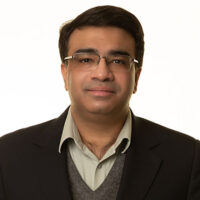
Hussam Amrouch is a Professor (W3) at the Technical University of Munich (TUM) , leading the Chair of AI Processor Design (AI-Pro) and affiliated with the Munich Institute of Robotics and Machine Intelligence (MIRMI) . He also serves as the head of Semiconductor Test and Reliability (STAR) at the University of Stuttgart. His academic journey includes a Ph.D. (Dr.-Ing.) summa cum laude from Karlsruhe Institute of Technology (KIT) and leadership of the Dependable Hardware Research Group at KIT. His research spans design for reliability and testing , machine learning for CAD , hardware security , approximate computing , and emerging technologies with a focus on ferroelectric devices . Recent publications highlight applications in hyperdimensional computing , cryogenic circuits , and neuromorphic systems . Amrouch has received 8 HiPEAC Paper Awards and best paper nominations at top EDA conferences. His work is funded by organizations including the German Research Foundation (DFG) , Advantest Corporation , and the U.S. Office of Naval Research (ONR) . He has over 200 publications across multidisciplinary domains from semiconductor physics to computer architecture. As an editor at Nature Scientific Reports , he contributes to journal oversight. His technical leadership extends to program committees of major EDA conferences like DAC, ASP-DAC, and ICCAD.
Dr. Mubarak Shah is the Trustee Chair Professor of Computer Science and Founding Director of the Center for Research in Computer Vision (CRCV) at the University of Central Florida. His research focuses on computer vision, including video surveillance, visual tracking, human activity recognition, and UAV video analysis. He has held prestigious fellowships from ACM, NAI, AAAS, IAPR, and IEEE. Roles: Trustee Chair Professor, Director of CRCV, Graduate Faculty Member Affiliations: University of Central Florida, College of Engineering and Computer Science Research interests span visual analysis of crowded scenes, video registration, and privacy-aware diffusion models. He has pioneered geolocalization techniques and multimodal learning frameworks. His work impacts security, autonomous systems, and medical imaging. Recent publications emphasize diffusion models, 3D object detection, and adversarial learning. His work has been presented at CVPR, ECCV, and NeurIPS. Awards: Pegasus Professor (2006) ACM SIGMM Technical Award (2019) Multiple fellowships and recognitions from IEEE, AAAS, and others Advising and mentorship include over 50 graduate students and NSF REU programs. He leads CRCV, a hub for interdisciplinary vision research, and contributes to high-impact datasets like MAVREC. Labs/Teams: CRCV hosts cutting-edge projects in geolocalization, action recognition, and medical vision. Collaborative efforts include global partnerships in AI and robotics.
Bin Yang is a Professor at the Department of Computer Science, Aalborg University, affiliated with The Technical Faculty of IT and Design. His research focuses on data engineering, artificial intelligence, and machine learning, with emphasis on spatiotemporal data analysis, representation learning, and time series forecasting. He leads projects like aSTEP (spatio-temporal data analytics) and Light-AI for Cognitive Power Electronics. Key contributions include advancements in trajectory data processing, anomaly detection, and lightweight neural architectures. Research interests span machine learning, data mining, intelligent transport systems, and material science applications. Notable awards include the IJCAI 2019 Distinguished PC Member and Sapere Aude Research Leader (2018). He has supervised six PhD students and contributed to over 119 publications. His work is supported by grants from Villum Foundation and EU initiatives. Yang is involved in interdisciplinary collaborations, including data-driven decision-making frameworks and environmental monitoring systems. Labs and teams include the Daisy Center for Data-intensive Systems and AI for the People initiatives. Projects emphasize real-world applications in smart cities, traffic forecasting, and sustainable technologies. His research bridges theoretical foundations with practical implementations in domains like oceanography and crowdsourcing systems.
Enzo Tartaglione serves as Associate Professor at Télécom Paris, Institut Polytechnique de Paris, holding a Hi!Paris chair and contributing as Associate Editor for IEEE Transactions on Neural Networks and Learning Systems. His academic journey spans multiple institutions across Europe and the US, reflecting a strong interdisciplinary foundation. Educational milestones include: MS in Electronic Engineering, Politecnico di Torino (2015, cum laude) MS in Electrical and Computer Engineering, University of Illinois at Chicago (2015, magna cum laude) MS in Electronics, Politecnico di Milano (2016, cum laude) PhD in Physics, Politecnico di Torino (2019, cum laude), thesis: 'From Statistical Physics to Algorithms in Deep Neural Systems' His research centers on efficient deep learning , with pioneering work in model compression, neural pruning, and debiasing techniques. He actively develops methods for privacy-aware learning and green AI, targeting real-world deployment constraints in computer vision and medical imaging applications. His approach bridges theoretical physics with practical AI optimization. Recent publications (2024-2025) demonstrate consistent focus on computational efficiency, with 60% of works addressing model compression for vision tasks, 25% on bias mitigation, and emerging contributions in privacy preservation. Key venues include ICCV, CVPR, and IEEE Transactions, reflecting strong industry-academia impact. Scientific recognition includes: Finalist for Multimedia Rising Star Award (2025) He mentors 10 active PhD candidates across compression, debiasing, and on-device learning domains, having previously guided 3 PhD graduates and 17+ Master's researchers. Research funding includes the Hi!Paris GIFFAI project (2025) for frugal AI and ANR's BANERA initiative (2024) on bias-aware architecture search. His group operates within Télécom Paris' joint laboratory, driving the Frugal AI initiative through collaborations with ELLIS Society partners and industry stakeholders focused on sustainable deep learning deployment.
Mini Das is the Moores Professor in the Department of Physics at the University of Houston, with affiliations in the Cullen College of Engineering's Biomedical Engineering and Electrical and Computer Engineering departments. She holds a Ph.D. from the Indian Institute of Technology, Delhi. Her research focuses on advanced imaging techniques at the intersection of optical physics, computational methods, and engineering, with applications in medical diagnostics, defense/security, and global health. Key areas include X-ray phase contrast imaging, photon-counting detectors (collaborating with CERN), virtual clinical trials, and psychophysical models for human perception in medical imaging. Her work aims to improve cancer screening accessibility in underserved regions through innovative imaging systems. Das leads interdisciplinary projects combining quantum detection, material decomposition algorithms, and virtual patient modeling. She is a leader in developing cutting-edge imaging tools and has pioneered methods for low-dose and high-resolution biomedical imaging. Education : Ph.D., Indian Institute of Technology, Delhi Research Interests : Experimental/Optical design and computational imaging, virtual clinical trials, psychophysics/image science, vision science-driven imaging systems, and global health applications in cancer screening. Her lab develops advanced imaging modalities like multi-contrast X-ray phase mammography and spectral CT material decomposition systems. Grants & Collaborations : Works with CERN to optimize quantum detectors, FDA on regulatory-compliant imaging systems, and non-profits to deploy screening tools in low-resource areas. Her lab also collaborates on eye-tracking studies for human observer performance modeling in radiology. Labs/Teams : Directs a lab focused on quantum detection systems, computational imaging platforms, and bio-inspired optical designs. Active in multi-university consortia for biomedical imaging innovation.
Dmitri Pavlov is an Associate Professor in the Department of Mathematics and Statistics at Texas Tech University, where he has been since 2017 (promoted to tenured Associate Professor in 2024). His research focuses on homotopy theory, algebraic topology, and their applications to quantum field theory. He earned his Ph.D. from UC Berkeley (2011) and held postdoctoral positions at the University of Regensburg, Max Planck Institute, and University of Münster. Pavlov has supervised multiple Ph.D. students and actively engages in teaching advanced courses like Lie Groups, Homological Algebra, and Functorial Field Theory. His awards include the Herb Alexander Prize (2011) and a Simons Fellowship (2007–2008). Pavlov’s work bridges pure mathematics with theoretical physics, particularly through geometric cobordism hypothesis and extended field theories. He collaborates widely, co-authoring papers on topics like classifying spaces of infinity-sheaves and symmetric operads in spectra. His recent research emphasizes locality principles in quantum field theories and their classification via homotopy-theoretic methods. Education: B.S./M.S. (2006/2007) from ITMO University, Ph.D. (2011) from UC Berkeley. Academic lineages trace back to prominent mathematicians like Peter Teichner and Friedrich Hirzebruch. Current research includes geometric field theory, differential cohomology, and higher categorical structures. Pavlov organizes the Quantum Homotopy Seminar and Topology & Geometry Seminar at Texas Tech, and has delivered invited talks globally at institutions like the Erwin Schrödinger Institute and University of Nottingham.
Dr. Edward Timko is an Assistant Professor in the Department of Mathematics and Statistics at the University of Windsor, Faculty of Science. His research focuses on operator theory, functional analysis, and related areas such as analytic function theory and operator algebras. He holds a Ph.D. in Mathematics, with expertise in constrained operator families and non-commutative measure theory. Dr. Timko’s research interests include the study of single and multiple operator theory, particularly in contexts involving constrained operators and their spectral properties. He explores topics such as multiplier ideals, non-commutative disc algebras, and boundary representations of operator algebras. His work often intersects with abstract harmonic analysis and mathematical physics, as seen in his contributions to lattice Higgs-Yang-Mills field quantization. His publication record spans high-impact journals such as Advances in Mathematics, Mathematische Annalen, and Journal of Functional Analysis. His articles address advanced topics like Henkin functionals, cyclic row contractions, and classification of commuting shift operators. Despite his prolific output, no specific awards or grants are explicitly mentioned in the provided materials. Dr. Timko’s advising and grant activities are not detailed here. His work is primarily theoretical, contributing to foundational areas of operator theory and functional analysis without direct mention of applied projects or interdisciplinary collaborations.
Martin Radfar is an Assistant Professor in the Department of Computer Science at Stony Brook University, affiliated with the Institute for AI-Driven Discovery and Innovation. He holds a Ph.D. in Machine Learning and Signal Processing from the University of Toronto (2014). His academic roles include teaching courses such as CSE215 (Foundations of Computer Science), CSE351 (Introduction to Data Science), and ISE316 (Introduction to Networking). He has advised PhD student Xuan Xu and MS student Pranavi Meda. Radfar's research focuses on voice-based human-machine interfaces, auditory scene analysis, Bayesian networks, and cancer drug target prediction using machine learning. His expertise spans signal processing, computational biology, and healthcare applications. Notable contributions include developing the PGMLAB library for Bayesian networks and pioneering work in microRNA target prediction. His academic achievements include awards such as the NSERC Postdoctoral R&D Fellowship (2014) and the Edward S. Rogers Graduate Scholarship (2008). His teaching emphasizes foundational computer science, data science tools (Python, Jupyter notebooks), and network architecture. He has published widely in venues like IEEE Signal Processing Society journals and ACM Transactions, addressing topics like speech separation, genomic data analysis, and network protocols.
Jörg Main is a full Professor at the University of Stuttgart , leading the research group at the Institute for Theoretical Physics I . His work bridges condensed-matter theory, quantum optics, and nonlinear dynamics, with a strong emphasis on Rydberg excitons in cuprous oxide and the foundations of non-Hermitian quantum systems. Research Interests: Exciton Physics & Semiconductor Spectroscopy: Extensive studies of Rydberg excitons in cuprous oxide, including quantum-defect theory, oscillator strengths, and fine-structure effects. Quantum Chaos & Semiclassical Methods: Application of periodic-orbit theory and phase-space analysis to understand complex spectra and classical-quantum correspondence. Non-Hermitian & PT-Symmetric Systems: Investigation of exceptional points, resonance phenomena, and gain-loss balanced potentials in Bose-Einstein condensates and photonic structures. Machine Learning in Physics: Development of Gaussian-process and neural-network approaches for predicting quantum dynamics and locating exceptional points in high-dimensional spectra. Recent Publication Trends: Over the last two years, Prof. Main has published prolifically on cuprous oxide excitons, unveiling new quantum-well phenomena, resonance linewidth behavior, and semiclassical descriptions. A parallel thrust leverages machine-learning techniques to analyze complex spectra and time-dependent systems, demonstrating an innovative blend of theoretical physics and data science. Laboratory & Group: Professor Main heads the Theory Group at the Institute for Theoretical Physics I, fostering an environment for advanced analytical and computational research in quantum many-body physics.
John Chandy is a Professor and Department Head of the Department of Electrical and Computer Engineering at the University of Connecticut. His research focuses on quantum dot-based semiconductor devices, compute-in-memory architectures, and hardware security mechanisms. University of Connecticut, Department of Electrical and Computer Engineering Research Interests: Dr. Chandy's work explores quantum interference transistors, multi-state logic circuits, and energy-efficient computing. He has pioneered the use of spatial wavefunction-switched (SWS) FETs for advanced memory and logic applications. Article Trends: His recent publications emphasize quantum dot channel FETs for multi-bit computing, II-VI gate insulator optimization, and hardware security using physically unclonable functions (PUFs). Key themes include biodegradable electronics, 8-state SRAMs, and quaternary logic gate design.
Olivier Sentieys is a Professor at the University of Rennes and a Senior Research Director at Inria (French National Institute for Research in Digital Science and Technology) since September 2023. He leads the Taran research team, a joint initiative between Inria and IRISA Laboratory, which comprises approximately 50 researchers including 8 faculty members, 25 PhD students, post-docs, and research engineers. Previously, he served as Inria Research Chair on Energy-Efficient Computing Architectures (2017-2023) and as Head of the Computer Architecture Department at IRISA (2010-2019). Professor Sentieys' research spans computer architectures, computer arithmetic, embedded systems, and signal processing, with particular emphasis on energy-efficient hardware accelerators (especially for machine learning), approximate computing, numerical accuracy analysis, and fault tolerance. His work bridges theoretical foundations with practical implementations, focusing on system-level design methodologies that optimize both performance and energy consumption. His research has evolved from early work on power management for energy harvesting sensor networks to current cutting-edge investigations in machine learning hardware acceleration and reliability of deep neural networks. Analysis of his recent publications reveals a strong trend toward hardware acceleration for machine learning applications, with increasing focus on fault tolerance mechanisms for deep neural networks and precision optimization techniques. His work demonstrates a consistent trajectory of addressing energy efficiency challenges across multiple computing domains, from traditional embedded systems to modern AI workloads. The interdisciplinary nature of his research connects computer architecture with machine learning, reliability engineering, and energy harvesting technologies. Scientific Excellence Award (PEDR, PES) recipient since 1998 without interruption Member of the IEEE/ACM DATE Executive Committee since 2022 Jury member for EDAA Outstanding Dissertations Award since 2016 Member of ANR Scientific Evaluation Committee CE25 Professor Sentieys has demonstrated extensive leadership in research funding and collaboration, having led a French ANR project, participated in multiple ANR projects, and contributed to three European FP7/H2020 projects. He has served as scientific leader for approximately 30 research contracts and funded collaborations. His advising responsibilities include overseeing numerous PhD students within the Taran team, which comprises 20 PhD students, 3 post-docs, and 5 research engineers. His leadership extends to committee service, including membership on the Evaluation Committee of INRIA since 2019 and participation in technical committees for major conferences like DATE, ICCAD, and FPL. The Taran research team (formerly Cairn), which Professor Sentieys leads, focuses on designing energy-efficient and fault-tolerant computing accelerators. The team operates within the IRISA laboratory, a joint research unit (UMR 6074) that brings together over 700 researchers from Inria, CNRS, University of Rennes, INSA Rennes, and ENS Rennes. The team's work bridges theoretical computer architecture research with practical implementations, maintaining strong industry connections and technology transfer pathways.
Anthony Stein is a Tenure Track Professor (equivalent to Assistant Professor) and Head of the Department of Artificial Intelligence in Agricultural Engineering at the University of Hohenheim's Faculty of Agricultural Sciences. He holds a Dr. rer. nat. from the University of Augsburg. Research develops intelligent agricultural systems through reinforcement learning, evolutionary computation, and distributed AI. Core applications include real-time weed detection, robotic crop monitoring, emission prediction, and resource-efficient AI for sustainable farming. Recent publications focus on optimizing vision systems for precision agriculture using generative AI and federated learning. Work emphasizes embedded system deployment and multi-objective neural architecture design. No awards documented. Leads research on AI-driven agricultural robotics without specific student advising details. Committee roles include GI Organic Computing group leadership and KTBL outdoor robotics standards.
Ali Azarpeyvand is a Researcher in the Department of Computer Systems at Tallinn University of Technology, specializing in dependable computing systems. His research focuses on hardware reliability, fault-tolerant architectures, and efficient deep learning accelerators. Recent publications develop adaptive multipliers, fault mitigation techniques for neural networks, and heterogeneous quantization methods. Work emphasizes hardware-aware optimizations for edge computing applications. Azarpeyvand's scholarship demonstrates consistent focus on improving reliability and efficiency in hardware systems, particularly through approximate computing and adaptive fault tolerance for deep neural networks.
Dr. Shahrukh Athar is an Assistant Professor in the Department of Electrical & Computer Engineering at McMaster University. His research focuses on perceptual image quality assessment (IQA), degraded-reference and multiply-distorted image analysis, and digital signal/video processing. He also emphasizes educational development, particularly active learning strategies and pedagogical training for colleagues and graduate students. He teaches courses such as COMPENG 2DX3 (Microprocessor Systems Project), COMPENG 2SH4 (Principles of Programming), ELECENG 2CI4 (Introduction to Electrical Engineering), and ELECENG 3CL4 (Introduction to Control Systems). His work bridges machine learning applications in IQA with practical educational methodologies. Dr. Athar's research includes developing robust no-reference IQA algorithms using deep learning and constructing large-scale datasets. He has published extensively on topics like image debanding, blind quality assessment, and FPGA-based signal processing implementations. His LinkedIn and other professional profiles highlight interdisciplinary contributions in both technical and educational domains.
Dr. Sorina Dumitrescu is a Professor in the Department of Electrical & Computer Engineering at McMaster University, where she has held various academic and research roles since 2002. She earned her Ph.D. in Mathematics from the University of Bucharest (1997) and completed a postdoctoral fellowship at the University of Western Ontario (2000–2002). Her research focuses on multimedia coding, communications, and data compression, with particular emphasis on network-aware systems, signal quantization, and steganalysis. She has been recognized with the NSERC University Faculty Award (2007–2012). Her research interests include distributed quantization for machine learning, resource allocation in non-orthogonal multiple access systems, and robust image coding. She has authored numerous publications, including a notable book on network-aware source coding. Dr. Dumitrescu teaches courses such as COMPENG 3SM4 (Algorithm Design and Analysis) and ECE 726 (Machine Learning: An Introduction). Key achievements include pioneering work on multiple description source coding, distributed source coding, and steganalysis. Her articles span topics like optimal quantizer design, network resource allocation, and error-resilient coding strategies. Awards and grants highlight her contributions to advancing communication systems and information theory.