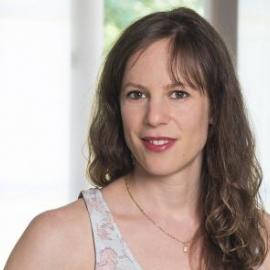
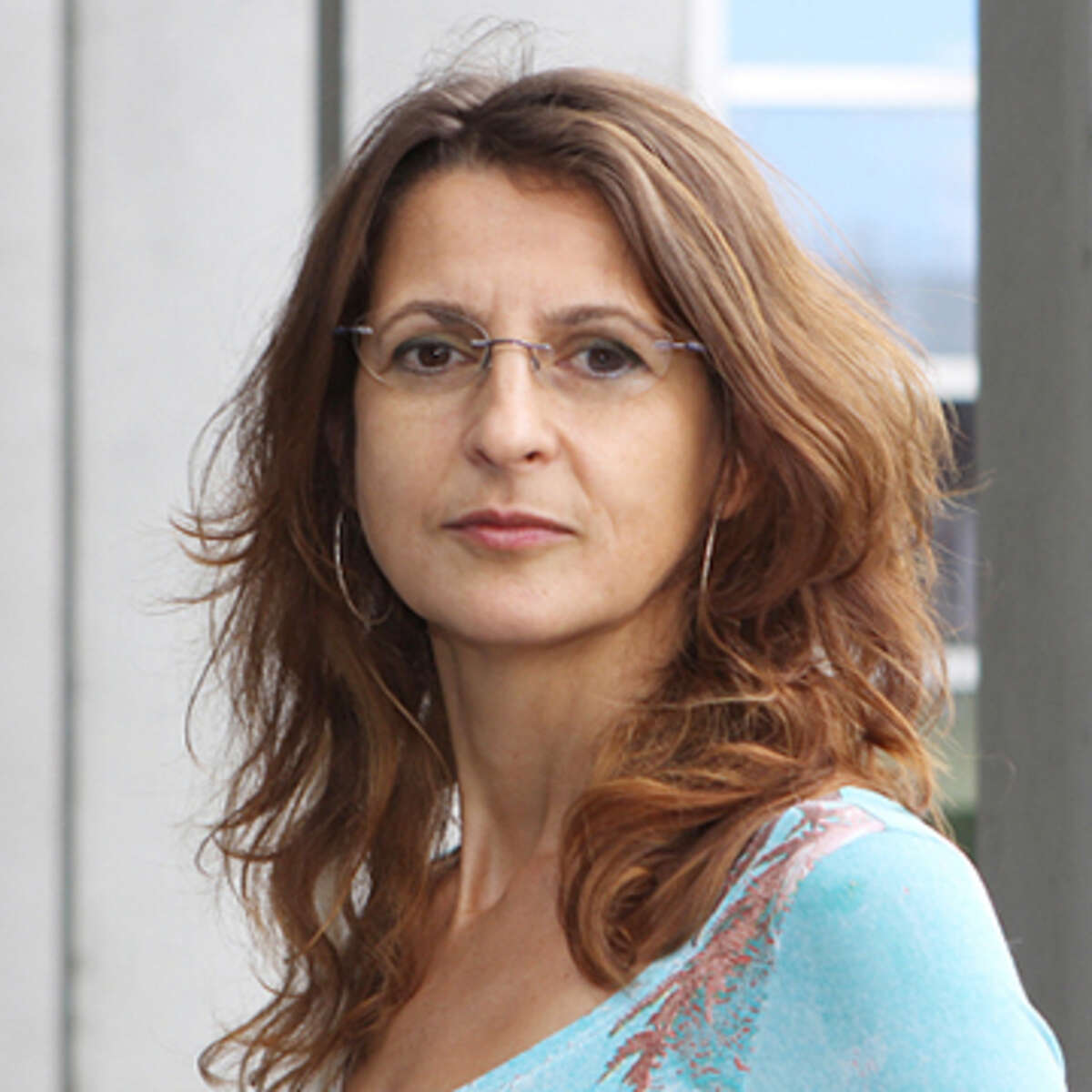
Dr. Anik Debrot is a Senior Lecturer and researcher at the LIVES Centre, University of Lausanne. Her work focuses on grief counseling, interpersonal touch dynamics in relationships, and digital health interventions. Senior Lecturer, LIVES Centre, University of Lausanne Research on touch in bereavement, couple relationship quality, and internet-based therapeutic programs Research Interests: Debrot's studies explore the intersection of touch physiology and emotional regulation in couples, with special attention to trauma recovery , attachment theory , and digital mental health applications. Publication Trends: Recent work includes Randomized controlled trials of grief interventions Dyadic trauma response studies Touch as a stress-buffering mechanism Design of multilingual internet-based therapies Collaborations: Debrot works with institutions in Switzerland on digital health protocols and cross-cultural adaptation of therapeutic tools.
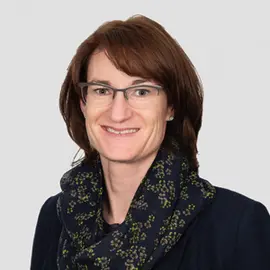
Prof. Dr. Maike Scherrer is a Professor at the Zurich University of Applied Sciences (ZHAW) School of Engineering, where she leads research in sustainable mobility and supply chain management. Her work focuses on developing innovative solutions for sustainable and circular supply chains, urban logistics, and resilient transportation systems. She directs multiple research projects including Sustainable and Circular Supply Chains for the MEM-industry and the Sustainable Mobility Lab, collaborating with industry partners to address critical challenges in sustainable logistics and mobility. Prof. Scherrer's research spans several key areas in sustainable operations and supply chain management. Her work in sustainable supply chains examines how to achieve net-zero emissions through circular economy principles and systemic approaches. In urban logistics, she develops innovative concepts like Smart Urban Multihub systems to reduce freight traffic and improve city livability. Her research on supply chain resilience investigates how to design networks that can withstand disruptions while maintaining mission-critical supplies. She also explores the electrification of freight fleets and temperature-controlled supply chains to reduce environmental impacts. Her recent publications demonstrate a strong focus on applying operations research and systems thinking to sustainability challenges. Key trends include using agent-based modeling to assess circular economy supply chains, developing optimization approaches for resilient networks, and examining the spatial aspects of pharmaceutical supply chains. Her work bridges theoretical frameworks with practical applications, particularly in the Swiss context but with implications for global supply chain sustainability. Prof. Scherrer leads multiple significant research projects including Sustainable and Circular Supply Chains for the MEM-industry (ongoing), Techno-Economic Grid Connection Optimization for Electric Freight Fleets (ongoing), and Designing and simulating resilient supply chain networks (ongoing). She serves as Deputy Project Leader for the Sustainable Mobility Lab and has completed notable projects such as User-based redistribution for free-floating car sharing and Predictive replenishment of urban distribution centres. Her research group operates within the Sustainable Mobility research focus at ZHAW's School of Engineering, collaborating with industry partners across multiple sectors including manufacturing, pharmaceuticals, and urban transportation. The team applies interdisciplinary approaches combining operations research, systems analysis, and sustainability science to develop practical solutions for complex mobility and logistics challenges.
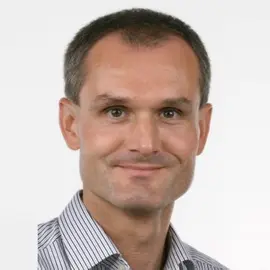
Prof. Dr. Marcel Honegger is a Lecturer in Robotics and Mechatronics at the Institute of Mechatronic Systems within the School of Engineering at Zurich University of Applied Sciences (ZHAW). He co-leads the Institute and focuses on the development of robot systems, drive controls, and control/regulation software for robotics and mechatronics. Ph.D., ETH Zurich (1996-1999) Dipl. Mech. Eng., ETH Zurich (1990-1996) His research spans robotics, mechatronics, and control systems, with recent work on predictive maintenance using autoencoder-based anomaly detection for delta robots and RGBD segmentation for agricultural automation. Earlier projects involved adaptive controllers for parallel manipulators and Java frameworks for robot control systems. Honegger has led projects such as the full automatic sprinkler robot (FASR) and the Advanced Rail Track Information System . He previously worked as a Senior R&D Engineer at CSEM Alpnach (2001-2009) and Project Manager at maxon motor ag (2009-2014). His publications reflect expertise in industrial automation, sensor integration, and mechanical design. He is involved in teaching and R&D collaborations, with an ORCID ID: 0009-0004-8178-136X.
Stefan Pichelmann is a Senior Lecturer at the Department of Psychology , University of Fribourg , affiliated with the Faculty of Letters and Human Sciences. His academic work spans cognitive, developmental, and temporal processing research. Contact: stefan.pichelmann@unifr.ch | +41 26 300 7652 | RM 01 bu. C-2.110, Rue PA de Faucigny 2, 1700 Fribourg Research Focus: Pichelmann investigates cognitive mechanisms in spatial perspective-taking, time perception, and sensory integration. His work applies psychometric and experimental methods to analyze how numerical values, spatial tasks, and sensory modalities influence temporal judgments. Key Trends in Publications: Recent studies (2013–2023) emphasize spatial cognition , temporal processing , sensory integration , and cognitive workload . Articles on digit magnitude effects, mental rotation, and multisensory timing highlight interdisciplinary intersections with neuroscience and psycholinguistics. Departmental Affiliation: Active in the Department of Psychology, his research aligns with teams like Cognitive Development and Clinical Psychology, contributing to foundational and applied psychological sciences.
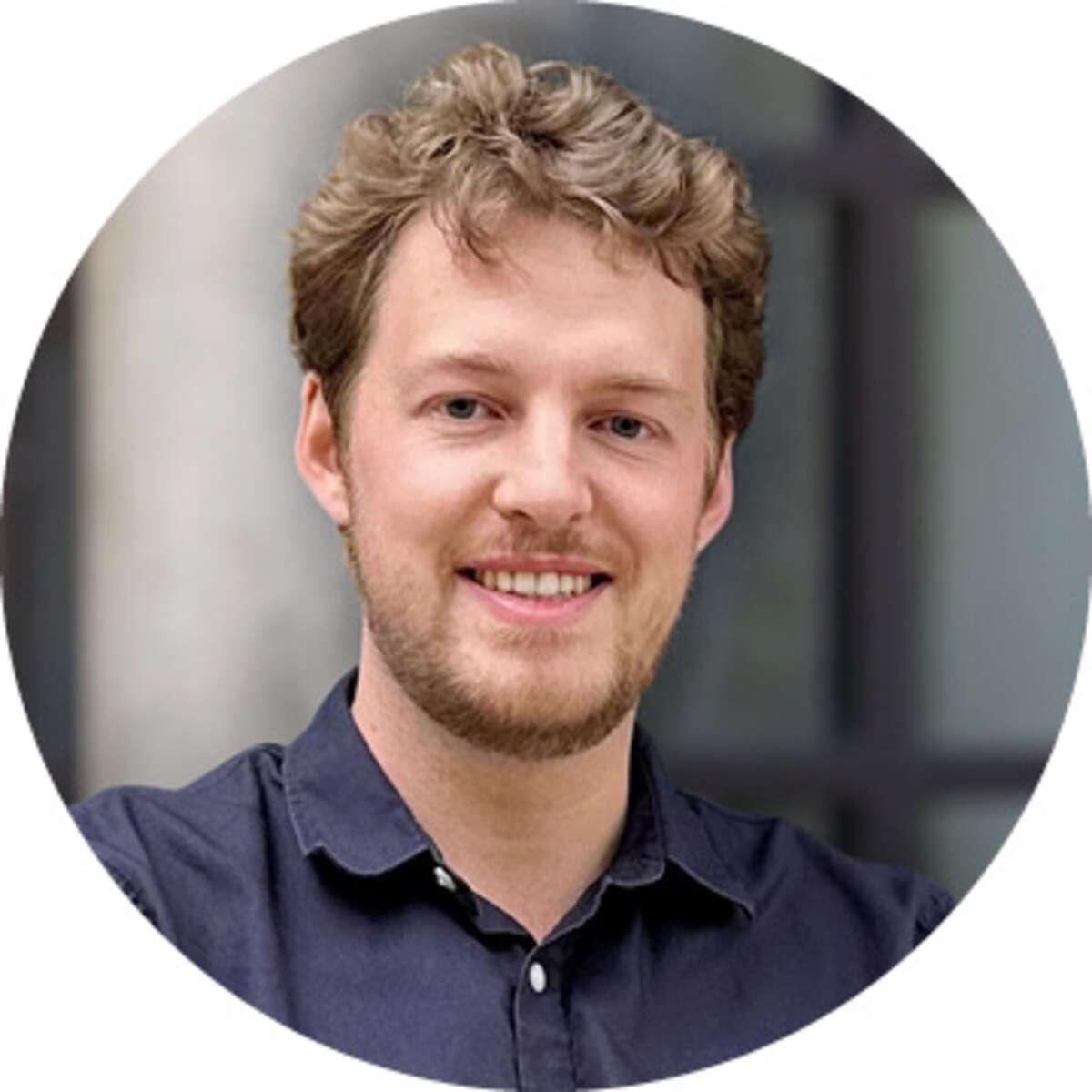
David Brückner is an Assistant Professor of Theoretical Biophysics at the Biozentrum of the University of Basel, Switzerland, where he leads a research group investigating the physics of living systems. Appointed in April 2025, he develops theoretical frameworks to understand how cellular interactions govern multicellular organization during development. His work bridges statistical physics, soft matter theory, and developmental biology to address fundamental questions about information processing in biological systems. Brückner's research focuses on stochastic dynamics in developmental systems , exploring how cells make reliable decisions despite biological noise. He investigates Mechanical and biochemical information transmission in tissues Cellular memory mechanisms in confined migration General physical principles across developmental systems Self-organization in multicellular structures His approach combines biophysical modeling with information theory and machine learning to connect theoretical predictions with experimental data. His recent publications reveal groundbreaking insights into cellular memory during migration, hyperdisordered biological packing, and information flow in developmental systems. Notable work published in Nature Physics (2025) demonstrates how the actin cortex serves as a mechanical memory enabling efficient navigation through confined spaces – crucial for understanding wound healing and cancer metastasis. Brückner's scientific achievements have been recognized through prestigious awards including an ERC Starting Grant (2025), the Gustav Hertz Prize (2022), and an EMBO Long-Term Fellowship (2022). His research is supported by international collaborations with experimental laboratories worldwide. As a newly established group leader, Brückner actively recruits PhD students and postdoctoral researchers for his ERC-funded "InfoFate" project, which investigates how cells integrate dynamical, neighborhood, and mechanical signals to make fate decisions. His laboratory employs interdisciplinary approaches combining theoretical physics with cutting-edge biological data.
Prof. Dr. Mihaela Zavolan is a Professor in Computational Biology/Genomics at the Biozentrum, University of Basel since 2014, where she leads her research group investigating gene expression regulation. She is also a group leader at the SIB Swiss Institute of Bioinformatics since 2003, combining computational approaches with biological insights to understand RNA processing and protein synthesis mechanisms. Dr. Zavolan earned her MD from the University of Medicine and Pharmacy of Timisoara, Romania (1992), followed by an M.Sc. (1996) and PhD (1999) in Computer Science from the University of New Mexico. Her interdisciplinary background bridges medicine, computer science, and molecular biology, enabling her unique approach to systems biology problems. Her research focuses on understanding how gene expression is regulated during stem cell differentiation, aging, and cancer development. Using a systems biology approach, her lab develops and applies computational methods to measure RNA, protein, and variant amounts across different cell types. They investigate mRNA variants and protein synthesis adaptation under various conditions, with particular interest in identifying cell-type specific biomarkers for age-related diseases and cancer. Analysis of her recent publications reveals a consistent focus on RNA processing mechanisms, particularly polyadenylation, translation dynamics, and the development of computational tools for RNA-seq analysis. Her work spans from fundamental molecular mechanisms to cancer applications, with increasing emphasis on single-cell technologies and multi-omics integration in recent years. Fellow of the International Society for Computational Biology (2024) Elected member of the European Molecular Biology Organization (EMBO) (2015) Appointed member of the Academia Europaea (2014) Scientific Advisory Committee, European Molecular Biology Laboratory (EMBL) (since 2018) As an editorial board member for journals including PLOS Genetics, Cells, Bioinformatics, RNA, and Genome Biology, Dr. Zavolan actively contributes to the scientific community. Her lab at the Biozentrum develops computational methods to measure RNA and protein variants across tissues and cell types, using computer models to identify regulatory signals and factors. The Zavolan Lab maintains strong collaborations with the Swiss Institute of Bioinformatics and participates in major research networks including the NCCR RNA & Disease.
Walter Bierbauer, Dr. phil., is a postdoctoral researcher in the Department of Psychology – Applied Social and Health Psychology at the University of Zurich, Faculty of Arts and Social Sciences. He is also an active member of the interdisciplinary Digital Society Initiative (DSI) Community Health cluster at the same university. His research centres on motivational and volitional determinants of health behaviour change among individuals living with chronic conditions. Employing intensive longitudinal designs, digital monitoring tools, and advanced statistical modelling, he investigates how psychological factors such as self-efficacy, social support, and illness perceptions translate into day-to-day variations in physical activity, medication adherence, and coping behaviours. Recent work focuses on cardiac rehabilitation, long-COVID, and breast-cancer survivors undergoing adjuvant endocrine therapy. Across 29 peer-reviewed publications (2015-2024), Bierbauer has advanced the Health Action Process Approach, uncovered differential impacts of depression and anxiety on rehabilitation outcomes, and highlighted the moderating roles of self-reliance preferences and social stigma. These contributions bridge clinical psychology, behavioural medicine, and digital-health methodologies. Labs & Collaborations: Applied Social and Health Psychology group, University of Zurich Digital Society Initiative (DSI) Community Health Contact: walter.bierbauer@psychologie.uzh.ch
Chabbi Houda is a Full Professor at the Fribourg School of Engineering and Architecture, University of Applied Sciences and Arts Western Switzerland. She leads research at the iCoSys Institute for Complex Systems, focusing on AI-driven solutions for industrial and societal challenges. Her work bridges computer vision, deep learning, and practical applications from medical imaging to construction materials. Her research explores: Advanced computer vision for industrial inspection and monitoring Deep learning architectures for anomaly detection and predictive modeling Multimodal data fusion in surveillance systems AI applications in material science and healthcare She leads significant projects including: HIGH-ROAD (2025-2026): Hierarchical AI for road asset inventory using orthoimagery VideoCognition (2023-2025): Explainable AI for surveillance systems with Morphean SA SoNIT (2025-2028): Sonography nerve tracking with FHNW Concrete AI (2022-2025): Machine learning for recycled concrete optimization Her lab at iCoSys Institute collaborates with academic partners including University of Applied Sciences Northwestern Switzerland and industry leaders in medical tech, surveillance, and construction.
Dr. Anastasios Kouvelas is a Lecturer at ETH Zurich, where he serves as head of the Road Traffic Engineering research group at the Institute of Transport Planning and Systems (IVT), Department of Civil, Environmental and Geomatic Engineering. He has held this position since August 2018, succeeding Dr. Monica Menendez who moved to New York University in Abu Dhabi. Prior to joining ETH Zurich, he was a research associate at the Urban Transport Systems Laboratory (LUTS) at EPFL (2014-2018) and a postdoctoral fellow at Partners for Advanced Transportation Technology (PATH) at the University of California, Berkeley (2012-2014). Dr. Kouvelas' research focuses on modeling, simulation, optimization and traffic flow control. His work aims to develop real-time solutions based on control theory and operations research methods. The Road Traffic Engineering group develops algorithmic solutions that are components of intelligent transportation systems used in traffic control centers. Recent technological advances in autonomous vehicles have expanded their research topics as the industry seeks efficient operational solutions for autonomous mobility. They are particularly interested in extending their work to the design of advanced management strategies for urban networks that utilize connected vehicles to improve traffic operations and develop network-wide control strategies that minimize environmental impacts. His recent publications (2023-2025) demonstrate strong focus on traffic prediction using deep learning techniques, bike lane allocation impacts on urban networks, transit network resilience against disruptions, vehicle trajectory extraction from aerial recordings, and traffic control for mixed traffic systems with connected and autonomous vehicles. His work bridges theoretical developments in control theory with practical traffic engineering challenges. Scientific Awards No specific scientific awards were mentioned in the provided information. Advising and Grants Dr. Kouvelas supervises PhD and Master's students in traffic engineering and intelligent transportation systems. His research is supported by various grants including a grant from the Hong Kong Research Grant Council (Grant No. GRF 11216323) for research on traffic speed prediction. Laboratories and Teams Dr. Kouvelas leads the multidisciplinary Road Traffic Engineering research group at IVT, which consists of researchers with backgrounds in civil engineering, electrical engineering, mechanical engineering, computer science, control, and operations research. The group's work spans multiple areas including traffic flow theory, traffic operations, connected and automated vehicles, and intelligent transportation systems.