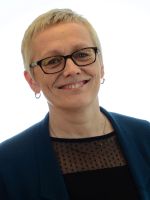
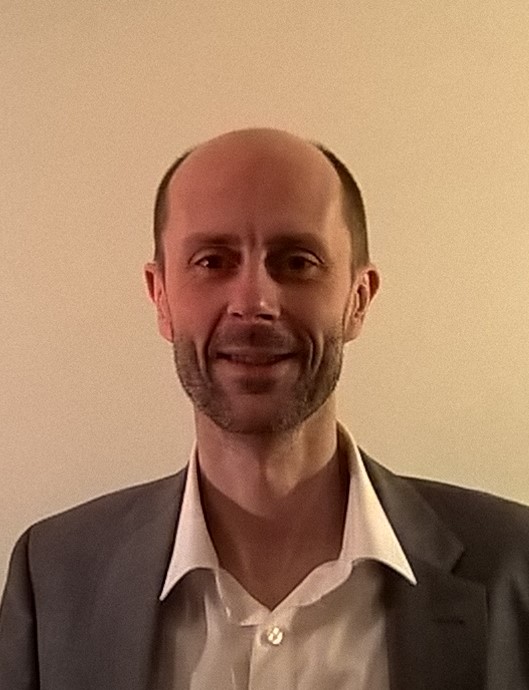
Verena Pichler is an Associate Professor at the University of Oslo, affiliated with the Section for Pharmaceutical Chemistry. Her research focuses on drug and radiotracer design for theranostic approaches, radiopharmaceutical technology, and biomedical imaging of micro/nanoplastics. She leads the Pichler Group and collaborates with institutions in Austria and Lithuania. Roles: Elected Director of the Society of Radiopharmaceutical Sciences, Founding Member of the Chemistry Study Group (European Society of Molecular Imaging) Collaborations: Prof. Lukas Kenner (Medical University of Vienna), Prof. Eglė Arbačiauskienė (Kaunas University of Technology), and the Center for Biomarker Research in Medicine (Graz, Austria). Her work emphasizes innovative preclinical screening platforms, automation in radiopharmaceutical processes, and green methodologies. She actively contributes to projects like microONE and develops analytical assays for nanoparticle tracing.
Liv Mathiesen is a Professor at the Department of Pharmaceutical Biosciences, School of Pharmacy, University of Oslo since 2017. Her academic background includes a PhD from the School of Pharmacy, UiO (1996), and prior roles as Head of Research and Development at the Hospital Pharmacies Enterprise (2012–2017) and senior clinical assessor at the Norwegian Medicines Agency (1998–2011). Her research focuses on medication management, patient-centered care transitions, pharmacogenetic testing, and antibiotic research incentives. Key projects include the 'IMMENSE study' on improving medication safety for elderly patients and the 'MedHipPro-Q' questionnaire for hip fracture medication protocols. Her work emphasizes interdisciplinary collaboration and systems engineering approaches to reduce medication discrepancies. Recent studies address barriers to self-management in multimorbid patients and validation of prognostic models for readmission risks.
Torbjørn Skardhamar is a Professor at the University of Oslo's Department of Sociology and Social Geography. His research focuses on criminology, criminal careers, substance use disorders, and public health. He has conducted extensive studies on desistance from crime, the impact of life-course transitions (e.g., employment, marriage, parenthood), and policy evaluations regarding nightlife violence and prison reforms. Notable collaborations include projects like PriSUD and WOMPRIS, addressing substance use among incarcerated populations and women's health post-release. Skardhamar’s work often employs register-based data and longitudinal analyses, emphasizing evidence-based policy recommendations. Recent publications include studies on vulnerable urban areas, mortality among incarcerated women, and the effects of environmental factors (e.g., weather) on crime. He has contributed to debates on open-access publishing standards, advocating for robust peer-review systems. His expertise spans criminal justice policy, socioeconomic disparities, and interdisciplinary approaches to crime reduction.
Indika Anuradha Mendis Balapuwaduge is a Researcher at the Department of Information and Communication Technology , University of Agder , Norway. He previously served as a Senior Lecturer at the University of Ruhuna (2020-2022) and held postdoctoral and PhD positions at the University of Agder (2017-2020 and 2012-2016). Education PhD in ICT (University of Agder, 2016) MSc in ICT (University of Agder, 2012) BSc in Electrical and Information Engineering (University of Ruhuna, 2008) Research Interests : Focus on Wireless Communication with expertise in Cognitive Radio Networks , Ultra-Reliable Communication , and Applied Machine Learning . His work integrates Dependability Theory and Stochastic Process Modeling to address challenges in 5G/6G Networks , IoT , and Network Slicing . Recent Publications include studies on Electric Vehicle Charging Optimization , Secure IoT Protocols , and 5G Network Slicing . He has contributed to IEEE Transactions and Springer publications, emphasizing Dynamic Spectrum Allocation and Machine Learning Applications .
Baltasar Enrique Beferull Lozano is a tenured Professor at the University of Agder , leading the Center Intelligent Signal Processing and Wireless Networks (WISENET) since 2015. With a PhD in Electrical Engineering from USC (2002) and prior roles at EPFL, AT&T Shannon Labs, and University of Valencia, his career spans 20+ years of academic and industrial research in signal processing, wireless systems, and AI. Education: PhD (USC), MSc (USC), MSc (University of Valencia) Expertise: Data Science, Machine Learning, Graph Signal Processing, Cyber-Physical Systems His research focuses on AI-driven wireless networks and in-network collective intelligence , addressing fundamental and applied challenges in smart water systems , energy management , and next-gen 5G/6G . He has secured 20+ international projects including 10 EU-funded initiatives (HYDROBIONETS, SENDORA) and 5 RCN-funded projects. Recent publications emphasize dynamic graph learning from time series data, quantized graph filters , and multi-agent reinforcement learning for networked environments. Awards include IEEE Best Paper Awards (2012, 2021), TOPPFORSK Grant (2015), and Ramón y Cajal Program Rank #1 (2005). As a Senior IEEE Member , he serves as Area Editor for IEEE Transactions on Signal Processing and evaluates research proposals for the European Commission , NSF , and Qatar National Research Fund . His lab has produced 15 PhD graduates and collaborates with 12+ industry partners including Telenor, IBM, and SINTEF.
Turgay Celik is a full Professor at the Department of Information and Communication Technology , University of Agder (Norway). His research focuses on machine learning applications in remote sensing, explainable AI, and data analysis . He leads projects related to radiometric normalization, sentiment analysis for low-resource languages, and biomedical prediction models. Research Interests : Machine learning for geospatial data, explainable NLP, adaptive learning systems, and domain adaptation frameworks Recent Publications : 15+ articles on topics spanning remote sensing image processing, multilingual NLP, and counterfactual credit scoring explanations Collaborations : Active in international research with co-authors from institutions in Norway, Iran, South Africa, and China His methodological work includes Trust-Region Reflective algorithms, Laplacian Pyramid Fusion, and SAM transfer learning for water segmentation tasks. He contributes to open-source frameworks evaluation and systematic reviews in computer vision and financial AI.
Anne Marie Mork Rokstad is a Professor in Nursing Science and Health Professions at Molde University College , Faculty of Health Sciences and Social Care. She specializes in dementia care, person-centered approaches, and health services research for elderly populations. Current affiliation: Molde University College Research focus: Dementia care, mental health in older adults, pandemic impacts on elderly healthcare Research Interests : Her work emphasizes person-centered dementia care, caregiver experiences, medication management in elderly populations, and pandemic-related healthcare adaptations. She leads initiatives like Hjerneløftet (Brain Lift) for public dementia awareness. Publication Trends : Recent studies analyze dementia risk prediction models, social media's role in mitigating pandemic isolation, medication dispensation patterns, and quality of life in nursing homes. Collaborations with international researchers (e.g., Livingston, Bergh) focus on large-scale HUNT study data. Scientific Awards : 2024: Prize for Hjerneløftet project (communicating dementia research to the public) Additional Contributions : Authored books on dementia care, contributed to national guidelines, and conducted intervention studies (e.g., TIME model for neuropsychiatric symptoms). Her work bridges academic research, practical implementation, and public health education.
Anna Lina Rahlf is an Assistant Professor in the Department of Sports Science at Europa-Universität Flensburg, where she has been serving since October 2021. She previously held positions as a Postdoctoral Researcher at the University of Hamburg (2020–2021) and as a PhD student and Research Associate at Friedrich Schiller University Jena (2014–2020), all within the domain of Sports Science and Human Movement Science. Master, Institute of Human Movement Science, Universität Hamburg (2011–2014) Her research interests lie at the intersection of sports injury prevention, biomechanics, and physical activity epidemiology. She specializes in neuromuscular training, chronic ankle instability, sex-specific injury differences, and the impact of public health interventions on athletic populations. Her work often employs systematic reviews, meta-analyses, and longitudinal cohort designs to assess injury risk and prevention strategies. The 15 most recent publications highlight a consistent focus on methodological rigor in sports injury research, the biomechanics of running and jumping, and the effectiveness of preventive interventions in youth and adult athletes. Trends include the application of machine learning for injury prediction, the evaluation of taping and bracing, and the influence of biological maturity and footwear on performance and injury risk. Anna Lina Rahlf has contributed to peer review for journals such as Sports Medicine and Sportwissenschaft , demonstrating active engagement in the academic community. While no formal scientific awards are listed, her extensive publication record in high-impact journals reflects significant scholarly contribution. She has advised or collaborated on research involving youth football players, patients with knee osteoarthritis, and athletes with chronic ankle instability. Her work often involves interdisciplinary collaboration with experts in biomechanics, rehabilitation, and public health. She has not been listed as leading a formal lab or research team in the provided text, but her research is embedded in structured academic environments with strong methodological and clinical components.
Surya Teja Kandukuri is a Researcher at the Department of Engineering Sciences at the University of Agder, Norway. His work focuses on fault diagnosis, prognostic health management, and control systems for renewable energy applications, particularly wind and hydroelectric power systems. Education: PhD in Mechatronics, University of Agder (2014-2018) MSc in Systems and Control, Delft University of Technology, Netherlands (2003-2006) B.Tech in Electrical and Electronics Engineering, Nagarjuna University, India (1999-2003) Research Interests: Dr. Kandukuri specializes in model-based fault diagnosis and prognostic system health management for complex engineering systems. His research integrates system identification, estimation, and control theory with advanced machine learning techniques to develop predictive maintenance solutions for renewable energy infrastructure. He has particular expertise in wind turbine systems, where he has developed innovative approaches for monitoring pitch systems, detecting electrical faults in induction motors, and assessing performance degradation over time. His work extends to hydroelectric power plants through the PHMHydro project, where he applies similar health monitoring principles to water turbine systems. The integration of physics-based models with deep learning frameworks represents a key innovation in his research approach, enabling more accurate and timely fault detection in critical infrastructure. Publications Trends: Dr. Kandukuri's publication record demonstrates a consistent focus on health monitoring systems for renewable energy infrastructure. His recent work (2022-2025) shows increasing integration of deep learning techniques with traditional signal processing methods for fault diagnosis. There's a clear progression from wind turbine systems to broader applications in hydroelectric power, reflecting expanding research scope. His collaborations span multiple countries and institutions, particularly with Norwegian and international research partners. Research Groups: Intelligent Mechatronics (iTron) Intelligent Monitoring Projects: Performance and Health Monitoring for Hydroelectric Powerplants (PHMHydro)
Muhammad Hamza Zafar is a PhD Research Fellow at the Department of Engineering Sciences, University of Agder. His research spans robotics, human-robot teaming, deep learning, and sustainable technologies with significant contributions to both academic literature and practical applications in emergency response and industrial automation systems. Dr. Zafar's research interests focus on the intersection of robotics and artificial intelligence, particularly in human-robot teaming, wearable technologies, and sustainable energy systems. His work addresses critical challenges in real-time gesture recognition, robotic manipulation, and emergency response systems, leveraging advanced deep learning techniques and novel algorithmic approaches. He has made significant contributions to photovoltaic power forecasting, battery state estimation, and intrusion detection in robotic systems. Analysis of Dr. Zafar's publication record reveals a strong focus on human-robot collaboration in emergency and industrial settings. His research consistently bridges theoretical advancements with practical applications, with particular emphasis on making robotic systems more intuitive, responsive, and capable in complex environments. Key thematic areas include gesture-based control systems, multi-modal sensor fusion, sustainable energy applications of AI, and Industry 5.0 manufacturing paradigms. Dr. Zafar is actively involved with the CIEM - Center for Integrated Emergency Management and the Artificial Intelligence, Biomechatronics and Collaborative Robotics research group at the University of Agder. His collaborative work spans multiple institutions, reflecting the interdisciplinary nature of his research in human-robot interaction and sustainable technologies. His office is located at D3063 (Jon Lilletuns vei 9, 4879 Grimstad, Norway) with contact information including phone +47 37233744 and mobile +4748919198.
Henrik Kalisch is a Professor of Applied Mathematics at the Department of Mathematics, University of Bergen, where he also serves as Deputy Head of Department. His research focuses on mathematical modeling of nearshore processes, wave breaking, surfzone circulation, and wave hazards in coastal zones. Dr. Kalisch received his Ph.D. in 2001 from the University of Texas at Austin. His academic career has established him as a leading researcher in fluid mechanics, partial differential equations, and numerical analysis, with over one hundred scientific publications to his name. Professor Kalisch's research spans several key areas in applied mathematics and fluid dynamics. His work on surface water waves investigates fluid particle motion, wave breaking mechanisms, wave shoaling processes, and the influence of vorticity on wave dynamics. In the domain of wave-ice interaction , he studies moving loads on ice sheets, marginal ice zone dynamics, and interactions with internal waves. His contributions to hyperbolic conservation laws include work on singular solutions and their physical interpretation, while his research on mathematical properties of model equations examines existence, uniqueness, and stability of traveling waves and soliton interactions. His research has practical applications in wave energy devices, tidal energy, carbon storage, and ice road safety. His recent publications reveal a strong focus on developing and analyzing mathematical models for wave phenomena, particularly Boussinesq-type models, KdV equations, and their variants. The research shows increasing integration of computational methods with theoretical analysis, and growing attention to practical applications in coastal engineering and polar science. There's also a notable trend toward interdisciplinary collaboration, particularly with oceanographers and engineers working on real-world wave problems. Professor Kalisch serves as co-editor-in-chief for "Water Waves: An interdisciplinary journal," published by Birkhäuser-Springer-Nature, demonstrating his leadership in the field. Methods for real-time wave forecasting and phase control of wave energy converters (Bergen Universitetsfond, 2021-2022) MegaRoller (European Commission Horizon 2020 grant) Norwegian Research Network in Mathematical Models in Geophysical Flows (Research Council of Norway, 2016-2019) Internal Waves in the Marginal Ice Zone (Hydralab grant from European Commission) Nonlinear PDE in Spaces of Analytic Functions (Research Council of Norway, 2012-2017) Wavemaker (Research Council of Norway, 2006-2010) Professor Kalisch has supervised numerous graduate students, including current PhD candidates Enrique Martinez, Olufemi Ige, and Anders Norevik, as well as several Master's students. His former PhD students include Maria Bjørnestad (2021), Evgueni Dinvay (2019), Vincent Teyekpiti (2018), and others who have gone on to careers in academia, industry, and research institutions worldwide. He has chaired curriculum committees and developed courses in applied mathematics, fluid mechanics, and numerics at both undergraduate and graduate levels. His research group at the University of Bergen includes postdoctoral researchers like Bashar Khorbatly, adjunct professors like Francesco Lagona, PhD students, and Master's students working collaboratively on various aspects of wave dynamics and mathematical modeling.
Thomas Espeseth is a Professor in the Department of Psychology at the University of Oslo, Faculty of Social Sciences. His research bridges cognitive psychology, neuroscience, and neuropsychology with a focus on understanding the genetic foundations of brain structure and cognitive function across the lifespan. Dr. Espeseth earned his Cand.mag. from the University of Oslo in 1997, followed by a Cand.psychol. from the University of Tromsø in 2002. He completed his Dr.philos. at the University of Oslo in 2007. His early career included clinical work at the Department of Old Age Psychiatry, University Hospital of Northern Norway (2002-2003), and research fellowship at the University of Oslo (2003-2007). Professor Espeseth's primary research focuses on cognitive neurogenetics, employing genome-wide association scans and candidate gene approaches to investigate how genetic variability affects brain morphology, physiology, and cognitive functions. His work integrates structural and functional MRI, electrophysiological methods, and behavioral experiments to uncover gene-brain-behavior relationships. This research has positioned him at the forefront of understanding genetic influences on brain development, aging, and cognitive performance across diverse populations. His recent publications demonstrate a strong emphasis on large-scale collaborative studies examining brain structure across tens of thousands of participants worldwide. A notable trend is the application of advanced computational methods to analyze complex neuroimaging datasets, with particular attention to lifespan changes in cortical thickness, subcortical volumes, and the impact of genetic variations like copy number variants on brain structure and psychiatric risk. H.M. The King's Gold Medal 2008 for the best doctoral thesis at the Faculty of Social Sciences, University of Oslo Professor Espeseth maintains extensive international collaborations with researchers from George Mason University (USA), University of Bergen, University of California San Diego, University of Copenhagen, University of Edinburgh, and Tsinghua University (Beijing, China). His research is conducted within the Center for the Study of Human Cognition at the University of Oslo, where he has been affiliated since 2007, leveraging large-scale datasets and advanced neuroimaging facilities to advance our understanding of the genetic architecture of the human brain.
Alf Kristian Gjerstad is an Associate Professor in the Department of Energy and Petroleum Engineering at the University of Stavanger, Faculty of Science and Technology. His research focuses on automated drilling systems, optimization of drilling parameters (such as rate of penetration and tripping speed), and computational modeling for real-time hazard detection (e.g., kicks, losses, differential sticking). He is based in Stavanger, Norway, and can be reached at alf.k.gjerstad@uis.no. His research interests span automated drilling , drilling fluid rheology , mechanical and flow modeling , multiphase flow , and geothermal drilling . He emphasizes practical simulation tools for real-time applications, particularly in high-pressure, high-temperature (HPHT) environments. His work bridges petroleum engineering, fluid dynamics, and control systems, promoting interdisciplinary collaboration. The recent publications (2012–2024) highlight a strong trend in modeling non-Newtonian and multiphase flows in drilling, with applications in surge/swab pressure prediction, gas kick simulation, and real-time optimization. His work frequently appears in SPE journals and ASME/IEEE conferences, indicating a focus on both theoretical and applied aspects of drilling engineering. Scientific Awards: No scientific awards mentioned in the provided text. Advising and Grants: While specific students and grant details are not listed, Dr. Gjerstad has co-authored research with academic and industry collaborators, suggesting involvement in funded projects and student supervision. His publications in optimization and control systems imply engagement in research teams and potential advising of graduate students in petroleum and mechanical engineering. Labs and Teams: Though not explicitly mentioned, his research in real-time modeling and automated drilling suggests affiliation with simulation labs or drilling automation research groups at the University of Stavanger, possibly involved in digital oilfield or smart drilling initiatives.
Bernt Sigve Aadnøy is a Professor in the Department of Energy and Petroleum Engineering at the University of Stavanger, Faculty of Science and Technology. His work bridges theoretical and applied petroleum engineering, with a strong emphasis on drilling operations, well design, and geomechanics. His research focuses on drilling optimization, wellbore stability, drilling fluids, and smart well systems. He has extensively studied the use of nanoparticles in drilling fluids, rate of penetration modeling, torque and drag in 3D wells, and closed-loop drilling optimization. His work integrates computational modeling, laboratory experiments, and field case studies. The recent publications highlight a consistent trend in applying advanced modeling techniques—including machine learning, finite element analysis, and stochastic optimization—to solve complex drilling challenges. Topics include nanoparticle-enhanced fluids, real-time mechanical specific energy minimization, and autonomous downhole control systems, reflecting a strong interdisciplinary approach combining petroleum engineering with data science and control theory. Bernt Sigve Aadnøy has collaborated with numerous researchers and students, contributing to advancements in drilling safety, efficiency, and sustainability, particularly in challenging environments such as the Arctic and deep-water reservoirs.
Aleksandr Malyshev is Professor of Mathematics at the University of Bergen. His research integrates numerical linear algebra, stability theory, optimisation-based control, and image-processing algorithms, yielding a portfolio of more than 60 peer-reviewed articles and conference contributions. Education & affiliations: Professor, Department of Mathematics, University of Bergen, Norway (present) Previous research and teaching engagements in informatics and applied mathematics at the same university Research interests: Malyshev’s core interest is the theoretical and algorithmic analysis of matrix problems arising in stability, control and imaging. He develops numerically reliable tools for assessing the distance to instability of dynamical systems, constructs preconditioners that accelerate optimisation solvers in real-time model predictive control, and designs variational models for 3-D reconstruction and image denoising. His work frequently combines spectral theory of matrix polynomials with practical issues such as high-performance implementation and medical-image quantification. Across the last decade his articles reveal three dominant strands: (i) stability and perturbation of time-delay and periodic systems, (ii) preconditioned iterative solvers for interior-point and MPC formulations, and (iii) variational and learning-based approaches to depth estimation, surface reconstruction and glenoid-bone assessment. These themes are unified by a common mathematical substrate—exploitation of matrix structure to obtain computationally efficient, numerically trustworthy solutions. Scientific awards & recognition: Regular invited speaker at international workshops on numerical linear algebra and control (e.g., SK Godunov conference 2009, IFAC 2018) Funded principal investigator / co-investigator on Research Council of Norway and EU Horizon Europe grants Advising & grants: Malyshev has supervised numerous MSc and PhD candidates in numerical analysis and scientific computing and currently advises graduate researchers on projects ranging from 3-D machine-vision algorithms to Krylov-subspace preconditioning. Recent grant participation includes EU project 101373 (3-D quantification of glenoid bone loss) and the Norwegian Research Council project 262203 on perfusion-flow simulation. Labs & collaboration: He collaborates closely with the Group for Numerical Methods and Applications at UiB, the Visual Computing cluster at the Department of Informatics, and maintains international partnerships with the Universities of Brest, Lübeck, and several US institutions. These joint efforts feed cross-disciplinary projects combining rigorous matrix analysis with real-world applications in biomechanics, process control, and computer vision.