Gerwin Hoogsteen is an Assistant Professor at the University of Twente, affiliated with the Computer Architecture for Embedded Systems chair. He focuses on smart grids, cyber-physical systems, and applying theoretical research in field-tests. PhD in Decentralized Energy Management (2017, University of Twente) His research integrates machine learning , distributed coordination , and cybersecurity into smart grid optimization. Recent work emphasizes multi-objective optimization for EV charging hubs, energy community resilience, and congestion management. Key article trends include EV charging algorithms , decentralized control , and hybrid storage systems . He contributes to UN SDGs like Climate Action and Affordable Energy . Founder of DEMKit and ALPG open-source software Collaborator in EU projects (SUSTENANCE, SERENE, LocalRES)
Antonios Liapis is an Associate Professor at the Institute of Digital Games, University of Malta. He completed his PhD in September 2014 under the supervision of Georgios N. Yannakakis at the IT University of Copenhagen. His academic journey includes an M.Sc. in Information Technology from the same institution and a 5-year Diploma in Electrical and Computer Engineering from the National Technical University of Athens. Dr. Liapis has held various academic positions at the University of Malta: Post-doctoral Researcher (2014-2015), Lecturer (2015-2020), Senior Lecturer (2020-2022), and currently Associate Professor (2022-present). He has served as General Chair for multiple international conferences including FDG (2020), GALA (2019), and EvoMusArt (2018-2019). He is an Associate Editor of the IEEE Transactions on Games and a member of the Games Technical Committee of the IEEE Computational Intelligence Society. His research focuses on Artificial Intelligence as an autonomous creator and as a facilitator of human creativity. Key areas include computationally intelligent tools for game design and computational creators that blend semantics, visuals, sound, plot, and level structure to create various game genres including horror, adventure, shooter, and dungeon crawler games. His work has resulted in over 150 peer-reviewed publications and several research awards. Dr. Liapis has secured multiple research grants from the European Commission, including projects on AI-powered robotic material recovery, virtual reality aided design, and learning science through coding and play. His notable project series "Data Adventures" demonstrates the use of open data from Wikipedia, DBpedia, Wikimedia Commons, and OpenStreetMap to automatically generate adventure games with complete plots, characters, items, and locations. His scientific contributions have been recognized with several awards including Best Paper Awards at major conferences, Best Reviewer Award, and Runner-Up Best Student Paper Award. Dr. Liapis has also co-organized 16 workshops in diverse conferences throughout his career. Research interests include: Artificial Intelligence for creative applications Procedural Content Generation in games Computational Creativity systems Machine Learning for game design Affective Computing in virtual environments Human-AI collaboration in creative processes His recent work shows a strong trend toward integrating Large Language Models with game design, exploring quality diversity algorithms for creative applications, and advancing affect modeling for improved player experience. The research spans computer science, artificial intelligence, game studies, and human-computer interaction, with practical applications in education, entertainment, and design.
Dr. Inga Schwabe is a University lecturer in the Department of Methodology at Tilburg School of Social and Behavioral Sciences, Tilburg University. She specializes in advanced quantitative methods and their application to psychological research questions, particularly in maternal mental health and forensic psychology contexts. Her research interests include: Structural Equation Modeling and advanced statistical techniques Machine learning applications in psychological research Maternal bonding and postpartum depression Mindfulness interventions during pregnancy Psychometric validation of assessment tools Analysis of large language models through psychological frameworks Dr. Schwabe's recent publications demonstrate a strong trajectory of methodologically sophisticated research addressing critical questions in perinatal mental health and the intersection of psychology with artificial intelligence. Her work on identifying prenatal risk factors for postpartum depression using machine learning represents a significant contribution to early intervention strategies, while her critical examination of 'cognitive phantoms' in large language models challenges assumptions about applying human psychometric tools to AI systems. She teaches courses in Structural Equation Modeling & Analysis and Construction and analysis of questionnaires, providing essential methodological training for social and behavioral science researchers. Her collaborative work spans multiple departments including Medical and Clinical Psychology, Developmental Psychology, and Tranzo, reflecting the interdisciplinary nature of her research approach.
Ahmed Elazab serves as an Associate Researcher at Shenzhen University's School of Biomedical Engineering since January 2021, following a Postdoctoral Research Fellowship at the same institution from January 2018 to April 2020. He holds a Ph.D. in Pattern Recognition and Intelligent Systems from the Shenzhen Institutes of Advanced Technology, University of Chinese Academy of Sciences (2017). Education Ph.D. in Pattern Recognition and Intelligent Systems, Shenzhen Institutes of Advanced Technology, University of Chinese Academy of Sciences, China (2017) Research Focus Dr. Elazab's work centers on machine learning and deep learning applications in biomedical contexts, with specialized expertise in medical image analysis , brain anatomy analysis , and computer-aided diagnosis . His research integrates computer vision, bioinformatics, and data science to develop AI-driven solutions for complex medical challenges including neurodegenerative diseases and infectious outbreaks. Publication Trends Analysis of his recent publications (2020-2023) reveals a concentrated focus on deep learning for medical diagnostics, particularly in Alzheimer's disease staging from MRI data and COVID-19 detection from X-ray images. His work consistently incorporates domain-specific knowledge into neural architectures, with growing emphasis on generative models for medical image segmentation and vaccine development. Cross-cutting themes include handling multi-modal biomedical data and addressing real-world clinical constraints. Scientific Recognition Active Academic Editor for PeerJ Computer Science with 1,600 contribution points Reviewer for prestigious international journals across computer science and biomedical domains Author/co-author of over 80 peer-reviewed publications Academic Engagement Dr. Elazab maintains significant scholarly involvement through editorial work at PeerJ Computer Science, where he has handled manuscripts on deep learning applications in medical imaging since 2020. His extensive publication record demonstrates consistent research productivity, though specific grant funding or student supervision details are not documented in available sources. He contributes to multiple subject areas including Artificial Intelligence, Bioinformatics, and Computational Biology. Research Environment As part of Shenzhen University's School of Biomedical Engineering, Dr. Elazab operates within a multidisciplinary research ecosystem focused on AI-driven medical solutions. His work intersects with ongoing initiatives in medical image computing and computational diagnostics, leveraging institutional resources for biomedical data analysis without specified laboratory affiliations.
Harry Hochheiser is an Assistant Professor in the Department of Biomedical Informatics at the University of Pittsburgh School of Medicine, where he also serves as Associate Director of the Biomedical Informatics Training Program. His academic career spans multiple disciplines at the intersection of computing and healthcare, with a strong focus on human-computer interaction, bioinformatics, and medical informatics. Dr. Hochheiser's research interests include human-computer interaction, information visualization, bioinformatics, universal usability, security, privacy, and public policy implications of computing systems. His work particularly focuses on NIH-funded projects related to bioinformatics research portals, visualization for review of chart records, and tools for aiding the discovery of animal models of human diseases. His research demonstrates a commitment to developing technology that addresses real clinical needs while considering user experience and ethical implications. His publication record shows consistent scholarly output across multiple domains, with recent work emphasizing biomedical informatics, machine learning applications in healthcare, epidemiological modeling, and academic publishing practices. His research demonstrates a strong interdisciplinary approach that bridges computer science with clinical medicine and public health, with particular attention to human-centered design principles in healthcare technology. Editorial Board Member, PeerJ - the Journal of Life & Environmental Sciences Editorial Board Member, PeerJ Computer Science Over 2,900 points on PeerJ representing 2,800 editorial contributions and 105 reviews Dr. Hochheiser has made significant contributions across numerous subject areas including Science and Medical Education, Science Policy, Statistics, Human-Computer Interaction, Computational Science, Bioinformatics, and many others. His work has practical implications for healthcare technology development, particularly in creating more effective, user-friendly systems that address real clinical needs while considering privacy and security concerns.
Paulo Jorge Coelho serves as an Adjunct Professor in the Electrical Engineering Department at the School of Technology and Management, Polytechnic University of Leiria, and as an integrated researcher with the ROBiTECH (Advanced Robotics and Smart Factories) group at INESC Coimbra's Leiria delegation. With over 20 years of academic experience since 2004, he specializes in Microprocessors, Industrial Automation, and Computer Vision instruction. Education: Ph.D. in Informatics (2019), Trás-Os-Montes and Alto Douro University Specialization in Automation and Control (2007), Coimbra University Bachelor of Electrical Engineering (2004), Coimbra University Research Focus: His work bridges industrial automation and computer vision with cutting-edge machine learning applications in biomedical imaging, ambient assisted living, and assistive technologies. Current projects emphasize practical implementations for reducing physical impairments and enhancing healthcare solutions through deep learning frameworks. Publication Trends: Recent work (2024-2025) reveals strong interdisciplinary convergence between healthcare diagnostics (schizophrenia/EEG analysis, perinatal depression prediction) and industrial/computer vision systems (sports analytics, activity recognition). His research consistently leverages sensor fusion and deep learning architectures to solve real-world problems across medical and engineering domains. Professional Engagement: Active member of the Portuguese Engineers Order and Portuguese Association for Pattern Recognition, with significant editorial contributions (89+ edited articles) across AI and computer vision domains. Previously served as course director and Scientific-Pedagogical Committee member for the Master's in Electrical and Electronic Engineering. Research Infrastructure: Operates within ROBiTECH's advanced robotics ecosystem at INESC Coimbra, focusing on smart factory solutions and human-robot interaction systems. His lab environment integrates industrial automation testbeds with biomedical sensor networks for cross-domain innovation.
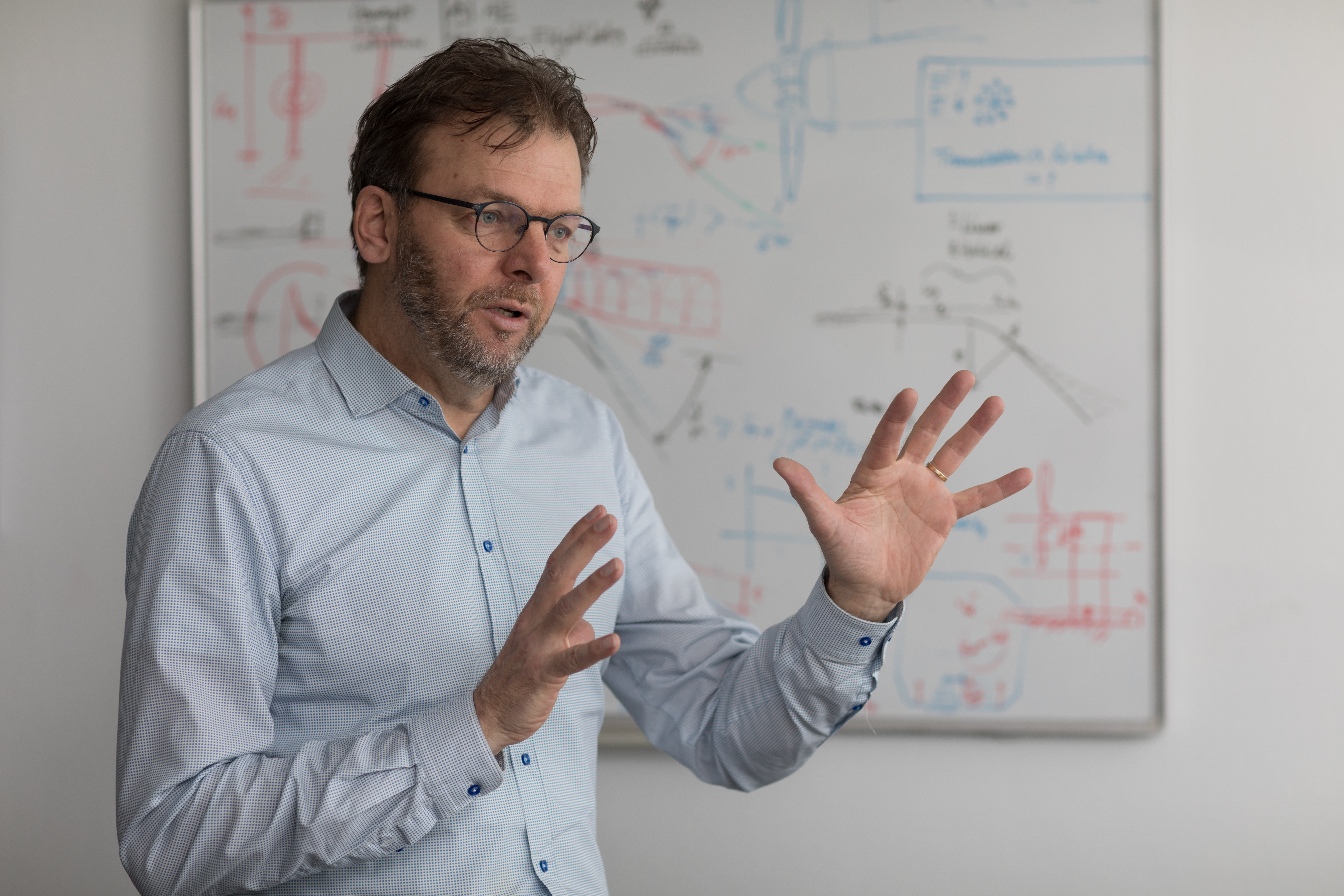
Prof. Leo Veldhuis serves as Full Professor of Flight Performance and Propulsion (FPP) at the Faculty of Aerospace Engineering, Delft University of Technology. His research focuses on developing sustainable aviation solutions through improved aircraft aerodynamics and propulsion systems integration. Veldhuis leads multiple European research projects aimed at reducing aviation's environmental impact through innovative aircraft design approaches. His primary research interests include aircraft aerodynamics, propulsion systems, sustainable aviation, electric flight, hybrid propulsion, distributed propulsion, and novel aircraft design. Veldhuis has specialized expertise in propeller propulsion systems, having conducted PhD research on propellers and propeller-wing interaction. He advocates for a transition toward electric and hybrid propulsion systems, recognizing both the potential and challenges of battery technology for aviation applications. His work addresses the critical need for more energy-efficient aircraft designs as the aviation sector continues to grow at approximately 5% annually worldwide. Veldhuis and his team are actively engaged in three major projects focusing on hybrid and electric propulsion systems. His research explores distributed propulsion concepts where electric engines are strategically placed across the aircraft rather than using traditional jet engines mounted on wings. He also investigates the resurgence of propeller propulsion, which offers approximately 30% better fuel efficiency compared to jet propulsion. Veldhuis collaborates extensively with industry partners including Royal NLR (Netherlands Aerospace Centre), Airbus, and companies developing small electric aircraft. Veldhuis has contributed to significant national initiatives, including the Dutch government's action plan on hybrid electric flying. He maintains an active research agenda examining the entire spectrum of sustainable aviation solutions, from technological innovations to policy recommendations. His work recognizes that technological developments alone cannot keep pace with aviation's growth, advocating for a broader societal approach to mobility that considers when and why air travel is necessary.