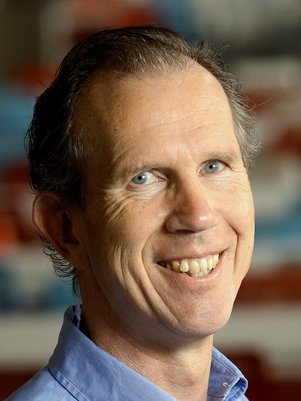
Dr. Eric Keus is a Clinical Professor and intensivist affiliated with the Faculty of Medical Sciences at the University of Groningen. His research focuses on critical care medicine, emphasizing outcome measurement in ICU patients, clinical trial design, fluid therapy protocols, and mortality prediction modeling. He has contributed to major studies such as the INCEPT trial and the GODIF trial, exploring interventions like thromboprophylaxis and enteral nutrition. His work involves collaborations across international teams, addressing topics such as crystalloid solutions, albumin use in shock, and furosemide efficacy. Dr. Keus has published in high-impact journals like Critical Care Medicine and Acta Anaesthesiologica Scandinavica . Notably, he leads projects on multi-organ failure biomarkers and machine learning applications in critical care data. His research interests span predictive analytics, evidence-based guidelines, and translational research in intensive care. Dr. Keus is actively involved in designing and analyzing clinical trials to improve patient outcomes in critical care settings.
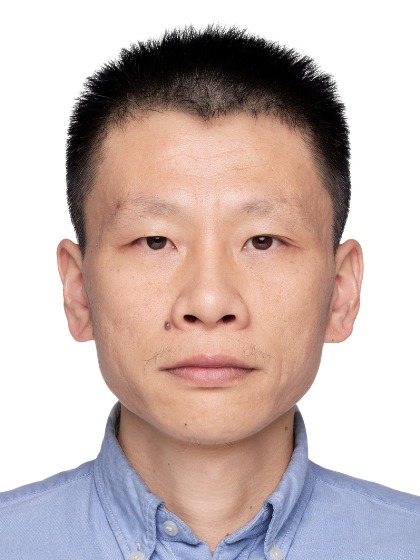
Zhao Zhou serves as a Visiting Associate Professor within the Faculty of Science and Engineering at the University of Groningen, affiliated with the Engineering and Technology Institute Groningen (ETIG). His research integrates control theory, transportation engineering, and artificial intelligence to address complex mobility challenges. His core research domains include: Automation and Control Systems Transportation Science and Technology Computer Science and Artificial Intelligence Model Predictive Control methodologies Intelligent Transportation Systems architecture Dr. Zhou specializes in applying Model Predictive Control frameworks to optimize traffic flow, enhance safety protocols, and develop adaptive algorithms for next-generation transportation networks, with emphasis on real-world implementation in urban mobility systems. His academic activities are centered at ETIG, where he collaborates on interdisciplinary engineering projects bridging theoretical control systems with practical transportation applications.
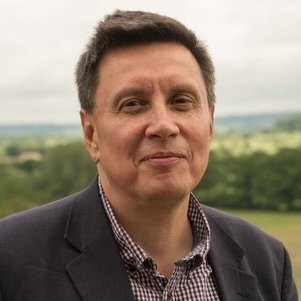
Malvina Nissim is a Professor of Computational Linguistics and Society at the University of Groningen's Faculty of Arts, affiliated with the Center for Language and Cognition Groningen (CLCG). Her research focuses on NLP applications to societal challenges, ethics in AI, and science communication. She is actively involved in initiatives like the Sectorplan's Humane AI theme and the ACL Ethics Committee. Education: Not explicitly listed in provided texts, but her career path suggests doctoral training in linguistics/comp. ling. Research interests include multilingual NLP, bias mitigation in AI, ancient language processing (e.g., AGALMA project), and responsible tech communication. She has co-authored a popular introductory book on Computational Linguistics (in Italian). Publications span topics like dialogue systems, model uncertainty in ed tech, and cross-lingual NLP. Key awards include the 2016 UG Lecturer of the Year. Awards: 2016 Lecturer of the Year, multiple grants (e.g., CLICK-NL 800K for PAGINA project with Dagblad van het Noorden).
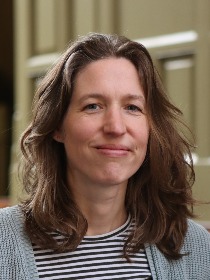
Prof. Klaske Glashouwer is a Professor by special appointment at the University of Groningen’s Faculty of Behavioural and Social Sciences, affiliated with the Clinical Psychology & Experimental Psychopathology department. She holds additional roles as a healthcare psychologist/therapist and Research Coordinator at Accare’s Department for Feeding Disorders, Eating Disorders, and Obesity, and chairs the Dutch Association’s Eating Disorders and Obesity special interest group. **Education**: Earned a doctorate in experimental psychopathology cum laude (2012) and certified as a healthcare psychologist (2012) and CBT-therapist (2014). Research focuses on anorexia nervosa, body image, and disgust mechanisms. Key projects include interventions targeting self-disgust and body functionality, with a focus on adolescents and university populations. **Research Themes**: Body image disturbances, self-disgust as a core mechanism in anorexia, reward/punishment sensitivity, and experimental treatments. Her work bridges clinical practice and experimental methods, emphasizing translational research. **Article Trends**: Recent studies (2023–2025) emphasize interventions to reduce body dissatisfaction (e.g., evaluative conditioning, virtual reality), the role of self-disgust in eating disorders, and neurobehavioral factors like punishment sensitivity. Most articles address clinical populations or university students, with a focus on prevention and treatment efficacy. **Awards**: 2012 Doctorate cum laude. **Advising/Grants**: Supervises PhD students (e.g., Sanne van Doornik, Franziska Schutzeichel) and postdocs (Stella Weiland). Research teams include collaborations at Accare and international networks in eating disorder treatment. **Affiliations**: Active in clinical practice at Accare, combining research and therapy. Leads projects like SMAAKK!, a blended treatment program for youth with eating disorders.
Prof. Marije van der Lee is a Full Professor in Psycho-Oncology at Tilburg University's Tilburg School of Social and Behavioral Sciences (TSB), holding an endowed chair in Clinical and Medical Psychology. She leads the scientific research department at the Helen Dowling Institute (HDI) and provides clinical care as a registered health psychologist. Her research focuses on personalized e-interventions for cancer patients, particularly addressing cancer-related fatigue, fear of recurrence, and resilience. Key projects include the COMPANION study (partner-involvement in fatigue treatment), SCHEME (predicting psychological distress risk), and the IMPRESS initiative (resilience in long-term responders to immunotherapy). Her work emphasizes co-creation with patients, as seen in the development of the doorlevenmetkanker.nl psychosocial support website. She has authored over 89 publications since 2003, with recent contributions in European Journal of Cancer Care , Annals of Behavioral Medicine , and Current Oncology . Her interventions, such as 'Less Tired' and 'Less Fear of Cancer' online programs, have been implemented clinically. She leads the HDI's endowed chair focused on optimizing psycho-oncology treatments to 'find what works for whom.' Current research priorities include validating personalized measurement designs, reducing patient burden in studies, and assessing cost-effectiveness of digital therapeutics. She collaborates with institutions like the University Medical Center Groningen and Radboud University Medical Center. Her interdisciplinary approach bridges clinical practice, research, and policy to improve cancer patients' mental well-being and quality of life.
Professor Zoran Kapelan serves as Chair of Urban Water Infrastructure within the Department of Water Management at Delft University of Technology's Faculty of Civil Engineering and Geosciences. With over 30 years of experience in water engineering, he joined TU Delft in 2018 after leading the Water and Environment Group at the University of Exeter for 19 years, following a decade in international consultancy. His research spans smart water systems, hydroinformatics, and sustainable urban water infrastructure management. Key focus areas include AI-driven solutions for drinking water distribution (leakage detection, pressure management), sewer systems optimization (blockage prediction, sustainable drainage), asset management, and flood risk assessment. He pioneers methodologies integrating artificial intelligence, real-time control, and decision-making under uncertainty to address climate change adaptation and circular economy principles in water systems. Recent publications (2024-2025) reveal strong trends in deep learning applications for infrastructure monitoring (sewer crack detection, floating litter quantification), resource recovery assessment frameworks, and advanced modeling of non-Newtonian fluid dynamics in wastewater systems. His work increasingly emphasizes circular economy metrics, environmental risk assessment of novel materials, and co-developed sustainable solutions through serious gaming approaches. Editor, Journal of Water Resources Planning and Management (ASCE) Associate Editor, Water Resources Research Member, IWA Digital Water Steering Committee Member, External Scientific Advisory Council of KWR Prof. Kapelan has secured over €10 million in research funding across 50+ EU, RCUK, and industry grants. His supervision portfolio includes 40+ PhD students and 25+ postdocs, with significant industry impact through commercialized technologies like AI-based pipe burst detection systems deployed by United Utilities serving 7 million customers. He coordinates TU Delft's Urban Drainage and Water Management course while contributing to asset management and water transport curricula. The Urban Water Infrastructure group under his leadership maintains strong industry partnerships with water utilities globally, focusing on translating research into operational solutions for real-time monitoring, predictive maintenance, and climate-resilient infrastructure design.
Willem van der Does is a Professor at the Department of Psychology, Leiden University, and holds a secondary appointment at the Department of Psychiatry, Leiden University Medical Center. His research spans clinical psychology, nutritional psychiatry, and political psychology, with a focus on depression, anxiety, and cognitive mechanisms. Professor of Clinical Psychology Department of Psychology, Leiden University Department of Psychiatry, Leiden University Medical Center His work includes studies on the chronobiology of depression, dietary interventions for mental health, and neuromodulation techniques like noninvasive vagus nerve stimulation. He leads the SAFE study on suicidal ideation monitoring and the IMPACT-study for PTSD treatment optimization. Recent publications analyze methodological challenges in nutritional psychiatry and explore the neurobiological links between stress, aging, and chronic illness. He is also active in science communication, contributing to Zin Magazine. Casimir Prize for suicide prevention education Peter van Straaten Psychologieprijzen 2021 He supervises clinical research, collaborates on international projects, and serves on editorial boards. His lab investigates biomarkers for depression (e.g., EEG theta/beta ratio) and personalized treatment approaches.
Prof. Jan Dirk Jansen (Delft University of Technology) specializes in systems and control theory applied to subsurface flow and geomechanics. His research spans induced seismicity , geothermal energy , reservoir simulation , and data assimilation . Current projects include co-leading the NWO-funded NEPTUNUS initiative on transient induced seismicity and previously researching seismicity mitigation in Dutch gas fields through the Science4Steer program. Expertise in numerical reservoir simulation History matching & model-order reduction Optimization of fluid injection/production He authored the textbook Nodal Analysis of Oil and Gas Production Systems , with significant contributions to closed-form geomechanical solutions and scalable numerical schemes . Contact: J.D.Jansen@tudelft.nl
Dr. Erik-Jan van Kesteren is an Assistant Professor in the Methodology and Statistics department at Utrecht University , where he leads the ODISSEI Social Data Science (SoDa) team. His work bridges statistical methodology with computational social science, with a focus on synthetic data, Bayesian inference, and open research infrastructure. Current research initiatives include: Developing privacy-preserving synthetic data frameworks Improving computational approaches to structural equation modeling Addressing geospatial sampling bias in volunteer-collected datasets Exploring text-based personality computing and language association tools He maintains the department's compute server infrastructure and contributes to open-source projects like ArtScraper and osmenrich. Contact via e.vankesteren1@uu.nl or erikjanvankesteren@pm.me
Dr. Mahdi Shafiee Kamalabad is an Assistant Professor in the Department of Methodology and Statistics at Utrecht University's Faculty of Social and Behavioural Sciences. His research focuses on developing advanced statistical and machine learning methods for complex data analysis, particularly in social and behavioral sciences, life sciences, and bioinformatics. Applied Data Science Network Analysis Bayesian Statistics Longitudinal Data Analysis He specializes in Dynamic Bayesian Network Models, Relational Event Models, and Change Point Detection algorithms. His work spans interdisciplinary collaborations, combining educational psychology, applied linguistics, and data science to improve understanding of multilingual classroom interactions and epidemic prediction models. He has contributed to R software packages like remify, remstats, and remstimate for relational event history data analysis. Notable projects include "Better Together: A Social Network Analysis of Multilingual Interactions in the Classroom" (2022) and methodological developments for malaria dynamics analysis in Cameroon. His teaching includes Data Wrangling and Data Analysis courses. Funding sources include Utrecht University's Faculty of Social and Behavioural Sciences.
Julian Quodbach is an Assistant Professor at the Division of Pharmaceutics , Utrecht Institute for Pharmaceutical Sciences ( Utrecht University ). He specializes in additive manufacturing (3D printing) for personalized medication and tablet disintegration phenomena . Education: PhD from Heinrich Heine University Düsseldorf Prior Positions: Postdoc at Uppsala University, research roles at Düsseldorf His research focuses on 3D printing for individual/small-batch medications , addressing challenges in process understanding , drug release , and clinical translation . He investigates tablet disintegration and pharmaceutical process optimization for personalized therapies . Recent publications analyze 3D printing applications across inflammatory bowel disease , parkinson's disease , and pediatric formulations , exploring machine learning and material science . Collaborations span Sweden , Germany , and Netherlands . He leads the Task Force Additive Manufacturing for APV e.V. and the Pharma3DPI workstream . His work addresses real-world challenges like process fluctuations , batch traceability , and tablet quality in additive manufacturing .
Dr. Jan Roelof Polling serves as an Ophthalmology Researcher at Erasmus University Medical Center, with dual affiliations in Ophthalmology and Epidemiology departments. His research primarily focuses on myopia epidemiology, refractive error analysis, and innovative diagnostic approaches for vision care. His research interests span myopia progression mechanisms , gender-specific visual impairment patterns , and digital health solutions for pediatric eye care . Current work emphasizes peripheral refraction mapping through MRI technology, web-based self-assessment tools, and international standardization of myopia management protocols. Key thematic areas include high myopia risk stratification, generational shifts in vision disorders, and dose-dependent pharmacological interventions. Polling's recent publications demonstrate strong engagement with international collaborations, particularly through the European Society of Ophthalmology and International Myopia Institute. His work frequently addresses public health implications of vision disorders, with emphasis on Dutch population studies and global care pathway development. Notable contributions include novel MRI-based progression prediction models and gender-focused epidemiological analyses.
Dr. Willem Tideman is a Researcher in the Ophthalmology department at Erasmus MC . His work focuses on refractive errors, myopia progression, and biomedical imaging applications. Institution: Erasmus MC, Department of Ophthalmology Academic Role: Researcher Research Interests: Tideman investigates the interplay between genetic and environmental factors (e.g., outdoor time, education) in myopia progression, utilizing advanced techniques like MRI for ocular biometry and Mendelian randomization for causal inference. His work addresses visual impairment in youth and gender-specific trends. Publications highlight his expertise in medical imaging , genetic epidemiology , and clinical guidelines for myopia management. Collaborations span European and international institutions, including the International Myopia Institute .
Mauro Salazar is an Assistant Professor in the Control Systems Technology section of the Department of Mechanical Engineering at Eindhoven University of Technology (TU/e), with co-affiliations at the Eindhoven AI Systems Institute (EAISI) in both Health and Mobility domains. He leads his own research group focused on optimization models and methods for systems and control. His educational background includes: B.Sc. and M.Sc. in Mechanical Engineering from ETH Zürich (2012, 2015) Master thesis conducted at EPFL's Automatic Control Lab Ph.D. in Mechanical Engineering from ETH Zürich (2019) in collaboration with Ferrari Formula 1 Postdoctoral Scholar at Stanford University's Autonomous Systems Lab (2019-2020) Salazar's research centers on optimization models for multi-scale cyber-socio-technical systems with applications spanning mobility systems, pandemic response, and material design. His work bridges theoretical optimization with practical implementation, particularly in sustainable mobility solutions where he develops methods for optimal design and operation of transportation systems from single vehicles to entire networks. He investigates mesoscopic user behavior modeling and designs incentive schemes to align individual and system-level objectives in transportation networks. His recent publications (2025) demonstrate a strong focus on sustainable mobility systems, with recurring themes in electric vehicle fleet management, battery degradation modeling, ride-pooling algorithms, and energy management for transportation electrification. His work spans multiple disciplines including automotive engineering, control systems, energy management, and public health, characterized by rigorous mathematical optimization approaches applied to real-world challenges. His scientific recognitions include: Two ETH Medals (for Master's and PhD theses) Best Student Paper awards at ITS 2018 and ECC 2022 Best Teacher Award (2021) Nomination for TU/e Young Researcher Award (2022) Salazar actively advises research projects and secured funding through the Dutch Research Council's NEON project (Crossover research program, Grant 17628). His teaching portfolio includes Optimal Control and Reinforcement Learning, Engineering Optimization, and Advanced Full-Electric and Hybrid Powertrain Design. He leads the 'Group Salazar' within the Control Systems Technology section and contributes to EAISI Health and Mobility initiatives.
Arturo Tejada Ruiz is a Part-time Assistant Professor at the Mechanical Engineering Department of Eindhoven University of Technology (TU/e), specializing in Safe Autonomous and Cooperative Vehicles . He also serves as a Senior Scientist at TNO in the Integrated Vehicle Safety department, supporting OEMs and regulators in certifying automated vehicles. His research integrates human factors , artificial intelligence , and motion control to enable socially acceptable self-driving systems. Education : BSc/MSc/PhD in Electrical Engineering (Pontificia Universidad Católica del Perú, Old Dominion University) Research Focus : Developing reference models of human driving to extract safety requirements for automated vehicles, with emphasis on probabilistic risk evaluation and real-time collision probability estimation. Recent work includes the PRISMA method for data-driven risk measures and novel approaches for multi-circular shape approximations in collision probability estimation. Publications highlight advancements in: Motion planning algorithms for autonomous vehicles Stochastic and robust model predictive control Human-centric safety certification frameworks His work bridges theoretical modeling with industrial applications, particularly in quantifying risk trends and improving computational efficiency for real-world deployment.