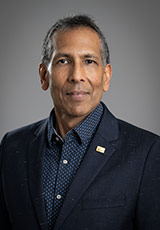
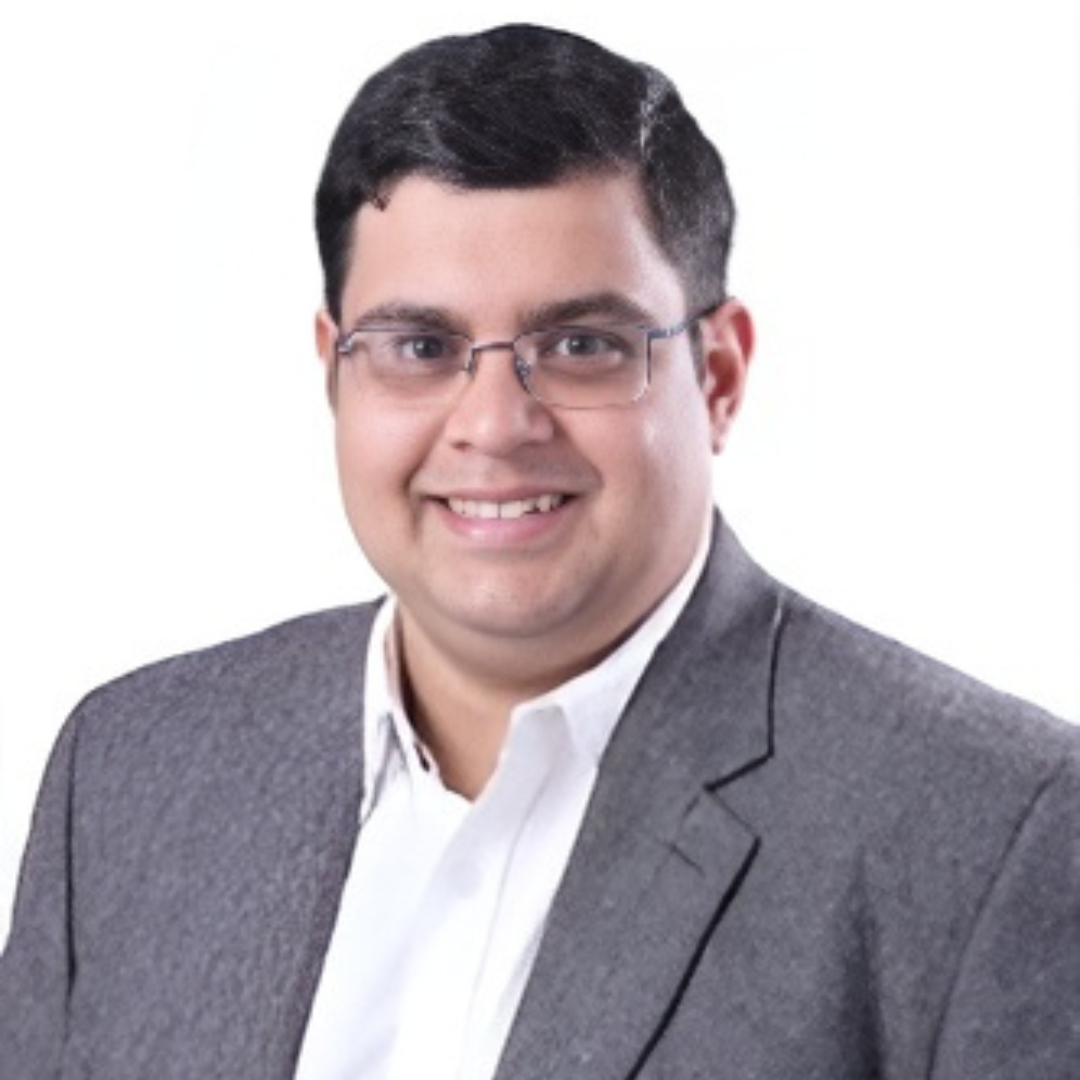
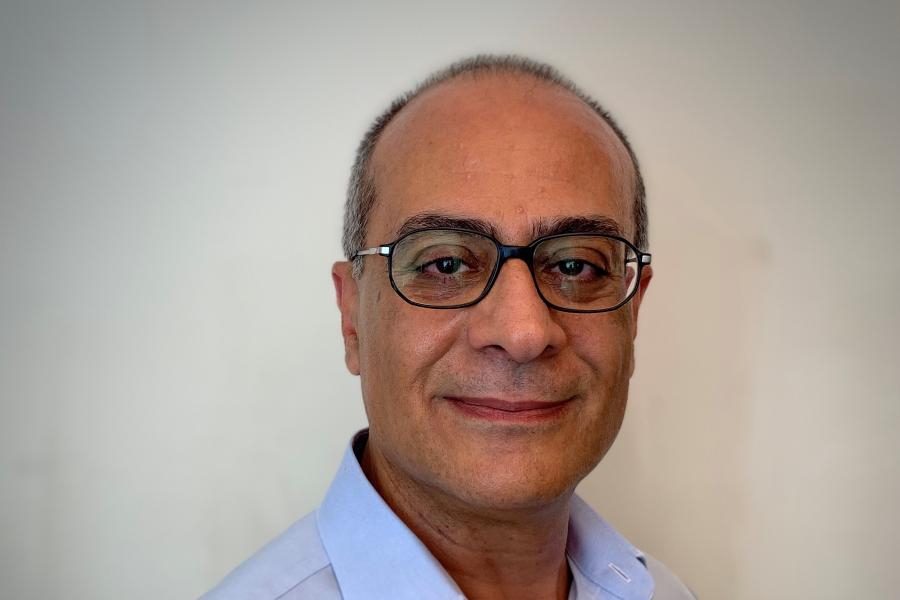
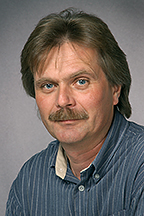
Rickey Dubay is Professor and Director of Graduate Studies in Mechanical Engineering at University of New Brunswick. His research spans control systems, robotics, and advanced manufacturing, with particular focus on unmanned marine vehicles. Research areas include: complex control systems, robotic learning control, intelligent systems, and unmanned vehicle control. He leads projects on 3D trajectory tracking for marine vehicles and cognitive robotic strategies for autonomous systems. He has supervised 7 PhD and 23 Master's graduates, with 3 PhD and 4 Master's students currently. His research includes patented innovations in nonlinear control methodologies and complex profile tracking, and he co-founded Eigen Innovations Inc. Course instruction includes advanced topics: Model-based Control Methods, System Identification, and Optimal Control Methods.
Dr. Sheldon Williamson is a Professor and NSERC Canada Research Chair in Electric Energy Storage Systems for Transportation Electrification at Ontario Tech University's Department of Electrical, Computer and Software Engineering, Faculty of Engineering and Applied Science. His research focuses on advanced energy storage technologies, power electronics, and their integration into transportation systems and smart grids. Education: Ph.D. (Electrical Engineering, Illinois Institute of Technology, 2006), M.S. (Electrical Engineering, Illinois Institute of Technology, 2002), B.E. (Electrical Engineering, University of Mumbai, 1999). Research Interests - Electric Energy Storage Systems for Transportation Electrification - Battery Management Systems (BMS) and Thermal Safety - Wireless Power Transfer and Charging Infrastructure - Cyber-Physical Security in EV Systems - Smart Grid Integration of Renewable Energy Publications : Over 50 peer-reviewed articles from 2021–2025, focusing on battery technologies, power electronics, and electrification challenges. Key themes include solid-state batteries, cloud-based BMS architectures, and dynamic wireless charging systems. No scientific awards explicitly listed in provided texts. Active in academic leadership and curriculum development within the department.
Frank Wood is an Associate Professor of Computer Science at the University of British Columbia and a Canada CIFAR AI Chair at AMII. He directs the Pacific Laboratory for Artificial Intelligence (PLAI) research group and co-founded Inverted AI, a spin-out focused on advanced simulation for autonomous vehicles. His research focuses on probabilistic programming, deep generative models, and reinforcement learning, with applications in autonomous driving, robotics, and vision. Wood teaches courses such as Machine Learning and Data Mining (CPSC 340) and Topics in Artificial Intelligence (CPSC 532W). He has been on academic leave from January to December 2025. His work integrates theoretical advancements with practical applications, including projects like PLAICraft, a large-scale embodied AI dataset. Key awards include the ICML Best Paper Honourable Mention and contributions to probabilistic programming systems like Anglican. His research group collaborates on tools such as TorchDriveEnv for autonomous driving benchmarking and explores cutting-edge methods in diffusion models and continual learning.
Dr. Nariman Sepehri is a Professor in the Department of Mechanical Engineering at the Price Faculty of Engineering, University of Manitoba, Canada. He has held significant administrative roles including Department Associate Head (Graduate Studies), Associate Dean of Engineering (Undergraduate Programs), and Acting Dean of Engineering. His research focuses on fluid power systems, robotics, and control with applications in rehabilitation and heavy machinery. Education: Post-Doctorate, Electrical & Computer Engineering, University of British Columbia, Canada (Tele-Robotics, Mechatronics) PhD, Mechanical Engineering, University of British Columbia, Canada (Control, Fluid Power Systems, Robotics) MSc, Mechanical Engineering, University of British Columbia, Canada (Computer-Aided Manufacturing Planning) BSc, Mechanical Engineering, Sharif University of Technology, Iran (Machine Design) Dr. Sepehri's research interests span Fluid Power Systems and Technology , Robotics and Teleoperation , Control Systems , Condition Monitoring , and Mechatronics of Rehabilitation Devices . His work integrates advanced control theory with practical applications in hydraulic and pneumatic systems, aiming to improve energy efficiency and reliability in robotics, manufacturing, aerospace, and healthcare. Notably, he has developed innovative rehabilitation devices using game-based interfaces for stroke and cerebral palsy patients. His recent publications (2022-2025) demonstrate a strong trend towards energy-efficient hydraulic systems, fault detection using machine learning, and the development of soft robotic actuators for rehabilitation. Key areas include electro-hydrostatic actuators, pump-controlled circuits, and the application of advanced algorithms for condition monitoring and control. Scientific Awards: Dean of Engineering’s Award for Superior Academic Performance University of Manitoba Rh Award for outstanding contributions to scholarships and research in Applied Sciences Fellow of the Canadian Academy of Engineering (CAE) Fellow of the American Society of Mechanical Engineers (ASME) Fellow of the Canadian Society for Mechanical Engineering (CSME) Dr. Sepehri has supervised over 100 graduate and postdoctoral students, contributing significantly to the field of fluid power and robotics. His research has been supported by major grants from the Natural Sciences and Engineering Research Council of Canada (NSERC) and other sources, enabling the establishment of the Fluid Power Research Laboratory. This lab features state-of-the-art equipment including a human-robot-in-the-loop simulator and hardware-in-the-loop test facilities for condition monitoring. The Fluid Power Research Laboratory at the University of Manitoba, under Dr. Sepehri's leadership, is a hub for innovation in fluid power technology. The lab collaborates internationally with researchers in USA, Brazil, China, Hungary, Romania, Denmark, Sweden and France, and has developed interdisciplinary projects bridging engineering with healthcare applications.
Yan Yan is an Assistant Professor at the School of Computer Science, University of Guelph. His research focuses on bioinformatics, multi-omics analysis, and AI-driven computational models for understanding biological processes. His lab develops algorithms for genome-wide association studies, single-cell RNA-seq analysis, and de novo peptide sequencing, with applications in plant genomics and digital agriculture. Education : Not explicitly stated, but his publications suggest advanced training in bioinformatics and computational biology. Research Interests : Bioinformatics, Machine Learning, Big Data Analysis, Statistical Association, and AI applications in agriculture. His work integrates artificial intelligence with omics data to uncover disease mechanisms and improve agricultural practices. Recent trends in his publications emphasize robotics, structural health monitoring, and environmental sensing using hybrid neural networks and deep learning techniques. Grants & Awards : No awards explicitly listed, but his prolific publication record indicates sustained research activity. Advising & Labs : Advises students like B S Puliparambil and J Tomal. His lab actively collaborates on projects involving AI in agriculture, robotics, and structural engineering. Current initiatives include digital twins for human-robot collaboration and precision livestock monitoring systems. Labs/Teams : Leads a computational biology and AI lab focusing on multi-omics integration and smart agriculture solutions.
Dr. Martin v. Mohrenschildt is an Associate Professor in the Department of Computing and Software at McMaster University's Faculty of Engineering. He holds academic positions as Undergraduate Advisor for Mechatronics and Mechatronics Coordinator. His expertise spans control systems, signal processing, hybrid systems, and immersive simulation. He earned a Dr. sc. math. ETH and Dipl. math. ETH (Swiss Federal Institute of Technology), and is a Professional Engineer (P.Eng.). Research focuses include Model Predictive Control, vibration analysis for industrial machinery, and multisensory integration in motion simulation. His Motion Simulator Laboratory features a 6-DOF simulator with advanced visualization and physiological measurement capabilities. The Embedded Systems Laboratory explores mechatronics and robotics, including alternative fuel injection systems. Teaching includes courses like CAS-748 (Time Series Analysis) and SFWR ENG 2SO3. Recent work emphasizes sensor fusion (LiDAR/camera/thermal), biofeedback systems for muscle interventions, and cognitive effects of motion cues in virtual environments. Collaborations with Dr. Shedden investigate perceptual neuroscience in immersive simulators. His lab facilities support interdisciplinary projects combining engineering, computer science, and cognitive science. Publications span 30+ years, covering hybrid systems theory, control algorithms, and applied sensor technologies. Current research directions include autonomous vehicle perception systems and aging-related changes in multisensory integration.
Professor Jeremy Laliberte is a faculty member in the Department of Mechanical and Aerospace Engineering at Carleton University. He focuses on novel aircraft structures, composite materials, and next-generation UAV/MAV design. Previously a Research Officer at the National Research Council Institute for Aerospace Research (2001-2008), he now leads the Advanced Aircraft Design Lab and co-leads the NSERC CREATE UTILI initiative with multiple Canadian universities. Research areas include: Composite and hybrid material manufacturing Biomimetic aerospace structures Hydrogen fuel cell aircraft power systems Finite element analysis of impact damage Urban air mobility safety protocols Recent publications emphasize: High-fidelity composite modeling Low-velocity impact analysis Hybrid delivery logistics Battery lifecycle optimization Scientific recognition includes: Best Poster at ICAF 2023 Best Student Paper/Presentation awards (2022 AEAC) He supervises a research group working on projects with industry partners like Bell Helicopter, Bombardier, and NRC.
François Bouffard is an Associate Professor at McGill University's Faculty of Engineering, specializing in Power Engineering and Systems Control. He holds the William Dawson Scholar title and serves as Associate Chair (Undergraduate Affairs). His research focuses on smart grids, renewable energy integration, and advanced control systems. Research interests include optimizing power systems through data-driven methods, demand response mechanisms, and energy storage solutions. He contributes to projects like the Group for Research in Decision Analysis (GERAD), emphasizing sustainable energy systems and grid resilience. Recent work explores flexibility in smart grid architectures, cold load management, and multi-agent reinforcement learning for energy systems. His publications highlight optimization techniques, stochastic modeling, and machine learning applications in energy control. Awarded the William Dawson Scholar distinction, his work bridges theoretical advancements with practical grid operations. He collaborates on interdisciplinary projects addressing energy transition challenges, such as hybrid storage systems and distributed energy resource coordination.
Stephen L. Smith is a Professor and Tier 2 Canada Research Chair in the Department of Electrical and Computer Engineering at the University of Waterloo. He serves as Co-Director of the Waterloo Artificial Intelligence Institute, leading research in robotics and AI. His work focuses on autonomous systems, multi-robot coordination, and human-robot interaction, with applications in navigation, control systems, and collaborative task planning. Smith's research explores challenges such as path planning in uncertain environments, persistent monitoring, and adaptive decision-making. His contributions include algorithms for robot navigation in ice-covered waters, real-time replanning under constraints, and optimizing multi-agent systems for efficiency and safety. Key scientific awards include the Tier 2 Canada Research Chair designation. His research also addresses human-centric aspects, such as studying user preferences in collaborative tasks and developing frameworks for learning user intent through interaction.
Steven Waslander is an Associate Professor at the University of Toronto Institute for Aerospace Studies and an Adjunct Professor in Mechanical and Mechatronics Engineering at the University of Waterloo. He previously directed the Waterloo Autonomous Vehicles Laboratory (WAVELab). Education: Doctorate in Aeronautics and Astronautics from Stanford University (2007) Master's in Aeronautics and Astronautics from Stanford University (2002) Bachelor's in Applied Mathematics and Mechanical Engineering from Queen's University (1998) His research focuses on autonomous vehicles , including aerial and ground systems, with an emphasis on Simultaneous Localization and Mapping (SLAM) , nonlinear estimation , multi-robot systems , and autonomous driving . He also explores convolutional and recurrent neural networks for motion planning and object detection . Recent articles highlight trends in 3D detection , LiDAR-based tracking , neural radiance fields for autonomous driving, and model-agnostic pretraining for motion prediction. These works span journals like IEEE Transactions on Robotics and conferences such as ICCV and NeurIPS . Professor Waslander has advised the University of Waterloo Robotics Team, mentored students like Evan Cook, Barza, and Marc, and collaborated with industry partners including Aeryon Labs and Clearpath Robotics. He is a member of the NSERC Canadian Field Robotics Network .
John K. Tsotsos is a Distinguished Research Professor at York University's Lassonde School of Engineering, holding positions in both the Department of Electrical Engineering & Computer Science and the Centre for Vision Research (CVR). His work bridges computer science, cognitive science, and neuroscience with a focus on visual attention and active vision systems. Dr. Tsotsos's research interests center on visual attention mechanisms, active visual search, and visuospatial reasoning. His work explores how humans and machines process visual information, with applications in autonomous driving, robotics, and human-computer interaction. He investigates the computational principles underlying visual attention, comparing biological systems with artificial implementations. His research has significant implications for developing more human-like computer vision systems that can effectively navigate and interpret complex visual environments. Analysis of his recent publications reveals a strong focus on active vision systems where observers dynamically control their viewpoints during visual search tasks. His work spans both theoretical foundations of visual attention and practical applications in autonomous vehicles. A significant portion of his recent research addresses driver attention modeling, gaze prediction, and the challenges of real-world visual processing where traditional computer vision approaches often fail. His work consistently bridges cognitive theory with practical engineering applications. Dr. Tsotsos has made substantial contributions to the field of computational vision through his theoretical work on attentional mechanisms and their implementation in artificial systems. His research has influenced both academic understanding of visual processing and practical applications in autonomous systems and human-machine interfaces. As a faculty member at York University, Dr. Tsotsos contributes to the vibrant research ecosystem of the Centre for Vision Research, where interdisciplinary teams work on cutting-edge problems in visual perception, cognitive modeling, and machine vision. His work exemplifies the integration of cognitive science principles with advanced computational techniques to solve complex visual processing challenges.
Prof. Kui Wu is a Professor in the Department of Computer Science at the University of Victoria, affiliated with the Faculty of Engineering and Computer Science. His research focuses on computer networks, wireless and mobile networking, mobile computing, and network security. He is part of the Parallel, Networking and Distributed Computing (PANDA) research group. Key areas of expertise include distributed learning frameworks, autonomous systems, IoT anomaly detection, and edge computing architectures. His work integrates machine learning techniques with network optimization, addressing challenges in real-time systems, security, and resource allocation. Notable contributions include advancements in federated learning, privacy-preserving distributed systems, and UAV-based monitoring solutions. Prof. Wu's research also explores edge computing innovations, such as smart contract-aided IoT resource sharing and energy-efficient edge data centers. He has contributed to over 50 peer-reviewed publications, with recent work emphasizing AI-driven network design, anomaly detection in IoT, and reinforcement learning applications in autonomous driving safety. His research has practical implications for improving the reliability and efficiency of next-generation communication and computing infrastructures.
Prof. Lionel Briand is a distinguished academic and researcher in software engineering, holding the Tier 1 Canada Research Chair in Intelligent Software Dependability and Compliance at the University of Ottawa's School of Electrical Engineering and Computer Science (EECS Department). He is also the director of Lero, Ireland's Research Centre for Software, and affiliated with the Nanda Laboratory. His roles span technical leadership, research, and academia across institutions in seven countries. Educated with a PhD, Briand's research focuses on trustworthy AI, software verification/validation, requirements engineering, and regulatory compliance. He pioneered model-driven development and search-based techniques in software engineering. His work bridges academia and industry, collaborating with sectors like aerospace, automotive, and finance. Key research trends in his articles include AI-driven testing methodologies, regulatory compliance tools (e.g., GDPR), safety-critical systems, and metamorphic testing for autonomous systems. His recent work emphasizes large language models (LLMs) for consensus-based test generation and safety monitoring of AI agents. Awards: IEEE/ACM Fellowships, Harlan Mills Award, ACM SIGSOFT Research Award Grants: ERC Advanced Grant, Canada Research Chairs Tools: CompAI (GDPR compliance), TEASMA (DNN testing), Smarla (safety monitoring) Labs/Teams: Leads Lero and collaborates with interdisciplinary teams at the University of Luxembourg's SnT center and Fraunhofer Institute. His work emphasizes synergies between Canadian and Irish research ecosystems.
Professor Benoit Boulet is a Full Professor in the Department of Electrical & Computer Engineering at McGill University and serves as Director of the McGill Engine Centre for Technological Innovation and Entrepreneurship. His research focuses on systems and control, with applications in robotics, automation, smart grids, and electric vehicles. He is affiliated with the Systems and Control Unit and the CIM Research Group. His work spans reinforcement learning, time series forecasting, anomaly detection, and traffic signal control. Notable contributions include advancements in electric vehicle transmission systems, autonomous driving trajectory prediction, and energy management systems for smart grids. His research emphasizes practical applications in transportation, renewable energy, and industrial automation. Key technical areas include: Reinforcement learning frameworks for control systems Multi-agent systems and meta-learning Electric vehicle powertrain design Graph-based trajectory prediction Energy-efficient building systems His recent publications (2023-2025) highlight innovations in causal discovery algorithms, fault detection methodologies, and adaptive control strategies. Current initiatives focus on bridging AI advancements with real-world control engineering challenges.
Jan Huissoon is a Professor in the Mechanical and Mechatronics Engineering Department at the University of Waterloo, where he previously served as Chair (2013–2020) and founded Canada's first Mechatronics Engineering program. He holds a Ph.D. and Bachelor's in Engineering Science from Trinity College, Dublin. His research focuses on mechatronic design, sensor-based robotics, autonomous vehicles, and microfluidic control, with notable contributions to robotic welding and intelligent transportation systems. Education: 1983: Doctorate in Mechanical Engineering, Trinity College Dublin 1979: Bachelor of Engineering Science, Trinity College Dublin Research Interests: Autonomous vehicle navigation using neural networks Sensor-based control for high-speed robotic welding Microfluidic device development and fluid dynamics Assistive robotics and human motion modeling Intelligent sensing systems (ultrasonic/vision-based) Industrial Experience: Consultant for Paradigm Products Inc. (2005–2007) Expert witness for patent infringement cases (2005–2007) Contract work in mechatronic and machine design (2005–2007) Labs/Teams: While no specific lab names are listed, his work involves collaboration with interdisciplinary teams focusing on robotics, microfluidics, and autonomous systems. He has developed open-source hardware like the µPump for microfluidic applications. Grants/Advising: Currently not accepting graduate students but holds Sole-Supervisory Privilege Status (SSPS). His research has produced over 100 publications and multiple patents, including foundational work in robotic calibration and welding automation.