Dr. Penina Axelrad is a University of Colorado Distinguished Professor and Joseph T. Negler Professor of Aerospace Engineering Sciences at the University of Colorado Boulder. She has held academic roles since 1992, serving as Department Chair from 2012–2017. A member of the National Academy of Engineering since 2019, her research focuses on GNSS technology, satellite navigation, and remote sensing applications. She has authored over 223 publications and secured $17.5M in research grants. Education: Ph.D., Aeronautics and Astronautics, Stanford University, 1991 S.M., Aeronautical and Astronautical Engineering, MIT, 1986 S.B., Aeronautical Engineering (Avionics Option), MIT, 1985 Research Interests: Global Navigation Satellite Systems (GNSS), multipath mitigation, GNSS reflectometry, orbital dynamics, and quantum sensing for Earth science. Her work bridges astrodynamics, satellite navigation, and environmental monitoring. Awards: Member, National Academy of Engineering (2019) Women In Aerospace Educator Award (2016) Institute of Navigation Samuel Burka Award (2012) AIAA Summerfield Book Award (2011) Advising & Grants: Advised numerous students (no names listed) and led major grants including NASA Quantum Pathways Institute and Sentinel-6 orbit determination projects. Active in Institute of Navigation leadership roles. Labs/Teams: Colorado Center for Astrodynamics Research (CCAR), Quantum Pathways Institute, and collaborative efforts on CubeSat atomic clock experiments.
Hao Liu is a researcher affiliated with institutions like Chinese Academy of Sciences , Beihang University , and Stanford University . His work spans Computer Science , Artificial Intelligence , and Robotics . Key affiliations: National Space Science Center (Beijing), School of Astronautics (Beihang), Key Laboratory of Pervasive Computing (Tsinghua) Research interests include Machine Learning , Image Processing , Graph Neural Networks , and Wireless Communication Optimization His recent publications focus on: Advanced control systems for fuzzy models Medical imaging via hyperspectral analysis Transformer-based approaches in NLP and vision Quantum-safe and edge computing protocols
Dr. Maria Anna Polak is a Professor in the Department of Civil and Environmental Engineering at the University of Waterloo, cross-appointed in the Faculty of Engineering. Her research focuses on advanced structural analysis, composite materials, and innovative construction technologies. She specializes in concrete structures, fiber-reinforced polymers (FRP/GFRP), and nondestructive evaluation methods. Her work addresses challenges in structural safety, durability, and sustainable design through computational modeling and experimental validation. Research Interests: Finite Element Analysis of Reinforced Concrete Structures FRP/GFRP Reinforcement for Concrete Applications Punching Shear Behavior and Design 3D-Printed Construction Materials Nondestructive Testing (NDT) with LiDAR and Ultrasonics Time-Dependent Behavior of Polymers and Composites Her recent publications emphasize advancements in computational modeling (FEA) for complex structural systems, material characterization of novel composites, and optimization of concrete components under seismic and environmental loads. Notable trends include integration of emerging technologies like smartphone LiDAR for on-site assessment and development of predictive models for FRP-degraded systems. Grants & Collaborations: Her work has been supported by industry partnerships (e.g., Horizontal Directional Drilling research) and academic initiatives. She contributes to international standards through experimental validation of design methods for modern construction materials. Labs/Teams: Active in the University of Waterloo's Structural Engineering and Applied Mechanics research group, focusing on smart infrastructure and material innovation.
Emanuel Sallinger is a Full Professor at TU Wien's Databases and Artificial Intelligence Group and Vice Dean of Academic Affairs for Business Informatics and Data Science. He leads the Knowledge Graph Lab, focusing on scalable knowledge-based systems, reasoning in knowledge graphs, and AI integration. His research spans computational logic, database theory, and blockchain applications. Education: PhD in Computer Science (awarded 'sub auspiciis praesidentis rei publicae'), Master's degrees in Computational Intelligence and Informatics Management, and a Bachelor's in Software and Information Engineering. Research Interests: Knowledge graphs (construction, reasoning, scalability), logic-based systems, AI/ML integration with databases, enterprise architecture modeling, and financial knowledge systems. His work emphasizes practical applications like enterprise modeling, sustainable waste management, and regulatory compliance. Grants & Projects: Lead Vienna Science and Technology Fund (WWTF)-funded Knowledge Graph Lab. Involved in projects like 'Knowledge Graph-driven Tour Management' (sustainability), 'SustainGraph' (waste processing), and 'Enterprise Architecture Knowledge Graphs'. Teaching: Offers courses on Knowledge Graphs, Generative AI, Database Systems, and research methodology. Supervises doctoral and master's students in AI, databases, and knowledge representation. Labs/Teams: Knowledge Graph Lab at TU Wien, collaborating with industry on blockchain-based systems, financial AI, and enterprise architecture frameworks.
Zeinab Karami Hassan Abadi is a PhD candidate at the Department of Engineering Cybernetics, Norwegian University of Science and Technology (NTNU), under Professors Jon Are Wold Suul and Marta Molinas. Her research focuses on Control of Wireless Power Transfer Systems for Public Transport Applications, supported by SINTEF Energi's collaboration with Dr. Giuseppe Guidi. Academic Background: 2015-2021: Research Associate at University of Kurdistan, Sanandaj, Iran. 2015-2017: M.Sc. in Power Systems Engineering (University of Kurdistan). 2011-2015: B.Sc. in Electrical Engineering (University of Kurdistan). Research Interests span Optimal Control of Power Converters, Model Predictive and Robust Control, Wireless Power Transfer Systems, and Microgrid Dynamics. She specializes in advanced control strategies for power electronics in renewable energy and EV charging applications. Her work emphasizes stability and efficiency in power systems, with contributions to Model Predictive Control (MPC) for DC microgrids and inductive power transfer. Notable collaborations include projects with SINTEF Energi, focusing on practical implementations of control algorithms in real-world systems. Labs/Teams: Active in NTNU’s Power Electronics and Drives group, collaborating with SINTEF on applied power systems research.
Professor Michael Keidar holds the A. James Clark Professorship at the George Washington University (GW) , School of Engineering and Applied Science, within the Mechanical and Aerospace Engineering department. He leads the Micropropulsion and Nanotechnology Lab , pioneering research in plasma medicine, micropropulsion systems, and plasma nanoscience. His lab collaborates with industry partners like Vector (licensed plasma thruster technology) and US Patent Innovations, LLC (a $5.3M grant for cold plasma cancer therapy). Key research areas include: Cold plasma applications in biomedical treatment Microthrusters for nanosatellites Synthesis of graphene and carbon nanotubes Multi-scale plasma simulations Scientific accolades include the 2017 Ronald C. Davidson Award and AIAA Engineer of the Year (2016-2017), alongside leadership in interdisciplinary projects with GW’s Global Food Institute .
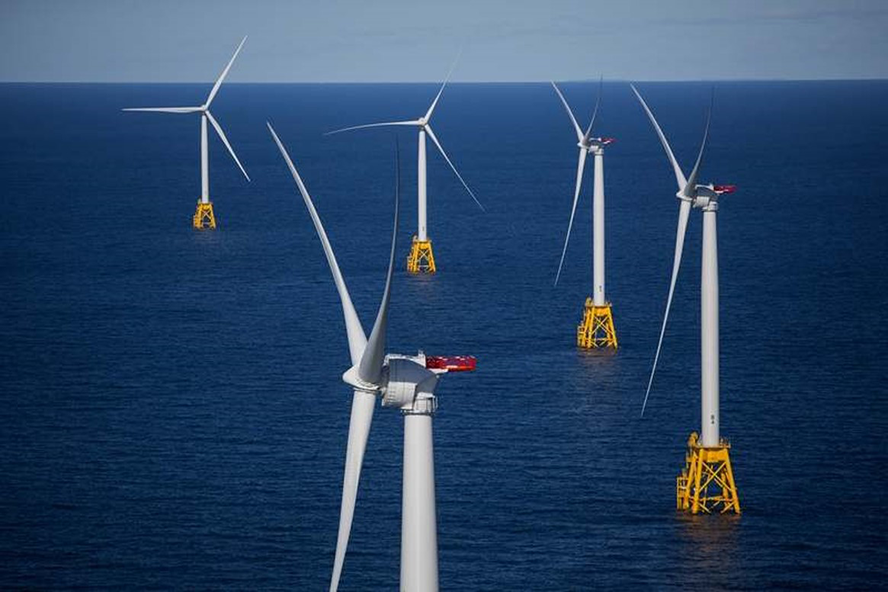
Babak Moaveni is a Professor in the Department of Civil and Environmental Engineering at Tufts University, serving as the Associate Chair since September 2024. He also holds a joint appointment as a Professor in Electrical and Computer Engineering. His research focuses on structural health monitoring, Bayesian inference, earthquake engineering, and offshore wind energy systems. Moaveni earned his Ph.D. in Structural Engineering from the University of California San Diego (2007), following an M.S. (2001) and B.S. (1999) from Sharif University of Technology in Tehran, Iran. His research interests span probabilistic system identification, signal processing, uncertainty quantification, and verification/validation of computational models. Notable grants include leadership in the PIRE project on offshore wind energy digital twins and the Coastal Virginia Offshore Wind Pilot Project. He has supervised multiple Ph.D. and M.S. students, with current advisees including Mehdi Akhlaghi and Nasim Partovi-Mehr. Moaveni has received the Best Presentation Award at the 2022 EDGE Symposium and serves on editorial boards for journals like Structural Health Monitoring and Frontiers in Built Environment . His lab, the Structural Health Monitoring Lab, specializes in infrastructure management and offshore wind energy systems. Key professional activities include membership in the American Society of Civil Engineers (ASCE) and roles on Tufts' Tenure and Promotion Committee. His teaching includes courses on structural health monitoring, numerical methods, and structural reliability.
Dr. Ben Mills is a Principal Research Fellow at the University of Southampton. His research focuses on the integration of deep learning with laser technologies, including applications in environmental monitoring, materials science, and biomedical imaging. He is a core member of the Smart Lasers and Special Fibres research group and leads projects such as Hearing Light and Lasers that Learn , funded by the EPSRC. His work spans laser beam shaping, material transfer, and diagnostic techniques using AI-driven photonics. Research Interests: Laser-material interactions Deep learning for optical systems Environmental sensing via lasers Biophotonics applications Additive/subtractive manufacturing Publications (2023–2025) highlight innovations in laser cleaning, beam optimization, and pollen imaging using low-cost hardware. His work bridges fundamental optics with applied machine learning solutions. External Contributions: Speaker at international conferences on AI in photonics (2019–2021) Keynote on predictive laser materials processing (2019) Presenter at invited sessions on particle sensing via deep learning (2020) Current Supervision: PhD students Luke Burke (Physics), Fedor Chernikov (ORC), and Yuchen Liu (ORC) work on laser beam control and environmental applications.
Anders Sejr Hansen is an Assistant Professor of Biological Engineering at MIT, leading the Hansen Lab focused on understanding 3D genome structure and its functional implications. He holds a PhD from Harvard University and completed postdoctoral training at UC Berkeley. His research integrates advanced imaging, genomics, and computational methods to study chromatin dynamics, enhancer-promoter interactions, and their roles in gene regulation across health and disease. Education: Bachelor's/Master's in Chemistry, University of Oxford (2010) PhD in Chemistry and Chemical Biology, Harvard University (2015) Postdoctoral Research, UC Berkeley (2015–2020) Research Interests: His work spans molecular mechanisms of genome organization, development of novel microscopy techniques (e.g., MINFLUX, expansion microscopy), and computational models for 3D genomics. Key areas include chromatin dynamics, loop extrusion by cohesin/condensin, and the impact of 3D structure on gene expression in cancer and aging. Awards: NIH K99 Pathway to Independence Award (2019) NIH Director’s New Innovator Award (2020) Pew-Stewart Scholar for Cancer Research (2021) NSF CAREER Award (2024) NIH Director’s Transformative Research Award (2024) Advising & Grants: Hansen mentors PhD students and postdocs, including notable advisees Viraat Goel and Domenic Narducci. His lab has secured major grants from NIH, NSF, and private foundations, supporting interdisciplinary projects in imaging, genomics, and synthetic biology. Labs/Teams: The Hansen Lab at MIT collaborates with institutions globally, advancing technologies like Region Capture Micro-C (RCMC) and deep learning models (e.g., Cleopatra) for high-resolution genome mapping. The lab also explores synthetic biology approaches to engineer genome structures.
Andreas Grothey is a Senior Lecturer in the School of Mathematics at The University of Edinburgh, a position he has held since 2011. He completed his MSc in Numerical Algebra and Mathematical Computing at the University of Dundee (1995) and his PhD in Optimization at the University of Edinburgh (2001), supervised by Ken McKinnon. His research focuses on stochastic programming, interior point methods, decomposition approaches, high-performance computing, and energy systems optimization. He has contributed to energy planning, power grid reliability, and emergency response strategies for power networks. Grothey has advised seven PhD students, including work on unit commitment, top-percentile traffic routing, and power flow optimization. His projects include the OOPS solver, CESI energy integration center, and the Structured Modelling Language (SML). Recent work addresses pandemic policy optimization and exascale computational challenges. Education: MSc in Numerical Algebra and Mathematical Computing (University of Dundee, 1995) PhD in Optimization (University of Edinburgh, 2001) Research Interests: Stochastic Programming Interior Point Methods Decomposition Methods High-Performance Computing Energy Systems Optimization Advising & Projects: PhD Supervision (7 students, 2007–2022) OOPS Parallel Solver Development CESI Energy Systems Integration SML Structured Modelling Language Labs/Teams: Member of the Edinburgh Research Group on Optimization, leading projects in power grid stability and energy planning.
Dr. Gary Glover is a Professor of Radiology (Radiological Sciences Lab) at Stanford University , with courtesy appointments in Psychology and Electrical Engineering. His work focuses on the physics and mathematics of MRI, particularly rapid scanning methods using spiral k-space trajectories for functional brain imaging and multimodal neuroimaging (fMRI/EEG/fPET/fNIRS) combined with neuromodulation techniques like TMS and transcranial ultrasound. Academic Appointments: Radiology, Psychology, Electrical Engineering Professional Affiliations: Bio-X, Stanford Cancer Institute, Wu Tsai Neurosciences Institute Research Interests include: Development of blood oxygen level-dependent (BOLD) and viscoelastic contrast in MRI Functional MR Elastography for brain activation mapping Optimization of MR-ARFI for transcranial ultrasound guidance Automated spinal cord segmentation (EPISeg) using machine learning Scientific Awards : National Academy of Engineering (2013) Gold Medal, ISMRM (2000) Steinmetz Award, General Electric (1985) Lauterbur Lecture, ISMRM (2018) Recent Publications analyze: Fast fMRI sampling and spurious signal correction Dissociated patterns in default mode network anti-correlations Neural correlates of collaborative behavior in triadic fMRI Salience network contributions to depression pathophysiology
Chris Freeman is a Professor of Robotics and Control at the University of Southampton's Electronics and Computer Science (ECS) school. His research focuses on iterative learning control theory, biomedical engineering, and robotics with applications in industrial automation and healthcare. As Deputy Head of School (Equity, Diversity and Inclusion) and Chair of the ECS Belonging, Inclusion, Diversity and Equity (BIDE) Committee, he drives initiatives promoting inclusive academic environments. Freeman leads multidisciplinary research projects such as "Towards intelligent, pervasive, high performance control system architectures" "Elder Athletes: building incidental interaction at home" "Low-cost personalised instrumented clothing with integrated FES electrodes" . His work combines robotics, functional electrical stimulation (FES), and wearable technologies to develop rehabilitation systems for stroke patients and industrial automation solutions. His recent publications demonstrate expertise in iterative learning control (ILC), model predictive control, and biomedical applications. Research groups include: Digital Health and Biomedical Engineering Institute for Life Sciences Centre for Health Technologies Centre for Robotics
Dr. Ken Ferens is an Assistant Professor in the Department of Electrical and Computer Engineering at the Price Faculty of Engineering, University of Manitoba. He serves as the Computer Engineering Champion in the Centre for Engineering Professional Practice and Engineering Education and directs the Applied Cognitive Intelligence (ACI) Research Group. Dr. Ferens is a senior member of the Institute of Electrical & Electronics Engineers (IEEE), Chair of the EduManCom Chapter of the IEEE, Vice-Chair of the Computer and Computational Intelligence Chapter of the IEEE, and Chair of the Industry, Teaching Assistants, and Student Forums for Engineering Curriculum Review and Improvement. Ph.D. (Computer Engineering), University of Manitoba, 1996 M.Sc. (Computer Engineering), University of Manitoba, 1991 B.Sc. (Electrical Engineering), University of Manitoba, 1989 Dr. Ferens has over 33 years of research experience in computational intelligence, focusing on cognitive machine learning, artificial intelligence, cognitive computational intelligence, chaos theory applications, agent-based models, and various optimization algorithms including simulated annealing, genetic algorithms, artificial neural networks, and particle swarm optimization. His research applies these techniques to develop software and hardware intrusion detection systems for cybersecurity applications. He teaches graduate-level courses on Computer Network Security and Applied Computational Intelligence, providing students with theoretical background and hands-on experience in state-of-the-art security methods. Analysis of Dr. Ferens' recent publications reveals a strong focus on applying cognitive and chaotic computational techniques to cybersecurity challenges, particularly malware detection and network intrusion detection. His work increasingly integrates complexity theory, fractal analysis, and hybrid optimization approaches to enhance security systems' effectiveness. There's a clear progression toward more sophisticated machine learning architectures applied to increasingly complex security scenarios, with growing emphasis on real-world IoT and network security applications. Best Paper Award at IEEE International Conference on Cognitive Informatics and Cognitive Computing (ICCI*CC 2022) Best Paper Award at IEEE International Conference on Cognitive Informatics and Cognitive Computing (ICCI*CC 2015) Best Journal Paper Award for 2013 (Journal of ICT Research and Applications) Best Poster Award at 12th International Conference on e-Health Networking, Application & Services (2010) Best Paper Award at IASTED International Conference on Computer, Electronics, Control, and Communication (1991) Dr. Ferens collaborates with national and international industry partners including the Department of Advanced Information Management, Content Technology Canadian Tire Corporation (CTC), and Magellan Aerospace. His research group has received funding supporting the Cyber-security Research Program, developing practical applications of computational intelligence for security systems. He has supervised numerous graduate students in the Electrical and Computer Engineering department, focusing on research at the intersection of machine learning and cybersecurity. Dr. Ferens leads the Applied Cognitive Intelligence (ACI) Research Group within the Department of Electrical and Computer Engineering, which focuses on applying cognitive, chaotic, and computationally intelligent algorithms to build intrusion detection systems. The group collaborates with industry partners to develop practical security solutions while providing students with hands-on research experience in cutting-edge security technologies. Their work spans both theoretical algorithm development and practical hardware implementation for real-world security applications.
Francine Battaglia is a Professor and Chair of the Department of Mechanical and Aerospace Engineering at the University at Buffalo, part of the School of Engineering and Applied Sciences. She directs the Advanced Simulations for Computing ENergy Transport (ASCENT) Laboratory. Her research focuses on computational fluid dynamics (CFD) applications in building energy systems, renewable energy, turbulent multiphase flows, and combustion. She holds a PhD in Mechanical Engineering from Pennsylvania State University (1997), and MS/BS degrees from SUNY Buffalo (1992, 1991). Research interests include CFD modeling for HVAC optimization, natural ventilation design, pathogen dispersion mitigation, and biomimetic aerodynamics inspired by insect flight. Her work bridges engineering, biology, and environmental science, addressing challenges in energy efficiency, public health, and sustainable architecture. Key contributions include developing predictive models for hydroplaning safety, solar chimney systems, and microbial fuel cells. She has received accolades such as the ASME Fellow distinction (2009), MAC Academic Leadership Fellowship (2019-2020), and Virginia Tech’s Teaching Excellence Award (2016). Her articles span CFD advancements in fluidization, combustion, and ventilation strategies, emphasizing practical applications in energy systems and public health. The ASCENT Lab collaborates on adaptive HVAC technologies and eco-friendly building designs, reflecting her dedication to interdisciplinary innovation. Awards: MAC Leadership Fellow, ASTFE Fellow, ASME Dedicated Service Award Education: PhD (Penn State), MS/BS (SUNY Buffalo) Labs: ASCENT Lab (focusing on CFD and energy transport)
George Nacouzi is a Senior Engineer at RAND Corporation and a Professor of Policy Analysis at the RAND School of Public Policy. He specializes in strategic defense research, focusing on space systems resilience, missile defense, hypersonic technologies, and nuclear command systems. His work bridges technical analysis with policy implications, particularly in integrating commercial space services into U.S. military operations. Education: Ph.D. in Mechanical and Aerospace Engineering from the University of California, Irvine. Prior to RAND, he held senior engineering roles at TRW and Northrop Grumman, analyzing space and missile defense systems. He also taught space-related courses at UC San Diego and Northrop Grumman. Research Interests: Space domain awareness, commercial space contributions to national security, orbital operations, small satellite applications, and the impact of emerging technologies on strategic stability. His work emphasizes non-materiel resilience strategies and policy frameworks for space systems. Key Article Trends: Recent publications focus on AI/ML applications for space domain awareness, commercial space integration challenges, and hypersonic missile nonproliferation. He explores how evolving technologies disrupt traditional military domains and influence global stability. Scientific Awards: None explicitly mentioned in provided texts. Advising & Grants: No formal advisees listed, but leads research projects at RAND’s Project AIR FORCE and National Security Research Division. His work is funded by U.S. Department of Defense and Congressional mandates. Labs/Teams: Affiliated with RAND’s Project AIR FORCE and National Security Research Division, collaborating with U.S. Space Force and Department of the Air Force on strategic initiatives.