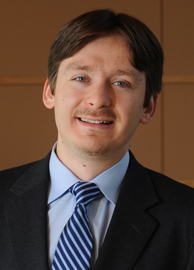
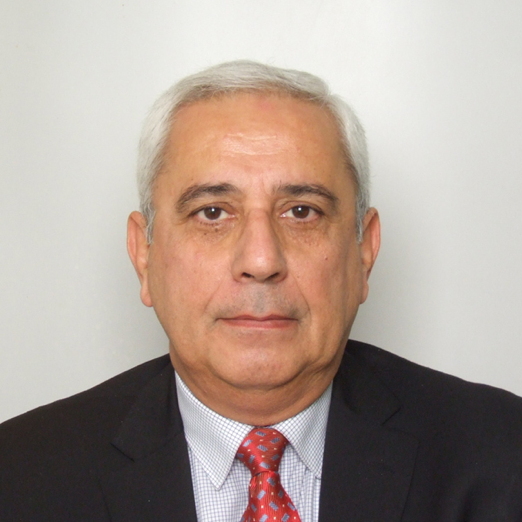
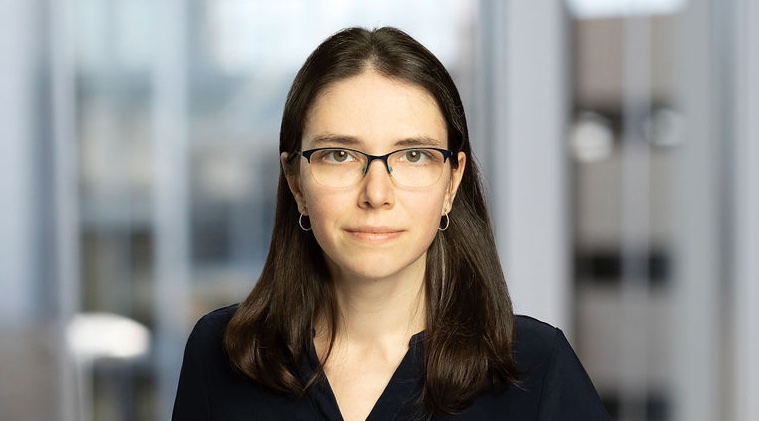
Thomas Zeume is a Professor for Logic and Formal Verification at Ruhr University Bochum since 2020. Previously, he served as a Scientific Assistant at TU Dortmund's Faculty of Computer Science from 2009 to 2020. His work bridges computational logic with database theory, complexity theory, and formal verification, while also innovating in educational technologies for formal foundations of computer science. Research Focus: Dynamic Complexity Theory: Classifying logical query languages for evolving databases. Formal Verification: Designing logics for software/hardware verification and XML/graph databases. Educational Technologies: Developing the Iltis system for interactive learning in formal logic and computational reductions. Publications and Contributions: His research spans dynamic complexity, two-variable logic, and CS education tools, with key works in Journal of the ACM , LICS , and SIGCSE TS .
N. Bora Keskin serves as Associate Professor of Business Administration at Duke University's Fuqua School of Business, specializing in data-driven optimization for dynamic pricing, revenue management, and operational systems. His work bridges theoretical operations research with practical applications in evolving market environments. His research focuses on developing machine learning and statistical methods for pricing under demand uncertainty, with emphasis on perishable inventory, platform operations, and service management. Current investigations include blockchain-enabled supply chain transparency, smart meter-based electricity pricing, and multi-agent learning in competitive markets, demonstrating consistent innovation in integrating high-dimensional data with classical optimization frameworks. Recent publications reveal a trajectory toward interdisciplinary applications, combining reinforcement learning with stochastic modeling to address challenges like reference price effects, information asymmetry in insurance, and congestion in two-sided platforms. Key themes involve personalization, nonstationary demand learning, and incentive design in complex systems. Dr. Keskin's scientific contributions have been recognized with prestigious awards including: Winner, MSOM Young Scholar Prize (2024) Winner, Lanchester Prize (2019) Winner, Triangle Impact Challenge (2021) Markov Lecture Discussant, INFORMS Applied Probability Society (2023) Multiple best paper awards across INFORMS conferences (2020-2024) While specific doctoral student mentorship details and grant funding information are not provided in available materials, his collaborative research spans institutions including Chicago Booth and UNSW, with works featured in Duke Fuqua Insights and INFORMS publications. No dedicated research labs or teams are explicitly referenced in the source text.
Sanjay Bhattacherjee is a Lecturer in Cyber Security at the School of Computing , University of Kent. He serves as the Information Services Liaison Lead for the Institute of Cyber Security for Society (iCSS) and leads the Undergraduate Year I module on Blockchain and Distributed Systems. His research focuses span cryptology, blockchain security, algorithm design, and game theory, as detailed on his research webpage . Research Interests Cryptology and Lattice Reduction Algorithms Game Theory Applications in Blockchain Security Algorithm Design for Broadcast Encryption Network Security and Proportional Representation in Financial Systems Teaching Role Highlights Undergraduate and Postgraduate Lectures on Blockchain, Cryptography, and Algorithms Module Leadership in "Maths for Computing" and "Distributed Systems" Contributions to Pedagogical Essays on Depth vs. Breadth in Education and Assessment Practices
Professor A J Ganesh is a faculty member at the University of Bristol , holding the title of Professor of Applied Probability within the School of Mathematics, Statistical Science and is affiliated with the Probability, Analysis and Dynamics research group. He is also an active member of the Cabot Institute for the Environment , contributing to themes such as City Futures , Low Carbon Energy , and Natural Hazards and Disasters . Education B.Sc. – Indian Institute of Technology, Madras M.Sc. – (institution not specified) Ph.D. – Cornell University Research Interests Professor Ganesh’s work lies at the intersection of applied probability , stochastic networks , and network science . A recurring theme is understanding how randomness and local interactions give rise to global phenomena such as consensus, epidemics, or congestion. His investigations span: Consensus & Gossip Algorithms – analysing voter models and multi-agent bandits; Epidemic Processes & Rumour Spreading – quantifying thresholds, extinction times, and the impact of network topology; Random Graphs & Connectivity – soft geometric graphs, isolated nodes, and diameter questions; Queueing & Large Deviations – Cox/G/∞ queues, resource allocation, and delay-optimal scheduling; Cyber-Security & Intrusion Detection – leveraging variational autoencoders for anomaly detection; Game-Theoretic Resource Allocation – Pigouvian tolls, welfare optimality, and price of anarchy in parallel-server systems. Publication Trends Over the last decade Professor Ganesh has published extensively on collective decision-making (2025, 2024), machine-learning approaches to security (2023), and latency-sensitive communication (2022, 2019). Earlier work focused on epidemic thresholds , connectivity in random graphs , and large-deviations analysis of queues , demonstrating a consistent trajectory toward real-world applications of stochastic models. Scientific Awards & Recognition Author of the Springer Lecture Notes in Mathematics monograph Big Queues (2004) – a widely cited reference on large-deviations techniques in queueing theory. Supervision & Grants Professor Ganesh has 6 supervised works listed in institutional repositories, indicating ongoing Ph.D. or post-doctoral mentoring. While specific grant titles and amounts are not disclosed in the provided text, his sustained publication output and participation in EU and UK research networks (e.g., Horizon 2020, EPSRC) suggest active grant funding. Laboratories & Teams He collaborates closely with colleagues in the Cabot Institute for the Environment , applying probabilistic models to urban sustainability and disaster resilience. Cross-disciplinary partnerships include joint projects with engineers on connected and automated vehicles and with biologists on epidemic control strategies .
Dr. Jackson van Dyke is a Research Fellow at the Technical University of Munich under Prof. Dr. Claudia Scheimbauer in the Department of Mathematics (M2) at the TUM School of Computation, Information and Technology. His research explores anomalous properties of functorial quantum field theories. Broad applications include classification of topological orders Higher algebraic geometry Relative Langlands program Publications span 2023-2024 articles on projective TQFT symmetries, 2020 work on knot Floer homology, and 2017-2020 studies in radiation material testing and fission modeling. His presentation history includes talks at University of Lisbon, University of Hamburg, and Simons Collaboration events.
Tim Mitchell is an Assistant Professor in the Department of Computer Science at Queens College / CUNY and the CUNY Graduate Center. His research focuses on designing fast and reliable algorithms for robust control and stability analysis of dynamical systems, with applications in nonsmooth constrained optimization and benchmarking of numerical algorithms. Queens College / CUNY, Assistant Professor, Computer Science CUNY Graduate Center, Faculty Affiliation, Data Science His work spans numerical linear algebra, optimization, and scientific computing, addressing both small-scale and large-dimensional problems. He develops open-source software packages like GRANSO (non-smooth optimization), ROSTAPACK (stability measures), and betaRMP (benchmarking visualization). The 15 most recent articles reflect his expertise in nonsmooth optimization, stability measures for dynamical systems, and computational methods in control theory, with recurring themes of algorithm design, benchmarking, and applications in machine learning and numerical analysis. Keywords include numerical radius, pseudospectral abscissa, hybrid expansion-contraction algorithms, and Kreiss constants. He actively collaborates with institutions such as the Max Planck Institute for Dynamics of Complex Technical Systems and the Courant Institute of Mathematical Sciences.
Marie E. Rognes is a Chief Research Scientist at Simula Research Laboratory's Numerical Analysis and Scientific Computing department. She specializes in computational mathematics and biomedical modeling, particularly focusing on cerebral fluid dynamics, electrodiffusion, and poroelasticity. Her work bridges advanced numerical methods with clinical applications in neuroscience. Research Pillars: Brain waterscape modeling, finite element methods, and biophysical simulations Software Leadership: Key contributor to FEniCS and Dolfin-adjoint projects Application Domains: Neurodegenerative diseases, cardiac electrophysiology, and personalized medicine Recent publications reveal methodological innovations in perivascular flow modeling , ionic transport simulations , and multi-scale brain mechanics . Her work on glymphatic system dynamics and cardiac tissue modeling demonstrates cross-disciplinary impact. While no explicit awards are listed, her extensive publication record in top-tier computational journals (SIAM, PLOS, Nature Computational Science) and invited talks at premier conferences (SIAM, ECCOMAS, FEniCS workshops) establish her as a leading figure in biomedical computing.
Nasser Darabiha is a Professor of Exceptional Class at CentraleSupélec's EM2C Laboratory. His career includes significant leadership roles such as Director of the Franco-Brazilian LIA (CNRS) Energy and Environment since 2016, President of the Technical Committee of GENCI, and membership in the Scientific Council of FRAE (Foundation for Research in Aeronautics and Space). Previously, he served as Director of the EM2C Laboratory (2002–2009), Dean of the Ph.D. School at École Centrale Paris (2011–2012), and Head of the Department of Energy (2005–2008). Education: Habilitation, Polytechnic Institute of Toulouse (1994) Ph.D. in Combustion, École Centrale Paris (1984) M.S. in Energy, École Centrale Paris (1981) Specialization Diploma in Energy, École Centrale Paris (1980) B.S. in Mechanical Engineering, Sharif University of Technology, Iran (1975) Research Focus: Darabiha's expertise spans theoretical/numerical modeling of combustion phenomena (laminar/turbulent flames, soot reduction, chemical kinetics tabulation) and experimental methods (laser diagnostics, signal processing). His work advances fundamental understanding of reactive flows in aerospace propulsion, energy systems, and pollutant mitigation. Publication Trends: His recent articles predominantly explore advanced combustion modeling techniques (LES/DNS), soot/PAH dynamics, plasma-assisted ignition, and alternative fuel chemistry. Computational fluid dynamics, particularly lattice Boltzmann methods and chemical mechanism optimization, feature prominently alongside experimental validations of high-pressure combustion systems. Awards & Honors: Officer in the Order of Academic Palms (2012) Knight in the Order of Academic Palms (2005) Leadership & Advising: He directs the Franco-Brazilian LIA consortium and has supervised numerous Master/PhD students. His grants include leadership of large-scale computational projects through GENCI. He established the EM2C Laboratory as a leading combustion research facility during his directorship. Laboratories & Teams: Leads research groups at EM2C Laboratory focusing on turbulent combustion modeling, plasma ignition, and soot formation. Collaborates internationally through the Franco-Brazilian LIA on sustainable energy solutions.
Florent PLED is an Associate Professor at Gustave Eiffel University, working within the Multiscale Modeling and Simulation Laboratory (MSME) UMR 8208 CNRS. His research focuses on advanced computational mechanics, particularly in the areas of uncertainty quantification, stochastic multiscale modeling, and statistical inverse problems applied to heterogeneous materials. Dr. PLED's research interests span several interconnected fields in computational mechanics and materials science. His work primarily investigates uncertainty quantification in computational mechanics, stochastic multiscale modeling of random heterogeneous materials, and statistical inverse identification of probabilistic models. He has made significant contributions to computational stochastic homogenization, machine learning applications for solving inverse problems in mechanics, and multiscale computational methods including domain decomposition approaches. His research also encompasses model verification techniques, global and goal-oriented error estimation methods, and model order reduction using Proper Generalized Decomposition. Analysis of Dr. PLED's recent publications reveals a strong focus on phase-field modeling of brittle fracture, particularly in wood and other heterogeneous materials. His work increasingly integrates machine learning techniques, especially artificial neural networks, to solve complex statistical inverse problems in computational mechanics and biomechanics. A notable trend in his research is the application of data-driven approaches to characterize material properties and predict failure mechanisms across multiple scales. Dr. PLED is actively involved in the Multiscale Modeling and Simulation Laboratory (MSME) at Gustave Eiffel University, where he collaborates with researchers on projects related to computational mechanics, uncertainty quantification, and multiscale modeling. His work has applications in diverse fields including wood mechanics, biomechanics, and general materials science.
Nicole Aretz is a Research Fellow at the Oden Institute for Computational Engineering and Sciences, University of Texas at Austin, working with Prof. Karen Willcox in the Willcox Research Group. Her educational background includes: Master's degree in Mathematics, RWTH Aachen University Doctoral studies at the Aachen Institute for Advanced Studies in Computational Engineering Science (AICES) Member of the International Research Training Group "Modern Inverse Problems" (IRTG MIP) Her research focuses on uncertainty quantification for digital twins, with specific interests in Bayesian inversion, multi-fidelity approximations, and optimal experimental design. She also has expertise in model order reduction, particularly reduced basis methods and non-intrusive operator inference. During her doctoral training, she served as a student representative and advised master's students. She is actively involved in the Willcox Research Group, collaborating across disciplines on challenges in computational engineering.
August Shi is an Assistant Professor in the Department of Electrical and Computer Engineering at The University of Texas at Austin. His research focuses on software testing, particularly regression testing, with emphasis on improving reliability with respect to flaky tests and increasing testing speed without compromising quality. Dr. Shi obtained his PhD in Computer Science from the University of Illinois at Urbana-Champaign in 2020. Prior to that, he earned a B.S. in both Computer Science and Electrical and Computer Engineering from The University of Texas at Austin in 2013. Dr. Shi's research interests center on software testing and regression testing , with a particular focus on addressing challenges related to flaky tests . His work aims to make regression testing both more reliable (by tackling issues with flaky tests) and faster (without sacrificing testing quality). His research spans multiple aspects of software testing including test prioritization, test scheduling, flaky test detection and repair, and optimization of continuous development processes. Dr. Shi's publication record shows a consistent focus on flaky tests and regression testing across multiple top-tier software engineering conferences including ASE, ICSE, ISSTA, and ESEC/FSE. His research has evolved from foundational work on test suite reduction and mutant generation to more recent innovations in flaky test classification, debugging, and repair. A notable trend is his increasing application of machine learning techniques to testing problems, particularly in his 2024-2025 publications. Dr. Shi actively contributes to the software engineering research community through committee service on major conferences including ASE, ICSE, ISSTA, and ESEC/FSE, where he has served on program committees for Research Papers, NIER tracks, and Tool Demonstration tracks. Dr. Shi is currently seeking PhD students to work on projects related to his research interests in software testing. He has supervised or co-supervised multiple student projects presented at major software engineering conferences, demonstrating his commitment to mentoring the next generation of researchers.
Dr. Jie Yuan is an Assistant Professor (Lecturer) at the University of Southampton, specializing in aerospace structures and nonlinear dynamics. He holds a PhD from the University of Bristol (2016) and has industry experience at Airbus UK and research roles at Imperial College London. He is affiliated with the Computational Engineering and Design Group and Dynamics Group. Education: PhD in Aerospace Structures, University of Bristol (2016) Research Focus: Dr. Yuan develops computational methods for nonlinear aerospace systems, friction dynamics, vibration control, and uncertainty quantification. His work bridges experimental validation (3D SLDV) with theoretical frameworks like Bayesian inference and Koopman operators to solve complex aeroelastic challenges. Publication Trends: Recent articles (2024-2025) emphasize data-driven approaches for aeroelastic stability, friction damping in turbomachinery, and energy harvesting. Earlier work (2015-2016) focused on probabilistic methods for mistuned bladed discs and aircraft design optimization. Awards & Honors: Research Fellowship, Royal Academy of Engineering/Leverhulme Trust (2023) Fellow, Higher Education Academy (2022) Chartered Engineer, RAeS (2021) Best Paper Award (2021) Fellowship, Royal Aeronautic Society (2025 forthcoming) Professional Activities: Editor for the Journal of Risk and Uncertainty in Engineering Systems (2023-2024) and frequent speaker at international conferences on friction dynamics and aerospace structures.
Patrick Coirault is a Full Professor in Automatic Control and Systems at the University of Poitiers' Institute of Technology. He is affiliated with the LIAS research laboratory, with operations at both ENSIP in Poitiers and ISAE-ENSMA. His research spans theoretical and applied control systems with significant contributions to multiple engineering domains. Professor Coirault's research interests encompass nonlinear control systems, multi-agent formation control, chaotic system synchronization, and practical applications in automotive systems. His work in hybrid vehicle control addresses critical challenges including torque ripple reduction, combustion control, and energy management. He has also made significant contributions to antenna array synchronization, power systems control, and wind engineering applications. His methodological approach combines theoretical advances in control theory with practical implementation in real-world systems, often bridging traditional model-based control with emerging data-driven techniques. Analysis of his recent publication record reveals a clear evolution toward distributed control systems, particularly for power networks and multi-agent coordination. His 2023-2025 publications demonstrate increasing integration of machine learning techniques with traditional control approaches, exemplified by work on data-enabled predictive control for LPV systems. The applications of his research span automotive systems, power grids, wireless communications, and aerodynamics, showcasing the versatility and impact of his control methodologies across multiple engineering disciplines. Professor Coirault maintains active collaborations within the LIAS research laboratory and with international partners. His publication record in top-tier journals including Automatica , IEEE Transactions on Automatic Control , and Control Engineering Practice demonstrates his sustained contribution to the field of control systems engineering over several decades.
Nat Tantivasadakarn is a Sherman Fairchild Postdoctoral Scholar and Research Associate in Theoretical Physics at the California Institute of Technology (Caltech), affiliated with the Division of Physics, Mathematics and Astronomy. His research focuses on topological phases of matter, quantum computing architectures, and non-Abelian anyon systems. He explores theoretical frameworks to engineer topological order through gauging procedures, symmetry-enriched phases, and measurement-based protocols. Research areas include non-invertible symmetries, fracton models, and fault-tolerant quantum computation leveraging topological codes. He investigates protocols for creating anyons in trapped ion systems and developing scalable quantum error correction strategies. His work bridges abstract algebraic structures (e.g., cohomology invariants) with experimental realizations in quantum hardware. Key contributions involve constructing tensor networks for higher-dimensional topological phases and analyzing Nishimori transitions in quantum circuits. His research also addresses the interplay between measurement-driven dynamics and long-range entanglement, particularly in symmetry-protected topological systems. Tantivasadakarn collaborates with institutions like the Institute for Quantum Information and Matter (IQIM) at Caltech. No scientific awards are explicitly listed. His advising roles and grant details remain unspecified in available texts.
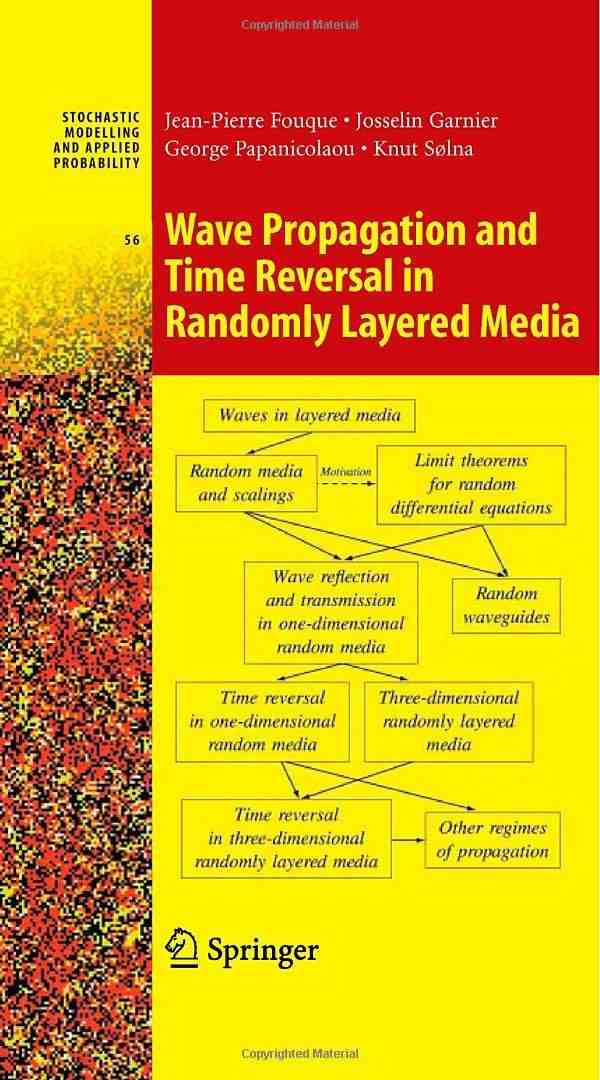
Josselin Garnier is a Professor at Ecole Polytechnique, France, affiliated with the Center for Applied Mathematics. His research focuses on wave propagation in random media, imaging techniques, uncertainty quantification, and inverse problems. He has authored/co-authored multiple influential books including Wave Propagation and Time Reversal in Randomly Layered Media (2007) and Multi-Wave Medical Imaging (2017). His work bridges mathematical theory with applications in optics, seismology, and nuclear engineering. Research interests emphasize stochastic dynamics, nonlinear wave interactions, and Bayesian methods for parameter estimation. He leads a large research group with over 30 PhD students, many working on interdisciplinary projects such as thermalization in optical fibers and seismic fragility analysis. His contributions include developing reduced order modeling approaches for inverse problems and advancing methodologies for uncertainty quantification in nuclear reactor simulations. Key collaborations involve institutions like the French Mathematical Society and the Ciroquo Research & Industry Consortium. His educational contributions include the widely used All-in-one Mathematics textbook series for undergraduate students.