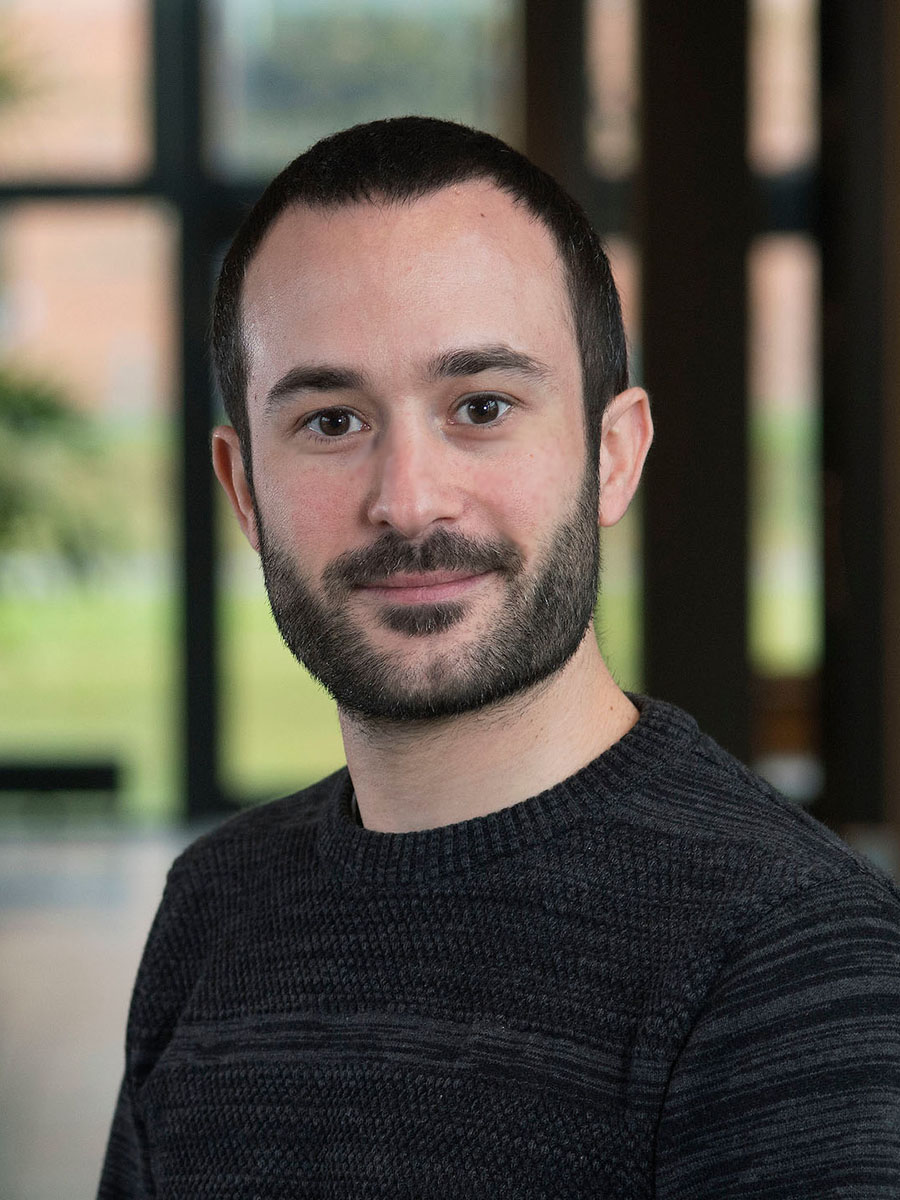
Maryamsadat Tahavori is an Associate Professor at the Technical University of Denmark (DTU), affiliated with the Department of Engineering Technology and Didactics Energy Technology and Computer Science. Her research focuses on sustainable energy systems, asset management, control systems, and fault diagnosis in robotics and district heating networks. She leads projects addressing district heating network optimization, prescriptive analytics, and soil sustainability through sensor technologies. Her academic contributions include advancements in model reduction techniques for bilinear systems and multi-objective optimization algorithms. She supervises PhD candidates like Jens Grønborg and collaborates internationally on initiatives like the IEA DHC Annex for district heating asset management. Key awards include IEEE Senior Member (2021). Her work bridges theoretical control systems with practical applications in energy infrastructure, agriculture, and autonomous systems. She actively participates in conferences, organizes academic events, and serves as an editor for the Sensors journal.
Peter Frigaard is an Associate Professor at the Department of the Built Environment, Aalborg University, affiliated with the Faculty of Engineering and Science. His research focuses on coastal engineering, wave energy conversion, and hydraulic structures. He is a key member of the Ocean and Coastal Engineering Research Group. Education details are not explicitly listed, but his academic contributions span over 30 years with 318 publications and 58 research projects. Notable projects include the AquaBuOY wave energy converter and studies on coastal protection systems. Research interests include wave dynamics, physical modeling, offshore wind turbine foundations, and renewable energy systems. His work combines experimental methods with numerical simulations to address challenges in energy harvesting and coastal resilience. Recent articles emphasize wave separation methods, directional spectrum estimation, and 3D model testing of wind turbine foundations. Media engagements highlight his expertise in coastal erosion solutions and wave energy technology. He has advised 5 PhD students and actively participates in international conferences like the European Wave and Tidal Energy Conference. His lab, the Ocean and Coastal Engineering Research Group, collaborates globally on coastal protection and renewable energy projects.
Giorgio Bacci is an Associate Professor at the Department of Computer Science , Aalborg University , Denmark. He is a member of the Distributed, Embedded, and Intelligent Systems (DEIS) research group led by Prof. Kim G. Larsen. He earned his Ph.D. in Computer Science from the University of Udine (2013) under Prof. Marino Miculan, following M.Sc. and B.Sc. degrees in Computer Science from the same university (2008 and 2005, both 110/110 cum laude ). Research Interests include: Behavioural Metrics : Quantitative methods for system equivalence and approximation. Model Synthesis and Automata Learning : Automated construction of models for probabilistic/stochastic systems. Analysis of Cyber-Physical Systems : Formal verification techniques for real-time and hybrid systems. Process Algebras : Nondeterministic, probabilistic, and stochastic process calculi. Semantics of Programming Languages : Formal models for probabilistic and concurrent computation. Scientific Service includes roles as PC member for LICS 2025 , ICALP 2025 , and co-chair for EXPRESS/SOS 2025 and GandALF 2025 . He has contributed to 35 publications in areas like probabilistic automata , Markov processes , and bigraphical models , with a focus on computational complexity and behavioral distances . Awards include: Teacher of the Year 2022/2023 (Department of Computer Science, Aalborg University) Best Paper Award at CALCO 2021 .
Ole Hansen is a Professor of Private Law at the University of Copenhagen, Faculty of Law, where he has been employed since 2010. He co-founded the Centre for Private Governance (CEPRI) in 2020 and previously co-founded the Centre for Enterprise Liability in 2008. His academic leadership includes serving as President of the European Society for Construction Law (2022-2023) and chairing the PhD Committee at the Faculty of Law since 2020. He also holds board positions as chair of the Danish Society for Construction Law and member of the Danish Climate and Energy Law Society. Education: Dr.jur. (2008), University of Copenhagen, Faculty of Law (Dissertation: "Det entrepriseretlige hjemmelsproblem") Master of Laws (1994), University of Copenhagen, Faculty of Law Hansen's research centers on private law with specialized focus on contract law, construction law, energy law, and digital construction law (BIM). His work examines how private actors undertake public tasks, with recent emphasis on decarbonization in transport infrastructure and sustainability requirements in commercial contracts. He has led major research initiatives including "Digital Construction Law" and "BIM International," funded by Realdania, the Danish Transport Authority, and industry partners, addressing legal frameworks for emerging technologies in construction. Analysis of his recent publications reveals a strong trajectory toward sustainable construction practices and digital transformation. Over 60% of his 2022-2024 outputs address decarbonization challenges in infrastructure contracts and BIM implementation, reflecting industry shifts toward environmental compliance and digital workflows. His scholarship consistently bridges theoretical legal concepts with practical construction industry applications, particularly in long-term contractual relationships and public procurement thresholds. Professor Hansen chairs the Faculty of Law's PhD Committee and has secured substantial research funding including projects on digital construction law (2018-2022) and new contractual forms in construction (2009-2013), supported by Realdania and government authorities. His editorial leadership includes editing special issues of the Journal of Housing and Construction Law on BIM legal aspects. He co-founded and actively directs the Centre for Private Governance (CEPRI), which investigates governance models where private entities perform public functions. His research teams collaborate internationally on construction law modernization, with recent work engaging the European Commission on transport infrastructure decarbonization standards.