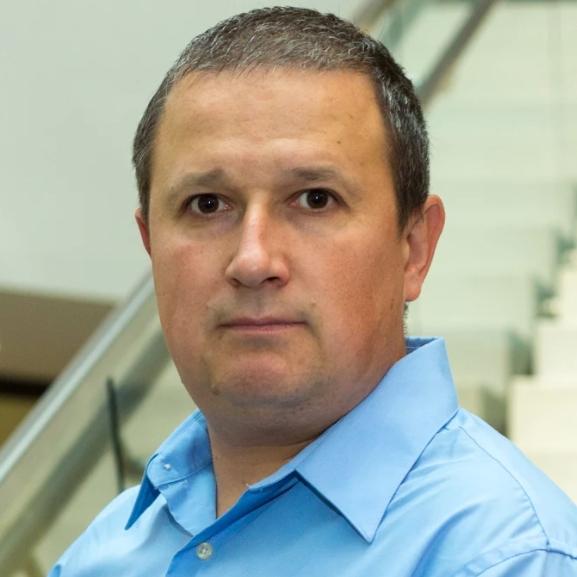
Mark Steedman is Professor of Cognitive Science at the University of Edinburgh's School of Informatics, with adjunct appointment at University of Pennsylvania. His research spans computational linguistics, AI, and cognitive science, focusing on Combinatory Categorial Grammar (CCG) and its applications. His research examines: Combinatory Categorial Grammar parsing and semantics Language model capabilities and limitations Cross-linguistic semantic inference Brain modeling of language processing Recent publications analyze hallucination sources in large language models, cross-linguistic entailment graphs, and brain-computer parallels in structure-building. He develops computational models integrating symbolic and distributional approaches to semantics. Honors include ACL Lifetime Achievement Award (2018) and George E. Davis Medal (2001). He serves on editorial boards of major linguistics journals and has authored influential books including 'The Syntactic Process' and 'Taking Scope'.
Nick Koudas is a Professor in the Department of Computer Science at the University of Toronto, specializing in large-scale data management, data systems, and applied machine learning. His research integrates machine learning techniques into scalable data platforms to enhance the analysis of massive datasets. He holds a PhD from the University of Toronto, an MSc from the University of Maryland, and a Bachelor's degree from the University of Patras. Education: PhD, University of Toronto MSc, University of Maryland at College Park Bachelor's degree, University of Patras, Greece Research Interests: Relational Deep Dive (ReDD): Natural language query execution over unstructured documents Streaming Video Queries (SVQ): Interactive query processing for video streams Reliable Text-to-SQL: Generating accurate SQL queries with human-in-the-loop assistance Machine Learning Integration in Data Systems Publications: Focus on video analytics, query processing, and reliable natural language interfaces. Notable works include optimizing video queries, declarative frameworks for temporal constraints, and abstention-based SQL generation. Awards: Inventor of the Year (1st Prize), University of Toronto (2011) Best Paper Awards at international conferences Entrepreneurship & Advising: Co-founder of Sysomos (Meltwater Group), Aislelabs (Constellation Software), and Workorb Advisor to mapintent and ktau Labs & Teams: Leads research groups developing systems like ReDD and SVQ, emphasizing collaboration between academia and industry.
Dr. Sonia Petrone is a Full Professor of Statistics at Bocconi University's Department of Decision Sciences. She earned her PhD in Statistics from Bocconi University and has held academic positions at the University of Pavia and University of Insubria before joining Bocconi. Her extensive international experience includes research visits across North America, Latin America, Europe, India, and Russia. Her research specializes in Bayesian statistics, with contributions to foundational theory, predictive modeling, Bayesian nonparametrics, and stochastic processes. She currently directs the Bocconi Summer School in Advanced Statistics and Probability and previously led the PhD program in Statistics (2011-2018). Her research portfolio demonstrates consistent focus on Bayesian nonparametric methods, predictive modeling, and applications to complex data structures. Recent work explores urn processes, time series analysis, and network modeling using innovative Bayesian approaches. Awards & Honors: IMS Medallion Lecture Award (2018) ISBA Foundational Lecture Award (2016) Fellow of International Society for Bayesian Analysis Fellow of Institute of Mathematical Statistics Fellow of European Laboratory for Intelligent Systems Fellow of Bocconi Institute of Data Science She has held editorial leadership positions as Editor of Statistical Science (2020-2022) and Bayesian Analysis (2010-2014), and served as President of the International Society for Bayesian Analysis (2014).
Ian Ewart is an Associate Professor at the University of Reading's School of the Built Environment, serving as Head of Construction and Engineering Management and Research Group Lead for Organisation, People and Technology. He chairs the Research Ethics Committee since 2016 and supervises undergraduate/postgraduate dissertations. His academic journey spans engineering and anthropology: DPhil Social and Cultural Anthropology, University of Oxford, St Hugh's College (2007-2012) MSc Material Anthropology and Museum Ethnography, University of Oxford, St Hugh's College (2006-2007) BA (Hons) Archaeology and Anthropology, University of Oxford, Harris Manchester College (2003-2006) Diploma in Management Studies, University of the West of England (1990-1994) BEng (Hons) Mechanical Engineering, Staffordshire University (1983-1987) Ewart's research integrates ethnographic methods with digital technology studies, examining human-technology interactions in construction and domestic settings. His work bridges engineering practice and social anthropology, focusing on skill transmission, sustainable design, and multisensory experiences in virtual environments. Publications from 2025-2013 reveal a dominant trajectory in digital twins for socio-ecological sustainability, VR-based occupant behavior prediction, and HBIM for heritage conservation. The corpus demonstrates consistent cross-disciplinary innovation, merging archaeological reconstructions with healthcare applications while maintaining anthropological rigor. Key recognition: ESRC Future Research Leader fellowship (2013) for Designing Healthy Homes project He supervises PhD candidates like Afolabi Dania (Nigerian sustainable construction) and Joanna Hull (Heritage BIM), leveraging ESRC funding for ethnography-VR health studies. His grants emphasize participatory design and real-world impact assessment in built environments. Leaders the Organisation, People and Technology research group, developing multisensory Roman town reconstructions with sound/smell integration to advance archaeological and architectural experience modeling.
Xiaohui Yu is a Professor and Graduate Program Director in the School of Information Technology at York University. He holds a BSc from Nanjing University, an MPhil from the Chinese University of Hong Kong, and a PhD from the University of Toronto. His research focuses on the intersection of data management and machine learning, including ML-based database systems, large-scale machine learning, and spatio-temporal data analysis in contexts like intelligent transportation systems and social networks. Supported by grants from NSERC and industry partners, his work has been published in top venues such as SIGMOD, VLDB, and TKDE. He serves as an Associate Editor for journals like IEEE TKDE and ACM TKDD, and actively participates in conference program committees. Education: BSc (Nanjing University), MPhil (Chinese University of Hong Kong), PhD (University of Toronto). Research Interests: Big data management, database systems, machine learning, spatio-temporal data analytics, and video query processing. Recent articles emphasize ML-driven database components, efficient video query optimization, and scalable algorithms for large-scale data. His work addresses challenges in query processing, indexing, and real-time systems. Service: Serves on editorial boards (e.g., Information Systems), and chairs/workshops (e.g., Symposium on Data Markets). Active in program committees for SIGMOD, ICDE, and other leading conferences. Advising & Grants: Directs graduate programs and leads research groups. Collaborates with industry on data marketplaces and AI model integration. No specific student names listed, but actively recruits PhD/Master’s candidates.
J. Edward Colgate is the Walter P. Murphy Professor of Mechanical Engineering and Director of the Human Augmentation via Dexterity (HAND) Engineering Research Center at Northwestern University's McCormick School of Engineering. He also holds the title of Breed Senior Professor of Design. His academic career includes leadership roles as founding co-Director of the Segal Design Institute and director of the Master of Science in Engineering Design and Innovation program. Colgate earned his Ph.D. (1988), S.M. (1986), and S.B. in Physics (1983) from the Massachusetts Institute of Technology. Colgate's research focuses on physical human-robot interaction with specialization in surface haptic interactive design and electroadhesion technology development. His work spans three interconnected domains: haptic interfaces (including wearable haptic arrays and Touchbot systems), robot dexterity through Shape-Based Remote Manipulation (SBRM) for overcoming communication delays, and high-speed electroadhesive actuators. The Northwestern Haptics Lab under his direction aims to create realistic virtual environments by merging these research vectors. His publications demonstrate consistent focus on tactile perception mechanisms, electroadhesion applications, and haptic rendering algorithms. Recent work explores texture playback fidelity, wearable electroadhesive arrays, robotic manipulation, and human-swarm control systems, reflecting interdisciplinary integration of mechanical engineering, materials science, and neuroscience principles. Awards: Elected to National Academy of Engineering (2021) for contributions to haptics, human-robot systems, and design education Inducted into National Academy of Inventors (2015) Educational initiatives include developing Northwestern's Design Thinking and Communication curriculum, establishing the Certificate in Engineering Design, and creating the Master of Science in Engineering Design and Innovation. He teaches ME 390: Introduction to System Dynamics using a flipped classroom model. Colgate directs the Northwestern Haptics Lab within the Center for Robotics and Biosystems, focusing on fundamental haptics research with applications in virtual reality, prosthetics, and human-assistive devices. The lab maintains active industry partnerships for technology transfer of haptic innovations.
Dr. Karim El-Basyouny is a Killam Laureate Professor and City of Edmonton Urban Traffic Safety Research Chair at the University of Alberta's Faculty of Engineering, where he serves as Associate Dean (Research Infrastructure and Innovation) in the Civil and Environmental Engineering Department. A licensed Professional Engineer in Alberta, he holds advanced degrees in Transportation Engineering from the University of British Columbia and has dedicated his career to advancing road safety through data-driven management frameworks. His academic credentials include: Doctor of Philosophy, Civil Engineering, University of British Columbia, 2011 Engineering Management Sub-specialization, Civil Engineering, University of British Columbia, 2010 Master of Applied Science, Civil Engineering, University of British Columbia, 2006 Bachelor's degree (ABET Equivalent), Civil & Environmental Engineering, United Arab Emirates University, 2003 El-Basyouny's research pioneers the integration of remote sensing, machine learning, and statistical modeling to enhance transportation safety. His work develops automated tools for infrastructure digitization, collision prediction, and speed management, treating safety as a systemic product requiring management frameworks. Key contributions include LiDAR-based road feature extraction, network-level safety evaluations, and frameworks for vision-zero outcomes that address both human-driven and autonomous vehicle contexts. His recent publications demonstrate a cohesive research trajectory centered on leveraging point cloud data and computational intelligence for safety management. Over 15 major publications since 2021 focus on automated infrastructure assessment (light pole detection, clear zone mapping, vertical clearance evaluation), weather-impact modeling, and enforcement resource optimization. This body of work bridges transportation engineering with computer vision and operations research to create scalable safety solutions. His scientific contributions have been recognized with prestigious honors including: 2024 Killam Annual Professorship Award 2024 Road Safety Achievement Award from TAC 2023 Donald Stanley Award for environmental engineering 2022 Faculty of Engineering Graduate Teaching Award 2021 Daniel B. Fambro Student Paper Award As an academic leader, El-Basyouny actively mentors graduate students and secures significant research funding through his endowed chair position. He currently recruits fully-funded PhD and postdoctoral candidates specializing in remote sensing applications, machine learning, and geomatics for road digitization projects. His research group collaborates with national safety committees and municipal agencies to translate findings into policy, while he serves on editorial boards for Transportation Research Record and Analytic Methods in Accident Research. The research group operates at the intersection of transportation engineering and computational science, developing automated frameworks that merge sensor technologies with data processing tools. Current projects focus on semantic segmentation of 3D point clouds, safety implications of infrastructure digitization, and machine learning applications for road feature extraction in both urban and rural environments.
Richard M. Stern is a Professor of Electrical and Computer Engineering at Carnegie Mellon University (CMU), holding courtesy appointments in the Language Technologies Institute and Department of Computer Science, and serving as an Artist Lecturer in the School of Music since 2007. His interdisciplinary work bridges engineering and music technology through the School of Music's programs. Education: Ph.D. in Electrical Engineering from Massachusetts Institute of Technology (MIT), 1976 Professor Stern's research spans sound, speech, hearing, and music, with core emphases on robust speech processing in variable acoustic environments, music information retrieval, automated accompaniment, and foundational contributions to binaural perception theory. His work integrates psychoacoustic principles with machine learning to address challenges in speech recognition and human-robot interaction. Recent publications (2022-2025) reveal intensified focus on deep learning for speech enhancement in reverberant/noisy conditions, human-robot interaction scenarios, and music tagging—highlighting innovations in beamforming, source separation, and temporal modulation modeling. Awards and Honors: Fellow of the IEEE Fellow of the Acoustical Society of America Fellow of the International Speech Communication Association (ISCA) ISCA Distinguished Lecturer Allen Newell Award for Research Excellence (1992) Lutron Award for Teaching Excellence (2018) Professor Stern has advised numerous graduate students in speech and audio research, though specific names are unlisted in source materials. His grant portfolio includes significant National Science Foundation and industry-funded projects in speech technology, with leadership roles in initiatives like Interspeech 2006. He actively collaborates with CMU's Language Technologies Institute and Music and Technology program. He maintains strong ties to CMU's interdisciplinary ecosystem through the Language Technologies Institute and School of Music's Music and Technology program, contributing to research that merges acoustic engineering with musical applications.
Clyde Kruskal is an Associate Professor in the Department of Computer Science at the University of Maryland, College Park. His research focuses on parallel architectures, models, and algorithms. He earned a Ph.D. from New York University in 1981 and a bachelor’s degree from Brandeis University in 1976. His work includes foundational contributions to parallel computing, such as the read–modify–write concept in distributed systems. Kruskal’s research spans topics like interconnection networks, synchronization mechanisms, and algorithm design for parallel systems. Education: Bachelor’s Degree: Brandeis University, 1976 Master’s Degree: New York University (Courant Institute), 1978 Ph.D.: New York University (Courant Institute), 1981 Research Interests: Parallel computing architectures, parallel algorithms design, multiprocessor synchronization, interconnection networks, and computational geometry problems like graph coloring and visibility analysis. His work emphasizes theoretical foundations and practical implementations in parallel systems. Notable Contributions: Kruskal co-authored the book Problems With A Point: Exploring Math And Computer Science (2019), and his research includes foundational papers on parallel prefix operations, sparse matrix algorithms, and synchronization protocols. His publications span over three decades, reflecting sustained contributions to parallel computing theory and practice. Advising & Outreach: He has mentored students through programs like the Summer Combinatorial Algorithms REU at UMD, fostering undergraduate research in algorithm design and parallel computing.
Prof. Ivo J.B.F. Adan is a Full Professor at Eindhoven University of Technology (TU/e), holding chairs in both Industrial Engineering & Innovation Sciences and Mechanical Engineering. His research focuses on stochastic operations research, queueing models, and manufacturing systems design. He has held visiting positions at the University of North Carolina and was part-time professor at the University of Amsterdam (2008–2011). Education: MSc and PhD in Mathematics from TU/e Affiliations: Eurandom Senior Fellow, Beta Research Director, editorial roles at Queueing Systems and Probability in Engineering and Informational Sciences His work addresses warehouse optimization, transportation logistics, and semiconductor manufacturing. Notable achievements include: Developed analytical models for zone picking systems and conveyor networks Advanced understanding of FCFS infinite bipartite matching systems Recipient of multiple best paper awards including the IE&IS Valorization Prize (2023) Current projects include the DigiTwop digital twin-based warehouse optimization initiative and modular construction research. He teaches courses on stochastic modeling, manufacturing systems, and smart industry applications.
W. George Scarlett is a Teaching Professor at Tufts University's Eliot-Pearson Department of Child Study & Human Development within the School of Arts and Sciences . He has held progressive academic roles at Tufts since 1990, including Assistant Professor (1990-1992), Lecturer (1992-2012), Senior Lecturer (2012-2024), and currently as Teaching Professor (2024-present). PhD in Developmental Psychology, Clark University (1978) MDiv in Theology, Episcopal Theological School (1971) BA in Psychology, Yale University (1967) His research focuses on children's development as earth stewards , children's play dynamics , behavioral approaches to challenging childhood behaviors , and lifespan religious/spiritual development . He emphasizes interdisciplinary connections between psychology, education, and environmental stewardship. Key publication trends show consistent contributions to classroom management theory (2015 Sage Encyclopedia), play therapy applications (2017), and spiritual development frameworks (2006-2020). His work integrates developmental psychology with practical educational interventions . He leads Tomorrow's Earth Stewards , an online platform for environmental educators, and has developed artful explanation guidelines merging creative nonfiction with academic analysis to enhance educational leadership.
Mathias Niepert is a Professor at the Institute for Artificial Intelligence within the Faculty of Computer Science, Electrical Engineering and Information Technology at the University of Stuttgart. His research focuses on advancing machine learning techniques with applications in scientific computing, graph neural networks, and medical imaging. He is particularly known for contributions to physics-informed neural networks, equivariant models, and graph learning frameworks. Key research areas include: Scientific Machine Learning for PDEs and molecular modeling Graph neural networks and their theoretical limitations Medical vision-language models and multimodal learning Efficient neural network architectures (transformers, FNOs) Domain knowledge integration in deep learning His work often bridges theoretical foundations with practical applications, as evidenced by extensive publications (2018–2025) on topics like adaptive message passing, equivariant networks, and medical imaging systems. He has contributed to benchmark development through initiatives like PDEBench and pioneered methods for equivariant diffusion models and molecular representation learning. His current projects emphasize: Improving generalization in Fourier Neural Operators Addressing oversmoothing in graph networks Combining physics principles with neural architectures Medical AI applications through multimodal fusion
Özüm Asirim is a Researcher at the Technical University of Munich (TUM) under the Associate Professorship of Computational Photonics led by Prof. Christian Jirauschek. Her work focuses on computational photonics , quantum optics , and nonlinear optical phenomena , particularly in micro-resonators and semiconductor devices. Education: Ph.D. in Electrical Engineering from Middle East Technical University (Ankara, Turkey). Research spans optical parametric amplification , Fourier domain mode-locked lasers , self-phase modulation , and machine learning applications in photonics . Her studies include optimizing gain factors, enhancing harmonic generation, and modeling supercontinuum sources via carrier injection. Recent publications (2019–2023) highlight interdisciplinary approaches, merging photonics with computational finance and nonlinear dynamics . She contributes to EU Project QOMBS and teaches courses like Python for Engineering Data Analysis and Quantum Engineering and Machine Learning seminars. Collaborations include Prof. Christian Jirauschek (TUM), Prof. Mustafa Kuzuoğlu (Middle East Technical University), and teams in computational photonics and quantum optics. Her work impacts semiconductor physics , laser technology , and adaptive optical systems .
Max Alekseyev is an Associate Professor in the Mathematics Department and Computational Biology Institute. His research spans computational graph theory, enumerative combinatorics, computational/algorithmic biology, and comparative genomics. He focuses on interdisciplinary problems, blending mathematics with biological applications, particularly in genome assembly and analysis. His work includes advancements in genome scaffolding algorithms, combinatorial sequence analysis, and mathematical biology. Notable contributions involve genome assembly tools like CAMSA and studies on ancestral genome reconstruction. He also explores theoretical topics such as Bernoulli series generalizations and modular data classification. His research trends highlight a blend of pure mathematics (e.g., number theory, graph theory) and applied computational methods, addressing challenges in genomics and evolutionary biology. He secured an NSF Student Travel Grant in 2018 for computational molecular biology.
Dr. Sara Alidoust is a Senior Lecturer in Planning at the University of Queensland's School of Architecture, Design and Planning , with affiliations to the Centre for Community Health and Wellbeing and the Centre of Architecture, Theory, Criticism and History. Her research merges Urban Planning and Public Health , focusing on: Developing resilient and liveable cities through systems thinking Age-friendly urban planning for elderly populations Addressing housing vulnerability in the Global North Enhancing community engagement in policy-making Recent publications analyze topics like anti-gating policies in China , thermal comfort in vertical cities , and house-sitting practices among older Australians. Her work informs national and international planning frameworks with emphasis on health equity. As a principal advisor for PhD candidates, she supervises projects on climate-resilient urbanism , gender-focused housing models , and car-free urbanism in low-density contexts. Current initiatives include 1000 Cities Challenge health indicators development.