Hussein T. Mouftah is a Professor at the University of Ottawa , affiliated with the College of Engineering and Computer Science and the Department of Electrical and Computer Engineering . He is a leading figure in Intelligent Transportation Systems , Wireless Networks , and Smart Cities research. His research spans vehicular ad hoc networks (VANETs) , autonomous electric vehicles (CAEV) , edge computing , IoT security , and 5G/6G-enabled infrastructure . He pioneers dynamic wireless charging , deep reinforcement learning , and federated learning for mobility solutions. The 15 most recent articles highlight his work in edge computing (4 entries), vehicular networks (5 entries), machine learning (3 entries), and blockchain (2 entries), with sub-fields including UAV energy management , real-time task offloading , multi-modal fusion , and smart grid integration . His methodology combines deep RL for autonomous driving , federated learning for decentralized energy trading , and blockchain to secure ITS systems . He collaborates extensively with researchers like Parisa Fard Moshiri , Burak Kantarci , and Binod Vaidya on smart city infrastructure and vehicular security projects.
Dr. Hongsheng Hu is currently a Lecturer in the School of Information and Physical Sciences at the University of Newcastle, Australia, specializing in the Data Science and Statistics focus area. Prior to this position, he served as a Postdoc Research Fellow at CSIRO's Data61 from October 2022 to August 2024. His academic journey includes a Doctor of Philosophy in Computer Systems Engineering from the University of Auckland in New Zealand, establishing his foundation in advanced computing systems. Dr. Hu's research centers on enhancing the trustworthiness of machine learning systems, with particular emphasis on identifying critical privacy vulnerabilities within machine learning models and developing robust defensive strategies. His work spans several key domains including adversarial machine learning (30% focus), statistical data science (30% focus), and data and information privacy (40% focus). He investigates membership inference attacks, machine unlearning techniques, and privacy-preserving mechanisms in federated learning environments. His research addresses fundamental challenges in AI security, exploring how machine learning models can be compromised through sophisticated privacy attacks and developing methods to mitigate these vulnerabilities while maintaining model utility. Analysis of Dr. Hu's publication record reveals a strong research trajectory focused on machine learning security and privacy. His work consistently addresses vulnerabilities in machine learning systems, particularly examining membership inference attacks, machine unlearning mechanisms, and privacy-preserving techniques in federated learning. The research spans top-tier venues including IEEE Security & Privacy, USENIX Security, NDSS, NeurIPS, IJCAI, AAAI, and WWW, demonstrating both technical depth and recognition by the research community. His publications show an evolving focus from foundational privacy attacks to developing more sophisticated unlearning techniques and robust defense mechanisms, with increasing citation counts indicating growing impact in the field. Active Program Committee member for USENIX Security, NDSS, ICLR, IJCAI, WWW, ICDM, ECML, and PKDD Invited reviewer for IEEE Transactions on Information Forensics and Security (TIFS), IEEE Transactions on Dependable and Secure Computing (TDSC), IEEE Transactions on Pattern Analysis and Machine Intelligence (IPAMI), and ACM Computing Surveys (CSUR) Dr. Hu currently serves as Course Coordinator for STAT6020 and STAT2020 Predictive Analytics at the University of Newcastle. As an academic supervisor, he co-supervises one PhD student working on 'Identifying and Mitigating Vulnerability in Recommender Systems' at Macquarie University. His research collaborations span multiple countries, with significant publication counts in Australia (18), China (12), New Zealand (10), and the United States (7), reflecting an active international research network focused on AI security challenges.
Jingrui He is a Professor and MSIM Program Director at the School of Information Sciences, University of Illinois Urbana-Champaign. She holds multiple faculty affiliate positions including with the Department of Computer Science, National Center for Supercomputing Applications (NCSA), Illinois Informatics, Center for Digital Agriculture (CDA), and Mayo Clinic Arizona. Her research spans machine learning with applications in diverse domains including healthcare, agriculture, security, and finance. Dr. He received her PhD in Machine Learning from Carnegie Mellon University in 2010. Her research focuses on heterogeneous machine learning, active learning, neural bandits, and self-supervised learning. She addresses complex data challenges where multiple types of heterogeneity coexist, developing methods for exploring, understanding, characterizing, and predicting real-world data through statistical machine learning techniques. Her recent publications demonstrate a strong focus on graph learning, federated learning, fairness in AI, and neural bandit algorithms. She has developed innovative approaches for class-imbalanced graph learning, Byzantine-robust federated learning, and privacy-preserving graph machine learning. Her work bridges theoretical foundations with practical applications across multiple domains. Her scientific awards include the Amazon Research Award (2025), ACM Distinguished Member (2023), AAAI Senior Member (2023), FAccT Distinguished Paper Award (2022), NSF CAREER award (2016), and multiple IBM Faculty Awards. She has been recognized as an excellent teacher and received Best Paper awards at major conferences including ICDM and SDM. Dr. He directs the iSAIL Lab and leads several major research projects including the AI Institute for Future Agricultural Resilience Management and Sustainability (AIFARMS). She has successfully mentored numerous doctoral students who have become co-authors on her publications. Her research has been funded through prestigious grants including the NSF CAREER award and IBM Faculty Awards.
Mira Edmonds serves as Clinical Assistant Professor of Law and Director of the Juvenile Justice Clinic at the University of Michigan School of Law, with additional appointments in the Pediatric Advocacy Clinic and Civil-Criminal Litigation Clinic. Her work centers on holistic advocacy and community lawyering within public interest legal frameworks. Her academic credentials include: Brown University, BA, magna cum laude Harvard University, JD Edmonds' research and practice focus on systemic inequities in criminal justice systems, specifically indigent defense, decarceration strategies, and prisoner reentry challenges. She simultaneously addresses housing justice through analysis of the affordable housing crisis, tenants' rights enforcement, and homelessness prevention frameworks. Her interdisciplinary approach bridges legal theory with community-based advocacy to dismantle structural barriers faced by marginalized populations. Recent scholarship reveals consistent thematic concentration on criminal record relief mechanisms, narrative deconstruction of 'violent offender' labels, and healthcare access restoration for formerly incarcerated individuals. These works demonstrate empirical rigor through survey methodologies while advocating for policy shifts toward restorative justice models. Her professional recognition includes: 2025 Teaching Award from Michigan Law students Friedman Fellowship at The George Washington University Law School Through clinical supervision in juvenile justice, pediatric advocacy, and civil-criminal litigation contexts, Edmonds mentors law students in direct representation of vulnerable clients while navigating complex intersections of housing instability, criminal legal involvement, and healthcare access. Her clinics operate as interdisciplinary incubators for innovative public interest lawyering methodologies. She leads the Juvenile Justice Clinic as its director while maintaining active roles in the Pediatric Advocacy Clinic and Civil-Criminal Litigation Clinic, fostering collaborative teams that integrate legal services with social work frameworks to address clients' multifaceted needs within systemic inequity contexts.
Troy McDaniel is an Assistant Professor at Arizona State University's School of Manufacturing Systems and Networks, specializing in haptic interfaces and assistive technologies for people with disabilities. With over 50 peer-reviewed publications and two authored books, his work bridges engineering, computer science, and healthcare to develop innovative rehabilitation solutions. Ph.D. from Arizona State University His research focuses on haptic perception and human augmentation through wearable technologies, with emphasis on assistive devices for motor and cognitive rehabilitation. Key areas include vibrotactile communication systems, social robotics for elderly care, and machine learning applications for activity recognition. His work prioritizes user-centered design for real-world disability challenges. Recent publications (2023-2025) demonstrate strong trends in haptic neuro-spatial rehabilitation, executive function therapy apps, and social robot companionship systems. His research increasingly integrates privacy-preserving AI for smart city health applications while maintaining clinical validity through partnerships with institutions like Mayo Clinic. Multiple Top 5% teaching awards for faculty at the Ira A. Fulton Schools of Engineering Dr. McDaniel advises graduate students in manufacturing systems and robotics through dissertation committees (MFG 799, CSE 799), with recent projects spanning haptic training simulations to PERACTIV activity monitoring systems. His research funding includes significant NSF grants like the IGERT program on person-centered technologies for disabilities and collaborations with Intel Corp on smart stadium applications. He contributes to ASU's Smart Living Research initiative, developing haptic neuro-spatial rehabilitation devices and social robotics frameworks within interdisciplinary teams focused on translating lab innovations to community health solutions.
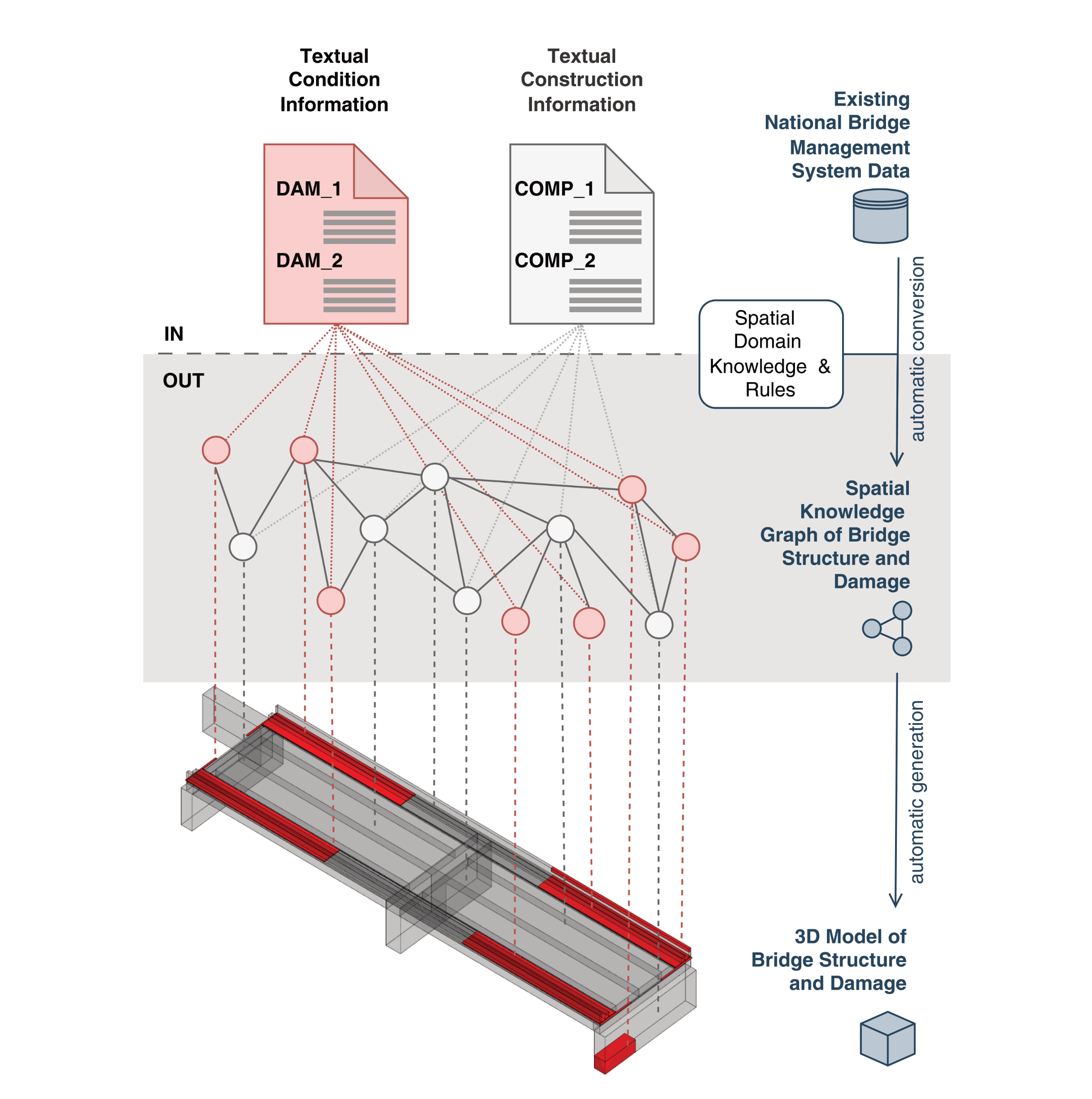
Prof. Dr. Jakob Beetz serves as a University Professor at RWTH Aachen University's Faculty of Architecture, leading the Design Computation (DC) research group. His work addresses critical challenges in sustainable built environments through digital innovation, focusing on integrating knowledge, information, and data across disciplines to reduce the sector's energy and material consumption—which accounts for over one-third of global totals—while advancing climate goals under the European Green Deal. His research spans Building Information Modeling (BIM), digital twins, and artificial intelligence, with emphasis on graph-based data federation, semantic web technologies, and large language models in construction. Key interests include evidence-based planning, parametric design optimization, building physics simulation, and networked knowledge modeling. Recent projects explore federated digital twin ecosystems for infrastructure management, intelligent damage assessment systems, and AI-driven solutions for wood structure preservation, directly contributing to sustainable development targets. Analysis of his 2024-2025 publications reveals a cohesive trajectory toward decentralized data environments and AI integration in Architecture, Engineering, and Construction (AEC). His work bridges theoretical foundations in knowledge representation with practical applications in bridge maintenance, road infrastructure, and timber construction, demonstrating consistent innovation in spatial data querying, federated issue management, and ontology-based process modeling. Prof. Beetz actively supervises PhD candidates, as evidenced by DC.Promotions 2024, and drives international collaboration through events like the Forum Construction Informatics 2025 and CIB W78 conferences. His research group engages with industry standards including Industry Foundation Classes (IFC) and Common Data Environments (CDEs), emphasizing open data principles and interoperability to transform construction workflows.
Jamie Callan is a Professor at Carnegie Mellon University's Language Technologies Institute (School of Computer Science), where he leads research in Information Retrieval and Neural Search Architectures . He teaches advanced courses on search engine design and mentors students in multiple programs. Research Focus: Federated retrieval, knowledge graph integration in search, ClueWeb dataset development, and neural approaches to document ranking Leadership: Past SIGIR Treasurer/Chair, Co-founding Editor of Foundations and Trends in IR, former TOIS Editor-in-Chief His recent work explores: Neural Retrieval: Latent vocabulary for sparse systems, hypothetical documents for dense vector retrieval Dataset Innovation: Maintenance and distribution of ClueWeb09, ClueWeb12, and ClueWeb22 datasets Search Efficiency: Selective search architectures with 90% reduced computational costs Scientific Recognition: International ACM SIGIR Conference Leadership Co-founding Editor-in-Chief, Foundations and Trends in IR Former Editor-in-Chief of ACM TOIS Dr. Callan's Lemur Project has produced Indri/Galago search engines and supported TREC evaluations through dataset contributions.
Yu Fujimoto is a Professor at Waseda University's Advanced Collaborative Research Organization for SmartSociety. Previously, he served as an Associate Professor at Waseda University's Advanced Collaborative Research Organization for Smart Society (2015-2023) and Institute for Nanoscience & Nanotechnology (2012-2015), and as an Assistant Professor at Aoyama Gakuin University's Department of Integrated Information Technology (2009-2012). He holds a Doctorate from Waseda University's Graduate School, Division of Science and Engineering and is a member of IEEE and the Information Processing Society of Japan. His research focuses on statistical science applied to energy systems, with specific interests in renewable energy forecasting, statistical data analysis for energy management systems, and statistical machine learning theory. Fujimoto has published 109 papers with 1,191 citations and maintains an h-index of 16, demonstrating significant impact in his field. His recent publications show a strong trend toward integrating machine learning techniques with power system applications, particularly focusing on renewable energy integration, electric vehicle charging optimization, smart grid technologies, and carbon reduction strategies. His work frequently addresses the challenges of grid stability with high renewable penetration and develops innovative solutions using advanced data analytics. Best Paper Award for Big Earth Data (2025) for wind generation dataset research Best Paper Award in International Conference on Power, Energy and Electrical Engineering (2025) Second Best Paper Award in International Conference on Renewable Energy Research (2024) Top Downloaded Article in IET Smart Cities (2023) Top Downloaded Article in IEEJ Transactions (2022) Fujimoto's research bridges theoretical statistical methods with practical energy system applications, contributing significantly to Japan's efforts in smart grid development and renewable energy integration. His work often involves collaboration with industry partners and government research organizations to address real-world power system challenges.
Ranjana Mehta serves as Professor in the Department of Industrial and Systems Engineering at the University of Wisconsin-Madison and Affiliate Faculty in the BerbeeWalsh Department of Emergency Medicine, directing the NeuroErgonomics Laboratory while co-directing the Texas A&M Ergonomics Center and holding faculty fellowships at the Center for Population Health and Aging and Center for Remote Health Technologies and Systems. Her academic background includes: PhD in Industrial & Systems Engineering from Virginia Tech MS in Industrial Engineering from University at Buffalo BE in Production Engineering from University of Mumbai, India Mehta pioneers neuroergonomic approaches to study human performance under fatigue and stress in safety-critical environments, developing closed-loop human augmentation technologies for emergency response, space exploration, and oil/gas operations. Her work integrates adaptive AR/VR interfaces, wearable systems, human-robotic interactions, and brain-computer interfaces to enhance human-technology partnerships through user-centered design. Analysis of her recent publications reveals strong emphasis on fatigue detection in offshore workers, trust dynamics in human-robot collaboration, and sex-specific neural adaptations to exoskeletons. Her research spans human factors engineering, neuroscience, and industrial engineering, employing multimodal physiological metrics to address real-world safety challenges across high-risk industries. Her scientific recognition includes: 2024 Virginia Tech, ISE Distinguished Alumni 2023 Human Factors and Ergonomics Society, Fellow 2022 IISE Award for Technical Innovation in Industrial Engineering 2022 NASA ideas* Fellow 2022 NASEM Gulf Research Early Career Research Fellow 2022 The Human Factors Prize 2021 Virginia Tech, ISE Emerging Leaders Award 2021 Texas A&M Presidential Impact Fellow 2020 TEES Engineering Genesis Award 2020 Virginia Tech Engineering Outstanding Recent Alumni Award 2019 HFE Woman of the Year 2017 William C. Howell Young Investigator Award Her research receives funding from multiple federal agencies and industry partners supporting neuroergonomic solutions for worker safety. She mentors graduate students through ISyE 699/790/890/990 research courses and PSYCH 859 special topics, focusing on human factors engineering applications in emergency response and healthcare systems. Mehta leads interdisciplinary teams across the NeuroErgonomics Laboratory and Texas A&M Ergonomics Center, integrating engineering, neuroscience, and emergency medicine expertise to develop real-time fatigue monitoring systems and adaptive interfaces for high-stakes occupational environments.
Mandy Hauser is a Researcher in the "Education with Special Needs and Intellectual Development" department at the Institute for Special Needs Education , Leipzig University , where she has taught and researched since 2012. Her work focuses on participatory and inclusive research, methodological and ethical challenges in empirical social research involving individuals with intellectual disabilities, inclusion-sensitive university development, disability studies, and self-reflexivity in teacher training programs. Education: Ph.D. in "Quality and Goodness in Joint Research with People with Learning Difficulties" (2019), funded by the Heinrich Böll Foundation Special Education Teaching Degree (intellectual development & communication) at Leipzig University (2002-2005) Studies in General Linguistics, Comparative Literature, and Medieval/Modern History (2000-2005) Research Interests center on participatory methodologies in disability studies, ethical frameworks for inclusive research, and transforming higher education to support inclusion. Her work addresses ambivalent emotions in academic inclusion, ableism in teacher education, and contradictions in inclusion-focused knowledge production. Recent Publications (2020-2025) explore themes like collaborative research quality, inclusive university didactics, and the intersection of disability studies and pedagogy. Notable projects include ParLink (2018-2021), funded by the German Federal Ministry of Education and Research. Notable Awards: Heinrich Böll Foundation scholarship for doctoral research She has also held an Acting Professorship at Martin Luther University Halle/Wittenberg (2011) and participated in teaching initiatives like " Kleine Forscher:innen " (2009-2013) for kindergarten education and feminist editorial work in " Outside the Box " (2009-2013).
Abolfazl Hashemi is an Assistant Professor in the Elmore Family School of Electrical and Computer Engineering at Purdue University, directing the MINDS Group. He holds a B.Sc. from Sharif University of Technology (2014), and M.S.E. and Ph.D. degrees from The University of Texas at Austin (2016, 2020). His research focuses on Large-Scale Optimization for AI/ML, Learning at the Edge, and Decision-Making under Uncertainty, with applications in Federated Learning, Medical Image Analysis, and Cyber-Physical Systems. He leads the MINDS Group and collaborates with EnCORE and ICON centers. Key research areas include optimizing algorithms for machine learning, robustness in distributed systems, and adversarial learning. He has developed algorithms with mathematical guarantees for efficient deployment under resource constraints. Teaching includes Optimization for Deep Learning (graduate) and undergraduate courses like ECE 20001. He advises the Purdue RoboMaster robotics team and has mentored students through programs like SURF and Summer Stay Scholars. Outreach activities include fostering diversity through robotics competitions and research fellowships. His work bridges theoretical optimization with practical AI applications, emphasizing equitable and robust solutions in federated and decentralized learning.
Tom Zick serves as Director of Responsible AI at Charles Schwab and holds an academic affiliation as a Research Fellow at Harvard University's Berkman Klein Center for Internet & Society. Her work bridges technical AI development and legal frameworks, focusing on governance mechanisms for emerging technologies. She has advised organizations from startups to Fortune 500 companies while collaborating with frontier AI labs and public institutions like the City of Boston on AI deployment and data governance initiatives. Her educational foundation includes a JD from Harvard Law School and a PhD in Astrophysics from UC Berkeley, providing interdisciplinary expertise critical to her research. This dual background enables rigorous analysis of complex technology-policy intersections. Zick's research centers on creating accountable AI systems through technical oversight frameworks and regulatory compliance strategies. She investigates generative AI's societal impacts, reinforcement learning risks, and privacy-preserving identity solutions like personhood credentials. Her work emphasizes red teaming, model alignment, and global regulatory harmonization, addressing both immediate implementation challenges and long-term existential risks through law-technology integration. Analysis of her publication trajectory reveals escalating focus on governance scalability as AI capabilities advance. Early work examined foundational risks in reinforcement learning, while recent publications address generative AI's disruption of education systems and the urgent need for cross-jurisdictional regulatory frameworks. Her taxonomy development for AI regulation demonstrates systematic approaches to navigating fragmented global policy landscapes. As an advisor, Zick has guided corporate and municipal entities through AI implementation challenges, notably helping Boston operationalize data governance frameworks. Her Berkman Klein fellowship involved direct collaboration with major AI labs on alignment research and red teaming exercises. She contributes to industry-wide initiatives including Twitter's decentralized social media project (bluesky), focusing on protocol-level solutions for content integrity. Zick's collaborative ecosystem spans frontier AI companies, academic researchers, and public sector innovators. Her current work with the City of Boston demonstrates practical governance implementation, while ongoing personhood credentials research addresses AI-generated content verification challenges. These partnerships reflect her commitment to translating theoretical frameworks into operational systems across multiple sectors.
Dr. Shulin (Stanley) Chen is a Lecturer at the University of Technology Sydney (UTS), specializing in antennas and applied electromagnetics. He holds a PhD from UTS (2019) and has held postdoctoral and visiting scholar positions at UTS and City University of Hong Kong. His research focuses on metasurfaces, reconfigurable antennas, and machine learning-driven design, supported by prestigious awards like the DECRA (2025) and IEEE AP-S Fellowship (2022). He serves as an Associate Editor for IEEE Transactions on Circuits and Systems II and has authored over 75 publications. His work spans advanced beam-forming antennas for 6G, frequency-controlled polarization systems, and intelligent metasurface design. Education: B.S. in Electrical Engineering, Fuzhou University (2012) M.S. in Electromagnetic Field & Microwave Technology, Xiamen University (2015) PhD in Electrical Engineering, UTS (2019) Research Interests: Metasurfaces for electromagnetic wave manipulation Reconfigurable antennas for 6G networks Machine learning in antenna design Joint communication and sensing systems Awards & Grants: DECRA (2025), TICRA-EurAAP Travel Grant (2022) Lead projects on intelligent redirecting surfaces and flood sensing (funded by Telstra, NSW Department of Planning, etc.) Labs & Teams: Active in UTS's Global Big Data Technologies Centre and collaborates with industry partners like XPOWER AI and TPG Telecom.
Zhiyu (Frank) Quan is an Assistant Professor at the University of Illinois at Urbana-Champaign (UIUC), holding positions in the Department of Mathematics, Department of Statistics, and National Center for Supercomputing Applications (NCSA). He is also an affiliate faculty member at Discovery Partners Institute as InsurTech Lead and serves as an ORMI Faculty Fellow in Finance. His research focuses on data science applications in actuarial science, including tree-based models, natural language processing, and deep learning for insurance risk modeling, predictive analytics, and InsurTech innovation. Education: Ph.D. in Actuarial Science (University of Connecticut, 2019), MS in Applied Statistics (Michigan State University, 2014), and BS in Mathematics and Applied Mathematics (Xiamen University, 2012). Research interests include computational statistics, insurance analytics, and leveraging machine learning for actuarial challenges such as claim prediction, rate-making, and cyber risk modeling. He leads the Illinois Risk Lab, bridging academic research with industry needs, and has pioneered hybrid tree-based models to address imbalanced data in insurance. Notable achievements include the Arnold O. Beckman Research Award and Society of Actuaries Research Institute recognition. He advises two doctoral students and teaches advanced predictive analytics courses, emphasizing practical applications in actuarial science and data ethics. Key collaborations involve InsurTech companies and NCSA, focusing on NLP-driven academic paper repositories (CyLit) and federated learning for privacy-preserving insurance data sharing. His work addresses real-world challenges in cyber insurance and automated machine learning systems.
Erik Hjalmarsson is a Professor of Banking and Financial Economics at the Department of Economics, University of Gothenburg. He holds the Felix Neubergh Chair and previously served as Director of the Centre for Finance. His research focuses on empirical asset pricing, financial econometrics, and long-run stock returns. Hjalmarsson earned his PhD from Yale University and has held roles at the Federal Reserve Board and Winton Capital Management. Education: PhD (Yale University, 2005), M.Sc. in Econometrics (London School of Economics, 2000), B.Sc. in Mathematical Statistics (University of Gothenburg, 1999). Research interests include stock return predictability, high-frequency trading, and econometric methods. His work has been published in top journals like the Journal of Finance and Journal of Financial Economics . Key grants include funding from the Swedish Research Council and Marianne and Marcus Wallenberg Foundation. Awards include the Carl Anderson Prize (2004) and multiple stipends for doctoral education. He supervises PhD students and advises on central bank policies. His recent studies explore long-horizon returns, inflation expectations, and portfolio strategies. Teaching includes PhD courses in econometrics and financial economics. He serves on editorial boards and as a referee for leading journals.