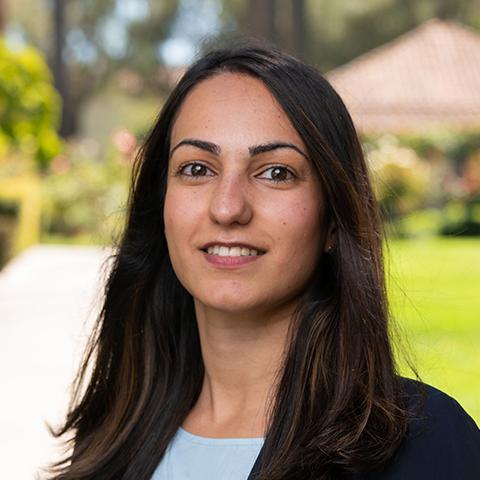
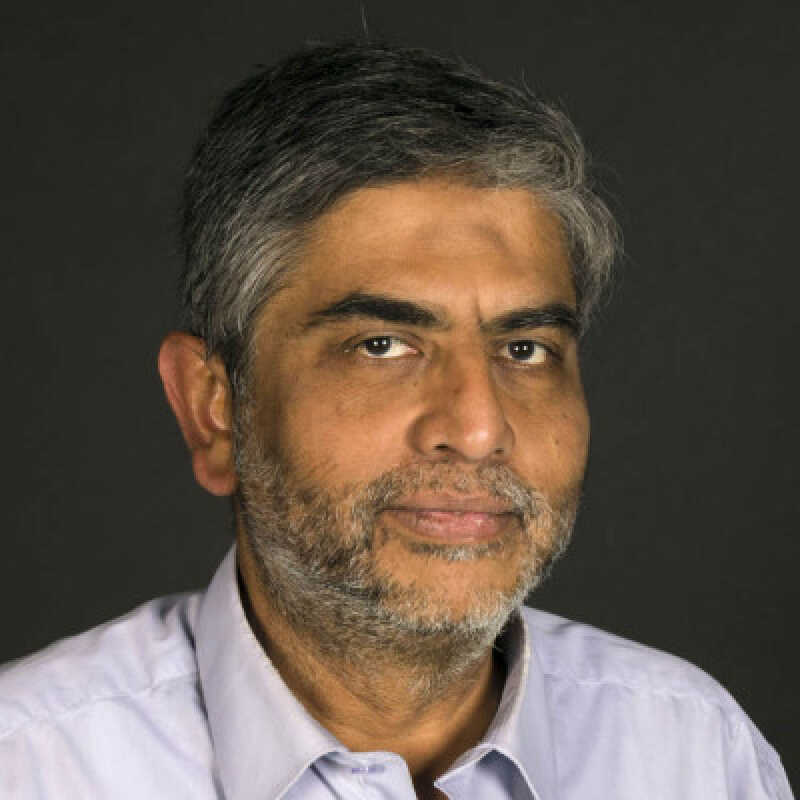
Shiva Houshmand is an Associate Professor in the Department of Mathematics and Computer Science at Santa Clara University's College of Arts and Sciences. Their research focuses on cybersecurity, password security, and digital forensics. B.S. in Mathematics from the University of Tehran M.S. and Ph.D. in Computer Science from Florida State University Research interests include password cracking techniques, IoT security, probabilistic algorithms, and forensic analysis. Recent work explores smartphone-wearable interactions, homophone-based attacks, and vulnerabilities in smart home systems. 15 most recent publications (2011-2025) demonstrate expertise in probabilistic password cracking, IoT forensics, and mobile security systems. Articles span topics from dictionary-based Viterbi algorithms to forensic data extraction in consumer devices.
Yiwei Wang is an Assistant Professor at the Department of Computer Science, University of California, Merced, leading the UC Merced NLP Lab . He holds a Ph.D. from National University of Singapore (2023), M.Phil from Hong Kong University of Science and Technology (2019), and B.S. from Southeast University (2017). His research focuses on natural language processing , large language models , and graph machine learning , with emphasis on trustworthy AI systems.
Hironori Washizaki is a Professor in the Department of Computer Science and Engineering at Waseda University, Japan. He is a leading researcher in software engineering with a focus on software design patterns, machine learning systems, cybersecurity, and software quality. His primary research interests include: Software Engineering Machine Learning Systems Engineering Software Design Patterns AI and ML Security Requirements Engineering for AI Systems Natural Language Processing for Software Engineering Software Quality and Reliability Empirical Software Engineering His recent publications (2023–2025) reveal a strong trend toward integrating AI and machine learning into software engineering practices. Key themes include prompt engineering patterns in software development, automated log anomaly detection, vulnerability analysis using NLP techniques, modeling frameworks for ML systems, and gender studies in software engineering. His work combines theoretical modeling with empirical validation and practical application. Notable scientific contributions and activities include: Guest editorial for IEEE Transactions on Emerging Topics in Computing on software aging and rejuvenation Organizing and contributing to workshops on SQuaRE, gender in software engineering, and ML systems engineering Leadership roles in IEEE Computer Society Extensive collaboration with researchers at Waseda and internationally He advises students and leads research on topics such as automated program repair, data-driven personas, bug fixing time analysis, and educational tools for programming. His work often involves interdisciplinary collaboration across software engineering, AI, and cybersecurity domains. He is involved in several research labs and teams focused on software engineering innovation, including groups working on: Software patterns and architecture AI/ML engineering Security and privacy in cloud and IoT Empirical studies in software development Educational technology and programming pedagogy
George P. Kafentzis is a Lecturer in the Computer Science Department at the University of Crete, where he teaches Physics for Engineers (CS-112), Digital Signal Processing (CS-370), and Signals and Systems (CS-215). He is a core member of the Speech Signal Processing Lab within the Multimedia Informatics Labs, focusing on advanced signal processing methodologies. His educational background includes a Ph.D. in Signal Processing and Telecommunications from MATISSE Doctoral School (University of Rennes 1) and a Ph.D. in Computer Science and Engineering from the University of Crete (2014), a Master of Science in Computer Science (2010), and a Bachelor's degree in Computer Science (2008), all from the University of Crete. Research interests span speech, audio, and biosignal processing with emphasis on sinusoidal modeling, emotion recognition from speech, deep learning applications, pathological speech analysis, and music signal processing. His work bridges theoretical signal processing with clinical and engineering applications, particularly in non-invasive vocal fold pathology detection through glottal analysis. Recent publications demonstrate a strategic pivot toward cough sound analysis for respiratory diagnostics using AI, while maintaining core expertise in adaptive sinusoidal models for speech transformations. Publication trends reveal an evolution from fundamental speech modeling (2010-2016) toward applied health informatics (2021-present), with increasing focus on real-world diagnostic systems leveraging cough acoustics. Over 50% of recent work integrates deep learning with traditional signal processing for medical applications, particularly in low-resource settings. Graduate student Scholarship - Institute of Computer Science, FO.R.T.H. (2008-2010) Undergraduate Scholarship - Institute of Computer Science, FO.R.T.H. (2007-2008) As an active industry collaborator, Kafentzis has served as Signal Processing Engineer at Hyfe AI (2022-2025) and contractor for VoiceSignals and Toshiba Research Europe. His teaching portfolio includes a widely adopted textbook Continuous and Discrete Time Signal Processing (2019), which integrates MATLAB implementations with theoretical foundations. Current research leverages his signal processing expertise in cough monitoring systems validated through multicenter clinical trials. He leads projects in the Speech Signal Processing Lab including Novel Deep Learning Architectures for Automatic Speech Recognition and Speech Emotion Recognition and Visualization Techniques, with recent work extending to Greek-language pathological speech analysis and respiratory health monitoring systems.
Carlos Guestrin is the Fortinet Founders Professor of Computer Science at Stanford University, Director of the Stanford AI Lab (SAIL), and Senior Fellow at the Stanford Institute for Human-Centered AI (HAI). He also serves as Chief Scientist at Visual Layer and Virtue AI, and is a Member of the National Academy of Engineering. His research centers on Machine Learning Methods, Explainability, Fairness & Ethics of AI, and Machine Learning Systems. He develops interpretable and reliable models, addresses algorithmic fairness, and builds efficient large-scale ML systems through frameworks like XGBoost. His work bridges theoretical rigor with real-world applications in healthcare and human-centered AI. His recent publications (2023–2025) demonstrate leadership in generative AI evaluation, model reliability, and ethical frameworks. Key trends include developing live benchmarks for research synthesis, on-device calibration techniques, multi-objective optimization with constraints, and societal impact assessment tools—showcasing a trajectory from foundational ML systems to responsible AI deployment. Honors include: Member of the National Academy of Engineering Details about his advising and grant activities were not provided in source materials, though his leadership roles indicate extensive mentorship and funding oversight. As Director of SAIL, he shapes one of the world’s premier AI research centers, while his HAI fellowship drives interdisciplinary initiatives ensuring AI advances human welfare. His industry roles at Visual Layer and Virtue AI translate academic research into practical AI solutions.
Hercules Dalianis is a Professor at the Department of Computer and Systems Sciences, Stockholm University. His research focuses on Natural Language Processing, particularly in clinical text mining for Swedish language data. He leads the Natural Language Processing Research Group and serves as director of the Health Bank - Swedish Health Record Research Bank infrastructure. MSc in Electrical Engineering (1984), KTH PhD in Technology (1996), KTH Professor of Computer and Systems Science (2011), Stockholm University His research addresses privacy-preserving NLP for clinical text analysis, including automated de-identification , domain adaptation of BERT models , and clinical entity recognition . Current projects like DataLEASH and Privacy-Preserving Techniques explore machine learning solutions that balance data utility with patient confidentiality. Key publication trends show emphasis on Swedish clinical text processing , ICD-10 coding automation , and privacy-aware language modeling . Collaborations span Karolinska University Hospital, Nordic healthcare institutions, and international AI research communities. He teaches courses in Internet Search Techniques and Business Intelligence (ISBI) , Natural Language Processing (NLP) , and Principles and Foundations of Artificial Intelligence (PFAI) . His work has produced the open-access textbook Clinical Text Mining: Secondary Use of Electronic Patient Records , establishing foundational frameworks for clinical NLP in low-resource languages.
Prof. Dr. Ünal Çavuşoğlu is an Associate Professor at the Department of Software Engineering, Faculty of Computer and Information Sciences, Sakarya University. With a doctorate in chaos-based encryption algorithms (2016) and a master's degree comparing network simulation tools (2014), his research focuses on cybersecurity, machine learning, and chaos theory. He has contributed extensively to intrusion detection systems, IoT security, and cryptographic protocols. Education: Doctorate (2016), Master's (2014), and Bachelor's (2011) in Computer Engineering. Research Interests: Cybersecurity frameworks, machine learning adaptation for threat detection, chaotic encryption, and IoT communication protocols. Recent Work: 2025 publications on homomorphic encryption and LSTM-based intrusion detection demonstrate cutting-edge applications of deep learning in security domains. His 2019-2024 publications reveal a trajectory from foundational chaos theory to applied IoT and cloud security solutions. Key methodologies include genetic algorithms, fractional calculus, and hybrid encryption systems.
Mohamed Abomhara is a Senior Researcher and Head of Department at the Department of Information Security and Communication Technology, Norwegian University of Science and Technology (NTNU) , Faculty of Information Technology and Electrical Engineering. He serves as Discipline Leader for the MRI PET (Multidisciplinary Research group on Privacy and data protEcTion) research group. Research Interests His expertise includes: GDPR compliance and privacy-by-design Risk assessment and secure system design AI ethics and social-cyber risk mitigation Healthcare digital transformation security Border control technology ethics Recent Publications His 2024-2025 research focuses on multilingual hate speech detection , border control technology acceptance , and privacy protections in national identification systems , bridging AI ethics, cybersecurity, and regulatory compliance. Earlier work (2016-2022) addresses: Cybersecurity in digital substation infrastructure Secure collaborative healthcare information sharing Blockchain-based GDPR compliance AI-driven social media analysis
Dongdong Chen serves as an Assistant Professor in the Department of Computer Science at Heriot-Watt University's School of Mathematical and Computer Sciences in Edinburgh, United Kingdom. His research profile indicates active supervision of PhD students with full scholarships available, demonstrating his established position within the academic community. Current research outputs show consistent publication activity from 2020 through 2024 with increasing impact. Dr. Chen's research interests center on machine learning applications for imaging systems, with particular expertise in image processing, computer vision, computational imaging, and inverse problems. His work bridges theoretical machine learning with practical applications, especially in medical imaging contexts. The fingerprint analysis of his publications reveals strong connections to Deep Learning (31%), Unsupervised Learning (25%), and Inverse Problems (43%), indicating a cohesive research trajectory focused on unsupervised frameworks for imaging challenges. Analysis of his 15 most recent publications (2021-2025) shows a clear evolution toward unsupervised and equivariant learning approaches for inverse problems, with increasing focus on diffusion models and medical applications. The research demonstrates strong theoretical foundations combined with practical implementations, particularly in MRI and medical diagnostics. Citation metrics indicate significant impact, with several papers exceeding 40 Scopus citations. His notable scientific achievements include: IES Best Student Paper Award (2014) MICCAI'18 BIA Best Paper Nomination (2018) Dr. Chen actively mentors PhD students and has attracted research attention through media coverage of his ICCV paper on Equivariant Imaging. His research contributes to UN Sustainable Development Goals through imaging technology development. Current activities include recruiting PhD students for projects in Edinburgh with full scholarship support, indicating ongoing research expansion and team development.
Daniel Cullina is an Assistant Professor in Electrical Engineering, specializing in theoretical computer science and machine learning. His research explores fundamental aspects of adversarial robustness, graph alignment, and information theory, with applications spanning cybersecurity and data science. Research Focus: Adversarial machine learning: Robustness guarantees, attack/defense strategies for classifiers Graph algorithms: Alignment and recovery in random graph models like Erdős-Rényi Information theory: Fundamental limits of database matching and Gaussian alignment Coding theory: Deletion error correction and converse bounds His publications (28+ with 575+ Scopus citations) demonstrate consistent contributions to understanding adversarial vulnerabilities in ML systems and combinatorial algorithms for graph/data matching. Recent work (2020-2023) focuses on theoretical characterization of optimal losses under attacks and database alignment frameworks. With an h-index of 12, his research output shows sustained productivity since 2012, peaking in 2016 (8 publications) and maintaining 3-5 annual publications in recent years.
Gang Tan is an Associate Professor at the Pennsylvania State University's College of Engineering, Department of Computer Science and Engineering. He also holds the James F. Will Career Development Professorship and is affiliated with the Institute for Computational and Data Sciences (ICDS). His research focuses on binary reverse engineering , cybersecurity , Internet of Things (IoT) security , machine learning fairness , and information flow security . He has led numerous NSF-funded projects, including work on precise binary analysis, IoT policy enforcement, and automated fairness repair in AI systems. Recent work trends include memory safety validation , pseudocode extraction , and control-flow integrity mechanisms. His 127+ research outputs reflect deep engagement with static program analysis , cache side-channel detection , and secure kernel-driver interfaces . Scientific Awards: James F. Will Career Development Professorship Gang Tan has secured multiple grants from the National Science Foundation (NSF) and U.S. Navy for projects like Sliver (information flow verification) and Semantics-Directed Binary Reverse Engineering . His work involves advising teams on IoT safety, and he has 19 active or completed grants since 2008.
Konda Reddy Mopuri is an Assistant Professor at the Indian Institute of Technology Hyderabad , leading the Data-Driven Intelligence & Learning Laboratory (DiL) . He holds a PhD from Indian Institute of Science, Bengaluru , where he worked under Prof. R. Venkatesh Babu. His research spans Artificial Intelligence , Deep Learning , Computer Vision , and Optimization , with recent work focusing on coreset selection , fairness in ML , and medical imaging . Awards include the IUPRAI Best Doctoral Dissertation Award and SPCOM Best Doctoral Dissertation Award in 2018, and the Young Alumni Achiever Award from IISc in 2022. Notable publications include work on data-free knowledge distillation , adversarial perturbations , and medical AI applications . He has advised students like Saumyaranjan Mohanty , Nikita Malik , and Naveen George , and teaches courses on Machine Learning and Deep Learning .
Dr. Sanaul Hoque is a Senior Lecturer in Secure Systems Engineering at the University of Kent's School of Engineering and Digital Arts, where he also serves as Course Lead for Electronic and Computer Engineering. His research focuses on biometric security systems, computer vision, and pattern recognition applications with over 79 publications documented in the Kent Academic Repository. Dr. Hoque's primary research interests include: Computer Vision and Pattern Recognition Biometrics and Security Systems Document Analysis and Modeling Encryption and Secure Systems Multi-Expert Fusion Techniques EEG-based Biometric Recognition His extensive publication record spanning over two decades demonstrates expertise in developing innovative biometric security solutions. Recent work focuses on neural network applications for security systems, explainable presentation attack detection, and EEG-based biometric recognition. His research shows a consistent trajectory toward more sophisticated and explainable biometric security systems that address real-world challenges in authentication and identification, with his most recent publication appearing in 2025. Dr. Hoque has maintained productive research collaborations with colleagues including Farzin Deravi, Konstantinos Sirlantzis, and Gareth Howells, resulting in numerous co-authored publications across various domains of biometric security. His work has appeared in reputable journals including Sensors, IEEE Access, and Pattern Analysis and Applications. As Course Lead for Electronic and Computer Engineering, Dr. Hoque plays a significant role in curriculum development and student mentorship within the engineering program at Kent. His expertise bridges theoretical computer science with practical security applications, particularly in biometric systems and secure document modeling.
Professor Shujun Li is a distinguished academic at the University of Kent , where he has served as a Professor of Cyber Security since November 2017. He is also the Director of the Institute of Cyber Security for Society (iCSS) , a UK government-recognized Academic Centre of Excellence in Cyber Security Research (ACE-CSR), and leads the Cyber Security Research Group at Kent's School of Computing. His research spans interdisciplinary cyber security , focusing on human-centric approaches, privacy, digital forensics, multimedia computing, and AI applications. He actively collaborates across disciplines such as Electronic Engineering, Psychology, Sociology, Law, and Business. Previously held roles include Deputy Director of Surrey Centre for Cyber Security (2014–2017) at the University of Surrey. Key projects include EPSRC-funded initiatives on human-centric cyber security and privacy. His recent publications highlight expertise in areas like data privacy , deepfake analysis , password security , and MaaS (Mobility-as-a-Service) vulnerabilities , with contributions to journals such as IEEE Transactions on Dependable and Secure Computing and Frontiers in Big Data . Scientific Honors: Two Best Paper Awards ISO/IEC Certificate of Appreciation (2012) Fellow of BCS Senior Member of IEEE Member of ACM As a principal/co-supervisor, he has guided students including Mohamad Imad Mahaini , Nandita Pattnaik , and Ali Raza . He also serves on editorial boards and advisory groups like the Scientific Board of RISCS and the Steering Committee of ARES .
Feng Liu is an Assistant Professor at the Decision Systems and e-Service Intelligence (DeSI) Lab within the Australian Artificial Intelligence Institute (AAII) at the University of Technology Sydney (UTS). He also serves as a Visiting Scientist at RIKEN-AIP, Japan. His academic journey includes a PhD in Computer Science from UTS (2020), an MSc in Probability and Statistics from Lanzhou University (2015), and a BSc in Mathematics from the same institution (2013). His educational background includes: Ph.D. (2020), Computer Science, University of Technology Sydney, Australia M.Sc. (2015), Probability and Statistics, Lanzhou University, China B.Sc. (2013), Mathematics, Lanzhou University, China Feng Liu's research centers on developing trustworthy intelligent systems through hypothesis testing and reliable knowledge transfer across domains. His work spans two-sample testing for distribution comparison, transfer learning for knowledge adaptation across domains, and defending against adversarial attacks to improve model robustness. His approach combines theoretical foundations with practical applications, particularly in domain adaptation with interval-valued data and secure multi-source learning. His recent publications demonstrate a strong focus on trustworthy machine learning, with significant contributions to interval-valued data processing, novel class discovery under unreliable sampling conditions, and privacy-preserving domain adaptation. His work bridges theoretical machine learning with practical applications in computer vision, bioinformatics, and recommender systems, showing a consistent pattern of addressing fundamental challenges in trustworthy AI. Among his notable recognitions are: Outstanding Reviewer Award of ICLR (2021) AAII Best Student Paper Award (2020) Best Student Paper Award from IEEE International Conference on Fuzzy Systems (2019) UTS-FEIT HDR Research Excellence Award (2019) Publons Peer Review Awards - Top 1% reviewers in Computer Science (2019, 2018) Dr. Liu has actively contributed to the academic community through supervision and service. He has helped supervise four students who collectively produced eight academic papers, three of which were published in CORE Tier A* venues. His service includes program committee roles for major conferences including NeurIPS, ICML, ICLR, and AAAI, as well as reviewing for prestigious journals like IEEE-TPAMI and IEEE-TNNLS. His research has been supported by various grants, including the Australian Laureate postdoctoral fellowship. As part of the AAII at UTS, Dr. Liu contributes to a vibrant research environment focused on advancing artificial intelligence through interdisciplinary collaboration. His work in the Decision Systems and e-Service Intelligence Lab addresses real-world challenges in trustworthy machine learning, with applications spanning healthcare, robotics, and secure information systems.