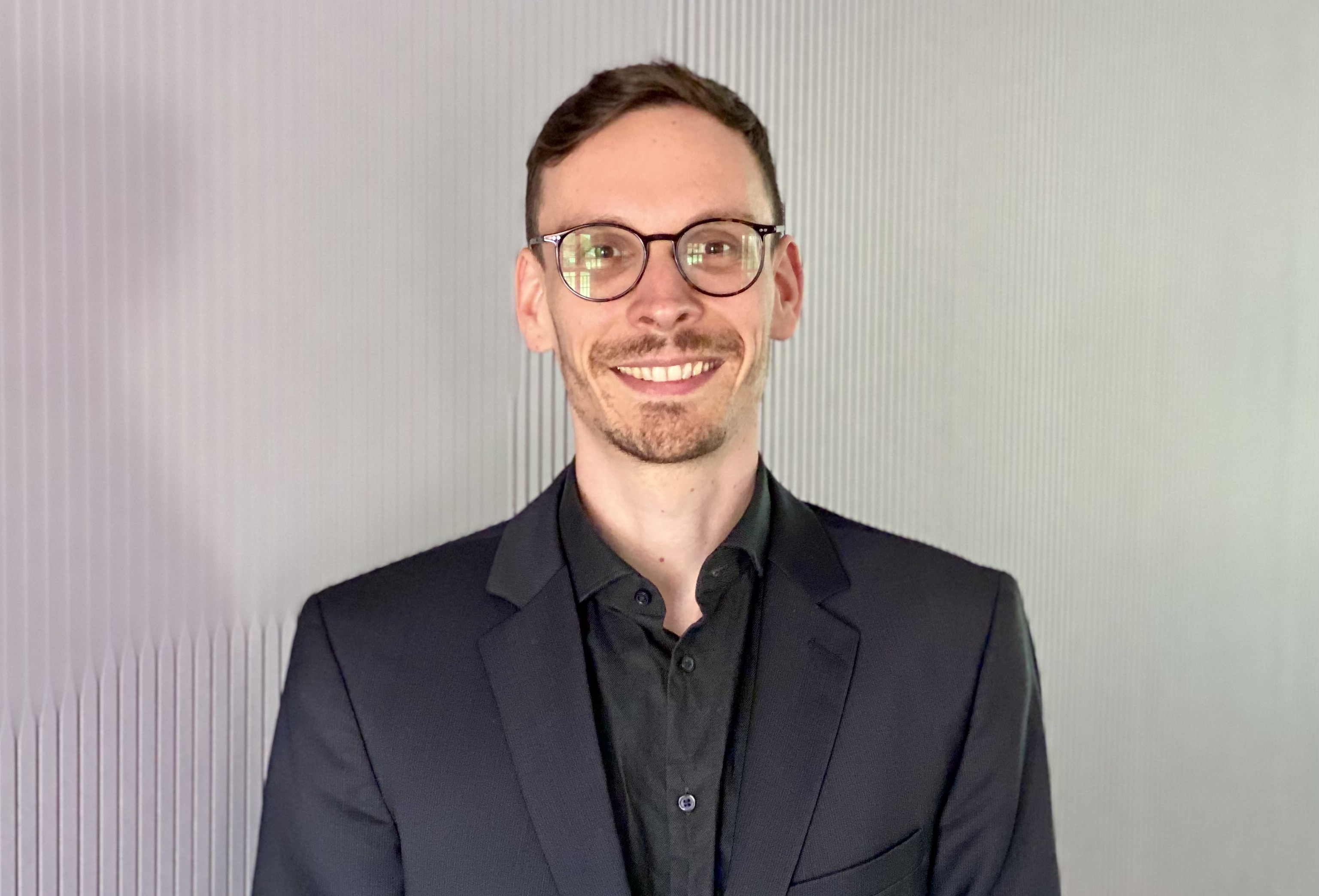
Li Li is a Professor of Software Engineering at Beihang University , China. Previously, he served as an ARC DECRA Fellow and Senior Lecturer at Monash University , leading the SMart software Analysis and Trustworthy computing (SMAT) research lab at the Department of Software Systems and Cybersecurity. His academic journey includes a Ph.D. in Software Engineering from the University of Luxembourg (2016), supervised by IEEE Fellow Prof. Yves Le Traon and Dr. Jacques Klein. Research Interests Li's research focuses on Mobile Software Engineering (Mobile Security, Quality Assurance) and Intelligent Software Engineering (SE4AI, AI4SE). He applies static code analysis , dynamic program testing , and machine/deep learning to enhance software security and reliability. Key areas include Android API evolution, automated patch validation, and multi-language code analysis frameworks like Scalpel for Python. Scientific Recognition ARC DECRA Fellowship Rising SE Research Star Top-5 Most Impactful Early Career SE Researchers (2020, 2017) 5 Best/Distinguished Paper Awards across PLDI, WWW, ASE, MSR, and SANER Academic Contributions He has contributed to foundational Android analysis tools (e.g., AndroZoo++, DroidRA) and developed scalable systems for distributed program analysis (Seads). His work appears in top venues like ICSE, ESEC/FSE, ASE, ISSTA, POPL, and TSE.
Olga Russakovsky is an Associate Professor in the Computer Science Department at Princeton University. She serves as Associate Director of the Princeton AI Lab and Chair of the Board of Directors at AI4ALL, a nonprofit dedicated to diversity in AI leadership. Her research focuses on computer vision, machine learning, human-computer interaction, and fairness in AI. She specializes in developing AI systems that reason about the visual world, emphasizing fairness, accountability, and transparency. Her work integrates computer vision with ethical AI frameworks, and she is affiliated with Princeton’s Center for Statistics and Machine Learning and Center for Information Technology Policy. Her publications address biases in datasets, explainable AI, and generative models. Her recent research trends include: Bias detection in datasets (e.g., CelebA, ImageNet) Interactive and explainable AI systems Generative models like diffusion and vision-language integration Deepfake detection and AI forensics Conceptual learning and few-shot training Scientific awards: NSF CAREER Award for fairer computer vision systems Co-founder of AI4ALL and Stanford AI4ALL outreach programs She advises students through AI4ALL initiatives and leads the Visual AI Lab, which focuses on robust, inclusive AI development. Her work bridges technical innovation with societal impact, particularly in diversity-focused education.
Shamik Sengupta is the Ralph E. and Rose A. Hoeper Professor at the University of Nevada, Reno (UNR) , where he serves as Professor in the Department of Computer Science & Engineering and Executive Director of the Cybersecurity Center . He holds a PhD in Computer Science from the University of Central Florida (2007) and a BE in Computer Science from Jadavpur University (2002). IEEE Senior Member Director, UNR Cybersecurity Center NSF CAREER Award Recipient
Dr. Ninghao Liu is an Assistant Professor of Computer Science in the School of Computing at the University of Georgia, part of the Franklin College of Arts & Sciences - Division of Physical & Mathematical Sciences. He holds a Ph.D. in Computer Science from Texas A&M University (2021) and an M.S. in Electrical and Computer Engineering from Georgia Institute of Technology (2015). His research focuses on Explainable AI (XAI), Graph Mining, Model Fairness, Recommender Systems, and Outlier Detection, with notable contributions to foundational AI techniques and their applications in education, healthcare, and environmental sciences. Dr. Liu has secured significant funding, including a three-year NSF grant (2022–2025) for 'Graph-Oriented Usable Interpretation' and a five-year $10 million grant from the U.S. Department of Education (2024–2029) for the GenAI Empowered National Initiative for STEM+C Education. He has also been honored with the Outstanding Paper Award at ICML 2022, Best Paper Award Shortlist at WWW 2019, and other distinctions. His work emphasizes interpretable machine learning, graph neural networks, and addressing algorithmic bias. He collaborates across disciplines, contributing to radiology AI, climate-smart forestry, and pandemic prediction through knowledge-enhanced deep learning. His lab is based at the Boyd Research and Education Center, where he advances research in trustworthy AI systems and data-centric solutions.
Pascal Hitzler is a University Distinguished Professor and holds the endowed Lloyd T. Smith Creativity in Engineering Chair at Kansas State University's Department of Computer Science, Carl R. Ice College of Engineering. He directs the Center for Artificial Intelligence and Data Science (CAIDS) and the Institute for Digital Agriculture and Advanced Analytics (ID3A). Previously, he held roles at Wright State University, Karlsruhe Institute of Technology, and TU Dresden. His research focuses on neuro-symbolic AI, semantic web technologies, knowledge graphs, and ontology engineering. Education: PhD in Mathematics (2001, University College Cork), Diplom in Mathematics (1998, University of Tübingen). Academic achievements include over 400 publications, founding editor roles for journals like Neurosymbolic Artificial Intelligence , and leadership in organizations like the Neural-Symbolic Learning and Reasoning Association. Research interests include AI explainability, knowledge representation, and interdisciplinary applications of semantic technologies. He leads the DaSe Lab for Data Semantics, advancing projects like the KnowWhereGraph and Enslaved.org Hub Knowledge Graph. His work bridges symbolic AI with neural networks, emphasizing practical applications in agriculture, environmental science, and historical data preservation. Grants and collaborations span academic, industrial, and international partners. He has advised numerous students and researchers, contributing to both theoretical advancements and real-world semantic systems deployments.
Jagath Samarabandu is a Professor in the Department of Electrical and Computer Engineering at Western University. He holds a Ph.D. and M.S. in Electrical Engineering from SUNY Buffalo, and a B.Sc. in Electronics and Telecommunication Engineering from the University of Moratuwa, Sri Lanka. His academic career spans since joining Western University in 2000, with prior post-doctoral experience at SUNY Buffalo and industry work at Life Imaging Systems Inc. Education: Ph.D. Electrical Engineering, SUNY Buffalo M.S. Electrical Engineering, SUNY Buffalo B.Sc (Eng) Electronics and Telecommunication, University of Moratuwa His research focuses on Artificial Intelligence, Machine Learning, Image Analysis, and Cyber Security , with applications in biomedical imaging, network intrusion detection, and civil infrastructure monitoring. He has supervised numerous graduate students working on topics ranging from chromosome analysis to smart grid security. Recent publications highlight his work in medical AI applications (auditory processing disorder diagnosis), industrial time-series analysis (using contrastive predictive coding), and network security frameworks (INSecS system development). He has contributed to 3D ultrasound segmentation, prostate motion compensation algorithms, and synthetic aperture radar systems. Key projects include NSERC-funded intelligent home monitoring systems for elderly care and low-cost synthetic aperture radar development for search-and-rescue applications.
Alan Fern is a Professor of Computer Science and Robotics in the School of Electrical Engineering and Computer Science at Oregon State University. He leads research in artificial intelligence, focusing on reinforcement learning, planning, and robotics applications like humanoid robotics and agricultural AI. His work includes co-directing the Dynamic Robotics Lab and leading the AgAID National AI Institute for agricultural solutions. Fern holds a Ph.D. from Purdue University and has contributed to over 100 publications. His recognitions include the NSF CAREER Award and multiple best paper awards. Education: B.S., Electrical Engineering, University of Maine (1997) M.S. & Ph.D., Computer Engineering, Purdue University (2000 & 2004) Research Interests: His research spans machine learning, planning, and robotics. Key areas include: AI for humanoid robotics (e.g., bipedal locomotion on Cassie) Reinforcement learning algorithms and applications Agricultural AI for specialty crops Explainable AI and anomaly detection Awards: 2017 College of Engineering Research Collaboration Award 2013 AAAI Outstanding Paper Award 2006 NSF CAREER Award Advising & Labs: Supervised over 50 students. Key collaborations include the Dynamic Robotics Lab (with Jonathan Hurst) and AgAID. His teams address challenges like robot navigation, policy learning, and AI ethics. Labs/Teams: Dynamic Robotics Lab, AgAID National AI Institute, and contributions to computational sustainability initiatives.
Julian Fierrez is a Full Professor at the School of Engineering, Universidad Autonoma de Madrid. With an h-index of 74 and over 20,000 citations, his work spans biometrics, signal/image processing, artificial intelligence, and human-computer interaction. Key research areas include: Biometric anti-spoofing and DeepFakes detection Mobile and behavioral biometrics Bias/fairness in AI systems Biometric applications in e-health and education Security in multimodal biometric systems His recent publications show strong focus on deep learning applications for biometric security, with specific subfields including fake detection, keystroke authentication, facial analysis for Parkinson detection, and privacy-preserving AI. He serves as Associate Editor for multiple IEEE and Elsevier journals. Scientific distinctions include: IAPR Young Biometrics Investigator Award (2017) Miguel Catalan Award to Best Researcher under 40 (2017) EURASIP Best PhD Award (2012) EBF European Biometric Industry Award (2006) Prof. Fierrez leads the BiDA Lab and supervises students like Ruben Tolosana and Aythami Morales. Current projects include BBforTAI (Biometrics and Behavior for Unbiased & Trustworthy AI) and PRIMA (Privacy Matters). He also contributes to standardization efforts in biometric evaluation.
Sven Mayer is a Professor at TU Dortmund University’s Faculty of Computer Science and leads the Chair for Human-AI Interaction. He previously held a postdoctoral position at LMU Munich’s Media Informatics group and completed his PhD at Carnegie Mellon University (2014–2018). His research focuses on Human-AI/Robot Interaction , machine learning for touch systems , and sensor fusion . Recent work includes super-resolution capacitive touchscreens, pose estimation via smartphones, and city-scale sensing using retroreflective markers. The 15 most recent publications highlight trends in AI-driven interaction design , robot expressions , and smartphone-based sensing , with keywords spanning robotics, machine learning, and smart cities. Subdomains include contextual awareness, ergonomic constraints, and novel touch input paradigms. Scientific contributions recognized with Honorable Mention for 'Flyables' (2022) Honorable Mention for ISS piano learning paper (2022) . He has supervised projects in augmented reality and human-robot interaction courses , and frequently contributes to conferences like CHI, UIST, and MobileHCI as both author and organizational leader (e.g., Publications Chair at CHI 2022).
Stefan Decker is a full University Professor (Universitätsprofessor) at RWTH Aachen University, Germany, where he heads the Chair of Information Systems and Databases (Informatik 5) within the Faculty of Mathematics, Computer Science and Natural Sciences. He is actively involved in teaching, research, and the supervision of numerous ongoing and completed doctoral, master’s, and bachelor theses. Education & Academic Background Doctorate (Dr. rer. pol.) – field of Information Systems or related (exact institution/year not stated in text). Appointed as University Professor and Chair of Information Systems and Databases at RWTH Aachen University. Research Interests Prof. Decker’s work lies at the intersection of databases, knowledge graphs, semantic web technologies, data science, and cybersecurity . He investigates architectures and algorithms for large-scale, privacy-preserving, decentralized data analytics , develops ontology-driven information systems , and explores the use of large language models (LLMs) for educational technology, anomaly detection, and incident-response playbooks. Additional focal areas include smart energy systems, mixed-reality learning environments, FAIR data principles, and federated machine learning . Scientific Contributions & Trends His recent publications (2022-2025) demonstrate a clear trend toward explainable AI, LLM-enhanced systems, secure data spaces, and semantic interoperability . Key contributions include novel anomaly-detection frameworks for encrypted power-grid communications, knowledge-graph-driven chatbots for higher-education support, and methodological advances in decentralized analytics and FAIR data sharing. These works are disseminated in top-tier venues such as AAAI, IEEE ISGT Europe, ESWC, IDEAL, and various Springer LNCS and IEEE Transactions. Supervision & Grants Doctoral Theses Advised: A. T. Neumann – “Chatbots as professional companions in large-scale community information systems” (2024) S. M. Welten – “Methods for practical data sharing and decentralized analytics” (2025) Master’s Theses Co-Advised: A. R. Küsters – “Object-centric process constraints using variable bindings” (2025) Additionally supervising more than 30 ongoing bachelor, master, and doctoral projects covering topics such as LLM-driven cybersecurity playbooks, knowledge-graph construction for German law, privacy-preserving analytics in smart grids, and mixed-reality learning agents. Principal investigator or senior researcher in large collaborative projects including NFDI4DS, WestAI, champI4.0ns and several EU/national initiatives on sovereign data spaces and AI services. Labs & Teams Prof. Decker leads the Information Systems & Databases (DBIS) Research Group . The group operates well-equipped laboratories for knowledge-graph engineering, mixed-reality applications, privacy-enhancing technologies, and secure distributed analytics . Current team size exceeds 30 researchers including PhD candidates, postdocs, and scientific programmers, supported by national and EU funding streams.
Sanjay Modgil is a Professor of Artificial Intelligence at King's College London's School of Informatics, specializing in argumentation theory, non-monotonic logic, and AI applications in medicine. He contributes to ethical AI research aligned with UN Sustainable Development Goals. Research Interests Argumentation Theory Non-monotonic Logic Normative Reasoning Agent Reasoning AI in Healthcare Human-AI Collaboration His recent publications focus on depth-bounded reasoning, ethical debates, and large language models. He leads EPSRC-funded projects like CONSULT and RESPECT, emphasizing responsible AI technologies and multimorbidity management systems.
Haoyu Wang is a Researcher in the Computer and Information Science department at the University of Pennsylvania . He previously held research positions at Shanghai Jiao Tong University and interned at Google DeepMind , Amazon AWS , ByteDance , AI2 , Tencent AI Lab , and Goldman Sachs . Education : PhD in Computer and Information Science (2021–Present), MS in Computer and Information Science (2019–2021), BS in Computer Science (2015–2019). His research focuses on Event-Centric NLP/NLU , LLM Reasoning and Planning , Knowledge Graph , and Pose Estimation in Computer Vision . His work includes event causality identification, semantic classification in context, and synthetic control for temporal reasoning. He has contributed to multimodal hallucination analysis and safety in reasoning models through projects like RESIN-11 and Devil's Advocate . His publications span venues like EMNLP , EACL , and ACL . His recent articles analyze LLM limitations in NP-hard problems , clinical trial prediction , event causality , and hallucination in vision-language models . He has served as PC Member for conferences including ACL , NAACL , NeurIPS , and EMNLP since 2019.
Didier Meuwly is a Full Professor of Forensic Biometrics at the University of Twente (since 2013) and Principal Scientist at the Netherlands Forensic Institute (NFI). His work focuses on automating and validating probabilistic evaluation of forensic evidence, particularly biometric traces. He has contributed to international standards via ISO Technical Committee 272 and served as Associate Editor for Forensic Science International . PhD in Forensic Speaker Recognition (University of Lausanne, 2000) Research spans forensic biometrics, likelihood ratios, AI validation, and gait/body analysis from surveillance footage. Recent work addresses ISO standards (21043), forensic AI explainability, and multimodal evidence evaluation. His publications emphasize empirical validation and statistical rigor. Key awards include: ENFSI Distinguished Forensic Scientist Award (2022) University of Lausanne Law Faculty Prize (2002) Active in global forensic networks, he chairs the ENFSI R&D Committee and collaborates across disciplines on digital evidence, biometric security, and forensic methodology.
Erich Schweighofer serves as Associate Professor at the University of Vienna within the Institute for European, International and Comparative Law, specifically affiliated with the Department of International Law and International Relations. His research activities are centered at the Juridicum building (Schottenbastei 10-16, 1010 Vienna), where he maintains an active office presence with scheduled consultation hours. His scholarly focus spans Legal Informatics , Artificial Intelligence and Law , Data Protection , and Legal Knowledge Representation , with particular emphasis on explainable AI systems for legal contexts and formal methodologies for translating legal norms into computational frameworks. This interdisciplinary work bridges jurisprudence and computer science through projects examining biometric regulation, autonomous vehicle governance, and natural language processing applications in legal domains. Analysis of his 2021-2024 publications reveals consistent thematic progression toward operationalizing legal principles in AI systems, with increasing focus on transparency mechanisms, temporal logic for dynamic regulations, and cross-jurisdictional compliance challenges. His work predominantly appears in the International Legal Informatics Symposium (IRIS) proceedings and JURIX conferences, reflecting deep engagement with the legal informatics community. Professor Schweighofer leads a dedicated research team including project assistants Mag. Jessica Fleisch, Mag. Jonas Pfister, Felix Schmautzer, and Mag. Jakob Zanol, while actively participating in the University of Vienna's Working Group on Legal Informatics (Arbeitsgruppe Rechtsinformatik). His collaborative approach extends to organizing the biennial IRIS symposium, which has established itself as a cornerstone event for European legal informatics scholarship since 1998.
Oliver Winkler, PD Dr., is a German sociologist of education based at Martin Luther University Halle-Wittenberg (MLU). Since 2021 he heads the BMBF-funded junior research group "EDIREG" on the educational integration of refugee children and youth; in 2024 he was awarded the venia legendi and now teaches as a private lecturer in the Institute of Sociology. Parallel to this he works (2025-) as research associate at the Leibniz Institute for Educational Trajectories evaluating the federal "Startchancen" programme. Education 2004-2010: Diploma studies in Sociology, University of Leipzig & Université Pierre-Mendès-France (Grenoble) 2016: Doctorate (Dr. phil.), Martin Luther University Halle-Wittenberg 2016-2019: Fellow, College for Interdisciplinary Educational Research (CIDER) 2024: Habilitation (venia legendi), MLU – Private Lecturer Research interests Winkler investigates how social and spatial contexts produce educational inequality, with a current focus on refugee integration, transitions to vocational education, and the role of regional opportunity structures. His work combines large-scale administrative data with contextual and policy analysis to explain variation in educational participation and attainment. Recent publication trends Between 2018 and 2025 Winkler published extensively on three inter-related themes: (1) educational transitions and aspirations of refugee youth in Germany, (2) social-structural and regional determinants of participation in vocational and higher education, and (3) comparative stratification of higher-education systems. His 2025 monograph Ungleichheit und Raum synthesises findings on spatial inequality in education and labour markets. Scientific awards & honours No specific prizes or medals are mentioned in the supplied material. Advising & grants Winkler currently supervises three early-career researchers (Dr. Melanie Olczyk, Franziska Meyer, Hannah Glinka) within the EDIREG group. He has continuously acquired third-party funding, most notably the BMBF grant for EDIREG (2021-2025) and earlier DFG funding for the Franco-German project on university choice (2015-2018). Labs & teams He leads the Junior Research Group "EDIREG" hosted by the Institute of Sociology at MLU and is an associate member of the Center for School and Educational Research (ZSB) at the same university.