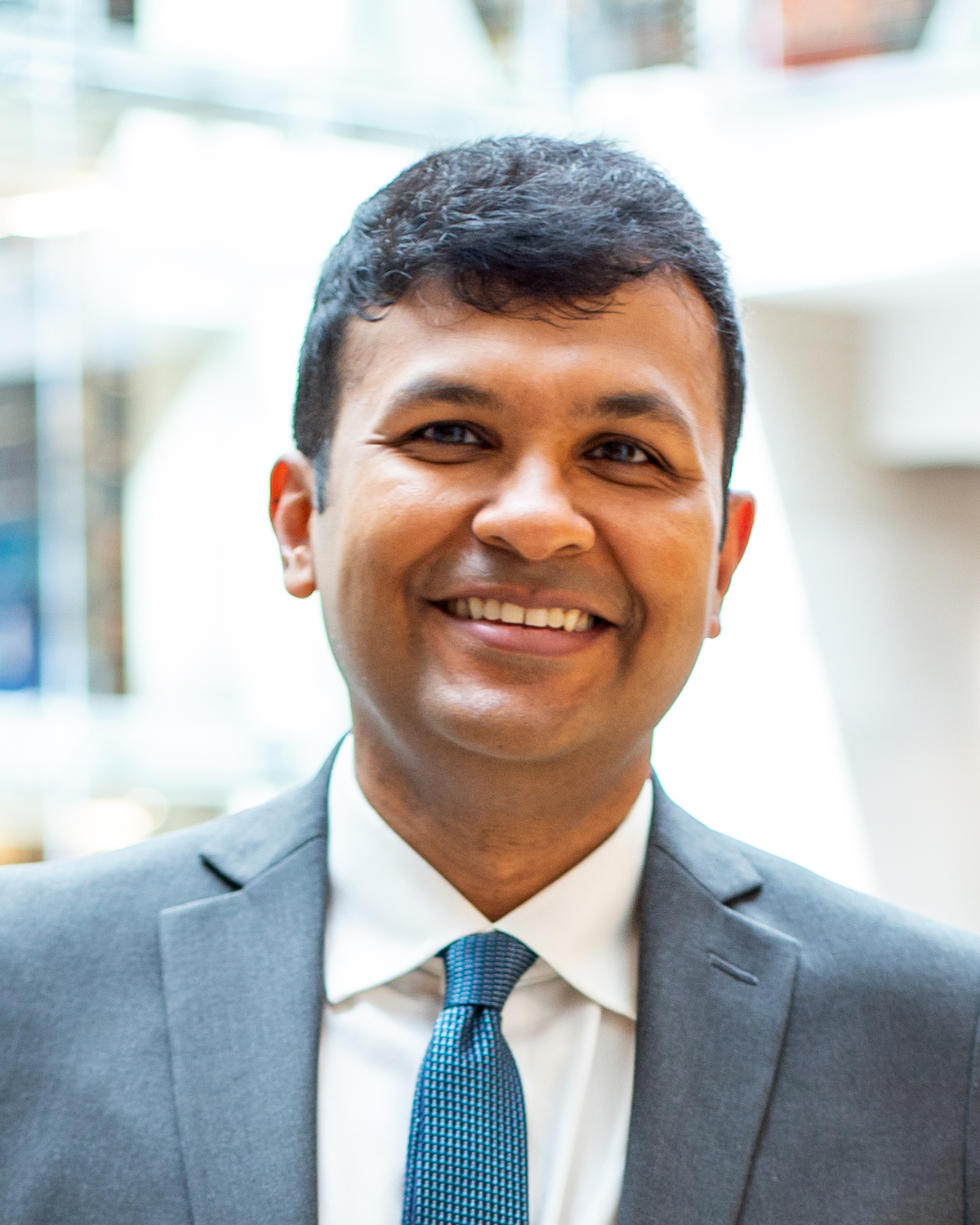
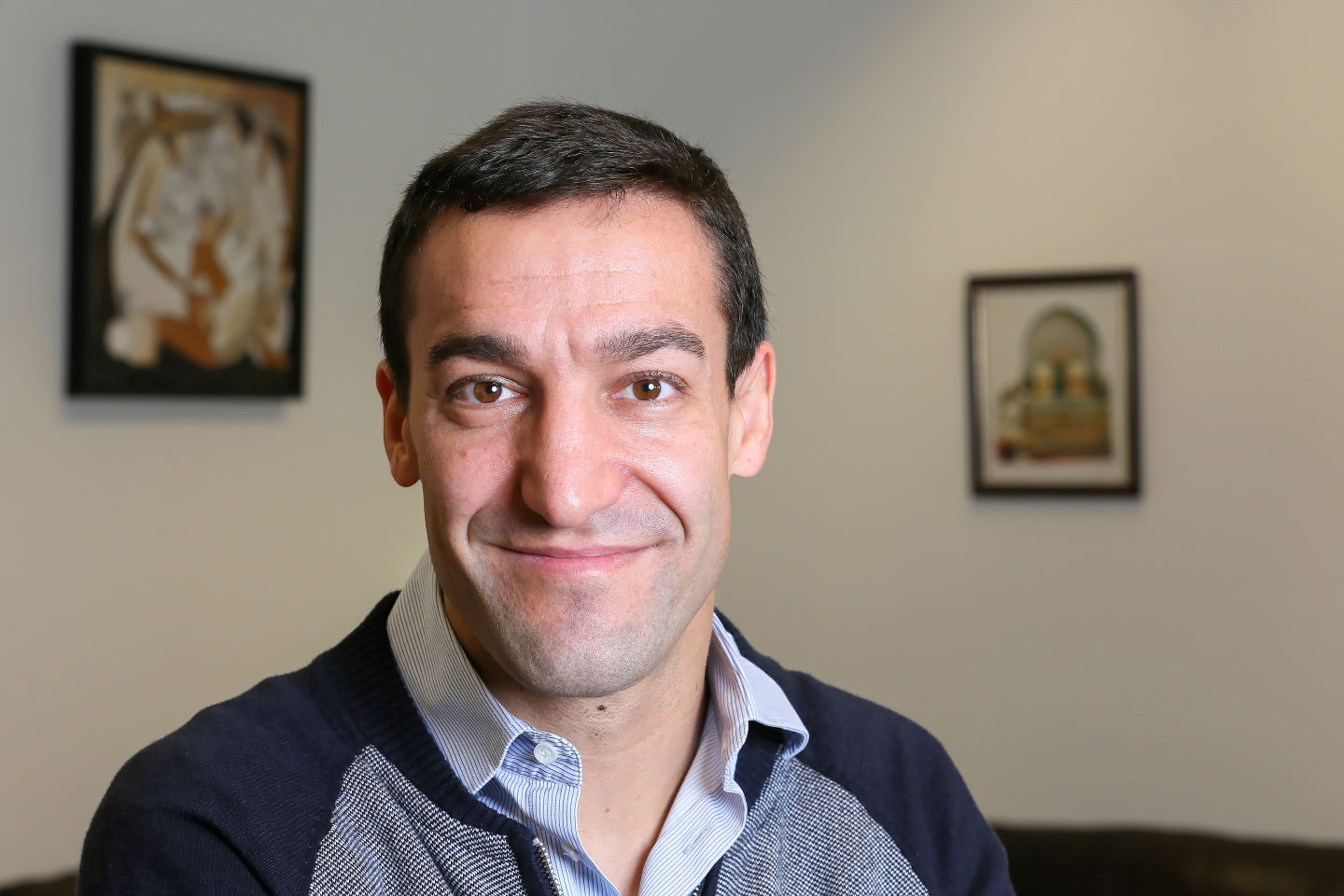
Prof. P. (Paris) Avgeriou is a full professor of Software Engineering at the Faculty of Science and Engineering , University of Groningen (RUG). His research focuses on software architecture , technical debt management , and self-adaptive systems through empirical studies and industrial collaborations. His work explores architectural decision-making using financial investment models, machine learning for debt detection, and dependency analysis in software systems. Recent projects include SDK4ED for energy-efficient embedded systems and DebtViz for debt visualization. Key article trends include technical debt lifecycle analysis (2023-2025), self-adaptive systems (2025), and modular architecture challenges (2024). Keywords span Computer Science , Machine Learning , and Software Systems . As an ancillary academic activity , he serves as editor for the Journal of Systems and Software (Elsevier). His collaborations extend to institutions in the Netherlands, Brazil, and Italy, with research outputs appearing in IEEE and ACM venues.
Arnab Nandi is a Professor in the Department of Computer Science & Engineering at The Ohio State University. His work bridges human interaction with data infrastructure, focusing on database systems, LLM-augmented analytics, and immersive query interfaces. Education: PhD in Computer Science & Engineering from the University of Michigan Leadership: Co-founder of OHI/O Hackathon Program and STEAM Factory interdisciplinary network Research spans human-in-the-loop data analytics , vibe querying (natural language + gestural interfaces), LLM integration into education, and climate response systems . Key projects include Omni (multimodal exploration), GestureDB , and Icarus (clinical pipelines). Recent publications analyze LLM-driven query stacks (HILDA 2025), video analytics (SIGMOD 2022), and data sunglasses for cognitive limits (HILDA 2025). Awards include NSF CAREER Google Faculty Research Award IEEE TCDE Early Career Award ACM Distinguished Member Advises students in database innovation , with alumni at Amazon, AWS, Roblox, and Meta. Teaches CSE 3241 (Database Systems), CSE 5889 (Software Startups), and CSE 5242 (Advanced Databases).
Eva Blomqvist serves as an Assistant Professor in the Department of Computer and Information Science (IDA) at Linköping University, Sweden. She is actively affiliated with the MDA laboratory within the Human-Centered Systems (HCS) division, focusing on critical-domain decision support systems. Her research centers on Semantic Web technologies and ontology engineering, with specialized expertise in ontology design patterns for security and crisis management applications. She pioneered the eXtreme Design methodology for agile ontology development and contributed foundational work on ontology testing frameworks, bridging theoretical knowledge representation with real-world operational systems. Analysis of her 2009-2016 publications reveals a progressive research trajectory from foundational pattern formalization to practical engineering methodologies. Her work consistently emphasizes reusable design patterns, validation techniques, and human-centered implementation within semantic technologies, establishing her as a key contributor to ontology engineering standards. No scientific awards were documented in the source material. While student advising and grant details remain unspecified in available records, her collaborative projects indicate active research leadership in ontology development. As a core member of IDA's MDA lab (HCS division), she contributes to human-centered decision analytics research, particularly developing ontology-driven support systems for high-stakes security and crisis scenarios through projects like Networked Ontologies.
Dr. Shabnam Sadeghi Esfahlani is an Associate Professor in Robotics at the School of Engineering and the Built Environment, Anglia Ruskin University , where she serves as Deputy Leader of the BORI research group and leads the Automation & Robotics MSc program. Her interdisciplinary expertise spans mechatronics, artificial intelligence, virtual reality, and serious games , with a focus on applications for rehabilitation, medical training, and autonomous systems . As a Chartered Engineer and Senior Fellow of the Higher Education Academy , she has secured significant funding from Innovate UK, Horizon 2020, and GCRF , with grants exceeding £3 million. Education PhD in Mechanical Engineering, Anglia Ruskin University BSc (First Class) in Statistics & Mathematical Science, Shahid Beheshty University Her research integrates AI with robotics for societal impact, exemplified by the open-source SROBO ground robot and projects like Rehabgame and the Assistive Feeding Robot . She has published over 45 peer-reviewed articles and contributes to academic communities as a journal guest editor and conference organizer . Key collaborations include IET, IMechE, and the Nuffield Foundation as a mentor for young students. Scientific Awards & Recognitions: Chartered Engineer (CEng), Engineering Council UK Senior Fellow (SFHEA), Higher Education Academy Student-Voted 'Made a Difference Award' (2018) Post-Graduate Certificate in Higher Education
Daniel Livingstone is a researcher at The Glasgow School of Art (GSA) specializing in the application of games and 3D technologies to enhance learning and public engagement. His work spans medical visualization, heritage interpretation, and broader educational technology domains. Current PGR supervisee: Shaojie Ni (AR & Gamification in Museums) Email: D.Livingstone@gsa.ac.uk Research Themes : Serious games, virtual reality, 3D anatomical modeling, disease education, digital heritage preservation, and AI-driven simulations. Highlights include AR tools for rheumatology engagement, VR applications in diabetes management, and digital reconstructions of historical surgical instruments. Article Trends : Focus on merging immersive technologies with healthcare education, heritage storytelling, and interdisciplinary applications of game engines. Recurring keywords: Augmented Reality , 3D Visualization , Medical Education , Public Health , Virtual Environments .
Matias D. Cattaneo is a Professor in the Department of Operations Research and Financial Engineering at Princeton University , with affiliated roles in the School of Public and International Affairs , Economics Department , Latin American Studies Program , Data-Driven Social Science , AI at Princeton , and Center for Statistics and Machine Learning . He serves as an Amazon Scholar and collaborates with global organizations. Education : Ph.D. in Economics (2008) and M.A. in Statistics (2005) from UC Berkeley, Master in Economics (2003) from Universidad Torcuato Di Tella, Licentiate in Economics (2000) from Universidad de Buenos Aires. Research focuses on interdisciplinary challenges in social, behavioral, and biomedical sciences, combining econometrics, statistics, data science, and causal inference. His methodological work includes regression discontinuity designs, synthetic control methods, and local polynomial estimation, with applications to decision-making under uncertainty. Scientific recognition : Elected Fellow of the American Statistical Association Elected Fellow of the Institute of Mathematical Statistics Elected Fellow of the International Association for Applied Econometrics Elected Member of the International Statistical Institute Software contributions include R packages rdhte , scpi , and lpcde , freely available on GitHub. His GitHub activity includes 344 contributions in the last year, with active repositories on regression discontinuity and synthetic control methods.
Dr. Jaswinder Lota is a Reader in Engineering at the University of East London , School of Architecture, Computing and Engineering, Department of Engineering & Construction. He is also a Visiting Academic at University College London’s Department of Electronic and Electrical Engineering, and a Chartered Engineer with extensive industry and academic experience. Education: BSc BEng MEng PGCert HE PhD Research Interests: Dr. Lota specializes in signal processing, circuits and systems, wireless communication, and their applications in radar systems (weather/military), low-power sustainable networks beyond 5G/6G (robotics, automation, healthcare), and electronic technologies for hydrogen propulsion. His work integrates AI-driven channel modeling and impulsive noise analysis. Scientific Awards: IEEE CAS Society Certificate of Appreciation (2019) Grants and Collaborations: He has secured significant funding, including a £2.5K International Research Collaboration Award (2016), £2.5K Research Internship Award (2015), £76K Impact Grant (2014), and a £7M MoD-funded project (1999-2004). Collaborators include UCL and NYU. Leadership: Dr. Lota leads the Smart Cities Research group at UEL and contributed to the REF 2021 submission. He has served as Associate Editor for IEEE TCAS I and Guest Editor for multiple IEEE journals.
Timothy Menzies is a full Professor in the Department of Computer Science at North Carolina State University's College of Engineering. He serves as the director of the Irrational Research lab (mad scientists r'us) and holds editorial positions as editor-in-chief of the Automated Software Engineering journal and associate editor for IEEE Transactions on Software Engineering. With over 300 publications and more than 24,000 citations, Menzies is a globally recognized leader in software engineering research. Menzies' research focuses on developing computer systems that make optimal decisions with minimal data, specializing in artificial intelligence, intelligent agents, data sciences, analytics, and software engineering. His pioneering work in data-driven, explainable, and minimal AI for software systems has redefined defect prediction, effort estimation, and multi-objective optimization. He is particularly known for his contributions to empirical software engineering, emphasizing transparency and reproducibility. As the co-creator of the PROMISE repository, he helped establish modern empirical software engineering by demonstrating that small, interpretable AI models can outperform larger, more complex ones. Menzies' recent publications reveal several key trends in his research: a growing emphasis on ethical considerations in AI deployment, particularly in sensitive domains like legal systems; continued innovation in software analytics with a focus on hyperparameter optimization tailored specifically for software engineering tasks; exploration of causal relationships in software analytics; and development of techniques that work effectively with limited data, including landscape analysis, surrogate learning, and active learning approaches. Mining Software Repositories Foundational Contribution Award (2017) Carol Miller Graduate Lecturer Award (2016) IBM Faculty Award (2016, 2017) ACM Fellow (2025) ASE Fellow (2024) IEEE Fellow Professor Menzies has advised 24 Ph.D. students throughout his career, with recent completions including Andre Motta (April 2025) and Xueqi Yang (October 2024). His research has secured over $19 million in funding from prestigious agencies including NSF, DARPA, and NASA, as well as industry partners like Meta, Microsoft, and IBM. Current grants focus on improving machine learning model efficiency, adapting empirical software engineering methods to computational science, vulnerability detection, and software analytics at scale using transfer learning across 10,000+ GitHub projects. Menzies has developed innovative approaches to help developers navigate the challenges of AI implementation while maintaining ethical standards and practical effectiveness. As director of the Irrational Research lab, Menzies leads a team focused on creating AI tools that are not only intelligent but also fair, transparent, and trustworthy. The lab's work emphasizes practical applications of AI in software engineering while addressing the human factors involved in developer-AI collaboration. Current projects include developing methods for better fuzzing with L3harris, improving vulnerability detection through smart pruning techniques, and creating AI platforms for workforce empowerment through credential gap diagnostics.
Siegfried Eggl is an Assistant Professor in the Department of Aerospace Engineering at the University of Illinois at Urbana-Champaign , with additional affiliations as an Affiliate Faculty in the Department of Astronomy (2022–present) and the National Center for Supercomputing Applications (NCSA) (2021–present). His research bridges astrodynamics, planetary defense, and celestial navigation, focusing on spacecraft trajectory optimization, asteroid deflection, and autonomous navigation systems. Education: B.S., Astrophysics, University of Vienna (2005) M.S., Astrophysics, University of Vienna (2008) M.S., Computational Physics, University of Vienna (2009) Ph.D., Astrophysics, University of Vienna (2013) Research Interests: Eggl investigates astrodynamics for planetary defense, including momentum transfer in asteroid impacts (e.g., NASA’s DART mission). He develops algorithms for celestial navigation using variable stars and studies space domain awareness to address satellite constellation interference. His work also explores dynamical systems in binary star environments and computation/data-driven approaches to orbital mechanics. Recent Publications highlight advancements in planetary defense simulations , celestial navigation algorithms , and asteroid impact dynamics . Topics include state transition matrix computation , ejecta momentum analysis , and binary asteroid system modeling . Scientific Awards: LSST Architect Award (2021) Space Foundation 2023 Space Achievement Award (DART Team) AIAA Award for Engineering Excellence (DART Team, 2023) Asteroid 2000 GT167 named 'Eggl' (2023) 2024 Engineering Council Outstanding Advisors Best paper award at AIAA Guidance, Navigation, and Control Conference (2024) Eggl contributes to professional societies such as the AIAA , American Astronomical Society (Division on Dynamical Astronomy) , and International Astronomical Union , where he co-leads the Centre for the Protection of the Dark and Quiet Sky. His APEX research group at UIUC focuses on planetary defense and astrodynamics.
Alexandre PARANT is a Researcher at the University of Reims Champagne-Ardenne, affiliated with the School of Engineering and Digital Tools. His work focuses on cyber-physical systems, digital twins, and industrial automation, with a strong emphasis on the IEC 61499 standard for control architecture development. Research Themes: Model-driven engineering for production systems Digital twin implementation IEC 61499 standard application Modular cyber-physical systems Article Trends: Alexandre's publications span model-based development, robotics synchronization, and PLC identification. His work bridges theoretical modeling with practical automation solutions, particularly in educational contexts and industrial manufacturing. Labs & Teams: LINEACT research team Collaboration with CESI Campus Reims
David Atienza is a Professor in the Department of Electrical Engineering at the School of Engineering, Swiss Federal Institute of Technology in Lausanne (EPFL), renowned for pioneering embedded systems education and research in ultra-low power computing. His innovative teaching methods, including using Nintendo DS consoles and smartphones to teach embedded systems, earned him the 2015 EPFL Teaching Award in Electrical Engineering. His research focuses on Embedded Systems , Edge AI , and Wearable Healthcare , with breakthroughs in energy-efficient hardware-software co-design for biomedical applications. Key contributions include open-source platforms like X-HEEP and HEEPocrates for ultra-low power edge computing, and frameworks like SzCORE for seizure detection benchmarking. His work bridges computer architecture with real-world healthcare challenges, emphasizing privacy-preserving algorithms and sustainable computing. Recent publications (2023-2025) reveal a dominant trend toward biomedical edge AI and sustainable computing , with 70% of articles targeting healthcare wearables (seizure detection, cough monitoring) and 30% addressing energy efficiency in data centers and edge devices. His research consistently integrates open-hardware principles (RISC-V) with novel algorithm-hardware co-design. Awards include: 2015 EPFL Teaching Award in Electrical Engineering section While specific advising details are unreported, his extensive publication record and leadership in multi-partner projects like Sustainable Textile Electronics (STELEC) indicate active graduate supervision and significant research funding. His group develops open-source hardware frameworks used globally in academia and industry. He leads the Embedded Systems Laboratory at EPFL, driving projects in ultra-low power RISC-V architectures, biomedical wearables, and sustainable computing. Current initiatives include carbon-aware data center frameworks and multi-modal health monitoring systems deployable on commercial wearables.
Isaac Lage is an Assistant Professor of Computer Science at Colby College since July 2023, specializing in interactive optimization methods for sociotechnical machine learning applications. Their work bridges technical rigor with societal impact, emphasizing accessibility in educational settings and algorithmic accountability. Harvard University PhD in Computer Science (NSF GRFP Fellow) Microsoft Research Intern (Adaptive Systems and Interaction Group) Research Software Engineer at MIT/NYU with David Sontag Research focuses on interpretable machine learning , human-AI collaboration , and healthcare equity analysis . Current projects explore sociotechnical implications of computing systems through EHR data patterns , fairness in predictive models , and user-driven interpretability frameworks . Recent publications show trends in explainable AI (2020-2022), with subfields including clinical decision support , policy summarization , and uncertainty communication . Key themes: healthcare disparities , robust interpretability , and human-in-the-loop learning . Scientific Awards: NSF GRFP Fellowship NeurIPS Spotlight Presentation (2018) AAAI HCOMP Honorable Mention (2019) As a Pedagogy Fellow at Harvard SEAS (2022-23), they contributed to curriculum design for CS 152 and CS 231 at Colby. Also earned a Teaching Certificate from Harvard's Derek Bok Center (Spring 2023).
Dr. Erma Perenda serves as Professor and Chair of Distributed Signal Processing at RWTH Aachen University, Germany, leading research within the Department of Distributed Signal Processing. Her contact details include email perenda@dsp.rwth-aachen.de and phone +49 241 80-27879, with office location at Kopernikusstraße 16, 52074 Aachen in the ICT Cubes facility. Her research spans: Distributed Signal Processing Wireless Communications Machine Learning (Deep Reinforcement Learning, Federated Learning) Modulation Classification AI-driven Network Optimization She focuses on solving real-world challenges in wireless systems including hardware impairments, channel variations, and energy efficiency through advanced AI techniques. Analysis of her 2018-2024 publications reveals consistent innovation in applying multi-agent deep reinforcement learning to wireless power allocation, developing robust modulation classification methods resilient to channel impairments, and implementing federated learning for industrial edge computing. Her work bridges theoretical machine learning with practical wireless communication constraints. Scientific Awards: No awards documented in available sources Advising and Grants: No student advisees or grant information provided Labs and Teams: Leads Distributed Signal Processing research group at RWTH Aachen University Based in ICT Cubes building focusing on wireless AI systems
Hye-Chung Kum is a Professor in the Department of Health Policy & Management at Texas A&M University, where she pioneers Population Informatics to transform digital data into evidence-based health policy solutions. Her work bridges computer science, public health, and social work to address critical data challenges in healthcare systems. Education: PhD, University of North Carolina at Chapel Hill (UNC-CH), 2004 MSW (Master of Social Work), UNC-CH, School of Social Work, 1998 MS, UNC-CH, Department of Computer Science, 1997 BS, Yonsei University, Seoul, Korea, Department of Computer Science, 1995 Research Vision: Dr. Kum develops privacy-preserving human-computer hybrid systems for cleaning and integrating chaotic real-world data (e.g., EHRs, administrative records). Her Population Informatics framework enables ethical large-scale analysis while addressing data genocide in marginalized communities through innovations like the Secure Decoupled Linkage (SDLink) system. Publication Trends: Recent work (2024-2025) reveals three dominant threads: (1) Mental health service utilization dynamics during/post-pandemic, (2) Racial/ethnic disparities in emergency department use and cancer outcomes, and (3) Ethical data sharing frameworks for vulnerable populations. Her Texas-focused studies on Medicaid payment models and AI-driven record linkage demonstrate practical policy applications. Research Infrastructure: As director of the Population Informatics Lab, she leads cross-disciplinary teams developing Privacy-by-Design tools that balance public health needs with data sovereignty—particularly for American Indian and Alaska Native communities. Her grant-funded work consistently addresses Medicaid transformation and healthcare cost drivers through secondary data analytics.
Lars Grunske is a Professor at the Department of Computer Science, Faculty of Mathematics and Natural Sciences, Humboldt University of Berlin. His research focuses on software and systems engineering, safety-critical systems, and software evolution. Department: Computer Science University: Humboldt University of Berlin Academic Rank: Professor His work spans automated software analysis, probabilistic model checking, and formal methods for complex systems. Key collaborations include researchers from Swinburne University, University of Hull, and University of Queensland. Recent publications address research software engineering, program repair, and explainability in cyberphysical systems. Professional roles include leadership in examination boards and program committees for conferences like ICSE and ASE. Contact info: Email: grunskel@hu-berlin.de Phone: +49 30 2093-41142 Address: Unter den Linden 6, Berlin