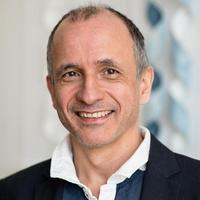
Dilian Gurov is a Professor in Computer Science at KTH Royal Institute of Technology, associated with the Digital Futures Faculty and the Division of Theoretical Computer Science. He also coordinates the Doctoral Programme in Computer Science at the CSC school. Before joining KTH in 2002, he earned a Ph.D. from the University of Victoria, Canada (1998), and worked at the Swedish Institute of Computer Science (1997-2002). His research focuses on software specification and verification, including contracts, program models, logics, and tools, as well as multi-agent strategic planning involving knowledge-based strategies in imperfect information settings. Key contributions include the CAV Distinguished Paper Award 2023 for 'Automatic Program Instrumentation for Automatic Verification' and an EASST award for 'Checking Absence of Illicit Applet Interactions: A Case Study' (2004). He leads projects funded by VR (SEFROS, ContraST) and Vinnova (AVerT2) and collaborates with industries like Scania on formal verification of C programs. His service roles span over 30 conference committees and organization roles, including PC memberships for iFM, TAP, and ISoLA. Teaching responsibilities include courses such as 'Formal Methods,' 'Program Semantics and Analysis,' and 'Knowledge in Games with Imperfect Information.' His work emphasizes practical applications of formal methods, bridging academic research with industry needs through collaborations and tool development (e.g., CVPP, ProMoVer, TriCo).
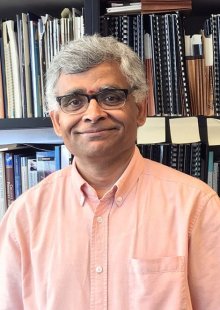
Dr. Sundaresan Jayaraman is a Professor at the School of Materials Science and Engineering, Georgia Institute of Technology, and Founding Director of the Kolon Center for Lifestyle Innovation. His research focuses on converging textiles with computing, notably pioneering the concept of 'Fabric is the Computer.' Key contributions include the Smart Shirt (Wearable Motherboard™), featured in LIFE Magazine and archived at the Smithsonian. He has secured $16M+ in research funding from NSF, DARPA, and industry. His work spans smart textiles, respiratory protection systems, and computer-aided manufacturing. Awards include the 1989 Presidential Young Investigator Award and the 2018 Textile Institute Research Publication Award. He holds ten U.S. patents and serves on editorial and advisory boards for journals like the Journal of the Textile Institute. Professional roles include leadership in National Academies committees on manufacturing and personal protective equipment. Education & Early Career: Dr. Jayaraman’s career began at Software Arts, Inc. (developers of VisiCalc) and Lotus Development Corporation, where he contributed to early spreadsheet and equation-solving software. His PhD research led to TK!Solver, a pioneering equation-solving program. Research Interests: His work bridges engineering and healthcare through smart textiles, wearable biomedical systems, and advanced manufacturing. Current projects address respiratory protection systems, wearable sensor networks, and personalized healthcare technologies. He emphasizes interdisciplinary collaboration to address societal challenges in health, security, and quality of life. Publications & Impact: Over 100 refereed papers and book chapters highlight his contributions to textile informatics, healthcare wearables, and manufacturing automation. Recent articles focus on next-generation respiratory protection devices and continuous fit monitoring systems. Past innovations include the Wearable Motherboard™ and sensor-integrated garments for vital signs monitoring. Awards & Recognition: In addition to his NSF and Textile Institute honors, he received the Georgia Technology Research Leader Award (2000) and Distinguished Alumni Award from A.C. College of Technology (2019). He is a Fellow of the Textile Institute and founding member of IEEE Technical Committees on Biomedical Wearables. Labs & Teams: Leads the Kolon Center for Lifestyle Innovation and collaborates with industry partners on textile-based computing solutions. His lab’s work on 3D-printed respiratory devices and smart garments exemplifies cutting-edge translational research.
Dr. Svetlana Yanushkevich is a Professor in the Department of Electrical and Software Engineering at the Schulich School of Engineering, University of Calgary. She is also a Full Member of the Hotchkiss Brain Institute and the Mathison Centre for Mental Health Research and Education. Her research focuses on biometric technologies, decision support systems, biomedical applications, and computational intelligence. She leads the Biometric Technologies Laboratory, developing strategies for risk assessment in biometric systems and healthcare monitoring through machine reasoning and signal processing. Education : BSc/MSc in Electrical Engineering (1989), State University of Informatics and Radioelectronics, Minsk PhD in Electrical Engineering (1992), same institution Dr. Habilitated in Technical Sciences (1999), Warsaw University of Technology Research Interests : Dr. Yanushkevich’s work spans biometric system design (e.g., gait analysis, facial attributes), decision support via probabilistic models (Bayesian networks, causal inference), biomedical applications (stroke rehabilitation, wearable sensors), and computational intelligence for data science. She emphasizes fairness, bias mitigation, and trustworthiness in AI systems, particularly in healthcare and accessibility contexts. Recent Research Trends : Her recent publications address causal modeling for accessibility barriers, UAV operator cognitive workload, and medical device optimization in radiation therapy. She explores AI ethics, stress contagion in human-robot teams, and cross-spectral biometric systems. Awards & Recognition : 2024 FEIC Fellow (Engineering Institute of Canada) 2019 Research Excellence Award (Schulich School of Engineering) 2001 Senior IEEE Membership Advising & Grants : She coordinates courses like ENCM 509 (Biometric Systems Design) and ENEL 610 (Biometric Technologies). Her research is supported by grants focusing on healthcare AI, accessibility technologies, and computational epidemiology. Labs & Collaborations : Her Biometric Technologies Lab collaborates with institutions like Hokkaido University and the IEEE Computational Intelligence Society. Projects include wearable health monitoring, decision support platforms, and AI-driven epidemiological modeling.
Professor Peter Chin is a Professor of Engineering at Dartmouth College and Director of the Learning, Intelligence + Signal Processing (LISP) Lab. He holds affiliations with the Thayer School of Engineering and serves as Associate Editor of IEEE Transactions on Computational Social Systems. His research bridges signal processing, machine learning, game theory, and differential geometry, with applications in cybersecurity, healthcare, and network analysis. Education: Bachelor of Science in Electrical Engineering, Computer Science, and Mathematics from Duke University (1993) Doctor of Philosophy in Mathematics from MIT (1998) Research Interests: Chin’s work focuses on fundamental questions at the intersection of machine learning, game theory, and signal processing. His lab explores topics like adversarial defense mechanisms, topological machine learning, and computational neuroscience. Recent projects include cybersecurity resilience modeling, medical imaging enhancements via GANs, and multi-agent reinforcement learning frameworks. Publications Trends: His most recent articles address cutting-edge challenges in cybersecurity (e.g., autonomous defense systems), medical AI (e.g., Alzheimer’s classification), and adversarial robustness. A notable 2025 focus is on quantitative resilience modeling for cyber defense, reflecting growing demand for AI-driven security solutions. Awards: Faculty Scholar Award, Duke University George Sherred III Award, Duke University Julia Dale Memorial Award, Duke University Grants & Leadership: Recipient of DARPA cybersecurity research grants Co-chair for SPIE/DSS Cyber Sensing Conference (2013–2020) Developed novel compressive sensing microscope for biological imaging LISP Lab: This interdisciplinary lab pioneers projects like nFlip (multiplayer security game models) and topological machine learning frameworks, emphasizing practical applications of theoretical advancements.
Guanrui Li is an Assistant Professor at Worcester Polytechnic Institute's Robotics Engineering Department and the director of the Aerial-robot Control and Perception Lab (ACP Lab). He holds a Ph.D. in Electrical and Computer Engineering from NYU (2024), an M.S. in Robotics from the University of Pennsylvania (2018), and a B.E. in Theoretical and Applied Mechanics from Sun Yat-sen University (2016). His research focuses on aerial robotics, including control methodologies for collaborative transportation, human-robot interaction, and perception-aware systems. Key contributions include Hybrid Perception-Aware MPC frameworks, cooperative manipulation algorithms, and simulation tools like RotorTM. Education: Ph.D., Electrical and Computer Engineering, NYU (2024) M.S., Robotics, University of Pennsylvania (2018) B.E., Theoretical and Applied Mechanics, Sun Yat-sen University (2016) Research Interests: Control and perception of aerial robots, human-robot collaboration, cooperative manipulation, and autonomous systems. Notable work addresses challenges in payload transportation, sensor fusion, and safety-critical navigation. Awards: NSF CPS Rising Stars (2023) Outstanding Deployed System Paper Finalist (IEEE ICRA 2022) NYU Dante Youla Award (2022) NYU Outstanding Dissertation Award (2024) Lab & Team: ACP Lab focuses on advancing aerial robotics through interdisciplinary research. Current projects include mixed reality interfaces for human-robot interaction and fault-tolerant control systems. Recent collaborations include workshops on Rust for Robotics (ICRA 2025) and embodied-AI for aerial systems (ICUAS 2025).
Funlade Sunmola is a Principal Lecturer in Manufacturing and Industrial Engineering at the University of Hertfordshire , affiliated with the School of Engineering and Computer Science and the Department of Engineering and Technology. He holds a PhD in Computer Science (Artificial Intelligence and Robotics) from the University of Birmingham and has nearly 40 years of professional experience across civil engineering, manufacturing, healthcare, and academia. Education: BEng (Hons) in Civil Engineering, Ahmadu Bello University MSc in Industrial Engineering, University of Ibadan MA in Accounting and Finance, Birmingham City University MPhil in Manufacturing Engineering, University of Birmingham PhD in Computer Science, University of Birmingham Research Interests: Focuses on Applied Artificial Intelligence , Sustainable and Smart Industries , and Industry 4.0 . Key areas include supply chain visibility, blockchain integration, machine learning applications in manufacturing, and virtual engineering. Leads the Duncan Calder Virtual Engineering Lab and oversees MSc Online Engineering Programmes. Grants & Projects: PI of LINK: Digital Direct Connection for Salvage Construction Materials (Circular Economy) PI of N-BICC: Cassava Innovation Deployment Co-I in Solar Cool System (So-Cool) for Smallholder Farmers Labs/Teams: Heads the Duncan Calder Virtual Engineering Lab , focusing on immersive technologies and virtual product design.
Özlem Özgöbek is an Associate Professor at the Department of Computer Technology and Informatics, Norwegian University of Science and Technology (NTNU). Her research spans artificial intelligence, machine learning, and recommender systems with a focus on privacy, fake news detection, and educational technology. NTNU - Department of Computer Technology and Informatics Her work explores multimodal fake news detection, privacy implications in recommender systems, and technology-enhanced classroom interaction. Recent publications analyze digital education trends and classroom tools. Özgöbek collaborates with international researchers and contributes to news recommendation workshops. Her projects address ethical AI, environmental sustainability, and real-time information processing.
Scott T. Doyle is an Associate Professor in the Department of Pathology and Anatomical Sciences at the Jacobs School of Medicine & Biomedical Sciences, University at Buffalo. His research integrates biomedical imaging, artificial intelligence, and computational pathology to develop quantitative tools for clinical diagnostics and anatomical modeling. Education: PhD in Biomedical Engineering, Rutgers, The State University of New Jersey (2011) BS in Biomedical Engineering, Rutgers, The State University of New Jersey (2006) Optical Microscopy & Imaging in the Biomedical Sciences, Marine Biological Laboratory (2014) hES Stem Cell Culture Training, WNYSTEM (2014) R Bioconductor Training, Roswell Park Cancer Institute (2016) Dr. Doyle’s research focuses on developing AI-driven algorithms for biomedical image analysis, particularly in digital pathology and 3D anatomical modeling. His work spans tumor segmentation, risk prediction in oral and thyroid cancers, and integration of virtual and physical anatomy in medical education. He applies machine learning, deep learning, and computational modeling to enhance diagnostic accuracy and patient outcomes. His recent publications reflect a strong trend in applying artificial intelligence to histopathology, with emphasis on active learning, 3D reconstruction, and multi-institutional data fusion. Key areas include oral cavity cancer recurrence prediction, thyroid cancer subtyping, and computational modeling of surgical margins and anatomical structures. Scientific Service and Recognition: Reviewer for NIH SPORE grants Peer reviewer for journals including Medical Image Analysis , BMC Bioinformatics , IEEE Transactions on Biomedical Engineering Program Committee and Session Chair, SPIE Medical Imaging: Digital Pathology (2016–present) Member, Graduate Program Steering Committee, Pathology & Anatomical Sciences Mentor, McNair Scholarship and CSTEP programs for underrepresented students Dr. Doyle has secured significant research funding as Principal Investigator on NIH and CTSI grants, including a $2M+ NIH grant for predicting oral cancer recurrence. He has also contributed to educational innovation through hybrid anatomy curriculum development and AI training for pathologists. He leads the 'Atoms to Anatomy' research initiative and is active in strategic planning at the Jacobs School. Laboratories and Collaborative Teams: Dr. Doyle collaborates with the Center for Computational Research (CCR) and is involved in the Structural Sciences Learning Center (SSLC). He has led projects with teams at Ibris, Inc., Veterans Affairs Hospital, and Mount Sinai School of Medicine.
Dr. Qiteng Hong is a Reader in the Department of Electronic and Electrical Engineering at the University of Strathclyde, Faculty of Engineering. He holds a BEng (Hons) and PhD from the same institution and is a leading researcher in power system protection and control for renewable-dominated grids. He is Deputy Director of the MSc in Electrical Power and Energy Systems and a member of the Steering Committee for the Joint MSc with Hong Kong University of Science and Technology (HKUST). BEng (Hons), Electronic and Electrical Engineering, University of Strathclyde, 2011 (Top Graduate of the Year) PhD, Electrical Engineering, University of Strathclyde, 2015 (fully funded by National Grid) His research focuses on novel solutions for monitoring, protection, and control of future power systems, particularly those with high renewable penetration. Key areas include wide-area monitoring using synchronized measurements, protection of converter-dominated systems, fast frequency response in low-inertia networks, and digital twin-based real-time control. His work contributes to UN Sustainable Development Goals in clean energy and climate action. Dr. Hong has published over 110 research outputs, including 59 journal articles. His recent publications (2025) emphasize fault detection and arc suppression in active distribution networks using advanced converter topologies and signal processing techniques. Themes include traveling wave analysis, Hough transform, synthetic zero-sequence signals, and machine learning for frequency prediction, reflecting a strong trend toward intelligent, data-driven power system protection. Gold Medal, 49th International Exhibition of Inventions Geneva (2024) IET Best Paper Award (DPSP APAC 2025) Best Paper Award, IEEE APAP (2019) Principal’s Award Runner Up, University of Strathclyde (2024) Students' Choice Award (2021) British Renewable Energy Awards – 'Highly commended' (2018) IET Prize for Academic Excellence (2011) John Moyes Lessells Scholarship (2013) Shortlisted for Best Innovation Award, Scottish Renewables (2018) Dr. Hong has led or participated in over 50 research and KE projects, securing £11M in funding (PI on £2.26M). He leads a team of 10 researchers, including 5 PhD students, and has developed the LGMVP platform—the UK’s first online tool of its kind. He serves on the University Senate, is a guest editor for 5 journal special issues (Co-Guest Editor-in-Chief for a special issue on zero-carbon power systems), and has delivered teaching across 9 modules. He has been PI or Co-I on major projects such as SETTLE-INSIGHT (NIA), Shell-iCase, and NGET SIF ALPHA. He leads an active research group focused on smart grid protection and digital twin technologies. He is the main developer of four prototype software tools and mentors a team of PhD students and research associates. His lab collaborates with industry partners like SSE, National Grid, and Shell, and he is a key figure in international initiatives through IEEE and CIGRE.
Theresa Scharl-Hirsch is a Senior Scientist and Deputy Scientific Director at the Core Facility Bioinformatics, University of Natural Resources and Life Sciences, Vienna (BOKU). She holds concurrent appointments at the Institute of Statistics, BOKU, and has extensive experience in bioprocess modeling, machine learning, and statistical computing. Her work bridges biochemical engineering with advanced data science methodologies. Her research focuses on real-time monitoring of biopharmaceutical processes, clustering of high-dimensional data (particularly RNA sequencing), and application of explainable machine learning techniques. She has developed statistical models for process optimization and quality prediction in antibody capture and protein purification, with a strong emphasis on industrial implementations using R programming. Key trends in her publications include three-way data analysis, matrix-variate Gaussian mixture models, and permutation-based variable importance methods for deep learning architectures. Her work spans bioprocess engineering, bioinformatics, and industrial data science applications.
Professor Peter Smith serves as the Head of School for the School of Built Environment at the University of Technology Sydney (UTS). With extensive expertise in project cost management and digital construction technologies, he leads academic initiatives focused on addressing global challenges in construction project delivery, cost overruns, and housing affordability. His leadership extends to international professional organizations in the field of cost engineering and quantity surveying. Professor Smith specializes in international research into Project Cost Management practices and the implementation of digital technologies such as Building Information Modelling (BIM) in the construction industry. His research primarily focuses on addressing the global problem of project cost overruns and extends to housing affordability through project life cycle costing applications. His work has significant implications for measuring the long-term cost of housing and understanding its societal impacts. He teaches across multiple domains including project management, procurement and contract management, project cost management, project risk management, and professional practice. His recent research outputs demonstrate a clear trend toward integrating artificial intelligence and computer vision technologies with traditional construction management practices. The most recent publications focus on deep learning applications for construction progress monitoring, particularly for indoor construction elements. This represents a shift toward more automated, data-driven approaches to construction management that complement his longstanding work on international standards for project cost management and BIM implementation strategies across different global contexts. Professor Smith has received numerous prestigious awards for his contributions to the field: DAB Outstanding Academic Leadership Award (2020, 2021, 2022) South American Cost Engineering Award (2016) Distinguished International Fellow Award (2016) ICEC Chair Award for significant global contribution (2016) AIQS Academic Teaching & Research Award - Runner Up (2014) Multiple PAQS Best Academic Paper Awards (2010, 2013) Professor Smith actively supervises Masters Research and PhD students through the University of Technology Sydney. His funded research projects include "International Project Cost Management Practices," "Digital Technologies Implementation in the Construction Industry," "Project Management," "Housing Affordability Measurement," and "Life Cycle Costing." These projects have received support from various organizations including Beverly Homes Pty Ltd, Leighton Holdings, and the RICS Education Trust, with recent funding extending through 2028. As Secretary-General of the International Cost Engineering Council and a Distinguished International Fellow, Professor Smith maintains strong connections with global professional bodies. He is also a Fellow of the Royal Institution of Chartered Surveyors and the Australian Institute of Quantity Surveyors. His work bridges academic research with industry practice, particularly through his role as an industry expert providing advisory and expert witness services for construction litigation matters.
Dr Zhe Wang is a Senior Lecturer at the School of Information and Communication Technology, Griffith University, focusing on artificial intelligence, knowledge graphs, and semantic technologies. He earned his PhD in Computer Science from Griffith University (2011) and previously worked as a Research Fellow at the University of Oxford (2011-2013) on ontology-based systems. Research: Specializes in knowledge graph construction, rule mining for explainable AI, and integrating machine learning with logical reasoning. Led development of the scalable RLvLR rule-mining system and contributed to the HermiT ontology reasoner. Teaching: Instructs undergraduate and postgraduate courses including Introduction to Artificial Intelligence, Secure Development Operations, and Software Engineering Fundamentals. Grants: Funded by Australia's Economic Accelerator Ignite Grant (2025) for AI-driven marine life survey systems and Office of National Intelligence projects (2021-2022). Publications: Active in top venues like AAAI, ICASSP, and ISWC, with recent work on temporal knowledge graph reasoning, auction design algorithms, and neurosymbolic AI systems.
Nita Dragoe is a Professor at Université Paris-Saclay, affiliated with the Institut de Chimie Moléculaire et des Matériaux d'Orsay (ICMMO - UMR 8182) . She co-leads the Synthèse, Propriétés et Modélisation des Matériaux research group, focusing on advanced functional materials synthesis and characterization. PhD (1996): Université Paris Sud XI & Université de Bucarest (Advisors: Alexandre Revcolevschi, Eugen Segal) HDR (2003): Université Paris-Sud Her research spans high-entropy materials , thermoelectric oxides , and functional ceramics , with recent work on entropy-stabilized pyrochlores, superionic conductors, and pH sensor development. Key article trends highlight oxide synthesis , magnetic properties , and disorder-engineered materials . Scientific Awards : CREST Fellow (1997-2000) JSPS Fellow (2021) She has secured grants including the ANR-funded project NEO and maintains active collaborations across France, Japan, and China, with visiting professorships at Beihang University (2017-2022) and University of Tokyo (2019, 2005).
Matti Minkkinen is a Docent at the Turku School of Economics (University of Turku) and a Postdoctoral Researcher in Information Systems Science at the Department of Management and Entrepreneurship. His work bridges futures studies with ethics, privacy, and socio-technical systems in digital transformation. Recent roles focus on responsible AI governance and foresight methodologies. University: University of Turku School: Turku School of Economics Department: Department of Management and Entrepreneurship His research explores how digital technologies reshape organizational practices, emphasizing Futures Consciousness as a human capacity. Key themes include responsible AI , privacy protection , and causal layered analysis in scenario planning. Publications highlight ethical governance frameworks and EU policy debates. Recent articles address generative AI ethics , ML system integration , and AI auditing across journals like Communications of the Association for Information Systems and Information and Management . Topics cluster around socio-technical systems, digital ethics, and institutional adaptation to AI. Teaching and editorial roles include co-curating student research collections at Finland Futures Research Centre. No explicit scientific awards are listed, but his work contributes to foresight theory and practice.
Bekir Taner Dincer is a Professor at Muğla Sıtkı Koçman University, Faculty of Engineering, Department of Computer Engineering. He has been actively teaching courses including Web Development and Programming, Artificial Intelligence, Data Mining, Natural Language Processing, and Senior Design Projects for multiple academic years including the upcoming 2025-2026 term. Dr. Dincer earned his Bachelor's degree in Statistics from Middle East Technical University (1988-1993), followed by a Master's degree in Statistics and Computer Science from Muğla Sıtkı Koçman University (1996-1998), and completed his Doctorate in Computer Science from Ege University's International Computer Institute (1998-2004). His research focuses on Information Retrieval, Natural Language Processing (particularly for Turkish language), and related computational linguistics areas. His work addresses challenges in Turkish language processing including morphological analysis, constituent chunking, information retrieval systems, and term weighting methods. He has made significant contributions to adapting information retrieval techniques for agglutinative languages like Turkish, which presents unique challenges compared to Indo-European languages. His publication record shows a consistent research trajectory with recent work (2013-2018) focusing on risk-sensitive evaluation methods, learning to rank, entity recognition in big data, and specialized approaches for Turkish language processing. His research often bridges theoretical information retrieval concepts with practical applications for Turkish text processing. Dr. Dincer has served as editor for prestigious publications including the International ACM SIGIR Conference proceedings and ACM Transactions on Information Systems journal, demonstrating recognition of his expertise by the international research community. He has supervised numerous graduate students, guiding PhD and Master's theses on topics including unsupervised syntactic disambiguation for Turkish, statistical analysis of word roots and affixes, and information retrieval system design. His research has been supported by TÜBİTAK projects including the Design of a Statistics-Driven Selective Information Retrieval System (2015-2018) and the Design of a Statistical Information Access System (2011-2014).