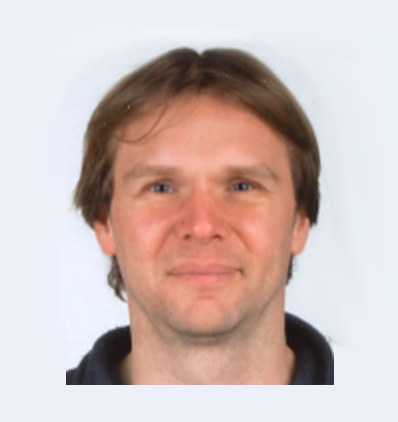
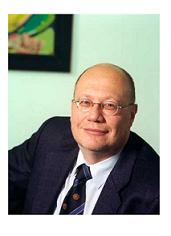
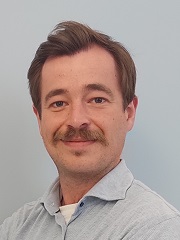
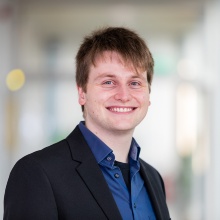
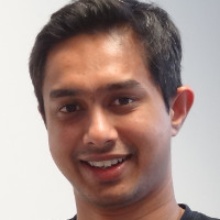
Daniel Pflugfelder is a Researcher at the Plant Sciences (IBG-2) department of the Institute of Bio- and Geosciences at Forschungszentrum Jülich. His work focuses on developing non-invasive imaging tools to study plant root systems, carbon dynamics, and water uptake using Magnetic Resonance Imaging (MRI) and Positron Emission Tomography (PET) . He is based in Jülich, Germany, and his research supports sustainable agriculture and bioeconomy goals. Expertise: Plant research, Magnetic Resonance, 3D Data analysis, Positron Emission Tomography, Root research His research integrates molecular, physiological, and ecological approaches to analyze plant-environment interactions and develop technologies for alternative biomass utilization. He has contributed to plant phenotyping tools like phenoPET and phenoVein , enabling precise studies of root architecture, carbon allocation, and water fluxes in crops such as sugar beet, maize, and wheat. Daniel's publications emphasize multimodal imaging techniques , particularly MRI-PET co-registration , to explore heterogeneous carbon distribution, root hydropatterning, and symbiotic interactions in legumes. His work addresses challenges in quantifying root water uptake, soil-root interactions, and climate adaptation strategies in agriculture. Key applications of his research include improving resource efficiency in crops and understanding plant responses to drought stress and warming scenarios. He has also contributed to computational tools for image processing and radiation therapy optimization in earlier works.
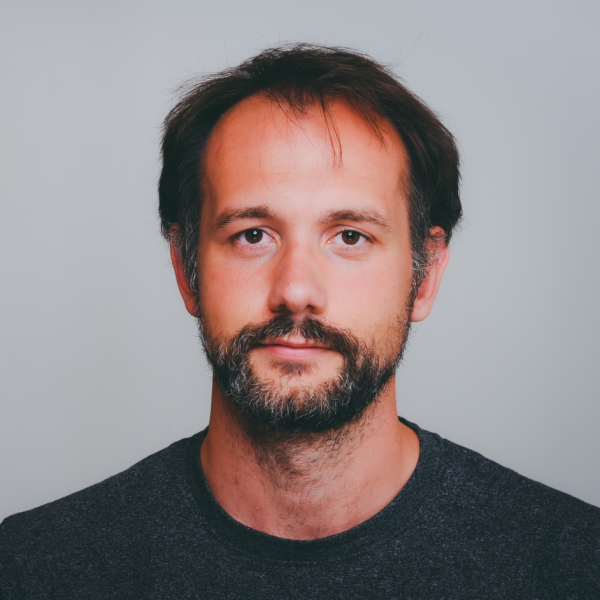
Adam Wolisz is a full Professor of Electrical Engineering and Computer Science at Technische Universität Berlin (TU Berlin), where he founded and led the Telecommunication Networks Group (TKN) from 1993 until 2018. He also served as Executive Director of the Institute for Telecommunication Systems (2001-2018), inaugural Dean of the Faculty of Electrical Engineering and Computer Science (2001-2003), and is currently an Einstein Center Digital Future (ECDF) Fellow. Since 2005 he has held an adjunct appointment at the University of California, Berkeley, and is presently a visiting researcher at the Berkeley Wireless Research Center. Education Dipl.-Ing. in Control Engineering, Silesian Technical University, Gliwice (1972) Dr.-Ing. in Computer Engineering, Silesian Technical University, Gliwice (1976) Habilitation in Computer Engineering, Silesian Technical University, Gliwice (1983) Research Interests Professor Wolisz has spent five decades advancing the architectures, protocols, and performance evaluation of communication networks. His current work centres on mobile multimedia communication , wireless sensor networks , and cognitive/cooperative wireless systems . Methodologically, he combines rigorous analytical modelling with large-scale simulation and real-world experimentation, frequently within the open testbeds run by TKN. A cross-cutting theme is Quality of Service (QoS) —from early work on real-time operating systems and industrial field-buses to recent studies on QoE-driven adaptive video streaming and ultra-reliable low-latency vehicular communications. His group is internationally recognised for contributions to reinforcement-learning-based MAC scheduling , spectrum sharing between LTE-U and WiFi , and energy-efficient protocol design . Publication Impact & Trends Across more than 200 refereed publications, two clear trajectories emerge: (1) a continuous evolution from wired network modelling (WDM optical networks, ATM, early Internet QoS) toward fully wireless and mobile settings, and (2) an increasing reliance on machine-learning techniques to tackle uncertainty and dynamics in dense, heterogeneous wireless environments. Recent papers exploit deep reinforcement learning for scheduling, federated learning for context-aware services, and transfer learning for realistic mobile-app testing. Scientific Awards & Recognition Best Paper Awards: IEEE WoWMoM 2020, IEEE INFOCOM CNERT 2019, ACM MSWiM 2017, IEEE EW 2017, IFIP WD 2017, IEEE EW 2009 Best Demo Award: ACM/IEEE IPSN 2014 (EVARILOS benchmarking platform) Senior Member, IEEE & IEEE ComSoc; Member, ITG (VDE); Steering Board, GI/ITG KuVS Doctoral Advising, Projects & Funding Since establishing TKN in 1993, Professor Wolisz has supervised over 60 completed PhD dissertations . Current and recent funding includes the DFG Collaborative Research Centre 1053 “MAKI”, DFG priority programme “SmartSynch”, EU projects (e.g., Fed4FIRE+, H2020 5G-Infrastructure), and industrial collaborations with Deutsche Telekom, Nokia, and Rohde & Schwarz. The group operates large-scale indoor and outdoor testbeds (FIT/IoT-LAB Berlin, TKN campus testbed, EVARILOS benchmarking framework) that are open to external researchers. Laboratories & Teams At TU Berlin, Professor Wolisz heads the Telecommunication Networks Group (TKN) , comprising more than 25 researchers (post-docs, PhD candidates, MSc students, technical staff). TKN maintains four major labs: the Wireless Communication Lab (software-defined radios, mmWave, IEEE 802.11ax/ay), the Sensor Networking Lab (IoT, 6TiSCH, energy harvesting), the Networking Testbed (optical backhaul, network softwarisation), and the QoE & Multimedia Lab (adaptive streaming, immersive media). Multiple spin-off companies have emerged from TKN research, most recently “Wolisz Technologies” (founded 2020) commercialising AI-driven Wi-Fi optimisation.
Professor Lloyd Montgomery is a faculty member in the Department of Informatics at Universität Hamburg. His research focuses on software engineering, requirements engineering, and natural language processing (NLP). He holds the academic rank of Professor and is actively involved in advancing empirical methods for requirements quality, support ticket analysis, and open-source community dynamics. Key research interests include improving software documentation strategies, recovering legacy requirements artifacts, and applying Bayesian methods for causal inference in software quality. His work bridges theoretical frameworks with practical applications, such as predictive modeling for customer support ticket escalations and NLP-driven tools for open-source onboarding. Montgomery collaborates on interdisciplinary projects, including the NLP4RE workshop series, and contributes to industry partnerships like IBM’s ecosystem analysis. His publications emphasize reproducibility, artifact recovery, and evidence-based practices in software engineering. Contact details: Email | Office: Vogt-Kölln-Str. 30, Room D 213, Hamburg
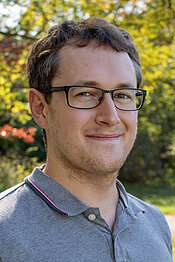
Jan Teichert-Kluge is a Researcher at the Department of Statistics within the University of Hamburg Business School at the University of Hamburg. His work focuses on Econometrics, Machine Learning, and statistical software development. Education: Master of Science in Industrial Engineering (2023) Bachelor of Science in Industrial Engineering (2020) Research Interests: His research spans causal inference methodologies, AI-driven demand analysis, multimodal data processing, and software tools for statistical analysis. He explores applications of deep learning in business contexts and develops foundation models for complex data integration. Recent Work Trends: Recent publications emphasize causal effect estimation with multimodal data and AI applications in demand analysis, reflecting a focus on bridging econometric theory with modern machine learning techniques.
Christian Kirches is a full professor at the Institute for Mathematical Optimization within the Carl-Friedrich-Gauß-Fakultät (Faculty of Mathematics, Technische Universität Braunschweig). His research focuses on nonlinear optimization , mixed-integer optimal control , and robust optimization for dynamic systems. He was awarded the Klaus-Tschira prize (2011) for public science communication and the Hengstberger prize (2014) for junior researchers, and received an ERC Consolidator Grant (2022) for his work on optimization under uncertainty. Alumni of Heidelberg University (Diploma, Doctorate, Habilitation) Former resident associate at Argonne National Laboratory and postdoctoral appointee at the University of Chicago Leader of a junior research group (2013–2017) at Heidelberg University His recent publications highlight advancements in mixed-integer nonlinear programming , real-time control systems , and optimization for sustainable energy and transportation . He collaborates with researchers on projects like wind farm control, hydrogen aviation networks, and chromatography process optimization. His methodological work on sum-up rounding , trust-region algorithms , and combinatorial integral approximation has been published in journals such as SIAM Journal on Optimization, Mathematical Programming, and IEEE Control Systems Letters. Kirches also serves as area coordinator for Optimization Online and was associate editor for OR Spectrum (2022–2024). Scientific Awards: Klaus-Tschira Prize (2011) Hengstberger Prize (2014) ERC Consolidator Grant (2022) He is an elected member of the COIN-OR initiative and contributes to open-source optimization software. His lab at TU Braunschweig develops algorithms for dynamic systems under uncertainty, with applications in energy management, autonomous traffic, and industrial processes.
Seyed Hossein HAERI is a Post-Doctoral Research Fellow at the Louvain Verification Lab (LVL) , affiliated with the School of Engineering (École Polytechnique de Louvain) and the ICTEAM Center at UCLouvain. His work focuses on model checking security properties of JavaScript code for cloud environments under the SeCloud project . He has held prior roles including Post-Doctoral Research Fellow at PLDC (UCLouvain), Research Assistant at TU Hamburg, R&D Software Architect at MuSemantik Ltd., and Research Fellow at Heriot-Watt University. His expertise spans formal methods, programming languages, and cybersecurity. Affiliations: LVL, UCLouvain, PLDC, ICTEAM Previous Institutions: TU Hamburg, Heriot-Watt University, Sharif University of Technology Research interests include verification techniques, security analysis, and model-driven approaches. His work bridges theory and practice in software systems reliability. Talks and tools related to formal methods are part of his contributions. Labs/Teams: Louvain Verification Lab (LVL), previously PLDC group. No specific grants listed, but active in SeCloud project research.
Sandro Speth is a Researcher and Doctoral Researcher at the University of Stuttgart's Institute of Software Engineering, focusing on cross-component issue management in microservice architectures. He contributes to software engineering research and education, particularly in gamified platforms and agile methodologies. University of Stuttgart, Software Quality and Architecture Group Doctoral Researcher in Software Engineering Active in teaching and supervising programming and software architecture courses His research spans software architecture analysis, issue propagation in distributed systems, automated GUI testing, and educational technology innovations like gamification and AI-driven content generation. Publications address challenges in microservice management, deployment model abstraction, and scalable educational tools. Speth's teaching roles include lecturing on data structures, software development, and deploying gamified systems like Gamify-IT and IT-REX. He supervises student projects in cross-component issue management, autoscaling explainability, and microservice design.
Jajnabalkya Guhathakurta is a Researcher at the Institute of Computer Architecture and Computer Engineering within Faculty 05 of the University of Stuttgart. His work focuses on advanced materials science, computational imaging, and structural analysis. He specializes in composite materials, computed tomography (CT), and the mechanical behavior of advanced composites under various conditions. His research interests include fiber-reinforced concrete systems, interpenetrated composites, and the application of CT imaging for non-destructive evaluation of materials. He has contributed to studies on steel fiber orientation effects, Li-ion cell expansion phenomena, and data-driven material characterization. His work integrates computational methods with experimental analysis, particularly in high-resolution imaging and dynamic material response modeling. Key areas of exploration include the potato effect in Li-ion cells, bubble dynamics in chemical flows, and the optimization of composite material properties through advanced fabrication techniques. His publications span interdisciplinary fields, combining mechanical engineering, materials science, and computational methodologies.
Dr. Ata Otaran is a Postdoctoral Research Fellow at the Human-Computer Interaction Lab within the Department of Computer Science at Saarland University. His work focuses on physical human-machine interaction, particularly leveraging haptics for virtual reality and educational interfaces. Prior to this role, he completed his PhD in the Robotics Group at Queen Mary University of London's School of Electrical Engineering and Computer Science, researching ankle gesture-based locomotion techniques for virtual environments. He holds an M.Sc. and B.Sc. in Mechatronics Engineering from Sabanci University, Istanbul, with a minor in Mathematics. His M.Sc. thesis introduced a novel admittance-type force control device for educational purposes. Notable projects include Foot Pedal Control, Metamaterial research, the 3HANDS Dataset initiative, and the WRLKit computational design framework. His research interests span wearable robotics, metamaterials for shape-changing interfaces, and educational robotics platforms. He is affiliated with the Human-Computer Interaction Lab at Saarland University, where his work bridges theoretical advancements with practical applications in human augmentation and VR interaction. Contact him via email at otaran@cs.uni-saarland.de or visit his office at E 1.7 Room 2.05.
Dr. Holger Hennig is a Researcher in the Department of Systems Biology and Bioinformatics at the University of Rostock , Germany, with affiliations at the Imaging Platform (Broad Institute of MIT and Harvard) , USA. His work bridges machine learning and biomedical imaging to develop label-free diagnostic tools for diseases like leukemia and cardiovascular conditions. Research Focus: High-throughput imaging flow cytometry (IFC) , deep learning for cell cycle analysis, and precision medicine applications in clinical studies. Scientific Contributions: Pioneered open-source analysis pipelines for IFC data, advanced computer vision in hematology, and developed multi-omics integration methods. Awards: Amnis Travel Stipend (2016) DFG Postdoctoral Fellowships (2011, 2012) Research stipend from Boston University (2008) Otto-Haxel Award for Master's thesis (2004) Collaborations: Works with Prof. Anne Carpenter (Broad Institute), Prof. Paul Rees (Swansea University), and Prof. Fabian Theis (Helmholtz Center Munich) on machine learning and single-cell analysis projects.
Prof. Dr.-Ing. Arun Nagarajah is Chair of Product Development Processes and Data Management at the University of Duisburg-Essen's Faculty of Engineering (IPE). He holds a doctorate from RWTH Aachen University (2010) and previously worked in the automotive industry and supply sector, leading product data management and digitalization initiatives. His research focuses on digitalization in engineering processes, product lifecycle management, machine learning applications, and knowledge graph-based standards interpretation. He leads projects like the UMEK initiative on multidisciplinary engineering processes in power plant construction and has contributed to over 50 peer-reviewed publications since 2011. Education: Mechanical Engineering & Quality Management, University of Wuppertal Doctorate in Mechanical Engineering, RWTH Aachen University (2010) Research Interests: Digital twins, sustainable product design, machine learning in engineering, requirements mining from standards, and modular product development. His work bridges theoretical frameworks (e.g., knowledge graphs) with practical applications in automotive, manufacturing, and energy sectors. Grants & Projects: Led the BMWI-funded UMEK project (2015-2018), focusing on multidisciplinary engineering processes in power plants. Collaborates on initiatives like SMART Standards for machine-actionable engineering guidelines. Labs/Teams: Heads the Product Engineering Processes (PEP) research group, specializing in data-driven product development methodologies and digital transformation in industry.
Marco Aiello is a Professor and Vice Dean at the University of Stuttgart's Faculty of Computer Science, Electrical Engineering and Information Technology. He leads the Institute of Architecture of Application Systems, focusing on Service Computing and AI-driven technologies. His research spans energy systems optimization, smart grids, IoT integration, and AI planning in robotics and automation. He has contributed to frameworks for carbon-efficient computing, blockchain-based IoT security, and human-aware robotics systems. Key research areas include: Service Composition & Large Language Model Integration Energy Smart Buildings & Sustainable Data Centers Robot Task Planning & Human-Computer Interaction Decentralized Energy Markets & Peer-to-Peer Trading Recent work emphasizes: - AI planning methodologies in real-world domains - Carbon-aware scheduling for Kubernetes deployments - Multimodal LLMs for human behavior prediction Awards: None explicitly mentioned. Grants/Advising: Active in doctoral supervision and industry collaborations, though specific grants are not detailed here. Labs/Teams: Leads the Institute's work on service-oriented systems and energy-aware computing architectures.
Holger Class is an Adjunct Professor and Deputy Head of the Department at the University of Stuttgart , specifically within the Department of Hydromechanics and Modelling of Hydrosystems . His academic career includes a Diplom (1997), doctoral degree (2000), and habilitation (2008), all in engineering. Since 2004, he has held research and teaching roles at the University of Stuttgart's Institute for Modelling Hydraulic and Environmental Systems. His research focuses on fluid dynamics, porous media processes, and CO2 sequestration. Key interests include multiphase flow modeling, density-driven dissolution, and karst hydrology. He has contributed to developing numerical models like DuMux and pioneered studies on enzymatically induced calcite precipitation. Teaching includes modules on fluid mechanics, environmental fluid dynamics, and multiphase modeling in porous media. He has advised on projects involving microfluidic experiments, hydraulic simulations, and geochemical processes. Awards include the 1999 John F. Kennedy Student Paper competition first prize and the 2006 University of Stuttgart Environmental Engineering award for teaching excellence. Research Impact : His work bridges numerical modeling with experimental validation, addressing challenges in subsurface flow, CO2 storage, and geomechanical processes. Collaborations span academic and industrial sectors, emphasizing interdisciplinary solutions for environmental and energy challenges.
Robert Leppich is a Researcher at the Chair of Computer Science II (Software Engineering) at the University of Würzburg, part of the Faculty of Mathematics and Computer Science. His work focuses on Software Engineering for Applied Data Analytics and Artificial Intelligence, with a particular emphasis on Time Series Analysis, Medical Informatics, and Sport Informatics. He coordinates teaching activities such as the master's lecture 'Advanced Programming' and the practical course 'Softwarepraktikum,' both led by Prof. Samuel Kounev. Additionally, he supervises Bachelor and Master theses and provides topics for the 'Seminar Software Engineering.' Leppich's research spans interdisciplinary domains, including the development of digital therapeutics (e.g., the Axia app for managing axial spondyloarthritis), machine learning applications in healthcare (e.g., ECG classification and biomarker profiling), and wearable sensor data analysis in sports performance. His work also explores synthetic data generation, evaluation metrics for time series synthesis, and lightweight neural network architectures for forecasting. His recent publications emphasize AI-driven solutions for healthcare challenges, such as improving disease management through mobile applications and enhancing predictive analytics in sports and medicine. He has collaborated with departments like Medical Informatics at the Universitätsklinikum Würzburg and the Data Science Group, reflecting his cross-disciplinary approach to research. Leppich holds a Master's and Bachelor's degree in Computer Science from the University of Würzburg, with prior research roles at the Intex group and the Data Science research unit. His contributions bridge software engineering principles with real-world applications in medicine and sports, aiming to improve clinical outcomes and athlete performance through technological innovation.
Dr. Ugur Öztürk is a leading researcher in natural hazards, specializing in landslide dynamics and urban risk assessment. He holds a Ph.D. from the University of Potsdam (2018) and has been a postdoctoral researcher at GFZ Potsdam since 2018. He is transitioning to the University of Vienna as a project leader in 2025 while maintaining affiliation with GFZ as a visiting scientist. His work bridges geosciences, environmental policy, and urban planning, focusing on climate-driven landslide risks in tropical cities. Key roles include ERC UrbanSlide project leadership (€1.5M grant), associate editorship of Natural Hazards , and membership in the Austrian Young Academy. Education: B.Sc. Civil Engineering, Istanbul Technical University (2010) M.Sc. Civil Engineering, Politecnico di Milano (2012) Ph.D. Geosciences, University of Potsdam (2018), under the NatRiskChange graduate school Research Interests: Landslide susceptibility and risk modeling Urban expansion and disaster vulnerability Climate change impacts on hydrological hazards Complex network analysis of extreme weather events Awards: ERC Starting Grant (2024) Brandenburg Science Prize (2023) Austrian Young Academy Member (2025) Projects: UrbanSlide (2025–2030): Quantifying landslide risk in tropical cities Co-PREPARE (2020–2024): Cross-border disaster preparedness CaTeNA (2018–2020): Catastrophic natural hazards Labs/Teams: Analysis of Hydrologic Systems Group at University of Potsdam GFZ Section 2.6: Earthquake Hazards and Dynamic Risks