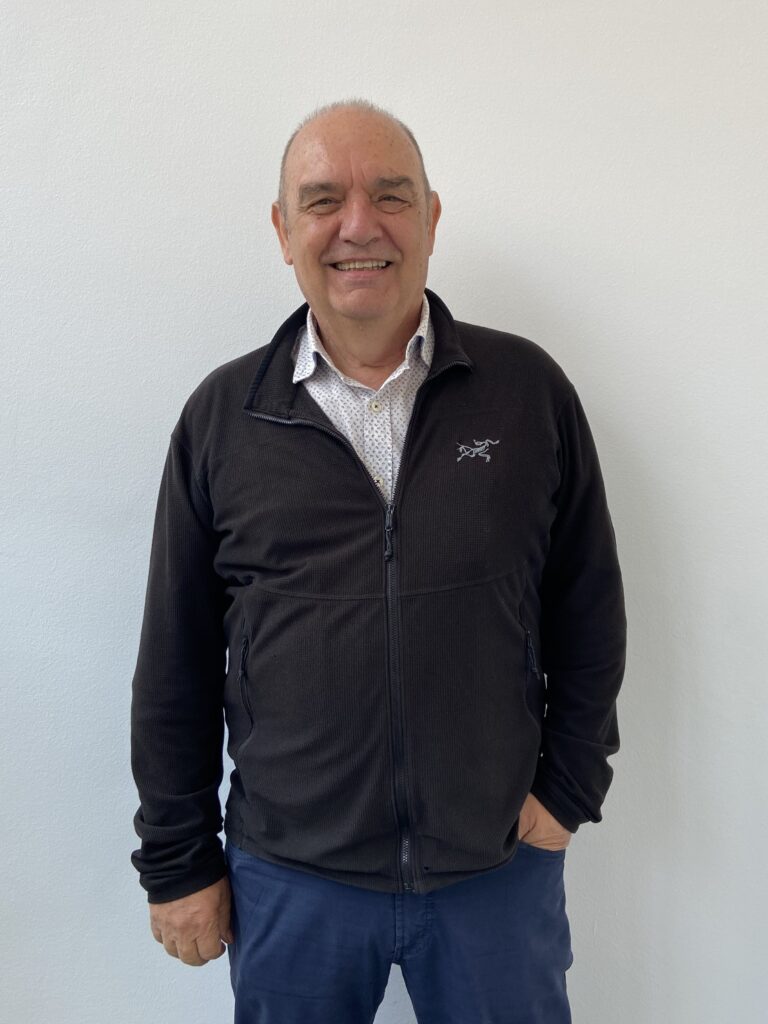
Josep Casanovas is a Full Professor at the Statistics and Operations Research Department of the Technical University of Catalonia (UPC), affiliated with the Barcelona School of Informatics. He previously served as head of inLab FIB (2012-2020) and as dean (1998-2004) and vice-rector (2006-2011) of UPC, leading strategic initiatives in university governance and ICT policies. His research focuses on Modelling and Simulation , Internet and Information Systems , and Urban Mobility . He has led projects for the European Union, including C-ROADS Spain, REMEDiAL, and ECHORD++, addressing intelligent transport, software automation, and robotic innovation. Recent publications highlight his work on agent-based simulation for urban health, deep learning applications in traffic and energy savings, and wildfire management tools . He co-directs LogiSim and coordinates the Severo Ochoa Research Excellence Program at the Barcelona Supercomputing Center (BSC-CNS).
Maria Paz Linares Herreros is a Senior Lecturer at the Universitat Politècnica de Catalunya (UPC) in the Department of Statistics and Operations Research within the Faculty of Mathematics and Statistics (FME). She is affiliated with the IMP - Information Modeling and Processing research group and inLab FIB. Her educational background includes a Licenciada en Matemáticas, a Doctorate from UPC, and a Master's in Logistics, Transportation, and Mobility. Licenciada en Matemáticas Doctorat from Universitat Politècnica de Catalunya Máster en Logística, Transporte y Movilidad Her research focuses on urban mobility , traffic simulation , and smart city technologies . She develops data-driven models for transportation systems and parking management, integrating deep learning techniques for real-time predictions. Her work addresses environmental impact assessment of traffic policies and inclusive mobility solutions . Recent publications analyze urban mobility trends through macroscopic and microscopic traffic models , deep learning applications for parking predictions, and dynamic ride-sharing systems . She explores IoT interoperability and data integration in transportation. Scientific awards include the IV International Award on Transport Infrastructure Management Research (2014). She participates in competitive R+D+I projects like ALGORAE and Virtual Mobility Lab, focusing on transportation innovation and smart city policy evaluation . She contributes to multimodal transport simulation frameworks such as CitScale and Barcelona Virtual Mobility Lab, which evaluate emerging mobility concepts and city policies using integrated modeling approaches .
Maria Dolors Costal Costa is an Associate Professor in the Department of Service and Information Systems Engineering at the Facultat d'Informàtica de Barcelona, Universitat Politècnica de Catalunya (UPC). She is a key member of the GESSI and inSSIDE research groups, focusing on software and service engineering. Her research interests include: Requirements Engineering Conceptual Modeling Model-Driven Development Non-Functional Requirements Open Source Software Ecosystems Goal-Oriented Requirements Engineering Her recent publications (2019–2024) reflect a strong focus on conceptual modeling, requirements engineering, and software quality, particularly in agile and ML-based systems. She frequently contributes to top-tier conferences like ER and CAiSE, and her work integrates empirical methods with modeling frameworks. She has received recognition for her research, including the Best Paper Award at CIbSE 2021. Her involvement in numerous competitive R&D+i projects demonstrates sustained research funding and leadership. She actively mentors and collaborates with researchers such as Javier Franch and Cristina Gómez. Her work is supported by participation in EU and national research initiatives like HORIZON 2020 and Plan Estatal de Investigación. She is involved in several research labs and teams, including: GESSI - Group of Software and Service Engineering inSSIDE - integrated Software, Services, Information and Data Engineering inLab FIB
David Fonseca Escudero is a Professor at the La Salle Technical School of Architecture within Ramon Llull University . His research focuses on Artificial Intelligence , Learning Analytics , and Generative AI in education, particularly addressing Self-Regulated Learning and Early Dropout Prevention in higher education. Lead researcher in projects like IA3T4DOR (AI & Machine Learning for dropout reduction) PI for ASPA4DOR (Academic Analytics for student profiling) Collaborator in Divintech (Robotics for autism support) His work integrates Augmented Reality and STEAM Education to enhance Student Engagement and Data Privacy in schools. Current projects emphasize GDPR Compliance and Collaborative Learning frameworks.
David Chaves-Fraga is an Assistant Professor at Universidade de Santiago de Compostela (Spain), affiliated with CiTIUS (Center for Intelligent Technologies) and a research collaborator at KU Leuven's DTAI group. His expertise lies in Knowledge Graph Construction (KGC), focusing on declarative mapping rules, data integration, and semantic web technologies. He completed his PhD at Universidad Politécnica de Madrid in 2021, researching Knowledge Graph Construction from heterogeneous data sources. Education PhD in Artificial Intelligence, Universidad Politécnica de Madrid (2016–2021) Master in Artificial Intelligence, Universidad Politécnica de Madrid (2015–2016) Bachelor in Computer Science, Universidade de Santiago de Compostela (2011–2015) Research Interests Dr. Chaves-Fraga specializes in optimizing data integration systems using declarative rules (e.g., RML), scalable KG materialization, and benchmarking tools like KROWN. He emphasizes reproducibility and sustainability in KG creation, advocating for community-driven standards. His work bridges theory and practice, addressing challenges in real-world KG adoption. Contributions He co-chairs the W3C Knowledge Graph Construction Community Group, organizes workshops like KGC and Sem4Tra, and coordinates initiatives like Open Summer of Code. His tools (e.g., SDM-RDFizer, RMLdoc) are widely used in the semantic web community. Key themes include RDF-star generation, SHACL constraint extraction, and ontology-mapping interoperability.
Joaquim Massana Raurich is a Senior Lecturer at the Department of Electrical, Electronic and Automatic Engineering , University of Girona. As a member of the Research Group in Control Engineering and Intelligent Systems (EXIT) , his work bridges Smart Cities , Energy Forecasting , and Healthcare Technology through Machine Learning and Automation Systems . Research Interests: Control Engineering, Smart Cities, Energy Forecasting, Healthcare AI Key Contributions: Development of public software for EEG-based disease detection, advanced load forecasting models, and AI-driven diabetes management systems His teaching spans Physics and Electronics , Automatic Regulation , and Control Systems at both undergraduate and master's levels. He has supervised internships and final projects while contributing to European/national projects like HIT2GAP and Pepper .
Antonio García Cabot is an Associate Professor in the Department of Computer Science at the University of Alcalá. His research focuses on artificial intelligence, educational technology, natural language processing, and mobile computing. He leads the INTELIA research group (Interaction Technologies and Artificial Intelligence Lab) and previously contributed to the PMI group (Intelligent Mobile Platforms). He earned his Doctorate in Computer Science from the University of Alcalá in 2013 with a thesis titled *Propuesta de un sistema multi-agente para la adaptación de contenidos docentes a las competencias, contexto y dispositivo del usuario*. His work emphasizes accessibility in digital education, gamification in MOOCs, and software engineering innovations like automated code repair using LLMs. Research trends in his 2024-2025 publications include: Advancing AI applications in educational assessment (e.g., automated question generation, distractor design) Improving mobile app usability through gesture-based interfaces and sensor integration Developing large language model-based tools for vulnerability repair and teacher simulation analysis Systematic reviews on digital competence ecosystems and multilingual AI systems His contributions to open educational resources (OER) and accessible virtual campuses have been widely adopted in Latin America. Current research extends into embedded systems education and olfactory stimuli impacts on mobile app performance.
Elena Katia Leal Algara is an Associate Professor at Universidad Rey Juan Carlos, affiliated with the Department of Telematic and Computing Systems. She holds a PhD from Universidad Complutense de Madrid (2010) with a thesis on federated grid scheduling. Her research focuses on Grid Computing, Ubiquitous/Pervasive Systems, and Distributed Scheduling. She contributed to projects like Plan B OS, a middleware-free environment for pervasive computing. Notable research groups include PROGRESSUS (Programming & Sustainability) and PMI (Intelligent Mobile Platforms). Her work emphasizes energy-efficient resource allocation, adaptive scheduling in federated grids, and security protocols in ubiquitous environments. Key achievements include proposals for self-adjusting resource sharing policies and reallocation strategies in dynamic systems. Over 20 peer-reviewed articles span scheduling algorithms, grid infrastructure optimization, and pervasive computing design. Leal Algara's academic career involves advancing decentralized scheduling frameworks and exploring middleware alternatives for distributed systems. Current research interests include sustainable computing and autonomous resource management in federated environments.
José Ignacio Olmeda Martos is a Professor at the Computer Science Department of the University of Alcalá, Spain. His research focuses on artificial intelligence, neural networks, financial modeling, and applications in tourism and e-learning. He leads the CSRG-UAH Cognitive Science Research Group and the AUDITAI Group for AI Software Development. He earned his Ph.D. in 1996 with a thesis on nonlinear financial models under Dr. Sergio Barba-Romero. His work bridges computational methods with real-world challenges in finance, tourism, and education. Research interests include predictive analytics, algorithmic optimization (genetic algorithms, SOMs), and accessibility in digital systems. His contributions span hybrid models in credit scoring, volatility forecasting using neural networks, and e-commerce adoption analysis. Over 25 years, he has published extensively on topics like tourism demand prediction (PLAZA project), web accessibility metrics, and financial market predictability. Key projects include developing internet-based tourism reservation systems for Castilla-La Mancha and applying wavelet filtering in financial time series. His research emphasizes interdisciplinary applications, integrating AI with tourism management and financial engineering. Education: Ph.D., Universidad de Alcalá, 1996 Publications reflect his expertise in computational finance, tourism technology, and machine learning. Despite no listed awards, his work demonstrates sustained impact in both academic and applied domains. Advising and grant activities are not detailed in the provided texts.
Massana Raurich, Joaquim is a Lecturer in the Department of Electrical, Electronic and Automatic Engineering at the University of Girona, Spain. His academic and research activities are centered on intelligent systems, with applications in smart cities, energy forecasting, and healthcare technologies. He is an active member of the eXiT Research Group (Control Engineering and Intelligent Systems), contributing to cutting-edge interdisciplinary projects such as HIT2GAP and PEPPER. Research Interests: Smart Cities and Urban Energy Modeling Short-Term Load Forecasting in Non-Residential Buildings Artificial Intelligence in Healthcare Insulin Recommender Systems for Type 1 Diabetes Multivariate Statistical Monitoring Data-Driven Control Systems His recent publications reflect a strong trend in applying machine learning and data science to both energy systems and medical decision support, particularly in personalized healthcare. The integration of AI in diabetes management and energy efficiency platforms demonstrates a consistent focus on real-world, impactful applications. Scientific Contributions: Published in high-impact journals such as IEEE Communications Surveys & Tutorials, Energy and Buildings, and Expert Systems with Applications Contributed to European research projects including H2020-funded initiatives Developed public software for mental health and nervous system disorder detection using EEG data Delivered lectures and talks to promote engineering vocations in high schools Active participant in international conferences on AI and smart systems Advising and Grants: While no formal students are listed, he has supervised final degree projects and guided students in internships and laboratory practices. He has participated in multiple competitive research grants, including national (RTC-2017-6701-1) and European projects (H2020-EeB-2015 –680708, Grant Agreement 689810), demonstrating strong grant acquisition and collaborative research capabilities. Laboratories and Research Teams: He is a core member of the eXiT Research Group at the University of Girona, which focuses on Artificial Intelligence and Machine Learning applied to medicine and healthcare. The group develops intelligent systems for personalized decision support, energy monitoring, and adaptive control, operating at the intersection of engineering, computer science, and clinical applications.
Juan Andrés Hernández Simón is an Associate Professor in the Department of Computer Science and Automation at the Faculty of Sciences, University of Salamanca, where he has been teaching since 1992. He is also an active member of the GRIAL Research Group, which specializes in intelligent and adaptive learning environments. His educational background includes: Bachelor of Science in Physics, University of Salamanca (1987) Master in Computer Science, Pontifical University of Salamanca (1990) His research interests lie at the intersection of computer science and education, focusing on: Development of intelligent tutoring systems Adaptive and personalized e-learning platforms Educational data mining and learning analytics Integration of AI in educational automation These interests are closely aligned with the mission of the GRIAL Research Group. No recent publications were listed in the provided text, so no article trends can be analyzed. There are no mentioned scientific awards or honors. He advises students through his role in the GRIAL group, though no specific advisees are named. There is no mention of research grants or funding sources. His dual professional role includes academic teaching and industrial work in the financial sector. He is a key member of the GRIAL Research Group , a multidisciplinary team at the University of Salamanca dedicated to advancing technology-enhanced learning through innovative software systems and AI-driven educational models.
Represa Pérez, César is a faculty member at the University of Burgos , affiliated with the School of Engineering . He has contributed extensively to computer science, parallel computing, and embedded systems through research articles, educational materials, and conference presentations. Education: Doctorate in Parallel & Hybrid Programming (2002). Research Areas: Parallel computing (MPI/CUDA), 3D virtual labs, sensor technology, Android applications, and embedded systems design. Key Collaborations: Co-authored works with José María Cámara Nebreda, Pedro L. Sánchez Ortega, and others on technical education and hardware-software integration. Recent Trends: Focus on smartphone-driven sensors, additive manufacturing monitoring, and educational tools for engineering students.
Dr. Borja Sanz Urquijo serves as a Senior Lecturer at the Faculty of Engineering, University of Deusto, and has been a core researcher at DeustoTech-Computing since 2008, including a tenure as Head Researcher (2015-2018). He holds a cum laude PhD in Information Systems (2012) from the University of Deusto, specializing in Android malware detection. Education PhD in Information Systems, University of Deusto (2012, cum laude) His research spans machine learning, big data, and knowledge discovery, with critical expansion into AI ethics, fairness, accountability, and societal impact. He investigates AI applications in domestic violence intervention, health rights, law enforcement transparency, and Edge Computing optimization, consistently bridging technical innovation with social responsibility. His work demonstrates rigorous methodology in small-dataset machine learning and genomic sequence analysis. Dr. Sanz Urquijo's publication trajectory reveals evolving expertise from foundational cybersecurity (Android malware analysis, spam filtering) to contemporary societal challenges (feminist AI frameworks, quantum software security). Recent articles emphasize interdisciplinary collaboration, particularly in feminist technology studies and ethical AI governance, while maintaining technical depth in Edge Computing and genomic analytics. Advising and Projects He has supervised multiple theses including doctoral work on Edge Computing for digital twins and cybersecurity competency frameworks. As lead researcher in over 50 projects (H2020, national, private), he currently directs BEACON (industrial AI systems) and contributes to EU initiatives like IMPROVE (domestic violence response) and ELKARTEK (Industry 5.0 ethics). His collaborations span social organizations, enterprises, and research centers globally. Research Environment As a pillar of DeustoTech-Computing, he operates within a multidisciplinary unit advancing AI, cybersecurity, and Edge Computing applications. His leadership in projects like AI-Driven Cognitive Robotic Platforms and REal tiME control systems demonstrates integration of theoretical research with industrial implementation in smart manufacturing contexts.
Iñaki Vazquez Gomez is a Lecturer and Researcher at the University of Deusto , affiliated with the College of Engineering and Department of Computing, Electronics and Communication Technologies . He holds a PhD in Computer Science and Artificial Intelligence (University of Deusto and Lancaster University) and served as Director of Deusto Institute of Technology (2020-2023). His research focuses on Reinforcement Learning , Internet of Things , and Cognitive Robotics , with applications in human-robot interaction and ambient intelligence. Member of European Internet of Things Council Founder of technology startups Editorial board member of International Journal of Ambient Computing and Intelligence His 15 most recent publications (2005-2024) span themes of Autonomous Systems , Context-Aware Computing , and Smart Environments , with subtopics including semantic device communication, adaptive positioning algorithms, and collaborative robotics architectures. 2024: Adaptive Robot Behavior via Reinforcement Learning 2021: Gesture Recognition for Resource-Constrained Devices 2015: Context-Aware Service Matching in AAL Scientific honors include: X Premio UD-Banco Santander de Investigación (2015) Sexenio de Investigación (2018-2025) Profesor Doctor de Universidad Privada (2009-2025) He supervised PhD students like Asier Gonzalez Santocildes and Ignacio Fidalgo Astorquia, while leading grants such as AI-Driven Cognitive Robotics (2021-2024) and Quantum Technologies (2021-2022). His work includes developing middleware for smart spaces and founding the Sentient Things project for self-adapting environmental systems.
Roberto Rodriguez-Echeverria is an Associate Professor at the Computer Languages and Systems Department of the Universidad de Extremadura (Spain). He leads the Applied Informatic Technology Institute and co-founded MetrikaMedia, a SaaS company for multimedia content measurement. His research focuses on software engineering, model-driven engineering, machine learning, and legacy system modernization. Education: Bachelor and Master in Computer Science (2000), Universidad de Extremadura Master on Education and IT (2012), Universitat Oberta de Catalunya PhD in Computer Science (2014), Universidad de Extremadura Research interests include data-driven software development, medical image segmentation using SAM models, and educational technology applications like chatbot performance analysis in exams. He explores reproducible data science workflows and hybrid recommendation systems for media. Recent work highlights include advancing loss function analysis for COVID-19 lung scans and developing cost-efficient medical image segmentation techniques leveraging SAM's zero-shot capabilities. He also studies the impact of AI tools like ChatGPT on academic assessment methods. His contributions span over 50 publications since 2004, with recent focus on smart city applications, cloud cost estimation, and cooperative social process modeling. Rodriguez-Echeverria's work bridges theoretical computer science with practical industry solutions through his lab's applied research initiatives. Labs/Teams: Applied Informatic Technology Institute (Director) i3 Lab (Affiliated)