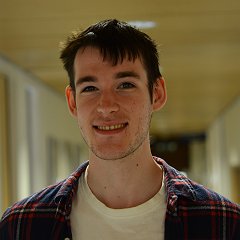
Yizhou Zhang is an Assistant Professor at the Cheriton School of Computer Science, University of Waterloo. He specializes in programming language design and implementation, focusing on balancing expressive power with strong guarantees through language abstractions and compiler verification. Designing modular, type-safe language systems Probabilistic programming and inference optimization Algebraic effects and control flow management His recent publications explore lexical effect handlers, certified compiler frameworks, and nested polymorphism models. Awards include the ACM SIGPLAN Distinguished Paper Award (2023) for his work on probabilistic program compilation. Current advisees include PhD candidates Cong Ma, Zhaoyi Ge, Jianlin Li, and Ende Jin. He has served on program committees for POPL, PLDI, and OOPSLA conferences.
Roger Mallol Parera is a contracted professor at the Department of Engineering, International Faculty of Commerce and Digital Economy, Universitat Ramon Llull. His research spans metabolomics, biomedical data analysis, and educational innovation, with a focus on connecting biological insights to clinical outcomes. Research Interests: Metabolomics (NMR spectroscopy, lipoprotein profiling), software platforms for data integration, empathy in social robotics, and pedagogical strategies for student engagement. Recent article trends include metabolomic disease biomarkers (METCOVID cohort), cloud-based bioinformatics tools (CloMet), and empathy-driven robotics interfaces. He has collaborated on environmental soundscapes (Sons al Balcó) and digital health projects. Additional Activities: Principal investigator for CLOMET (bioinformatics workflows) and co-investigator for multidisciplinary projects involving environmental research and social robotics.
Antonio Salmerón Cerdán is a Professor in the Mathematics Department at the University of Almería, where he has established himself as a leading researcher in probabilistic artificial intelligence and Bayesian networks. With over 25 years of academic experience, he leads the 'Análisis de datos' research group and serves as Principal Investigator for multiple nationally and internationally funded projects, including the current 'Hacia una Inteligencia Artificial Probabilística Confiable (TOPAI-UAL)' project (2023-2026). His research expertise spans theoretical and applied aspects of probabilistic graphical models, with particular focus on Bayesian networks, causal inference, and their applications across diverse domains. His work demonstrates a consistent trajectory from foundational theoretical contributions to practical implementations in software engineering, genomics, sports analytics, and trustworthy autonomous systems. Professor Salmerón's publication portfolio reveals a strong emphasis on methodological innovations in probabilistic reasoning, with recent work exploring divide-and-conquer approaches for causal computation, noise-robust classification methods, and the integration of observational and randomized data sources. His research shows increasing interdisciplinary reach, connecting computer science methodologies with applications in plant genomics, software maintenance, and healthcare. Journal Publications: 105 articles in high-impact venues including Ecological Informatics (Q1), International Journal of Approximate Reasoning (Q2), and ACM Transactions Research Funding: Principal Investigator for 9 major projects since 2001 totaling over €800,000 in funding Thesis Supervision: Director of 7 doctoral theses on probabilistic graphical models and their applications Metrics: h-index 22 (Web of Science), i10 index 59 His research program demonstrates a unique combination of theoretical rigor in probabilistic reasoning with practical applications across diverse scientific domains, positioning him at the forefront of reliable probabilistic AI development.
José Alfonso Ferrer Martínez serves as an Associate Professor at the Polytechnic University of Cartagena, where his career spans over two decades of specialized research in energy systems and industrial applications. His research expertise centers on Energy Engineering with deep specializations in Renewable Energy integration , Energy Management systems , Cogeneration feasibility , and Industrial Maintenance optimization . His work consistently bridges theoretical energy principles with practical industrial implementation, particularly in building engineering and manufacturing contexts. Key contributions include developing calculation methodologies for energy efficiency and establishing audit frameworks for food industry applications. Analysis of his publication timeline (1994-2015) reveals an evolutionary trajectory from foundational feasibility studies in cogeneration toward comprehensive energy management systems. His later work demonstrates increasing focus on maintenance-driven energy conservation strategies and renewable energy integration, reflecting industry shifts toward sustainable engineering practices. The publications consistently target industrial and building engineering applications rather than purely theoretical exploration.
María del Mar García Alcaraz serves as Assistant Professor at the Polytechnic University of Cartagena's School of Engineering, specializing in hydrogeological systems and sustainable resource management. Her work bridges theoretical research with practical applications in water-scarce regions and urban environments. Her research portfolio demonstrates deep expertise in groundwater dynamics, geothermal energy systems, and GIS-based environmental modeling. Key contributions include pioneering methodologies for ecosystem services assessment in aquifer management, innovative approaches to shallow geothermal resource mapping in metropolitan areas like Buenos Aires, and advanced tools for hydrogeological data analysis. Her interdisciplinary work integrates hydrogeology, environmental science, and engineering principles to address critical challenges in water security and renewable energy. Publication trends reveal consistent focus on sustainable resource management, with increasing emphasis on urban applications since 2020. Her work combines field studies in Argentina and Spain with computational modeling, producing practical frameworks for groundwater-dependent ecosystem conservation and metropolitan-scale geothermal energy planning. Recent publications highlight growing integration of ecosystem services concepts into hydrogeological practice. While no specific awards are documented in the provided text, her extensive publication record in high-impact journals including Hydrology , Renewable Energy , and Science of the Total Environment demonstrates significant scholarly contribution. Her research has generated multiple software tools and methodologies adopted in professional practice, particularly the TI-GER method for geothermal management. Dr. García Alcaraz actively mentors students through thesis supervision and curriculum development initiatives, notably creating relational maps for EICIM degree programs. Her collaborative research spans international institutions, particularly in Argentina, addressing transboundary water challenges. Current projects focus on groundwater recharge mechanisms in irrigated agriculture and thermal impact assessment of urban geothermal systems, positioning her at the forefront of sustainable water-energy nexus research.
Philippa Gardner is a Professor in the Department of Computing at Imperial College London, where she has been on faculty since 2001 and became a professor in 2009. She holds a UKRI Established Fellowship (2018–2023) and directs the EPSRC-funded Research Institute on Verified Trustworthy Software Systems (VeTSS) from 2017 to 2022. Previously, she held an EPSRC Advanced Fellowship at the University of Cambridge (hosted by Robin Milner) and a Microsoft Research Cambridge/Royal Academy of Engineering Senior Fellowship (2005–2010). She completed her PhD in 1992 at the University of Edinburgh under Professor Gordon Plotkin, followed by five years of postdoctoral fellowships at Edinburgh. Her research focuses on program verification , with specialized interests in web programming (JavaScript/DOM), concurrent systems, and formal methods. She developed the Gillian platform for multi-language symbolic execution and has made significant contributions to separation logic, WebAssembly verification, and compositional reasoning techniques. Her recent publications demonstrate a strong emphasis on unified formal methods, scalable verification techniques, and practical tools for real-world languages like JavaScript and WebAssembly. Key themes include symbolic execution, correctness/incorrectness reasoning, and mechanized semantics. Awards and Fellowships: UKRI Established Fellowship (2018–2023) Microsoft Research Cambridge/Royal Academy of Engineering Senior Fellowship (2005–2010) Leadership and Service: Directs the VeTSS research institute focusing on trustworthy systems. Chaired the BCS awards committee (2013–2018), overseeing the Lovelace Medal and Roger Needham Award.
Ohad Kammar is a researcher at the University of Edinburgh , actively contributing to programming language theory, denotational semantics, and algebraic effects. His work bridges theoretical foundations with practical implementations. Research Themes : Type-driven development, concurrency, probabilistic programming, normalization algorithms, and algebraic effects. Conference Involvement : Committee member in Diversity, Equity and Inclusion , Student Research Competition , and LAFI tracks at POPL; program committee roles in ICFP, APLAS, PEPM, and HOPE. Publications : Focus on denotational semantics, effect handlers, relaxed memory concurrency, and dependently-typed probabilistic models.
Conrad Watt is an Assistant Professor at Nanyang Technological University in Singapore. His research focuses on the formal verification and mechanisation of WebAssembly, particularly its concurrency and security features. He previously held a Research Fellow position at Peterhouse, University of Cambridge. His work bridges theoretical formal methods with practical systems implementation, contributing to standards proposals for WebAssembly's evolution. He co-chairs the W3C WebAssembly Community Group and has served on program committees for POPL, PLDI, and SPLASH. Education: PhD in Computer Science (University of Cambridge, 2021), supervised by Peter Sewell Research interests include mechanisation of programming language specifications, relaxed-memory concurrency, and domain-specific languages for formal semantics. His projects like SpecTec aim to unify WebAssembly's specification across documentation, implementations, and mechanisations. Selected contributions to WebAssembly include: Designing its initial concurrency specification Developing WasmRef-Isabelle as a verified interpreter and fuzzing oracle Creating Iris-Wasm for modular program verification Scientific recognition includes: ACM Doctoral Dissertation Award Honorable Mention EAPLS Best Dissertation Award He advises PhD students in WebAssembly-related topics and leads collaborations with industrial partners like Wasmtime. Current research explores irreducible control flow in WebAssembly, richer concurrency models, and performance optimization through mechanised specifications.
Elvira Patricia Pino Blanco is a Professor in the Department of Computer Science at the Barcelona East School of Engineering, Polytechnic University of Catalonia (UPC). She is a member of the ALBCOM research group (Algorithms, Bioinformatics, Complexity and Formal Methods) and has an extensive publication record spanning over two decades. Her research interests focus on formal methods in computer science, particularly in graph theory, logic programming, and database systems. She has made significant contributions to navigational logics for graphical structures, graph databases, and model synchronization using triple graph grammars. Her work bridges theoretical foundations with practical applications in software engineering and data management. Her publication trends show a consistent focus on graph-based approaches to computational problems, with recent work emphasizing logical approaches to graph databases and navigational query languages. She has published in high-impact venues including Journal of Logical and Algebraic Methods in Programming, Theoretical Computer Science, and various international conferences. Professor Pino Blanco has been involved in numerous competitive R&D projects related to algorithmics, bioinformatics, and formal methods. Her work demonstrates interdisciplinary connections between theoretical computer science and practical applications in data management and software engineering. She is affiliated with the ALBCOM research group which focuses on algorithmics, bioinformatics, complexity theory, and formal methods. This group represents a vibrant research community working at the intersection of theoretical computer science and practical applications.
Joseba Andoni Agirre Bastegieta is a researcher at Mondragon University's Faculty of Engineering within the Department of Electronics and Computing. He actively contributes to the Software and System Engineering (SSE) research group, focusing on industrial system applications. He earned his Doctorate from Mondragon University in 2017 with a thesis titled 'Método para la adaptación de transformaciones m2m legadas ante cambios en la logica de mapeo y a extensiones de metamodelos mediante perfiles' (Method for adapting legacy model-to-model transformations to changes in mapping logic and metamodel extensions through profiles), supervised by Dr. Goiuria Sagardui Mendieta. Dr. Agirre Bastegieta's research centers on embedded systems and intelligent systems for industrial applications, spanning information systems, electronics, and computing disciplines. His work addresses model-driven engineering challenges in industrial contexts, particularly transformation adaptation for evolving metamodels. The Software and System Engineering research group develops integrated solutions combining embedded technologies with intelligent computing approaches to solve complex industrial engineering problems through collaborative industry-academia partnerships.
Maria-Cristina Marinescu serves as a Lecturer in the Department of Mathematics and Data Analytics at IQS School of Management. With a strong foundation in computational methods and data analysis, she contributes significantly to both teaching and research within the institution. Her academic profile demonstrates consistent scholarly activity with 44 documented scientific production items spanning over two decades. Dr. Marinescu's research interests center on Machine Learning, Data Analytics, and Artificial Intelligence, with notable applications in epidemic modeling, wireless sensor networks, and programming models. Her work bridges theoretical computer science with practical applications addressing real-world challenges in public health, digital well-being, and medical diagnostics. The fingerprint analysis of her work shows strong emphasis on Machine Learning (100%), Learning Systems (100%), and Transportation Models (100%), with substantial contributions to Programming Models (84%) and Wireless Sensor Networks (77%). Her recent publications reveal a trend toward interdisciplinary research that combines computational methods with societal challenges. She has made significant contributions to epidemic modeling during the COVID-19 pandemic, developing methods for accurate incidence rate estimation in Spain and analyzing information gains from multiple epidemic model outputs. Additionally, her work extends to medical applications including research on ocular ischemia and glaucoma, as well as innovative approaches to automated metadata annotation using machine learning techniques. Dr. Marinescu actively leads and participates in multiple research projects including Uncovering patterns of unconscious reactions to fake content (as Principal Investigator), MobilePressure (focused on reducing children's smartphone exposure), and ADAMIQS: Applied Data Analytics and Modelling IQS . These projects demonstrate her commitment to addressing contemporary issues through data-driven approaches while mentoring students and collaborating with interdisciplinary research teams.
Raúl Lapeña Martí serves as a Professor at the School of Architecture and Technology, teaching core subjects including Data Structures and Algorithms, Networks and Communications I, and Networks and Communications II across Computer Engineering and Video Game Design and Development undergraduate programs. He holds a Doctorate in Computer Engineering from the Polytechnic University of Valencia (awarded July 2020), with doctoral research focused on traceability link recovery in BPMN models. His research centers on software engineering, specifically advancing information retrieval techniques, requirements engineering frameworks, and model-driven development methodologies. He publishes in high-impact venues including Information & Software Technology (IST) and Journal of Systems and Software (JSS), while maintaining active participation in the CAiSE (Conference on Advanced Information Systems Engineering) research community.
Ana Cristina Marcén Terraza serves as Professor and Director of the Artificial Intelligence degree at the University of San Jorge's School of Architecture and Technology. She teaches core courses across Computer Engineering, Video Game Design and Development, and Bioinformatics programs including Information Systems, Operating Systems Administration, and Human-Computer Interaction. Education: Doctorate in Computer Engineering from Polytechnic University of Valencia (Thesis: Fragment recovery in models through machine learning techniques) Research Focus: Her work centers on applying Machine Learning to solve critical challenges in Software Engineering , particularly for information retrieval systems, model-driven development frameworks, and automated software maintenance processes. This research bridges artificial intelligence with practical software development methodologies. Research Leadership: Actively leads the National Project "ALPS" (Intelligent Evolutionary Assistants for Software Product Lines) and National Project "DataME" (Model-Driven Software Production for Big Data Applications). Previously contributed to the International Project "REVaMP2" (Round-trip Engineering and Variability Management). Research Affiliation: Member of "Software Variability for Internet of Things" Research Group Publication Record: Author of multiple high-impact publications in premier journals including Information & Software Technology (IST), Journal of Systems and Software (JSS), and Software and Systems Modeling (SoSyM).