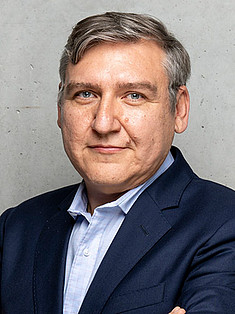
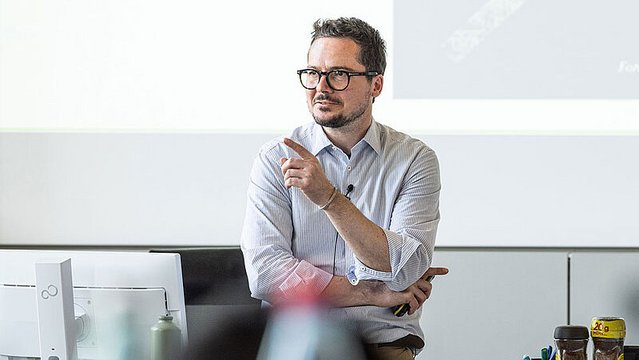
Egon Lüftenegger is a Senior Lecturer at Fachhochschule Salzburg's Department of Information Technologies and Digitalisation. His work bridges academia and industry through innovative process mining and sentiment analysis applications. PhD in Information Systems (TU Eindhoven) Focus on Service-Dominant Logic and Business Process Management Active in Industry 4.0 and Digital Transformation research His research explores sentiment-driven process redesign, technology-enabled social inclusion, and smart production analytics. Publications highlight process mining frameworks , LLM applications in BPM, and service-dominant business models . Current projects involve creating tools like SentiProMoWeb and Cost-Benefit Tracker, with applications in manufacturing, airline services, and education sectors.
Aleksandar Borković is a Researcher at the Institute of Structural Mechanics , Graz University of Technology. His work focuses on advanced computational methods in structural engineering, particularly isogeometric analysis, finite strip modeling, and van der Waals interactions in slender structures. Department: Institute of Structural Mechanics Email: aborkovic@tugraz.at His research bridges theoretical mechanics and practical engineering applications, addressing nonlinear dynamics, contact mechanics, and geometrically exact formulations. Recent publications highlight innovative approaches to modeling molecular interactions in fiber systems and optimizing computational efficiency for structural simulations. The 15 most recent articles demonstrate expertise in: Van der Waals attraction in curved beams Geometrically exact isogeometric formulations Finite strip method for stiffened plates Contact dynamics in beam-to-beam interactions Nonlinear stability analysis of thin-walled structures Moving load simulations in spatial beams He has also contributed to educational software development for structural analysis, emphasizing real-time visualization and numerical accuracy.
Univ.-Prof. Dr. Stefan Wagner is a Professor of Business Administration with a focus on Innovation and Technology Management at the University of Vienna since October 2024. Previously, he held positions as Assistant Professor (2011–2012), Associate Professor (2013–2022), and Director of the PhD Program (2017) at ESMT European School of Management and Technology in Berlin. He has also served as Senior Fellow at the Berlin Center for Consumer Policy, Visiting Fellow at the University of Melbourne, and Visiting Professor at Pontificia Universidad Católica de Chile. Wagner’s research explores innovation processes, patent systems, and business strategy. His work examines how firms leverage technological recombination inventor mobility freemium pricing models patent thickets data-driven optimization to enhance competitiveness and drive technological progress. His recent publications focus on topics like bureaucracy measurement in German legislation personalized content monetization in mobile games software product bundling strategies Markush patent structures data exclusivity in pharmaceutical innovation reflecting his expertise in linking innovation research to practical business applications.
Christoph Bock is a Principal Investigator at CeMM Research Center for Molecular Medicine and Professor/Head of the Institute of Artificial Intelligence at Medical University of Vienna. He leads the Biomedical Sequencing Facility and contributes to the Human Cell Atlas and ELLIS initiatives. Key research areas: Single-cell biology , Epigenetics , CRISPR screening , Machine learning , Cell therapy , Multi-omics Major contributions: CellWhisperer (natural language single-cell analysis), JAK-STAT signaling in immune homeostasis, LIQUORICE for liquid biopsies, and RnBeads software Scientific Awards include: ERC Starting Grant (2016) ERC Consolidator Grant (2021) Overton Prize (2017) Erwin Schrödinger Prize (2022) Clarivate Highly Cited Researcher (2019-2024) His lab develops bioinformatics tools (e.g., RnBeads, LIQUORICE) and applies systems immunology to understand disease mechanisms. Startup leadership : Co-founder of Myllia Biotechnology. Collaborations include clinical translations and tech development with the Biomedical Sequencing Facility.
Florian Grebien is a Professor at the Department for Biological Sciences and Pathobiology, University of Veterinary Medicine Vienna, and Principal Investigator at the St. Anna Children’s Cancer Research Institute (CCRI) and Adjunct PI at CeMM. His research focuses on molecular mechanisms of pediatric leukemia driven by oncoproteins. Research Interests: Pediatric leukemia Fusion oncoproteins Transcriptional/epigenetic networks CRISPR/Cas9 screening Targeted degradation of oncoproteins Proteomic/transcriptomic analysis Scientific Awards: ERC Starting Grant His lab combines cellular models, animal models, and primary human samples to validate molecular mechanisms, collaborating with institutions like Ludwig Boltzmann Institute and CeMM. Funding sources include the European Research Council.
Christoph Ableitinger is an Associate Professor at the Department of Mathematics , Faculty of Mathematics , University of Vienna , with a dual affiliation to the Center for Teacher Education . His academic profile focuses on the intersection of theory and practice in mathematics education, particularly through his roles in curriculum development and teacher training programs. Broadly investigates mathematical procedural knowledge and its assessment Examines technology integration in secondary mathematics instruction Develops modeling seminars and educational outreach initiatives Studies teacher-student belief systems in mathematical contexts Researches the impact of standardized testing on educational practices Recent publications highlight trends in analyzing student errors, optimizing technology use in classrooms, and bridging university mathematics with secondary school requirements through modeling activities. His work offers valuable insights into improving mathematical understanding and instructional effectiveness across educational systems.
Sarah Riedmann is a Junior Researcher at the Information Technologies and Digitalisation Centre for Dependable Systems Engineering, Salzburg University of Applied Sciences. She actively contributes to the Josef Ressel Centre for Dependable System-of-Systems Engineering (DeSoS) and Research Campus Schloss Urstein (RCSU), advancing Industry 4.0 implementation through reference architectures and simulation modeling. Education: Information Technology and Systems Management, Dipl.-Ing., Salzburg University of Applied Sciences GmbH (2021) Research Focus: Her work centers on RAMI 4.0 integration, resource capability modeling, and stakeholder-specific reference architectures. She investigates reinforcement learning applications in production systems and dependable system-of-systems engineering, addressing critical gaps in smart manufacturing resilience and design principle compliance. Publication Analysis: 2024 outputs reveal concentrated innovation in Industry 4.0 architecture frameworks, with dual emphasis on theoretical extensions (domain-specific languages for RAMI 4.0) and practical implementations (smart campervan retrofits). Her research consistently bridges reference architecture theory with production system validation, demonstrating cross-domain applicability from embedded systems to smart grids. Scientific Awards: No awards documented in source materials. Research Leadership: As Co-Investigator on major initiatives: RCSU: Research Campus Schloss Urstein (2023-2025) focusing on applied Industry 4.0 campus development DeSoS: Josef Ressel Centre for Dependable System-of-Systems Engineering (2020-2025) advancing methodology for complex industrial systems Collaborative Ecosystem: Operates within Salzburg University's digitalisation centre alongside interdisciplinary teams from engineering, computer science, and industrial partners, driving Austria's Josef Ressel Centre research agenda in dependable systems engineering.
Dorian Achim Prill is a Researcher at the School of Information Technology and Systems Management, Salzburg University of Applied Sciences, specializing in digitization and digital transformation within Industry 4.0 contexts. He serves as Deputy Project Manager for DIH-West-Neu (2024-2028) and contributes to multiple funded research initiatives including Retailization 4.0 and RetailLab4.0, focusing on practical implementations of digital technologies in production and retail environments. His research integrates Machine Learning and Data Science with industrial maintenance systems, developing intelligent frameworks for predictive maintenance scheduling and service choreography. Key interests include Publish-subscribe architectures, Learning Systems for production optimization, and Planning Frameworks that bridge theoretical models with real-world manufacturing applications. His work emphasizes data-driven process monitoring and cloud-based intelligence for industrial IoT ecosystems. Recent publications demonstrate a clear trajectory toward applied machine learning in maintenance engineering, with increasing focus on smart factory implementations and service-oriented architectures. The research consistently connects broad computer science principles with specific industrial subfields like friction coefficient measurement for vehicle safety and retail digitalization. Prill actively participates in externally funded projects totaling 11 initiatives since 2017, securing grants for Digital Innovation Hubs and living labs. His collaborative approach involves interdisciplinary teams across academia and industry, particularly evident in RetailLab4.0's living lab environment and FriCamMod's vehicle safety research. He has shared expertise through invited lectures on data-driven maintenance planning and marine maintenance intelligence. He operates within dynamic project teams including RetailLab4.0's retail digitalization consortium and FriCamMod's vehicle safety collaboration, working closely with principal investigators like S. Kranzer and R. Zniva. Current projects emphasize scalable digital transformation frameworks for both manufacturing and retail sectors through the DIH-West-Neu initiative.