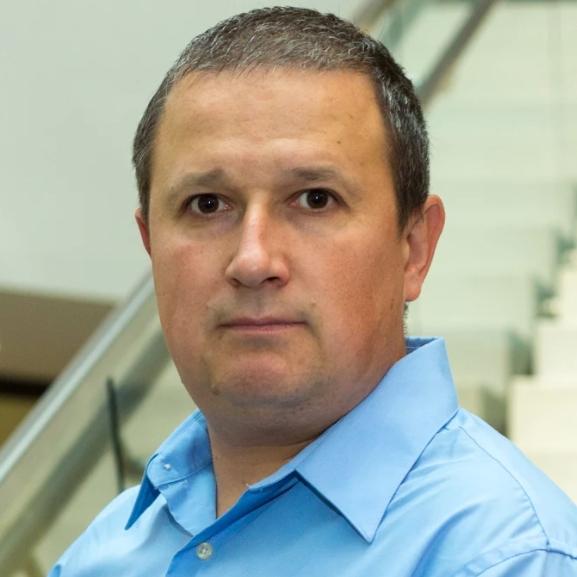
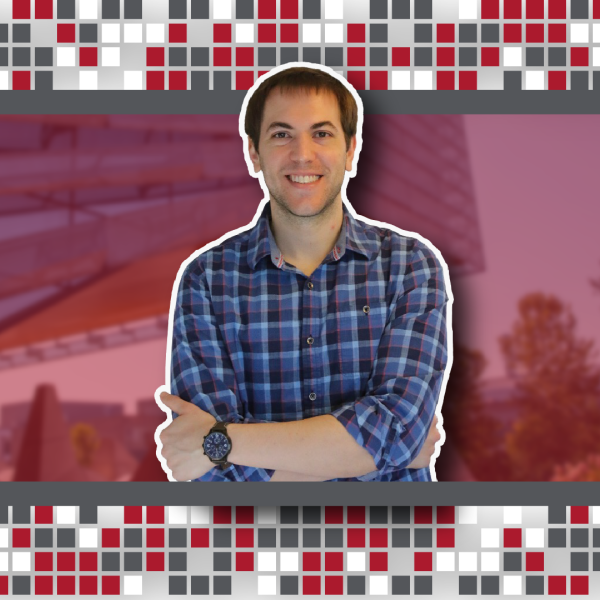
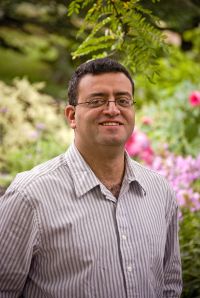
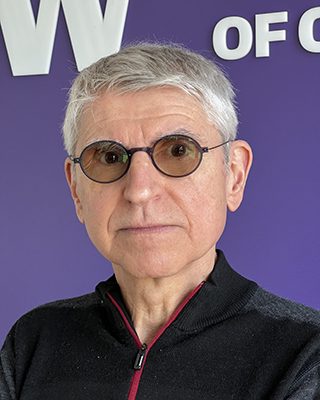
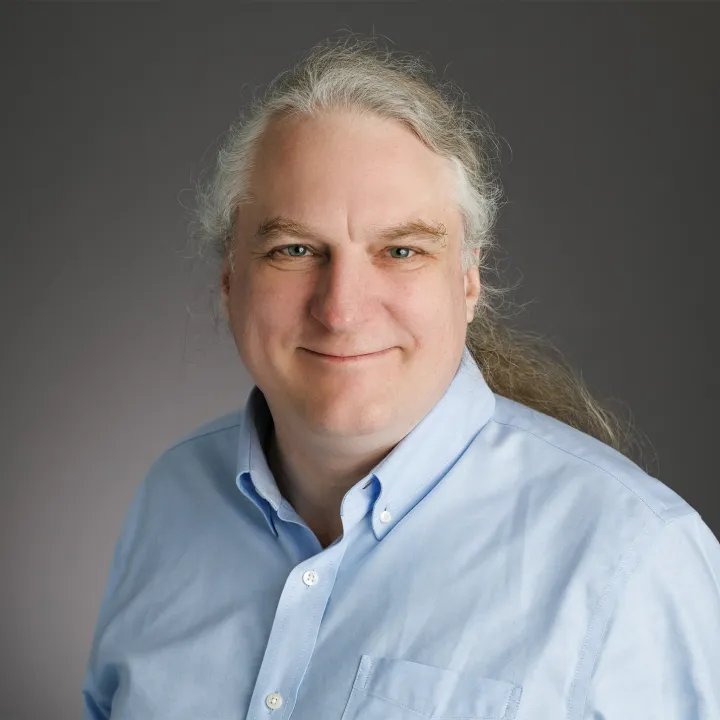
Eric Fortune is an Associate Professor in the Department of Biological Sciences at New Jersey Institute of Technology. His research spans neuroethology, electrosensory systems, and computational biology, with a focus on weakly electric fish and sensorimotor integration. Recent Publications highlight work on Neurophysiological adaptations in weakly electric fish Machine learning applications in flu forecasting Behavioral and neural mechanisms of exploration-exploitation trade-offs Grants include multiple NSF-funded projects on collaborative research in active sensing, neuromechanical systems, and social interaction effects on sensory function. Media Coverage features his role in a $5M Amazon rainforest biodiversity contest, where his team counted over 250,000 critters in a square kilometer.
Shanna Swan is a renowned epidemiologist and Professor of Environmental Medicine and Public Health at the Icahn School of Medicine at Mount Sinai. She holds a PhD in Statistics from UC Berkeley (1963), an MA in Biostatistics from Columbia University, and a BA in Mathematics from City College of New York. Her career spans academia, public health institutions, and research on environmental health impacts. Notable roles include work at Kaiser Permanente, California Department of Health Services, University of Missouri, and University of Rochester. Her research focuses on endocrine-disrupting chemicals (EDCs), sperm count decline, and reproductive health. Her groundbreaking 2017 study revealed a 50% sperm count drop in Western men over 40 years, later updated to show acceleration since 2000. She authored the influential book Count Down (2021), addressing environmental threats to human fertility. Key contributions include forming California’s reproductive health group and leading National Academy of Sciences committees on EDCs. Swan advocates for science-driven public health policy, emphasizing the need to address chemical exposures. Her work bridges statistical rigor with real-world impact, influencing global discussions on fertility and environmental safety. Awards include the Ward Medal in Logic (CCNY). She remains active in advancing research, education, and community action to safeguard human health and reproduction.
Günter Rote is a Professor in the Department of Computer Science at Freie Universität Berlin, specifically within the Theoretical Computer Science group (Arbeitsgruppe Theoretische Informatik). He holds a formal academic title of Professor Dr. and is affiliated with the Faculty of Mathematics and Computer Science. His research focuses on theoretical computer science, computational geometry, algorithms, and discrete mathematics. Key research interests include geometric algorithms, optimization problems (e.g., shortest paths, traveling salesman problems), and algorithm design for parallel computing systems. His work spans topics such as systolic arrays, convex hulls, and combinatorial optimization. Rote’s contributions include foundational studies on computational geometry problems, algorithmic complexity, and practical applications in energy equity and infrastructure design. Publications highlight contributions to solving extremal equations, polygon transformations, and the quadratic assignment problem. He has been active in academic leadership, mentoring students, and contributing to computational science communities. His email is rote@inf.fu-berlin.de, and his office is located at Takustraße 9 in Berlin.
Prof. Dr. Fabian Gieseke is a Professor and Chair of Machine Learning and Data Engineering at the University of Münster. He holds a PhD in Computer Science from Carl von Ossietzky University of Oldenburg and a dual degree in Mathematics and Computer Science from the University of Münster. His research focuses on Machine Learning, High-Performance Computing, and their applications in Geosciences, Smart Cities, and Astrophysics. Education: PhD in Computer Science (2012), Carl von Ossietzky University of Oldenburg University studies in Mathematics and Computer Science (2006–2011), University of Münster Research Interests: Data Mining and Machine Learning High-Performance Computing & Distributed Systems Deep Learning Applications in Environmental Science and Astrophysics Geospatial Data Analysis using Satellite Imagery Publications Trends: His recent work emphasizes large-scale environmental monitoring via deep learning, including canopy height estimation, forest biomass prediction, and national-scale tree counting. He also explores interactive systems for geospatial data retrieval and optimization of machine learning models for resource-constrained environments. Advising & Grants: Supervised over 30 theses on topics like satellite image analysis, deep learning on microcontrollers, and data marketplaces for smart grids. Active in securing grants for interdisciplinary projects combining AI with Earth observation. Labs/Teams: Leads the Machine Learning and Data Engineering group at the University of Münster, focusing on scalable AI solutions for real-world challenges in science and industry.
Max Alekseyev is an Associate Professor in the Mathematics Department and Computational Biology Institute. His research spans computational graph theory, enumerative combinatorics, computational/algorithmic biology, and comparative genomics. He focuses on interdisciplinary problems, blending mathematics with biological applications, particularly in genome assembly and analysis. His work includes advancements in genome scaffolding algorithms, combinatorial sequence analysis, and mathematical biology. Notable contributions involve genome assembly tools like CAMSA and studies on ancestral genome reconstruction. He also explores theoretical topics such as Bernoulli series generalizations and modular data classification. His research trends highlight a blend of pure mathematics (e.g., number theory, graph theory) and applied computational methods, addressing challenges in genomics and evolutionary biology. He secured an NSF Student Travel Grant in 2018 for computational molecular biology.
Jennifer Widom is the Frederick Emmons Terman Dean of Stanford University's School of Engineering and holds the Fletcher Jones Professorship in Computer Science and Electrical Engineering. She previously served as Chair of the Computer Science Department (2009–2014) and Senior Associate Dean (2014–2016). Widom earned her Ph.D. in Computer Science from Cornell University (1987) and completed her undergraduate degree in Music at Indiana University (1982). She joined Stanford in 1993 after research at IBM Almaden. Education: Ph.D., Computer Science, Cornell University, 1987 MS, Computer Science, Cornell University, 1985 MS, Computer Science, Indiana University, 1983 BS, Music, Indiana University Jacobs School of Music, 1982 Research Interests: Widom's work focuses on nontraditional data management, including data streams, uncertain databases, crowdsourcing, and query processing systems like STREAM and Deco . She has pioneered methods for managing and querying uncertain data, optimizing graph algorithms, and integrating human computation into data systems. Key Contributions: Developed the STREAM system for real-time data stream management Advanced techniques for crowdsourcing quality management Contributed to foundational work in uncertain databases and provenance tracking Awards & Recognition: ACM Fellow (2005) Member, National Academy of Engineering (2005) Edgar F. Codd Innovations Award (2007) ACM-W Athena Lecturer (2015) EPFL-WISH Erna Hamburger Prize (2018) Teaching & Leadership: Widom teaches courses on data analytics and database systems, advising students like Arnav Joshi. She has led major initiatives in computational education and institutional leadership at Stanford.
Sheldon Katz is a Professor of Mathematics at the University of Illinois at Urbana-Champaign (UIUC), with a joint appointment in the Department of Physics. He holds a Ph.D. in Mathematics from Princeton University (1980) and a B.S. from MIT (1976). Previously, he was a Regents Professor of Mathematics at Oklahoma State University before joining UIUC in 2001. Katz's research focuses on algebraic geometry and mathematical physics, particularly string theory and supersymmetric quantum field theories. His work bridges geometry and physics, exploring topics like Gromov-Witten theory, toric varieties, and F-theory. He co-authored the influential book Mirror Symmetry and Algebraic Geometry (1999), a cornerstone in the field. His recent research includes studies on BPS invariants, Calabi-Yau manifolds, and topological string theory. Key contributions include analyses of F-theory, mirror symmetry, and geometric dualities in string compactifications. He teaches advanced courses in algebraic geometry and mathematical physics at UIUC. While no explicit awards are listed, his extensive publication record and academic leadership reflect significant contributions to the field. Katz’s work continues to explore the interplay between algebraic geometry and fundamental physics.
Mathias Lécuyer is an Assistant Professor in the Computer Science Department at the University of British Columbia (UBC) , part of the Faculty of Science . His research focuses on trustworthy AI systems, with emphasis on privacy (differential privacy), adversarial robustness, and causal machine learning. He leads the Systopia Lab and collaborates with groups such as UBC S&P, TrustML, and CAIDA. Education: PhD in Computer Science from Columbia University (2019), MSc from Columbia University (2013) and École Polytechnique (2011). Research Interests: Ensuring rigorous guarantees for AI systems via differential privacy, robustness against adversarial attacks, and causal inference. His work spans theoretical foundations and practical implementations in areas like privacy-preserving systems, federated learning, and transparent machine learning. Awards: SOSP Distinguished Artifact Honorable Mention (2024), Google Research Award (2022), Bourse Carnot Fellowship (2011), and UBC’s top teaching evaluations (2021). Advising & Service: Supervised over 20 students (PhD, MSc, undergrad) across privacy and machine learning topics. Serves on PCs for top conferences (OSDI, S&P, NeurIPS) and organizes workshops like TrustML @ UBC. Actively mentors high school students in ML research through outreach programs. Labs/Teams: Leads the Systopia Lab at UBC, focusing on AI safety and privacy. Collaborates with MSR, Google, and industry partners on practical system implementations.
Dan Kowal is an Associate Professor in the Department of Statistics and Data Science at Cornell University, joining in 2024. His research focuses on Bayesian models for large/dependent data, mixed data modeling, and interpretable uncertainty quantification. Key areas include public health, environmental justice, epidemiology, and economics. He holds a PhD from Cornell University (2017) and previously served as an Assistant Professor at Rice University. Awards include the Blackwell-Rosenbluth Award (2021), Army Research Office Young Investigator Award (2020), and Lindley Prize Honorable Mention (2024). Notable grants include NSF funding for adaptive dependent data models (2022–2025) and Army Research Office support for Bayesian prediction methods (2020–2022). His work addresses racial inequities in statistical modeling and has been published in top journals like JASA and Bayesian Analysis. He advises multiple PhD students and develops R packages (e.g., SeBR, countSTAR) for Bayesian regression and data synthesis. Teaching roles include Bayesian Statistics at both undergraduate and graduate levels.
Elham Kazemi is a Professor of Mathematics Education at the University of Washington’s College of Education, holding the Geda and Phil Condit Endowed Chair. She specializes in elementary teacher education, instructional leadership, and equity-focused mathematics pedagogy. Her research emphasizes professional learning communities, student-centered classroom practices, and disrupting inequities in education. Education: PhD in Mathematics Education, UCLA (1999) MA in Educational Psychology, UCLA (1997) BS in Psychology (Elementary Teaching Certificate), Duke University (1992) Research Interests: Kazemi’s work focuses on equitable mathematics instruction, teacher learning, and leadership development. She designs school-wide professional development models (e.g., Math Labs) and studies classroom discourse, student disciplinary identities, and organizational learning. Key projects include the Labs Project (funded by JSMF) and RMLL (NSF-funded leader learning). Publications & Grants: Over 40 peer-reviewed articles, including work in American Educational Research Journal and Journal of Teacher Education . Co-authored influential books like Choral Counting and Counting Collections and Intentional Talk . Recipient of $5.4M+ in grants from NSF, McDonnell Foundation, and others for projects on teacher leadership and equitable instruction. Awards: 2022 AERA Open Article of the Year 2019 Outstanding Faculty Award for Educational Equity 2015 Geda & Phil Condit Professorship Advising & Leadership: Kazemi co-leads initiatives like the Leading Towards Racially Just Mathematics Instruction partnership. She has supervised numerous graduate students and collaborates with schools to implement equity-driven practices. Labs & Teams: Her work includes the Labs Project (designing Learning Labs for mathematics/literacy discussions) and the Mathematics Education Project (MEP), fostering statewide collaboration among educators.
Olof Bälter is a Professor in Computer Science at KTH Royal Institute of Technology, affiliated with the Division of Media Technology and Interaction Design within the School of Electrical Engineering and Computer Science. He is the founder of the Technology-Enhanced Learning research group and holds a focus on learning engineering and human-computer interaction. His research interests center on technology-enhanced learning , question-based learning , learning analytics , AI in education , and inclusive pedagogy . A consistent theme in his work is improving efficiency in education and daily life through digital tools. He developed the Pure Question-Based Learning (Pure QBL) methodology, a digital Socratic approach that enhances student engagement and learning outcomes. His work extends to wellness in education through initiatives like walking seminars, and he investigates digital interventions for mental health, such as online Cognitive Behavioral Therapy (CBT) courses. His recent publications highlight trends in AI-generated educational content , learning efficiency , digital pedagogy , and inclusive course design , with applications in computer science education, language instruction, and global development. His research often employs experimental and data-driven methods, including randomized controlled trials and learning analytics. Teacher of the Year at the Surveying program KTH's Pedagogical Prize Higher Education Hero STINT Excellence in Teaching Scholarship (2008 and 2013) Olof Bälter has supervised numerous courses in programming, computer science, media technology, and learning engineering. He has collaborated with institutions such as Stanford University, Williams College, Region Stockholm, Stockholm University, and organizations like Promobilia and Begripsam. His projects aim to scale effective learning methods globally and make education more accessible and efficient. He leads research on the effectiveness of Pure QBL for students with ADHD and is involved in developing digital tools for health literacy and professional development in Ethiopia and Rwanda. His work bridges theory and practice, aiming to transform educational delivery through innovation and evidence-based design.
Mohamed F. Mokbel is a Distinguished McKnight University Professor in the Department of Computer Science and Engineering at the University of Minnesota - Twin Cities , where he also serves as the Director of Graduate Studies. He is recognized as an IEEE Fellow and ACM Distinguished Member for his contributions to spatially- and privacy-aware systems. His research focuses on database systems , spatial data management , and GIS (Geographic Information Systems) , with significant work in spatiotemporal data, location-based services, and machine learning for spatial applications. His most recent publications address scalable BERT-based trajectory imputation , spatial logistic regression frameworks , and spatiotemporal big data decay techniques . Key Awards: Distinguished McKnight University Professor (2023) ACM SIGSPATIAL 10-Year Impact Award (2022) IEEE Fellow (2020) ACM Distinguished Member (2017) NSF CAREER Award (2010) Selected Conference Papers: Recathon (2015, IEEE MDM Best Paper) ST-Hadoop (2017, SSTD Best Paper) KAMEL (2023, ACM SIGMOD Demo) Academic Service: Editor-in-Chief, ACM Transactions on Spatial Algorithms and Systems (2024–) General Co-Chair, ACM SIGSPATIAL 2025 Past Chair, ACM SIGSPATIAL (2014–2017)
Dan Suciu is a Microsoft Endowed Professor in the Paul G. Allen School of Computer Science & Engineering at the University of Washington. His research focuses on data management, query optimization, probabilistic databases, parallel data processing, and information theory applications to databases. Awards : ACM Fellow (2011), American Academy of Arts and Sciences (2024), ACM SIGMOD Codd Innovation Award (2022), NSF Career Award (2001), Alfred P. Sloan Fellow (2001-2002). Research Trends : Recent work emphasizes cardinality estimation using Lp-norms, submodular width for query evaluation, dynamic query processing, and tensor program optimization. His publications highlight intersections between database systems and formal methods, driven by mathematical rigor. Key Collaborators : Mahmoud Abo Khamis, Dan Olteanu, Amir Shaikhha, Maximilian Schleich, Kyle Deeds, Moe Kayali. Advising : PhD students Gerome Miklau (2006), Christopher Re (2010), Paris Koutris (2016), Nilesh Dalvi (2008 runner-up), Yisu Remy Wang (2024 runner-up) have excelled in dissertation awards.
James Aspnes is the Harold W. Cheel Professor of Computer Science at Yale University, specializing in distributed algorithms and randomized methods. He holds a PhD from Carnegie Mellon University and degrees from MIT. His research focuses on distributed systems, peer-to-peer networks, and sensor networks, emphasizing tools for efficient data management and fault-tolerance. Education: PhD (CMU, 1992), SM & SB (MIT, 1987) Affiliations: Yale since 1993, IBM Almaden Research Center (1992–1993) Research interests include distributed algorithms, randomization, and applications in biology and economics. Notable contributions include skip graphs, population protocols, and consensus algorithms. He has received the ACM-EATCS Dijkstra Prize (2020) and Dylan Hixon Prize (2000). Publications span distributed computing, algorithms, and cryptography. Recent work explores consensus protocols and privacy in population models. Grants include NSF awards totaling over $2M. Active in editorial roles (Algorithmica, Distributed Computing) and conference organization (PODC 2005, DCOSS 2007).
Richard A. Davis is the Howard Levene Professor of Statistics at Columbia University's Faculty of Arts and Sciences. He is affiliated with the Data Science Institute (DSI) and the Financial and Business Analytics Center. His research focuses on applied probability, time series analysis, stochastic processes, and extreme value theory, with applications to financial data and spatial modeling. He co-founded the Space-Time Aquatic Resources Modeling and Analysis Program (STARMAP), supported by an EPA-STAR grant. Education details are not explicitly provided in the text, but his academic roles indicate advanced qualification in statistics. His work combines theoretical advancements with practical applications, such as analyzing financial time series models (e.g., GARCH) and spatial environmental data. Recent research emphasizes high-dimensional extremes, sparsity, and privacy-preserving methods. His articles explore cutting-edge topics like kernel PCA for multivariate extremes, quantile treatment effects, and goodness-of-fit testing for time series. He has also contributed to applications in healthcare imaging and disaster economics. His collaborative projects aim to bridge statistical theory with environmental and societal challenges. Key contributions include the STARMAP initiative and grants focused on extreme value analysis. His work often integrates advanced statistical techniques with real-world data challenges, reflecting a commitment to both methodological innovation and interdisciplinary impact.