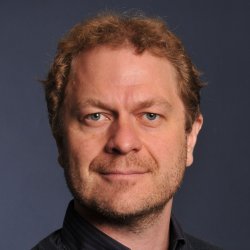
Mark F. Bocko is a Professor of Electrical and Computer Engineering and Physics at the University of Rochester, serving as Chair of the Department of Computer and Electrical Engineering since 2004. He holds a BA from Colgate University and advanced degrees (MS/PhD) in Physics from the University of Rochester. His research spans superconducting digital electronics, quantum computing, music signal processing, and smart sensor systems. Notable awards include the Excellence in Undergraduate Teaching Award (1991, 2002) and Professor of the Year (2002). His research groups focus on high-frequency digital signal processing using Josephson junctions, quantum coherence in superconducting circuits, and applications in music technology such as internet-based real-time musical collaboration. Collaborations include work with the Eastman School of Music and local industries on sensor networks and wireless technologies. Key contributions include developing GHz-rate analog-to-digital converters, quantum bit control systems, and music encoding algorithms. His NSF-funded projects explore internet2 applications for musical interaction and physical modeling in music systems.
Dr. Thuc Vo is an Associate Professor in Civil Engineering at La Trobe University, Australia. His expertise lies in structural engineering, composite materials, and machine learning applications. He previously held roles at Northumbria University (UK) and Airbus’ Advanced Composite Training and Development Centre. His research focuses on shear deformation theories for composite structures and machine learning for structural engineering. He has authored over 120 publications in prestigious journals and conferences. Education & Experience: Associate Professor, La Trobe University (2019–present) Senior Lecturer & Program Leader in Civil Engineering, Northumbria University (2013–2019) Lecturer at Airbus’ Advanced Composite Training and Development Centre/Wrexham Glyndwr University (2011–2013) Research Associate, University of Liverpool (2010–2011) Research Interests: Composite material analysis (FGMs, nanoporous materials) Machine learning for structural prediction Vibration and buckling analysis Advanced beam and plate theories Collaboration & Supervision: Offers supervision for masters/PhD students and collaborates on industry projects. His work bridges theoretical mechanics with data-driven approaches, addressing challenges in smart materials and structural optimization.
Dr. Werner Bauer is a Lecturer in Mathematics at the University of Surrey, affiliated with the Mathematics at the Interface Group within the School of Mathematics and Physics. His research focuses on numerical analysis and scientific computing, particularly in the Mathematics of Planet Earth. Key areas include parallel-in-time methods for oscillatory PDEs, structure-preserving discretizations for fluid dynamics, stochastic flow models for ensemble prediction, and geometric formulations of fluid and magnetohydrodynamic systems. He also explores finite difference and finite element methods, with prior work on grid adaptation in weather and climate models. His research interests span numerical methods for geophysical flows, stochastic modeling of oceanic and atmospheric dynamics, and energy-conserving computational frameworks. Bauer’s recent work emphasizes uncertainty quantification, ensemble forecasting, and the development of compatible finite element schemes to ensure physical conservation laws in simulations. Bauer’s publications highlight advancements in structure-preserving discretizations, stochastic parameterization of mesoscale eddies, and variational integrators for geophysical equations. His work bridges applied mathematics and computational science with applications in climate modeling and environmental fluid dynamics.
Meng Liang is a Teaching Professor in the Centre for Interdisciplinary Methodologies (CIM) at the University of Warwick. Her research focuses on digital media economies, algorithmic media systems, and the attention economy, particularly in East Asian contexts. She holds a Ph.D. in Media and Film Studies from University College London (UCL), supported by the Overseas Research Scholarship (ORS-UCL). Her doctoral work examined participatory media and attention economy models in China since 1995. Key research interests include the cultural and social impacts of algorithmic media platforms like TikTok, emotional dependency in user demographics, and the interplay between media technology and cultural norms. She has conducted research at MIT’s Global Media Technology and Cultural (GMTaC) Lab (2019-2020). Her recent work explores data attraction models reshaping social media dynamics, Chinese compressed modernity in short video platforms, and transmedia storytelling in East Asia. She has presented at international conferences including MIT Worlding 2023 and the Critical Digital and Social Media Research Conference (2019). Notable awards include the ORS-UCL scholarship. She teaches the module IM901: Cultures of the Digital Economy at Warwick.
Dr. Xuhui Fan is a Lecturer in Artificial Intelligence at the School of Computing, Macquarie University. He holds a PhD in Computer Science from the University of Technology Sydney (Australia) and a bachelor's degree in Mathematical Statistics from China. Prior to his current role, he worked as a project engineer at Data61 (formerly NICTA), a postdoc fellow at the University of New South Wales, and a lecturer at the University of Newcastle. His research focuses on Bayesian methods, federated learning, temporal point processes, and neural network architectures. He is affiliated with the Data Horizons Research Centre and the Frontier AI Research Centre at Macquarie University. Key research interests include developing interpretable AI models, advancing federated learning for privacy-sensitive applications, and applying Bayesian techniques to complex data analysis. His work bridges theoretical advancements in machine learning with practical applications in areas such as anomaly detection, generative models, and spatio-temporal data analysis. Dr. Fan’s publications span top-tier conferences like NeurIPS, ICML, and IJCAI, covering topics such as diffusion models, nonstationary processes, and scalable relational models. He has contributed to surveys on Bayesian federated learning and developed novel frameworks for dynamic customer segmentation and network sustainability. His research collaborations span institutions in Australia and internationally, reflecting his expertise in interdisciplinary AI applications. Current projects emphasize ethical AI practices, efficient uncertainty quantification, and scalable inference techniques for large-scale datasets.
Edriss S. Titi is a University Distinguished Professor and Arthur Owen Professor of Mathematics at Texas A&M University within the College of Arts & Sciences. His research focuses on nonlinear partial differential equations, applied mathematics, and geophysical fluid dynamics. He leads studies on fluid mechanics, atmospheric and oceanic dynamics, data assimilation, and control theory. His work often addresses mathematical rigor in modeling complex systems like climate dynamics and turbulent flows. Research Interests: Nonlinear PDEs and their applications Fluid dynamics and turbulence Data assimilation algorithms Climate and ocean modeling Infinite-dimensional dynamical systems Recent publications emphasize Navier-Stokes equations , primitive equations , and data assimilation in chaotic systems . His methodologies bridge theoretical analysis and computational modeling, with applications to weather prediction and geophysical flows. Collaborations include the Institute for Applied Mathematics and Computational Science (IAMCS) at Texas A&M. Notable contributions include rigorous analysis of global well-posedness for oceanic models and development of CDAnet, a physics-informed deep learning framework for fluid flow downscaling.
Daniel Müller-Gritschneder is an Adjunct Teaching Professor (Privatdozent) at the Technical University of Munich (TUM), affiliated with the Chair of Electronic Design Automation. He leads the 'Electronic System Level' research group, focusing on embedded systems, TinyML, virtual prototyping, and hardware resilience. He temporarily served as head of the Chair of Real-Time Systems (2019–2020) and holds a senior membership in IEEE. His research spans: TinyML : Optimizing neural network inference for microcontrollers. Virtual Prototyping : Fast simulation for embedded software development (e.g., ETISS simulator). Runtime Verification : Hardware monitoring for safety-critical systems. Fault Tolerance : Cross-layer resilience against soft errors. Design Automation : NoC synthesis and RISC-V toolchain optimization. His publications emphasize RISC-V-based systems, TinyML deployment, fault injection, and embedded AI. Recent works show trends toward compiler-assisted security, thermal management, and automated design-space exploration for edge devices. Awards: Best Paper Award (SiPS 2019) Habilitation Award (Bund der Freunde der TUM, 2019) 2nd Best Paper (SMACD'15) Best Paper nominations at DAC'07, DATE'10, Analog'10, NOCS'13 He advises researchers in the Electronic System Level group and contributes to EU projects (e.g., Scale4Edge). His lab develops tools like ETISS, MLonMCU, and Seal5 for RISC-V and TinyML ecosystems.
Professor Sungheon Gene Kim holds a faculty position at the Weill Cornell Medicine Graduate School of Medical Sciences within the Department of Radiology . His research focuses on quantitative MRI methodology for oncological applications , particularly in breast cancer and head and neck cancer . Kim's lab develops advanced dynamic contrast-enhanced MRI (DCE-MRI) and diffusion MRI (dMRI) techniques to assess tumor microenvironment and treatment response . Key research areas include: Tumor vascular properties via 3D UTE-GRASP MRI Cellular microstructural analysis through POMACE framework Adipose-tissue cancer interaction via MR spectroscopic imaging His lab has received continuous funding from the National Cancer Institute (R01CA219964, UG3/UH3CA228699, R01CA160620). Recent publications demonstrate technical advancements in ultrafast MRI reconstruction , deep learning-enhanced perfusion analysis , and multi-parametric tumor characterization . Collaborations with the National Institutes of Health Quantitative Imaging Network have produced novel cellular water exchange rate measurements that correlate with patient survival outcomes .
Baris Kasikci is an Associate Professor in the Paul G. Allen School of Computer Science & Engineering at the University of Washington. Previously (2017-2023), he was a Morris Wellman Assistant Professor in the Electrical Engineering and Computer Science Department at the University of Michigan. His research focuses on building efficient and trustworthy computer systems through innovative combinations of approaches from systems, computer architecture, and programming languages. Dr. Kasikci received his PhD in Computer Science at EPFL and has held research positions at Microsoft Research Cambridge, Google, Intel, and VMware. His work addresses critical challenges in system reliability, security, and performance in increasingly complex software ecosystems. His research interests center on improving the efficiency of datacenter applications and machine learning systems, analyzing and fixing failures, and enhancing hardware security. His lab develops techniques for automated bug detection, formal verification of distributed systems, and building systems support for heterogeneous hardware architectures. Recent projects include Whisper (profile-guided branch misprediction elimination), Huron (taming false sharing), and Agamotto (automatic detection and repair of bugs in persistent memory applications). Analysis of his recent publications shows a strong trend toward optimizing large language model serving, hardware security, and performance optimization for modern heterogeneous architectures. His work bridges traditional systems research with emerging AI infrastructure needs, particularly in efficient LLM serving, security vulnerabilities in modern hardware, and performance optimization for heterogeneous computing environments. NSF CAREER award Microsoft Research Faculty Fellowship Intel Rising Star Award VMware Early Career Faculty Grant Google Faculty Award Roger Needham PhD Award (best PhD thesis in computer systems in Europe) Patrick Denantes Memorial Prize (best PhD thesis at EPFL) Best Paper Award at OSDI'18 Best Paper Award at MICRO'22 Dr. Kasikci has advised numerous PhD students who have gone on to prestigious positions in academia and industry, including Tanvir Ahmed Khan (Assistant Professor at Columbia University), Akshitha Sriraman (Assistant Professor at CMU), and Jiacheng Ma (AMD). His research has been supported by significant grants from NSF, DARPA, Intel, Google, Microsoft, VMware, and Amazon. His lab, the EfesLab, focuses on building tools and techniques that make computer systems more reliable, secure, and efficient. The EfesLab, led by Dr. Kasikci, brings together postdocs, PhD students, and undergraduate researchers to tackle fundamental challenges in systems reliability and performance. The lab has developed numerous influential tools including Whisper, Huron, and Agamotto that address critical performance and reliability issues in modern computing systems. Current research directions include efficient LLM serving, security of emerging hardware technologies, and automated debugging techniques.
Dr. Zhenghao Chen is a Lecturer in Data Science at the University of Newcastle, affiliated with the School of Information and Physical Sciences. He earned his Ph.D. from the University of Sydney in 2022, following a B.Eng. H1 degree from the same institution in 2017. Prior to his current position, Dr. Chen served as a Postdoctoral Research Fellow at the University of Sydney (2022-2024), a Research Engineer at TikTok (2024), and as a Visiting Research Scientist at Microsoft Research and Disney Research (2022-2023). Dr. Chen's educational background includes: Doctor of Philosophy, University of Sydney (2022) Bachelor of Information Technology (B.Eng. H1), University of Sydney (2017) Dr. Chen's research spans multiple domains within artificial intelligence, with particular expertise in Computer Vision, Natural Language Processing, and Machine Learning. His work in Generative AI has garnered significant recognition, with applications in both academic and industrial settings. His research interests are reflected in his Fields of Research percentages: Deep Learning (30%), Computer Vision (30%), Natural Language Processing (20%), and Multimodal Analysis and Synthesis (20%). His publications in top-tier venues like CVPR, ICCV, ECCV, and journals like IEEE TPAMI demonstrate the breadth and impact of his work. Analysis of Dr. Chen's recent publications (2022-2025) reveals a consistent focus on neural compression techniques, 3D perception, and multimodal AI systems. His work spans medical imaging (CXR bone suppression), video compression, point cloud processing, and neural surface reconstruction. A notable trend is his exploration of efficient AI systems that work well under resource constraints, as evidenced by his involvement in the EMCLR workshop. His research often bridges theoretical advances with practical applications across multiple domains. Dr. Chen has received several prestigious awards: Microsoft Research Asia StarTrack Fellowship (2025) ACM SIGMM Award for Outstanding PhD Thesis in Multimedia Computing (2024) Australia Government Research Training Program (RTP) Fellowship (2019) Google Australia Prize for Excellence in Computer Science (2017) Dr. Chen is actively involved in the academic community, serving on the Program Committee for major AI conferences including CVPR, ICCV, ECCV, SIGGRAPH, AAAI, and others. He also organizes workshops in Multimedia and ICCV conferences, and serves as a reviewer for prestigious journals. His teaching responsibilities include courses on Intelligent Visual Signal Understanding, Video Intelligence and Compression, Database and Information Management, and Computing Fundamentals at both the University of Sydney and University of Newcastle.
Alexandros Kontogiannis is a research fellow at the University of Cambridge, Department of Engineering, specializing in fluid dynamics and applied mathematics. His work combines Bayesian inference, machine learning, and physics-informed algorithms to solve inverse problems in magnetic resonance velocimetry (MRV) and fluid-structure interaction. EPSRC National Fellow in Fluid Dynamics Member of Energy, Fluids and Turbomachinery Division Research Focus: Development of digital twin frameworks that integrate MRV data with Navier-Stokes equations to reconstruct flowfields, infer rheological parameters in non-Newtonian fluids, and estimate hidden quantities like pressure and wall shear stress. Key innovations include: Physics-informed compressed sensing for sparse MRV data Simultaneous boundary shape and flowfield estimation Bayesian turbulence model parameter learning Scientific Awards: ASME Fluids Engineering Division Graduate Student Scholar (2021) Technical Chamber of Greece (TEE) Award (2018) Limmat Foundation Academic Excellence (2017) Mentzelopoulos Scholarship for international studies (2017) Greek State Scholarships Foundation Award (2012) Key Contributions: Algorithms for 3D flow reconstruction with adaptive discretization, viscous signed distance field regularization, and multi-objective aerodynamic shape optimization. His methodologies enable 27x reductions in MRI scanning time while maintaining diagnostic accuracy.
Paolo Prandoni is a Lecturer at École Polytechnique Fédérale de Lausanne (EPFL) in the School of Computer and Communication Sciences (IC). He serves as a Scientist in the Audiovisual Communications Laboratory (LCAV) and teaches in the SSC-ENS and SIN-ENS units, focusing on signal processing theory and practical applications in audiovisual communications. He earned his PhD from EPFL after completing all prior education there, driven by childhood fascination with long-distance telephony. His doctoral work established foundations in communication systems that continue to inform his research. Prandoni's research spans audio/image processing, machine learning for media analysis, and DSP education. Key areas include computational photography (e.g., spectral imaging, stained glass rendering), speech quality assessment via transfer learning, music information retrieval (e.g., fingering prediction), and audience analytics through his company Quividi. His work consistently bridges theoretical signal processing with real-world implementation. Recent publications reveal a strategic shift toward machine learning integration in signal processing tasks, particularly non-intrusive speech assessment and lensless imaging reconstruction. Simultaneously, he advances DSP pedagogy through MOOC development and hands-on teaching tools using off-the-shelf hardware, emphasizing accessibility and practical skill development. No scientific awards are documented in the provided materials. He has advised PhD student Thanikachalam Niranjan (thesis: Image Based Relighting of Cultural Artifacts , 2016) and teaches Communication Systems and Computer Science courses. His educational impact extends through the open-access textbook Signal Processing for Communications (2008) and tools like MultiPub for maintainable online classes. Industry engagement includes Quividi co-founding (2006) and ongoing CSO role in attention analytics. As a core LCAV laboratory member, he collaborates on interdisciplinary projects including cultural heritage digitization, embedded signal processing systems, and real-time audience measurement, leveraging EPFL's infrastructure for both academic and commercial applications.
Teemu Turunen-Saaresti is a Tenured Professor at the School of Energy Systems , LUT University , Lappeenranta, Finland. His research focuses on energy technology, particularly supercritical CO2 cycles, Organic Rankine Cycles (ORC), turbomachinery, and heat pump design. PhD in Energy and Environmental Technology (2004), Lappeenranta University of Technology MSc in Energy and Environmental Technology (2001), Lappeenranta University of Technology His work spans Supercritical CO2 Power Cycles , Organic Rankine Cycle Systems , Turbomachinery Design , and Non-Equilibrium Condensation Modeling . Recent studies include printed circuit heat exchangers for transcritical cycles, high-temperature ORC thermal inertia, and centrifugal compressor design for large-scale CO2 heat pumps. Publications highlight trends in sCO2 Turbines , Tip Clearance Effects , and Multiphase Flow Simulation . Funding from the Academy of Finland and Business Finland supports his research on computational/experimental condensing flows, small-scale compressors, and green shipping energy solutions. He collaborates with international teams on projects like the International Wet Steam Modeling Project , contributing to guidelines for high-temperature heat pumps (IEA HPT Annex 58) and advancements in hydrogen compression strategies.
Michalis Vazirgiannis is a Professor at LIX, École Polytechnique in France, where he leads the Data Science and Mining group (DaSciM). He holds a degree in Physics and a PhD in Informatics from Athens University (Greece), and a Master's degree in AI from Heriot Watt University, Edinburgh (UK). His academic career spans multiple prestigious institutions including Fraunhofer and Max Planck MPI in Germany, INRIA/FUTURS in Paris, AUEB in Greece, Telecom-Paristech, ENS in France, Tsinghua and Jiaotong Shanghai in China, and Deusto University in Spain. Professor Vazirgiannis's research focuses on machine and deep learning methods for graph analysis, including community detection, graph clustering, node embeddings, and influence maximization. His work in text mining encompasses Graph of Words, word embeddings with applications to web advertising and marketing, event detection, and summarization. He has active collaborations with industrial partners in analytics and machine learning for large-scale data repositories across various application domains such as recommendations, meeting summarization, influence metrics for scientific and social networks, and predictive maintenance. His recent publications demonstrate a strong emphasis on Graph Neural Networks, multilingual NLP (particularly for French and Arabic), and applications of deep learning to diverse domains including social networks, legal text, and biomedical data. There's a clear trajectory toward developing more efficient, explainable, and specialized models that address real-world challenges in data analysis. ERCIM fellowship Marie Curie EU fellowship Tencent "Rhino-Bird International Academic Expert Award" (2017) Best Paper Award at IJCAI 2018 Best Paper Award at CIKM 2013 Professor Vazirgiannis has supervised 29 completed PhD theses and has attracted significant R&D funding from national and international sources, including research agencies and industrial partners such as Google, Airbus, Huawei, Deezer, BNP, and LVMH. He leads or has led several academic research chairs including DIGITEO (2013-15), ANR/HELAS (2020-25), and AXA (2015-2018). The DaSciM research group, which he leads at École Polytechnique, has extensive experience in real-world R&D projects involving large-scale data mining. The team maintains active collaborations with major industrial partners including AIRBUS, Google, BNP, Tencent, and Tradelab, working on cutting-edge machine learning projects. The group has co-organized major conferences such as ECML PKDD 2011 and ECML/PKDD 2017 and participates in the senior organization of AI and data mining events like AAAI and IJCAI.
Tania Lombrozo serves as the Arthur W. Marks ’19 Professor at Princeton University, leading the Concepts and Cognition Lab where she investigates the psychological and philosophical dimensions of human reasoning. Her work uniquely integrates empirical methods from cognitive science with conceptual frameworks from analytic philosophy. Her academic background includes a Ph.D. from Harvard University, establishing her foundation in interdisciplinary research approaches. Lombrozo's research centers on the human drive to explain, examining why we seek explanations for certain phenomena but not others, how explanation-seeking affects learning, and whether explanatory processes serve epistemic goals or introduce reasoning errors. She explores connections between causal reasoning, moral responsibility, and intuitive theories of knowledge, drawing from cognitive, social, and developmental psychology alongside philosophy of science and moral philosophy. Her methodology emphasizes experimental rigor while addressing normative questions about ideal reasoning. Analysis of her 2024-2025 publications reveals dominant themes in explanation evaluation across scientific and moral contexts, with significant attention to jargon in science communication, simplicity principles (Ockham’s razor), and moral responsibility in collective action. Her work increasingly addresses AI-human interaction, particularly how explanations influence trust in large language models and the cognitive effects of chain-of-thought reasoning. Notable honors include: Arthur W. Marks ’19 Professorship Excellence in Mentoring Graduate Students Award Lombrozo actively mentors graduate students including Sarah Joo, Casey Lewry, and Sebastian Montesinos, with research supported by interdisciplinary grants spanning cognitive science, ethics education, and technology policy. Her Concepts and Cognition Lab functions as a collaborative hub where philosophical questions are tested through behavioral experiments, contributing to both theoretical advances and practical applications in science communication and AI design.