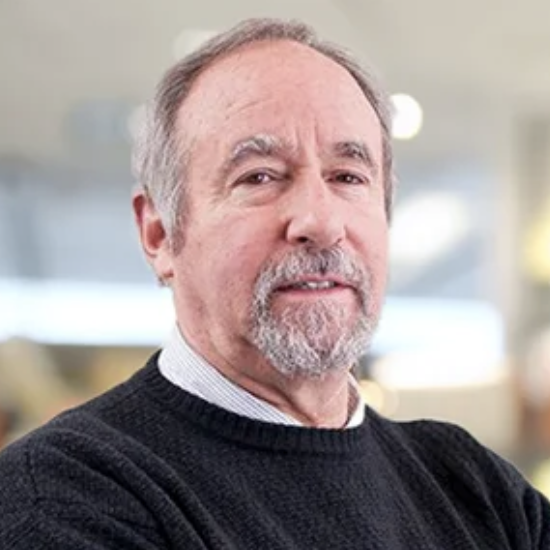
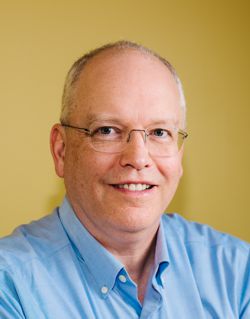
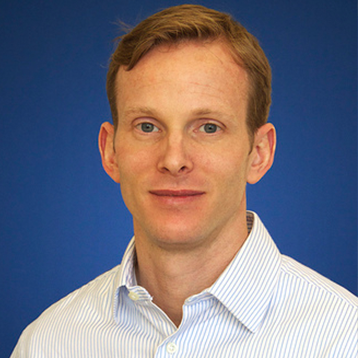
Yonatan Bisk is an Assistant Professor at Carnegie Mellon University within the Language Technologies Institute (with courtesy appointment in Robotics Institute). His research bridges Natural Language Processing , Robotics , and Embodied AI , focusing on language grounding, theory of mind, and multimodal interaction. Education : Ph.D. in Computer Science from University of Illinois at Urbana-Champaign Postdoctoral Experience : USC ISI, University of Washington, Allen Institute for AI Industry Appointments : Microsoft Research, Meta AI His research emphasizes embodied language systems and social intelligence in AI . Recent projects include WebArena for autonomous agents, SOTOPIA for social reasoning, and HomeRobot for open-vocabulary manipulation. He leads the REAL Center (Robotics, Embodied AI, and Learning) to foster interdisciplinary collaboration. Key scientific awards include selection for the DARPA ISAT Study Group (2024). He teaches courses like "Talking to Robots" and "Multimodal Machine Learning" while serving as area chair/editor across NLP, Robotics, and ML communities.
Sunder Kekre is the Vasantrao Dempo Professor of Operations Management at Carnegie Mellon University’s Tepper School of Business , where he has held academic appointments since 1984. His research focuses on manufacturing systems, global supply chains, and healthcare operations management. Research Expertise : New product development structures, strategic costing, lean innovation, knowledge sharing in enterprise networks, and business analytics for coordinated supply chains. Key Publications : Contributions to journals like Management Science , Operations Research , and Production and Operations Management , with work on LNG storage valuation, RFID logistics, and healthcare disparities. Scientific Recognition : Dempo Chair Professorship Bosch Chair Professorship Best Paper Award (1995) Teaching : Courses in Operations Management, Strategic Management of the Enterprise, and Information Systems Project. Non-Academic Experience : Prior engineering roles at Tata Steel (1974-1980) and consulting engagements with Fortune 500 firms like Bosch, Caterpillar, and IBM.
Carlos Guestrin is the Fortinet Founders Professor of Computer Science at Stanford University and serves as Director of the Stanford AI Lab (SAIL) and Senior Fellow at the Institute for Human-Centered AI (HAI). He holds dual roles as Chief Scientist at Visual Layer and Virtue AI. His research focuses on machine learning methods, explainability, fairness, and ethics of AI, alongside systems for scalable AI deployment. Education details are not explicitly provided, but his work spans foundational contributions to machine learning systems (e.g., XGBoost) and explainable AI frameworks like Anchors and LIME. He emphasizes ethical AI through projects like CheckList for model testing and Model Equality Testing for API transparency. His scientific contributions include advancing optimization techniques (AdaScale SGD, TVM compiler) and ethical benchmarks for generative AI. He has been recognized as a Member of the National Academy of Engineering for his transformative impact on AI systems and their societal applications. Guestrin leads interdisciplinary initiatives at SAIL and HAI, fostering collaboration between technical innovation and human-centered design. His work bridges theory and practice, addressing challenges in healthcare (diabetes management systems) and AI security.
Norman Sadeh is a Professor in the School of Computer Science at Carnegie Mellon University (CMU), where he has made significant contributions to cybersecurity, privacy, and AI research. He has co-founded and co-directed several groundbreaking graduate programs at CMU, including the Privacy Engineering Program (2012-present), the Ph.D. Program in Societal Computing (2003-2013), and the MBA track in Technology Strategy and Product Management (2005-2017). Carnegie Mellon University, School of Computer Science Software and Societal Systems Department CyLab Security and Privacy Institute Manufacturing Futures Institute Dr. Sadeh received his Ph.D. in Computer Science at CMU with a major in Artificial Intelligence and a minor in Operations Research. He holds an M.Sc. in computer science from the University of Southern California and a BS/MS degree in electrical engineering and applied physics from the Free University of Brussels (Belgium) as 'Ingénieur Civil Physicien.' Professor Sadeh's research spans cybersecurity, online privacy, Human-AI Interaction, AI governance, mobile computing, the Internet of Things, user-oriented machine learning, and language technologies. He is particularly known for his pioneering work on AI-based privacy enhancing technologies, including privacy assistants, automated privacy compliance tools, and NLP-based privacy solutions. His work has influenced the design of privacy features at major technology companies including Apple, Google, and Facebook/Meta, as well as privacy policies at regulatory agencies like the Federal Trade Commission and the California Office of the Attorney General. Analysis of his recent publications shows a strong focus on practical privacy solutions, particularly in mobile and IoT contexts, with an emphasis on making privacy more usable and understandable for end users. His work bridges technical innovation with policy implications, addressing both the technological and human aspects of privacy protection. 2018 Outstanding Entrepreneur of the Year award from the Pittsburgh Venture Capital Association Test of time award by the AAAI Conference on Web and Social Media (ICWSM) Gartner Group's Magic Quadrant leader in Security Awareness Computer-Based Training for 4 consecutive years Deloitte's Technology Fast 500 recognition for 3 consecutive years Professor Sadeh has advised numerous students, including PhD candidates like Aerin (Shikhun) Zhang, whose dissertation focused on understanding diverse privacy attitudes. His research has been funded through various grants, including NSF SaTC projects, and has resulted in technologies that protect tens of millions of users worldwide. He also founded Wombat Security Technologies, which was acquired by Proofpoint in 2018 and whose technologies are used by over 75% of Fortune 100 companies. Professor Sadeh leads several research initiatives including the Privacy Engineering Program, the Usable Privacy Policy Project, the Personalized Privacy Assistant Project, and CMU's Privacy Infrastructure for the Internet of Things. His Mobile Commerce Lab and E-Supply Chain Management Lab have produced influential research that has been commercialized by major organizations including IBM, Raytheon, Boeing, and the U.S. Army.
Tom Mitchell is the Fredkin Professor of AI and Learning and Director of the Center for Automated Learning and Discovery (CALD) at Carnegie Mellon University's School of Computer Science. His research focuses on machine learning, computational neuroscience, and their applications in neuroimaging and natural language processing. He is renowned for pioneering work in developing algorithms to decode brain activity and for contributions to foundational machine learning theory, including co-training and explanation-based learning. Mitchell authored the seminal textbook *Machine Learning* (McGraw Hill, 1997) and has led projects like Never-Ending Learning (NELL), an AI system that autonomously learns from web content. His work bridges computer science and cognitive science, exploring how machines can learn from data and human interaction. Notable research interests include brain-computer interfaces, automated knowledge extraction, and ethical AI. Mitchell's publications span influential journals like *Science* and *Nature*, and he has been recognized for advancing interdisciplinary research in AI and neuroscience. He has advised numerous students and contributed to initiatives like the AAAI Presidential Address on AI and brain sciences. Mitchell's current projects include studying the neural basis of language and developing AI tools for education and healthcare.
David Garlan is a Professor at the Software and Societal Systems Department within the School of Computer Science at Carnegie Mellon University , where he also serves as Associate Dean for Master’s Programs . He received his Ph.D. from Carnegie Mellon in 1987 after working in industry as a software architect. His research focuses on controlling complexity in large software systems through formalized architectural design, self-adaptive systems, and cyber-physical systems. He developed AcmeStudio , a widely used architecture design environment, and pioneered formal representation and analysis of software architecture. Education : Ph.D. in Computer Science (Carnegie Mellon, 1987) Research Interests include: Software Architecture: Formal methods for architectural design, end-user composition, and architectural styles Self-Adaptive Systems: Stochastic planning, model checking, security adaptation, and uncertainty reduction Cyber-Physical Systems: Multi-view design methods, consistency checking, and automotive systems Recent Article Trends address microservice resiliency, hybrid planning (combining formal methods and ML), simulation-augmented robotics, and sustainable machine translation. Themes include stochastic modeling , probabilistic verification , and adaptive decision-making . Scientific Awards : Stevens Award Citation (2005) ACM SIGSOFT Outstanding Research Award (2011) Allen Newell Award for Research Excellence (2016) IEEE TCSE Distinguished Education Award (2017) Nancy Mead Award (2017) Fellow of IEEE and ACM Advising and Grants : He has advised 25+ graduate students and collaborated on projects with Toyota and the Software Engineering Institute. His work includes model-based adaptation, automated planning, and formal verification of adaptive systems. Labs & Teams : Affiliated with the Institute for Software Research and works on tools like AcmeStudio, Rainbow, and IPL for architectural modeling and self-adaptation.
Mayank Goel serves as an Assistant Professor in the Software and Societal Systems Department (S3D) at Carnegie Mellon University's School of Computer Science. His research bridges computer science and societal impact through practical sensing systems that leverage existing environmental devices for health monitoring and human-computer interaction without requiring hardware modifications. Dr. Goel specializes in mobile computing, signal processing, and machine learning to develop unobtrusive health technologies applicable to real-world scenarios. His core research areas include passive activity recognition for chronic disease management (particularly multiple sclerosis), privacy-preserving acoustic sensing, smartwatch-based clinical interventions for post-operative care, and equitable healthcare systems for global development contexts. He emphasizes end-to-end solutions through close collaboration with medical professionals and designers to ensure immediate deployability outside laboratory environments. Analysis of his 2024-2025 publications reveals a strong interdisciplinary focus spanning computer science, biomedical engineering, and clinical practice. Key trends include longitudinal digital phenotyping for neurological conditions, on-device privacy preservation in activity recognition, and multimodal procedural assistance systems. His work consistently addresses real-world challenges in sensor placement flexibility, user adoption barriers, and equitable access to medical technologies. No scientific awards were mentioned in the available documentation. Information regarding student advising, research grants, or laboratory affiliations was not specified in the provided materials, though his publication record indicates active collaboration with medical professionals and bio-engineers for clinical validation of health technologies.
Garth Gibson is a Professor in the Computer Science Department and Department of Electrical and Computer Engineering at Carnegie Mellon University's School of Computer Science. He serves as Co-Director of the Master of Computational Data Science program and as Associate Dean for Master's Programs. Gibson has been a faculty member at CMU since 1991, after receiving his Ph.D. and M.Sc. in Computer Science from the University of California at Berkeley and a Bachelor of Mathematics in Computer Science and Applied Mathematics from the University of Waterloo. Gibson's research focuses on large-scale parallelism in computer systems, secondary memory system technologies and optimization, scalable file and key-value storage systems, scalable machine learning, and systematic testing for large scale systems. His work bridges theoretical concepts with practical implementations, with a strong emphasis on shepherding technological advances from academic research to commercial reality. He has made significant contributions to RAID technology, network-attached secure disks (NASD), and parallel file systems that have shaped industry standards and products. Gibson's recent publications reveal a strong trend toward data-intensive scalable computing, with increasing focus on machine learning systems, distributed storage solutions, and high-performance computing infrastructure. His research has evolved from foundational storage technologies to address the challenges of petascale and exascale computing environments, with particular attention to the intersection of storage systems and machine learning workloads. The papers demonstrate a consistent theme of addressing system scalability challenges through innovative architectural approaches. Scientific Awards: 2014 Fellow of the IEEE for contributions to the performance and reliability of transformative storage systems 2012 Fellow of the ACM for contributions to the performance and reliability of storage systems 2012 Jean-Claude Laprie Award in Dependable Computing Industrial/Commercial Product Impact Category 2011 SIGOPS Hall of Fame for the SIGMOD88 RAID paper 1999 Reynold B. Johnson Information Storage Award 1999 Allan Newell Award for Research Excellence 1998 Test of Time Award 1991 A.C.M. Doctoral Dissertation Award (tied for second) Gibson has advised numerous graduate students who have gone on to influential positions in both academia and industry, including Swapnil Patil who won first place in the 2010 ACM Graduate Student Research Competition. He has secured significant research funding through initiatives like the DOE Petascale Data Storage Institute and the Intel Science and Technology Center for Cloud Computing. His research has been supported by collaborations with national laboratories including Los Alamos, Sandia, Oak Ridge, Pacific Northwest, and Lawrence Berkeley. Gibson founded CMU's Parallel Data Laboratory (PDL) in 1993, which has grown into a vibrant research community comprising 6-9 faculty members, 2-3 dozen students, and 4-10 staff. The PDL operates with guidance from the Parallel Data Consortium, which includes 15-25 companies interested in parallel data systems. He also founded Panasas Inc. in 1999, a scalable storage cluster company that has deployed technology in national laboratories, energy sectors, and other high-performance computing environments. More recently, Gibson established the Big Learning research group and created the Systems Major curriculum within CMU's Master of Computational Data Science program.
Adam Perer is an Associate Professor at Carnegie Mellon University, where he is a member of the Human-Computer Interaction Institute within the School of Computer Science. He serves as Co-Director of the Data Interaction Group and holds leadership positions as Area Papers Chair at IEEE VIS and Visualization Subcommittee Papers Chair at ACM CHI. Previously, he worked as a Research Scientist at IBM Research. Ph.D. in Computer Science from the University of Maryland, College Park Perer's research integrates data visualization and machine learning techniques to create visual interactive systems that help users make sense of big data. His work focuses on human-centered data science, extracting insights from clinical data to support data-driven medicine, and facilitating human-AI collaboration. He investigates how people engage with and make decisions using data, designing new interfaces to interact with complex information while assisting impactful domains drowning in data. His recent publications reveal a strong trend toward healthcare applications of AI and visualization, particularly in clinical decision support and overdose prevention. There's also a significant focus on explainable AI (XAI), with multiple papers examining how imperfect explanations affect human-AI collaboration and decision-making in critical contexts like healthcare. His work consistently bridges visualization theory with practical applications in high-stakes domains. Best Paper Honorable Mention for 'Dead or Alive: Continuous Data Profiling for Interactive Data Science' (VIS 2023) Best Paper for 'Neo: Generalizing Confusion Matrix Visualization' (CHI 2022) Most Reproducible Paper Award for 'SQLShare' (SIGMOD 2016) Perer actively mentors students across all levels, with PhD students focusing on human-AI collaboration in healthcare settings, visualization techniques, and clinical decision support systems. His lab receives funding for projects related to human-centered AI, data visualization in healthcare, and explainable machine learning systems. The Data Interaction Group, which he co-directs, focuses on empowering everyone to analyze and communicate data through interactive systems. His research has been supported by collaborations with medical institutions and appears in premier venues for visualization, human-computer interaction, and medical informatics. Current projects include Eye into AI (improving XAI interpretability), Predicting and Visualizing Overdose Risk, and AI applications in intensive care units.
Karl Crary is an Associate Professor at the Computer Science Department of Carnegie Mellon University , where he also serves as Director of Doctoral Programs . His research focuses on Programming Languages , Security and Privacy , and Mechanized Metatheory , with emphasis on applying Type Theory to software verification and compiler design. Research Type Safety Proofs Certified Code Compiler Implementation His recent publications explore Substructural Parametricity , Hashgraph Consensus Verification , and Focused Logic applications. He has advised students including Derek Dreyer , Chris Martens , and Tom Murphy , with software projects like Istari proof assistant and CM-Lex/CM-Yacc for hygienic code generation. Current teaching includes Constructive Logic (15-317/657) and HOT Compilation (15-417).
Hana Habib is an Assistant Professor at Carnegie Mellon University's Software and Societal Systems Department in the School of Computer Science . She serves as Associate Director of the Master's in Privacy Engineering program and contributes to the Collaboratory Against Hate through human-centered design interventions. Ph.D. in Societal Computing (2021), Carnegie Mellon University MSIT in Information Security (2015), Carnegie Mellon University BS in Computer Science/ECE (2013), Cornell University Her research investigates privacy engineering challenges through human-computer interaction lenses, focusing on user behaviors in digital ecosystems, privacy choice interfaces , and hate speech mitigation strategies. Current work examines iconography effectiveness in privacy communication and regulatory compliance implementation. Recent publications analyze GDPR compliance mechanisms , CCPA implementation challenges, and behavioral advertising controls across platforms. Her empirical approach combines user studies with policy analysis to advance usable security frameworks. Scientific Recognition : Facebook Research Award recipient for advertising control usability Three-time CyLab Presidential Fellowship awardee Executive Women's Forum full-tuition scholarship Stokes Educational Scholarship Program participant Rising Stars Workshop invitee Habib previously served as a Program Committee member for EuroUSEC, USEC, and WAY conferences, and held leadership roles in CMU's OurCS Conference Committee and INI Alumni Leadership Council . Her work has been cited in CCPA rulemaking and influenced NIST Digital Identity Guidelines through password policy research.
John Paul Shen is a Distinguished Service Professor of Electrical and Computer Engineering at Carnegie Mellon University (CMU), based at the Silicon Valley campus. With over three decades of experience in academia and industry, he has held prominent roles including founding director of Nokia Research Center-North America Lab (2007–2012) and director of Intel’s Microarchitecture Research Lab (2000–2006). His academic career includes a tenured professorship at CMU’s ECE Department from 1990–2000 and a return to CMU in 2015 as a tenured professor. Education: Ph.D. in Electrical Engineering, University of Southern California M.S. in Electrical Engineering, University of Southern California B.S. in Electrical Engineering, University of Michigan Research Focus: Modern Processor Design: Specializes in superscalar processors, instruction-level parallelism (ILP), and microarchitecture validation tools like VMW (Visualization-Based Microarchitecture Workbench). Neuromorphic Computing: Develops energy-efficient temporal neural networks (TNNs) and CMOS implementations for sensory processing. Edge AI: Focuses on low-precision accelerators, sparsity exploitation, and real-time data analytics for edge devices. Dependable Computing: Leverages idle processor resources for error-checking and fault tolerance. Awards & Impact: Recipient of multiple teaching awards during his CMU tenure. Supervised 17 Ph.D. students and dozens of M.S. students, with notable contributions to compiler design and parallel computing. Authored two influential textbooks, including Modern Processor Design: Fundamentals of Superscalar Processors , used at Stanford. Generated over 100 patents and 200+ papers at Nokia and Intel, with a focus on mobile computing and hardware architecture innovations. Labs & Collaborations: Founded and led the Nokia Research Center-NAL, advancing mobile Internet and computing. Directed Intel’s Microarchitecture Research Lab, advancing IA32/IA64 processor designs. Current research at CMU Silicon Valley focuses on neuromorphic systems, wearable computing, and real-time data analytics.
Philip Koopman is an Associate Professor in the Department of Electrical and Computer Engineering at Carnegie Mellon University, specializing in autonomous vehicle safety and dependable embedded systems. His work focuses on ensuring safety in self-driving technologies, including standards development (e.g., ANSI/UL 4600), risk assessment, and fault-tolerant software design. Education & Affiliations: Carnegie Mellon University: Faculty in ECE since [year not explicitly listed, but content suggests 20+ years] Principal author of UL 4600 safety standard for autonomous products Former advisor to graduate students (no longer accepting new advisees) Research Interests: Autonomous vehicle safety validation and assurance Reliability of embedded systems software Cyclic redundancy check (CRC) algorithms and error detection Ethical and legal frameworks for automated systems Standards for vehicle automation (e.g., SAE J3016) Key Contributions: Authored influential books on safety in autonomous systems, CRCs, and embedded software Developed safety case methodologies for autonomous vehicles Testified before U.S. Congress on self-driving car safety Labs/Teams: Leads research initiatives on safety-critical systems, including collaboration with industry and government agencies. Maintains active engagement through blogs (Safe Autonomy, Better Embedded Software) and standards bodies.
Michael Theobald is a researcher at D. E. Shaw Research, focusing on the design and verification of specialized supercomputers for protein simulations. He has previously held postdoctoral and academic positions at Carnegie Mellon University (CMU) and Columbia University. Education: Ph.D. in Computer Science from Columbia University (2002), Postdoctoral Fellow at CMU (2002-2004), and Diplom in Computer Science from Johann Wolfgang Goethe-Universitaet (1994). His research interests span formal verification of software and hardware systems, asynchronous (“clock-less”) circuits, and efficient algorithms for combinatorial optimization. He has contributed to advancements in BDD and SAT techniques, logic synthesis, and hybrid systems verification, with applications in systems biology and robotics. Michael's publications emphasize formal methods, including model checking, abstraction refinement, and SAT-based algorithms applied to hybrid and asynchronous systems. These works align with his broader expertise in embedded systems and computer-aided design.
David Brumley is a Professor of Electrical and Computer Engineering at Carnegie Mellon University with a courtesy appointment in the Computer Science Department. He previously served as Director of CyLab, CMU's Security and Privacy Institute, from 2015 to 2017. His research focuses on developing systems that automatically check software for exploitable bugs using program analysis with security-specific properties. Brumley received his Ph.D. in Computer Science from Carnegie Mellon University, an MS in Computer Science from Stanford University, and a BA in Mathematics from the University of Northern Colorado. Before his academic career, he served as a Computer Security Officer for Stanford University from 1998-2002. Brumley's research focuses on software security techniques that provide users with guarantees. His work sits at the intersection of model checking, formal methods, compilers, and logic, all applied to security problems. He develops efficient symbolic execution, reasoning about bit-level arithmetic in finite fields, sound decompilation, and decision procedures. His research also extends to network security and applied cryptography, focusing on efficient protocols, signature schemes, and privacy-preserving cryptography. A key aspect of his work involves binary code analysis, which allows reasoning about the security of code that actually executes. Brumley's publication record shows a consistent progression from theoretical foundations in program analysis to practical security systems. His work spans symbolic execution, fuzzing, exploit generation, and binary analysis. The Mayhem Cyber Reasoning System, which won the DARPA Cyber Grand Challenge, represents the culmination of his research vision for automated vulnerability detection and patching. His publications demonstrate how theoretical advances in program analysis can be translated into real-world security tools. USENIX Security Best Paper Awards (2003, 2007) International Conference on Software Engineering Distinguished Paper Award (2014) NSF CAREER Award (2010) United States Presidential Early Career Award for Scientists and Engineers (PECASE) (2010) Sloan Foundation Award (2013) DARPA Cyber Grand Challenge Winner ($2,000,000) (2016) Brumley has mentored numerous PhD students who have gone on to successful careers in academia and industry, including co-founders of ForAllSecure. He served as faculty mentor for the CMU Hacking Team Plaid Parliament of Pwning (PPP), which has been ranked #1 internationally and won DefCon 2013. His research has been supported by significant grants including DARPA programs and the NSF CAREER award. He also runs PicoCTF, an annual computer security contest for high school students that has become one of the largest cybersecurity education initiatives of its kind. Brumley leads the development of security systems through both academic research and commercialization. He is the CEO of ForAllSecure, which commercializes the Mayhem system developed through his academic research. His work bridges the gap between theoretical security research and practical security tools used by industry, creating a pipeline from academic innovation to real-world impact.