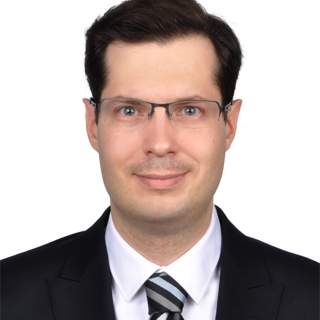
Dr. Brian Logan is an Associate Professor in the Faculty of Science at Utrecht University, specializing in Computer Science and Intelligent Systems. His research focuses on Multi-Agent Systems, Artificial Intelligence, and formal verification of resource-bounded systems. Key research areas: Agent-Based Simulation, Reinforcement Learning, Temporal Logic, Norm Synthesis, Causal Modeling He has published extensively on intention progression, norm revision, and epidemic simulations, with recent work spanning 2025 to 2020. His articles explore topics like Probabilistic Strategy Logic, Reward Machines, and Behavioral Interventions in Pandemics. Email: b.s.logan@uu.nl , bslogan@uu.nl
Jeroen Keiren is an Assistant Professor in the Formal System Analysis group at Eindhoven University of Technology (TU/e). He holds a PhD (2013) and Master's degree (2009) in Computer Science from TU/e, where his thesis focused on Advanced Reduction Techniques for Model Checking . His academic journey includes postdoctoral work at Vrije Universiteit Amsterdam (2013-2015), assistant professor roles at Open Universiteit (2015-2019) and University of Maryland (2016), and visiting researcher/lecturer positions at Radboud University and TU Delft. Research interests: Formal methods, model checking, bisimulation, parity games, timed systems Current projects: National Growth Fund Future Network Services (2024–), NWO MasCot Programming and Validating Software Restructurings (2020-2024) His work emphasizes reducing computational complexity in model checking through bisimulation techniques, with applications in industrial systems like automotive software and medical devices. He co-developed the mCRL2 toolset and contributed to educational initiatives such as MOOCs on system validation.
Sanne Willems serves as an Assistant Professor in the Methodology & Statistics department within Leiden University's Institute of Psychology. Her academic journey began with Mathematics studies at Utrecht University followed by Statistics at Leiden University, culminating in a PhD in Applied Statistics from Leiden's Mathematical Institute in 2020. In 2021, she transitioned to her current position in the Psychology faculty, where she bridges statistical methodology with psychological research on communication. Dr. Willems' research focuses on the critical intersection of statistical communication and public understanding. She investigates how statistical uncertainties and risk information are interpreted by diverse audiences, with particular attention to the cognitive and emotional impacts of different communication formats. Her work addresses fundamental challenges in statistics communication, including the problematic interpretation of probability phrases (like 'likely' or 'rarely') which her research demonstrated vary dramatically between individuals, creating significant risks for miscommunication in medical, policy, and everyday contexts. Analysis of her recent publications reveals a consistent trajectory toward practical applications of statistics communication research. Her articles increasingly focus on debunking misleading visualizations through the 'Grafiekpolitie' (Graph Police) initiative, examining how common graphical distortions in media and official communications affect public understanding. This work spans consumer statistics (examining misleading 'value pack' marketing), medical communication (interpreting survival probabilities), and public policy (referendum design flaws). Kiem grant, Leiden University (2024) Project Grant, Leiden University Fund / Gratama-Stichting/LUF (2023) YAL Outreach Grant (2022) LUF Lustrum Subsidy (2020) IOPS Best Poster Award (2019 and 2015) Through her outreach activities, Willems has significantly expanded the societal impact of statistics communication research. As co-founder of the Statistics Communication section of the VVSOR (Netherlands Society for Statistics and Operations Research), she established both the society's statistics blog and a regular reading group on statistics communication and (in)numeracy. Her 'Grafiekpolitie' collaboration with Nieuwscheckers.nl provides regular public debunking of misleading graphs in Dutch media. She has developed teaching packages on misleading statistics and engages in national radio discussions to improve statistical literacy. Willems also coordinates the Communication Advisory Board for Statistics Netherlands and organizes events to increase diversity in mathematics, particularly targeting minority groups considering PhD studies.
E.M. Hahn serves as Assistant Professor in the Formal Methods and Tools group within the Department of Computer Science at the University of Twente's Faculty of Electrical Engineering, Mathematics and Computer Science (EEMCS). His academic appointment focuses on theoretical and algorithmic approaches to system verification. His research program centers on stochastic system analysis, with particular emphasis on: Stochastic hybrid systems and continuous-time Markov chains with infinite state-space Parametric/interval Markov models and quantum Markov models Multi-objective model checking and stochastic parity games Reinforcement learning applications for linear-time properties The Formal Methods and Tools group leverages these methodologies to develop efficient algorithms for verifying complex computational systems, bridging theoretical computer science with practical verification challenges.
Xavier G.L.V. Pouwels serves as Assistant Professor at the Health Technology & Services Research department within the TechMed Centre at the University of Twente. His academic work bridges health economics, medical technology assessment, and open science initiatives, with particular focus on cardiovascular disease modeling and cost-effectiveness analysis frameworks. His research spans Cost-Effectiveness Analysis , Health Care Economics , and Medical Decision Modeling , with significant contributions to cardiovascular interventions, albuminuria screening programs, and open-source health economic modeling tools. His work demonstrates strong integration of probabilistic analysis methods with clinical applications, particularly in cardiology and stroke prevention. Dr. Pouwels has developed influential open-science resources including the Probabilistic Analysis Check dashBOARD (PACBOARD) and educational materials for R programming in Health Technology Assessment. His publication trends show increasing focus on model validation frameworks, open-source economic modeling, and practical implementation of health technology assessment tools in clinical decision-making. h-index 10 (Scopus) 266 Citations (Scopus) His collaborative work includes significant contributions to ISPOR Special Interest Group reports and multi-institutional studies on disease modeling frameworks. Current activities focus on advancing open science practices within health care technology education and developing reusable disease modeling blueprints through expert consensus building. Dr. Pouwels leads the PACBOARD initiative for systematic validation of health economic models and contributes to open science education through Zenodo-hosted resources on R Markdown and open science principles. His work emphasizes transparency, reproducibility, and practical implementation of economic modeling in healthcare decision-making.
Pieter J.L. Cuijpers is an Associate Professor in the Department of Mathematics and Computer Science at Eindhoven University of Technology (TU/e), affiliated with the Interconnected Resource-aware Intelligent Systems (IRIS) group and EAISI Mobility. His research focuses on quantitative formal modeling of cyber-physical systems, real-time scheduling, and performance analysis of embedded systems, leveraging tools like max-plus algebra and the Lean proof assistant. He holds an MSc in Electrical Engineering (2000) and a PhD in Computer Science (2004), both from TU/e. Research interests include hybrid systems, energy-aware scheduling, Time-Sensitive Networking (TSN), and formal verification. He teaches courses such as Quantitative Evaluation of Embedded Systems and advocates for innovative educational methods like MOOCs and challenge-based learning (CBL). His work contributes to UN Sustainable Development Goals related to industry, innovation, and infrastructure. Notable recognition includes the Outstanding paper award RTNS 2016 . He coordinates the capstone project CBL Embedded Systems and has mentored 44 students, including master’s thesis advisor for M.P.J. Stevens. His lab, IRIS, explores interconnected systems and resource optimization.
Robbert Schulpen is a University Researcher in the Electromagnetics Group at Eindhoven University of Technology, specializing in millimeter-wave technology, antenna systems, and channel sounding. He holds M.Sc. and Ph.D. degrees from the same institution (2017 and 2022). His research focuses on radio propagation, millimeter-wave metrology, and channel sounder design. He was awarded the Vederprijs 2022 for contributions to millimeter-wave channel sounding. Education: M.Sc. Electrical Engineering, Eindhoven University of Technology (2017) Ph.D. Electrical Engineering, Eindhoven University of Technology (2022) Research Interests: Robbert’s work addresses millimeter-wave channel characterization, measurement uncertainties, and practical implementation of 5G technologies. He explores topics like path loss, beamforming efficiency, and human impact on indoor/outdoor channels. His EM Antenna Systems Lab and EM-Metrology Lab collaborations drive advancements in high-frequency wireless systems. Projects: ETAIN (2022–2027): Developing essentiality checks for 5G/6G standard patents. JRC_ESS (2019–2020): Patent licensing and technical feasibility studies. Channel Sounder for 5G mm-Wave (2017–2022): Designing cost-effective measurement setups. Awards: Vederprijs 2022 (Eindhoven University of Technology) Teaching: He instructs the course 5LPA0 Wireless Communications , integrating theoretical and applied aspects of modern telecommunications.
Prof. Bruce Mutsvairo is a Full Professor in the Department of Media and Culture Studies at Utrecht University, Netherlands, and holds the UNESCO Chair on Data, Disinformation, and Democracy. Previously, he held tenured positions at Auburn University (USA), the University of Mississippi, the University of Witwatersrand (South Africa), and Simon Fraser University (Canada). His research focuses on Global South journalism, digital media, conflict mediation, and democracy. He has led interdisciplinary teams in media studies and published extensively on journalism studies, including works on citizen journalism, disinformation, and media ethics. Key affiliations include the Humanities Institute for Cultural Inquiry and the Media and Performance Studies group. His expertise spans digital media governance, postcolonial political communication, and media's role in conflict zones. Recent research includes 'Postcolonial Political Communication' (forthcoming) and studies on fact-checking in authoritarian contexts. He frequently contributes to global debates on media sustainability and decolonial approaches to journalism education. Publications highlight themes like disinformation dynamics, African media landscapes, and the impact of digital platforms. He has organized international conferences and serves on advisory boards for initiatives like the Sustainable Journalism Partnership. His work bridges theory and practice, emphasizing global collaboration to address media challenges in the Global South.
Wieger Wesselink is Assistant Professor in Formal System Analysis at Eindhoven University of Technology, where he specializes in formal verification and concurrent systems. He is a lead developer of the mCRL2 toolset for modeling and verifying concurrent protocols. His research focuses on symbolic model checking, parity games, and efficient algorithm implementation. Awards: Received FMICS-AVoCS Best Paper award in 2017. Teaching: Instructs courses on Foundations of Artificial Intelligence and Provable Programming.
Sieuwert van Otterloo holds the position of Visiting Professor in the Faculty of Science's Computer Science department at Vrije Universiteit Amsterdam. He also serves as a Visiting Fellow at the Network Institute and within the Research Programmes of the university. His expertise spans Artificial Intelligence, Data Science, and Ethics in AI, with active research in neural networks, bias correction, and case studies in technology. Education background and qualifications are not explicitly detailed in the provided text, but his professional engagements reflect advanced academic standing. His research interests are underscored by contributions to AI ethics, neural network applications, and foundational work in game logics. He teaches the Skills for AI course (2024–2025) and has contributed datasets like the Utrecht Housing Dataset (2022). His research outputs include peer-reviewed articles in computer science and AI domains. No ancillary activities are reported, and his work aligns with UN Sustainable Development Goals related to innovation and infrastructure. While no explicit grants or awards are listed, his involvement in multi-institutional research programs and open-access publications indicate active collaboration and recognition in his field.
Dr. Aviv Barnoy is an Assistant Professor at the Department of Media and Communication within the Erasmus School of History, Culture and Communication (ESHCC) at Erasmus University Rotterdam. His research focuses on strategic communication, digitalization, AI epistemology, and misinformation studies, blending philosophical theories with empirical analysis. He actively collaborates with industry, regulators, and citizens to bridge academic and practical domains. Barnoy’s work has been supported by grants from the International Communication Association (ICA), Israel Science Foundation (ISF), and other institutions. His interdisciplinary research examines contemporary challenges in media trust, journalistic practices, and the epistemological foundations of news production. He frequently engages with national media to contextualize complex issues for public discourse. Research Grants: ICA, ISF, Komorov Fund, The 2nd Authority for Media, Zefat College Fund, AiPact Key Themes: Media Cynicism, Native Advertising Boundaries, Epistemic Crisis in Journalism His publications explore topics such as verification processes, source credibility dynamics, and the evolution of news ecosystems. Barnoy’s methodological contributions include innovative approaches to reconstructing news production practices, offering frameworks for understanding modern journalism’s complexities.
Mariëlle I.A. Stoelinga is a Full Professor at Radboud University Nijmegen, affiliated with the Digital Society Institute and the Formal Methods and Tools group. Her work focuses on formal methods, cybersecurity, and safety-critical systems, contributing to UN Sustainable Development Goals related to infrastructure resilience and innovation. Education: Prior academic qualifications include doctoral studies leading to her Prof.dr. title. Her research integrates theoretical foundations of fault and attack trees, model checking, and stochastic modeling, with applications in railways, manufacturing, and smart infrastructure. Research interests include: Fault Tree Analysis (FTA), Attack Tree Modeling, Risk Management, Formal Verification of Cyber-Physical Systems, Railway Industry Standards, and Anomaly Detection in Manufacturing. She has a strong focus on practical applications, such as data-driven maintenance strategies and security protocols for critical infrastructure. Recent work emphasizes modular criticality analysis for dynamic systems, fuzzy logic in cybersecurity, and statistical model checking for reliability-centered maintenance. Her publications reflect interdisciplinary collaboration across computer science, engineering, and legal domains. Scientific Awards: Notable recognitions include the Alice & Eve Award (2024), Best Paper Awards at SEFM (2023) and FORTE (2022), and the Concur Test-of-Time Award (2022). These highlight her contributions to formal methods and security research. Advising & Grants: Supervised 12 students and led projects on topics like railway controller testing and additive manufacturing defect analysis. Active in research networks and conferences, she also engages in public outreach through podcasts on data-driven maintenance innovations. Labs/Teams: Part of the Formal Methods and Tools group at Radboud University, collaborating on projects involving digital society challenges, safety-critical systems, and cyber-physical security.
Ed Brinksma is a Researcher in the Formal Methods and Tools department at the University of Twente. His work focuses on formal methods, model-based testing, process algebra, and real-time systems verification. He has contributed to foundational research in temporal logic, concurrent systems, and formal verification techniques, with over 148 publications. Brinksma has been actively involved in international conferences and workshops, delivering invited talks on topics like model-based testing and verification methodologies. His research collaborations span theoretical advancements and practical applications in embedded systems, safety-critical systems, and industrial software validation. Key research areas include: formal semantics of concurrent systems, automated test generation frameworks (e.g., Torx), and integration of formal methods with real-time systems. He has edited books and special issues on topics like process algebra and stochastic systems modeling. Brinksma's work bridges theoretical computer science with practical engineering challenges, emphasizing rigorous validation approaches for complex systems. He has supervised 18 academic works and participated in 38 professional activities including keynote lectures at major venues. His research network includes collaborations with institutions globally, particularly in Europe, focusing on probabilistic systems modeling and verification challenges.
Milan Abel Lopuhaä-Zwakenberg is an Assistant Professor at the University of Twente, holding dual appointments at the Digital Society Institute and the Formal Methods and Tools research group within the Faculty of Electrical Engineering, Mathematics and Computer Science. His expertise bridges theoretical computer science with practical security applications for critical infrastructure systems. His research focuses on computer security, differential privacy, and formal methods, with specialized work in attack trees, fault trees, and defense trees for modeling security vulnerabilities. He develops quantitative analysis techniques including statistical model checking and integer linear programming to address side channel attacks and risk mitigation in cyber-physical systems. His work demonstrates particular strength in translating formal verification methods into actionable security solutions for smart grids and aerospace systems. Recent publications reveal a clear trajectory toward practical implementation of theoretical security models, with increasing emphasis on real-world case studies in critical infrastructure. His 2024-2025 output shows significant expansion in satellite security applications and gridshield dependencies, while maintaining core contributions to fault tree analysis and differential privacy frameworks. The research consistently integrates quantitative metrics with formal verification to address evolving security challenges. Dr. Lopuhaä-Zwakenberg has received prestigious recognition for his contributions: Best paper award at the 14th International Conference on the Digital Society (2020) Best Paper Award at the 21st International Conference on Software Engineering and Formal Methods (2023) SPIN 2025 Best paper award (2025) As an active researcher within the Formal Methods and Tools group, he collaborates extensively on security analysis projects that combine attack-fault-defense trees with quantitative risk assessment methodologies. His team develops advanced tools for security dependency mapping in critical infrastructure, with current work focusing on satellite mission security and smart grid resilience through the Gridshield framework.
Tom van Dijk is an Assistant Professor in the Department of Formal Methods and Tools at the University of Twente. He holds a PhD and MSc in related fields. His research focuses on formal methods, algorithm design, model checking, decision diagrams, and parity games. Key contributions include work on reactive synthesis, parity game solvers (e.g., Oink and Knor), and multi-core computing techniques. His research interests include algorithm complexity analysis, symbolic methods, and formal verification. Notable achievements include the SYNTCOMP awards (2021–2023) and the Best Paper Award at SPIN 2017. He has published widely on topics such as parity game algorithms, decision diagram optimizations, and parallel computing frameworks like Sylvan and LTSmin. Recent articles highlight advancements in parity game solving strategies, reactive synthesis competitions, and worst-case complexity analysis. He actively contributes to open-source tools and datasets, including repositories on Zenodo and GitHub. His work aligns with UN Sustainable Development Goals through contributions to efficient computational methods and formal verification techniques.