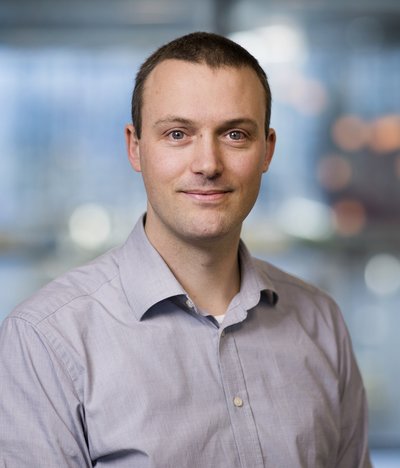
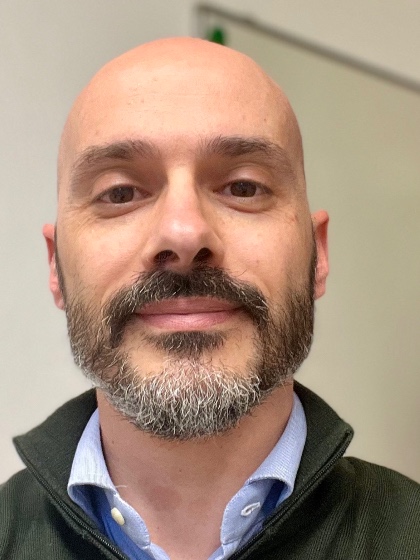
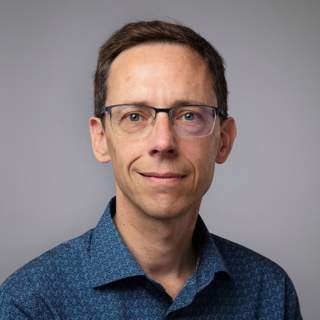
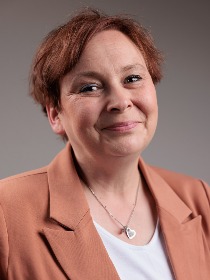
Rashid Zaman is a researcher affiliated with Eindhoven University of Technology (TU/e), focusing on intersections of process mining , GDPR compliance , and event stream processing . His work addresses conformance checking, data retention constraints, and memory optimization in dynamic business processes. Research Trends: Recent publications emphasize technical solutions for aligning business processes with privacy regulations like GDPR, with specialized attention to memory-efficient algorithms for real-time conformance checking and orphan event handling in data streams. Collaborations: Active collaborator with researchers including Boudewijn van Dongen and Mohammad Hassani , contributing to projects on GDPR-compliant business process frameworks.
Dr. Boudewijn van Dongen is a Full Professor at Eindhoven University of Technology's Department of Mathematics and Computer Science, chairing the Process Analytics group. His research focuses on conformance checking and process mining , particularly through alignment-based techniques. Develops ProM and CPN Tools frameworks Collaborates with Philips Research and Vanderlande Leads IEEE Task Force on Process Mining Research Interests : Specializes in aligning observed data with process models, addressing multi-case dependencies , privacy-aware mining , and stream processing . Project Highlights : • Strategic partnership with Philips on health data science • Logistics optimization with Vanderlande Industries • Foundational work in alignment theory and behavioral diagnostics
Giovanni Sileno is an academic specializing in Artificial Intelligence, Logic Programming, and Knowledge Representation, with teaching appointments at the University of Amsterdam, EPITA Paris, and Université Pierre et Marie Curie. His primary affiliation is with the Informatics Institute at the University of Amsterdam where he serves as a Lecturer. His research interests span multiple domains within computer science, focusing particularly on formal methods for normative systems, agent-based programming, and logic-based knowledge representation. His work bridges theoretical computer science with practical applications in policy modeling, forensic science, and business information systems. Dr. Sileno has developed several notable software projects including AgentScriptCC for single-threaded intentional agents, DCPLschema for normative policy specifications, and libraries for normative primitives in Answer Set Programming. His GitHub activity shows consistent contributions from 2012 through 2025, indicating active engagement in both research and development. His publications reflect a strong focus on formal methods applied to practical problems, with particular emphasis on normative systems, agent architectures, and logic programming applications. The research trajectory shows evolution from foundational topics in logic and numeral systems toward increasingly sophisticated applications in policy modeling and agent-based systems. As an educator, he has taught across multiple institutions and disciplines, covering topics from basic programming paradigms to advanced knowledge representation and formal modeling techniques. His teaching spans undergraduate to master's level courses in information studies, cognitive science, data science, and forensic science.
Boudewijn F. van Dongen is a Full Professor in computer science at Eindhoven University of Technology (TU/e), holding positions in Mathematics and Computer Science, Process Analytics, and strategic initiatives like EAISI Foundational, EAISI Health, and EAISI High Tech Systems. He chairs the Process Analytics group, focusing on conformance checking within Business Process Management and Process Mining. Academically, he earned his MSc and PhD in computer science from TU/e (2003 and 2007). His research develops techniques and tools to analyze large-scale systems for process misconformance, leveraging alignments in ProM framework. Key projects include collaborations with Philips Research, Vanderlande, and GDPR compliance initiatives. He teaches courses like Foundations of Process Mining and Data Analytics. Awards include the Best Paper Award BIS 2011. His work contributes to UN Sustainable Development Goals through process optimization in logistics and healthcare.
Pieter-Tjerk de Boer is an Associate Professor at the University of Twente , affiliated with the Electrical Engineering, Mathematics and Computer Science (EEMCS) faculty. He holds dual roles in the Design and Analysis of Communication Systems (Computer Science) and the Digital Society Institute . His research focuses on rare-event simulation, communication systems, and mathematical performance analysis. He earned his PhD in 2000 from the University of Twente with a thesis on queueing models for telecommunication systems. Key research areas include stochastic performance analysis (e.g., importance sampling techniques for queueing networks), computer networking (DNS analysis, IPv6 security), and radio technology (MIMO receivers, harmonic rejection mixers). His work bridges theory and application, addressing challenges in reliability, security, and efficiency of digital systems. Notable contributions include advancements in statistical model checking, automated rare-event simulation for stochastic Petri nets, and open-source intelligence analysis using radio receivers. His findings are published in journals like Simulation , IEEE Transactions , and Performance Evaluation , with over 98 research outputs since 1996. Collaborations span academia and industry, including work on cybersecurity, network management, and hardware-software co-design. Media engagements include discussions on radio receiver usage patterns during the Ukraine war and IPv6-related network vulnerabilities.
Tommaso Caselli is an Assistant Professor in the Faculty of Arts at the University of Groningen, specializing in Computational Linguistics. His work focuses on advanced NLP techniques including event extraction, storyline analysis, sentiment detection, and generative AI applications. He leads the 'AI and Language' theme at the Jantina Tammes School of Digital Society and contributes to initiatives like the Dutch Abusive Language Corpus (DALC) and the Event Storyline Corpus (ESC). His research addresses societal challenges such as climate communication, misinformation detection, and ethical AI use. Caselli has received awards for his contributions to NLP, including the Outstanding Area Chair (2023) and Best Paper Awards at COLING 2022. His recent projects explore generative AI's potentials and risks in healthcare and social media contexts. Affiliations: Faculty of Arts, Computational Linguistics Department, University of Groningen External Roles: Theme Coordinator (Jantina Tammes School), Former Board Member (Senso Comune) Research Interests: Event processing, temporal reasoning, causal relation extraction, abusive language detection, and the societal impact of NLP technologies. His work intersects with UN Sustainable Development Goals related to climate action and responsible innovation. Key Contributions: Developed benchmark corpora like EXCEPTIUS for legal texts analysis and TEXT-CAKE for evaluating language models. Active in CLEF labs (CheckThat!) addressing misinformation and check-worthiness detection. Supervised datasets such as the Dutch Abusive Language Corpus and the Content Type Dataset. Awards & Recognition: Recipient of multiple academic accolades including Outstanding Paper Awards (2022-2023), Best Student Paper (2022), and leadership in organizing NLP workshops (e.g., CLEF, CASE).
Professor Marieke Huisman is a leading figure in software reliability at the University of Twente, where she chairs the Computer Science department within the Faculty EEMCS and leads the Formal Methods and Tools (FMT) Group. She serves as President and Steering Committee chair of the ETAPS association, Member of the board of IPN (ICT-Research Platform Netherlands), and Fellow of the Netherlands Academy of Engineering (NAE). Her research focuses on program verification, reliability of concurrent, parallel and distributed applications, software specification, and formal methods. She develops verification techniques through the VerCors verifier, with applications spanning concurrent data structures, GPGPU programming, and distributed systems. Her work bridges theoretical formal methods with industrial applications, particularly in safety-critical domains. Professor Huisman's recent publications demonstrate strong activity in deductive verification, with particular emphasis on verification of concurrent and parallel systems, memory models, and practical applications of formal methods. Her research shows consistent evolution from theoretical foundations toward practical industrial applications, with increasing focus on GPU programming verification and automated invariant generation. Netherlands Prize for ICT Research 2013 (50,000 euros) 2023 Athena Award for female researchers who stand out as role models She leads multiple significant research projects including NWO OC M Pallas, WWU Münster - UT collaboration Saves, NWO TTW OTP Cheops, NWO VICI Mercedes, and Interreg North Sea Storm_Safe. Her leadership extends to editorial roles including Associate Editor-in-Chief of the Software Track of Science in Computer Programming and executive board membership of VERSEN, the Dutch National Association for Software Engineering. Professor Huisman directs the FMT Group which develops the VerCors verification toolset for concurrent and parallel software. The group collaborates internationally with institutions including WWU Münster, TU Eindhoven, and NlNet Labs, focusing on making formal verification accessible and practical for real-world software development challenges.
Boudewijn Haverkort is Dean of the Tilburg School of Humanities and Digital Sciences at Tilburg University , with a distinguished career spanning over 30 years in academia and research leadership. He has held professorships at the University of Twente and RWTH Aachen, focusing on cyber-physical systems, and led major institutions like the Embedded Systems Institute (ESI) and the Dutch national research program Commit2Data . Education : PhD in Performability Modelling (University of Twente, 1991) Master’s in Computer Science (University of Twente, 1986; thesis work at University of Dortmund, Germany) Research centers on cyber-physical systems , including their application to sustainability , smart grids , wearable systems , and industrial security . His work combines technical rigor with societal impact and is funded by national (NWO) and international (EU) grants. Scientific contributions span performance evaluation , model checking , stochastic Petri nets , and digital twin development . His recent publications address temperature-aware scheduling , virtual entity modeling , and safety-critical system verification . Scientific leadership : Chairman of Commit2Data (2016–present) Chair of 3TU Centre of Excellence CeDICT (2005–2009) Scientific Director of Embedded Systems Institute (2009–2013) Head of Computer Science Department (University of Twente, 2008–2009, 2017–2018) Awards : Harvey Rosten Award for Excellence (2019) Collaborations include roles at the Fraunhofer Project Centre (2018) and advisory positions for regional innovation policies. He has supervised over 30 PhD students and taught courses on cyber-physical design , computer networking , and smart industry modules .
Cornelis (Kees) Huizing is an Assistant Professor in the Department of Mathematics and Computer Science at Eindhoven University of Technology. His work focuses on software engineering , concurrent programming , and dependency safety in Java , with a strong emphasis on model-to-code transformations and educational tools. Research Interests : Concurrency, code transformation, Java programming, failbox mechanisms, and structured design methodologies. Collaboration Networks : Active in interdisciplinary research related to concurrent systems, state machines, and software engineering practices, as evidenced by his fingerprint metrics. Teaching Contributions : Involved in courses such as Capstone and Computer Science Teaching, emphasizing interactive and independent learning strategies for software-intensive systems.
Peter Baas is a Teacher Researcher and Associate Professor at Fontys University of Applied Sciences, trained as a mathematician and mathematics educator. He specializes in applying data analytics to optimize production processes across atypical industrial engineering domains, including healthcare, traffic, transportation, and defense. His research focus centers on Operational Excellence (OPEX) in healthcare, aiming to establish a dedicated research group. Past projects include developing access time management models at Bernhoven Hospital and designing patient check-in systems at Máxima Medical Center, emphasizing variation reduction and multidisciplinary collaboration. Key Achievements Six Sigma Black Belt certification through healthcare waiting time research Developed mobile diagnostic box concept for healthcare process optimization Proposed check-in kiosk implementation at Máxima Medical Center Peter actively collaborates with other Fontys professorships and hospitals, seeking to initiate large-scale interdisciplinary research projects. He maintains professional connections via LinkedIn and is reachable at his institutional email.
J.C. van de Pol is a full-time Professor at Aarhus University with expertise in formal methods and model checking. He is affiliated with the Computer Science department and has a strong focus on algorithms, automaton models, and multicore systems. His work includes the development and application of model checkers, timed automata, and formal verification tools. His research interests span the theoretical and practical aspects of formal verification in computer science. He contributes to the advancement of model checking techniques and their application to complex, timed systems. His work bridges algorithmic theory with real-world software verification challenges. He is associated with the Formal Methods and Tools (EEMCS-CS-FMT) group at the University of Twente (UTwente) and the Digital Society Institute. He can be reached at his email j.c.vandepol@utwente.nl or via phone at +31 53 489 3017.
Prof. Stef van Buuren is a Professor of Statistical Analysis of Incomplete Data at Utrecht University's Faculty of Social and Behavioural Sciences, Department of Methodology and Statistics. He also serves as Head of Statistics at TNO Quality of Life in Leiden. His expertise spans missing data techniques, longitudinal analysis, and early child development. He developed the MICE imputation method and the D-score for child development assessment. His research focuses on applying statistical methods in public health, growth monitoring, and interventions for children. Education: Ph.D. in Social Sciences, Utrecht University (1990) MA in Psychology, Leiden University (1986) Research Interests: Missing data imputation and methodology Child development measurement (D-score, GSED) Public health analytics and growth monitoring Longitudinal data analysis Statistical computing and software development Articles Trends: Recent work emphasizes global child development assessment tools, neonatal outcomes of preterm birth, and methodological advancements in handling missing data. His publications bridge statistical theory with practical applications in healthcare and epidemiology. Grants & Advising: Advised multiple international studies on child development and preterm birth outcomes. Collaborates with global health organizations to develop scalable assessment tools. Active in training researchers in statistical methodology through software like 'mice' and 'D-score' packages. Labs/Teams: Leads statistical research teams at Utrecht University and TNO, focusing on translational data science for public health challenges.
Klaus Freiherr von Gleissenthal is an Assistant Professor at the Faculty of Science and the Network Institute at Vrije Universiteit Amsterdam. His research focuses on computer security, hardware security, and programming languages. He teaches courses on compiler construction and verification for security. His work addresses challenges in embedded systems, microcontroller-based devices, and open-source processor verification. Collaborations span international research networks, emphasizing practical applications in cybersecurity and hardware-software co-design. Research Interests: Hardware-Triggered Security Mechanisms Type Systems and Static Analysis Side-channel Attack Mitigation Compiler Optimization Impacts on Security His recent publications explore topics such as data integrity in microcontrollers, refinement type systems, and leakage contracts for open-source processors. He actively contributes to conferences like CCS and PLAS, fostering interdisciplinary approaches to security challenges.
Femke van Raamsdonk is an Assistant Professor in Theoretical Computer Science at Vrije Universiteit Amsterdam’s Faculty of Science and affiliated with the Network Institute. She specializes in rewriting systems, lambda calculus, and formal methods. Her research spans higher-order rewriting, termination analysis, and computational logic, with a focus on theoretical foundations and applications in programming languages. Van Raamsdonk has edited numerous conference proceedings, including RTA 2013 and FSCD 2023, and has authored over 24 research outputs. She teaches advanced courses like Advanced Logic and Equational Programming, emphasizing practical tools like the ProofWeb system. Her work contributes to UN Sustainable Development Goals through advancements in computational theory and education. No scientific awards are explicitly mentioned, but her extensive editorial roles and conference contributions highlight her academic leadership. She has supervised two PhD theses, though student names are not listed. Her activities include memberships in professional organizations like CL and RTA, and lectures on topics such as constructor subtyping and termination in lambda calculus.
Ansgard Heinrich is an Associate Professor of Journalism Studies and Media at the University of Groningen's Faculty of Arts. She holds a PhD from the University of Otago (2008) and specializes in global journalism dynamics, digital media, and conflict reporting. Her research focuses on how digitization and globalization reshape journalistic practices and conflict reporting in complex information networks. Education: PhD in Journalism Studies (University of Otago, 2008); MA in German Language/Literature, English, and Sociology (Bielefeld University); prior career as freelance journalist in Germany. Research Interests: Explores digital journalism transformation, global conflict reporting agents, alternative media, and disinformation. Current NWO Aspasia-funded project Who’s Breaking the News? examines conflict reporting in digital networks. Earlier work includes Network Journalism (Routledge, 2011), analyzing interactive media practices. Awards: Recipient of the NWO Aspasia grant (2020–present). Teaching: Coordinates MA thesis supervision and teaches Global Journalism, Business & Ethics, and Global Conflict Reporting. Active in international classroom initiatives integrating diverse student/staff backgrounds. Affiliations: Member of Research School for Media Studies (RMeS), European Communication Research and Education Association (ECREA), Globalisation Studies Groningen (GSG), and Groningen Research Institute for the Study of Culture (ICOG).