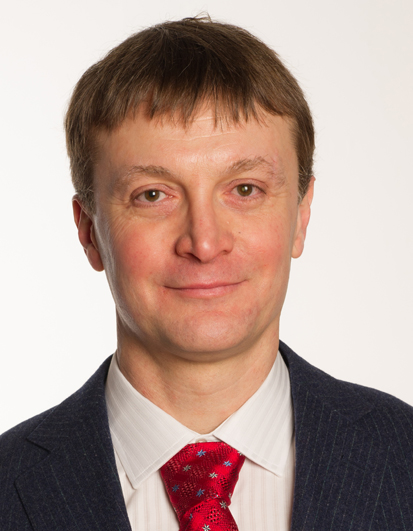
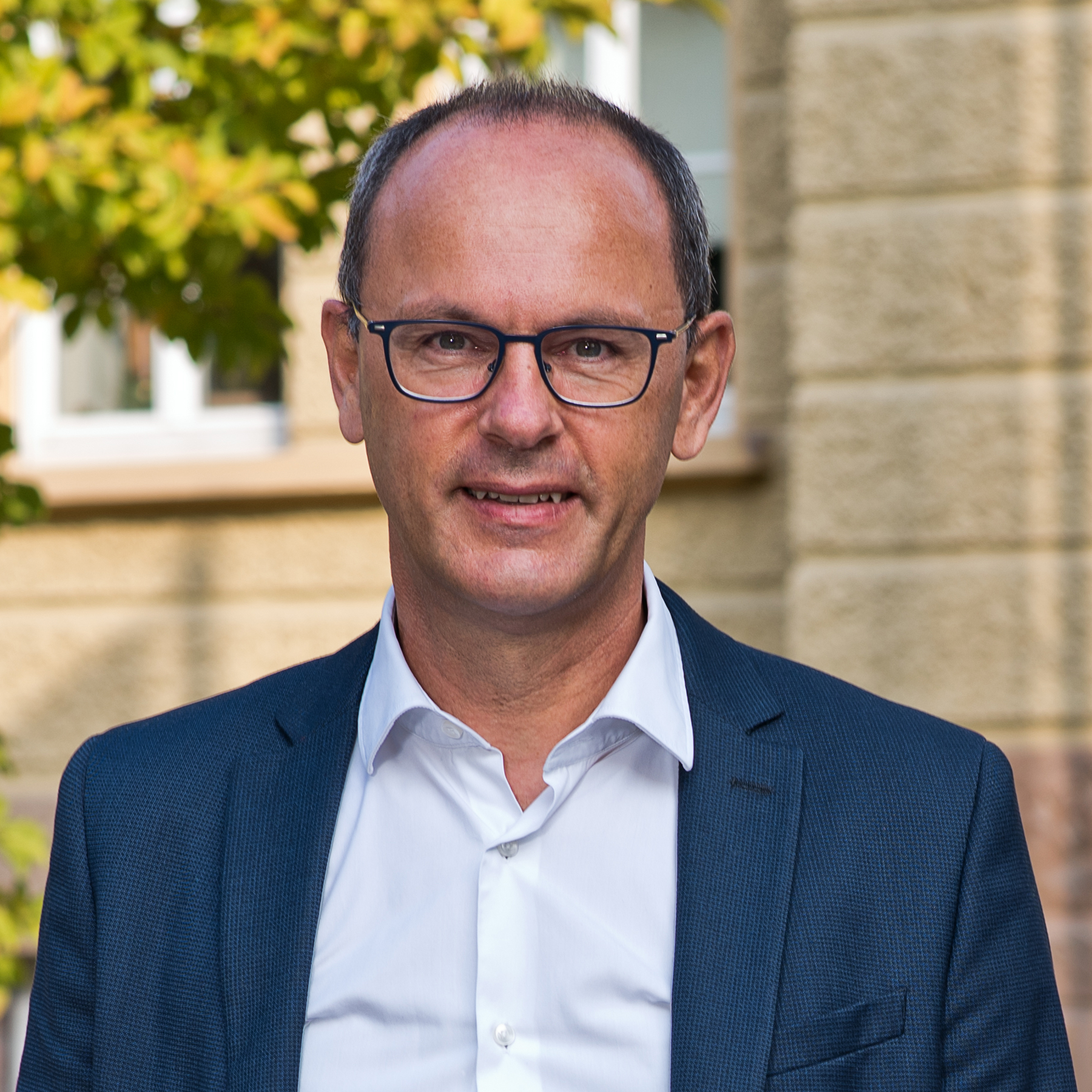
Stefano Quer is an Associate Professor at the Department of Control and Computer Science (DAUIN), Politecnico di Torino. He holds a PhD in Electronic Engineering from the same institution and has been affiliated with DAUIN since 1996. Researcher (1996-2000) Associate Professor (2000-present) Visiting Faculty at UC Berkeley (1994-1995) Research Interests His work spans Formal Verification BDD/SAT Techniques Embedded Systems Hardware/Software Co-Verification Parallel Computing with applications in VLSI CAD, industrial IoT, and energy-efficient systems. Recent articles focus on GPU-accelerated graph algorithms, wireless sensor calibration, and AI-driven test optimization. Scientific Awards Best Paper Award, IEEE EURO-DAC'94 Academic Contributions Supervised PhD students Lorenzo Cardone and Andrea Calabrese Member of DATE, ICSOFT Technical Program Committees Topical Advisor for Sensors MDPI 60+ publications in IEEE/ACM venues
Luis Alberto Barron Cedeno is an Associate Professor at the Department of Interpretation and Translation, University of Bologna since 2022, where he previously served as Senior Assistant Professor from 2019-2022. He holds a PhD in Computer Science from Universitat Politècnica de València (2012) and has worked at Qatar Computing Research Institute (2014-2019) and TALP Research Center (ERCIM fellowship, 2012-2014). PhD: Universitat Politècnica de València (2012) MSc: AI (Universitat Politècnica de València, 2009) MSc: Computing Science (UNAM, 2007) BEng: Computing (UNAM, 2004) His research focuses on NLP applications for analyzing text qualities like originality (plagiarism detection) and intent (hate speech, propaganda). Recent work includes persuasion techniques in spam emails , misogyny detection using argumentation theory, and Spanish language varieties analysis. He has published over 100 papers with 20+ in top-tier conferences. Key awards include SemEval 2020 Best Task for propaganda detection and ACL 2020 Best Demo . He serves as Specialty Chief Editor for Frontiers in Artificial Intelligence (NLP) since 2023. His students include PhD candidates Arianna Muti (misogyny detection), Katerina Korre (hate speech), and Paolo Gajo (inceldom analysis). 2020: SemEval Best Task 2020: ACL Best Demo 2012: PhD International Mention 2009: Best MSc Thesis 2007: MSc Cum Laude 2004: BEng Cum Laude He organizes the annual CheckThat! lab at CLEF since 2018 and chaired CLEF 2022. His teaching includes NLP courses, computational linguistics, and game localization for translation students.
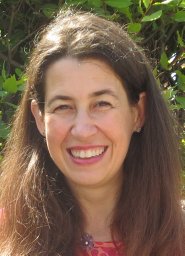
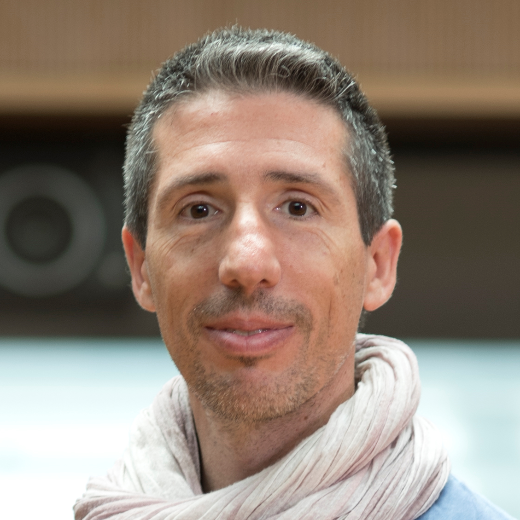
Yehia Moustafa Abd Alrahman is a PostDoc researcher at the SysMA research unit of IMT School for Advanced Studies Lucca, where he also participates in the FILIERASICURA project with Cisco. He is preparing to relocate to the University of Leicester to collaborate with Prof. Nir Piterman on the ERC Consolidator Project DSynMA (Distributed Synthesis from Single to Multiple Agents). His academic journey began with a scholarship-funded computer engineering degree at IMT Lucca, followed by a master's scholarship in computer science where he served as a teaching assistant. Abd Alrahman's research focuses on formal methods for developing correct-by-construction software systems with emphasis on predictability, adaptivity, efficiency, reusability, maintainability and modularity. His work particularly addresses challenges in contemporary information systems including embedded systems and service-oriented architectures. Currently, he is investigating formal analysis approaches for securing supply chains in cyber-physical systems. His research spans attribute-based communication, collective adaptive systems, multi-agent systems verification, and reconfigurable distributed systems. His publication record shows a consistent trajectory from foundational work on attribute-based communication (2014-2018) toward increasingly sophisticated verification frameworks for reconfigurable systems (2019-2025). Recent publications demonstrate a clear evolution toward distributed synthesis techniques, model checking for reconfigurable multi-agent systems, and formal frameworks for runtime reconfiguration. His work bridges theoretical computer science with practical applications in secure system design. Abd Alrahman completed his PhD with first honors rating 'excellent' in the Computer, Decisions, and Systems Science track at IMT School for Advanced Studies Lucca. While no formal awards are documented in the provided materials, his consistent publication record in top venues like FORTE, ISoLA, and AAMAS demonstrates recognition within the formal methods community. His collaborations with established researchers like Nir Piterman, Rocco De Nicola, and Michele Loreti indicate strong research networks. As a PostDoc researcher, Abd Alrahman works within the SysMA research unit at IMT Lucca, contributing to the Italian Project FILIERASICURA with Cisco. His upcoming move to Leicester represents a significant career advancement through the ERC Consolidator Project DSynMA, which will expand his research scope into distributed synthesis for multi-agent systems.
Laura Carnevali is an Associate Professor of Computer Science at the Department of Information Engineering, University of Florence, where she leads research in formal methods and performance evaluation as a member of the Software Technologies Lab. She teaches Software Engineering for Embedded Systems, Quantitative Evaluation of Stochastic Models, and Foundations of Computer Programming at the School of Engineering. Her research focuses on formal methods for real-time software development and performance evaluation of non-Markovian models, with significant contributions to the ORIS Tool for quantitative system analysis. Key areas include: Stochastic modeling of critical infrastructure Formal verification of real-time systems Reliability engineering methodologies Performance evaluation of cyber-physical systems Her publications show strong emphasis on applied formal methods, with recent work focusing on workflow analysis, infrastructure reliability, and transportation systems modeling. Research consistently integrates theoretical frameworks with practical applications in engineering domains. Awards include: Best Paper Award at ICPE 2021 She actively contributes to academic service as program committee member for leading conferences including FORMATS, QEST, and EPEW, and serves as reviewer for IEEE Transactions on Software Engineering, Reliability, and other prestigious journals.
Roberto Zunino is an Associate Professor in the Department of Mathematics at the University of Trento, specializing in blockchain technologies, formal methods, and distributed systems. His research bridges theoretical computer science with practical cryptographic applications, particularly in Bitcoin and smart contract ecosystems. His research interests focus on blockchain security , smart contract formalization , and probabilistic verification . Key areas include MEV (Maximal Extractable Value) theory, UTXO-based smart contracts, and computationally sound tokenization. His work combines rigorous mathematical modeling with real-world protocol analysis, emphasizing security guarantees through formal methods. Recent publications demonstrate a strong trend toward theoretical foundations of blockchain economics and security. His 15 most recent papers (2020-2025) analyze MEV formalization, Bitcoin contract liquidity, UTXO scalability, and smart contract language design, revealing deep integration of type theory, game theory, and cryptographic primitives. Zunino actively teaches courses including Informatics , Interactive Theorem Proving (using Lean 4), and Computer Tools for Mathematics . His educational focus emphasizes formal verification, imperative programming foundations, and mathematical logic applications in computer science.
Valeria Cardellini is an Associate Professor in Computer Engineering at the University of Rome Tor Vergata, with a PhD in Computer Science and Automation Engineering (2001). Her research focuses on distributed computing systems, particularly cloud-based and edge-based systems, with emphasis on resource provisioning, self-adaptation, and QoS-driven optimization. She has published over 90 peer-reviewed papers, including award-winning works at IEEE SOSE and ACM DEBS conferences, and has led collaborations in EU projects like EoCoE (2015-2018) and the Cloud for Europe tender (2016-2017). She has organized major events such as UCC 2018 and contributed to workshops like Auto-DaSP. Teaching includes distributed systems, cloud computing, and computer architectures at both undergraduate and graduate levels. Education: PhD in Computer Science and Automation Engineering (2001), University of Rome Tor Vergata Previous academic qualifications not explicitly listed Research Interests: Her work spans geo-distributed systems, serverless computing, edge-cloud continuum optimizations, and reinforcement learning for adaptive systems. Key areas include energy-efficient scheduling, fault-tolerant architectures, and QoS-aware service composition. Recent projects address scalability challenges in data stream processing and cybersecurity for distributed environments. Awards & Recognition: Best Paper Awards at IEEE SOSE 2011, ACM DEBS 2015, and ACM DEBS 2016 Keynote Speaker at IEEE MASCOTS 2016 Grants & Projects: Led EU H2020 projects (EoCoE), contributed to the European Cloud tender, and managed COST Action IC1304 (ACROSS). Current research involves cloud-edge continuum frameworks like Serverledge and FIGARO. Labs & Teams: Active in developing experimental platforms such as MOSES (for self-adaptation testing) and OpenCoarrays (coarray Fortran frameworks). Collaborates with interdisciplinary teams on HPC, distributed systems, and cybersecurity.
Alessandra RAFFAETA' serves as Associate Professor in the Department of Environmental Sciences, Informatics and Statistics at Ca' Foscari University of Venice, where her research bridges computer science with environmental applications through advanced mobility data analytics. Her research expertise spans several interconnected domains: Mobility Data Analytics and Trajectory Pattern Recognition Semantic Trajectories and Spatiotemporal Modeling Big Data Processing for Environmental Monitoring Marine Noise Pollution and Fisheries Management Privacy-Preserving Data Mining and Ethical Considerations Urban Mobility and Tourist Behavior Analysis Dr. RAFFAETA's scholarly output demonstrates a clear evolution from theoretical foundations in constraint logic programming to practical environmental applications. Her recent work (2021-2025) shows increasing focus on marine environmental challenges, particularly underwater noise characterization through semantic trajectories and analysis of fishing activities in the Adriatic Sea. A notable trend is her growing attention to ethical dimensions of mobility data usage, reflecting the field's maturation and societal implications. Her research methodology combines advanced trajectory data warehousing techniques with machine learning to extract meaningful patterns from complex spatiotemporal datasets. She has developed specialized frameworks for visual OLAP analysis on trajectory data and semantic enrichment of mobility information, with applications ranging from marine conservation to urban planning. Dr. RAFFAETA' actively contributes to the mobility data analytics community through workshops like the International Workshop on Big Mobility Data Analytics (BMDA) and collaborative research addressing real-world environmental challenges. Her work with marine scientists on fishing vessel tracking and with urban planners on Venice tourism patterns demonstrates strong interdisciplinary collaboration. Her laboratory work likely involves trajectory data management systems, semantic enrichment tools, and spatiotemporal analysis frameworks that enable both theoretical exploration and practical environmental monitoring applications.
Gianpiero Cabodi is an Associate Professor in the Department of Control and Computer Science (DAUIN) at the Polytechnic of Turin, where he is also a member of the University Internship Commission. He is actively involved in teaching and research within the College of Computer, Film and Mechatronics Engineering. Research Interests: His research spans formal verification, model checking, binary decision diagrams, SAT solvers, embedded system design, and cybersecurity. His work emphasizes formal methods for ensuring correctness and security in hardware and software systems, particularly in safety-critical and automotive applications. Recent Publications: His 2024 publications demonstrate a strong focus on optimizing formal verification techniques. He explores interpolation-based improvements in bounded model checking, hardware model checking algorithms, and the use of binary decision diagrams in interpretable machine learning—highlighting a convergence of formal methods with modern AI interpretability and hardware verification. Teaching and Leadership: He has served as a course instructor for advanced data structures in Python, systems programming, and algorithms. He has also directed several doctoral programs in Computer and Systems Engineering. His leadership extends to research projects such as REBECCA and OSMOSIS, and he has chaired international workshops including FMCAD and DIFTS. Research Projects: REBECCA (2023–2026): Scientific Head of Structure, focusing on reconfigurable platforms for secure AI. OSMOSIS (2008–2010): Scientific Responsible for EU-funded codesign of embedded systems. Multiple commercial research projects on embedded systems in automotive, RFID traceability, cybersecurity, and HMI design (2008–2025). Advising and Grants: While no formal students are listed, he has supervised numerous research projects, often as Scientific Manager or Responsible, funded by both EU programs and industry contracts. His work bridges academic research and industrial applications, particularly in automotive and embedded domains. Labs and Teams: He is a key member of the FM - Formal Methods (DAUIN) research group, which focuses on formal verification techniques for digital systems.
Johann Gamper is a Professor and Head of the Database Systems Group at the Free University of Bozen-Bolzano. He previously served as Vice-Rector for Research (2018-2024) and Vice-Dean for Studies (2014-2018). Education: Information not provided in text. Research Focus: His core research investigates data-intensive systems with emphasis on temporal data management, time series analysis, and efficient query processing. His team combines fundamental research with system development for applications in governance, tourism, healthcare, and agriculture. Current projects include temporal RDBMS extensions, time series motif mining, and multidimensional range count approximation. Publication Trends: Recent work addresses temporal query optimization, time series classification, and generative approaches for e-commerce data. His research demonstrates consistent innovation in temporal data handling and database performance optimization. Teaching: Currently teaches Database Management Systems and advises PhD students in temporal database research.
Prof. Toni Mancini is Full Professor at the Department of Computer Science, Sapienza University of Rome, where he leads research in artificial intelligence and formal verification methods. His work develops computational approaches for system verification, in silico clinical trials, and optimization of cyber-physical systems. Mancini has secured substantial research funding including EU projects PAEON (model-driven computation of infertility treatments) and SmartHG (energy demand aware services for smart grids). He currently coordinates scientific programs in Rome Technopole's innovation ecosystem and develops AI applications for forensic psychiatry. His teaching includes courses on Artificial Intelligence, Databases, and Formal Methods in AI-Based Systems Engineering. Mancini has supervised numerous PhD students and received the Best Paper Award at ISMIS 2018 for work on network vulnerability analysis.
Jacopo Sini is a Research Fellow at the Department of Automatic Control and Computer Science (DAUIN) of the Polytechnic University of Turin. His research focuses on safety-critical automotive systems, software reliability engineering, and emotion recognition. He collaborates on Master's courses related to model-based software design and autonomous vehicles. He is affiliated with the CAD - Electronic CAD & Reliability Group, contributing to projects involving ISO26262 compliance, hardware fault tolerance, and simulation methodologies. His work includes developing real-time driver monitoring systems and enhancing social acceptance of autonomous vehicles through emotion analysis. Key research outputs include studies on control flow checking for automotive embedded systems, emotion recognition algorithms, and test benches for hardware failure diagnostics. Recent publications explore Rust programming language safety features and AR-based educational platforms.
Roberto Bruni is a Professor in the Department of Computer Science at the University of Pisa, Italy. He has been actively contributing to theoretical computer science with a focus on formal methods, operational semantics, and reaction systems. His academic service includes serving as PC member for SAS 2025 and CMSB 2025 conferences. Professor Bruni's research interests span Operational Semantic, Petri Nets, Reaction Systems, Graph Transformation, and Monoidal Category. His work bridges theoretical computer science with applications in computational biology and program analysis. He has developed significant tools like BioReSolve, a Prolog interpreter for Reaction Systems analysis, and has contributed to projects such as RemConf (Confusion removal in Petri nets) and The Link Calculus. His recent publications demonstrate a strong focus on reaction systems, program analysis, and formal verification methods. The research trend shows increasing application of theoretical computer science concepts to biological modeling and healthcare applications, particularly through enhanced reaction systems frameworks. Professor Bruni holds several institutional responsibilities including membership in the Commission Didattica del GRIN since 2020, delegation to the University Information System (SIA) for the Department of Computer Science since 2020, and membership in the Doctoral College for Smart Industry since 2018. He has been Vice-president of the Master's Degree in Data Science and Business Informatics at the University of Pisa since 2017. His teaching portfolio is extensive, covering courses in programming, algorithms, quantum computing, business process modeling, and program analysis for both undergraduate and graduate students in multiple languages (Italian and English). He has taught courses such as Programmazione e Algoritimica, Models for Programming Paradigms, Business Processes Modeling, Program Analysis, and Introduction to Quantum Computing. Professor Bruni has been involved in numerous research projects including PRA (FM4HD, DECLWARE, FOG), PRIN (ASPRA, CINA, IPODS), and several EU-funded projects (IST-FP7 ASCENS, IST-FP6 SENSORIA, CoMeta, AGILE, NAPI, GETGRATS). His previous academic positions include PhD Student at University of Pisa, International Fellow at SRI Computer Science Laboratory, and Visiting Scholar at UIUC.
Kaicheng Yang is a postdoctoral researcher at Northeastern University , with an upcoming transition to Assistant Professor in the Department of Computer Science at Binghamton University in Fall 2025. His work bridges computational social science, AI ethics, and platform governance. Education: Ph.D. in Informatics from Luddy School of Informatics, Computing, and Engineering , Indiana University Bloomington His research investigates malicious information manipulation through social bots, algorithmic biases, and generative AI misuse, developing countermeasures for trustworthy online ecosystems. Recent publications explore domain-sharing patterns , news source credibility , and AI-generated social media fraud across journals like Scientific Data , PNAS , and Journal of Online Trust and Safety . Awarded Best Paper - Honorable Mention at the International AAAI Conference on Web and Social Media, Yang also contributes to open-source tools such as the LLM Domain Classification dashboard and Botometer X. His work has received media coverage from Wired , Forbes , and MIT Technology Review .
Luca Spalazzi is an Associate Professor at the Department of Information Engineering , Università Politecnica delle Marche , Italy. His research spans multiple domains including cybersecurity , blockchain technology , machine learning , and telerehabilitation systems for Parkinson's disease. He applies formal methods to software verification and security analysis, with a focus on real-time systems and distributed architectures . Key research areas: Cybersecurity, Blockchain, Machine Learning, IoT, Formal Verification Recent work: Blockchain-based sustainable supply chains, Zero-Knowledge Proofs, Smartphone health monitoring His publications (2013-2025) demonstrate expertise in malware detection , smart contract verification , and AI-driven health solutions . Articles include BRAIN 2024 workshop organization and RAPIDO system for Parkinson's telerehabilitation.
Sergio Tessaris is an Assistant Professor at the KRDB Research Center for Knowledge and Data, affiliated with the Faculty of Computer Science at the Free University of Bozen-Bolzano. His research focuses on semantic technologies, Description Logics, and data-aware workflows. University: Free University of Bozen-Bolzano School: Faculty of Computer Science Emails: Sergio.Tessaris@unibz.it, tessaris@inf.unibz.it Research Interests: His work centers on semantic technologies for data access and process management, including Description Logics reasoning algorithms, declarative business processes, and ontology-driven systems. He has contributed to temporal event data analysis, chatbot design for legal reporting, and SQL null value handling. Recent publications emphasize business process verification, constraint mining, and deep learning applications. Teaching Activities: Local coordinator of the European Masters Program in Computational Logic (EMCL) Lecturer for courses: Integrated Logic Systems, Computational Logic, Introduction to Artificial Intelligence, Non-monotonic Logics Teaching assistant for Semantic Web Technologies and XML/Semi-structured Databases Organisational Contributions: Co-organiser of DL 2007 and DL 2002 workshops Former member of Description Logic steering committee Program committee member for conferences including AAAI-06, ESWC, ISWC, and ODBASE