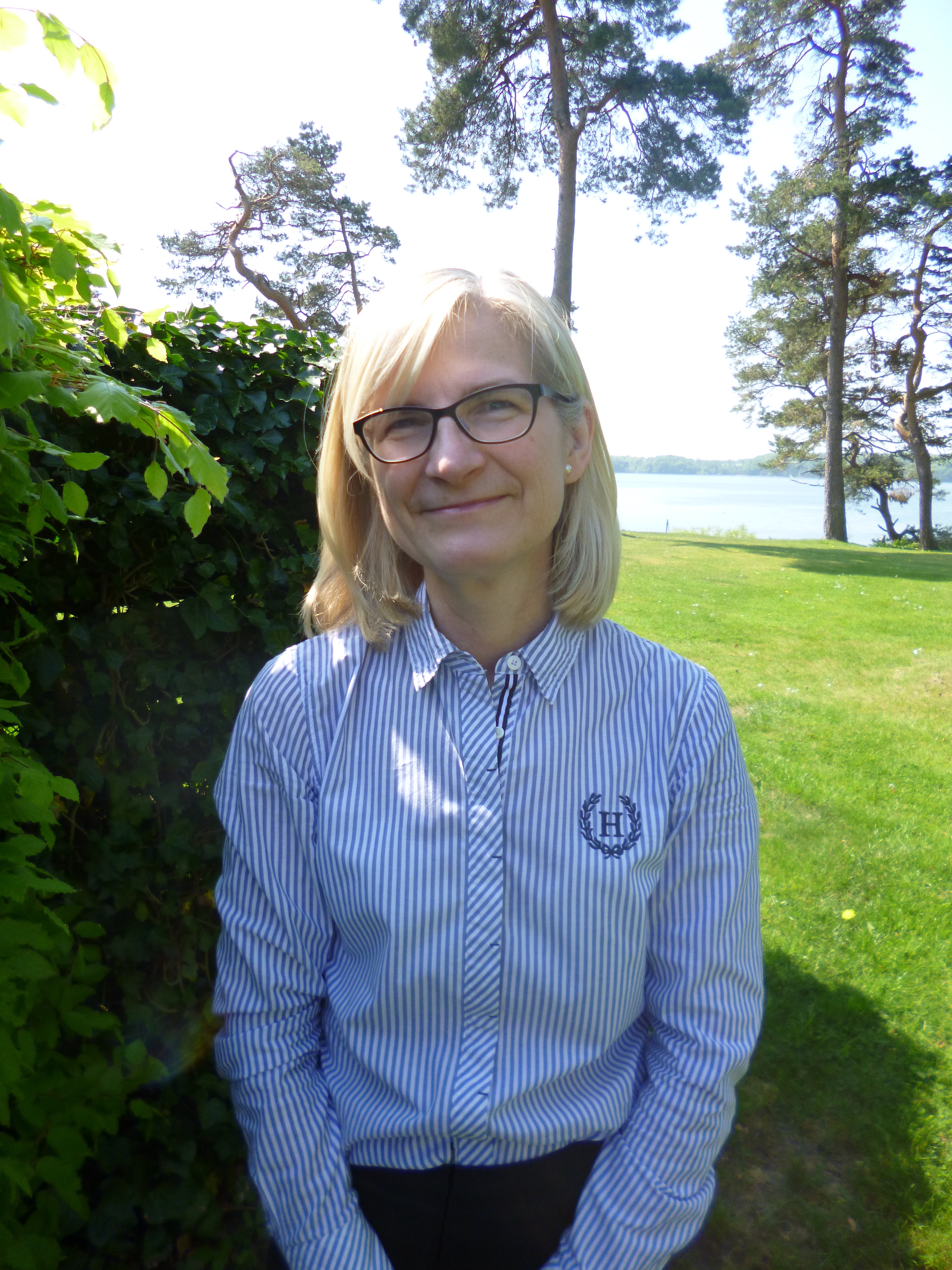
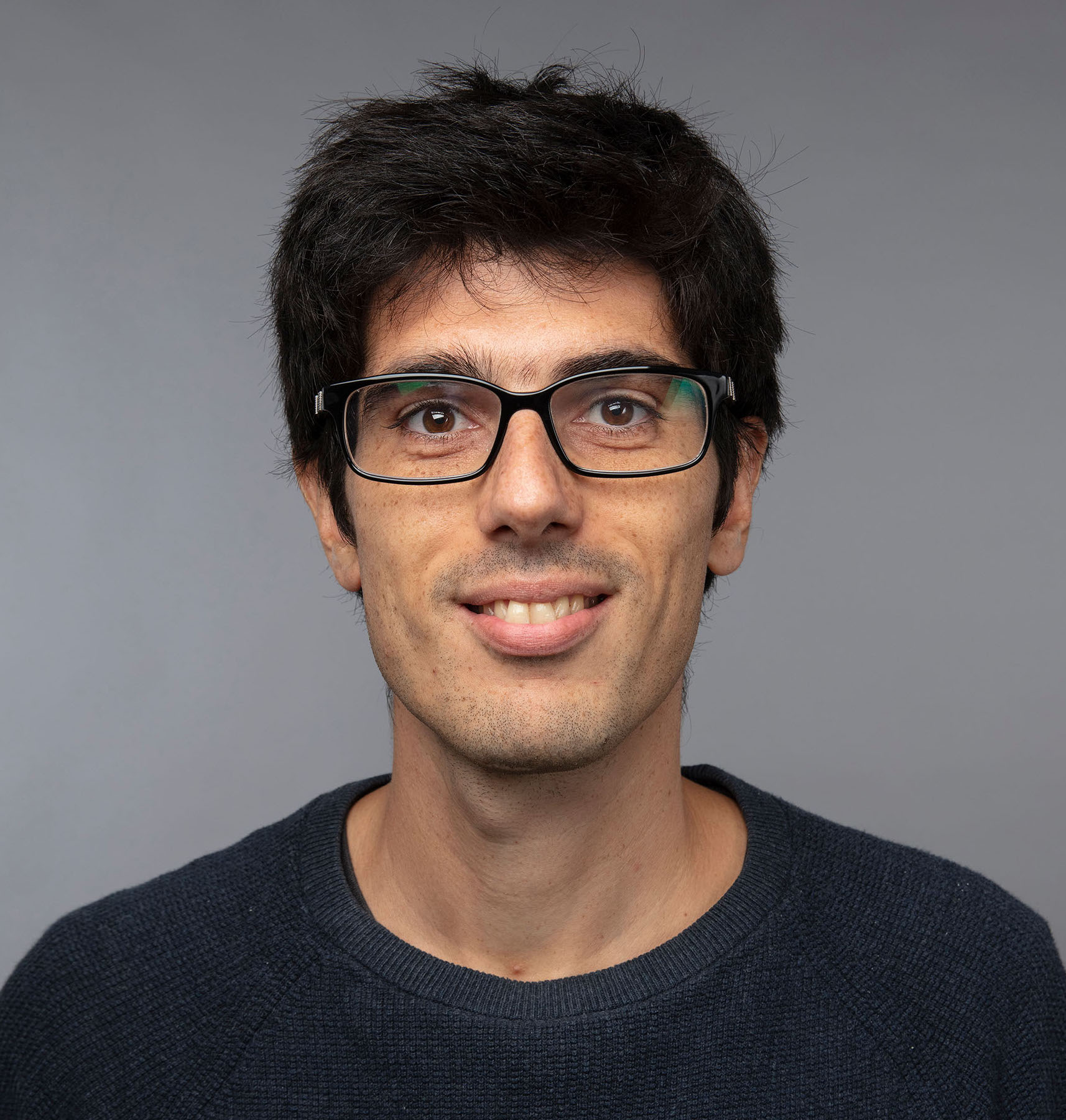
Anders Søgaard is a Professor at the University of Copenhagen , affiliated with both the Department of Computer Science and the Department of Communication. His research bridges Natural Language Processing and Machine Learning with a focus on AI ethics , explainability , and human-AI interaction . Primary Affiliation: Department of Computer Science, University of Copenhagen Secondary Affiliation: Department of Communication, University of Copenhagen Email: soegaard@di.ku.dk, soegaard@hum.ku.dk Research Interests His work spans Natural Language Processing , Machine Learning , and AI ethics , with recent studies addressing: Trustworthiness in AI systems Explainable AI (XAI) frameworks Multilingual model fairness and alignment Human-AI collaboration in reasoning tasks Ethical implications of social robots Mental health analytics using ML Recent Publications His 2025 output highlights trends in: AI ethics (e.g., fairness metrics, trustworthy systems) Multilingual model analysis (knowledge retention, cross-lingual transfer) Human-centric AI (gaze data, cultural considerations) Applications in healthcare and social good
Manex Aguirrezabal Zabaleta is an Associate Professor in the Department of Nordic Studies and Linguistics at the University of Copenhagen. He previously held positions as a Postdoc (2017-2019) and Assistant Professor at the same institution. His educational background includes: PhD in Natural Language Processing from the University of the Basque Country (UPV/EHU), conducted at the IXA NLP group. Master's degree in Natural Language Processing from UPV/EHU. Bachelor's degree in Computer Science (5 years) from UPV/EHU. Dr. Aguirrezabal's research focuses on the computational analysis of poetry , particularly stress patterns in English. He explores whether computers can effectively analyze poetic structures, a field with roots in the 1980s but revitalized by modern techniques. Additionally, he investigates language generation , computational morphology and phonology , and finite-state methods . His work bridges traditional linguistic inquiry with cutting-edge natural language processing. Recent publications (2023-2024) demonstrate a diverse engagement with computational linguistics, including poetry generation, multimodal corpus development, clickbait analysis, and fact-checking. His research often employs zero-shot learning and language models, reflecting current trends in AI-driven linguistic analysis. He has contributed to international collaborations such as ParlaMint (multilingual parliamentary corpora) and the GEHM Zoom corpus. While specific grant details are not provided, his active publication record indicates ongoing research support. Dr. Aguirrezabal maintains a strong connection to his Basque heritage, having pursued his early education in the Basque language.
Nicholas Dias is a postdoctoral researcher at the Department of Political Science, Aarhus University. His work focuses on public opinion, political psychology, and the dynamics of democratic systems. Research examines citizen competence, polarization, and misinformation Teaching includes seminars on American politics and data science Contact: niccdias@ps.au.dk Research Trends: Dias’s publications analyze how citizens engage with democracy, polarization’s impact on governance, and misinformation mitigation. His work challenges assumptions about voter rationality and explores the limits of correcting partisan misperceptions. Collaborations: Co-authored studies with scholars like Y. Lelkes and A. Sippitt, published in journals such as Journal of Politics , PNAS Nexus , and Political Quarterly .
Desmond Elliott is an Associate Professor in the Natural Language Processing section at the Department of Computer Science, University of Copenhagen (UCPH). His research focuses on multimodal and multilingual models with specific emphasis on vision-language integration and tokenization-free NLP approaches. He teaches Bachelor and Master's level courses including Advanced Topics in Natural Language Processing (since 2019), Grundlæggende Data Science (since 2023), and previously Data Science (2021-2023). His research interests center on building and understanding multimodal and multilingual models , particularly exploring vision and language interactions through billion-parameter systems. Current work investigates cultural representation disparities in vision-language models, parameter-efficient captioning, and multimodal distributional semantics across diverse domains including food culture and medical imaging. His methodology emphasizes real-world applicability in non-English contexts and ethical considerations in multimodal systems. Elliott's recent publications (2025) demonstrate leadership in multimodal NLP, with significant contributions to vision-language pretraining, multilingual evaluation frameworks, and clinical NLP applications. His work spans theoretical advancements in model architectures and practical implementations addressing challenges in low-resource languages and domain adaptation. Best Long Paper Award at EMNLP 2021 Best Poster Award at COLING 2019 As an active educator, Elliott contributes to courses on Fair and Transparent Machine Learning and previously taught Information Retrieval. His research collaborations span international institutions with particular focus on European and non-English language contexts, reflecting UCPH's recognition as Europe's #1 institution for HCI research over the past decade.
Jiri Srba is a Professor at Aalborg University's Department of Computer Science, part of the Technical Faculty of IT and Design. He leads research in the Distributed, Embedded and Intelligent Systems group and contributes to projects like "ControLing wAter In an uRban Environment" and "Collective Adaptive System SynThesIs using Non-zero-sum Games". His office is located at Selma Lagerløfs Vej 300, 9220 Aalborg Øst, Denmark. Contact him at +4599409851 or srba@cs.aau.dk. His core research focuses on formal methods and applied computer science: Model checking and verification of concurrent systems Petri nets and their applications Network protocol verification and synthesis Distributed system correctness Automated reasoning for industrial systems His publication record shows strong emphasis on network verification, model checking optimization, and applying formal methods to environmental systems. Recent work integrates computer science with sustainable engineering, particularly in water management systems and energy control.
Andrea Burattin is an Associate Professor at the Department of Applied Mathematics and Computer Science, Technical University of Denmark. His work bridges formal methods and practical process analysis, focusing on process mining, business process management, and hybrid modeling techniques. He actively contributes to research in healthcare process optimization, streaming data analysis, and system verification through Petri nets and CCS transformations. UN Sustainable Development Goals: Poverty eradication, environmental protection, and prosperity for all (via process optimization) Active projects: Immersive Process Mining (2024-2027), Usability and Understandability of Hybrid Process Models (2018-2021) His research explores large language model integration with process mining, proposing frameworks like Tiramisù for multi-faceted process visualization and PN2CCS for formal model translation. Recent work emphasizes real-time monitoring, conformance checking, and IoT-driven process analytics. Key trends in his publications include: 1) Streaming process mining pipelines (2022-2025); 2) LLM-plan generation frameworks (2024); 3) Formal verification techniques (Petri nets, CCS); 4) Healthcare process modeling (2019-2023); 5) Behavioral pattern analysis in process compliance. Scientific Awards Best Demo Award (2022, 2016) Best Process Mining Dissertation Award (2014) Best Workshop Paper (EDBA and PODS4H, 2023) As advisor, he supervises PhD projects on process mining and hybrid modeling. His editorial roles include Information Systems reviewer (2024-2025) and past editor for Engineering Applications of AI (2022-2023). Collaborations span Denmark, Italy, and the Netherlands.
Arnav Arora is a PhD Fellow at the Department of Computer Science , University of Copenhagen (DIKU), specializing in Natural Language Processing . His work focuses on ethical AI, bias detection, and societal impacts of language models. Email: aar@di.ku.dk Location: Universitetsparken 1, 2100 København Ø Arnav's research explores fine-grained value alignment in language models, harmful content detection , and cross-cultural differences in AI responses. His work bridges technical NLP advancements with social responsibility, including dual use ethical frameworks and community value analysis . Key publication trends include: 2025: Bias mitigation through BiasGym framework 2024: Factcheck-Bench benchmark development 2023: Thorny Roses dual use analysis 2022: Cross-cultural value probing methods 2020: Multi-hop fact checking systems Arnav contributes to the Software, Data, People & Society (SDPS) section, collaborating with interdisciplinary teams on projects involving language model evaluation and societal impact mitigation . His work often addresses real-world AI deployment challenges through academic-industry partnerships.
Anne Elisabeth Haxthausen is an Associate Professor at the Software Systems Engineering section within DTU Compute , Technical University of Denmark . Her work focuses on formal methods, railway control systems, and safety-critical software engineering. Founder and leader of the DTU Railway Verification Group Member of European Technical Working Group on Formal Methods in Railway Control Editorial board member for Springer Formal Aspects of Computing Journal Active in the Overture Language Board Her research emphasizes formal verification of railway interlocking systems, particularly through compositional approaches and automated tools. She has contributed to projects like RobustRailS, Overture, and RAISE, focusing on model-based development and verification. She serves as a tutor for bachelor students and contributes to the advisory committee for DTU's Computer Science and Engineering MSc program. Her recent publications explore challenges in verifying autonomous and AI-driven railway technologies.
Isabelle Augenstein is a Professor at the University of Copenhagen, Department of Computer Science (DIKU), where she heads the Copenhagen Natural Language Understanding (CopeNLU) research group and the Natural Language Processing section. She is also a co-lead of the Danish Pioneer Centre for Artificial Intelligence, Denmark's largest research center initiated by the Danish Ministry of Higher Education and Science. In October 2022, she became Denmark's youngest ever female full professor. Dr. Augenstein earned her undergraduate degree in Computational Linguistics and Psychology from Heidelberg University, followed by a Master's in Computational Linguistics. She completed her PhD in Computer Science at the University of Sheffield under the supervision of Dr. Diana Maynard and Prof. Fabio Ciravegna. In 2021, she earned a Habilitation at the University of Copenhagen in Explainable Fact-checking. Professor Augenstein's primary research focuses on fair and accountable Natural Language Processing, with particular emphasis on explainability, factuality, and bias detection. Her work spans multiple subfields including automated fact-checking, stance detection, gender bias analysis, and cultural bias in language models. She has pioneered research in explainable fact-checking, developing methods that not only predict claim veracity but also provide meaningful explanations of the decision-making process. Her research group has produced numerous influential papers on measuring model fragility, quantifying gender biases, and developing robust fact-checking systems that account for distribution shifts. Her significant contributions have been recognized with several prestigious awards: ERC Starting Grant on 'Explainable and Robust Automatic Fact Checking' DFF Sapere Aude Research Leader fellowship on 'Learning to Explain Attitudes on Social Media' Karen Spärck Jones Award from the British Computing Society and Bloomberg Hartmann Diploma Prize from the Hartmann Foundation Member of the Royal Danish Academy of Sciences and Letters since 2024 Professor Augenstein has secured significant research funding including her ERC Starting Grant supporting five years of blue-sky research. She actively mentors PhD students and postdoctoral researchers through her 'ExplainYourself' project. She served as President of SIGDAT (which organizes the EMNLP conference series), having previously held leadership roles as Vice President and Vice President-Elect. She is a co-founder of Widening NLP (WiNLP), an initiative to increase diversity in the NLP community, and maintains the BIG Directory of underrepresented groups in NLP. She leads the Copenhagen Natural Language Understanding (CopeNLU) research group, which relocated to the historic Østervold Observatory in Copenhagen's Botanical Gardens in 2023. The group focuses on developing methods for explainable and robust natural language understanding, with applications in fact-checking, bias detection, and social media analysis. Professor Augenstein also co-leads the Speech and Language collaboratory at the Pioneer Centre for Artificial Intelligence, where her team investigates how language models can better serve diverse populations while maintaining accountability and transparency.
Tijs Slaats is an Associate Professor in the Software, Data, People & Society section at the Department of Computer Science, University of Copenhagen. His research focuses on Business Process Management with particular emphasis on declarative and hybrid process notations to provide flexible workflow support for knowledge workers, funded by the Danish Council for Independent Research. His educational background includes: M.Sc. in Information Technology from IT University of Copenhagen Ph.D. in Computer Science from IT University of Copenhagen (supervised by Thomas Hildebrandt) Dr. Slaats specializes in declarative process modeling, particularly Dynamic Condition Response (DCR) graphs which enable flexible workflow systems. His work bridges theoretical foundations with practical applications in cross-organizational settings. Recent research extends into blockchain technologies, smart contracts, and applications in sensitive domains like asylum processing and refugee law. He combines formal methods with empirical evaluation to ensure both correctness and usability of workflow systems. His publication pattern shows increasing application of process mining techniques to blockchain technologies and socially impactful domains, while maintaining core research in Business Process Management. Notable trends include integration of DCR graphs with smart contracts, privacy-preserving techniques for asylum data, and object-centric approaches to process discovery. Research funding includes: Hybrid Business Process Management Technologies project (Danish Council for Independent Research) Technologies for Flexible Cross-organizational Case Management Systems (FLExCMS) industrial Ph.D. project Alongside his academic work, Dr. Slaats maintains strong industry connections through Exformatics A/S where he developed the DCR Graphs workflow solution (www.dcrgraphs.net), and previously worked as a software engineer in the Dutch e-commerce sector. His dual expertise in academia and industry ensures his research addresses real-world workflow challenges while maintaining theoretical rigor.
Matteo Acclavio is an Assistant Professor in Computer Science at the School of Engineering and Informatics, University of Sussex, affiliated with the Foundations of Software Systems (FoSS) research group. A logician specializing in proof theory and its applications to computer science, his work bridges mathematical logic with concurrency theory and process calculi. Education: PhD in Mathematics, Aix-Marseille University, France Master in Discrete Mathematics and Foundations of Theoretical Computer Science, Aix-Marseille University Master in Mathematics, Roma Tre University, Italy Bachelor in Mathematics, Roma Tre University His research focuses on graphical proof systems, linear logic, modal logic, and concurrency theory. Publications highlight contributions to deep inference, sequent calculus, and the intersection of logic with distributed systems. Recent work explores logical frameworks for concurrency, such as choreographic programming, and graphical models for proof systems. He teaches courses like Operating Systems and maintains active collaborations in theoretical computer science.
Michael Reichhardt Hansen is an Associate Professor at the Department of Applied Mathematics and Computer Science (DTU Compute) at the Technical University of Denmark. He holds a MSc in Engineering (1982) and a PhD in Computer Science (1987) from DTU. He has held postdoctoral and visiting roles, including a fellowship at IBM Research Center (1984–1985) and a guest professorship at Oldenburg University (1992–1993). His research focuses on formal methods, embedded systems, and real-time systems, emphasizing mathematically grounded software development. He has authored/co-authored three books and over 70 scientific articles. Research interests include model-based program construction, temporal logic, functional programming, and ontology alignment. He has led projects on ontology matching frameworks (e.g., MDMapper) and formal methods for real-time systems. Hansen has supervised PhD students in areas like data integration and genetic circuit synthesis. He has contributed to international conferences and serves as a reviewer/examiner for academic programs. His work bridges theoretical foundations with industrial applications, particularly in embedded systems and data management. He has collaborated internationally, with projects addressing ESG reporting standards and regulatory compliance through automated data traceability.
Mateja Novak is an Assistant Professor at AAU Energy, Aalborg University, Denmark, within the Department of Applied Power Electronic Systems under the Faculty of Engineering and Science. Her research focuses on model predictive control, multilevel converters, machine learning, and reliability of power electronic systems, contributing to sustainable energy systems and renewable energy integration. She holds a Ph.D. from Aalborg University (2020) and an M.Sc. from Zagreb University (2014). Previously, she was a Postdoc at AAU Energy (2020-2023) and a visiting researcher at Kiel University (2018) and Danfoss (2023). Notable achievements include the EPE Outstanding Young EPE Member Award (2019) and 2nd place in the 2021 IEEE-IES Student and YP Competition. Her work spans projects like ALL2GaN (2023-2026) and AI-Power (2022-2027), addressing GaN IC solutions and AI-driven power electronics advancements. She is actively involved with IEEE societies including the Power Electronics Society and IEEE Women in Engineering. Her research outputs emphasize control strategies for power electronics, reliability analysis, and optimization techniques. Key areas of exploration include thermal stress balancing in converters, statistical model checking, and multiobjective control algorithms. Collaborations with industry partners like Danfoss and academic institutions like Kiel University underscore her interdisciplinary approach to advancing power electronics technology.
Brian Nielsen is an Associate Professor at Aalborg University's Department of Computer Science, under The Technical Faculty of IT and Design. His research focuses on Distributed Systems, Embedded Systems, Real-Time Systems, Model Checking, IoT Networks, and Autonomous Vehicles. He has been actively involved in projects such as domOS (operating system for smart buildings), FED (Flexible Energy Denmark), and compositional verification of multicore avionics systems. His work emphasizes model-based validation, formal methods, and industrial applications, particularly in safety-critical systems. Recent research highlights include energy-efficient motion planning for autonomous vehicles, comparative analysis of network simulators, and sigfox-based IoT modeling. He has received awards including the Application Coordinator Pool and START funds (both in 2007). Key Projects: domOS, FED, compositional verification of multicore systems Grants: Multiple EU-funded projects (e.g., Horizon Europe) and industry collaborations Awards: Application Coordinator Pool (2007), START funds (2007) His publications span over 80 articles, with a focus on real-time systems, IoT interoperability, and model-driven development. He has advised two PhD students and has been actively involved in organizing international conferences and workshops.
Andreas Pavlogiannis is an Associate Professor in the Department of Computer Science at Aarhus University. His research focuses on formal methods , algorithmic verification , automata theory , concurrency , static and dynamic program analysis , network diffusion , evolutionary graph theory , and evolutionary game theory . Teaching courses: Programming Languages (Bachelor) , Algorithmic Model Checking (Master) , and Program Analysis (Master) Service: Program committee member for POPL, ESOP, AAAI, IJCAI, CONCUR, OOPSLA, and organizer of CONFEST'25 His research has been supported by the Austrian Science Fund (FWF), VILLUM Foundation, Stibo Foundation, and Danish Council for Independent Research (DFF). He is actively recruiting PhD and PostDoc researchers. Recent publications span quantum computing , concurrent systems , evolutionary dynamics , and network science , with particular emphasis on symbolic algorithms , dynamic analysis , and graph-based models .