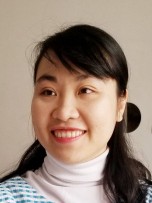
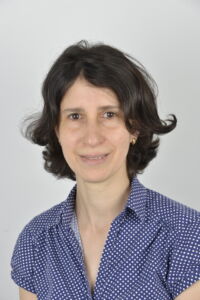
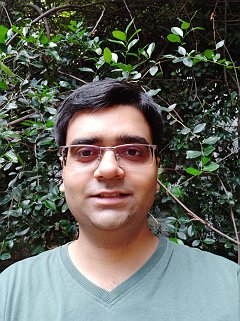
Denis Duhamel is a Professor and researcher at the Navier Laboratory, affiliated with École des Ponts ParisTech. He teaches mechanics courses at École nationale des ponts et chaussées and previously lectured at École Polytechnique. He earned his doctorate from École des Ponts ParisTech (1994) and research accreditation from University of Marne la Vallée (1998). His research focuses on structural acoustics, railway dynamics, tire-road noise, and numerical modeling of vibrations using Wave Finite Element (WFE) methods. Key areas include railway track dynamics, vibration control, and acoustic barrier performance. Notable projects involve dynamic analysis of periodic structures like railway tracks and metamaterials. Recent publications (2020–2025) emphasize wave-based methods for periodic structures, nonlinear foundation modeling, and in-situ measurements of acoustic barriers. His work bridges theoretical models with practical applications in transportation and structural engineering. Lab affiliations include the Navier Laboratory, a leading center for mechanics and materials research. He collaborates on projects like DEUFRABASE for pavement noise evaluation and ODSurf for optimized road surface design.
Vinkle Srivastav is a Research Scientist (Chargé de recherche R&D) at the CAMMA group, a collaborative research team between IHU Strasbourg and the University of Strasbourg, where he focuses on advancing surgical data science through novel computer vision and machine learning approaches. His work bridges the gap between clinical practice and artificial intelligence, developing methods for surgical video analysis, 3D medical imaging, and surgical workflow understanding. Education PhD in Computer Science (2018-2021) from University of Strasbourg, France. Thesis: "Unsupervised Domain Adaptation Approaches for Person Localization in the Operating Rooms." Master of Science in Computer Science (2014-2017) from Indian Institute of Technology, Delhi, India. Thesis: "Computerized evaluation of neurosurgery skills using image processing and computer vision techniques." Bachelor of Technology in Electronics and Communication (2007-2011) from Punjab Technical University, Jalandhar, India. Research Interests Vinkle's research spans surgical data science, with particular focus on multi-modal learning approaches for surgical computer vision. His work addresses fundamental challenges in medical AI including domain adaptation, self-supervised learning, and privacy preservation in clinical environments. He develops methods for 3D medical image analysis, multi-view human pose estimation in operating rooms, and surgical activity recognition. His recent work emphasizes multi-modal pretraining frameworks that leverage both visual and textual information to improve surgical workflow understanding. He also investigates scientific simulation techniques, particularly for therapeutic ultrasound applications, where physics-aware deep learning models can accelerate computational processes while maintaining accuracy. Publication Trends Vinkle's recent publications demonstrate a strong trajectory toward multi-modal surgical AI systems that integrate vision, language, and physics-based modeling. His work increasingly focuses on few-shot and zero-shot adaptation techniques to address the data scarcity problem in surgical AI. The publications reveal a progression from basic pose estimation to holistic surgical scene understanding, incorporating team communication analysis and surgical safety protocols. Scientific Awards IPCAI 2024 Best paper award (co-author) IPCAI 2019 Runner-up award in the bench-to-bedside category (co-author) Joint winner for the best paper award in the machine learning for CAI track, IPCAI 2025 Advising and Grants Vinkle actively mentors multiple PhD students and research interns at various levels, supervising thesis work on topics including large-scale multi-modality learning, holistic surgical scene analysis, and self-supervised video representation learning. He serves as Co-PI on two ITI-HealthTech projects: one focused on multi-modality learning for 3D medical imaging (2023), and another on physics-aware deep-learning approaches for therapeutic ultrasound simulation (2024). Laboratories and Teams Vinkle is a key member of the CAMMA research group at IHU Strasbourg, a collaborative team focused on computer-assisted medical modeling and analytics. He co-organizes the Surgical Data Science Summer School, an interdisciplinary program that brings together clinicians and computer scientists to develop AI-driven solutions with clinical impact. His work involves close collaboration with surgical teams at University Hospitals of Strasbourg and international partners including Johns Hopkins University and Technical University of Munich.
Clément Pit-Claudel is an Assistant Professor at École Polytechnique Fédérale de Lausanne (EPFL), leading the SYSTEMF lab focused on programming languages, formal methods, and systems engineering. His work bridges mathematical formalisms with practical system development to achieve full assurance in critical software and hardware. PhD in Computer Science from MIT (2016) William A. Martin Memorial Thesis Award recipient Former Senior Applied Scientist at Amazon AWS Teaching accolades including the Frederick C. Hennie III Teaching Award Research spans three axes: extensible proof-producing compilers for performance-critical systems, verified hardware compilation with cycle-accurate semantics, and interactive theorem prover tooling for democratizing verification technology. Key projects include Kôika for hardware verification, Alectryon for Coq proof visualization, and Fiat for correct-by-construction program synthesis. Recent publications address JavaScript regex verification (ICFP 2024), cryptographic server integration (PLDI 2024), and hardware simulation optimization (ASPLOS 2021). Articles demonstrate expertise in functional-to-imperative translation, domain-specific compiler extensions, and hardware-software co-verification. Scientific contributions recognized through: Distinguished artifact award (SLE 2020) MIT William A. Martin Thesis Award Frederick C. Hennie III Teaching Award Teaching philosophy emphasizes hands-on lab instruction , oral assessment , and automated tooling . Courses taught include Software Construction (undergraduate) and Interactive Theorem Proving (graduate) at EPFL. Research service includes program committee roles at Dafny, POPL, and SPLASH conferences.
Romain Raveaux is an Associate Professor at the LIFAT Computer Science Laboratory, University of Tours, affiliated with Polytech Tours. His research focuses on Image Analysis, Machine Learning, Structural Pattern Recognition, Graph Matching, Graph Neural Networks, Discrete Optimization, Reinforcement Learning, and Transfer Learning . Email: romain.raveaux@gmail.com , romain.raveaux@laposte.net Address: 64 av. Jean Portalis, Tours, France, 37200 Phone: +33 (0)2 47 36 14 27 Research Interests Graph Matching and Neural Networks Discrete Optimization for Pattern Recognition Transfer Learning in Graph-Based Models Historical Document Analysis Scientific Trends His recent work bridges Graph Neural Networks with Mixed-Integer Programming , focusing on Image Semantic Segmentation and Graph Cycle Detection . Earlier studies emphasize Genetic Algorithms for graph classification and Graph Edit Distance optimization in pattern recognition.
Cyril Kahn is a Lecturer at University of Lorraine with extensive research in nanoliposome technology and biomaterials development. His work bridges pharmaceutical sciences, tissue engineering, and biomedical applications with a particular focus on drug delivery systems. His primary research interests include Nanoliposome Technology , Drug Delivery Systems , Tissue Engineering , and Biomaterials Development . Kahn's research demonstrates significant innovation in creating targeted delivery systems for neuroprotective agents, particularly using curcumin and other natural compounds. His work on GelMA hydrogels and 3D printing represents cutting-edge approaches to scaffold development for tissue regeneration. Analysis of his recent publications (2023-2025) reveals a strong emphasis on Nanoliposome functionalization for targeted drug delivery Advanced hydrogel systems for tissue engineering Multiscale biomaterial design incorporating natural compounds Microfluidic platforms for drug testing Sustainable biomaterial processing techniques Kahn's research shows consistent progression toward more complex, multi-functional biomaterial systems with therapeutic applications. His technical expertise spans nanoliposome formulation, hydrogel characterization, 3D bioprinting, and in vitro testing of biomaterials. The interdisciplinary nature of his work connects pharmaceutical sciences with tissue engineering and materials science.
Iza Marfisi is a Professor at the University of Le Mans where she became a University Professor in 2024 and was appointed Head of the IEIAH (Computer Environments for Human Learning) team in 2025. She works within the Claude Chappe Institute of Computer Science, focusing on developing educational technologies that empower teachers to create their own digital learning tools. Her research bridges computer science and educational theory to enhance teaching practices through accessible technology solutions, with particular emphasis on making advanced tools usable for non-technical educators. Marfisi's research spans Educational Technology, Serious Games for Education, Mobile Learning, and Extended Reality (XR), with a consistent focus on teacher-centered design. She develops "no-code" authoring tools enabling educators to create custom digital learning experiences deployable across various hardware platforms. Her work specifically targets situated learning with mobile devices, human-computer interactions for learning, and educational applications of mixed and extended reality. This approach democratizes access to advanced educational technologies by removing technical barriers for teachers. Analysis of her recent publications reveals a clear evolution from foundational mobile learning frameworks toward increasingly sophisticated integration of mixed reality and artificial intelligence in educational contexts. Her 2024-2025 work shows particular emphasis on generative AI for educational activity design, immersive pharmacology learning, and collaborative frameworks that connect multiple learning technologies. The publications consistently emphasize practical teacher needs, with many studies conducted in authentic educational settings rather than controlled laboratory environments. Marfisi actively supervises doctoral research across multiple dimensions of educational technology. Her current advisees explore artificial intelligence for mixed reality activity creation, mixed reality for professional training, free software approaches to serious games, and innovative interaction techniques for collaborative learning. Previous students have investigated mixed reality for fraction learning, educational game indexing systems, and mobile educational game design models. Her supervision portfolio demonstrates both depth in specific technical areas and breadth across the educational technology landscape. As Head of the IEIAH team at LIUM since 2025, Marfisi leads a research group focused on computer environments for human learning. She also serves on the Board of Directors for both the Serious Game Society and the IKIGAI association (Games for citizens), and was elected Deputy Director of Research at the Claude Chappe Institute of Computer Science since 2018. Her leadership extends to communications management for the IEIAH team and participation in the LIUM Laboratory Council (2022-2024), demonstrating significant institutional impact beyond her direct research contributions.
Djamel E. Khelladi is a CNRS researcher affiliated with the IRISA research lab and the DIVERSE team at University of Rennes 1 , France. Previously, he held postdoctoral and PhD positions at Johannes Kepler University (JKU) Linz, Austria, and Université Pierre et Marie Curie (UPMC), France. Research interests include: Model-Driven Engineering Software Evolution & Co-evolution AI and Generative AI Applications Polyglot Programming Digital Twins Recent article trends focus on integrating Large Language Models (LLMs) for code-metamodel co-evolution, polyglot programming challenges, incremental build optimization in configurable systems, and empirical studies on software evolution. His work often bridges theoretical modeling with practical implementation in industrial contexts. Academic service roles include: Proceedings Co-Chair @MODELS 2025 Co-Organizer of Models and Evolution (ME) workshops (2023-2025) Co-Editor for special issue on Model Driven Engineering for Digital Twins (SoSym 2024/25) PC member in top venues: ICSE , ASE , MODELS , ECMFA , MSR , FSE
Anna Tykhonenko is a Full Professor of Economic Sciences at Université Côte d'Azur, affiliated with the University School of Economics and Management and the Research Group in Law, Economics, Management (GREDEG). She serves as Co-head of the Master's in Expertise and Analysis of Economic Data (EADE), Co-head of the MIASHS Degree, and Head of the 'European Project Engineering' DU program. Her research spans Macroeconomics, Applied Economics, and Econometrics with focus areas including: Prudential supervision and domestic credit dynamics Economic convergence and business cycle synchronization in the EU Environmental Kuznets curves and trade-environment nexus Public debt impacts on twin imbalances Nuclear energy-GDP relationships Her methodological expertise includes Bayesian shrinkage estimation, panel data analysis, and distance-based approaches for heterogeneous economies. Analysis of her recent publications reveals consistent focus on European economic integration challenges, particularly how global crises impact convergence processes. Her work frequently employs advanced econometric techniques to address cross-country heterogeneity in environmental, financial, and macroeconomic contexts. Scientific recognition includes: INFER Young Economist Award (2023) She maintains active research collaborations across international institutions with notable co-authors including Thomas Jobert, Fatih Karanfil, and Veronika Šuliková. Her work has accumulated over 3,283 reads and 384 citations on ResearchGate, reflecting significant scholarly impact in applied economic research.
Dr. Thi Phuong Khanh Nguyen is a researcher at the Ecole Nationale d'Ingénieurs de Tarbes (ENIT) , affiliated with the College of Engineering and Department of Systems . Her work focuses on Prognostics and Health Management (PHM) , predictive maintenance, and industrial data analytics, combining machine learning with physics-informed modeling to address uncertainty in system degradation. Teaching: Mathematics for engineers, Probability, Statistics, Operating safety Research: Health indicators, diagnostics, prognostics, multimodal data fusion Methods: Data mining, physical and data-driven models, decision support systems Tools: FAST, Petri nets, UML, HMM, RNN, CNN, Transformer architectures Her recent publications highlight advancements in explainable AI , physics-informed neural networks , and multimodal learning for fault detection, battery RUL prediction, and robotic inverse dynamics. She also explores blockchain and federated learning for decentralized prognostics.
Oum El Kheir Aktouf is a Professor in Computer Science at Grenoble Institute of Technology (Esisar Engineering School) and a member of the LCIS laboratory, France. She previously served as a Visiting Professor at San José State University, USA, during a sabbatical leave. Education : Master and PhD in Computer Science from Grenoble Institute of Technology Her research focuses on dependability, safety, and security of embedded and interconnected systems, including sensor-based applications and multi-agent architectures. She employs runtime testing, diagnosis, and monitoring approaches. Her work spans mobile application testing, fault diagnosis in RFID and wireless sensor networks, and security frameworks for autonomous systems. Recent publications highlight trends in Android security benchmarking , decentralized cryptography , and multi-agent resilience . She has participated in 12 funded national and international research projects and supervised courses in operating systems, real-time systems, distributed computing, and system dependability.
Kartik Nagar is an Assistant Professor at the Department of Computer Science and Engineering, IIT Madras . He specializes in developing verification and analysis techniques to enhance the reliability, security, and efficiency of computer systems, focusing on concurrent and distributed systems, computer architecture, and real-time systems.
Thierry Duval is a Professor in the Department of Computer Science (INFO) at IMT Atlantique , Brest campus. His work focuses on Virtual Reality (VR) , Human-Computer Interaction (HCI) , and 3D Interaction in collaborative environments.
Jeanne Crassous is a CNRS Research Director at the Institut des Sciences Chimiques de Rennes , University of Rennes, France. She holds a prominent position in the field of chiral molecular materials, with a focus on helicenes and their applications in optoelectronics and fundamental chirality studies. Position: CNRS Director of Research (DR1) Institution: University of Rennes, Institut des Sciences Chimiques de Rennes (ISCR) Email: jeanne.crassous@univ-rennes.fr Office: 236, Building 10A, Campus de Beaulieu, Rennes Education PhD in Organic Chemistry, École Normale Supérieure de Lyon (1996) Research Habilitation, École Normale Supérieure de Lyon (2005) Post-doctoral Research, ETH Zurich (1997) Student, École Normale Supérieure de Lyon (1989) Research Interests Dr. Crassous specializes in the molecular engineering of helicenes , including organic and organometallic variants with chromophores or aggregating units. Her work explores chiroptics and fundamental chirality , with a focus on chiral organometallic complexes and vibrational circular dichroism (VCD) . She investigates how molecular chirality influences optical, electronic, and spin properties, enabling applications in advanced materials and quantum technologies. Publication Trends Her recent publications (2016–2023) reflect a strong focus on chiral luminescent materials , circularly polarized luminescence (CPL) , and chiral-induced spin selectivity (CISS) . She integrates synthesis, spectroscopy, and computational modeling (TDDFT) to design and characterize novel helicene-based systems for optoelectronics, spintronics, and parity violation experiments. Scientific Awards CNRS Silver Medal (2023) Distinguished Member of the French Chemical Society, senior category (2023) CNRS Talent (2023) Chemistry Europe Fellow (2020/2021) National Prize of the Organic Chemistry Division (SCF, 2020) Elected Member of the European Academy of Sciences (2021) Victor Grignard–Georg Witting Lecture Award (GDCh/SCF, 2024) Advising, Grants, and Collaborations Dr. Crassous leads and collaborates on numerous national and international research projects, including ANR-funded programs such as SMM-CPL, ChirON, and iCHIRALight. She mentors early-career researchers and collaborates with leading experts in France (ENS Lyon, Strasbourg, Angers) and abroad (USA, UK, Spain, Israel, Poland, Netherlands, Greece). Her work bridges organic, inorganic, and physical chemistry, fostering interdisciplinary innovation. Laboratories and Research Teams She is based at the Institut des Sciences Chimiques de Rennes (ISCR) , a leading French research institute in chemistry. Her team works within the Organométalliques et Catalyse (OMC) and Physique de la Matière Molle (PMM) groups, focusing on the synthesis and characterization of chiral molecular systems. The ISCR provides state-of-the-art facilities for spectroscopy, crystallography, and materials testing, supporting her cutting-edge research in chiral functional materials.
Marie Candito is a Lecturer at the School of Linguistics, Paris Cité University. She serves as Deputy Director of the Laboratoire de Linguistique Formelle (LLF, CNRS) since January 2025 and Head of the M2 Computational Linguistics program at Paris Cité University. Her research focuses on natural language processing, computational linguistics, and linguistic abilities of large language models. Current Projects : Co-PI of ANR SELEXINI (2021-2025) and scientific coordinator for LLF in ANR PANTAGRUEL (2023-2025) Past Projects : PI of ANR ASFALDA-French FrameNet (2013-2016), scientific coordinator for ANR PARSEME-FR (2015-2019), and member of ANR SEQUOIA (2010-2013) Her work involves measuring and mitigating biases in language models, inducing semantic lexicons from corpora, and studying human vs. LLM word associations. She supervises PhD students including Maria Andueza Rodriguez, Anna Mosolova, and David Kletz.
Thomas Brunet is a researcher at the University of Bordeaux, specializing in physical acoustics and functional materials for acoustics. His work spans ultrasound physics, material characterization, and advanced modeling/simulation techniques. Key collaborations with research groups: APY (Physical Acoustics) , Functional Materials for Acoustics , and GCE (Civil and Environmental Engineering) . Focus areas: acoustic metamaterials , Anderson localization , contactless micromanipulation , and viscoelastic wave propagation . His publications (over 30 in the last decade) demonstrate expertise in ultrasonic imaging, nanophononics, and multiphysics problems involving mechanical, thermal, and fluid interactions. Collaborative projects include DuMAS (Sustainability of Materials) , IMC (Mechanical Engineering) , and MPI (Materials-Procedes-Interactions) initiatives. No formal awards or student advising details are publicly available in the provided data.