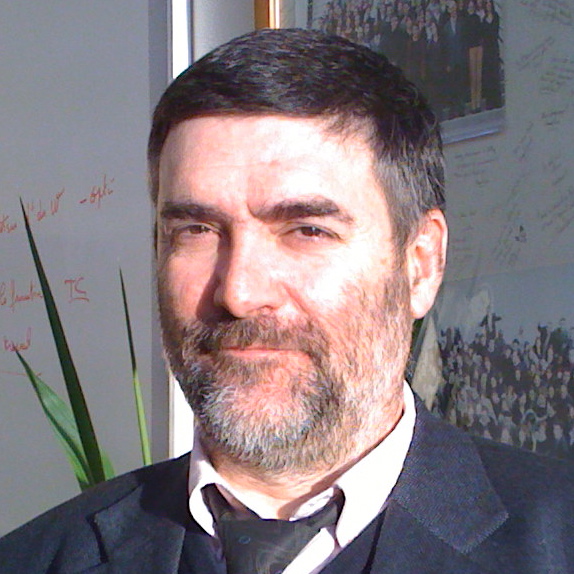
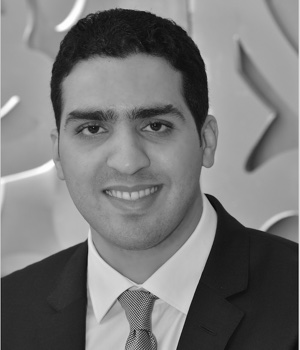
Allan Fousse is an Associate Professor in Data Engineering at ISAE-ENSMA, France, affiliated with Laboratory LIAS (a joint research unit between ISAE-ENSMA and ENSIP). His work bridges engineering and human-centered computing through task modeling and simulation research. His core research areas include: Data Engineering Human-Computer Interaction Task Modeling Software Engineering Simulation He specializes in developing task model simulators like ProtoTask to address inaccuracies in user interface design processes. Publications from 2012-2016 reveal consistent focus on model validation techniques, with trends showing evolution from tool development (2012) to comprehensive methodology reviews (2015) and accuracy refinement (2016) in task modeling. He operates within ISAE-ENSMA's Data Engineering team at Laboratory LIAS, which maintains parallel research groups in Automatic Control and Real Time systems across Poitiers and Chasseneuil campuses.
Patrick Girard is a Full Professor in Data Engineering at ISAE-ENSMA (Institut Supérieur de l'Aéronautique et de l'Espace - École Nationale Supérieure de Mécanique et d'Aérotechnique) in France. He is a member of the Data Engineering Team within the LIAS (Laboratoire d'Ingénierie des Applications de la Sensorique) laboratory, with dual affiliations at ISAE-ENSMA in Chasseneuil and ENSIP in Poitiers. Professor Girard's research focuses on Human-Computer Interaction , with particular expertise in task modeling , interactive systems design , and programming by demonstration techniques. His work spans theoretical foundations to practical applications in model-based development, user interface design methodologies, and educational technology for programming. He has made significant contributions to task model validation, simulation techniques, and the application of these principles in complex systems engineering, particularly in aerospace contexts. His publication history demonstrates a consistent evolution from foundational work on programming by demonstration and task-oriented architectures in the 1990s to more recent applications in complex systems engineering and avionics. A distinctive trend in his work is the integration of formal methods with practical HCI approaches, creating robust frameworks for developing user-centered interactive systems with safety-critical applications. Professor Girard has mentored numerous researchers throughout his career, with frequent collaborations showing sustained relationships with scholars like Loé Sanou, Nicolas Guibert, and Thomas Lachaume. His research has involved multiple interdisciplinary projects, often connecting academic research with industrial applications, particularly in the aerospace sector. Within the LIAS laboratory, Professor Girard works in the Data Engineering Team alongside colleagues in Automatic Control and Real Time research groups. The laboratory maintains strong industry partnerships, especially with aerospace companies, enabling practical implementation of theoretical research in real-world engineering contexts. His work bridges computer science theory with practical engineering applications, particularly in the French aerospace ecosystem.
Jean-Denis Gabano serves as an Associate Professor specializing in Automatic Control and Systems at the University of Poitiers. He maintains dual affiliations with the Laboratory of Automated Systems Engineering (LIAS) at both ENSIP (École Nationale Supérieure d'Ingénieurs de Poitiers) and ISAE-ENSMA campuses, reflecting his integrated role across these engineering institutions. His research program bridges theoretical control systems with practical industrial applications, particularly in energy storage technologies. Dr. Gabano's research expertise centers on fractional-order calculus applications for modeling complex physical phenomena. His work primarily focuses on electrochemical systems, particularly battery impedance characterization across time and frequency domains, and thermal system identification. He has developed sophisticated identification algorithms that enable precise modeling of diffusion processes in batteries and heat transfer in thermal systems. His methodological innovations in fractional-order modeling have significant implications for improving battery management systems and thermal control in industrial applications. Analysis of his publication record reveals a clear research trajectory evolving from fundamental thermal system identification toward increasingly sophisticated battery impedance modeling. His most recent work (2023-2024) demonstrates advanced applications of fractional calculus to lithium-ion battery characterization, addressing critical challenges in impedance spectroscopy and parameter estimation. The interdisciplinary nature of his research connects control theory with electrochemistry and materials science, yielding practical methodologies for energy storage system optimization. Dr. Gabano leads research within the Automatic Control team at LIAS laboratory, focusing on developing advanced system identification methods using fractional calculus. His research group maintains strong collaborative ties with industry partners, particularly in the energy sector, to translate theoretical developments into practical engineering solutions. Current projects emphasize time-domain identification techniques as alternatives to traditional frequency-domain approaches, potentially reducing testing time for battery characterization while maintaining accuracy.
Sandrine Moreau is an Associate Professor in Automatic Control and Systems at the National Higher School of Engineers of Poitiers (ENSIP), part of the University of Poitiers. She is affiliated with the LIAS (Laboratory of Informatics and Systems of Angers) laboratory, with offices at both ENSIP in Poitiers and ISAE-ENSMA in Chasseneuil. Dr. Moreau's research spans multiple areas within electrical engineering and control systems, with particular focus on electric machine diagnosis, fault detection and tolerant control, wind energy conversion systems, and permanent magnet synchronous motors. Her work demonstrates expertise in parameter estimation techniques, haptic interfaces, and power electronics applications. She has developed sophisticated control algorithms for various electromechanical systems, with emphasis on sensorless operation and robust performance under fault conditions. Analysis of her recent publications shows a strong trend toward practical implementations of control systems for renewable energy applications, particularly wind turbines, alongside continued work on fault diagnosis in electric machines. Her research combines theoretical developments with experimental validation, as evidenced by numerous papers describing hardware implementations and test bed validations. The interdisciplinary nature of her work bridges electrical engineering, control theory, and power systems. Dr. Moreau maintains active collaborations with researchers across France and internationally, as indicated by her extensive publication record with co-authors from various institutions. Her work appears in high-impact journals including IEEE Transactions on Industrial Electronics, Control Engineering Practice, and Sensors, demonstrating the relevance and quality of her research contributions to the field.
Sybille Caffiau serves as a Lecturer in Data Engineering at ISAE-ENSMA's School of Engineering, affiliated with the LIAS laboratory across both ENSIP (Poitiers) and ISAE-ENSMA (Chasseneuil) campuses. Her research focuses on Human-Computer Interaction with specialization in task modeling and user interface validation. Her research interests span Human-Computer Interaction , Task Modeling , and User-Centered Design . She develops and evaluates tools like K-MADe for modeling user activities, with emphasis on empirical validation of task modeling approaches. Her work bridges cognitive science principles with practical software engineering applications, particularly in educational technology and interactive system design. Analysis of her publication trends reveals consistent contributions to HCI conferences and journals since 2006, with increasing focus on tool development (notably K-MADe) and empirical validation methodologies. Her recent work demonstrates strong interdisciplinary connections between cognitive modeling, software engineering, and educational technology. No scientific awards or fellowships are documented in the available materials. While her collaborative network includes prominent researchers like Laurent Guittet and Patrick Girard, specific details about student advising or research grants are not provided in the source materials. Her thesis work (2009) established foundations for model-driven interactive application design. She operates within the LIAS laboratory's Data Engineering team, contributing to research on interactive systems and task modeling frameworks. The KMADe environment represents her primary software contribution for activity description and task modeling.
Yassine Ouhammou is an Associate Professor in computer science at École Nationale Supérieure de Mécanique et d'Aérotechnique (ENSMA), where he is a member of the "Real-Time and Embedded Systems" research team at LIAS laboratory. His work focuses on critical real-time embedded systems with applications in avionics, drones, and control command systems. His research interests include: Software architectures for critical real-time embedded systems Design and analysis of critical real-time systems regarding their temporal performances Model-based design using domain specific languages (MoSaRT, AADL, Capella, Time4Sys) Real-time scheduling and dimensioning Knowledge repositories for expertise capitalization, reuse and reproducibility Collaborative engineering for complex systems design Model-driven engineering and formal methods Dr. Ouhammou's publication record shows consistent contributions to real-time systems, embedded architectures, and model-based approaches. His recent work demonstrates increasing emphasis on drone technology and avionic applications, with numerous collaborations on autopilot design, scheduling optimization, and verification methodologies. His research bridges theoretical computer science with practical aerospace engineering challenges, addressing safety-critical aspects of embedded systems. Professional service includes: PC Member of MEDES 2020, INISTA 2020, WIMS, SADASC 2020 PC Chair of DETECT 2019 General Co-Chair of RTNS 2018 PC Member of multiple international conferences since 2017 Dr. Ouhammou collaborates extensively with researchers in the field of real-time systems, particularly with Emmanuel Grolleau and other members of the LIAS laboratory. His work often involves interdisciplinary teams addressing complex challenges in aerospace and embedded systems engineering, with practical applications in drone technology and avionic systems.
Hocine IMINE is a Research Director at Gustave Eiffel University, where he has been working since 2021 after previously joining IFSTTAR (French institute of science and technology for transport, development and networks) in 2005. He holds a PhD in Robotics and Automation from Versailles University (2003) and received his HDR (Habilitation à Diriger des Recherches) from Valenciennes University in 2012. He serves as Cohead of NEXTRIM Associated International Laboratory, established in 2021 with the University of Bologna, Italy. His primary research interests span Intelligent Transportation Systems, vehicle modeling and stability, nonlinear observation and control, simulation technologies, and cycling safety. Dr. IMINE has developed expertise in both heavy vehicle dynamics and bicycle/cyclist safety, with recent work focusing on bicycle simulators, cycling infrastructure assessment, and multimodal transportation systems. His research bridges theoretical control systems with practical transportation safety applications. Analysis of his recent publications reveals a clear evolution from heavy vehicle dynamics toward more comprehensive transportation systems research, with significant emphasis on vulnerable road users like cyclists. His work demonstrates strong methodological consistency in applying advanced control theory and observation techniques to transportation problems, while expanding into human factors and infrastructure assessment. Dr. IMINE actively supervises research students and collaborates with international partners, particularly through the NEXTRIM laboratory. His research group at the Perceptions, Interactions, Behaviors and Simulations Lab for road and street users (PICS-L) develops advanced simulation technologies for transportation safety research. Current projects focus on bicycle simulators, cycling infrastructure assessment, and multimodal transportation systems integration.
Julien CARLIER is a Lecturer at the Institut d'Électronique, de Microélectronique et de Nanotechnologie (IEMN) within the Institut des Sciences et Techniques de Valenciennes (ISTV) at the Université de Valenciennes et du Hainaut-Cambrésis (UVHC). He currently serves as Deputy Director of IEMN DOAE since January 2020, having previously served as Head of the MAMINA research group from September 2017 to December 2019. His academic career includes membership in the CSE 63rd section of UVHC (2007-2009), serving on the Board of Directors of ISTV (2007-2012), and managing the SPI Electronics Course at ISTV (2007-2012). Dr. CARLIER earned his HDR (Habilitation à Diriger des Recherches) from the University of Valenciennes in 2016, following his Doctorate in Advanced Instrumentation and Analysis from the University of Lille 1 in 2004. His educational background includes an Engineer's degree from Polytech'Lille's Department of Instrumentation and a Master's in Advanced Instrumentation and Analysis, both obtained in 2001 from the University of Lille 1. Dr. CARLIER's research focuses on high frequency acoustics on silicon, specializing in the development of ultrasonic transducers and high frequency resonators using thin layers of ZnO and monocrystalline LiNbO 3 on silicon for RF applications. His work spans micro and nanotechnology, ultrasonic propagation for biological environment interactions, and acoustic MEMS with applications in lab-on-chip systems. He has international collaborations with Wuhan University and Fudan University in China, as well as with the University of Fanar in Lebanon and IMEC in Leuven. His publication record shows a consistent focus on high-frequency ultrasound applications, with particular emphasis on MEMS integration, acoustic wave propagation in silicon substrates, and lab-on-chip implementations. The research demonstrates progression from fundamental materials characterization to increasingly sophisticated integrated systems for both industrial and biological applications. Dr. CARLIER has coordinated significant research projects including the French-International PICS CNRS program "Lab-on-Chip for biological high frequency acoustic characterization" (2010-2012) with 21k€ funding, participation in the ARCIR project (2007-2009) with 110k€ funding, and the Interreg IV PRISTIMAT project (2008-2010) with 300k€ funding. His international collaborations have resulted in multiple joint publications with Chinese universities. He leads the MAMINA research group at IEMN, focusing on micro and nanotechnology applications in acoustics. His team works on developing high-frequency ultrasonic transducers and resonators, with applications ranging from RF components to biological characterization systems. The group maintains strong international connections, particularly with Chinese institutions, facilitating knowledge exchange and collaborative research in advanced acoustic technologies.