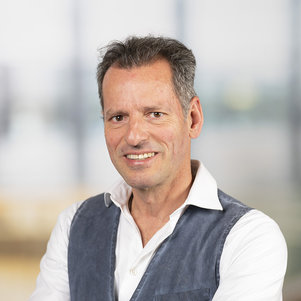
Dr. Prasanth Venugopal is an Associate Professor specializing in Power Electronics with a focus on advanced energy transfer systems and battery technology. His research spans wireless power transfer, electric vehicle charging, and electrochemical impedance spectroscopy for battery diagnostics. Primary research areas: Wireless Power Transfer (100%), Harmonics (88%), Inductive Power Transfer (87%), Battery Engineering (48%) Recent publications demonstrate expertise in transformerless converter designs, multi-level architectures, and AI-driven battery capacity estimation. He has pioneered meander coil topologies for harmonic mitigation and developed computation-light models for battery aging analysis. His work includes collaborations on Li-ion battery degradation, onboard chargers for electric vehicles, and hybrid power systems for electric aircraft. Despite significant output in IEEE Transactions, no explicit awards or student mentoring data appears in the provided texts.
Zian Qin serves as an Associate Professor in the Department of Electrical Sustainable Energy at Delft University of Technology, Netherlands. His academic journey includes a B.Sc. from Beihang University (2009), M.Sc. from Beijing Institute of Technology (2012), and Ph.D. from Aalborg University (2015), all in Electrical Engineering, with a Visiting Scientist stint at RWTH Aachen University (2014). B.Sc., Electrical Engineering, Beihang University (2009) M.Sc., Electrical Engineering, Beijing Institute of Technology (2012) Ph.D., Electrical Engineering, Aalborg University (2015) His research centers on power electronics-based grid stability, solid-state transformers, and battery energy storage systems. Key contributions span DC microgrid control, magnetic material optimization, and EV charging infrastructure, with fingerprints highlighting expertise in power quality ( 100% ), voltage stability ( 87% ), and grid-forming applications ( 79% ). Current projects like ECS4DRES and GROW focus on resilient renewable energy systems and African energy storage solutions. His 154+ publications reveal strong emphasis on power electronics control ( 83% ), grid integration ( 79% ), and EV technologies ( 42% ), with recent work targeting microgrid vulnerability reduction and data-driven magnetic loss modeling. Awards include IEEE Prize Paper Awards (2023), World Top 2% Scientist recognition, and IEEE Innovation Awards (2024). IEEE International Challenge Excellent Innovation Award (2024) IEEE Open Journal Prize Paper Award (2023) World's Top 2% Scientist (2022-2024) Featured IES Journal Articles (2023) IEEE TIE Distinguished Reviewer (2020) As Founding Chair of IEEE Transportation Electrification Council Benelux Chapter and Dutch National for Cigre WG B4.101, he leads critical industry collaborations. His editorial roles in IEEE TPEL/TIE/JESTPE and projects like PROGRESSUS demonstrate significant grant leadership in next-generation power infrastructure. Lab activities focus on DC systems, energy conversion, and storage validation through Delft's Electrical Sustainable Energy facilities.
Alfons Oude Lansink is a Professor and Chairholder in Business Economics at Wageningen University, Netherlands. He holds adjunct professorships at Universitas Padjadjaran (Indonesia) and the University of Florida (USA), and serves on the Dutch Ministry of Agriculture's CDM committee and Rabobank's scientific advisory board. His academic career spans roles as director of Wageningen School of Social Sciences (WASS) and Secretary-General of the European Association of Agricultural Economists. Education: MSc and PhD in Agricultural Economics from Wageningen University Leadership: Head of Business Economics group since 2003 His research focuses on dynamic technical and economic efficiency , sustainable performance of food supply chains , and economics of plant health . Recent work examines climate adaptation strategies, circular economy applications, and cross-border agri-food innovation dynamics using advanced econometric models. Key projects include MINDSTEP (modeling farm decisions), Closing the Loop (insect-based agriculture), and Food Pro-tec-ts (transboundary food technologies). Publications address topics like: Technical efficiency in dairy and arable farming Economic impacts of climate change on agriculture Corporate social responsibility in food manufacturing Policy evaluation for biogas and organic farming He serves as: Secretary/Treasurer of agricultural economics journal foundation Advisor to Universitas Padjadjaran (Indonesia) on policy and PhD supervision Editorial board member of Agronomy Journal and European Review of Agricultural Economics
Francesca Grisoni serves as an Assistant Professor in the Department of Biomedical Engineering at Eindhoven University of Technology (TU/e), where she currently leads the Molecular Machine Learning team. She additionally holds appointments as an ICMS Core member and Associate Professor at EAISI (Eindhoven Artificial Intelligence Systems Institute), reflecting her cross-disciplinary role at the intersection of computational science and biomedical applications. Academic Background : Grisoni completed her Environmental Sciences degree and earned a Ph.D. in 2016 from the University of Milano-Bicocca, where her dissertation focused on interpretable machine learning for molecular property prediction. During doctoral studies, she conducted research at ETH Zurich's Department of Chemistry and Applied Biosciences and the U.S. EPA's National Center for Computational Toxicology. Ph.D., University of Milano-Bicocca, 2016 (Dissertation: Interpretable machine learning for molecular property prediction) Environmental Sciences, University of Milano-Bicocca Her research integrates artificial intelligence, chemistry, and biology to develop computational methods for drug discovery, emphasizing wet-lab experimental validation alongside algorithmic innovation. Key focus areas include overcoming activity cliffs in molecular machine learning, generative modeling for scaffold hopping, and AI-augmented decision-making in therapeutic development, with the ultimate goal of achieving 'better decisions faster' in drug discovery pipelines. Analysis of her recent 2025 publications reveals a concentrated trend toward chemical language models and generative deep learning frameworks, specifically addressing low-data drug discovery challenges through active learning and neural network architectures. These works bridge computer science with pharmacology, targeting bioactivity prediction, molecular representation, and enzyme design while maintaining strong ties to experimental validation. Scientific Awards : Lush Young Researcher Prize Early Career Award 2022 from the Dutch Royal Netherlands Academy of Arts and Sciences (KNAW) ERC Starting Grant (2022) Grants and Supervision : Dr. Grisoni secured the prestigious ERC Starting Grant in 2022 to advance her molecular machine learning research. Institutional records indicate she has supervised 7 students (as shown in TU/e's 'Supervised Work (7)' repository section), though specific names aren't provided in the source material. Her group maintains active industry collaborations, including past engagement with Bracco Pharmaceuticals. Laboratory and Team : The Molecular Machine Learning team operates under the ICMS and EAISI frameworks, merging computational AI development with experimental wet-lab validation. This collaborative unit focuses on fragment-based molecular design, chirality representation (evidenced by fragSMILES work), and high-throughput nanoparticle identification using machine learning, as highlighted in recent press coverage and datasets.
Nelly V. Litvak is a Full Professor in Algorithms for Complex Networks at Eindhoven University of Technology (Mathematics and Computer Science). She works on mathematical methods and algorithms for complex networks (social networks, WWW) using random graph models. She joined TU/e as a part-time professor in 2017 after being an Associate Professor at the University of Twente since 2012. Affiliations: 4TU Applied Mathematics Institute, Data Science Center Eindhoven, CTIT Industry Partners: ABN-AMRO Bank, Philips Lighting, Thales Editorial Role: Managing Editor of Internet Mathematics Her research focuses on extracting value from network data across three areas: (1) Information extraction and prediction, (2) Mathematical analysis of network characteristics, and (3) Efficient algorithms for incomplete network data. Key topics include PageRank, HITS algorithm, random graphs, homophilic networks, and network epidemiology. Recent work (2022-2025) spans network growth mechanisms, fairness in ranking algorithms, educational pedagogy, and pandemic forecasting dashboards. She contributes to SDGs through data-driven approaches to societal challenges. Teaching activities include course development at TU/e and earlier institutions, with innovative methods for computer engineering students' statistical understanding.
Said Hamdioui serves as a full Professor in the Department of Computer Engineering within the Faculty of Electrical Engineering, Mathematics and Computer Science at Delft University of Technology. His research focuses on cutting-edge hardware architectures for neuromorphic computing and energy-efficient AI acceleration, with particular emphasis on memristor-based systems, emerging memory technologies, and fault-tolerant designs for edge applications. His research interests span Neuromorphic Computing , Memristor-Based Architectures , and Energy-Efficient AI Hardware , addressing critical challenges in hardware security, computation-in-memory, and reliable edge AI deployment. Recent work demonstrates significant advancements in RRAM/FeFET testing methodologies, spiking neural network implementations, and spin wave computing alternatives to traditional CMOS. His publications reveal strong trends toward real-world deployment of brain-inspired hardware with practical constraints like power efficiency, testability, and security. Award highlights include: DATE'20 Best Paper Award DFT'21 Outstanding Student Paper ETS 2021 Best Paper Award LATS 2018 & 2022 Best Paper Awards Professor Hamdioui actively contributes to the research community through editorial roles at IEEE Transactions on VLSI Systems , IEEE Design & Test , and Journal of Electronic Testing from 2017-2018. His leadership in multi-partner projects like CONVOLVE and NEUROKIT2E demonstrates strong industry-academia collaboration for edge AI solutions. Current work shows increasing focus on practical deployment challenges including in-field fault monitoring, security vulnerabilities in neuromorphic systems, and realistic brain simulation frameworks.
Thom de Vries is an Associate Professor at the University of Groningen's Faculty of Economics and Business, based in the HRM & Organizational Behavior department. He also serves as Program Director for the Master of Science in Human Resource Management and holds a lecturer position in Industrial Engineering Management. His expertise focuses on organizational resilience, team boundary spanning, and infrastructure management. He holds a Ph.D. in Business Administration (cum laude) from the University of Groningen (2015), with prior experience as a Business Researcher at TNO and academic leadership roles in program committees. Education highlights include: Ph.D. in Business Administration (cum laude), University of Groningen (2015) Res. M.A. and M.A. in Business Administration (cum laude), University of Groningen (2011, 2009) B.A. in Public Administration, Thorbecke Academie (2007) Research interests emphasize team dynamics in complex environments, particularly: Resilience and adaptability in critical infrastructure organizations Boundary spanning across teams/organizations Design of multiteam systems for complex tasks Disruption management in supply chains Notable projects include the NGinfra-funded ConCorCom initiative studying coordination during infrastructure challenges, and NWO grants exploring resilience and decision-making under uncertainty. His work has earned awards like the Academy of Management Best Paper Award and multiple teaching recognitions. Grants include: NGINFRA/NWO: ConCorCom (Context, Coordination, Competencies) NWO VENI: Team Boundary Spanning in Disruptions NWO: Resilience-Efficiency Balance in Planning Teaching roles span disciplines including Organizational Behavior, Survey Research, and Experimental Design across faculties. He actively supervises research master students and contributes to executive education programs.
Dr. Ilias Gerostathopoulos is an Assistant Professor at the Faculty of Science, Vrije Universiteit Amsterdam, affiliated with the Network Institute and the Department of Information Management & Software Engineering. He specializes in self-adaptive systems, cyber-physical systems, and machine learning operations (MLOps). His work focuses on software architectures for autonomous systems, decision-making under uncertainty, and experiment-driven adaptation frameworks. He teaches courses such as 'Fundamentals of Adaptive Software' and 'Information Management', emphasizing practical applications of adaptive systems and data-driven decision-making. Gerostathopoulos has been awarded the Best Presentation Award (2021) for contributions to evaluating self-adaptive systems. His research addresses challenges in industrial self-adaptation, MLOps architectures, and robotics. Key research themes include: Architecture-based self-adaptation in robotics and CPS MLOps frameworks and systematic analysis of AI systems Uncertainty management in autonomous systems Experiment-driven learning and tool development Notable contributions include the ExpEngine tool for workflow optimization and the ReBeT framework for robotic systems. His work bridges theoretical software engineering with practical industrial implementations.
Prof. Dr. Ir. Andy van den Dobbelsteen is a Professor of Climate Design & Sustainability at Delft University of Technology's Faculty of Architecture and the Built Environment . His work focuses on integrating sustainable energy systems , climate adaptation strategies , and urban development through innovative design solutions. Department: Architectural Engineering + Technology Expertise: Energy systems, climate-responsive architecture, urban sustainability He actively translates research findings into actionable concepts for heritage building retrofitting , data center energy alternatives , and vertical urban farming , emphasizing interdisciplinary collaboration and knowledge transfer. His recent publications explore parametric modeling for energy efficiency, renewable backup systems , and synergetic urban design . He received prestigious awards including the edX Prize and Knight of the Netherlands Lion . 2020 edX Prize for Zero-Energy Design MOOC 2020 Golden Heron for educational film 'Energy Slaves' 2019 Solar Decathlon Europe 2nd prize As a dedicated educator, he supervises students in user-centred sustainability projects while maintaining active industry partnerships through secondary roles as speaker and columnist.
Tim Baarslag is a Senior Researcher and group leader of the Intelligent and Autonomous Systems group at CWI (The Dutch research institute for Mathematics and Computer Science). He holds the title of Professor of Mathematics of Cooperative AI at Eindhoven University of Technology and serves as a Visiting Associate Professor at Nagoya University of Technology, Visiting Fellow at the University of Southampton, and Visiting Scholar at MIT. His research focuses on automated negotiation systems for collaborative decision-making in smart energy trading, IoT, autonomous vehicles, and digital privacy. Education : MSc (cum laude) and BSc (cum laude) from Utrecht University; PhD (cum laude) from Delft University of Technology Tim pioneered the COMBINE project (NWO Vidi grant) for coordinating multi-deal negotiations and developed the widely-used Genius negotiation environment. His work appears in prestigious venues like Science Magazine , Artificial Intelligence , and MIT Technology Review . He also leads the International Automated Negotiating Agent Competition and contributes to policy through memberships in The Young Academy and Netherlands Academy of Engineering . Recent research trends emphasize multi-deal negotiation protocols (2024), preference uncertainty modeling in privacy negotiations (2022), and scalable algorithms for handling outcome spaces as large as 10²⁵⁰ possibilities. His 2023 work on search algorithms for large negotiation domains has applications in energy trading and supply chain management. Scientific Awards : Cor Baayen Young Researcher Award (2017), Springer Theses Award (2016), multiple Best Paper Awards (AAMAS 2022, WI-IAT 2015, IJCAI 2014), and recognitions as Science Talent (2018), Academic Pioneer (2020), and Young Talent (2019) As a grant recipient , Tim leads NWO Vidi project COMBINE and previously held a Veni grant for preference uncertainty research. He mentors through organizing competitions, serving on conference PCs (AAAI, IJCAI), and reviewing in top journals like Artificial Intelligence . His work bridges theory and practice through the Genius framework and real-world implementations in smart grid and vehicular platooning.
Dr. Ed E. Moret is an Associate Professor of Computational Medicinal Chemistry at Utrecht University, where he serves as Managing Director of the Utrecht Institute for Pharmaceutical Sciences. He is a member of the Departmental Executive Board and Chair of the Board of Examiners of the School of Pharmacy. His academic career spans over three decades with significant contributions to pharmaceutical sciences. Utrecht University, Utrecht Institute for Pharmaceutical Sciences School of Pharmacy, Department of Chemical Biology and Drug Discovery Managing Director since January 2010 Dr. Moret's educational background includes completing Gymnasium-b at Gymnasium Camphusianum in Gorinchem in 1979, followed by pharmacy studies at Utrecht University until 1988. He earned his PhD in 1993 with research on calculations and simulations of DNA-alkylating cytostatics under supervision of Prof. L.H.M. Janssen and Prof. J.P.A.E. Tollenaere. He also conducted postdoctoral research at the Scripps Research Institute with Prof. A.J. Olson. His primary research interests focus on molecular recognition, particularly in auto-immune diseases, with expertise spanning computational medicinal chemistry, computer-aided drug discovery, cheminformatics, and bioinformatics. Dr. Moret's work bridges the gap between theoretical calculations and experimental validation in drug design. His research portfolio demonstrates a consistent trajectory from fundamental molecular interactions to applied drug discovery, with particular emphasis on enzyme inhibitors, carbohydrate-protein interactions, and molecular recognition processes. Analysis of his publication record reveals a strong focus on structure-based drug design, with significant contributions to the development of inhibitors for enzymes like β-glucocerebrosidase, NNMT, and neuraminidase. His work spans multiple therapeutic areas including lysosomal storage disorders, cancer metabolism, and infectious diseases. The interdisciplinary nature of his research is evident in the integration of computational approaches with experimental validation across biochemistry, pharmacology, and medicinal chemistry. Teacher of the Year (awarded three times by Pharmacy students) Member of editorial boards for Medicines and Conceptuur journals Secretary of Board of FIGON (2016) Secretary of Raad voor de Farmaceutische Wetenschappen (2024) Member of Board of Stichting Farmaceutische Erfgoed (2024) Dr. Moret has been actively involved in educational innovation, developing and coordinating the master's programme Drug Innovation, the profile Drug Regulatory Sciences, and the Honours programme Pharmaceutical Sciences. He has taught courses for pharmacy, chemistry, UCU and medical sciences students, as well as PhD courses in bioinformatics and computer-aided drug discovery. His educational contributions include developing an inquiry-based elective course on drug discovery, for which he published educational research. He holds BKO and SKO teaching qualifications and participated in the Centre of Excellence in University Teaching program. As Managing Director of the Utrecht Institute for Pharmaceutical Sciences, Dr. Moret leads research initiatives across chemical biology, drug discovery, and pharmaceutical sciences. His leadership extends to multiple advisory and editorial roles within the pharmaceutical research community, reflecting his significant contributions to both academic and professional spheres of pharmaceutical sciences.
Nathan van de Wouw is a Full Professor at the Mechanical Engineering Department of Eindhoven University of Technology (TU/e), affiliated with ICMS, EAISI Mobility, EAISI High Tech Systems, EAISI Foundational, and EIRES. He also holds an adjunct Full Professor position at the University of Minnesota and a part-time Full Professorship at Delft University of Technology. His research focuses on dynamics and control of mechanical systems, including mechatronics, robotics, smart manufacturing, energy systems, and networked control. He has supervised over 150 students and led numerous projects funded by industry partners like ASML, Philips, and Shell. Education: M.Sc. (with Honors) in Mechanical Engineering, TU/e (1994) Ph.D. in Mechanical Engineering, TU/e (1999) Research Interests: Nonlinear systems and control Model reduction and complexity analysis Data-driven and networked control strategies Applications in high-tech systems, autonomous vehicles, and energy systems Awards: IEEE Control Systems Technology Award (2015) for variable-gain control in motion systems Grants & Projects: Lead projects on mechatronic design, lithography systems, and thermodynamic optimization Collaborations with TNO, ASML, and industrial partners Labs & Teams: Member of TU/e’s Dynamics and Control group Affiliated with EAISI (Eindhoven AI Systems Institute)
Federico Toschi is a Full Professor at Eindhoven University of Technology (TU/e), holding joint appointments in Applied Physics and Mathematics and Computer Science departments. His research focuses on multi-scale transport phenomena, combining statistical physics, fluid dynamics, and computational methods. He leads projects in the 4TU Centre for Multiscale Phenomena and EAISI. Education: PhD in Physics (University of Pisa, 1998) and academic background at Scuola Normale Superiore di Pisa. Interdisciplinary expertise in fluid dynamics turbulence, Lagrangian turbulence, crowd dynamics, and Lattice Boltzmann methods. Recipient of APS Fellow (2015), Euromech Fluid Mechanics Fellow (2012), and Ig Nobel Prize for Physics (2021). Research emphasizes turbulence modeling, pedestrian dynamics, and active matter, with applications in environmental flows and crowd management. His work bridges computational innovations with experimental validations. Recent articles explore kinetic data-driven turbulence modeling, pedestrian flow optimization, and turbulence effects in biological systems. Projects include digital twins for seismicity modeling and rarefied gas dynamics. Teaches fluid mechanics, computational physics, and chaos theory courses. Founded Flow Matters Holding BV, applying research to practical solutions.
Florian Muijres is an Associate Professor and Chairholder at the Experimental Zoology Group, Wageningen University & Research, where he leads the Animal Flight Lab. His research focuses on the biomechanics, aerodynamics, and flight control of natural flyers such as insects, birds, and bats, with applications in bio-inspired robotics and ecological solutions like mosquito traps and flapping-wing drones. He holds a PhD from Lund University (Sweden) and conducted postdoctoral research at the Dickinson Lab, University of Washington (USA). Research Interests: Merging experimental and computational methods, his work explores primary research on flight mechanics (e.g., mosquito evasion, butterfly gliding) and applied studies (e.g., drone design, pollinator behavior in greenhouses). His lab uses advanced videography and robotic models to study flight dynamics under real-world conditions. Labs & Teams: The Animal Flight Lab collaborates with biologists, physicists, and engineers to investigate flight adaptations in mosquitoes, bumblebees, and pied flycatchers. Projects include developing high-efficiency traps and analyzing flight performance in complex environments.
Alejandro Tirachini is an Associate Professor in Transport Planning at the University of Chile, specializing in transportation systems research with emphasis on public transport optimization, emerging technologies, and socio-economic impacts. His work bridges engineering, urban planning, and policy analysis to address global mobility challenges. His research spans public transport operations, road transportation systems, autonomous vehicle integration, and sustainable mobility solutions. Key methodologies include agent-based modeling, statistical analysis, and mathematical programming for optimization. Tirachini investigates environmental externalities, economic systems in transport, and behavioral responses to innovations like real-time information apps and teleworking. Analysis of his 2023-2025 publications reveals a strong focus on practical transport solutions: bus scheduling algorithms, electrification barriers, real-time information impacts, and railway barrier effects. His work consistently compares developed and developing country contexts, with significant Chilean case studies. Methodologically, he combines quantitative techniques with socio-technical analysis to evaluate policy interventions across environmental, economic, and behavioral dimensions.