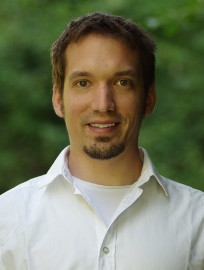
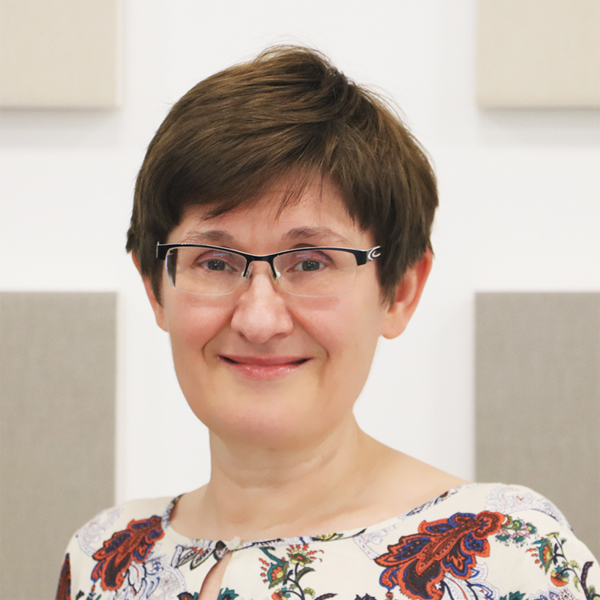
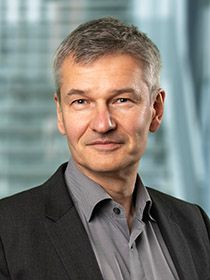
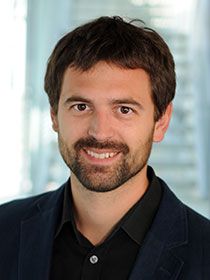
Horst Possegger is a Computer Vision researcher at the Institute of Computer Graphics and Vision at Graz University of Technology, Austria. He holds a BSc and MSc in Software Development and Business Management (2011, 2013) and a PhD in Computer Science (2018), all from Graz University of Technology. His research focuses on multiple object tracking/detection, human behavior analysis, and video analysis with applications in autonomous systems, LiDAR data processing, and robotics. Key projects include trajectory prediction, 3D object detection, and domain adaptation techniques for real-world scenarios. Recent work emphasizes cross-modal learning (e.g., vision-language models for LiDAR data), robust localization in challenging environments, and lightweight motion prediction models. He contributes to the Learning, Recognition & Surveillance (LRS) group and has published extensively in top-tier venues like IEEE/CVF CVPR and IROS. Publications span autonomous driving benchmarks, UWB-based localization, and warehouse automation. His work often bridges theoretical advancements with practical implementations in robotics and surveillance systems.
Ralph-Johan Back is a Professor in Computer Science at Abo Akademi University since 1983. He serves as Director of the Center for Reliable Software Technology (CREST) and has held leadership roles including Chairman of the Board at TUCS (Turku Centre for Computer Science) and Academy Professor at the Academy of Finland. Hybrid systems modeling Computational biology in living cells Software engineering (Gaudi factory, incremental construction) Formal methods (refinement calculus, invariant-based programming) He was elected to the Academy of Europe in 1996 under the Informatics section. His career spans roles in parallel computing, neural computing, and national Ph.D. education programs.
Mária Deli is a Research Professor and group leader at the Institute of Biophysics, Biological Research Centre, Hungary. She is an honorary professor at the University of Szeged and a corresponding member of the Hungarian Academy of Sciences. Education: MD, Szent-Györgyi Albert Medical School (1988); PhD in blood-brain barrier research (1996); Dr. habil. (2011); DSc (2013) Her research focuses on biological barrier dysfunction in diseases, drug delivery via tight junction modulation, and nanoparticle-based targeted delivery across the blood-brain barrier (BBB). She pioneered a patented triple co-culture BBB model and is developing microfluidic chip devices integrated with brain organoids for Parkinson's disease studies. Key trends in her publications include BBB modeling, nanoparticle drug delivery, tight junction modulation, and microfluidic lab-on-a-chip systems. Her work bridges neuroscience, pharmacology, and bioengineering. Scientific awards: János Bolyai Fellowship, JSPS fellowship, Hungarian Academy of Sciences awards, and multiple mentoring accolades Grants: TEVA, Richter Gedeon Pharmaceutical Ltd., and international collaborations She has mentored graduate/PhD students and leads multidisciplinary research teams in Szeged, Hungary.
Prof. Martin Gebser is a University Professor and Deputy Director at the Institute for Artificial Intelligence and Cybersecurity, University of Klagenfurt. His work bridges theoretical advancements in Answer Set Programming (ASP) with practical applications in industrial scheduling, semiconductor manufacturing, and explainable AI systems. Institute for Artificial Intelligence and Cybersecurity, University of Klagenfurt His research focuses on Answer Set Programming and its extensions for complex scheduling problems, particularly in semiconductor production. Key areas include: Multi-shot ASP solving for job-shop decomposition Hybrid AI systems integrating reinforcement learning and logic programming Explainable AI for battery health monitoring and semiconductor dispatching Recent publications emphasize temporal planning, constraint learning, and real-world data integration. He has developed customizable simulators and optimization frameworks for industrial applications.
Manfred Jürgen Primus is affiliated with the Faculty of Technical Sciences at the University of Klagenfurt , specifically within the Institute of Information Technology . His research focuses on Computer Science and Medical Informatics , particularly in Endoscopic Video Analysis and Human-Computer Interaction . Research themes: Medical video datasets, smoke detection in surgical footage, collaborative video retrieval systems Key technologies: Computer vision, machine learning, real-time image processing Applications: Surgical workflow optimization, medical education support Recent publications (2016-2018) demonstrate his work at the intersection of multimedia systems and healthcare, including advanced video analysis tools for laparoscopic surgery and endoscopic procedures. Despite a lack of explicit awards or student advisement records in the provided data, his contributions to Medical Imaging and Human-Computer Interaction are evident through technical publications and interdisciplinary collaborations.
Christian Bettstetter is a Professor at the Institute for Networked and Embedded Systems at the University of Klagenfurt, Austria, and the Scientific Director of Lakeside Labs. He leads research in wireless communications, autonomous systems, and self-organizing networks. As Coordinator for International Relations of the Faculty of Engineering and Head of his institute, he oversees interdisciplinary projects involving drone networks, synchronization algorithms, and industrial IoT applications. His research interests span robotics , swarm intelligence , and drone communication protocols , with notable contributions to synchronization in oscillator networks and multi-robot exploration. He teaches courses on mobile communications and electricity & magnetism , and his work has been recognized with the 2022 Lehrepreis for excellence in teaching. Key projects include: Developing self-organized drone swarms using the swarmalator model Investigating interference management in 5G-connected drones Creating ROS-based frameworks for coordinated multi-robot systems He advises over 10 PhD candidates and has pioneered UWB sensor networks for industrial applications. Current work focuses on bridging simulation-to-reality gaps in drone swarm development and optimizing cellular connectivity for aerial vehicles.
Konstantin Warneke is a Senior Researcher at the Department of Computer Science, Alpen-Adria-Universität Klagenfurt. His work focuses on robotics, multi-agent systems, and automation. While his formal teaching role at the university has concluded, he remains active in research projects such as 'Heterogeneous multi-agent localization' and 'Wind Turbine Blade Inspection Using Multimedia Drones,' funded by agencies like FFG and OeAD. His research spans radar technology, swarm intelligence, and edge-cloud computing, with recent publications in journals like Physical Review E and IEEE Sensors Journal. He collaborates on interdisciplinary projects addressing sustainability, automated systems, and media studies. Notably, his work emphasizes applied research with industry partners such as Infineon Technologies and NOI AG, contributing to practical innovations in fields like agricultural monitoring and renewable energy.
Dr. Samir Cerimovic is a researcher at the Center for Modelling and Simulation of Danube University Krems, Austria. His work focuses on thermal flow sensor development, non-invasive measurement technologies, and energy efficiency optimization in HVAC systems. Develops sensors using printed circuit board technology for fluid flow and thermal monitoring Specializes in building energy efficiency through sensor-based solutions Active in industrial process monitoring applications His recent publications highlight advancements in fiber optic sensors for process furnaces, calorimetric flow sensing, and FEM analysis of micromachined transducers. Key collaborations include projects with Thilo Sauter, Albert Treytl, and Roland Beigelbeck. Research spans smart building systems , petrochemical process monitoring , and flexible sensor applications in air conditioning systems. Current affiliations: Danube University Krems Center for Modelling and Simulation Involved in EUROSensors and IEEE conferences
Univ.-Prof. Priv.-Doz. Dr. Martin Kainz is a Professor at the University for Continuing Education Krems, leading the Research Lab Aquatic Ecosystem Research and -Health. His work focuses on aquatic ecosystems, particularly the role of polyunsaturated fatty acids (PUFAs) in food web dynamics, climate change impacts, and biodiversity effects. He investigates how environmental factors like dams, eutrophication, and temperature influence nutrient availability and trophic interactions in freshwater systems. Research interests include limnology, food web ecology, stable isotope methodologies, and the ecological implications of aquatic resource subsidies. Recent studies highlight the importance of PUFAs as high-quality nutritional resources for aquatic consumers and the degradation of food webs under global change scenarios. His lab employs advanced analytical techniques, including compound-specific stable isotope analysis of fatty acids, to trace nutrient pathways and metabolic adaptations in zooplankton and fish. Key contributions include synthesizing the 'bright and dark sides' of aquatic resource subsidies, demonstrating how consumer biodiversity enhances nutrient availability, and revealing the critical role of chytrid fungi in sustaining planktonic ecosystems. His work bridges ecological theory with applied environmental management, addressing challenges in freshwater conservation and aquaculture.
**Dr. Stefan Nehrer** is a **Professor and Dean of the Faculty of Health and Medicine** at the University for Continuing Education Krems. His research focuses on regenerative medicine, orthopedics, and the application of artificial intelligence (AI) in medical diagnostics. Key areas of expertise include cartilage repair, osteoarthritis therapy, and tissue engineering. He leads projects such as ‘Artificial Intelligence in Orthopedic Radiography Analysis’ and ‘Minced Cartilage in Regenerative Medicine.’ **Research Projects**: Assessing biomechanical biomarkers for knee osteoarthritis (2024–2027) Nutrition and movement for osteoarthritis self-efficacy (2022–2025) AI-driven analysis of radiographic images for knee and spinal conditions **Publications**: His work spans journals like *Biomacromolecules*, *Macromolecular Bioscience*, and *Journal of the Mechanical Behavior of Biomedical Materials*, with a focus on 3D bioprinting, biomaterials, and AI applications. Recent studies explore silk fibroin hydrogels for meniscus regeneration and deep learning for Cobb angle measurements. **Awards & Recognition**: While no specific awards are listed, his contributions to regenerative medicine and AI in healthcare highlight significant scholarly impact. **Grants & Funding**: Projects funded by Austrian federal programs and industry collaborations, such as ‘Additive Manufacturing for Partial Implants’ (2022–2024). **Labs/Teams**: His work integrates interdisciplinary teams in biomedical engineering, orthopedics, and AI, with a focus on translating research into clinical practice.
Alexander Otahal, PhD MSc, is affiliated with the Center for Regenerative Medicine at the University for Continuing Education Krems. His research focuses on extracellular vesicles, stem cell therapies, and regenerative approaches for osteoarthritis and cartilage regeneration. He leads projects funded by organizations such as the Austrian Science Fund (FWF) and regional initiatives. Education: Holds a PhD and MSc in relevant fields (specific details not provided in text). His work emphasizes translational research, including bioprinting, silk-based hydrogels, and microfluidic models. Research Interests: Extracellular vesicle isolation for cartilage repair, 3D bioprinting applications, and osteoarthritis treatment strategies. His studies integrate biomaterials, biomechanics, and cell biology to advance regenerative medicine. Grants & Projects: Principal Investigator for ongoing projects like 'Biodistribution of extracellular vesicles in organ-on-chip systems' and '3D-bioprinted hybrid scaffolds for meniscus regeneration.' Past projects include investigating blood-derived products in osteoarthritis therapy. Labs/Teams: Active within the Center for Regenerative Medicine, collaborating on interdisciplinary projects involving biomaterials, stem cell engineering, and clinical translation.
Harald Özelt is a Researcher at the Center for Modelling and Simulation within the University for Continuing Education Krems. His work focuses on computational magnet design, micromagnetics, and machine learning applications in materials science. He leads projects such as 'Data Driven Magnet Design through Combinatorial Synthesis and Micromagnetic Graph Networks' (FWF-funded) and 'Design of Nanocomposite Magnets by Machine Learning' (FWF-funded). His research emphasizes the development of advanced simulation techniques and optimization strategies for magnetic materials, particularly permanent magnets and composite systems. Key Projects: Magnetic Multiscale Modelling Suite (EU-funded, PI: Thomas Schrefl) Data Driven Magnet Design (FWF-funded, PI: Özelt) Design of Nanocomposite Magnets (FWF-funded, PI: Özelt) Özelt's research interests include the simulation of magnetic materials' microstructure-property relationships, defect manipulation for enhanced coercivity, and the integration of physics-informed machine learning into computational frameworks. He has authored numerous peer-reviewed articles in journals like Journal of Magnetism and Magnetic Materials and Frontiers in Materials , focusing on topics such as micromagnetic modeling, hysteresis optimization, and magnet design. His lectures and conference presentations highlight contributions to inverse design methodologies, multiscaling strategies in magnet design, and the use of neural networks for predicting magnetic properties. He collaborates internationally on projects addressing sustainable materials and rare-earth reduction in permanent magnets.
Dr. Thilo Sauter holds a tenured position as Associate Professor for Automation Technology at Vienna University of Technology (VUT) and is affiliated with Danube University Krems, where he leads the Center for Distributed Systems and Sensor Networks. He has been a pivotal figure in industrial automation research for over two decades, with expertise in smart sensors, real-time systems, and cybersecurity in automation networks. His academic credentials include a Dipl.-Ing. and Doctorate in Electrical Engineering from VUT. Education: Dipl.-Ing. in Electrical Engineering (1992), Vienna University of Technology Doctorate in Electrical Engineering (1999), Vienna University of Technology Research Interests: Dr. Sauter focuses on advancing secure and efficient automation systems, including real-time communication, sensor integration, and cybersecurity for industrial environments. His work bridges theoretical frameworks with practical applications in energy systems, IoT security, and industrial IoT (IIoT). Recent projects emphasize energy transition challenges, such as optimizing e-car charging and enhancing HVAC systems with machine learning. Key Projects: Leading the Community Flexibility in Regional and Local Energy Systems project (2019–2023), addressing energy grid optimization. Principal Investigator for Decision Making and Optimization for Distributed Energy Management (2022–2024), focusing on smart energy systems. Co-developed the Attack Resilience for IoT-Based Sensor Devices in Home Automation initiative (2019–2023). Publications and Awards: With over 300 publications, Dr. Sauter has authored influential works on industrial cybersecurity, sensor systems, and automation networks. His 2014 IEEE Fellow distinction recognizes contributions to synchronization and security in automation networks. He serves as Past Editor-in-Chief of the IEEE Industrial Electronics Magazine and holds leadership roles in IEEE and Austrian professional associations. Grants and Collaborations: His research is supported by grants from FFG (Austrian Research Promotion Agency), FWF (Austrian Science Fund), and industry partners. Projects often combine academic rigor with industry collaboration, such as fiber-optic sensor integration in process furnaces and blockchain-based energy community management. Labs and Teams: He oversees interdisciplinary teams at the Center for Distributed Systems and Sensor Networks, focusing on hardware-software co-design, embedded systems security, and smart energy solutions. His lab infrastructure supports advanced prototyping and testing of sensor networks and IoT devices.
Gerald Ostermayer is a Professor at the University of Applied Sciences Upper Austria, affiliated with the Research Center Hagenberg. His research focuses on automotive/mobility engineering, traffic simulation, and vehicle communication systems. He leads projects like pDrive (platooning energy efficiency) and AutoSimAR (AR applications in automotive). He has been active in multiple research areas including surface acoustic wave technology, smart grids, and augmented reality in vehicles. Key research topics include microscopic traffic simulation, vehicular visible light communication, and security protocols for vehicle platoons. His work integrates interdisciplinary approaches across computer science, electrical engineering, and transportation systems. He has organized workshops such as the 2nd Automotive Mixed Reality Applications and contributed to conferences like IEEE WCNC. Awards include the 2020 Best Paper Award for vehicle platoon verification research. Projects like InterGrid and Localisation & Coexistence highlight his expertise in smart infrastructure and vehicular networking.
Erik Pitzer is a Professor at FH Hagenberg, part of the Research Center Hagenberg. He leads the Josef Ressel Center for Heuristic Optimization and has contributed to projects like SMART UNLOAD (2021-2022) focusing on unloading bay optimization and BIOBOOST (2012-2014) addressing biofuel production via biomass. His work spans heuristic algorithms, simulation-based optimization, and fitness landscape analysis. Research interests include developing metaheuristics for complex optimization problems, distributed modeling frameworks, and dynamic problem adaptation. Notable contributions include Composable Evolutionary Computation (2025) and middleware for distributed systems (2024). Key Projects : SMART UNLOAD (Operational Excellence), BIOBOOST (Bioenergy Production), Josef Ressel Center (Heuristic Optimization) Advising : Supervised 4 works (names withheld) Labs : Josef Ressel-Zentrum für Heuristische Optimierung