Alessandro Aliakbargolkar is a Professor at the Department of Space Systems Design under the School of Aerospace Engineering at Skolkovo Institute of Science and Technology (Skoltech). His research focuses on Federated Satellite Systems, CubeSat constellations, and Spacecraft Systems Architecture, with applications in Earth observation, messaging services, and networked satellite systems. He has an extensive publication record in these areas, including work on technology roadmapping and digital twin implementation. Key Research Areas: Satellite federation and resource sharing CubeSat constellation design Network performance optimization Integration of systems engineering models with AI Selected Trends: Recent work explores digital twin technologies for CubeSats, federated satellite network analysis, and large language model applications in spacecraft design. Publications often combine theoretical frameworks (e.g., network theory) with practical implementations (e.g., LoRa-based messaging services). ORCID Profile: 0000-0001-5993-2994
Prof. Dr.-Ing. Frank Thielecke is a full Professor and the head of the Institute of Aircraft Systems Engineering (Flugzeug-Systemtechnik) at Technische Universität Hamburg (TUHH), Germany. His research is centered on advanced aircraft systems, avionics, flight control, and the integration of emerging technologies such as hydrogen and hybrid-electric propulsion. Institution: Technische Universität Hamburg Department: Institute of Aircraft Systems Engineering (Flugzeug-Systemtechnik) Email: frank.thielecke@tuhh.de Office: Neßpriel 5, Room 1.012, 21129 Hamburg His research interests include integrated modular avionics (IMA), model-based systems engineering (MBSE), aircraft load estimation, health monitoring, fault diagnosis, and sustainable aviation technologies. He leads a research group actively contributing to next-generation aircraft design, with a strong focus on digitalization, virtual testing, and system safety. The recent publications highlight a consistent trend in developing model-based tools and architectures for avionics and aircraft systems. Key themes include the design of IMA platforms, virtual integration, system validation, hydrogen aircraft systems, and control algorithms for UAVs and flexible aircraft. His work frequently appears in AIAA, DASC, DLRK, and CEAS conferences and journals. Prof. Thielecke has been involved in numerous collaborative research projects focusing on more-electric aircraft, fuel cell systems, and advanced actuation. He has contributed to the development of frameworks such as ASHLEY and SArA for avionics platform design and systems architecting. His team also works on noise reduction in hydraulic systems and condition monitoring for aircraft subsystems. He supervises a group of researchers and PhD students, many of whom co-author his publications. While specific student names are not listed, long-term collaborators like Oliver Luderer, Thimo Bielsky, Nils Külper, and Philipp Chrysalidis are likely doctoral candidates or postdoctoral researchers in his group. He has secured funding for projects related to hydrogen aircraft, hybrid propulsion, and digital avionics engineering. His lab, the Institute of Aircraft Systems Engineering, operates test benches for avionics, hydraulic systems, and flight control validation. The team uses advanced simulation, co-simulation (e.g., FMI), and hardware-in-the-loop techniques for virtual integration and testing. Ongoing work includes the development of tools for early validation of flight control platforms and automated requirement-based testing.
Lydia Kaiser is an ECDF Professor for "Digital Engineering 4.0" at Technische Universität Berlin since March 2021. She is affiliated with Faculty V of Mechanical Engineering and Transport Systems, specifically within the Institute for Machine Tools and Factory Management where she leads the Chair for Digital Engineering 4.0 at the Production Technology Center (PTZ). Dr. Kaiser earned her academic foundation with a Bachelor's and Master's degree in Physics from the University of Paderborn, followed by a doctorate in December 2013 from the Faculty of Mechanical Engineering at the same institution. Her dissertation focused on "Framework for Modeling a Plausible System Structure of Mechatronic Systems." Prior to her current position, she held leadership roles at the Fraunhofer Institute for Mechatronic Design, where she headed the Systems Engineering department from 2018 until joining TU Berlin. Professor Kaiser's research centers on the digital transformation of the manufacturing industry, examining both the opportunities and challenges companies face through digitization processes. Her work emphasizes systems engineering approaches that align with the ECDF's vision of "digitization for all, digitization beyond disciplines, people at the center of digitization." She investigates how technical systems become networked, leading to new business models, and stresses the importance of understanding user needs across different departments to develop effective solutions. Her research addresses the growing need for collaboration between traditional mechanical engineers and software developers, as well as the evolving boundaries within industry value chains. Her scholarly output demonstrates a strong focus on Model-Based Systems Engineering (MBSE), Digital Twins, and the integration of Artificial Intelligence in engineering processes. Recent publications show increasing attention to sustainability aspects, particularly through concepts like the "Digital Green Twin" for sustainable product lifecycles. Her work bridges theoretical frameworks with practical industrial applications, addressing challenges in machinery and plant engineering sectors while exploring evolving roles in systems engineering and the sociotechnical dimensions of digital transformation. Professor Kaiser leads a research team comprising Thu-My Huynh and Atilla Köstekci as Research Assistants, along with student assistants Tillmann Hasselbach and Jonas Pfeiffer. After several years in applied research at the Fraunhofer Institute for Mechatronic Design, she has returned to academia with a focus on deepening research while balancing her professional and personal life as a mother of three. She aims to serve as a role model for women in science and advocates for work structures that better support career-family balance, noting that "until a few years ago it was unimaginable for me to combine a professorship and my children - now I am confident it will work out!"
Meric Taneri is a Lecturer and Scientific Staff member at the Chair of Aviation Systems, Technical University of Munich. His research focuses on Aircraft Design , with specialized interests in Model-Based Systems Engineering (MBSE), Multi-Disciplinary Analysis and Optimization (MDAO), and Machine Learning (ML). He contributes to the UNICADO project , advancing methodologies in aviation systems engineering. Contact: meric.taneri@tum.de | +49 (89) 289 - 15989
Bernhard Saske serves as a Research Associate at the Chair of Virtual Product Development within Dresden University of Technology, where he has been affiliated since completing his mechanical engineering studies in 2002. Holding a doctorate (Dr.-Ing.) earned in 2008 for research on 'Augmented Reality in Maintenance,' he specializes in virtual and augmented reality applications integrated with product lifecycle management systems. His academic credentials include: Master's degree in Mechanical Engineering from Dresden University of Technology (2002) Doctorate (Dr.-Ing.) from Dresden University of Technology (2008) focusing on Augmented Reality in Maintenance Saske's research centers on digital transformation in engineering workflows, with core expertise in virtual/augmented reality implementation, product lifecycle management (PLM), and model-based systems engineering (MBSE). Recent investigations address generative AI applications in CAD processes, sustainable product development frameworks, and component reuse optimization in industrial plant design. His work consistently bridges theoretical methodologies with practical industry implementation challenges. Analysis of his 2023-2025 publications reveals a strategic shift toward artificial intelligence integration in engineering design, particularly generative models for CAD and computer vision systems. Concurrently, his research maintains strong emphasis on sustainability-driven PLM strategies and MBSE adaptation for circular economy principles, reflecting evolving industry priorities in resource efficiency and digitalization. Scientific Awards: No documented awards, fellowships, or major honors were identified in the source materials. Dr. Saske actively contributes to collaborative research projects within the Chair of Virtual Product Development, frequently co-authoring with Prof. Paetzold-Byhain and interdisciplinary teams. While specific student supervision is unrecorded, his publications indicate mentorship roles in conference papers and journal articles. Project funding appears aligned with German academic-industry partnerships focused on digital engineering solutions, though grant details remain unspecified. As a core member of the Chair of Virtual Product Development, Saske operates within a research ecosystem dedicated to advancing virtual prototyping, digital twin technologies, and immersive maintenance solutions. The chair maintains active industry collaborations to implement VR/AR methodologies in real-world manufacturing and product development contexts across European industrial partners.
Maximilian Amm serves as a Researcher at the Chair of Product Development and Lightweight Design, Technical University of Munich (TUM), under Prof. Markus Zimmermann's leadership. He actively contributes to the Robot Systems research group and delivers instruction as an assistant lecturer for core courses including Cost Management in Product Development and Think.Make.Start., demonstrating integration of academic research with pedagogical practice. His research program centers on Robotics, Systems Engineering, Lightweight Structures, and Product Development, with specific focus on computational methodologies for affordable robotic systems and model-based approaches to dynamic behavior in robot-like systems. This work bridges theoretical frameworks with industrial applicability through rigorous engineering design principles. Analysis of his 2023 publications reveals a strategic emphasis on democratizing robotics through cost-effective lightweight solutions while advancing systems engineering practices for time-dependent behaviors. His research trajectory indicates strong alignment with industry needs for adaptable, efficient robot design processes. Regarding academic mentorship, Amm currently has no listed graduate advisees. Project involvement includes key initiatives like KREATIVE, BUENA, and TuWAs within the Robot Systems group, which develops cutting-edge methodologies for robotic system design and implementation.
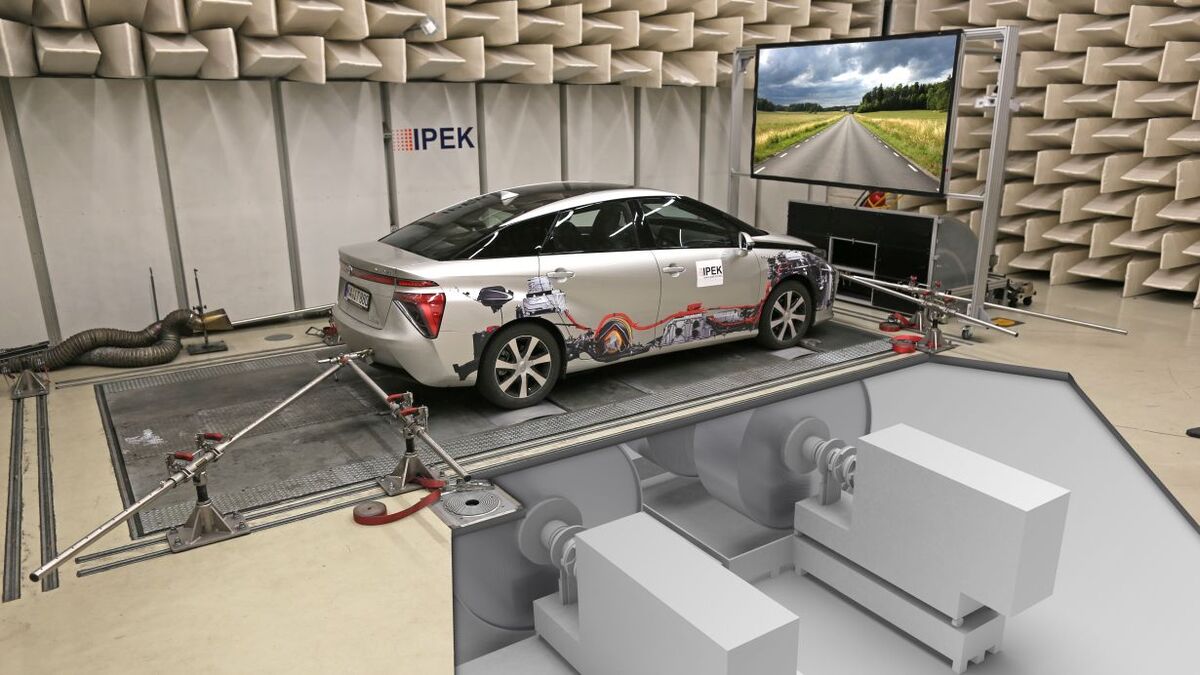
Prof. Albert Albers is a faculty member at the Karlsruhe Institute of Technology (KIT) and heads the Institute for Product Development (IPEK) . His research focuses on reducing development times while enhancing efficiency and quality in drive technologies and mechatronics through Agile Systems Design (ASD). He emphasizes holistic system analysis, combining simulations and experimental studies at all levels, from components to complete systems. Research Interests: Drive system technology in automotive and mechanical engineering Agile methods in product development Model-Based Systems Engineering (MBSE) Advanced Systems Engineering (ASE) for innovation tasks Tribological analysis of components like clutches Sustainable and efficient drive systems 3D vibration measurement and thermal imaging for NVH behavior Institute Facilities: Vehicle-in-the-loop test benches Highly dynamic performance test benches 3D scanning vibrometer High-speed thermal camera and fiber-optic temperature measurement High-performance computing cluster for virtual product development
Prof. Dr. Jutta Abulawi is a faculty member at Hamburg University of Applied Sciences, affiliated with the Faculty of Engineering and Computer Science and the Department of Automotive Engineering and Aircraft Construction . Her research focuses on aerospace and automotive engineering, with an emphasis on sustainable transportation systems and model-based systems engineering (MBSE). Key research areas include: Aerospace Engineering Automotive Engineering MBSE methodologies Sustainable transportation technologies She is actively involved in research projects such as KIVIKA and MBSE initiatives at HAW Hamburg.
Markus Mörtl is a researcher at the Chair of Product Development and Lightweight Design at the Technical University of Munich. His work focuses on product-service systems (PSS), lifecycle-oriented planning, and sustainable product development. He contributes to teaching in cost management, lightweight design, and machine learning for product development, collaborating with Prof. Markus Zimmermann and other team members. University: Technical University of Munich Department: Chair of Product Development and Lightweight Design Research: Digital Twins, Customer Acceptance, Design for Cost, Product-Service Systems Mörtl's research explores the integration of digital twins for sustainable manufacturing, agile approaches in mechatronic development, and frameworks for product-service systems. His work addresses challenges in lifecycle costing, modular design, and indirect cost analysis, with applications in the automotive industry and engineering processes. Recent publications examine sustainable additive manufacturing, data-driven engineering, and trust frameworks for industrial digital twins. He has co-authored over 30 publications with colleagues at TUM, focusing on PSS planning, CO2 reduction technologies, and systems engineering considerations. In teaching, Mörtl assists with courses on cost management, lightweight structures, and machine learning applications in product development. His professional contact details include the email markus.moertl@tum.de and office in Garching, Germany.
Bernhard Rumpe is a full Professor at RWTH Aachen University, where he leads the Chair of Software Engineering (Department of Computer Science 3). His research focuses on model-based software and systems engineering (MBSE), domain-specific languages, and generative development techniques to improve software quality and development efficiency. His research interests include: Model-Based Software Engineering (MBSE) Domain-Specific Languages (DSLs) and language workbenches like MontiCore Model-driven digitalization and digital twins Agile integration with formal modeling Applications in embedded systems, AI, automotive, IoT, and cloud systems His team has developed MontiCore, a powerful language workbench used in both academia and industry for creating and processing DSLs, supporting code generation and static analysis. Research projects span theoretical foundations and industrial applications, with over 100 successfully completed projects celebrated recently. The recent publications reflect a strong trend in model-driven engineering, emphasizing formal modeling, automation, and scalability. Key themes include DSL design, variability modeling, digital twins, and integration of MBSE with agile practices. The work bridges theoretical rigor with practical implementation, especially in safety-critical and complex systems. Scientific contributions and leadership are evident through: Founding and leading a major research chair in software engineering Supervising PhD students such as Sage Binder and Brooke Burson Securing and managing over 100 research projects with industrial partners Developing widely used tools like MontiCore He also actively promotes academic careers, inviting applications for PhD and postdoctoral positions in software engineering, including opportunities for habilitation. The research is conducted within the Software Engineering group at RWTH Aachen, which fosters collaboration between students, researchers, and industry partners, focusing on innovation in software development processes and tools.
Benedict Harder is a Researcher at the Chair of Computing in Civil and Building Engineering, Technical University of Munich, specializing in Building Information Modeling and Model-Based Systems Engineering. He contributes to the DFG SPP 2187 project on modular concrete bridges and maintains active roles in research and teaching. His educational foundation includes a 2024 Master's thesis on algorithmic design of modular precast structures and a 2021 Bachelor's thesis exploring train station design via parametric modeling. These works established his trajectory in computational civil engineering. Harder's research integrates semantic web technologies with infrastructure design, focusing on SysML-OWL interoperability, graph-based modular construction, and formal methods for BIM. His work bridges computer science formalisms with practical civil engineering challenges, particularly in bridge systems and precast structures. Publication trends reveal consistent advancement in formalizing design processes: early work centered on parametric regulation compliance (2021), evolving to SysML-based bridge representation (2024) and semantic reasoning frameworks (2025). Key themes include graph rewriting for modular design, incremental BIM updates, and MBSE applications in structural monitoring. He supervises graduate research including a 2025 Master's thesis on MBSE for bridge monitoring and teaches courses like Computer-Aided Modeling of Products and Processes. His academic activities align with TUM's BIM-Lab and research groups in Digital Twinning and Knowledge Representation.