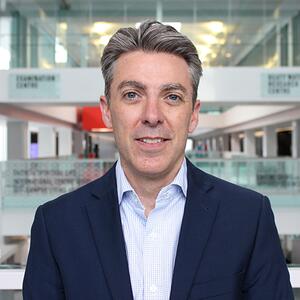
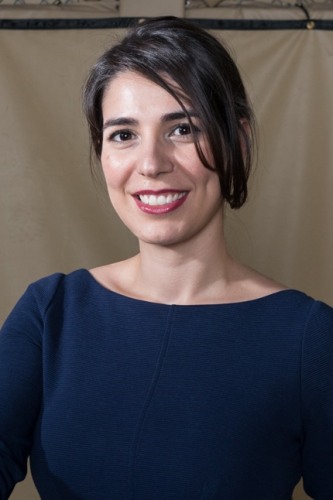
Professor Enda Cummins is a faculty member at University College Dublin (UCD), serving as Professor and Deputy Head of the School of Biosystems and Food Engineering. He also holds roles as Head of Teaching and Learning and Visiting Professor at KU Leuven, Belgium. His research focuses on risk assessment, predictive modeling, food safety, and environmental contamination, with an emphasis on chemicals (e.g., acrylamide, nanoparticles) and pathogens (E. coli, Salmonella). He leads a multidisciplinary team and coordinates the EU-funded H2020 ITN project PROTECT, addressing climate change impacts on food safety. Education: BAgrSc, MEngSc, PhD from UCD. Teaching emphasizes problem-based learning and integrates research innovations. He developed the EU-funded Erasmus+ Predictive Modelling and Risk Assessment program and coordinates the MEngSc in Food Engineering. Grants include projects on antimicrobial resistance, nanoparticle toxicity, and urease inhibitor efficacy. Over 100 peer-reviewed publications and 123 conference papers highlight his work on risk assessment, food safety, and environmental modeling.
Eirin Olaussen Ryeng is a Professor at the Department of Civil and Environmental Engineering, Norwegian University of Science and Technology (NTNU). Her work focuses on transportation engineering, road safety, and human behavior in urban and rural mobility contexts. Key research themes: winter road conditions, autonomous vehicles, cyclist/pedestrian safety, route familiarity, and sustainable transport infrastructure Active in transnational studies and multidisciplinary collaborations Recent publications analyze pedestrian gait in winter, cargo bike efficiency, driver risk perception, and geometric road design impacts. She employs advanced methodologies like sensor technology, survey analysis, and crash-based modeling. Teaching includes courses on road engineering, traffic safety, and transport infrastructure. She has presented at major European Transport Conferences and Nordic Traffic Safety Academy seminars.
Farshad Arvin is a Professor of Robotics in the Department of Computer Science at Durham University. Prior to this, he held academic positions at The University of Manchester (2018-2022) and worked as a Research Assistant at the University of Lincoln (2012-2015). He holds a BSc in Computer Engineering (2004), an MSc in Computer Systems Engineering (2010), and a PhD in Computer Science (2015). His research focuses on Swarm Robotics , Bio-inspired Swarms , and Autonomous Multi-agent Systems . He pioneered the Swarm & Computation Intelligence Laboratory (SwaCIL) at Durham, leading projects like H2020-FET RoboRoyale (€3.27M), Horizon Europe Sensorbees (€3.2M), and BioDiMoBot (€8M), with total funding exceeding £4M. Recent publications highlight advancements in swarm trajectory optimization (T-STAR), collision-free multi-robot coordination, and bio-hybrid environmental monitoring. His work integrates bio-inspired algorithms with practical applications in autonomous vehicles, aerial drones, and hazardous environments. Scientific Awards: Marie Skłodowska-Curie fellowship Notable Projects: EU H2020-FET RoboRoyale (2021-2026) Horizon Europe Sensorbees (2024-2029) Horizon Europe BioDiMoBot (2025-2030) H2020-FET Robocoenosis (2020-2025) Supervision: Mentors 8 postgraduate students at Durham, including Hanadi Alhamdan, Hang Wang, and Honghao Pan.
Prof. Dr. Gökhan Kiper is a faculty member in the Department of Mechanical Engineering at Izmir Institute of Technology , Turkey. His research focuses on Mechanism Science , Machine Design , and Deployable Structures , with particular emphasis on Polyhedral Geometry applications. Teaches courses: ME332 (Mechanisms), ME402 (Machine Design), ME577 (Advanced Mechanism Design) Active in IFToMM (International Federation for the Promotion of Mechanism and Machine Science), including roles in the Technical Committee for Computational Kinematics and the Turkey Branch (MakTeD) Co-organized the IFToMM Summer School on Mechanism Design for Medical Applications (2018) Research interests span kinematic synthesis of mechanisms, deployable architectural structures, and medical robotics. Key projects include a rollable ramp for temporary use, finger exoskeletons for rehabilitation, and remote-center-of-motion manipulators for minimally invasive surgery. His work integrates theoretical analysis with practical prototyping, reflected in publications across robotics, structural mechanics, and geometric design. Affiliates with the Rasim Alizade Mechatronics Laboratory (RAML) and the IzTech Kinetic Designs in Architecture Group . Presented at international conferences like International Symposium of Mechanism and Machine Science (ISMMS-2017) in Baku, Azerbaijan, where he chaired sessions on mechanism kinematics.
Dr. Srishti Banerji is an Assistant Professor in the Department of Civil and Environmental Engineering at Utah State University and Director of the Systems, Materials, and Structural Health (SMASH) Lab. She leads research on advanced construction materials, structural resilience under extreme loads (particularly fire), sustainable infrastructure, and structural health monitoring. Her group focuses on experimental testing, numerical simulations, and developing design solutions for civil infrastructure. Education: PhD in Civil (Structural) Engineering, Michigan State University (2021) MS in Civil (Structural) Engineering, Concordia University (2016) BS in Civil Engineering, National Institute of Technology Silchar (2013) Research Focus: Her work spans: 1) Characterization of high-performance/sustainable materials (e.g., UHPC, recycled glass pozzolan), 2) Structural behavior under fire exposure, 3) Integration of electric charging systems in concrete pavements, 4) Non-destructive testing and structural health monitoring, and 5) Retrofitting techniques for infrastructure strengthening. She employs machine learning, thermo-mechanical modeling, and full-scale experimentation. Publication Trends: Her 13+ journal articles primarily analyze fire resistance of concrete/timber structures, UHPC material properties at high temperatures, sensor-based infrastructure monitoring, and sustainable material development. Recent works increasingly incorporate machine learning and electrification concepts. Awards & Honors: Teacher of the Year (USU, 2025) ASCE ExCEEd Faculty Teaching Fellowship (2023) Top Cited Article Award, Fire and Materials Journal (2023) SHMII-11 Early Career Grant (2022) NSERC Scholarship (2015) Best Conference Paper (SEC 2016) Current Projects & Teams: She leads 5+ funded projects including fire performance of polymer concrete, self-healing concrete for bridges, and Utah-sourced UHPC development. Mentees include 3 PhD students (Abdullah Al Sarfin, Mehrnoosh Nazari, Mahmoud Ali) and alumni working on sustainable materials and additive manufacturing.
Dr. Andy Nguyen is a Senior Lecturer in Structural Engineering at the University of Southern Queensland, within the School of Engineering. He is an active researcher and educator, specializing in the Structural Health Monitoring (SHM) of critical civil infrastructure such as bridges, buildings, and transport tunnels. Bachelor of Engineering (BEng), NUCE, 1999 Master of Engineering (MEng), NUCE, 2003 Doctor of Philosophy (PhD), Queensland University of Technology (QUT), 2014 Dr. Nguyen's research is at the forefront of integrating advanced technologies into civil engineering. His primary focus is on developing and deploying sophisticated SHM systems that utilize sensors, data analytics, and machine learning to provide real-time insights into the structural integrity of ageing infrastructure. His work aims to enable proactive maintenance, extend the lifespan of structures, and enhance public safety. He has successfully implemented monitoring systems on major bridges and high-rise buildings in Queensland and New South Wales, with systems capable of even detecting distant earthquake events. His research interests span Structural Health Monitoring, Machine Learning for Engineering, Damage Detection, Finite Element Model Updating, Sustainable Building Materials like bamboo, and the application of AI for automated condition assessment of transport infrastructure. The analysis of his recent publications reveals a strong and consistent research trajectory centered on the application of data-driven and AI methods to solve practical problems in civil infrastructure. His work frequently combines signal processing techniques (like Stockwell Transform) with deep learning models for tasks such as crack detection in concrete and pavement. He also conducts significant research on model updating for complex structures like cable-stayed and arch bridges, using vibration data and optimization algorithms. The integration of machine learning for overload classification and the development of cost-effective, automated monitoring systems are key trends in his recent output. Advanced Queensland Fellow (2024-2027) Dr. Nguyen is actively involved in research supervision and collaboration. He is currently supervising several postgraduate students on projects related to AI-powered condition assessment, bamboo as a sustainable building material, and railway track design. He receives research funding from the Queensland Government through his Advanced Queensland Fellowship. His research has direct practical applications, as evidenced by his public engagement, such as writing for The Conversation on safeguarding ageing bridges, and his work with the Australian Network of Structural Health Monitoring. Dr. Nguyen's work embodies the development of a next-generation 'Living' Laboratory for engineering education, where research, teaching, and real-world infrastructure monitoring are integrated. His current projects involve creating smart, automated fault detection systems and advancing 'digital twin'-based monitoring platforms for infrastructure.
Timothy Baldwin is a Professor at the University of Melbourne, School of Computing and Information Systems, with additional affiliation at Mohamed bin Zayed University of Artificial Intelligence in UAE. His research spans natural language processing, large language models, and multilingual AI systems. His research interests focus on the safety, reliability, and ethical aspects of large language models. He investigates bias evaluation and debiasing techniques, uncertainty quantification methods, fact-checking systems, and multilingual model safety. His work addresses critical challenges in making AI systems more transparent, reliable, and culturally aware, with particular attention to low-resource languages and cross-cultural differences. Baldwin's recent publications demonstrate a strong focus on evaluating and improving the safety of language models across diverse linguistic contexts, developing tools for fact verification, and understanding the internal mechanisms of large language models. His research shows increasing emphasis on practical applications with real-world impact, particularly in multilingual settings and safety-critical domains. His scientific contributions include foundational work on multilingual NLP, bias mitigation techniques, and frameworks for evaluating LLM safety across different cultural contexts. His research has been published in top-tier venues including ACL, NAACL, EMNLP, and ICLR. Baldwin actively mentors students and junior researchers, with frequent collaborations with Haonan Li, Xudong Han, and Fajri Koto, among others. His research group appears to focus on practical applications of NLP with strong ethical considerations, particularly regarding model safety and cultural sensitivity.
Ehsan Samei is the Reed and Martha Rice Distinguished Professor of Radiology at Duke University. He holds concurrent professorships in Medical Physics, Biomedical Engineering, Physics, and Electrical and Computer Engineering. His leadership roles include Chief Imaging Physicist at Duke University Health System, Director of the Carl E. Ravin Advanced Imaging Laboratories, and Director of the Center for Virtual Imaging Trials (CVIT). Education: University of Michigan (PhD, 1997; MEng, 1995) Key Appointments: Radiology (Clinical Science Departments), Biomedical Engineering (Pratt School of Engineering), Physics (Trinity College of Arts & Sciences) Dr. Samei's research bridges medical imaging physics with clinical applications. His work focuses on photon-counting CT technology, virtual imaging trials, and AI-driven harmonization of CT images. He develops computational models for organ dosimetry, disease quantification, and procedural optimization in radiology. Recent publications emphasize virtual imaging trials for evaluating CT technologies, radiation dose reduction strategies, and AI integration in medical imaging. His studies compare photon-counting CT with conventional systems for lung density, liver lesion detection, and cardiac imaging, while advancing radiomics and dose monitoring frameworks. Scientific Awards Fellow of AAPM (FAAPM) Fellow of SPIE (FSPIE) Fellow of AIMBE (FAIMBE) Fellow of IOMP (FIOMP) Fellow of ACR (FACR) President of AAPM (2023) President of SDAMPP (2010-2011) Dr. Samei has secured major grants from NIH, NCI, and industry partners like GE Healthcare and Siemens. He leads the Center for Virtual Imaging Trials and directs multiple residency training programs in medical physics. His laboratory develops simulation toolkits, 3D-printed phantoms, and dose analytics platforms.
Jay P. Gore is the Vincent P. Reilly Professor in Combustion Engineering at Purdue University's School of Mechanical Engineering, with courtesy appointments in Aeronautics & Astronautics and Chemical Engineering. He holds positions at the West Lafayette campus and leads the Gore Research Group, focusing on combustion, radiation heat transfer, and sustainable energy systems. Education: B.E. from University of Poona (1978), M.S. and Ph.D. from Penn State (1982, 1986), and a Postdoctoral Certificate from University of Michigan (1987). His research spans combustion fundamentals, CO2 recycling via char gasification, laser diagnostics, and propulsion systems. He pioneered the Summer Undergraduate Research Fellowship (SURF) program at Purdue. Research interests include turbulent reacting flows, biomedical heat transfer, and global energy policy. Key subfields are combustion diagnostics, flame structure analysis, and hydrogen storage. His work integrates experimental and computational methods, with applications in aerospace, energy, and environmental sectors. Awards: Purdue Innovator Hall of Fame (2014) Fellowships: AIAA (2009), ASME (2006) Reilly Chair Professor (2000) Presidential Young Investigator Award (1991) Grants & Collaborations: Supported by DoE, NASA, and industry partnerships. Leads interdisciplinary projects on CO2 utilization and renewable energy systems. Labs/Teams: Gore Research Group specializes in combustion diagnostics, laser-based measurements, and sustainable energy solutions. Collaborations include international conferences and policy initiatives.
Kevin Lynch is a Professor of Mechanical Engineering and Director of the Center for Robotics and Biosystems at Northwestern University. He holds a Ph.D. in Robotics from Carnegie Mellon University and a B.S.E. in Electrical Engineering (with honors) from Princeton University. His research focuses on robotic manipulation, robot locomotion, physical human-robot interaction, and distributed control of robot swarms. He has pioneered advancements in exoskeleton control, swarm formation algorithms, and haptic interaction frameworks. Professor Lynch has received significant recognition, including the IEEE Fellow distinction (2010), the Harashima Award (2017), and the Charles Deering McCormick Professor of Teaching Excellence award (2007–2010). He serves as Editor-in-Chief of the IEEE Transactions on Robotics and has authored over 150 peer-reviewed publications. Key contributions include the development of safety-aware human-robot collaboration systems and self-healing swarm control algorithms. He created the ME 333 Introduction to Mechatronics course and the Mechatronics Design Laboratory, fostering interdisciplinary robotics education. His lab, the Center for Robotics and Biosystems, integrates biomechanics with advanced robotics to address challenges in rehabilitation and autonomous systems.
David Garlan is a Professor at the Software and Societal Systems Department within the School of Computer Science at Carnegie Mellon University , where he also serves as Associate Dean for Master’s Programs . He received his Ph.D. from Carnegie Mellon in 1987 after working in industry as a software architect. His research focuses on controlling complexity in large software systems through formalized architectural design, self-adaptive systems, and cyber-physical systems. He developed AcmeStudio , a widely used architecture design environment, and pioneered formal representation and analysis of software architecture. Education : Ph.D. in Computer Science (Carnegie Mellon, 1987) Research Interests include: Software Architecture: Formal methods for architectural design, end-user composition, and architectural styles Self-Adaptive Systems: Stochastic planning, model checking, security adaptation, and uncertainty reduction Cyber-Physical Systems: Multi-view design methods, consistency checking, and automotive systems Recent Article Trends address microservice resiliency, hybrid planning (combining formal methods and ML), simulation-augmented robotics, and sustainable machine translation. Themes include stochastic modeling , probabilistic verification , and adaptive decision-making . Scientific Awards : Stevens Award Citation (2005) ACM SIGSOFT Outstanding Research Award (2011) Allen Newell Award for Research Excellence (2016) IEEE TCSE Distinguished Education Award (2017) Nancy Mead Award (2017) Fellow of IEEE and ACM Advising and Grants : He has advised 25+ graduate students and collaborated on projects with Toyota and the Software Engineering Institute. His work includes model-based adaptation, automated planning, and formal verification of adaptive systems. Labs & Teams : Affiliated with the Institute for Software Research and works on tools like AcmeStudio, Rainbow, and IPL for architectural modeling and self-adaptation.
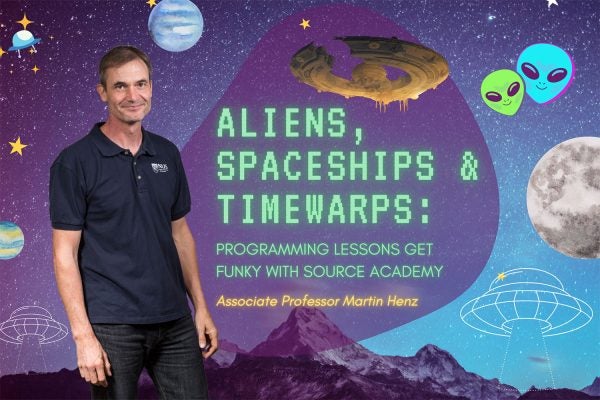
Martin Henz is an Associate Professor at the National University of Singapore , affiliated with the School of Computing and its Department of Computer Science . His academic journey includes an M.Sc. in Computer Science from Stony Brook University (1993) and a Dr.rer.nat. in Computer Science from Saarland University (1997). He has also worked as a Research Scientist at the German Research Centre for Artificial Intelligence. Research Focus : Scalable Experiential Learning, Systems for Teaching/Learning, AI in Education, Programming Languages, Algorithms, and Constraint Programming. Key Projects : Source Academy (immersive programming environment), Deep Teaching (LMS enhancements), and NUS Seafarers (maritime experiential learning). Publications span education technology, programming languages, and sustainable engineering, with recent works focusing on JavaScript-based pedagogy, automated question generation, and electric vehicle conversions. He supervised Rahul Singhal 's PhD, leading to the educational startup Cerebry, and co-founded Workforce Optimizer Pte Ltd with Alan Sevugan. Awards : NUS Annual Digital Education Award (2021) NUS Annual Teaching Excellence Award (2016/17) Fulbright Scholarship (1990) Startup @ Singapore Champion (2001)
Dr. Zhen Peng is a Research Fellow at Curtin University's School of Civil and Mechanical Engineering, part of the Faculty of Science and Engineering. He holds an ARC Early Career Industry Fellowship (2025–2028), focusing on developing cost-effective bridge monitoring systems using computer vision and edge computing in collaboration with Main Roads WA. His work bridges structural engineering, IoT/edge computing, and machine learning to enhance infrastructure safety. Dr. Peng earned his PhD from Curtin University (Chancellor's Commendation, 2022). His research emphasizes structural dynamics, nonlinear damage detection, and mobile crowdsensing frameworks for infrastructure monitoring. He has published extensively in top journals like Engineering Structures and Structural Control and Health Monitoring , receiving notable awards such as the 2023 Best Paper Award and a Gold Medal in the China Postdoctoral Innovation Competition. His current projects include deploying IoT-driven systems for real-time bridge condition assessment and training students via available 2025 PhD scholarships. Dr. Peng teaches courses in civil engineering and structural analysis, contributing to both academia and industry through innovation in smart infrastructure technologies.
Joshua Marshall is a Professor of Electrical & Computer Engineering at Queen’s University, Canada, and Director of the Offroad Robotics research group. He holds a PhD from the University of Toronto and has cross-appointments in Mechanical & Materials Engineering and the Robert M. Buchan Department of Mining. His expertise spans field robotics, autonomous systems, control engineering, and harsh-environment applications in mining, space, and marine domains. He led the Ingenuity Labs Research Institute (2018–2024) and served as a Visiting Professor at Örebro University (2016–17). Dr. Marshall’s work focuses on autonomous vehicle navigation, robotic excavation, and spatiotemporal mapping. He has received the 2025 OPEA Engineering Medal and has commercialized technologies through partnerships with companies like Epiroc and RockMass Technologies. Education: PhD, Electrical & Computer Engineering, University of Toronto (2005) MSc(Eng), Mechanical Engineering, Queen’s University (2001) BSc (Hons), Engineering, (details not specified) Research Interests: Autonomous robotics in mining, space, and marine environments Data-driven control systems and model predictive control Proprioceptive sensing and terrain classification Multi-robot coordination and task planning Underground navigation and SLAM Professional Activities: Senior Member, IEEE Editorial roles: International Journal of Robotics Research , IEEE Transactions on Mechatronics Co-founded the NSERC Canadian Robotics Network (NCRN) Contributions to the IEEE Medal for Environmental & Safety Technologies Committee Labs/Teams: Offroad Robotics Group (Queen’s University) Ingenuity Labs Research Institute (founding Director) Advisor to Queen’s AutoDrive Challenge II Team and aQuatonomous ASV Design Club
Nora Ayanian is an Associate Professor of Computer Science and Engineering at Brown University, leading the Automatic Coordination of Teams Lab. She holds a PhD and M.S. in Mechanical Engineering from the University of Pennsylvania, followed by postdoctoral research at MIT’s CSAIL. Her work focuses on multi-robot systems, integrating task assignment, path planning, and control to enable coordinated teams of robots for applications in manufacturing, environmental monitoring, and emergency response. Affiliations: Brown University School of Engineering, Department of Computer Science. Former roles include Andrew and Erna Viterbi Associate Professor at USC and WiSE Gabilan Chair holder. Research Interests: Aerial robotics, multi-agent systems, swarm intelligence, and control systems. Notable projects include the Crazyswarm nano-quadcopter swarm and downwash dynamics research for large-scale UAV teams. Awards: 2016 MIT TR35 Innovator, NSF CAREER Award, Okawa Foundation Grant, and recognition as one of IEEE's 'AI’s 10 to Watch'. Teaching: Courses on coordinated robotics and robotics as an artistic medium. Active mentorship with awards for inspiring students and fostering diversity in STEM. Grants & Labs: Director of the Automatic Coordination of Teams Lab, with funding from NSF and industry partnerships. Research has been featured in USA Today, Discovery Channel, and Tech Insider.