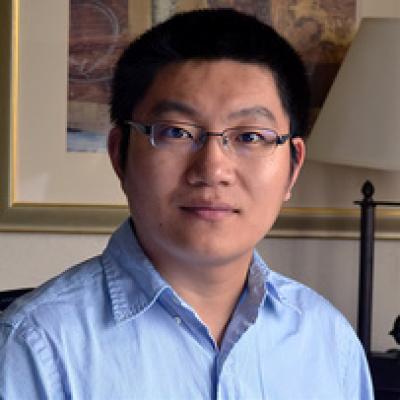
Allen Hsiao MD, FAAP, FAMIA is Professor of Pediatrics, Biomedical Informatics and Data Science, and Emergency Medicine at Yale School of Medicine. He serves as Chief Health Information Officer (CHIO) for Yale School of Medicine and Yale New Haven Health System, and as Vice Chair of Clinical Systems in Biomedical Informatics & Data Science. BA in Biomedical Ethics and MD from Brown University Pediatrics residency at Yale-New Haven Children's Hospital Fellowships in Pediatric Emergency Medicine and Medical Informatics at Yale His research focuses on leveraging health information technology to improve care delivery, with emphasis on electronic health records, clinical decision support, natural language processing, and AI applications. He actively explores how informatics can optimize systems, improve transitions of care, and advance health equity through diverse clinical trial participation. His work spans pediatric emergency medicine, gastroenterology, child abuse detection, and opioid safety. Dr. Hsiao's recent publications demonstrate leadership in AI-augmented clinical decision support, EHR-based machine learning models, and pandemic response infrastructure. His team has developed innovative tools for child abuse identification, gastrointestinal bleeding risk prediction, and collaborative research data platforms. 56 Hospital and Health System CMIOs and CNIOs to Know (Becker's Healthcare, 2023) Healthcare Diversity Leader Award (National Diversity Council, 2023) 48 CMIOs and CNIOs to Know (Becker's Hospital Review, 2022) Norman J. Siegel Faculty Award (Yale School of Medicine, 2022) As principal investigator and co-investigator on NIH and AHRQ-funded grants, he examines health information technology's impact on healthcare quality. He co-directs Yale's CTSA Informatics Core, working with Yale Center for Clinical Investigations to equip researchers with EHR (Epic) and clinical trials management (OnCore) tools. His leadership extends to national committees including American Academy of Pediatrics, HIMSS, and Children's Hospitals Association.
Jing Yang is a full Professor and Director of MS CS Program in the Computer Science Department at the University of North Carolina at Charlotte (UNCC). She has been actively involved in data visualization and visual analytics research since joining UNCC in 2005 after completing her PhD at Worcester Polytechnic Institute. Dr. Yang earned her Bachelor's degrees in Engineering Mechanics and Computer Science from TsingHua University in 1997 and completed her Ph.D. in Computer Science from Worcester Polytechnic Institute in May 2005 under advisors Matthew O. Ward and Elke A. Rundensteiner. Her research focuses on developing visual analytics techniques for abstract data including multidimensional data, time-oriented data, networks, hierarchies, text documents, and trajectory data. She conducts design studies for application domains such as sports, bioinformatics, finance, network security, and health, while exploring fundamental visualization topics like interactions, insight management, clustering-based approaches, and animations. Her recent work emphasizes sports analytics, urban data, and multivariate time series visual analytics. Analysis of Dr. Yang's publication record reveals a strong focus on practical applications of visualization techniques across diverse domains. Her work consistently bridges theoretical visualization frameworks with real-world data challenges, particularly in transportation (taxi trajectories), sports (tennis match analysis), financial transactions, and bioinformatics. The publications demonstrate an evolution from foundational visualization techniques to increasingly sophisticated domain-specific applications. Dr. Yang has secured substantial research funding from NSF, EPA, DHS, and industry partners including Google and Bank of America. Her grants portfolio includes significant projects like TrajAnalytics (NSF, $200,950), Visualizing Event Dynamics (NSF EAGER, $75,317), and Visualizing High Dimensional Categorical Datasets (Google Faculty Research Award, $60,000), among others totaling over $4 million in research support. As an educator, Dr. Yang has taught numerous courses including Visual Analytics, Information Visualization, and Database Design. She directs the Charlotte Visualization Center and has mentored numerous students through research projects. Her collaborative approach is evident in her extensive co-authorship network spanning multiple institutions and disciplines. Current research directions include narrative animation for streaming text visualization and advanced techniques for exploring high-dimensional categorical datasets.
Molly Crockett is a Professor at Princeton University's Department of Psychology and affiliated with the University Center for Human Values . Her research integrates cognitive science, social psychology, philosophy, and data science to examine how systems of power shape knowledge production, and how technologies like artificial intelligence reinforce social inequalities. Education: Ph.D. from the University of Cambridge Her lab focuses on epistemic injustice , using behavioral experiments, computational modeling, and machine learning to study moral cognition, narrative testimony, and the cultural evolution of ethics. Recent work highlights AI's role in distorting scientific understanding and explores how social norms constrain self-knowledge. Key article trends include analyses of algorithmic bias in social networks, moral outrage dynamics, and the interplay between self-perception and societal expectations. She actively mentors postdoctoral, PhD, and undergraduate researchers, emphasizing diversity and inclusion in scientific practice. Publications span topics from neurobiological markers of guilt to positive illusions in relationships , reflecting her interdisciplinary approach. Her lab avoids tech industry funding to maintain research autonomy.
Professor Jordan Taylor is affiliated with Princeton University as a faculty member in the Department of Biomedical Engineering within the School of Engineering and Applied Science. His research focuses on unraveling computational processes in motor control and learning, with particular emphasis on interactions between explicit cognitive strategies and implicit motor adaptation during skill acquisition. Taylor leads the Intelligent Performance and Adaptation Laboratory , aiming to develop optimal training protocols for motor rehabilitation post-stroke or disease. Research Interests : Taylor investigates how humans learn motor skills through dual mechanisms of declarative strategy formation and implicit neural adaptation. His work explores the neural systems underlying these processes and their functional consequences, especially in pathological conditions like cerebellar degeneration. Current studies examine working memory constraints, reward modulation of implicit adaptation, and plan-based generalization of motor learning. Publication Trends : Recent articles analyze dual mechanisms in sensorimotor learning, reward-driven adaptation, and contextual influences on motor memory. His computational neuroscience approach combines behavioral experiments, neural imaging, and theoretical modeling to study cognitive-motor interactions across various tasks.
Kalina Bontcheva is a Senior Researcher in the Natural Language Processing Group within the Department of Computer Science at the University of Sheffield. She holds an EPSRC Career Acceleration Fellowship (working part-time since October 2015) focused on personalized summarization of social media content. Her research spans multiple EU-funded projects including PHEME (computing veracity of social media), TrendMiner, DecarboNet, and uComp, with significant contributions to the GATE (General Architecture for Text Engineering) open-source NLP infrastructure since 1999. Dr. Bontcheva's research interests focus on the intersection of natural language processing and social media analysis. Her work encompasses NLP for social media, semantic search, information extraction from social platforms, crowdsourcing of NLP corpora, collaborative text annotation, semantic technologies, and text mining and analytics. She has particular expertise in developing methods for personalized, abstractive multi-document summarization across different social media platforms, addressing the challenges of noisy, jargon-filled and dynamic content. Her interdisciplinary approach combines machine learning, semantic technologies, and social dimension analysis to create systems that adapt to individual users' information seeking goals. Analysis of her recent publications reveals a strong focus on social media processing challenges, with emphasis on Twitter analysis, temporal expression recognition, and handling noisy text. Her work consistently addresses the unique characteristics of social media content and develops specialized techniques for information extraction, sentiment analysis, and user geolocation within these platforms. The GATE framework serves as the foundation for much of her tool development, demonstrating her commitment to creating reusable, open-source NLP infrastructure. Her most significant award is the EPSRC Career Acceleration Fellowship, which supports her work on personalized social media summarization. This prestigious fellowship includes a substantial budget of £560k and involves collaborations with industry partners including The Press Association, British Telecom, and Fizzback. Dr. Bontcheva has led numerous major research projects throughout her career. She was Principal Investigator on three EU-funded projects (MUSING, TAO, and ServiceFinder) between 2006-2009, coordinating the TAO consortium with seven partner institutions. She currently leads the PHEME EU project and serves as PI for TrendMiner and DecarboNet European projects, while also contributing as Co-I on the uComp project. Her project portfolio demonstrates consistent success in securing competitive research funding across multiple domains within NLP and semantic technologies. She works within the Natural Language Processing Group at the University of Sheffield, which has been central to the development of the GATE infrastructure. Her work connects with various initiatives including the GATE Cloud platform and the TextVRE project for e-humanities textual studies. She has established collaborations with organizations including the Press Association, British Telecom, Oxford Internet Institute, and Sheffield's Department of Journalism to ensure her research addresses real-world needs across different user communities.
Georgios Arvanitidis is an Associate Professor at the Technical University of Denmark (DTU) in the Department of Applied Mathematics and Computer Science, specifically within the Section for Cognitive Systems (CogSys). He has established himself as a leading researcher in geometric machine learning, focusing on the application of differential geometry principles to enhance machine learning models. His work bridges theoretical mathematics with practical applications in artificial intelligence, with particular emphasis on understanding the geometric structure of data manifolds and latent spaces. Dr. Arvanitidis completed his educational journey with a Bachelor's degree from the Department of Informatics at the Aristotle University of Thessaloniki, followed by a Master's degree in Computer Science from Saarland University supported by the Max Planck Institute for Informatics. He earned his PhD at DTU's Cognitive Systems section under the supervision of Søren Hauberg, with additional research experience at Philipp Hennig's Probabilistic Numerics group. Prior to his current position as associate professor, he was a PostDoc at the Max Planck Institute for Intelligent Systems working with Bernhard Schölkopf. Dr. Arvanitidis's research primarily focuses on differential geometry in machine learning , where he explores how geometric structures can enhance representation learning and statistical modeling. His work in generative models investigates how learning the geometry of data manifolds can improve deep learning architectures. In the domain of deep learning theory , he examines why deep learning models generalize effectively on unseen data, with particular attention to the curvature properties of loss landscapes. His research in approximate Bayesian inference applies geometric principles to improve uncertainty quantification in neural networks. Through his innovative approaches, Dr. Arvanitidis has established himself as a leading researcher in geometric machine learning, contributing to both theoretical foundations and practical applications across various domains including robotics and life sciences. The publication trends of Dr. Arvanitidis reveal a consistent and evolving focus on geometric approaches to machine learning problems. His recent work (2023-2025) demonstrates increasing sophistication in applying Riemannian geometry to deep learning architectures, with particular emphasis on latent space geometry, optimization on manifolds, and geometric interpretations of neural network behavior. A notable pattern is the progression from foundational work on geometric representations to more applied research in areas like robotics and causal inference. His publications span top-tier conferences including NeurIPS, ICML, ICLR, and AISTATS, reflecting the high impact of his research. The interdisciplinary nature of his work is evident in collaborations across mathematics, computer science, and robotics domains, with recent papers addressing challenges in multimodal sampling, safety guarantees for dynamical systems, and counterfactual explanations. Dr. Arvanitidis has received several notable scientific awards and recognitions: Sapere Aude starting grant from the Independent Research Fund Denmark (DFF) GADL funding i-Rase, Pathfinder, and EIC (European Innovation Council) funding Best reviewer award for NeurIPS 2019 Best reviewer award for NeurIPS 2018 Best student paper award at Robotics: Science and Systems (R:SS) 2021 Dr. Arvanitidis actively mentors PhD students and researchers, currently supervising Alejandro Valverde, Johanna Gegenfurtner, and Albert Kjøller Jacobsen. He has previously co-supervised Alison Pouplin's PhD and worked with research assistant Georgios Pantis. His group receives substantial funding through multiple prestigious grants including the Sapere Aude starting grant from the Independent Research Fund Denmark, as well as European Innovation Council funding. He has been instrumental in creating opportunities for students interested in geometric machine learning, offering BSc and MSc thesis projects focused on generative models, deep learning theory, and optimization techniques. Dr. Arvanitidis also contributes significantly to the academic community as a reviewer for top conferences including ICLR and TMLR, and as an area chair for NeurIPS, ICML, AISTATS, and UAI. He co-organized the Machine Learning Summer School 2020 in Tübingen, further demonstrating his commitment to education and community building. Dr. Arvanitidis leads a vibrant research group focused on geometric machine learning within the Cognitive Systems section at DTU. His team includes multiple PhD students working on cutting-edge research at the intersection of differential geometry and artificial intelligence. The group has developed notable software tools, including the "geometric_ml" GitHub repository with over 70 stars, which contains implementations for applying Riemannian geometry in machine learning. His research has practical applications in robotics, where geometric approaches enable more robust motion planning, as evidenced by his work on "Reactive Motion Generation on Learned Riemannian Manifolds" which received a best student paper award. Additionally, his methodologies have found applications in life sciences, as mentioned in his 2022 AISTATS paper. The collaborative nature of his work is evident through extensive partnerships with researchers at institutions including the Max Planck Institute for Intelligent Systems, University of Cambridge, and various European universities. His recent news items indicate active engagement with the academic community through talks, conference presentations, and ongoing supervision of new PhD students joining his group.
Xin Li is a Professor in the Department of Electrical and Computer Engineering at Duke University and serves as the Associate Vice Chancellor at Duke Kunshan University. He holds a Ph.D. from Carnegie Mellon University (2005) and has held leadership roles in research consortia like the FCRP Focus Research Center and the Center for Silicon System Implementation (CSSI). His research bridges integrated circuits , machine learning , and cyber-physical systems , with applications in autonomous driving, battery lifetime prediction, and smart buildings. Education : Ph.D., Carnegie Mellon University (2005); M.S., Fudan University (2001); B.S., Fudan University (1998) His work emphasizes robust design methodologies for analog/RF circuits, data-driven predictive modeling , and Bayesian inference for high-dimensional variation spaces. Recent publications focus on generative adversarial networks for circuit design, multi-view imputation for incomplete data, and knowledge-driven autonomous systems . He has received numerous accolades, including the NSF CAREER Award (2012) , IEEE Donald O. Pederson Best Paper Awards (2013, 2016) , and IEEE Fellow (2017) . He has served as Editor for journals like IEEE Transactions on Biomedical Engineering and as Chair for conferences including ISVLSI and CAD/Graphics.
Dr. Ali Çarkoğlu is Professor of Political Science at Koc University in Istanbul, Turkey, specializing in comparative politics, electoral systems, and political communication. Holding a PhD from SUNY Binghamton (1994), he has previously taught at Boğaziçi and Sabancı Universities. Doctoral Degree: State University of New York-Binghamton (1994) Master's Degree: Rutgers University (1989) Bachelor's Degree: Boğaziçi University (1986) His research focuses on political polarization in multiparty systems, misinformation dynamics in authoritarian regimes, and the emotional mobilization effects of populist rhetoric. Recent studies examine partisan bias in pandemic-era conspiracy theories and electoral alliance challenges in Turkey's 2023 presidential election. Notable scientific achievements include the 2013 Wapor Best Article Award. He has developed innovative network-based approaches for measuring party polarization and conducted experimental analyses of voting advice applications' impact in constrained media environments.
Nicolò Dell'Unto serves as Professor of Archaeology at Lund University's Department of Archaeology and Ancient History within the Faculty of Humanities and Theology. His research pioneers digital methodologies for archaeological analysis, specializing in 3D visualization, spatial technology, and virtual reality applications that transform how we perceive and investigate the past. Based at Helgonavägen 3 in Lund (Room LUX:A122), he directs the Digital Archaeology Laboratory (DARKLab) and oversees undergraduate/postgraduate digital archaeology programs. His educational background includes: Archaeology studies at University of Rome, La Sapienza PhD in Technology and Management of Cultural Heritage from IMT Lucca, Italy Postdoctoral fellowship at University of California Merced Dell'Unto's research focuses on how laser scanners, photogrammetry, GIS, and virtual reality technologies fundamentally reshape archaeological practice. His work bridges technical innovation with theoretical frameworks in landscape archaeology, emphasizing practical field applications while addressing methodological challenges in data interpretation. Key themes include digital documentation standards, 3D data management, and the cognitive impact of visualization tools on archaeological reasoning. His publication trends reveal a shift toward AI integration in archaeological data interpretation, infrastructure development for 3D data sharing, and cross-disciplinary collaborations examining Mediterranean connectivity. Recent works emphasize practical frameworks for implementing digital tools in fieldwork while addressing sustainability challenges in digital heritage preservation. Award highlights: Einar Hansen Prize for Humanities (2017) Royal Physiographic Society of Lund election (2024) Best Paper Award (2014) Highly Cited Research recognition (2017) Dell'Unto supervises PhD and master's students while leading major projects including RE-OSTRAKON (3D artifact scanning), TETRARCHs (data reuse), and AIR (Archaeological Interactive Report). His DARKLab serves as Sweden's national infrastructure for digital archaeology, collaborating with institutions like University of Oslo's Museum of Cultural History where he holds a visiting professorship since 2019. He actively shapes digital archaeology policy as Domain Specialist for Swedish National Data Service, Board Member for Statens historiska museer, and Open Science Champion at Lund University, driving national standards for archaeological data management and open science practices.
Leonora Kaldaras is an Assistant Professor in the Department of Curriculum & Instruction at Texas Tech University College of Education. Her research focuses on equitable personalized learning, AI-driven assessment systems, and cognitive development in STEM education. She holds a dual Ph.D. in Curriculum, Instruction and Teacher Education and Measurement and Quantitative Methods from Michigan State University (2020) and has worked with Nobel laureate Carl Wieman on AI-guided feedback tools. Education: Dual Ph.D. (2020), Michigan State University Science Education Certificate, BGSU B.S. in Chemistry (2009), BGSU Research Interests: Personalizing learning through technology, equity in blended/personalized learning, and fostering knowledge transfer via self-guided strategies. She specializes in NGSS-aligned assessments and AI-enhanced feedback systems for STEM education. Article Trends: Her recent work (2023-2025) emphasizes AI-driven assessment design, NGSS-aligned learning progressions, and cognitive frameworks for math-science integration. Earlier publications (2012-2016) focus on biophysics but transitioned to education post-2020. Scientific Awards: New and Noteworthy Invited Symposium by American Chemical Society Top Downloaded Article (JRST, 2019) Top Cited Article (JRST, 2021-2022) Grants: NSF DrK-12 Co-PI (2022-2026) for AI feedback systems in NGSS classrooms. Labs & Collaborations: Formerly at Stanford University Graduate School of Education and University of Colorado Boulder PhET Interactive Simulations Project, working closely with Nobel laureate Dr. Carl Wieman.
Andrew D. Coppens, Ph.D., is an Associate Professor of Learning Sciences at the University of New Hampshire, directing the Graduate Programs in Educational Studies. He holds a Ph.D. in Psychology from UC Santa Cruz, focusing on cultural and developmental psychology, learning sciences, and qualitative methods. His research examines cultural processes of learning in non-dominant communities across diverse settings, including rural, middle-class, and Indigenous-heritage communities globally. Key projects include the New Hampshire Youth Retention Initiative (YRI), addressing rural youth futures through NSF, Spencer Foundation, and NH Charitable Foundation grants. Coppens teaches courses on human development, qualitative research, and cultural perspectives in education. Education: Ph.D. in Psychology (Latin American Studies), UC Santa Cruz; M.S. Psychology, UC; B.S. Kinesiology: Outdoor Education, UNH Research interests span cultural child development, qualitative methods, rural education, and children’s prosocial learning. His work emphasizes strengths-based approaches and informal learning contexts, with publications in journals like Social Development and Frontiers in Psychology. Coppens collaborates internationally, contributing to frameworks for rural teacher residencies and youth retention strategies. Recent articles highlight outdoor recreation’s role in STEM equity, socioscientific decision-making, and cross-cultural prosocial behavior. Grants include exploring identity trajectories and STEM pathways in rural areas. The YRI’s interdisciplinary efforts aim to combat human capital extraction in rural communities through sustainable educational pathways.
Hao Zhang is an Associate Professor in the Department of Computer Science at the Manning College of Information and Computer Sciences (CICS), University of Massachusetts Amherst. He directs the Human-Centered Robotics Laboratory (HCRLab), focusing on lifelong collaborative autonomy, robot adaptation, and human-robot teaming. His research integrates robotics, AI, and machine learning to develop algorithms for real-world applications like manufacturing, autonomous driving, and environmental monitoring. He holds an NSF CAREER Award and DARPA Young Faculty Award, among other recognitions. Dr. Zhang earned a PhD from the University of Tennessee, Knoxville (2014) and an MS from the Chinese Academy of Sciences (2009). His work addresses challenges in unstructured environments through innovations like self-reflective terrain adaptation and graph-based perception systems. He actively promotes equity in robotics through his PROGRESS outreach program. His research sponsors include NSF, DARPA, and industry partners such as Toyota. Publications span conferences like RSS, ICRA, and IROS, with best paper awards. He serves on editorial and program committees for top-tier journals/conferences including RA-L, NeurIPS, and AAAI.
Michael Fisher is the Royal Academy of Engineering Chair in Emerging Technologies and Professor of Computer Science at the University of Manchester. He also holds an Honorary Professorship at the University of Liverpool (2020–2023). His research focuses on autonomous systems, formal verification, robotics ethics, and AI safety. Fisher leads projects such as the Centre for Robotic Autonomy in Demanding Environments (CRADLE) and contributes to IEEE standards for fail-safe autonomous systems. He is a Senior Associate Editor of the Annals of Mathematics and Artificial Intelligence and co-chair of the IEEE Verification of Autonomous Systems committee. His work integrates formal methods with robotics, emphasizing ethical reasoning and assurance in autonomous systems. Key research interests include temporal logic, model checking, and the verification of robotic decision-making. Fisher has received Best Paper Awards in 2018 and 2014, recognizing contributions to human-robot team validation and ethical reasoning frameworks. Fisher’s projects span space robotics, industrial automation, and safety-critical systems. He collaborates with industry partners like Amentum and advises the UK government on AI and robotics policy. His recent work explores neuro-symbolic AI integration and compositional verification for modular robotic systems.
Stephen Lee-Urban is a Teaching Associate Professor in the Department of Computer Science & Engineering at Lehigh University, affiliated with the Rossin College of Engineering. He holds a Ph.D., M.S., and B.S. in Computer Science and Engineering from Lehigh University, all completed with summa cum laude distinction. His research focuses on fundamental and applied artificial intelligence, machine learning, game AI, cognitive systems, and automated planning. He has contributed to innovative projects such as HuManIC (human-machine interpretive control), CORA (cognitive systems framework), and crowdsourced narrative generation systems. His academic career includes significant work in cybersecurity through intelligent agent modeling of malware, as well as contributions to game AI for strategy games and military training simulations. Notable awards include summa cum laude honors for all three of his university degrees. Lee-Urban's scholarly output spans over 20 publications since 2000, with recent emphasis on AI applications in collaborative storytelling, adaptive planning systems, and human-computer interaction. His research integrates machine learning techniques with sociocultural analysis, crowd-powered content creation, and hierarchical task networks. Current work explores autonomous systems capable of leveraging crowd intelligence for generating interactive narratives and optimizing military training scenarios. While no specific grants or advising roles are listed, his interdisciplinary approach bridges computer science with game design, cybersecurity, and cognitive modeling.
Arjen Wals is a Personal Professor at Wageningen University & Research , specializing in Education for Sustainable Development (ESD) and transdisciplinary sustainability research. His work bridges academia, policy, and community action, focusing on transformative learning, climate change adaptation, and systemic societal challenges. Research interests include: Relational education and outdoor pedagogies Transdisciplinary knowledge co-creation Decolonization of sustainability education Role of AI (e.g., ChatGPT) in educational practices Whole school approaches to sustainability Key Projects: Supervising PhD research on regenerative farming, nature-based education, and business models for sustainability Leading initiatives like the 'Whole School Approach' to integrate sustainability across educational systems Co-designing river co-learning arenas for multi-stakeholder environmental governance Media Contributions: Regularly provides expert commentary on sustainability education, climate policy, and societal transitions in Dutch and international media. Advising: Mentor to 18 PhD candidates exploring themes like wild pedagogies, food systems governance, and climate resilience.