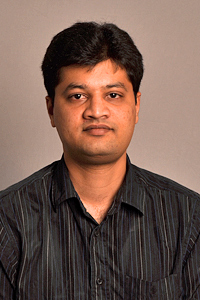
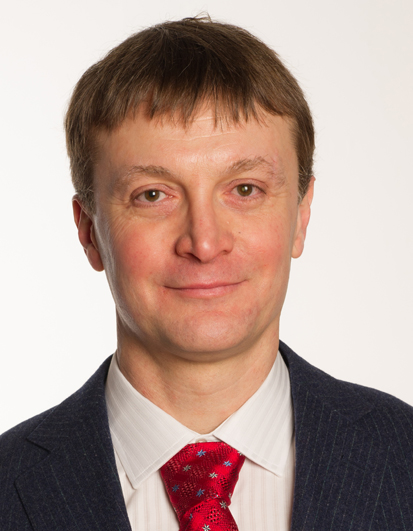
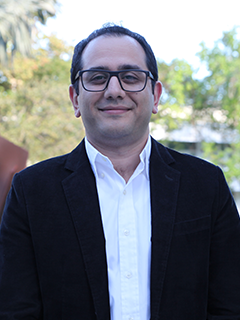
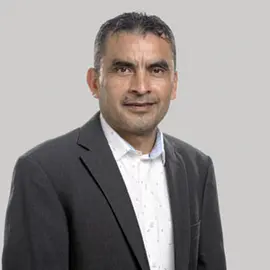
Thomas Wies is a Professor of Computer Science at the Courant Institute, New York University, and Chair of the Computer Science Department. His research focuses on program analysis and verification, automated deduction, and concurrency. University : New York University School : Courant Institute Department : Computer Science Academic Rank : Professor His research explores foundational techniques for verifying concurrent systems, including separation logic, shape analysis, and SMT-based methods. Key trends in his recent work include advancements in symbolic verification for concurrent data structures, multiparty protocol analysis, and linearizability proof tools. Scientific awards he has received include: Best Paper Award, ISSRE 2019 Best Paper Award, ACM SIGPLAN OOPSLA 2014 He has advised numerous PhD students and co-advised alumni, including Devora Chait-Roth, Mark Goldstein, Ekanshdeep Gupta, and others. His teaching portfolio includes graduate and undergraduate courses on programming languages, concurrency, and program verification. Professional roles include organizing conferences like VerifyThis 2025 and chairing program committees for VMCAI and ESOP.
Ben Bartlett is a Researcher at the University of Limerick's School of Engineering, specializing in robotics and unmanned systems for environmental and infrastructure applications. His work bridges engineering innovation with practical solutions for challenging real-world environments. His research focuses on: Development of UAV systems for wildlife monitoring and offshore wind farm surveys Cooperative multi-robot path planning for bridge and infrastructure inspection Fault-tolerant control systems for inaccessible environments Maritime robotics using integrated aerial and surface vehicles Automated 3D reconstruction of unknown structures using LiDAR Analysis of his 2023-2025 publications reveals a consistent trend toward real-time, automated systems that balance wide-area coverage with high-resolution precision. His work demonstrates particular strength in adapting robotic systems to dynamic environments like offshore wind farms, aging infrastructure, and maritime settings, with emphasis on efficiency, safety, and cost-effectiveness through modular design and fault tolerance. Contact: Ben.Bartlett@ul.ie
Vijayanarasimha Hindupur Pakka is a Senior Lecturer in Electrical Power Systems & Smart Grids at De Montfort University, UK, based in the School of Engineering and Sustainable Development within the Faculty of Computing, Engineering and Media. He is affiliated with the Institute of Energy & Sustainable Development (IESD) and the Engineering & Physical Sciences Institute (EPSI), contributing to cutting-edge research in sustainable energy systems and smart grids. Education: PhD in Computer Science, University of Southampton, UK (2005–2009) MSc (Engg) in Electrical Engineering, Indian Institute of Science, Bangalore, India (2002–2004) B.E. in Electrical & Electronics Engineering, Bangalore University, India (1997–2001) PGCertHE, De Montfort University, UK (2016–2017) His research focuses on smart grids, distributed energy integration, microgrid control, voltage regulation, electricity markets, and agent-based modeling. He applies advanced techniques such as machine learning, multi-agent systems, statistical models, and metaheuristics to power system challenges. His teaching includes power system analysis, electrical principles, and power electronics at both undergraduate and postgraduate levels. His recent publications (2022–2024) reflect a strong trend toward intelligent optimization in distribution systems, local energy planning, water quality modeling, and real-time occupancy sensing for energy efficiency. These works span disciplines including electrical engineering, environmental science, and building automation, with a clear emphasis on sustainability, data-driven modeling, and smart infrastructure. Scientific Awards and Recognition: Higher Certificate in Statistics, Royal Statistical Society (2013) Fellow of the Higher Education Academy (FHEA, 2017) Reviewer for EPSRC, Netherlands Organization for Scientific Research, IET, MDPI Energies, and several international journals Vijay Pakka actively supervises MSc and PhD students and has led or contributed to major research grants such as CASCADE, AMEN (EPSRC), and the UKRI-funded CEPREC project. His consultancy includes power and statistical system analysis. He is involved in KTP projects with industry partners like Advanced Infrastructure Technology Ltd and Midas Productions Ltd, focusing on data-driven energy planning and demand optimization. He is a member of IEEE, IET, CIGRE, and the Energy Institute, and regularly presents at international conferences such as CIRED, EEM, and IEEE SmartGridComm. His work bridges technical power systems with socio-economic and behavioral aspects of energy transitions, positioning him at the forefront of interdisciplinary energy research.
Giulia Fanti is an academic researcher affiliated with Carnegie Mellon University in the Computer Science Department . Her research focuses on privacy-preserving technologies, blockchain systems, and machine learning mechanisms, with significant contributions to federated learning, differential privacy, and cryptocurrency network design. Key Research Areas : Privacy in blockchain, Generative Adversarial Networks (GANs), Federated Learning, Game Theory applications to decentralized systems. Recent Publications : Her work explores liquidity provisioning in decentralized finance, truncated consistency models for image generation, and private data valuation frameworks. She has contributed to venues like NeurIPS, ICLR, and SIGMETRICS, often addressing privacy-utility tradeoffs.
Benjamin Bevans is a Research Assistant Professor in the Department of Industrial & Systems Engineering at the University of Oklahoma. His work focuses on advanced manufacturing through data analytics, machine learning, and in-situ process monitoring in Additive Manufacturing (AM) systems. Ph.D., Industrial & Systems Engineering, Virginia Tech B.S., Mechanical & Materials Engineering, University of Nebraska-Lincoln Research domains include Physics-Based Machine Learning for thermal history control in Laser Powder Bed Fusion (LPBF), Computer Vision for defect detection, and Quality Assurance through heterogeneous sensor integration. He specializes in Wire Arc Additive Manufacturing (WAAM) and Directed Energy Deposition (DED) processes. Recent publications highlight trends in autonomous control systems for AM, Bayesian transfer learning for in-situ qualification, and multi-sensor fusion for flaw detection. His work bridges materials science and process optimization in metal AM. He is based at the Sooner Advanced Manufacturing Laboratory in Norman, Oklahoma, and his research has been published in top journals such as Additive Manufacturing and Journal of Materials Processing Technology .
Zhenjie Zhang is a Professor in the Department of Computer Science at East China Normal University's School of Computer Science and Software Engineering, with a distinguished research career spanning nearly two decades. His work bridges theoretical computer science with practical industrial applications, maintaining strong international collaborations with researchers from TU Wien, National University of Singapore, and industry partners including ByteDance. Dr. Zhang's research focuses on the intersection of database systems, machine learning, and industrial applications. His early work centered on database privacy and query processing, evolving toward causal inference, fault diagnosis systems, and industrial AI applications. His recent publications demonstrate a strategic shift toward solving real-world engineering problems using advanced machine learning techniques, particularly in manufacturing, transportation, and cloud systems. The consistent publication trajectory across top venues like IEEE TKDE, VLDB, and ACM Transactions shows sustained research excellence and adaptability to emerging technical challenges. His publication record reveals significant contributions to causal inference methods, evidenced by multiple papers on causal discovery and transfer learning. The research demonstrates practical impact through industrial collaborations, particularly in fault diagnosis systems for mechanical equipment and adaptive control for unmanned vehicles. The recent work shows increasing focus on deploying AI models efficiently in resource-constrained environments, reflecting awareness of practical implementation challenges. Dr. Zhang has mentored numerous junior researchers who have become active contributors in the field, including Ruichu Cai and Zining Zhang. His collaborative network spans multiple continents, indicating strong research leadership and international recognition. The consistent flow of publications in top venues suggests successful grant funding and research group management, though specific grant details aren't provided in the source material.
Marcin Jachimski serves as a lecturer at the Department of Power Electronics and Automation of Energy Conversion Systems within the Faculty of Electrical Engineering, Automatics, Computer Science and Biomedical Engineering at AGH University of Science and Technology in Kraków. His academic role involves teaching and research focused on energy-efficient technologies and advanced control systems, with particular emphasis on practical applications in building automation and industrial processes. Dr. Jachimski holds both a PhD and an engineering degree (Eng.), establishing his foundation in electrical engineering principles. His educational credentials, while not detailed in available sources, underpin his expertise in power electronics and automation systems that drive his current academic work. His research spans multiple critical domains including Power Electronics for efficient energy conversion, Building Automation systems optimizing energy usage in structures, and Energy Conversion Systems for sustainable power management. He also investigates Electrical Energy Consumption monitoring techniques and develops advanced Control Systems for industrial applications, with growing interest in event-based data acquisition methods and energy-saving lighting technologies. Analysis of Dr. Jachimski's publication trends (2006-2020) reveals consistent focus on energy efficiency within building automation systems, particularly event-based electricity metering and LED/CFL lamp consumption analysis. His work demonstrates strong practical orientation through applications in lime processing control systems, industrial machine monitoring, and hardware implementations for safety functions, with increasing integration of LonWorks and TCP/IP technologies in building management solutions. No scientific awards or fellowships are documented in available sources, indicating his primary contributions occur through academic publications and teaching activities rather than formal recognitions. As a lecturer, Dr. Jachimski likely mentors undergraduate and graduate students, though specific advisees are not listed in available information. Details regarding research grants secured through competitive funding mechanisms are also absent from current documentation. His departmental affiliation suggests active participation in research teams developing energy conversion solutions and automation systems, though specific laboratory names or team structures are not explicitly mentioned in available materials. The department's focus implies collaborative work on industrial automation projects and energy monitoring systems.
Dr. Angela Meyer is an Assistant Professor of Energy Meteorology and Artificial Intelligence at TU Delft, Faculty of Civil Engineering and Geosciences, Department of Geoscience and Remote Sensing since October 2023. She concurrently leads the Energy Weather & AI Lab at the Bern University of Applied Sciences (BFH), School of Engineering and Computer Science. She earned her PhD in atmospheric physics from ETH Zurich (2015) and a master’s degree in mathematics from the University of Cambridge (2009). Research Focus: Intersection of data science, atmospheric science, and renewable energy applications. Machine learning for solar and wind energy forecasting. Federated learning for privacy-preserving wind turbine condition monitoring. Satellite-based solar radiation retrieval and bias correction. Probabilistic intraday and sub-seasonal forecasting. Her research is supported by major grants from the Swiss National Science Foundation (SNSF) and Innosuisse , and she is a project partner in the Horizon Europe UrbanAIR initiative. Scientific Contributions: Over 40 peer-reviewed publications since 2015 in journals such as Applied Energy , Solar Energy , Energy and AI , and Journal of Climate . Key publications include advances in deep generative models for solar forecasting, federated learning in renewable energy, and AI-based satellite retrieval of solar radiation. Active reviewer for Applied Energy , Energies , and program committee member for ECML PKDD and LOD conferences. Research Team & Supervision: Dr. Meyer currently supervises six PhD candidates and six postdoctoral researchers across her labs at TU Delft and BFH. Her group focuses on AI-driven solutions for renewable energy reliability and resilience. Laboratories & Collaborations: Energy Weather & AI Lab – Bern University of Applied Sciences. GRS Lab – TU Delft, Department of Geoscience and Remote Sensing. Active collaborations with ETH Zurich, Siemens Smart Infrastructure, Hexagon AB, and NVIDIA. For more information, visit her personal website or ResearchGate profile .
Stefano Quer is an Associate Professor at the Department of Control and Computer Science (DAUIN), Politecnico di Torino. He holds a PhD in Electronic Engineering from the same institution and has been affiliated with DAUIN since 1996. Researcher (1996-2000) Associate Professor (2000-present) Visiting Faculty at UC Berkeley (1994-1995) Research Interests His work spans Formal Verification BDD/SAT Techniques Embedded Systems Hardware/Software Co-Verification Parallel Computing with applications in VLSI CAD, industrial IoT, and energy-efficient systems. Recent articles focus on GPU-accelerated graph algorithms, wireless sensor calibration, and AI-driven test optimization. Scientific Awards Best Paper Award, IEEE EURO-DAC'94 Academic Contributions Supervised PhD students Lorenzo Cardone and Andrea Calabrese Member of DATE, ICSOFT Technical Program Committees Topical Advisor for Sensors MDPI 60+ publications in IEEE/ACM venues
Ramin Moghaddass is an Associate Professor in the Department of Industrial Engineering at the University of Miami's College of Engineering. He serves as Director of both the Industrial Research and Assessment Center and the Building Training, Research, and Assessment Center. His work bridges machine learning with industrial engineering to solve complex system monitoring and maintenance challenges. University of Miami, College of Engineering Director, Industrial Research and Assessment Center Director, Building Training, Research, and Assessment Center His research focuses on: Deep state-space modeling for dynamic systems Graph neural networks for smart grid and network anomaly detection Thermal-RGB sensor fusion for manufacturing plant efficiency Image processing for vegetation risk analysis in power networks Bayesian filtering techniques with stochastic neural networks Recent publications highlight trends in sensor-driven system modeling (2025), thermal-RGB fusion for HVAC optimization (2025), anomaly detection in smart grids (2025), and adaptive inspection protocols for large-scale networks (2024). His work combines recurrent neural networks with dynamic Bayesian layers for predictive analytics while exploring graph topology integration. Contact: rxm991@miami.edu | (305) 284-9505
Dr. Usman Hadi serves as an Assistant Professor in the School of Engineering within Ulster University's Faculty of Computing, Engineering and Built Environment at the Jordanstown campus. His academic trajectory includes a Ph.D. in Electronic Engineering from the University of Bologna (2020), followed by postdoctoral research at Aalborg University and industry experience as an External Research Engineer at Nokia Bell Labs in Denmark (2019-2021). His educational foundation comprises: PhD in Electronic Engineering, University of Bologna (2020) Master's in Digital Predistortion for Compensation of Nonlinearities in Radio over Fiber Links, University of Bologna Dr. Hadi's research spans cutting-edge domains in wireless communications and AI-driven networking solutions. His primary focus includes 5G/6G technologies, Time Sensitive Networks, Radio over Fiber systems, and machine learning applications in telecommunications. Recent work emphasizes AI-enhanced signal detection for MIMO systems, UAV-based communication frameworks, and IoT security architectures, with significant contributions to optical front-haul optimization and wireless sensor networks. Analysis of his publication record reveals a strategic emphasis on AI integration for next-generation wireless systems. Key trends include deep learning applications for MIMO detection in 6G networks, digital twin implementations for UAV fault detection, and secure IoT frameworks for drone communications. His work consistently bridges theoretical advancements with practical implementations in optical and wireless front-haul systems, particularly through the MADNI (Made in UU) drone platform. Notable recognitions include: Top 2% Cited Researcher designation for three consecutive years (2021-2023) Research and Impact Fund Award (2023) Dr. Hadi supervises two PhD students: Ms. Cara Rose (Department of Economy-funded, 2023-present) and Mr. M.Y. Daha (Vice Chancellor's Research Studentship, 2022-present). His active research portfolio includes drone-based climate resilience initiatives funded by the British Council (2025-2026) and IoT-driven cybersecurity frameworks supported by Innovate UK (2025), alongside participation in EPSRC-funded infrastructure projects. He leads the MADNI drone research platform, which integrates state-of-the-art 5G connectivity, object detection, and facial recognition capabilities. His laboratory maintains active collaborations with Nokia Bell Labs, University of Manchester, University of East Anglia, Manchester Metropolitan University, University of Texas, and Boise State University, focusing on next-generation communication technologies and sustainable development applications aligned with UN SDGs.
Pradeep Kundu serves as an Assistant Professor in the Department of Mechanical Engineering at KU Leuven's Faculty of Engineering Technology (Bruges Campus), where he leads the M-Group Asset Performance Management subdivision. He is an active member of Leuven.AI Institute for Artificial Intelligence and holds governance roles in the Mechanical Engineering Department Council and Faculty Council. His research centers on Industrial Artificial Intelligence integrated with Digital Twin Technology, focusing on three core domains: rotating machinery condition monitoring (fault diagnosis/prognosis), manufacturing quality control (tool wear/surface monitoring), and production process optimization. Key methodological contributions address data scarcity through synthetic data generation (Digital Twin/Generative AI) and enhance model robustness via Physics-Informed Machine Learning, Hybrid Modeling, and advanced Statistical Regression. Analysis of his 15 most recent publications (2024-2025) reveals a dominant focus on predictive maintenance for mechanical systems, utilizing diffusion models for damage imaging, entropy-based domain adaptation for bearing failure prediction, and sensor fusion techniques. His work consistently bridges physics-based modeling with deep learning across rotating machinery, structural health monitoring, and smart manufacturing applications. Dr. Kundu currently leads multiple funded projects including 'Intelligent Prognosis of Rotating Machines in Industry 4.0 using Generative AI' (2024-2025) and 'Digital Twin Framework for Fleet-Level Feed Drive Systems Health Assessment' (2023-2027), addressing critical challenges in data-limited industrial AI deployment. His research directly supports Industry 4.0 transformation through maintenance optimization and quality control innovations. He actively contributes to academic governance as member of the OC Smart Operations and Maintenance in Industry committee and the Mechanical Engineering Department Council, while his research group within the Mecha(tro)nic System Dynamics unit develops practical AI solutions for industrial asset performance management.
Dr. Miguel Ramirez Gonzalez is a Researcher at the Zurich University of Applied Sciences (ZHAW) , affiliated with the School of Engineering and the IEFE Electric Power Systems and Smart Grids department. His research focuses on modern power system challenges, including renewable integration, stability enhancement, and machine learning applications for grid security. Research Focus Dr. Gonzalez's work spans: Power System Dynamics : Inertia quantification, stability assessment, and oscillation damping. Renewable Integration : Grid-forming converters, HVDC links, and solar/wind integration. Computational Methods : Machine learning (CNNs, transfer learning) for security assessment and optimization. Real-time Simulation : Hardware emulation and co-simulation of transmission-distribution networks. Project Leadership He leads key initiatives: Deputy Project Leader for inertia measurement to support renewables (ongoing). Project Leader for expanding the CE-Nordic dynamic grid model using OPAL-RT (completed). Team member in Europe-North Africa interconnection studies (completed). Publication Trends His 15 most recent works (2020-2025) emphasize machine learning-driven solutions for power system stability, real-time simulation validation, and converter-based grid support. Dominant themes include CNN architectures for security assessment, spatio-temporal data analytics, and hardware-in-the-loop testing for low-inertia systems. Laboratory & Collaboration He contributes to the IEFE laboratory, specializing in dynamic hardware emulation and real-time grid simulation. Collaborations include work with international utilities and conferences like IEEE PowerTech and CIGRE.
Vladimirs Jemeļjanovs serves as Professor and Leading Researcher at Riga Technical University (RTU), where he has been affiliated since 2004. He currently directs the Study Program in Fire Safety and Civil Protection, leveraging prior leadership experience as Deputy Chief of Latvia's State Fire and Rescue Service (1986-2002) and Director of the Fire Safety and Civil Defense College (2002-2004). His research expertise centers on practical fire safety engineering and civil protection systems, with emphasis on risk assessment methodologies for hazardous environments. Key focus areas include lightning protection systems, smoke detector efficiency validation, fault tree analysis for urban planning, and simulation-based training for emergency responders. His work bridges engineering principles with public policy implementation. Recent publications (2019-2024) reveal consistent interdisciplinary contributions across civil protection planning, industrial risk modeling, and societal security frameworks. The research demonstrates strong regional applicability in Latvia and the Baltic states, particularly in adapting safety standards for schools, transportation infrastructure, and local government emergency protocols. Professor Jemeļjanovs actively secures research funding through projects like the ERASMUS+ initiative on societal security education (2020-2023) and environmental risk planning for Jelgava/Šiauliai cities (2018-2019). He regularly conducts expert evaluations for fire safety institutions (LATAK, ongoing since 2017) and has delivered specialized training including an 80-hour fire safety systems course under Latvia's ESF professional development program (2022).
Yutaka Iino serves as an Associate Professor at Waseda University's Advanced Collaborative Research Organization for Smart Society (ACROSS) and Research Institute for Advanced Network Technology (RIANT). With over 35 years of professional experience, he transitioned from a long career at Toshiba Corporation (1984-2018) where he worked on energy management and energy-saving technologies, to his current academic position focusing on smart society element technologies including power, transportation, and information systems. Doctor of Engineering from Tokyo Institute of Technology (2015) Master's in Electrical Engineering from Waseda University (1984) Bachelor's in Electrical Engineering from Waseda University (1982) Professor Iino's research focuses on control and system engineering with particular emphasis on energy management systems and distributed optimization. His work bridges theoretical control systems with practical applications in smart grids, electric transportation, and distributed energy resources. He has pioneered approaches in decentralized optimization, modeling techniques for energy systems, and demand science applications in power networks. His research interests include Di-centralized and distributed optimization, Distributed Energy Resource management, System Control Theory, and Demand Science. Analysis of his recent publications reveals a strong focus on practical applications of distributed energy resources, particularly in the context of electric buses, photovoltaic integration, and grid congestion management. His work demonstrates a consistent trajectory toward developing market-oriented solutions for energy systems, with increasing emphasis on machine learning techniques for parameter optimization and federated learning for smart inverter control. The research spans multiple domains including electrical engineering, transportation systems, and control theory, with a clear practical orientation toward solving real-world energy challenges. SICE Paper Award, No.1995 for 'Cyber-physical Optimal Traffic Signal Control Based on a Macroscopic Traffic Model and Its Verification Using Microscopic Traffic Simulator' Best Paper Award of IEEJ Transactions on Electrical and Electronic Engineering 2021 for 'Evaluation of Mutual Effect between Power and Traffic Aiming Electrified Urban Transportation System Using Integrated Light Rail Transit and Distribution System Model' Professor Iino has secured research funding through Japan Society for the Promotion of Science Grants-in-Aid for Scientific Research, including current projects on cooperative next-generation distribution system operation methods for mass introduction of photovoltaic power generation (2023-2027) and hybrid model analysis methods with data and physical models for automatic energy analysis (2020-2023). His committee memberships include roles in IEEE, Japan Society of Energy and Resources, The Institute of Electrical Engineers of Japan, and The Society of Instrument and Control Engineers (where he holds Fellow status). At Waseda University, Professor Iino contributes to the research ecosystem through the Advanced Collaborative Research Organization for Smart Society, where he leads efforts in developing practical energy management solutions that bridge theoretical control systems with real-world applications in smart grids and transportation electrification. His work exemplifies the integration of academic research with industry applications, leveraging his extensive industrial experience at Toshiba to inform his current academic pursuits.