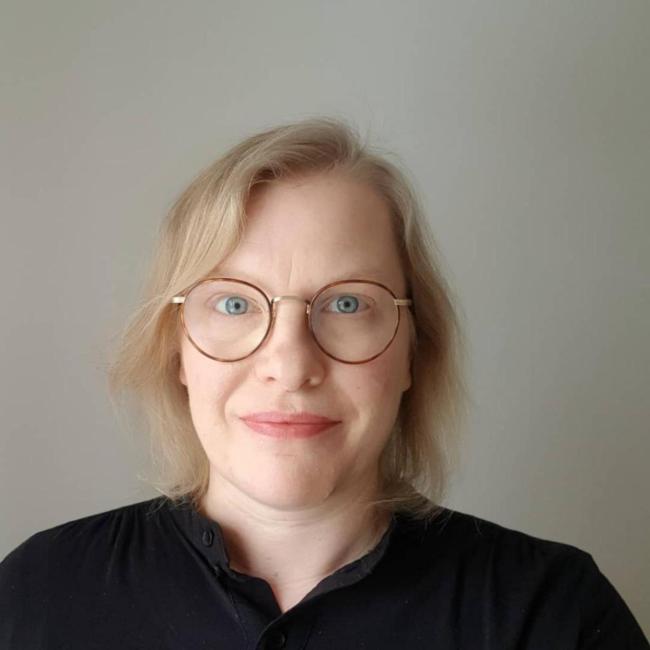
Moa Tunström is a Senior Lecturer in Human Geography at Karlstad University. Her work focuses on urban planning, social sustainability, and policy analysis with an emphasis on Nordic urban contexts. She has contributed to understanding segregation, affordable housing challenges, and evolving urban ideals through interdisciplinary research. Her research interests include the interplay between urban policy and societal outcomes, with particular attention to equity, spatial justice, and participatory governance. Notable themes in her work are the transformation of urban ideals over time, barriers to social inclusion, and the role of dialogue in planning processes. Tunström's publications analyze Nordic urban issues, such as housing affordability, segregation patterns, and the repackaging of welfare state models into urban policies. She critiques postpolitical discourse in Swedish urban planning and explores how planning education shapes future professionals' identities. Her work often integrates historical perspectives with contemporary challenges, offering frameworks for evaluating policy efficacy and fostering socially sustainable cities. She collaborates with researchers across disciplines and Nordic countries, contributing to policy-oriented research initiatives.
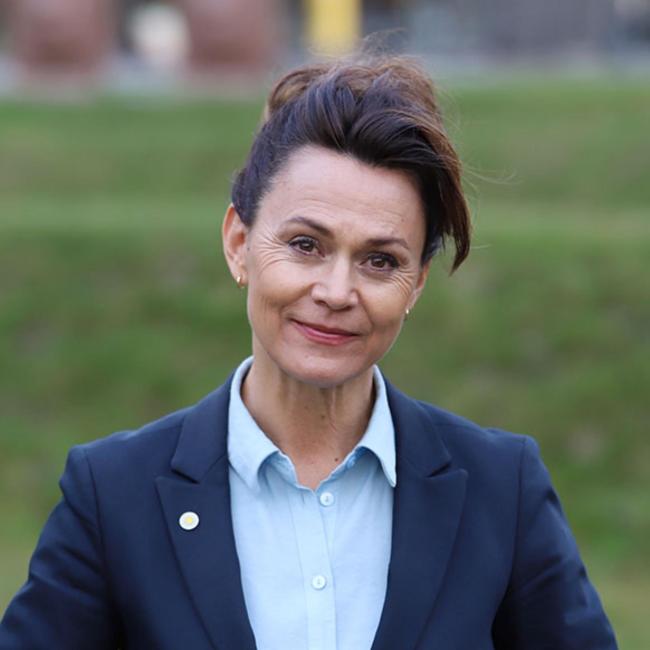
Helene Wadensjö, PhD in Public Health, is affiliated with Karlstad University's Department of Public Health. Her research focuses on fracture prevention in osteoporosis, physical activity promotion for children and elderly populations, and healthcare collaboration strategies. She has contributed to understanding the interplay between motor competence and sedentary behavior in children, as well as the psychological aspects influencing health behaviors in osteoarthritis and osteoporosis patients. Key research areas include: Fracture prevention strategies targeting at-risk groups Physical activity interventions for children with disabilities Qualitative studies on patient narratives and health behavior motivations Interprofessional collaboration models in geriatric care Her publications demonstrate a focus on epidemiological studies, grounded theory methodologies, and health promotion initiatives. Recent work explores feedback mechanisms in doctoral education and the sociocultural dimensions of health behavior among elderly populations.
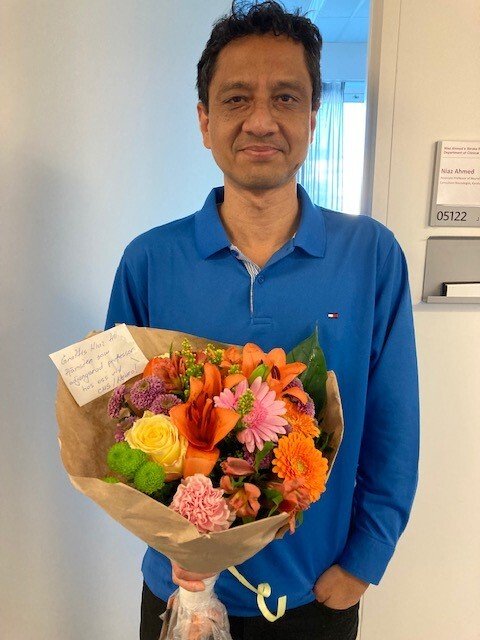
Niaz Ahmed is an Adjunct Professor at the Department of Clinical Neuroscience, Karolinska Institutet. He serves as a senior consultant (overläkare) and head of research and education at the Neurology division of Karolinska University Hospital. His academic journey includes a Doctor of Philosophy (2003) and Master of Medical Science (1999) from Karolinska Institutet, and a medical degree (1995) from Dhaka Medical College, Bangladesh. Research Interests: Vascular neurology with focus on stroke Acute treatment and secondary prevention strategies Reperfusion therapies (thrombolysis/thrombectomy) Blood-brain barrier restoration Cerebral edema and hemorrhagic transformation Anticoagulation timing in stroke patients Recent Publications: His 15 most recent articles (2025-2018) examine blood pressure dynamics after thrombectomy, anticoagulation timing post-reperfusion, statin effects on stroke outcomes, cerebral edema risk factors, and thrombolysis in special populations (elderly, minor stroke). These studies leverage the SITS International Stroke Registry, which he co-founded. Academic Leadership: As chairman of SITS International (since 2019), he oversees a global registry with data from over 350,000 stroke patients across 1400 centers. He coordinates the I-Stroke II phase-III trial and contributes to clinical guideline development. Clinical & Educational Roles: He supervises doctoral students, serves as course leader for neurology in physiotherapy education, and teaches neurology residents and medical students at Karolinska University Hospital.
Eva Lövstål serves as Senior Lecturer and Head of the Department of Industrial Economics at Blekinge Institute of Technology (BTH), where she leads academic operations while maintaining an active research profile in innovation-management control intersections. Her institutional affiliation spans both administrative leadership and scholarly contributions within the Department of Industrial Economics. Academic Background: PhD from Jönköping International Business School (JIBS), 2008, with dissertation on management control in entrepreneurial organizations Affiliated with Research School of Management and IT (MIT) during doctoral studies Research Trajectory: Lövstål's work fundamentally explores the tensions between innovation and management control , evolving from foundational studies on entrepreneurial firms (2008-2011) toward complex applications in public healthcare crises (2020-2023) and sustainable transportation systems (2023). Her scholarship consistently bridges theoretical rigor with practical implementation, particularly through the DIDEC project on dementia care innovation. Recent publications (2021-2024) demonstrate increased focus on educational leadership and Nordic higher education reform, reflecting expanded disciplinary engagement while maintaining core methodological approaches. Research Initiatives: Entrepreneurial Human Capital: Investigating resilience drivers in rural/urban business ecosystems Local Entrepreneurship and Crime: Analyzing community-level socioeconomic relationships DIDEC Project: Digital innovation for dementia care through living lab methodology Professional Evolution: Prior to BTH, Lövstål held significant roles at Kristianstad University and Växjö University including Program Manager, Quality Developer, and Chairman of the Board of Education. Her teaching portfolio spans management theory, organizational behavior, innovation processes, and business development, reflecting her integrated research-practice perspective.
Simon Davidsson Kurland is a Senior Lecturer at Uppsala University's Department of Geosciences (Wind Energy division), based at Campus Gotland in Visby, Sweden. His research centers on sustainable energy transitions, with emphasis on technological innovation, resource efficiency, and interdisciplinary energy system analysis. Key technologies studied include wind power, solar cells, batteries, and electric vehicles. Education: • PhD: Natural resources and sustainable energy: Growth rates and resource flows for low-carbon systems (2016) • Licentiate: Global energy transitions: Renewable energy technology and non-renewable resources (2015) Research Focus: His work explores the intersection of energy technology, natural resource constraints, and decarbonization pathways. Primary domains include: Macro-scale energy system transitions Critical material supply chains for renewables Lifecycle analysis of green technologies Policy-driven emission reduction strategies Publication Trends: Recent articles (2019–2025) focus on electric vehicle material demands, battery production energy costs, and integrated energy-mineral system modeling. Earlier work (2012–2017) established foundations in fossil fuel depletion forecasting and renewable scalability constraints, demonstrating consistent interdisciplinary analysis of sustainability challenges.
Dr. Fredrik Sävje is a Senior Lecturer and Associate Professor at the Department of Economics, Uppsala University , specializing in causal inference and econometrics. His research focuses on experimental design, variance estimation, and treatment effect analysis under complex interference structures. Academic Affiliation: Department of Economics, Uppsala University Email: fredrik.savje@nek.uu.se Dr. Sävje’s research interests span causal inference, econometrics, and statistical methodology. Key areas include: Design-based frameworks for causal inference Threshold blocking and covariate balancing Exposure-response models in bipartite experiments Robust variance estimation under interference His recent work emphasizes: Foundations of causal inference in randomized controlled trials Optimized covariate balancing via Gram–Schmidt Walk Design Relaxing assumptions in exposure mapping for treatment effects Generalizing inference methods to sparse and complex experimental graphs Dr. Sävje has co-authored software packages including GSWDesign.jl for covariate balancing and quickmatch for generalized full matching in R. His publications appear in top journals like Biometrika , Journal of the American Statistical Association , and Electronic Journal of Statistics .
Anders Isaksson is a Senior Lecturer at the Department of Entrepreneurship and Strategy, Chalmers University of Technology. His academic role focuses on entrepreneurial finance and the factors influencing the growth, profitability, and survival of technology-based firms. He specializes in financial analysis and business valuation, with a particular interest in Excel applications in business contexts. His research spans entrepreneurial finance, venture capital dynamics, business model design, and the application of Building Information Modeling (BIM) in the construction industry. Recent studies examine the path dependency of business models, the role of entrepreneurial networks in firm growth, and resource mobilization strategies for early-stage startups. Anders’ publications highlight trends in technology transfer, firm performance under varying market conditions, and the institutional factors shaping BIM adoption in Swedish construction. Key projects include analyses of business models in new technology-based firms and localized innovation performance in high-tech SMEs.
Astrid von Mentzer is an Associate Senior Lecturer at the University of Gothenburg , affiliated with the Department of Microbiology and Immunology . Her research focuses on pathogenic Escherichia coli (ETEC), combining genomic approaches with machine learning to understand bacterial adaptation, spread, and disease mechanisms. Specializes in microbial genomics and antibiotic resistance research Investigates host-pathogen interactions through adhesin proteins Develops data-driven models for predicting pathogen transmission Studies hybrid E. coli strains with enhanced virulence potential Her recent work examines ETEC clones in aquatic environments (2025) and their molecular epidemiology in sub-Saharan Africa. She has created genomic resources like the ETECFinder database and contributed to understanding CS23-expressing isolates . Her lab ( vonmentzerlab.com ) applies computational methods to map transmission dynamics between humans, animals, and environmental reservoirs. Key methodologies include whole-genome sequencing , machine learning classification , and host specificity analysis . Research outcomes inform public health strategies for diagnostics and vaccine development against resistant strains.
Karolina Westling is a Senior Lecturer at the Department of Cultural Sciences, University of Gothenburg, affiliated with the Aesthetics Unit. Her institutional contact details include email (karolina.westling@kultvet.gu.se), telephone (+46 31-786 53 34), and office location (Renströmsgatan 6, room E210A, Gothenburg). She remains actively engaged in research with publications spanning 2008–2024. Her research centers on film studies , media literacy , and children's rights , with emphasis on early childhood media exposure, gender construction in play and television, and resistance in explicit cinematic works. She explores intersections between moving image aesthetics, pedagogical applications of media, and social justice advocacy—particularly in Swedish and French cinema contexts—while examining how young children (under age 3) navigate television and film within domestic settings. Analysis of her publications reveals evolving focus from foundational studies on infant media consumption (2008–2014) toward contemporary societal critiques (2023–2024), including democratic citizenship through media literacy and intergenerational injustice in modern French film. Recurring themes involve children's agency, ethical media representation, and cultural resistance, consistently bridging academic theory with practical educational frameworks. Scientific Awards: No awards, fellowships, or medals were documented in the provided texts. Advising and Grants: No formal advisees (PhD/Master's students) were listed. No grant funding or project details were referenced in the source material. Labs and Teams: Westling operates within the Aesthetics Unit of the Department of Cultural Sciences, but specific labs, research teams, or collaborative structures were not detailed.
Pia Käcker is a Lecturer at Linköping University’s Department of Prevention, Rehabilitation and Close Care (PRNV), Faculty of Health Sciences. She specializes in occupational therapy research focused on cognition, communication disorders, and disability studies. Doctoral Degree (2007), Linköping University Licensed Occupational Therapist (1972) Her research develops user participation methods and technology support for individuals with cognitive/communicative disabilities, including: Groundbreaking studies on communication between severe brain injury patients and caregivers Creation of the Pict-O-Stat evaluation tool Methodological frameworks for empowering people with disabilities Recent publications examine ADHD/autism workplace adaptations and intellectual disability participation models. She leads the Occupational Therapy Program (180 credits) course 8 and teaches professional communication in course 2, integrating users with mental disabilities in pedagogy. Active in national collaborations with SKR/Socialstyrelsen, she works as a Regional Development Manager for disability services, focusing on: Systematic quality improvement in LSS/Sol interventions Training professionals in Alternative and Complementary Communication (AKK) Implementing participatory models across Östergötland County’s municipalities
Lukas Linnér is a Senior Lecturer at Halmstad University's School of Health and Welfare , Department of Health and Sport . He leads dual career development at Sweden's National Sports University and serves as Associate Editor for the Scandinavian Journal of Sport and Exercise Psychology . His work integrates research, education, and collaboration to advance elite athlete development through sustainable dual careers. Research Focus : Psychological perspectives on human development in sport, socially responsible elite sports, dual career frameworks Leadership : Head of operations and development for Halmstad University as National Sports University Collaboration : Swedish Sports Confederation, national sports federations, and all National Sports Universities in Sweden His research includes holistic ecological approaches to dual career environments, with publications on transition support systems, balance frameworks, and national guidelines. He teaches psychology courses with sport and health focus, and applies the Halmstad Applied Sport Psychology Supervision Model in athlete development. Recent publications analyze dual career coping factors, policy development, and university transition support across Scandinavia. His work emphasizes systemic solutions for student-athlete sustainability, including the Dual Career Assistance Framework synthesis and updated national guidelines. He also explores challenges in young academic careers through studies like Performing under new pressure (2024). As a Doctoral thesis author ( Elitidrottande studenters dubbla karriärer... , 2021), he contributes to longitudinal understanding of athlete-student development. Collaborations span elite sports-friendly universities and national policy stakeholders.
Elin Siira is an Associate Senior Lecturer at Halmstad University within the School of Health and Welfare . She holds a PhD in Caring Science and has a background in Sociology (BSc and MSc), with a focus on innovations in elderly care and informal care systems. Her research centers on the implementation of Artificial Intelligence (AI) in healthcare, analyzed through theoretical frameworks such as Social Practice Theory and Posthuman Practice Theory . She employs both qualitative and quantitative methods, with a particular emphasis on ethnographic approaches . Her teaching activities span nursing and health innovation. Education: BSc in Sociology MSc in Sociology PhD in Caring Science Her recent publications highlight trends in AI adoption in healthcare , including studies on trust in AI systems , person-centered care , information-driven care definitions , and intersectionality in nursing research . These works often utilize scoping reviews , qualitative interviews , and Delphi methodology to explore socio-technical challenges in healthcare digitization. Her professional activities include collaborations with Swedish primary healthcare professionals and patients, emphasizing the interplay between social practices , technical systems , and organizational trust dynamics . She actively contributes to defining emerging paradigms like information-driven care and AI-based triage through empirical and theoretical research.
Karin Weman is a Senior Lecturer at the School of Health and Welfare at Halmstad University, Sweden. She specializes in exercise psychology, motivation, and e-health, with a particular focus on applying self-determination theory to understand and promote sustainable physical activity behaviors. Her work bridges psychology, digital technology, and health promotion, with significant contributions to both academic research and practical applications in healthcare and community settings. Weman earned her PhD in Psychology specializing in sport and exercise from the University of Gothenburg. Her dissertation, "You don't have to love it - Exploring the mechanisms of exercise motivation using self-determination theory in a digital context" (2016), laid the foundation for her ongoing research. She has worked at Halmstad University since 2007, where she has developed courses in exercise psychology and written educational materials. Weman's primary research interest centers on understanding the psychological mechanisms behind exercise motivation, particularly through the lens of self-determination theory. She investigates how digital tools can support autonomous motivation for physical activity, examining factors like psychological need satisfaction, motivational regulations, and how these relate to exercise behavior. Her work often takes a person-centered approach, recognizing individual differences in motivation patterns. She has made significant contributions to understanding how gender and age moderate the relationships between motivation and behavior, and how digital interventions can be designed to support sustainable exercise habits. Her research has evolved through several major projects. The GoDIS project (Digital Innovations in self-determined exercise motivation) developed and tested a digital prototype based on self-determination theory, showing positive effects on motivation to exercise, need satisfaction, and exercise quantity and intensity. The follow-up project, GoFaR, integrates AI systems to further improve personalized digital tools for motivation to physical activity and health. Weman has also established the WemanMotivation brand, registered with the Swedish Patent and Registration Office, to create evidence-based quality assurance methods for health promotion. Weman has received recognition for her collaborative work, particularly in interdisciplinary research that bridges psychology, information technology, interaction design, and innovation science. She has worked with various partners including Health Profile Institute, Kairos Future, SportCompetence, and Västra Götalandsregionen. Weman has been active in public discourse, contributing to Swedish debates on Corona strategy and providing practical motivation tips for sustainable exercise habits. She has given public lectures, participated in radio interviews, and created educational content including a YouTube video "5 tips för hållbar motivation till motion" (5 tips for sustainable motivation to exercise). She leads an active research group including Magnus Lindwall (Professor of Psychology), Mark B. Andersen (Professor of Psychology), Esbjörn Ebbesson (PhD in Interaction Design), Jesper Lund (PhD in Interaction Design), and Fawzi Halila (Associate Professor in Project Management), among others.
Monika Nair is a post-doctoral researcher at Halmstad University's School of Health and Welfare, specializing in artificial intelligence implementation within healthcare systems. Her work bridges technical AI development and practical clinical deployment, with significant contributions to reducing heart failure readmissions and creating practitioner-focused implementation frameworks. Her research spans critical areas at the AI-healthcare intersection: Implementation science for clinical AI systems Predictive modeling of patient readmissions Human-centered design of decision support tools Barrier analysis for healthcare technology adoption Mixed-methods evaluation of AI interventions Stakeholder-driven framework development Analysis of her publication trends (2022-2025) reveals consistent focus on practical AI integration challenges, combining technical modeling with organizational and human factors. Her work emphasizes co-creation with healthcare providers and addresses domain-specific applications in heart failure management and mental health services through scoping reviews, framework development, and empirical implementation studies. Scientific awards: No specific awards documented in available sources Monika actively supervises Master's and PhD students while teaching health innovation courses, guiding research on AI implementation topics. Her project involvement in the "Heart Failure Readmission Prediction" initiative and AI framework development indicates active grant-funded research, though specific funding details aren't publicly enumerated. She collaborates within interdisciplinary teams focused on the "Heart Failure Readmission Prediction within 30-days" project and AI implementation framework development, working across computer science, clinical practice, and implementation science domains to translate research into actionable healthcare solutions.
Sara Cervantes is a Senior Lecturer in Pedagogy at the Department of Pedagogy, Language and Subject Didactics, Luleå University of Technology. She serves as the Program Director for the Master’s program in Educational Science and teaches within both the Master’s and Preschool Teacher Education programs. Research focus on societal changes and policy document impacts on educational practices Key interest in preschool leadership and governance through systematic quality work Collaborative work with Anna Öqvist on policy-driven educational reforms Her research explores how leaders at different levels implement new laws, policy documents, and guidelines within preschool and school settings. She is a member of the Piteås Utbildningsvetenskapliga Råd (PUR), dedicated to advancing preschool and school practices grounded in scientific research. While no explicit scientific awards are listed, her work has been published in journals like Education Sciences and Journal of Early Childhood Research , focusing on inclusive education models, teacher collaboration, and policy compliance in early childhood education. Her recent publications analyze trends in educational policy implementation and pedagogical adaptation. She emphasizes the invisibility of preschool teachers’ responsibilities despite policy changes and advocates for structured quality work to enhance teaching visibility. Key collaborations include studies with Anna Öqvist on leadership dynamics and curriculum implementation challenges. Her role in PUR highlights her commitment to evidence-based educational development.