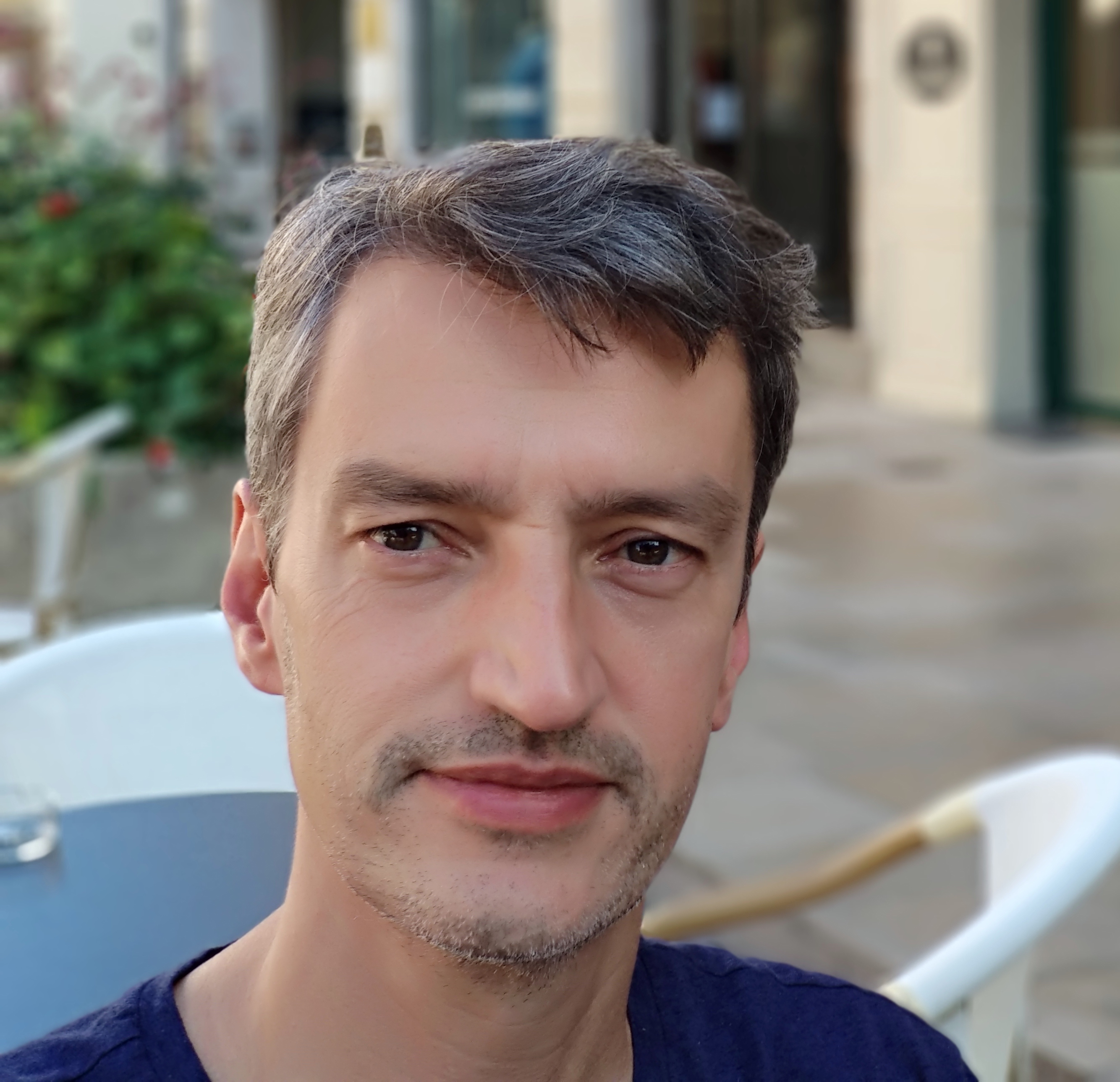
Pierre Senellart is a Professor in the Computer Science Department at École normale supérieure (ENS, Université PSL) and deputy director of the DI ENS laboratory, a joint CNRS/Inria/ENS unit. He leads the Valda team at Inria Paris and holds a chair in the PRAIRIE Paris School of AI. University: École normale supérieure (Université PSL) School: Department of Computer Science (DI ENS) Academic Rank: Professor Research Interests: His work bridges theoretical and practical aspects of web data management, including web crawling, archiving, information extraction, uncertainty management, and intensional data systems. He contributes to probabilistic XML data models, provenance tracking, and knowledge base construction. Recent Article Trends: His Google Scholar publications (2025–2023) focus on provability in probabilistic databases, theorem extraction from PDFs, and AI applications in uncertain data analysis. Topics span game theory, knowledge compilation, and multi-modal learning for scientific documents. Scientific Awards: Junior member of Institut Universitaire de France (2020–2025) Distinguished SIGMOD 2017 Program Committee Member ACM HyperText 2014 Douglas Engelbart Best Paper Award Adviser of Clément Genzmer (SIGMOD Programming Contest 2009 winner) Grants & Projects: He secures major funding (e.g., PRAIRIE Paris School of AI: €575k, DesCartes CNRS@CREATE: SGD50M), with roles in research projects like Dissemin (open science platforms) and ARCOMEM (social web archiving).
Léo Girard is a Lecturer-Researcher in Ecology and Biostatistics at ISARA Lyon, affiliated with the Agroecology and Environment Research Unit. He specializes in the intersection of aquaculture, environmental science, and statistical analysis, focusing on sustainable fish farming practices that balance production needs with ecological conservation. Current Position: Lecturer-Researcher at ISARA Lyon (since 2024) Research Unit: Agroecology and Environment Research Unit Doctoral School: ABIES (AgroParisTech) Dr. Girard's research focuses on agroecology in extensive fish farming systems, particularly examining how pond management practices affect biodiversity, carbon cycling, and ecosystem services. His work combines field studies with statistical modeling to develop sustainable aquaculture practices that can adapt to climate change while maintaining ecological integrity. He investigates how practices like periodic pond drying affect primary producer communities, which in turn influence fish production and biodiversity conservation. His publication record shows a strong focus on the relationship between fish pond management and environmental outcomes, with particular attention to carbon dynamics and biodiversity. Recent work demonstrates how traditional practices like pond drying can be optimized as agroecological techniques that simultaneously support fish production while enhancing biodiversity and carbon sequestration. His research spans multiple geographic contexts, including comparative studies between French and Belgian pond systems. As an educator, Girard teaches statistics, aquatic ecology, and experimental design across multiple program levels at ISARA. His pedagogical approach integrates practical field knowledge with theoretical ecological principles, preparing students for careers at the intersection of agriculture and environmental science. PONDERFUL: POND Ecosystems for Resilient FUture Landscapes in a changing climate (European H2020 Project) FISHMIX: Definition of new pond fish assemblages adapted to the context of climate change (PEPIT regional project) Isère Ponds: Restoration reports and monitoring of pond emptying PSE Dombes Girard collaborates extensively with researchers across Europe on pond ecosystem studies, working with institutions involved in the PONDERFUL project and other international research initiatives. His work bridges academic research with practical applications for sustainable aquaculture development.
Dr. Satyanand Singh is a Professor in the Department of Mathematics at New York City College of Technology, City University of New York (CUNY), where he has established himself as a leading educator and researcher. His academic journey began with an Honors B.S. in Mathematics from City College of CUNY, followed by an M.Phil. and Ph.D. in Mathematics from the CUNY Graduate Center. His educational foundation includes: Ph.D. in Mathematics, City University of New York Graduate Center M.Phil. in Mathematics, City University of New York Graduate Center Honors B.S. in Mathematics, City College of the City University of New York Dr. Singh's research spans number theory, quantum computing, probability, and statistics, with significant contributions to combinatorial structures like Calkin-Wilf trees and linear fractional transformations. His recent work demonstrates a strong interdisciplinary focus, bridging mathematics with finance, computational education, and digital technology. He has pioneered the integration of R and Python into mathematics pedagogy, developing innovative approaches for teaching differential equations and computational thinking. Analysis of his publications reveals an evolving trajectory from pure number theory toward applied computational mathematics, with increasing emphasis on real-world applications in finance and educational technology. His work consistently connects theoretical mathematics with practical implementation, particularly in STEM education reform. Among his distinguished honors: Distinguished Teaching Award from the Mathematics Association of America (2017) Salute to Scholars Special Issue listing (2016) Chancellor's Major Institutional Grant for Education and Public Service (2015) Chancellor's honor for inaugural Calculus 1 Boot Camp (2015) National Society of Collegiate Scholars Award (2014) Stefan Bernard Baumrin travel award (2019) Integers Conference travel grant (2018) Dr. Singh has mentored numerous students who have presented at national conferences and pursued advanced degrees. His substantial grant portfolio includes serving as PI for the Perkins Grant Mathematics and Computer Science program (2010-2019), Co-PI for a National Endowment for the Humanities grant on digital technology history (2016-2018), and Senior Personnel for a Department of Education MSEIP grant focused on diversity in computer science (2015-2019). These projects reflect his commitment to educational innovation and broadening participation in STEM. As an active leader, he serves as Chair Elect of the Metro NY Mathematical Association of America Section and as Trustee and Vice Chair of the Belle Zeller Scholarship Fund. His institutional impact includes founding the Calculus 1 Boot Camp and developing computational projects that integrate R programming into undergraduate mathematics curricula across multiple course levels.
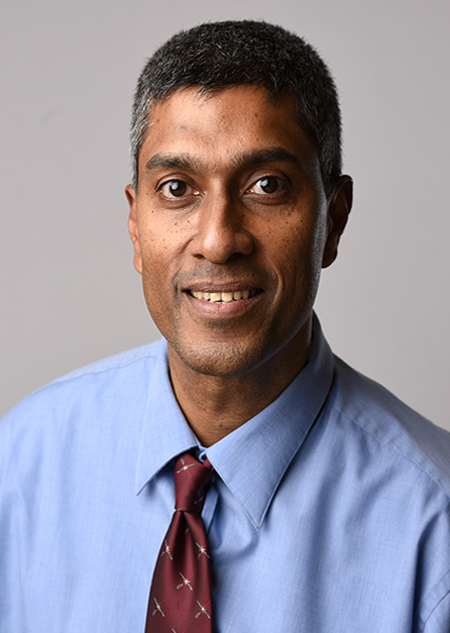
Dr. Robert Harmsen is an Assistant Professor in the Energy & Resources group at the Copernicus Institute of Sustainable Development , Utrecht University. His research focuses on energy transition dynamics, policy interaction, and the role of the built environment in decarbonization efforts. Current academic role: Assistant Professor in Energy & Resources Key research themes: Heat Transition, Energy Policy, Renewable Energy Integration Teaching: Coordinated courses in Utrecht University’s Master Sustainable Development track, including Tools for Energy & Material Analysis and Policies for Energy & Material Transitions , with guest lectures in Energy Science and Global Sustainability Science Email: r.harmsen@uu.nl Research Interests Harmsen investigates the factors driving successful energy transitions, with a particular emphasis on heat decarbonization in the residential sector . His work explores how policies can be designed to account for complex interactions and systemic barriers, drawing on methods like decomposition analysis and technology assessment. Energy Policy Design Heat Transition in Urban Areas Policy Interaction Effects Decomposition Analysis Variable Renewable Energy Integration Building Sector Energy Efficiency Publications and Media Engagement He has published extensively on topics such as district heating systems , combined heat and power (CHP) , and policy evaluation frameworks . His research is frequently cited in Dutch media (e.g., AD , RTV Utrecht ) on issues like wind turbine noise pollution and natural gas phaseout strategies.
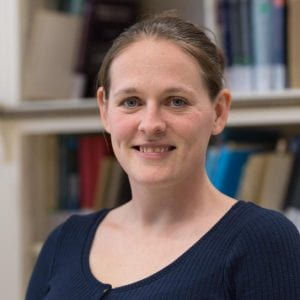
Professor Jayne Birkby is a distinguished Professor of Exoplanetary Science at the University of Oxford and a Fellow of Brasenose College. She leads research in exoplanet atmospheres using the world's largest telescopes and highest resolution instruments, with a focus on understanding the composition and dynamics of exoplanetary systems. Her work bridges astronomy, chemistry, geology, and biology in the pursuit of answering fundamental questions about planetary formation and potential habitability. Education: PhD in Astrophysics from the University of Cambridge Professor Birkby specializes in observational techniques for characterizing exoplanet atmospheres, particularly through high-resolution spectroscopy. Her research interests span exoplanets , exoplanet atmospheres , high-resolution spectroscopy , Extremely Large Telescopes , low-mass stars , open clusters , eclipsing binaries , and young stars . She has pioneered methods for detecting molecular signatures in exoplanet atmospheres using ground-based observations, with notable successes including the detection of water in the atmosphere of the hot Jupiter HD 189733 b. Her work on M-dwarf stars aims to address discrepancies between stellar evolution models and observational data, which has significant implications for understanding exoplanetary systems around the most common stars in our galaxy. Professor Birkby's research portfolio demonstrates a consistent focus on advancing observational techniques for exoplanet characterization, with particular emphasis on atmospheric composition and dynamics. Her work increasingly integrates multi-wavelength observations and leverages the capabilities of next-generation telescopes, positioning her at the forefront of preparing for future discoveries with Extremely Large Telescopes. Scientific Awards: ERC Starting Grant Laureate (PI of the "exoZoo" project) 2021 Philip Leverhulme Prize in Physics Finalist in the 2024 Blavatnik Awards for Young Scientists in the UK Professor Birkby leads an active research group at Oxford comprising multiple PhD students and postdoctoral researchers. She is principal investigator of the ERC-funded "exoZoo" project, which focuses on high-definition and time-resolved studies of exoplanet atmospheres. Her group develops innovative observational techniques to study the extreme diversity of exoplanets, with particular emphasis on connecting exoplanet studies with chemistry, geology, and biology in the pursuit of understanding planetary habitability. Professor Birkby's research group, part of the Astrophysics sub-department at Oxford, utilizes world-class observational facilities and collaborates with international teams to advance our understanding of exoplanetary systems. Her work is closely tied to the development of instrumentation for future Extremely Large Telescopes, ensuring her research remains at the cutting edge of exoplanet discovery and characterization.
Kate Su is a Research Professor at Steward Observatory within the College of Science at the University of Arizona. She earned her Ph.D. from the University of Calgary in 2000. Her research centers on planetary debris disks and planetary system formation/evolution, specializing in dust distribution and grain property modeling in circumstellar disks. She utilizes data from Spitzer, Herschel, WISE, SOFIA, and ALMA observatories to investigate Solar System origins and debris disks as planet formation tracers. Dr. Su leads an active Spitzer large program analyzing time-series photometry of collisions during terrestrial planet formation. She serves on NASA's Origins Space Telescope Science and Technology Definition Team and the JWST/MIRI Instrument/Science Team as a key contributor to major astrophysics initiatives. Professional recognition includes membership in the American Astronomical Society, reflecting her standing in the astrophysics community. Her advising activities and grant portfolio demonstrate leadership in observational astrophysics, with ongoing projects leveraging cutting-edge space and ground-based facilities to advance planetary system evolution theories.
Axel Petri is a faculty member at the Institute of Music Education, University of Vienna, specializing in music mediation (Musikvermittlung). His work bridges academic research and practical implementation across music education, community music, and inclusion. He contributes to doctoral programs, supervises theses, and leads workshops through the IMPro initiative, while also shaping the Master Contemporary Arts Practice curriculum. Department of Music Education Department of Educational Sciences (BiWi) Department of Elementary Music Education (EMp) His research focuses on music mediation frameworks, including the International Journal of Music Mediation (IJMM) . Recent publications analyze participation strategies in orchestras, societal value systems, and higher education innovations. The Axel Petri Prize honors his contributions to the field. Key trends in his 15 most recent publications (2025-2019) emphasize: Conceptual development of Musikvermittlung Inclusion in classical music spaces Professionalization of music educators Contemporary arts pedagogy Interdisciplinary collaborations Practitioner training methodologies Scientific Awards: Axel Petri Prize Petri actively supervises master's and bachelor's theses, contributes to teacher training programs, and leads projects like the EMp doppio module. He pioneers practical phases in education through the Master ME/IME program and advocates for music mediation as both pedagogical and societal innovation.
Rüdiger Hahn serves as Professor and Holder of the Henkel Endowed Chair for Sustainability Management at Heinrich Heine University's Faculty of Business and Economics, where he champions direct student engagement within a nearly familial academic atmosphere. His research portfolio spans: Sustainable Supply Chain Management and behavioral drivers in green logistics Corporate Social Responsibility with critical analysis of greenwashing risks Impact Investing frameworks and social enterprise financing constraints Base of the Pyramid business models for inclusive development Nonfinancial reporting efficacy and sustainability goal measurement Recent publications (2023-2025) reveal a methodological emphasis on mixed-methods designs, vignette experiments, and systematic reviews addressing carbon-reduction investments, African venture capital ecosystems, and hybrid organizational relationships. His work consistently bridges theoretical rigor with practical sustainability challenges across emerging and developed markets.
Jens Behley is a Lecturer (Privatdozent) at the Institute of Geodesy and Geoinformation, University of Bonn, where he actively teaches graduate courses in robotics and computer vision while leading cutting-edge research in 3D perception. His work bridges theoretical advances with real-world agricultural and automotive applications, focusing on robust algorithms for unstructured environments. Behley's research centers on 3D point cloud processing, semantic segmentation, and SLAM systems, with specialized expertise in agricultural robotics for crop phenotyping and autonomous vehicle navigation. He develops novel techniques for plant organ-level analysis, fruit shape completion, and radar-based localization, emphasizing solutions that function under real-field conditions with sensor noise and dynamic changes. His methodologies frequently integrate deep learning with geometric computer vision to achieve precision in challenging outdoor settings. Analysis of his recent publications reveals a dominant trend toward neural implicit representations (e.g., Gaussian Splatting) and diffusion models for 3D scene understanding, alongside continued innovation in LiDAR processing for agricultural robotics. Key thematic clusters include plant phenotyping (18% of recent work), neural mapping techniques (24%), and robust sensor fusion for autonomous systems (31%), with growing emphasis on generative models for data synthesis. Scientific Awards Outstanding Reviewer at IEEE Robotics and Automation Letters (RA-L), 2024 Outstanding Reviewer at European Conference on Computer Vision (ECCV), 2024 Best Agri-Robotics Paper Award for “BonnBeetClouds3D...” at IROS, 2024 Best Paper Award in Workshop “Agricultural Robotics for Sustainable Futures” at IROS, 2024 Best Paper Award Second Place in Workshop “AI and Robotics For Future Farming” at IROS, 2024 Outstanding Reviewer at CVPR, 2024 Finalist Best Paper Award in Service Robotics at ICRA, 2024 Best Paper for “KISS-ICP...” by RA-L, 2023 Honorable Mention for “High Precision Leaf Instance Segmentation...” by RA-L, 2023 Outstanding Reviewer at CVPR, 2023 Outstanding Reviewer at ECCV, 2022 Finalist IROS Best Paper Award on Agri-Robotics, 2022 Outstanding Reviewer at RA-L, 2022 Outstanding Reviewer at ICRA, 2022 Outstanding Reviewer at ICCV, 2021 Faculty Award for Geodesy from Agricultural Faculty of University of Bonn, 2021 Outstanding Reviewer at CVPR, 2021 Finalist Best System Paper at RSS, 2020 Diplomarbeitspreis der Bonner Informatik Gesellschaft e.V., 2009 Behley actively mentors students through advanced coursework including “Machine Learning for Robotics and Computer Vision” and “Techniques for Self-Driving Cars,” though specific advisees aren't documented. His research is supported by extensive collaborations with Prof. Cyrill Stachniss's robotics group at Bonn, with publications appearing in top venues like RA-L, ICRA, and CVPR. Current projects focus on neural scene representations for agricultural robotics and robust localization in changing environments, with datasets like BonnBeetClouds3D establishing new benchmarks in plant phenotyping.
Lukáš Lička is a researcher at the Department for the Study of Ancient and Medieval Thought, Institute of Philosophy, Czech Academy of Sciences. He holds a Ph.D. (2016) and Mgr. (2013) in philosophy from Ostrava University, alongside dual Bc. degrees in Latin Language & Culture and Czech Language & Literature with Foundations of Social Sciences (2011). Research Focus: Medieval Latin philosophy and science (13th–16th centuries), particularly optical traditions ( perspectiva ), sensory perception theories, disputation practices, and manuscript production. His work explores knowledge transfer between disciplines (optics ↔ astronomy), genres (lectures ↔ disputations), and cultural regions (Western Europe → Central Europe). Projects: Principal investigator of the GAČR project Peckham's Age (2024–2026); team member of the ERC ACADEMIA project (2021–). Scientific Recognition: Recipient of the Otto Wichterle Prize (2023) and SIEPM Junior Scholar Award (2020). His publications span optical theories, cognitive psychology, and manuscript studies, emphasizing Prague University's role as a medieval intellectual hub.
Dr. Ljerka Jukić Matić is an Associate Professor at the School of Applied Mathematics and Informatics , Josip Juraj Strossmayer University of Osijek . As Head of the Geometry and Mathematics Education Group , her work focuses on: Teacher professional development Digital game-based learning (DGBL) Curriculum resource design and utilization Her recent publications examine: Non-routine task approaches in undergraduate mathematics Constructionist DGBL implementation challenges Longitudinal curriculum material interactions Systematic reviews of teacher professional development Research trends in her 15 most recent articles highlight: Integration of DGBL in secondary mathematics Teacher-student-textbook dynamics Cross-cultural comparisons of mathematical concepts Assessment of conceptual vs procedural knowledge retention She employs mixed-methods research designs, combining: Longitudinal case studies Triangulated data collection Frameworks like curricular noticing and Ref*AER Her work contributes to understanding: Mathematics teacher design capacity Textbook's role in educational reform Implementation of creativity-fostering tasks Remote education challenges during the pandemic
Paula Savolainen serves as a Lecturer in Business, Entrepreneurship and Marketing at Turku University of Applied Sciences, based at the Kupittaa Campus. Her position falls under the Business education program within the university's structure. Her research centers on Customer Behavior , Entrepreneurship , and Value Creation , with significant contributions to Software Project Management . She investigates critical dynamics in customer-supplier relationships, project initiation challenges, and failure factors in software development, particularly emphasizing the supplier's perspective during early project phases. Analysis of her publication timeline (2020-2008) reveals persistent focus on project start-up practices, knowledge transfer obstacles, and contractual influences on project outcomes. Her work bridges business management and software engineering, highlighting how vague project starts, manager transitions, and misaligned expectations critically impact project success. No scientific awards were documented in the provided materials. Available information contains no details regarding student advising activities or research grant acquisitions. She actively participates in research groups dedicated to Customer Behavior and Entrepreneurship and Value Creation, driving collaborative investigations in these domains.
Jean Cadigan is a Professor of Social Medicine and core faculty member at the University of North Carolina at Chapel Hill School of Medicine , with affiliations to the Center for Bioethics and ELSI@UNC. Her research focuses on the ethical, legal, and social implications (ELSI) of genomic research and clinical care. PhD in Anthropology from UCLA (2002) Postdoctoral training in medical anthropology and human development Jean Cadigan’s work examines the ethical dimensions of genomic research , including topics like: Return of individual research results Ownership of biospecimens Human genome editing governance Polygenic scores for social traits Biobanking practices Her recent publications highlight trends in genomic ethics , with a focus on stakeholder perspectives, governance frameworks, and the intersection of social sciences with biotechnology. She also contributes to medical education through clinical ethics rotations. Dr. Cadigan serves on the leadership team of ELSI@UNC and the UNC Hospital Ethics Committee, where she consults on clinical and research ethics. Her work spans interdisciplinary collaborations with biobanks, HIV research cohorts, and community engagement initiatives.
Gerson Sunyé is an Associate Professor at Nantes University, where he teaches topics related to Software Engineering. He is a member of the Naomod research group within the LS2N research laboratory, focusing on Model-Based Engineering (MDE) techniques applied to software engineering problems, particularly in testing distributed systems. His work bridges academic research and industrial applications through the Atlanmod open-source platform developed within the Eclipse Community. His primary research interests span Model-Based Engineering, Software Testing, Distributed Systems, Cloud Computing, and Domain-Specific Languages. He investigates how rigorous application of models can improve software engineering practices, focusing on model merging, conflict resolution, and large-scale model management. His work particularly emphasizes executable DSLs, model views, and testing methodologies for complex systems. Analysis of his recent publications (2020-2024) reveals a strong trend toward integrating AI techniques with model management, particularly using machine learning for inter-model relations and reinforcement learning for conflict resolution. His work continues to evolve from foundational model management toward more applied contexts including low-code development platforms, energy-aware computing, and large language model integration for software engineering tasks. Dr. Sunyé actively collaborates with numerous researchers including Jean-Marie Mottu, Massimo Tisi, and Erwan Bousse. His research has been supported by European projects including Heterogeneous and Distributed Services for the Future Computing Continuum and Training the Next Generation of Experts in Scalable Low-Code Engineering Platforms. He leads research within the Naomod group at LS2N, which develops the Atlanmod platform for model-based engineering. The group focuses on practical applications of MDE in industrial contexts, particularly addressing scalability challenges in model management and the integration of model-based techniques with modern software development practices including cloud computing and low-code platforms.
Blaise Agüera y Arcas serves as an External Professor at the Santa Fe Institute while holding the position of Vice President and Fellow at Google, where he functions as Chief Technology Officer of Technology & Society. He founded and leads Paradigms of Intelligence (PI), an organization dedicated to foundational research in artificial intelligence with emphasis on neural computing, evolution, and Artificial Life. His career uniquely integrates theoretical inquiry with practical engineering breakthroughs that shape modern AI infrastructure. His research program investigates the computational principles underlying life, evolution, and intelligence through symbiotic frameworks. Key contributions include inventing Federated Learning for privacy-preserving decentralized training, pioneering on-device AI for Android/Pixel ecosystems, and establishing the Artists + Machine Intelligence program. Current work spans AI ethics, medical applications, and existential questions about life and intelligence, reflecting an interdisciplinary approach bridging computer science, biology, and philosophy. He actively publishes in high-impact venues while engaging public discourse through TED talks and NeurIPS keynotes. Analysis of Blaise's 2023-2025 publications reveals three dominant trajectories: (1) Privacy-centric AI architectures like Federated Learning applied to healthcare and audio processing, (2) Philosophical examinations of life and intelligence through computational models, and (3) Critical analyses of AI's societal impact including ethical frameworks and existential risk debates. His scholarship increasingly integrates medical applications with foundational AI research while maintaining strong engagement with artistic and humanistic perspectives. His scientific recognition includes: MIT TR35 prize (2008) for pioneering contributions to location-based services and image search As founder of Paradigms of Intelligence and leader of Artists + Machine Intelligence, Blaise directs research initiatives that secure substantial institutional resources at Google. His work on Federated Learning has generated foundational patents and industry-wide adoption, while the Artists + Machine Intelligence program has cultivated a vibrant ecosystem of creative technologists. Though specific grant figures aren't public, his position as VP and Fellow indicates significant research funding allocation. Blaise established Paradigms of Intelligence as his primary research laboratory investigating life-intelligence foundations through computational models and neural architectures. The Artists + Machine Intelligence program functions as a specialized creative research collective, while his Google leadership roles connect him to broader AI infrastructure teams developing on-device intelligence and privacy-preserving systems.