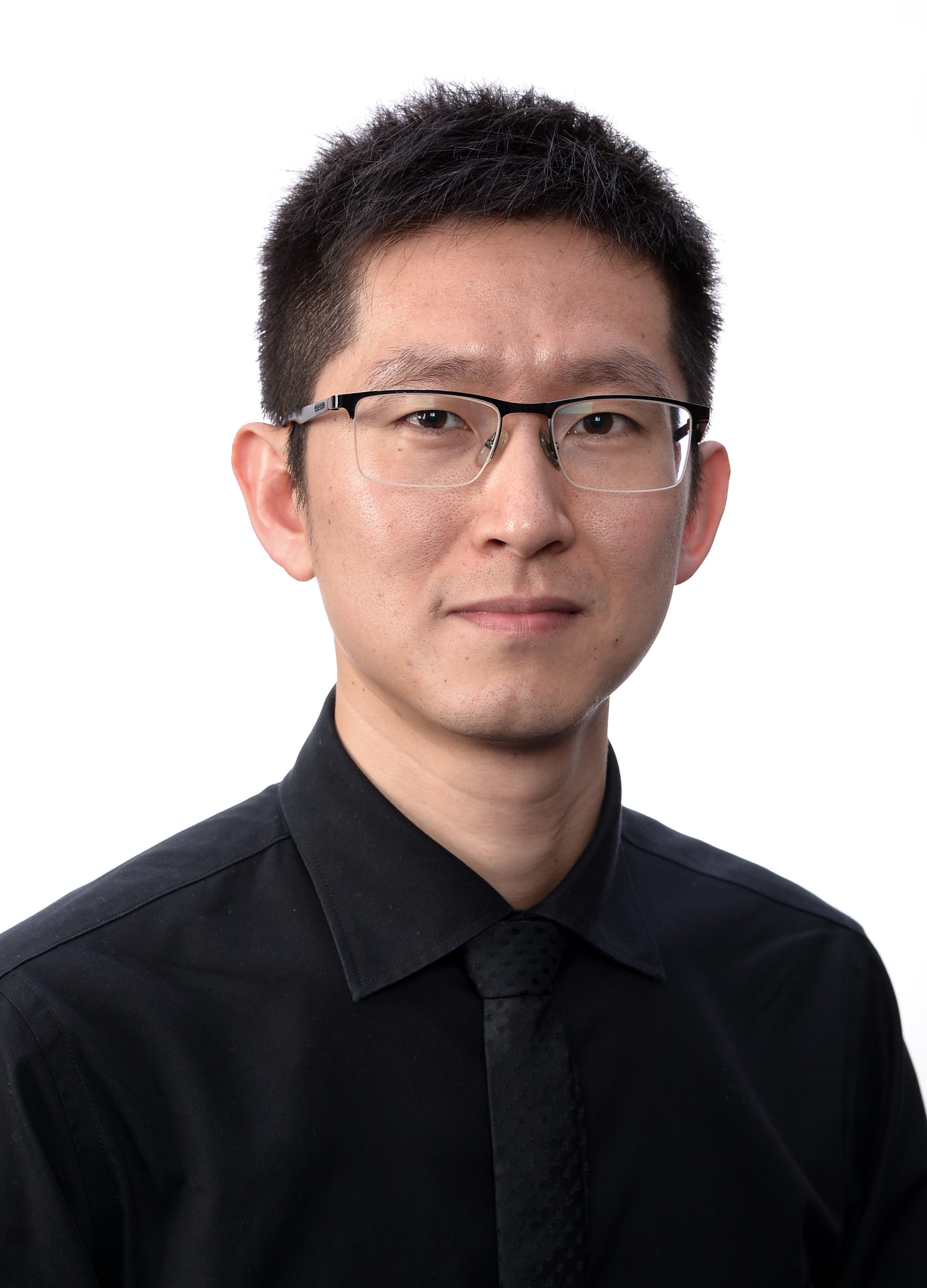
Patricio Vela is a Professor at the School of Electrical and Computer Engineering , Georgia Institute of Technology , specializing in geometric perspectives for control theory and computer vision. His research focuses on computer vision integration for semi-autonomous systems, nonlinear control of robotic systems, and biologically inspired mechanics. Education: B.S. (1998) and Ph.D. (2003) from Caltech Research Areas: Autonomy, Robotics, Computer Vision, Control Theory Key Contributions: Geometry-based control systems, visual navigation frameworks, SLAM benchmarking Recent publications highlight advances in vision-based motion planning , 6D pose tracking , and safe navigation policies for autonomous robots. His work bridges geometric mechanics with deep learning for robust perception and control in dynamic environments. Awards: HENAAC Most Promising Engineer (2005) Contact: pvela@gatech.edu | Office: TSRB 441 | Phone: 404.894.8749
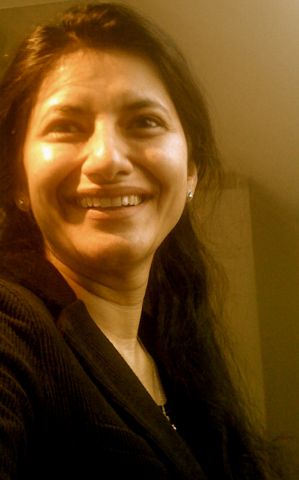
Professor Yasamin Mostofi is a faculty member in the Department of Electrical and Computer Engineering at the University of California, Santa Barbara. She is also affiliated with the Department of Computer Science and the Center for Control, Dynamical Systems and Computation. Her work bridges wireless systems, robotics, and machine learning. PhD, Stanford University MS, Stanford University MS, Sharif University of Technology Research Interests : Her lab focuses on wireless systems and autonomous agents , developing novel mathematical models for RF sensing and communication-aware robotics. Current directions include WiFi/millimeter wave/6G-based imaging and analytics, networked robotics for cellular systems, human-robot collaboration, and machine learning integration. Recent Publications : Her work spans through-wall crowd analytics , robot-assisted connectivity , and vision-aided wireless sensing , with applications in smart health, security, and retail optimization. Key trends include cross-modal integration (WiFi and vision), synthetic data generation, and real-world clinical validation. Scientific Recognition : Presidential Early Career Award for Scientists and Engineers (PECASE) Antonio Ruberti Prize, IEEE Control Systems Society NSF CAREER Award IEEE Region 6 Outstanding Engineer Award IEEE Fellow (2020) Advising and Leadership : She mentors PhD students in systems research, with graduates joining leading companies like Qualcomm and Google. She co-founded NPJ Wireless Technology (Nature Portfolio) and serves on editorial boards including IEEE Transactions on Control of Network Systems .
Carolin Pflueger is an Associate Professor at the Harris School of Public Policy , University of Chicago, and holds affiliations as a NBER Faculty Research Fellow and CEPR Research Affiliate . Her work bridges macroeconomics and finance, focusing on inflation dynamics, monetary policy impacts, and financial market risk perception. University: University of Chicago School: Harris School of Public Policy Affiliations: NBER, CEPR Role: Associate Professor Her research explores how inflation and monetary policy influence financial markets, including models connecting Treasury bond risk to stagflation drivers and analyzing economic agents' perceptions of policy uncertainty. Recent work leverages cross-sectional data of stock prices and economic forecasts to quantify macrofinancial linkages. Notable scientific recognitions include the Fama DFA Prize (2023), AQR Insight Award Finalist (2018), and the Arthur Warga Award (2014). She has received NSF Grant 2149193 for macrofinance research. Contact: cpflueger@uchicago.edu | GitHub Code Repositories
Jianming Liang is a full professor at Arizona State University's College of Health Solutions, specializing in biomedical informatics, data science, and computer vision. His research focuses on self-supervised learning, foundation models, and improving transfer learning techniques for medical imaging applications. National Academy of Inventors Fellow (2021) ASU Faculty Innovation Award (2019) ASU Distinguished Faculty Award (2023) NIH R01 grant recipient Led lab producing FDA-approved medical imaging products His lab has developed multiple open-source frameworks like Ark , Foundation_X , and ModelsGenesis for medical image analysis. Team has received over 70 student research awards including NCWIT Collegiate and AMIA Ph.D. Dissertation honors. Key research contributions include: Anatomically consistent foundation models Domain-adaptive pretraining strategies Annotation-efficient deep learning Integrated classification/localization/segmentation frameworks 40+ US patents (50+ pending) Major publications demonstrate leadership in self-supervised learning for chest radiography, pulmonary embolism detection, and medical AI explainability.
Jennifer A. Smith, PhD, MPH is an Associate Professor of Epidemiology and Research Associate Professor of Survey Research at the University of Michigan School of Public Health . She also serves as Director of the Certificate in Public Health Genetics and is Assistant Director of the Cohort Development working group for U-M Precision Health and the Michigan Genomics Initiative. Education: PhD, Epidemiology, University of Michigan (2011) MA, Statistics, University of Michigan (2009) MPH, Health Management and Policy, University of Michigan (2005) BS, Biological Sciences, Cornell University (2001) Research Interests: Dr. Smith is a genetic epidemiologist whose work lies at the intersection of genomics, epigenomics, and social epidemiology . She investigates how genetic, epigenetic, and transcriptomic variation influence age-related chronic diseases such as cardiovascular disease, hypertension, dementia, and cognitive decline. A major focus is understanding how social, psychosocial, and neighborhood determinants interact with genetic risk to shape socioeconomic and racial/ethnic health disparities . Research Projects: Her work leverages large, multi-ethnic cohorts including the Health and Retirement Study (HRS), GENOA, SWAN, MESA, and LASI. She is a core faculty member of the Center for Social Epidemiology and Population Health (CSEPH) , and affiliated with MiCDA, the Center for Midlife Science, and the PNG Program . She also collaborates with leading consortia such as CHARGE and TOPMed. Selected Trends in Publications: Her recent work (2022–2025) emphasizes epigenetic mediation of social determinants on cardiovascular and cognitive health, polygenic risk scores across diverse ancestries , and multi-omics integration in aging and disease. These studies consistently highlight how social environments and genetic architecture jointly influence health outcomes across populations. Contact: Email: smjenn@umich.edu Office: 734-615-9455 Address: 2631 SPH I, 1415 Washington Heights, Ann Arbor, MI 48109
Ira Kemelmacher-Shlizerman is a Full Professor of Computer Science at the Paul G. Allen School of Computer Science & Engineering at the University of Washington and Director of the UW Reality Lab. She also serves as a Principal Scientist at Google, where she leads the Shopping Gen AI visuals teams focusing on Virtual Try-On, 3D, and product videos. Her research spans computer vision, computer graphics, and Generative AI, with particular contributions to virtual try-on technology, 3D modeling, and augmented reality applications. Professor Kemelmacher-Shlizerman's research interests focus on Generative AI applications in visual computing. Her work bridges the gap between theoretical computer vision and practical applications, particularly in e-commerce and virtual reality. She has made significant contributions to virtual try-on technology, 3D editing with generative models, and AI applications for shopping experiences. Her research combines deep learning with traditional computer vision techniques to solve challenging problems in image and video synthesis. Her recent publications demonstrate a strong trend toward Generative AI applications for visual shopping experiences, virtual try-on technology, and 3D content creation. The work spans multiple top conferences including CVPR, SIGGRAPH, and ICCV, with a focus on practical applications of computer vision and graphics. Her research has evolved from foundational work in face reconstruction and aging to current applications in virtual shopping and 3D content generation. Google faculty award Madrona prize GeekWire Innovation of the Year Award Covers of CACM and SIGGRAPH Best student paper honorable mention at CVPR'21 Best demo runner up MobiSys'22 Senior member of IEEE Distinguished Member of ACM Professor Kemelmacher-Shlizerman has successfully tech-transferred multiple research projects to industry. She founded Dreambit, a startup acquired by Meta, and previously built and launched the Face Movies feature at Google. She currently leads Google's Shopping Gen AI visuals teams, focusing on 10x improvements to shopping journeys. Her UW Reality Lab serves as a hub for AR/VR research with industry partnerships. She has mentored numerous PhD students who have become researchers in both academia and industry, with several publications featuring student co-authors receiving recognition at top conferences. Professor Kemelmacher-Shlizerman leads the Graphics and Imaging Laboratory (GRAIL) and the UW Reality Lab, which focuses on augmented and virtual reality research with industry partnerships including Google. The labs work on cutting-edge projects in virtual try-on, 3D modeling, and immersive experiences, bridging academic research with real-world applications.
Mani Golparvar Fard is a Professor at the University of Illinois at Urbana-Champaign, holding joint appointments in the Siebel School of Computing and Data Science and the Department of Civil and Environmental Engineering. He also contributes to the Technology Entrepreneur Center. His research focuses on integrating artificial intelligence, computer vision, and data analytics to advance construction management, infrastructure monitoring, and automation. Key areas include BIM integration, reality capture systems, and deep learning-based progress tracking. His work emphasizes automated construction progress monitoring through semantic segmentation, vision-language models, and UAV-based data collection. He has pioneered methods like Scan2BIM-NET for converting point clouds into BIM models and developed frameworks for worker safety analysis using machine learning. Awards: Walter L. Huber Civil Engineering Research Prize (2018) Daniel W. Halpin Award for Scholarship (2016) Advising & Grants: While no specific grant details are provided, his research is supported by collaborations with industry and government initiatives, such as the Japanese national bridge inspection project. He advises a team focused on AI-driven construction solutions and maintains active partnerships with engineering firms. Labs & Teams: Leads research groups in vision-based construction analytics, automated scheduling systems, and BIM integration. His work is disseminated through platforms like the VisualSiteDiary system and the InstaDam open-source platform for structural damage analysis.
Renée J. Miller is a Professor and Canada Excellence Research Chair in Data Intelligence at the Cheriton School of Computer Science, University of Waterloo. Her research focuses on data integration, data management, and open data systems. She holds a PhD in Computer Science from the University of Wisconsin-Madison and bachelor’s degrees in Mathematics and Cognitive Science from MIT. Her work addresses challenges in data preparation, integration, and curation, aiming to reduce the burden on data scientists. She co-authored foundational papers on data exchange and schema mapping, earning the ICDT Test-of-Time Award (2013) and the Alonzo Church Award (2020). Miller has led major initiatives like the NSERC Business Intelligence Network and the International Very Large Data Base Foundation. Her grants include NSERC Accelerator Awards and funding from IBM, SAP, and Microsoft. Notable students include Ariel Fuxman (SIGMOD Dissertation Award winner) and Oktie Hassanzadeh (IBM PhD Fellow). Her research group, the Miller Lab, develops tools like Clio for schema mapping and systems for data lake exploration (RONIN, JOSIE).
François-Xavier Briol is an Associate Professor in the Department of Statistical Science at University College London (UCL). He co-leads the Fundamentals of Statistical Machine Learning research group and holds roles including theme lead for Computational Statistics and Machine Learning (CSML), co-director of the UCL CDT in Data-Intensive Science, and ELLIS scholar. His research focuses on merging scientific models with data through robust statistical and machine learning methods, emphasizing computational efficiency and model misspecification robustness. Education: BSc/MMORSE from the University of Warwick, PhD from the joint Warwick-Oxford CDT in Statistics. Postdoctoral roles at Imperial College London (Mathematics) and University of Cambridge (Engineering), followed by a Group Leader position at The Alan Turing Institute (2020–2023). Research interests include probabilistic numerical methods, Bayesian inference for intractable models, Stein’s method, and kernel-based approaches. His work has been recognized via awards like the AISTATS Best Paper Award and Blackwell-Rosenbluth Award, with funding from EPSRC and Amazon. Advising: Supervised PhD students in areas like Bayesian quadrature, robust inference, and Gaussian processes. Current students focus on topics such as Bayesian filtering and sensitivity analysis. Grants include EPSRC funding and an Amazon Research Award. Labs/Teams: Active in UCL’s ELLIS unit, CSML, and Turing Institute collaborations. Editorships include SIAM/ASA Journal on Uncertainty Quantification and Bayesian Analysis.
Dr. Geng Guoqing is an Assistant Professor in the Department of Civil and Environmental Engineering at the National University of Singapore (NUS). He holds concurrent roles as East Asian Regional Convener for RILEM and board member of ACI-Singapore Chapter. His research focuses on sustainable construction materials, particularly durability, microstructural characterization, and waste material utilization. Geng earned his PhD from UC Berkeley (2017), followed by postdoctoral research at the Paul Scherrer Institute (Switzerland). He has authored over 50 papers and leads multiple projects funded by Singapore’s Ministry of Education, Energy Center, and National Research Foundation. Education: Bachelor of Engineering, Southeast University, China (2010) Master of Science, UC Berkeley, USA (2013) PhD, UC Berkeley, USA (2017) Research interests center on sustainable construction materials, multi-scale characterization, and material durability . Key themes include recycling low-grade materials, mitigating degradation in concrete, and developing high-performance binders like LC3. His work employs advanced techniques like molecular modeling, X-ray diffraction, and NMR. Recent articles explore hydration kinetics, CSH matrix mechanics, and waste clay applications. Awards include the 2023 RILEM Medal and multiple teaching excellence recognitions. Current projects address CO 2 absorption, sustainable cement blends, and resilient façade materials. Professional service includes editorial roles at Cleaner Materials and Frontiers in Materials , plus organizing the 2022 EASEC Conference. His lab focuses on bridging microstructural insights with macro-scale material performance.
Mohammad Aliannejadi is an Assistant Professor at the IRLab (formerly ILPS) within the Informatics Institute at the University of Amsterdam. His research focuses on Information Retrieval (IR), machine learning, natural language processing (NLP), and conversational systems, particularly in modeling user information needs on mobile devices and conversational search systems. He holds a Ph.D. in Informatics from Università della Svizzera italiana (USI), Lugano, Switzerland, and a M.Sc. in Computer Engineering from Tehran Polytechnic. During his Ph.D., he visited the CIIR Lab at the University of Massachusetts Amherst, USA. His research interests include conversational search systems, recommender systems, unified search frameworks, and user-centric evaluation methodologies. Notable contributions include work on clarifying questions in open-domain dialogues, contextual suggestion systems, and cross-market recommendation. Aliannejadi has organized major shared tasks and workshops, including the IGLU Contest (NeurIPS 2021) and XMRec Workshop (RecSys 2021). He serves on program committees of top IR conferences like SIGIR, CIKM, and ECIR, and has authored over 50 peer-reviewed publications in these areas. His work has received recognition, including top performance in TREC Contextual Suggestion tracks (2015, 2016). He actively contributes to the IR community through teaching, including courses on Information Retrieval and Human-in-the-Loop Machine Learning at the University of Amsterdam.
Dr. Dmytro Matsypura is an Associate Professor in the Discipline of Business Analytics at the University of Sydney Business School. He holds a BA (Hons) from Kyiv Polytechnic Institute (KPI), an MS (Hons) from KPI, and a PhD from the University of Massachusetts Amherst. His research focuses on optimization methodologies, network science, and their applications in finance, transportation, ecology, and graph theory. He is a recipient of multiple teaching awards, including the Wayne Lonergan Outstanding Teaching Award (Early Career) in 2010. Education: PhD in Management Science, University of Massachusetts Amherst (2006) MS (Hons) in Information Systems, Kyiv Polytechnic Institute (2000) BA (Hons) in Business Administration, Kyiv Polytechnic Institute (1998) Research Interests: Dr. Matsypura’s work spans operations research and management science, with a focus on mathematical optimization and network science. His methodological contributions include developing efficient optimization algorithms, while his applied research addresses real-world challenges in finance, engineering, and ecology. Notable applications include wildfire fuel management, portfolio margining, and credit card fraud detection via graph-based models. Awards and Recognition: Teaching Excellence Award (2008, 2013, 2018) Wayne Lonergan Outstanding Teaching Award (Early Career) (2010) Grants and Projects: Current projects include Bushfire Analytics: Optimization of Fuel Reduction (2023, ARC Discovery Project). His research frequently integrates interdisciplinary collaborations, such as applying graph theory to biomedical problems and cybersecurity. Labs/Teams: Active in the Sydney Environment Institute, contributing to projects at the intersection of analytics and sustainability. Collaborates with industry on fraud detection and supply chain optimization.
Michael J. Black is a Professor and Director at the Max Planck Institute for Intelligent Systems in Tübingen, Germany, where he leads the Perceiving Systems department and serves as Managing Director . He is also an Honorarprofessor at the University of Tübingen 's Faculty of Science . His career spans roles at Brown University (2000-2010), Xerox PARC, and academic-industry collaborations with Amazon and Meshcapade.
Professor Masooda Bano serves as William Golding Senior Research Fellow at Brasenose College and Professor of Development Studies at the University of Oxford's Department of International Development. She leads the five-year ERC-funded Changing Structures of Islamic Authority (CSIA) project examining Islamic scholarly debates and their societal impacts. Her academic credentials include an MPhil in Development Studies from Cambridge and a DPhil from Oxford. These qualifications underpin her expertise in development theory and field research methodologies. Bano's research centers on the interplay between ideas, beliefs, and material incentives in development processes . She investigates how psycho-social factors shape individual choices and collective outcomes, with particular focus on Islamic authority structures, female education movements, and aid effectiveness. Her work combines large-scale comparative studies using ethnographic and survey data across Muslim-majority contexts. Recent publications reveal a concentrated focus on education policy in developing nations , especially Pakistan, Nigeria, and Indonesia. Key themes include decentralized education planning, low-fee private tuition markets, community participation models, and Islamic education systems. The research consistently examines religion-development intersections and institutional responses to social change. Her scientific recognition includes: Two competitive ESRC Fellowships A 1.4 million euro ERC Starting Grant for the CSIA project ESRC Best Social Science Impact award for Nigeria education interventions Bano supervises MPhil/DPhil theses at Oxford and has advised major development agencies, notably designing DfID's education reforms in northern Nigeria. Her CSIA project coordinates a multinational team conducting textual analysis, surveys, and ethnographic fieldwork to map evolving Islamic authority structures.
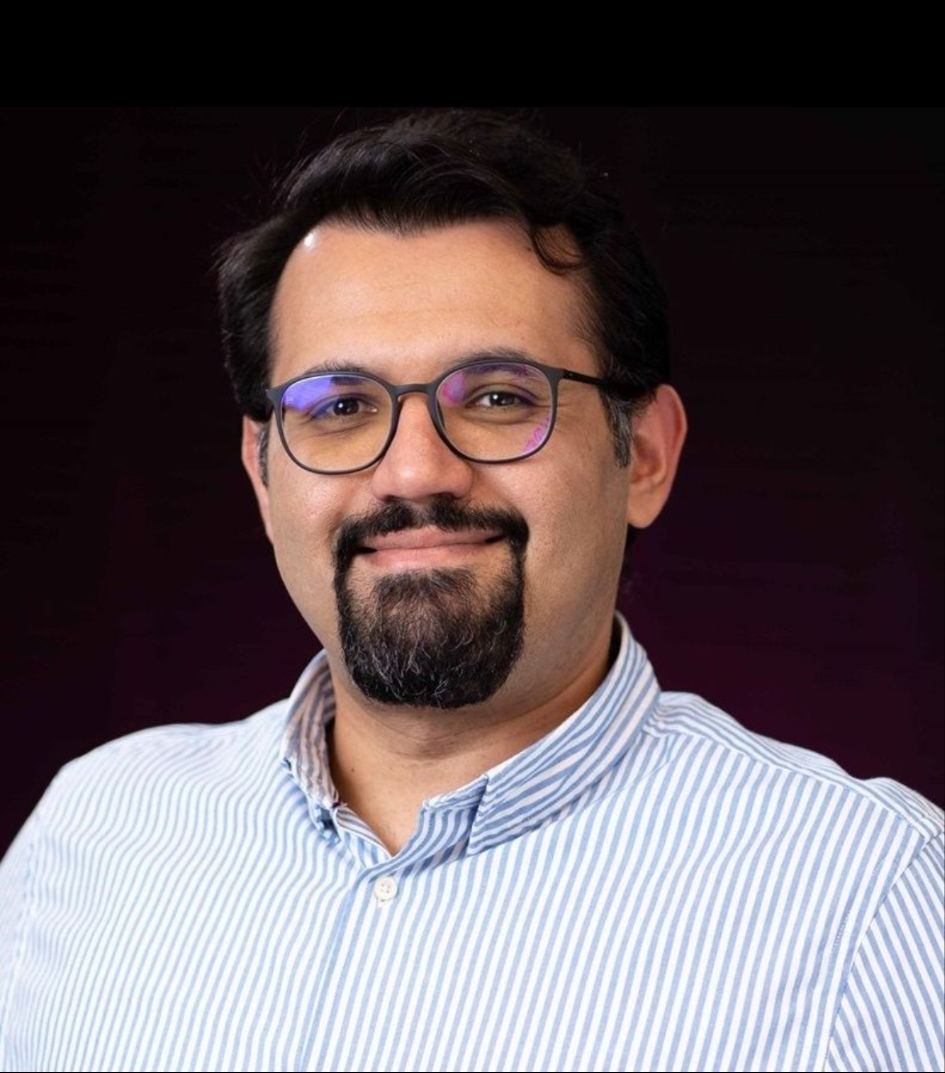
Dr. Ehsan Abbasnejad is an Associate Professor at Monash University's Department of Data Science and Artificial Intelligence, and holds adjunct positions at the Australian Institute for Machine Learning (AIML, University of Adelaide) and the Centre for Augmented Reasoning (CAR). He specializes in foundational AI, focusing on vision-language tasks, adversarial machine learning, and reinforcement learning. His work bridges theory with real-world applications in agriculture, energy, healthcare, and sports. Education: PhD in Computer Science from Australian National University (ANU). Research Interests: Machine Learning Theory and Adversarial Defenses Neural Network Robustness and Generalization Multimodal Learning (Vision-Language) Continual and Transfer Learning Applications in Energy, Healthcare, and Robotics Awards: Finalist for Australian AI Academic/Researcher of the Year (2024) Multidisciplinary competition wins (e.g., OzMineral Explorer Challenge) Advising & Grants: Australian Research Council (ARC) Discovery Project on Reinforcement Learning CSIRO's Next Generation Graduate Fund Accepting PhD students in foundational AI and applications Labs & Teams: Director of Foundational Machine Learning & Reasoning at Monash, leading global teams in AI competitions and industry collaborations (Microsoft Research, NEC Labs America).